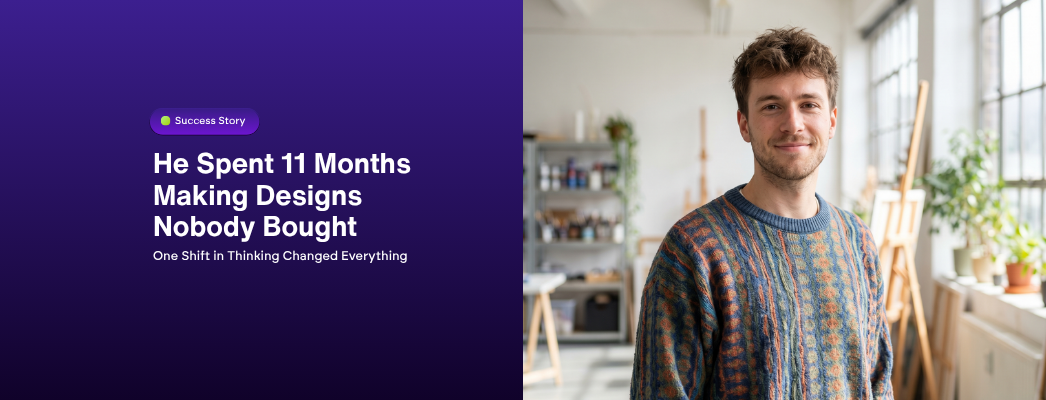
The shift that changed everything was deceptively simple: he stopped asking what design he could make and started asking what his buyer wanted to feel. Print on demand, he finally understood, is not a design business. It is an identity business.
Marcus wasn’t bad at design. He was asking the wrong question the whole time.
Marcus had a system. Every Sunday evening, he’d open his laptop, pull up Google Trends, check what was gaining traction on Etsy and Shopify, and spend the next two hours making designs around whatever looked promising. Retro gaming. Funny dog stuff. Motivational quotes. Fishing. Coffee humor. Abstract design.
He was disciplined about it. Consistent. He’d read enough about print on demand to know that the people who failed and quit were the ones who didn’t stick with it, so he stuck with it.
Eleven months. Just under 300 designs across three different shops. His best month was $210 in revenue. Most months it was under $80.

The Part Nobody Talks About
Marcus will be honest with you about something: his designs weren’t bad. He’d gotten genuinely decent at Canva and Illustrator. He understood color theory in a basic way. He knew how to make a clean graphic, how to position text, how to export for print without it coming out blurry.
“I wasn’t improvising,” he says. “I was actually putting in real work. I had a spreadsheet tracking which niches I’d tried, what the search volume was, how many competing listings there were. I thought I was being smart about it.”
That wasn’t the problem. The problem, he’d eventually learn, was that he was thinking like a designer, not like a buyer. Every time he sat down on Sunday night, he was asking himself: what’s a cool design I can make? Or: what topic hasn’t been saturated yet?
Those aren’t bad questions. But they’re the wrong ones. “I was building a catalog,” he says now. “What I needed to build was a connection. I just didn’t know the difference yet.”
300 Designs and a Hard Conversation With Himself
Somewhere around month ten, Marcus sat in his car in a parking garage after work and just looked at his numbers on his phone. $623 in total revenue over ten months. After fees, base costs, and the Canva subscription he’d been paying for, he’d netted somewhere around $190. He was very far from his dream of leaving his 9 to 5 and becoming a full-time POD business owner working from Bali.
He wasn’t alone in that gap, either. Our own market data shows only about 24% of print-on-demand shops are still operating three years after launch. The grind is real, and most people who quit do it right around where Marcus was.
“I wasn’t even angry,” he says. “I was just confused. I was doing everything the YouTube tutorials said. I was being consistent. I was hitting the volume targets everyone recommended. My designs looked like designs that were selling for other people. So why wasn’t it working?”
He drove home, opened Reddit, and started reading threads from sellers who’d actually quit their jobs doing this. Not the polished YouTube success stories, the raw forum posts where people described exactly where they’d been stuck and what had changed. One reply stopped him completely.
“I stopped trying to make designs people would like and started making things that made people feel something specific. There’s a massive difference.” Marcus read it three times.
What He’d Been Getting Wrong
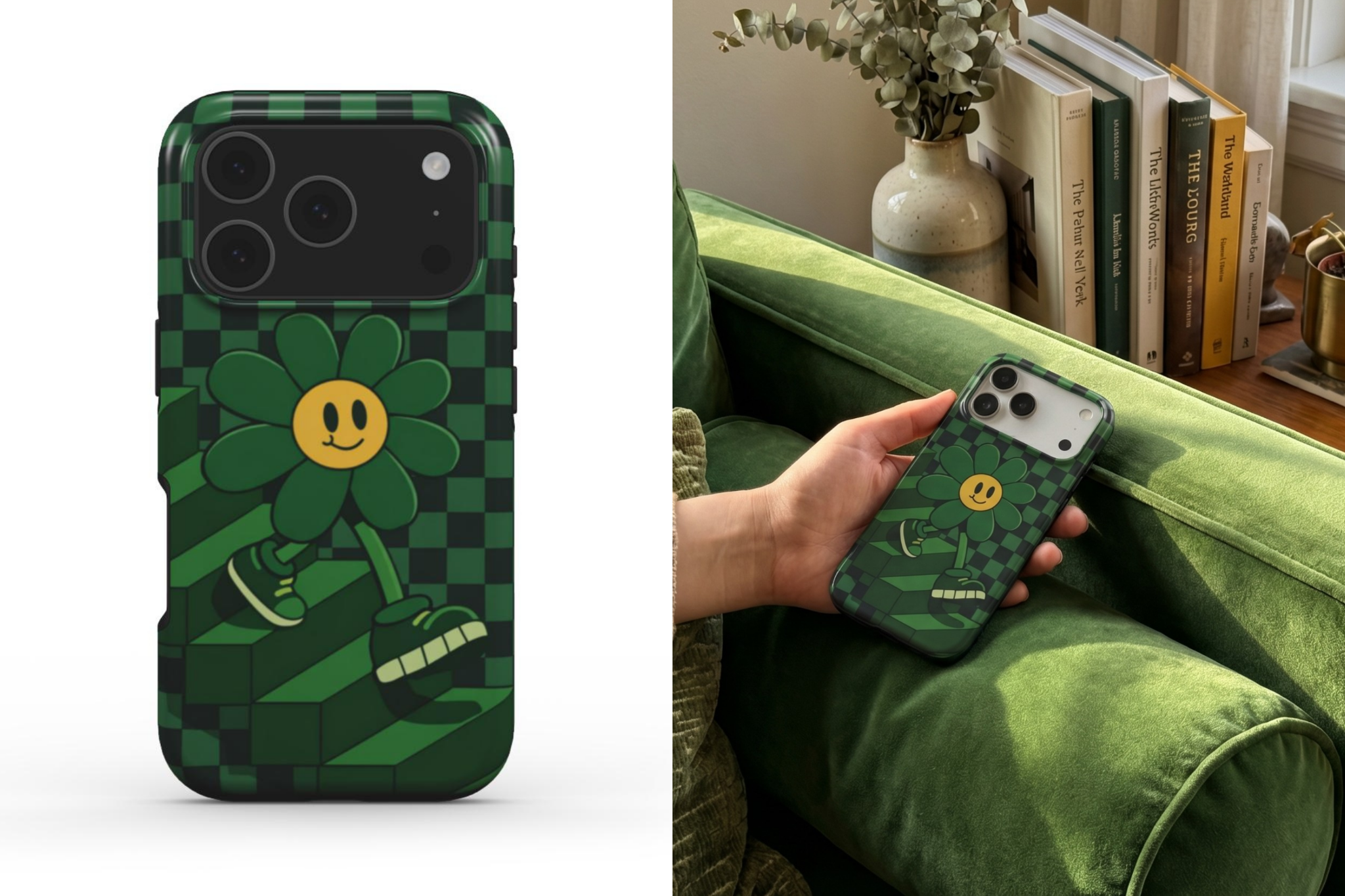
Here’s what Marcus understood in theory but had never actually applied: people don’t buy a phone case. They buy a version of themselves.
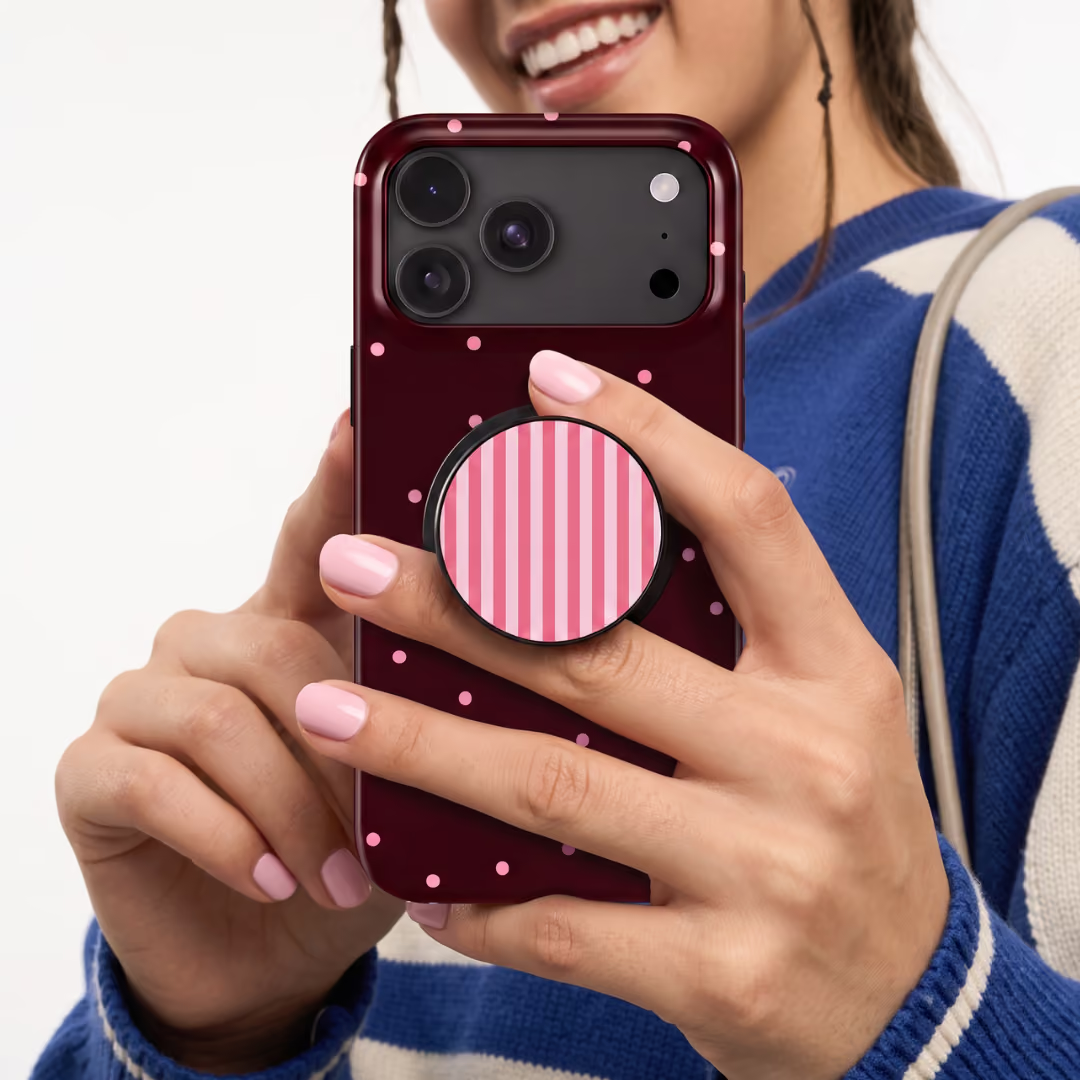
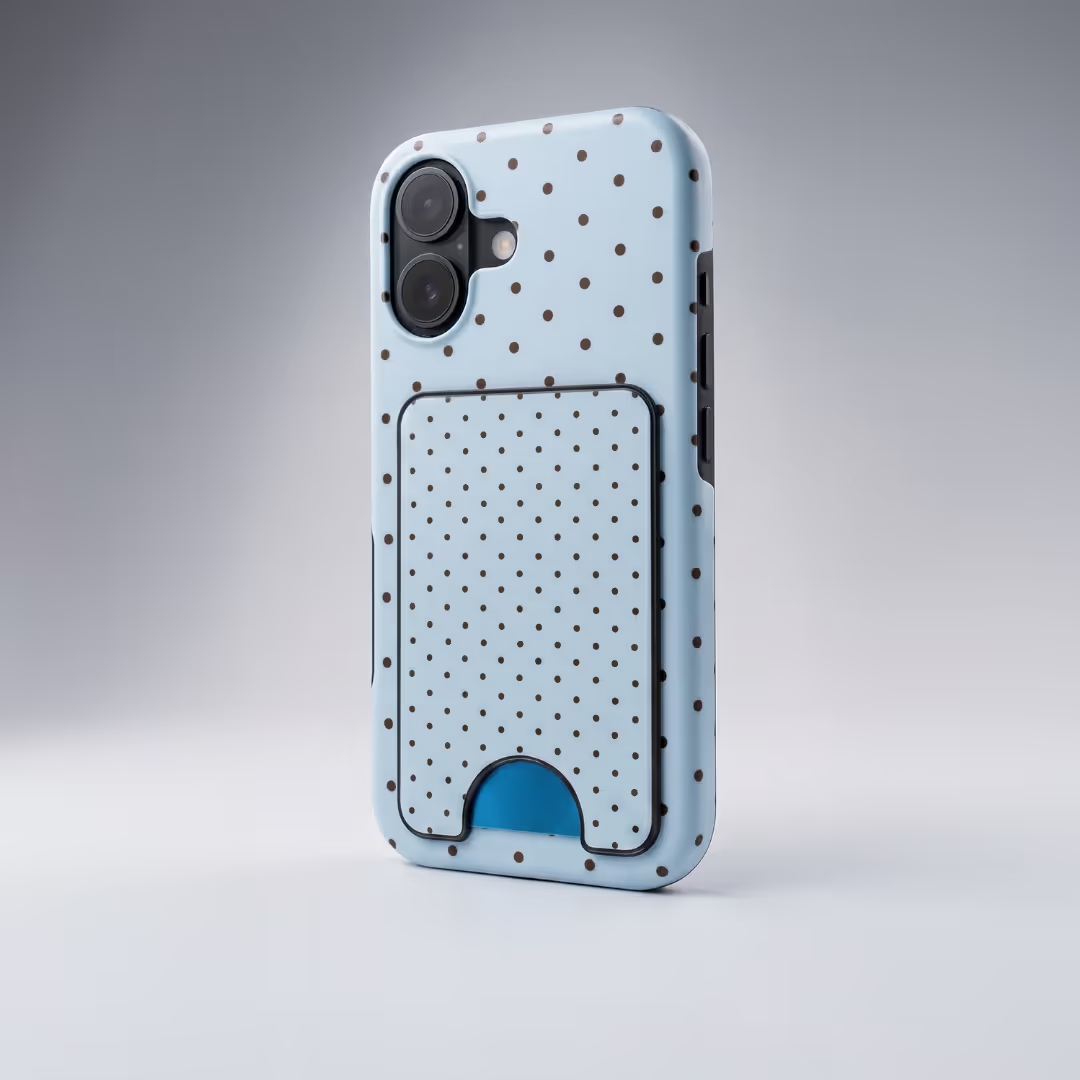
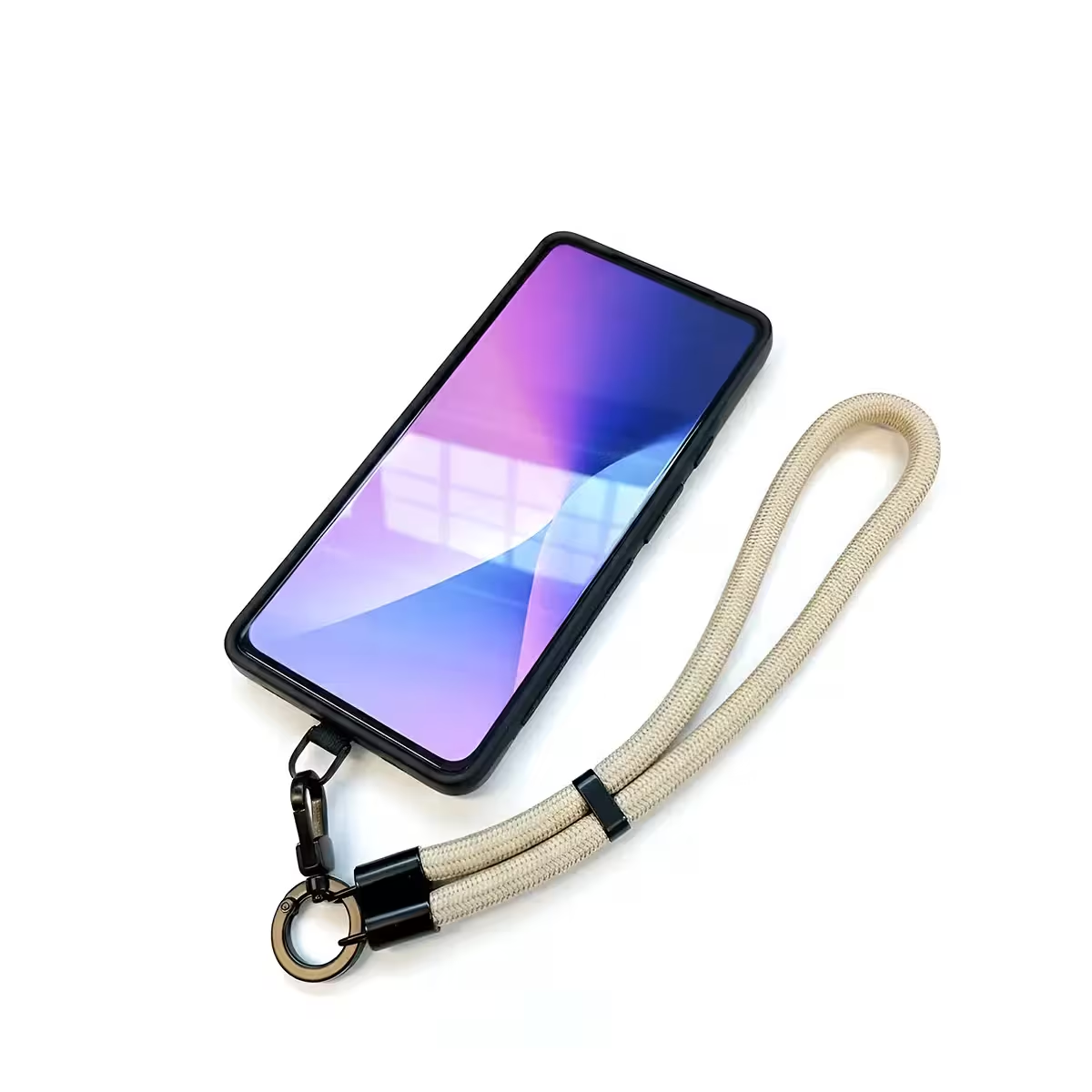
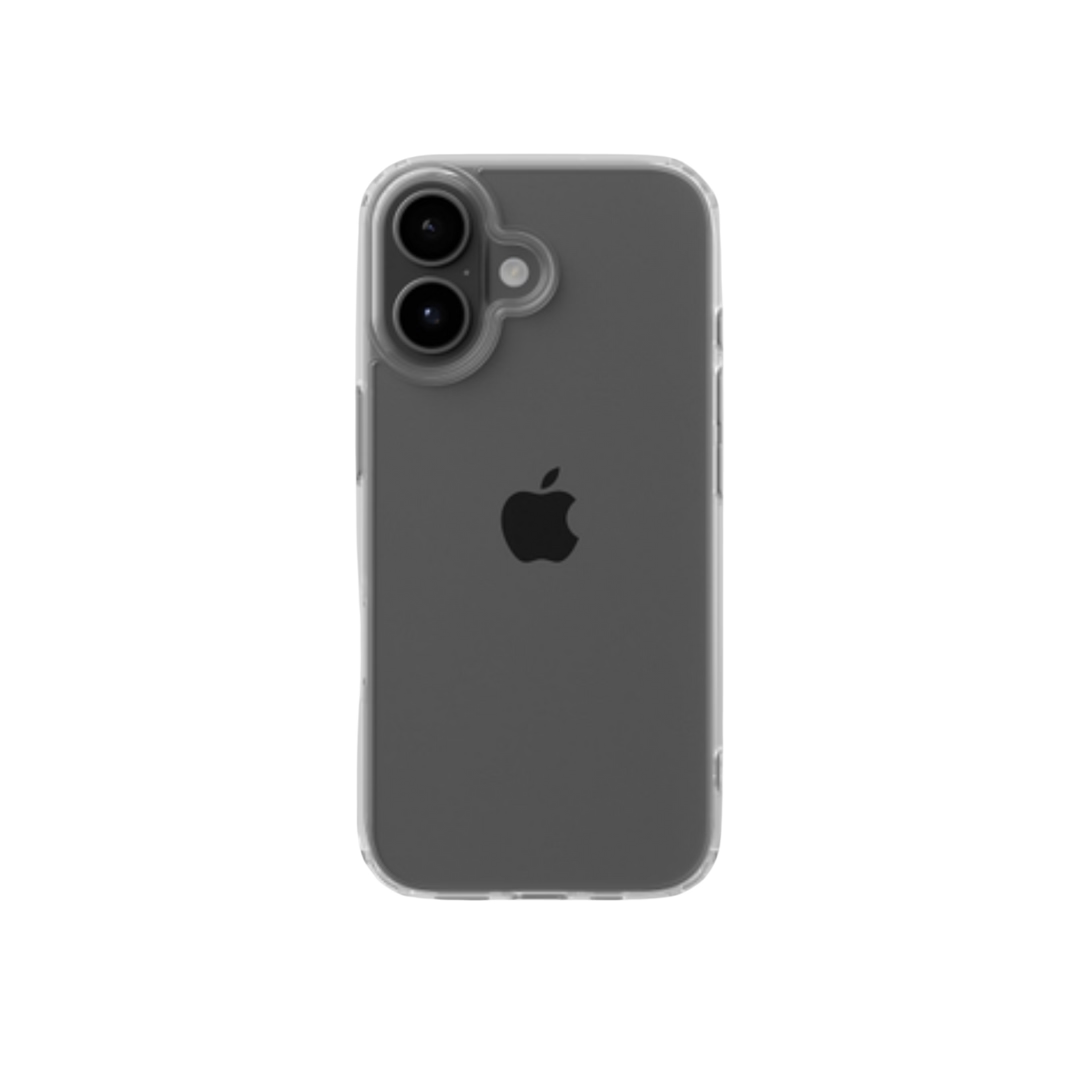
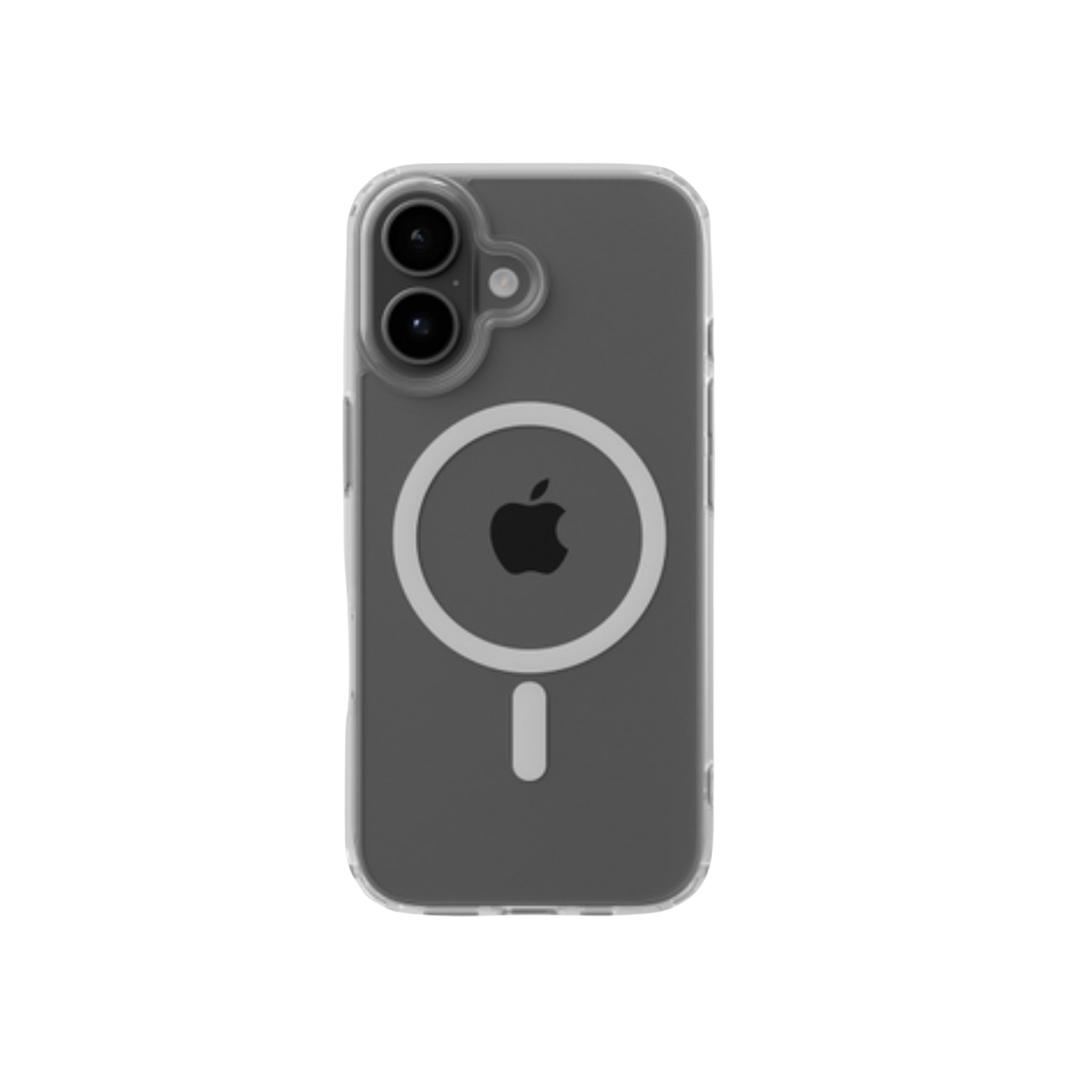
This isn’t a motivational slogan, it’s how the category actually behaves. “Tech accessories surround us every day,” says Justina, Podbase’s Head of Product Development. “Somewhere along the way it stopped being simply devices and became an extension of who we are.” Our CEO, Saulius Meilutis, puts the same idea in sharper terms: a custom phone case “became like your personal billboard on your gadget. You carry this art on your everyday commute to your job, to your hobby. You put it on the table in the restaurant, so that art is everywhere.”
When someone puts a particular phone case on their device, they’re making a statement, to themselves and to anyone who sees it, about who they are and what they value. The guy who buys the “I’d rather be fishing” mug isn’t buying a mug. He’s buying a small, affordable flag that says: this is my identity, this is where my real life happens. The gym guy who buys the “Built Different” hoodie isn’t buying warmth. He’s buying membership in an idea about himself.
The market rewards this, measurably. Roughly 68% of smartphone owners use a case, so the audience is enormous, and 1 in 5 buyers pays at least 20% more for a custom product. People aren’t paying for ink on plastic. They’re paying to be seen.
“I’d been designing topics,” Marcus says. “Fishing. Hiking. Gaming. But I wasn’t thinking about the person who buys the fishing thing and why it means something to them. I was just slapping words on a phone case and wondering why no one cared.” The designs that sell aren’t the ones that look the best. They’re the ones that make someone see themselves in the product and think: that’s me. I need that.
The Community That Made It Click
Marcus joined the Podbase Skool community around month eleven, right when he was genuinely considering whether to shut everything down.
“I went in expecting the usual stuff,” he admits. “General advice. Theoretical stories. Vague tips about SEO. People telling you to just keep going and never give up. Instead I found people actually breaking things down: here’s what I ran, here’s what flopped, here’s the exact reason why.”
That difference is not a coincidence, and it’s not small. Our Head of Sales, Sidas, looked at the data and found that sellers who have a community, a mentor, or a peer group working in the same space scaled approximately 32% faster than solo operators. It’s the single biggest accelerator we’ve been able to measure, bigger than any single design tweak.
One thread in particular changed how Marcus worked. Someone had posted a breakdown of two nearly identical phone cases. Same niche, same general aesthetic, similar quality. One had 40+ sales. The other had three. The difference wasn’t the design. It was the listing copy, the mockup photography, and, most importantly, the angle.
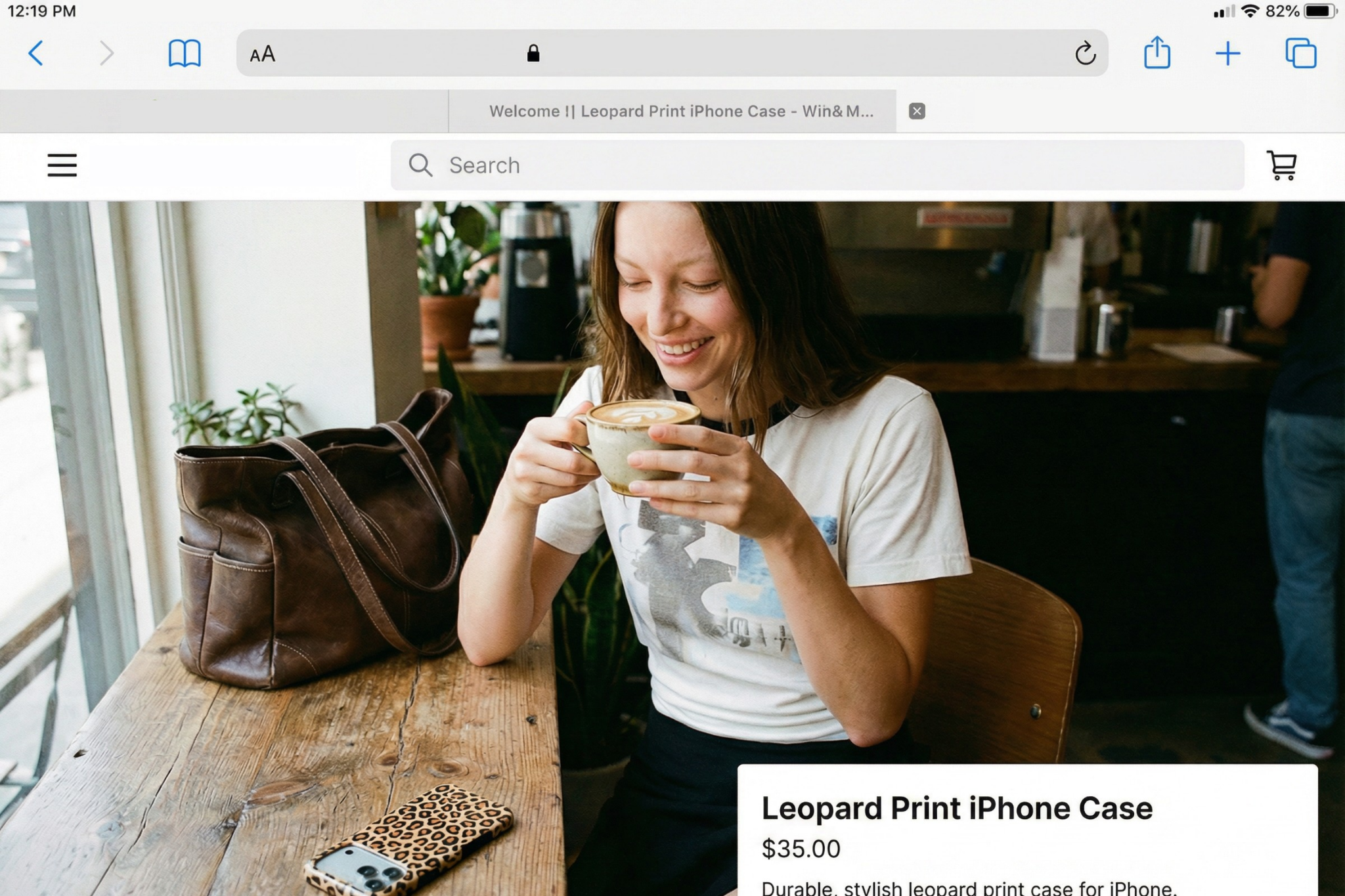
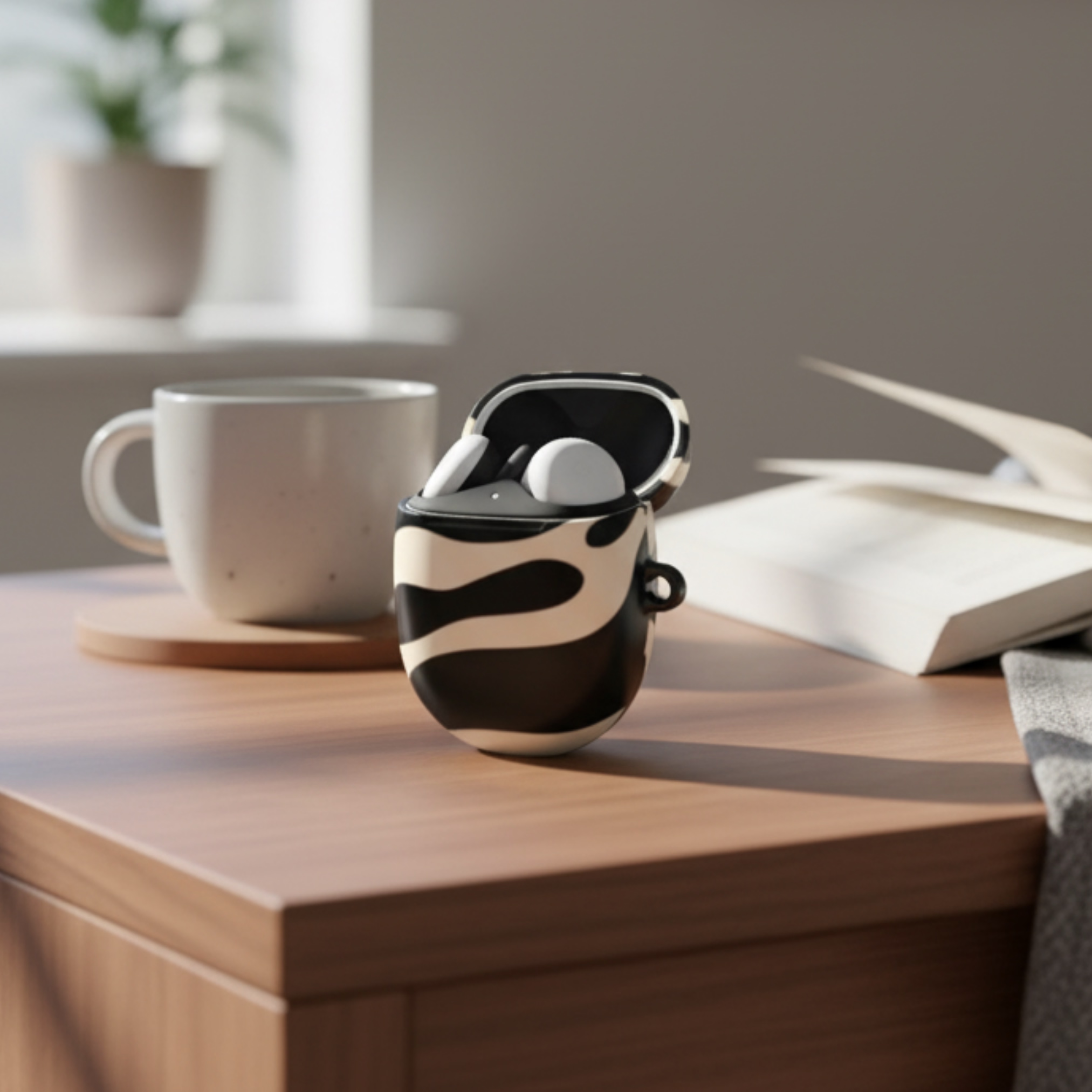
The successful listing didn’t describe the product. It described a moment. The image wasn’t a flat lay of a phone case, it was a lifestyle shot of a girl in a stylish outfit, sitting in a coffee shop, enjoying her flat white. The phone case was just lying near her on the table, barely visible. The copy didn’t say “durable phone case with unique design.” It said something like: spring has arrived = coffee dates every day.
“That breakdown broke my brain a little,” Marcus says. “I went straight back to my shop and looked at my listings. Flat mockups. Generic descriptions. Product specs. I wasn’t selling anything, I was filing inventory.”
What He Changed, And What Happened
Marcus didn’t scrap his designs. He kept the ones that had real potential and rebuilt everything around them: lifestyle mockups instead of white-background flat lays, listing copy that opened with a feeling instead of a feature, titles that spoke to identity, not just keywords.
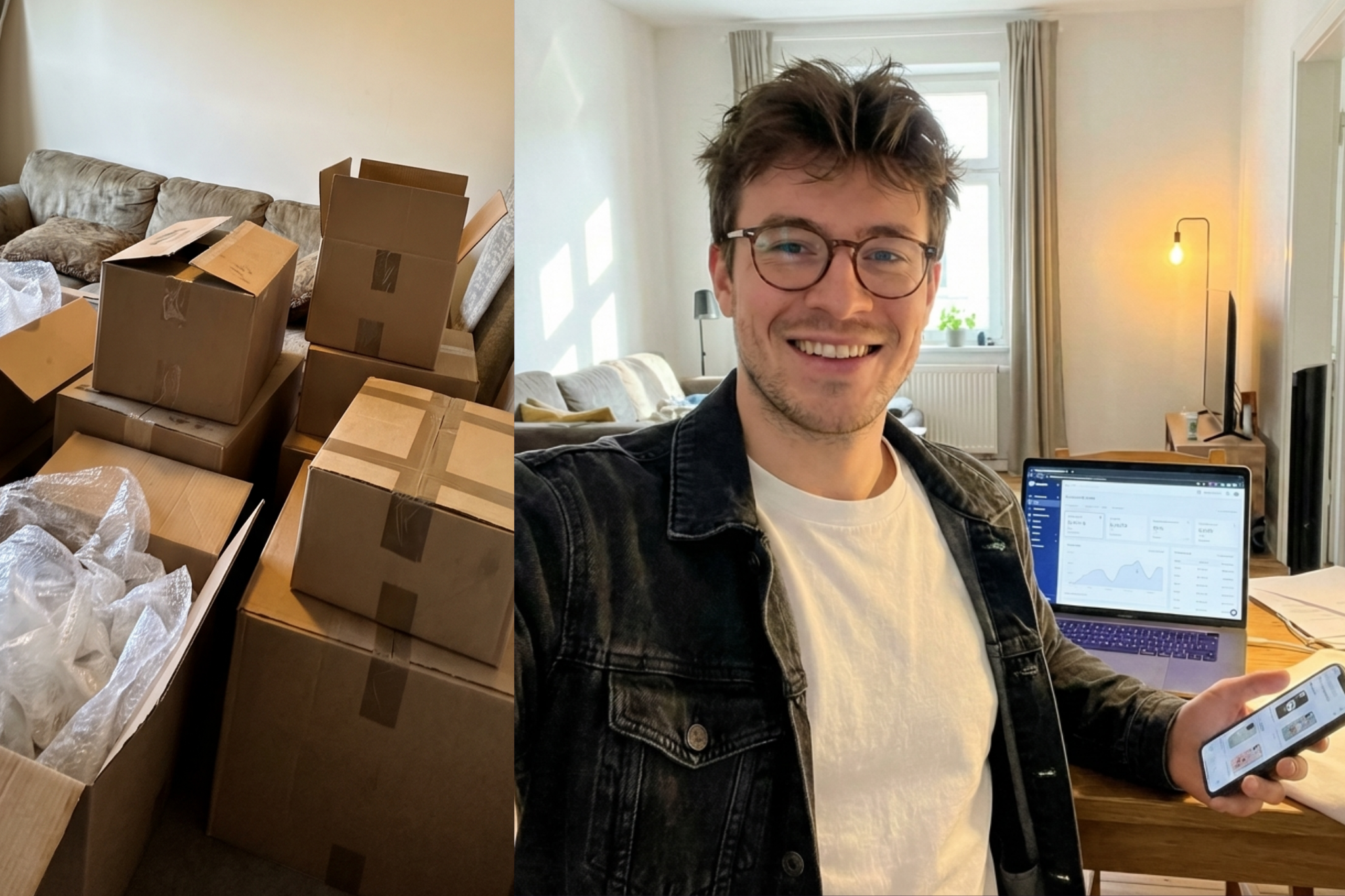
He picked two niches to go deep on, both connected to a lifestyle he genuinely understood. He’d been into the outdoors and overlanding since his early twenties, and he knew exactly how those guys thought, what they found funny, what they’d put on their truck or their gear. “I stopped guessing at the buyer,” he says. “I was the buyer.”
The economics quietly worked in his favor, too. On Podbase, a phone case bought at around 10 euro can sell for 35 to 60 euro, so a sharper, identity-driven listing doesn’t just convert better, it earns more per sale. And the milestones came faster than he expected. Our seller data shows that publishing five products within 30 days already puts you ahead of about 80% of stores, and ten sales puts you in the top 10%, because most stores never get there.
His first month after the pivot: $580 in revenue. His second: $940. By month four, he crossed $2,000 for the first time. Seven months after that, he did his last shift at his logistics job and drove home without setting an alarm for the following morning.
He’s not an outlier in kind, only in timing. One business we work with crossed into seven-figure yearly revenue thirteen months after starting from zero, selling phone cases. They launched with around ten designs, pushed hard into influencer marketing, and iterated quickly. Fewer products, sharper angle. “The weird thing is, I’m doing less volume now than I was at month six,” Marcus says. “Fewer products. But every product actually means something to the person who buys it. That’s the whole game.”
Also Read:
- 25+ Print on Demand Tips for Beginners and Sellers
- How to Sell Wall Art Online: A Complete 2026 Guide
The Thing That’s Actually Buried
Marcus talks about this now in the Podbase community when newer sellers show up frustrated. “The technical stuff, designs, mockups, SEO, that’s all learnable,” he says. “That’s not where most people get permanently stuck. Where they get stuck is in thinking that POD is a design business. It’s not. It’s a feeling business.”
Podbase’s product team sees the same pattern from the other side of the catalog. “People are constantly looking for cases that suit their personalities, hobbies, interests, and lifestyle the best,” says Justina. That’s the demand Marcus had been ignoring. His job was never to make something that looked good, it was to make someone feel seen when they looked at his product and thought: that’s for people like me.
This is also why specificity beats coverage. The instinct most struggling sellers have is to widen, more niches, more designs, more topics. The Podbase sellers who win do the opposite: they narrow until the message is unmistakable. Niche selection gets easier because you’re looking for tribes, not topics. Mockup choices become obvious because you’re showing a life, not an object. Listing copy writes itself because you’re describing a feeling you already understand.
“I found all of that in a community of people who’d already been where I was,” Marcus says. “And they were willing to explain, plainly, why they’d been stuck and what actually moved them forward. That’s rarer than it sounds. Most places just tell you to keep grinding.”
If You’re Somewhere in Month Four Through Eleven
If you’re reading this and you’re somewhere in the grind, consistent, not quitting, but not seeing the numbers move, there’s a good chance you’re where Marcus was. Not failing. Not talentless. Just asking the wrong question.
The right question isn’t what should I design next? It’s what do the people I’m designing for want to feel? Whether you sell tech accessories, drinkware, or wall art, that single change reorders everything downstream of it.
There’s a community of sellers working through that shift right now, sharing what’s landing, what isn’t, and why. No fluff. Real breakdowns. People at every stage of the journey. Find them at the Podbase Skool community. The buried layer is there. Some people find it on their own eventually. Others find it faster.
FAQ
1. Why aren’t my print on demand designs selling?
Most print-on-demand designs fail to sell because the seller thinks like a designer instead of a buyer. The question that works is not what looks cool, but what the customer wants to feel. Buyers choose products that reflect their identity, so designs that make someone think that is me consistently outsell technically better but generic artwork.
2. Is print on demand a design business or a marketing business?
Print on demand is closer to an identity business than a pure design or marketing business. The product is a vehicle for self-expression: a phone case or hoodie signals who someone is. Sellers who treat each item as a statement their buyer makes about themselves outperform those who simply publish more designs and chase trending topics.
3. How long does it take to make money with print on demand?
It varies, and many sellers spend months stuck before a breakthrough. One Podbase seller went 11 months at under $80 most months, then crossed $2,000 within four months after changing his approach. Podbase data shows that publishing five products within 30 days already puts a new store ahead of roughly 80% of stores.
4. Do I need a lot of designs to succeed with print on demand?
No. Volume alone does not drive sales, resonance does. Sellers often succeed with fewer, sharper products aimed at a specific identity rather than hundreds of generic ones. One business reached seven-figure yearly revenue selling phone cases after launching with around ten designs, pushing influencer marketing, and iterating quickly on what actually connected.
5. How do I choose a print on demand niche that actually sells?
Choose a niche you genuinely understand, then design for the buyer’s identity inside it, not the topic. Look for tribes, not subjects. People constantly seek products that suit their personalities, hobbies, and lifestyle, so the more specifically a design says that is for people like me, the more it sells. Specificity beats broad coverage.
6. Does joining a print on demand community actually help?
Yes. Podbase Head of Sales data shows sellers with a mentor or peer group scaled about 32% faster than solo operators, the single biggest accelerator measured. Communities expose the real reasons listings succeed or flop, from copy to mockup angle, replacing vague keep-grinding advice with specific breakdowns a seller can apply immediately.
Conclusion
Marcus spent almost a year proving that effort and consistency aren’t enough on their own. The unlock wasn’t a better design, a hotter niche, or a clever SEO trick. It was a question: stop asking what you can make, and start asking what your buyer wants to feel. Print on demand rewards sellers who sell identity, and our data backs it up at every stage, from the first five products to seven-figure stores. If you’re ready to build products people actually see themselves in, create a Podbase account today to get started.

SEO Content Manager at Podbase

.avif)



.avif)
.avif)
.avif)
.avif)
.avif)
.avif)

.avif)


.avif)

.avif)

.avif)

.avif)
.avif)