The best Gelato alternatives in 2026 are print-on-demand platforms that beat Gelato on the exact things it limits - pricing, customization, support, and niche focus - with Podbase leading for premium tech accessories. Gelato is a well-known name, but it is not the right fit for everyone.
With production in 32 countries and a strong global network, Gelato offers fast delivery and solid quality. Still, many sellers find it limiting - especially on customization, base pricing, and support, which is email and chat only. If you want better margins, more design freedom, or faster help, you are in the right place.
This guide ranks the top 10 Gelato print on demand alternatives for 2026 - with key features, pros and cons, pricing, and real use cases. Whether you are just starting or scaling fast, there is a print-on-demand platform here for you.
Gelato Alternatives at a Glance
- How we chose: print quality, product range, integrations, speed, branding options, support, pricing, and sustainability.
- Why switch from Gelato: higher base pricing, feature gaps, limited customization, shipping footprint, and email-only support.
- Quick picks: Podbase, Printify, Printful, Spreadconnect (SPOD), Redbubble, Zazzle, Society6, Teelaunch, Spreadshirt, Print Aura.
- Podbase highlight: best for premium tech accessories, with early device templates, in-house production, and smooth Shopify, Etsy, and WooCommerce integrations.
- Margin edge: Podbase pricing runs 10-15% better than competitors across most categories, up to 20% in some.
- Pro move: order samples, check margins, and run small tests before scaling winners.
Need a Gelato alternative that ships fast and looks premium? Connect Podbase, publish in minutes, and scale with confidence. Start with Podbase.
Why Sellers Switch From Gelato
Gelato established itself as a print-on-demand leader, but several gaps push sellers to look elsewhere. These are the reasons that come up most - and where our own switcher data backs them up.
- Print-on-demand cost: Gelato's pricing can run higher than competitors. If profit matters, look for platforms with better base prices and bulk discounts - Podbase margins sit 10-15% better than competitors across most categories.
- Platform features: not all print-on-demand platforms are built the same. Design tools, mockup generators, and ecommerce integrations vary widely.
- Product variety: Gelato covers the basics; other platforms add niche or specialized items. For tech sellers specifically, a focused catalog beats a generic one.
- Shipping locations: fulfillment near your customers cuts delivery time. Podbase ships worldwide, with economy orders typically arriving in about 3 to 16 days.
- Product customization: if branding matters, choose a platform with custom labels, packaging, and design flexibility - areas where Gelato is limited.
- Customer service: Gelato offers email and chat only. As our CEO Saulius Meilutis notes, “what surprises switchers most is customer support - if your supplier is too big to care, response times get slower.”
Also Read:
- 12 Printful Alternatives
- 10 Printify Alternatives
- Gelato vs Printify: Which Print on Demand Platform To Choose?
The 10 Best Gelato Alternatives Compared
Here is how the top 10 Gelato alternatives stack up at a glance. We break each one down in detail below.
What Are the Best Alternatives to Gelato?
There are plenty of platforms like Gelato - and some better ones for specific needs. Here are the 10 best Gelato alternatives to consider for your print-on-demand business.
1. Podbase
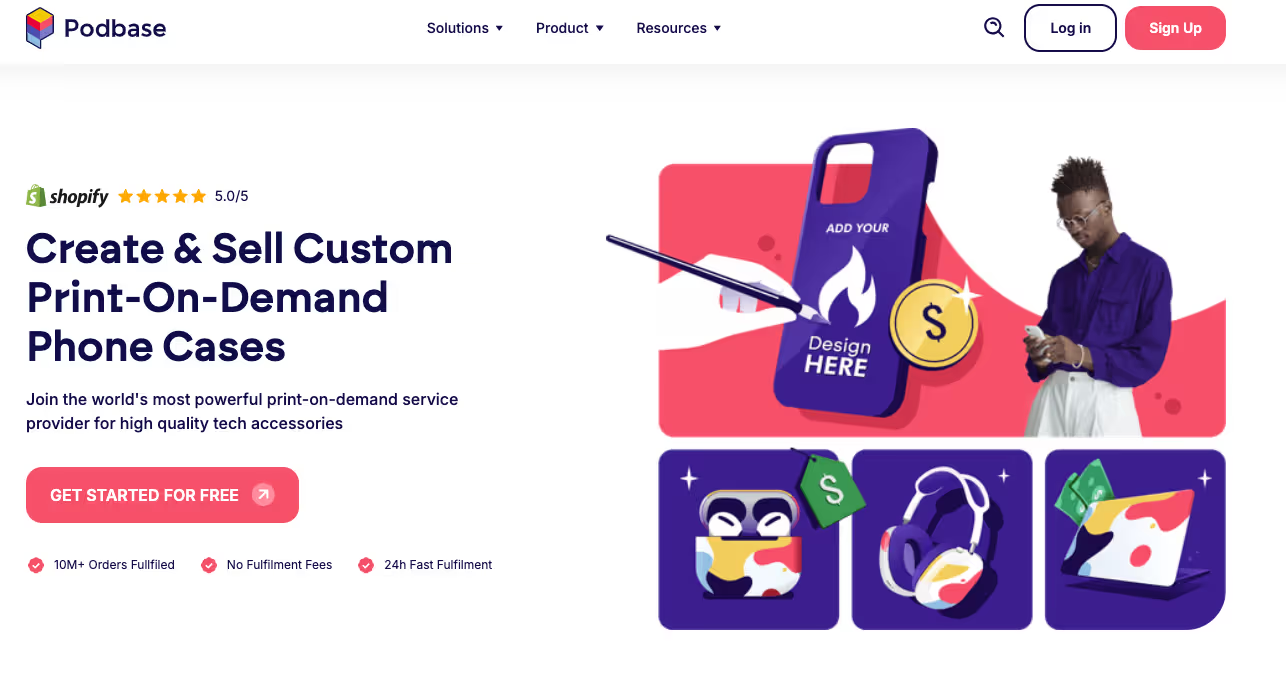
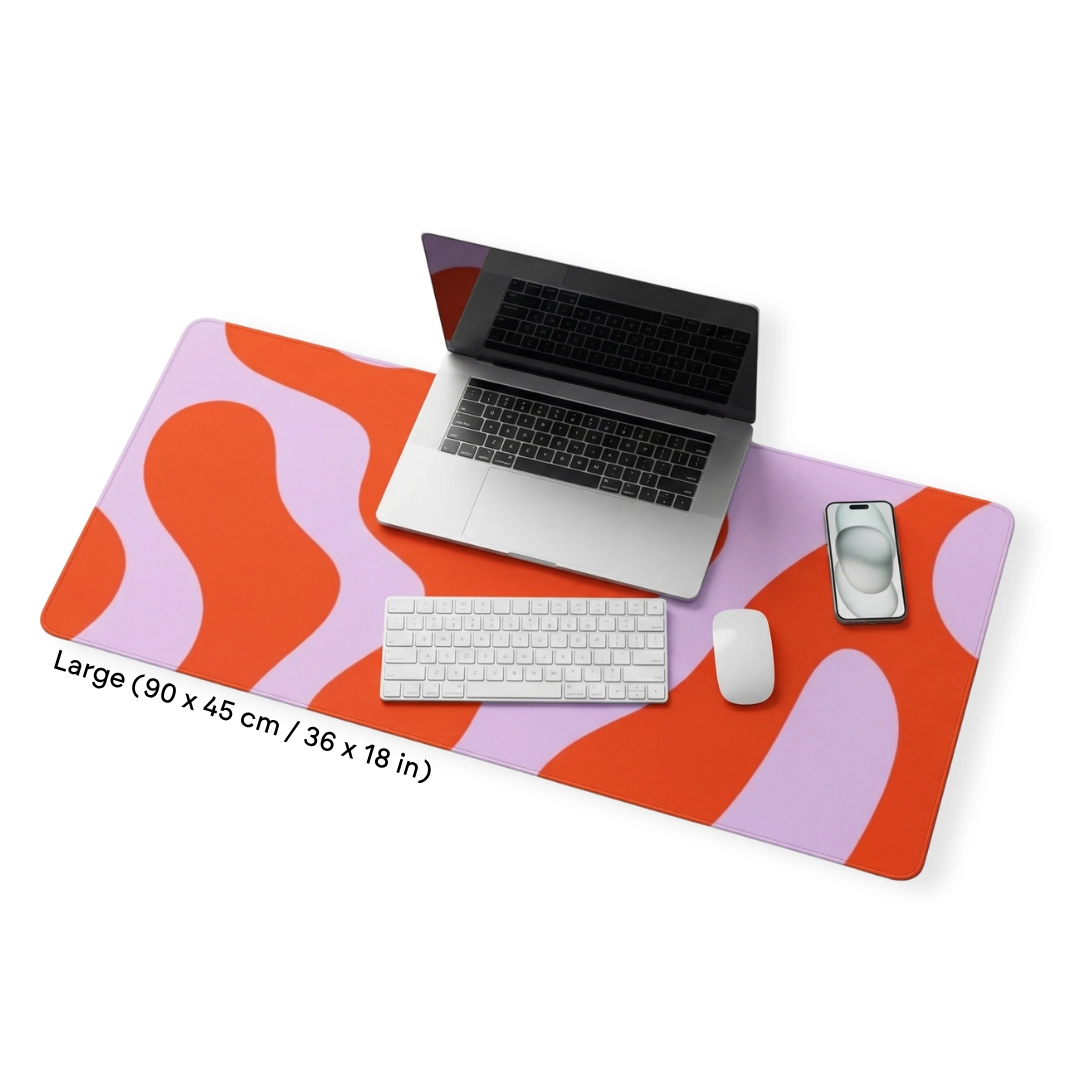
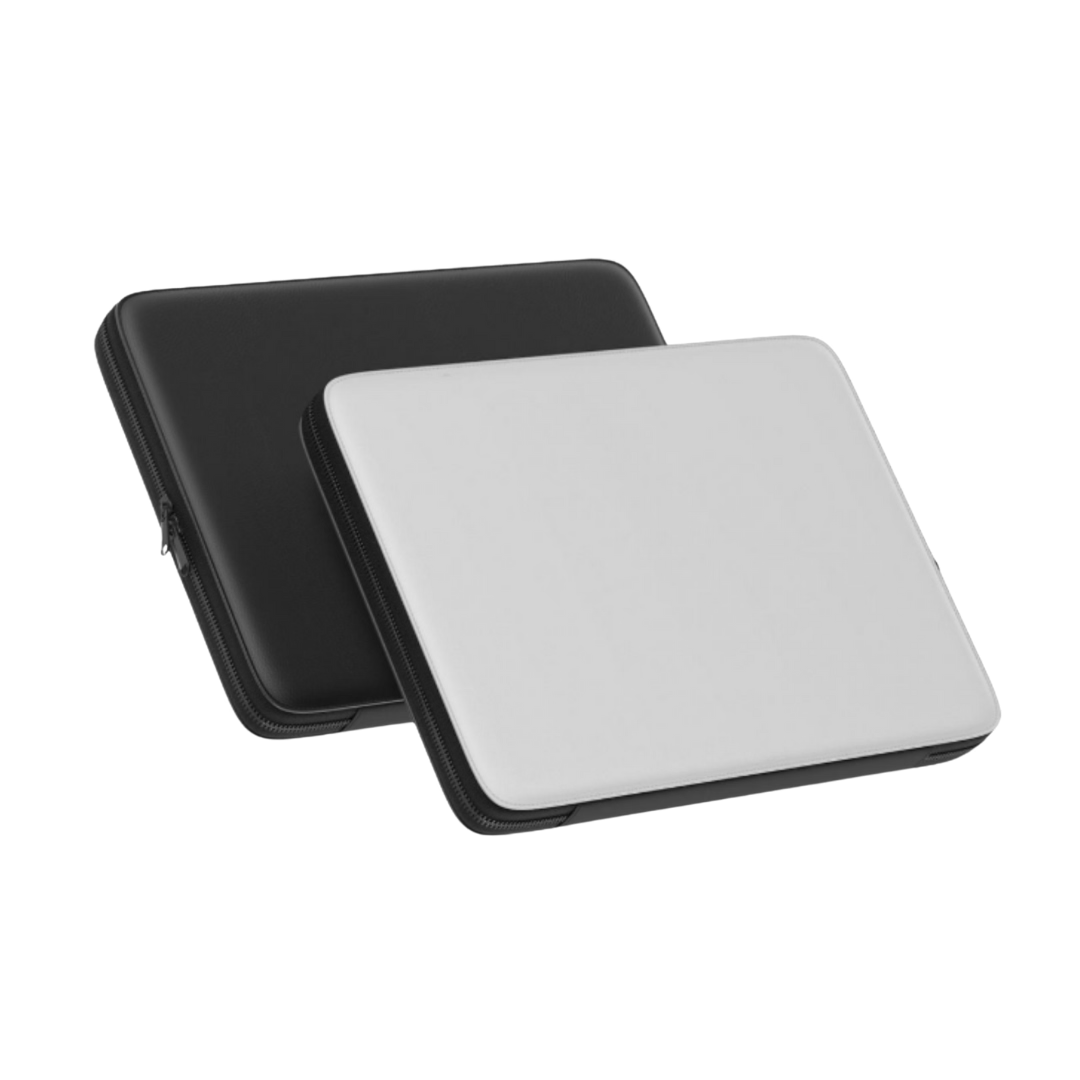
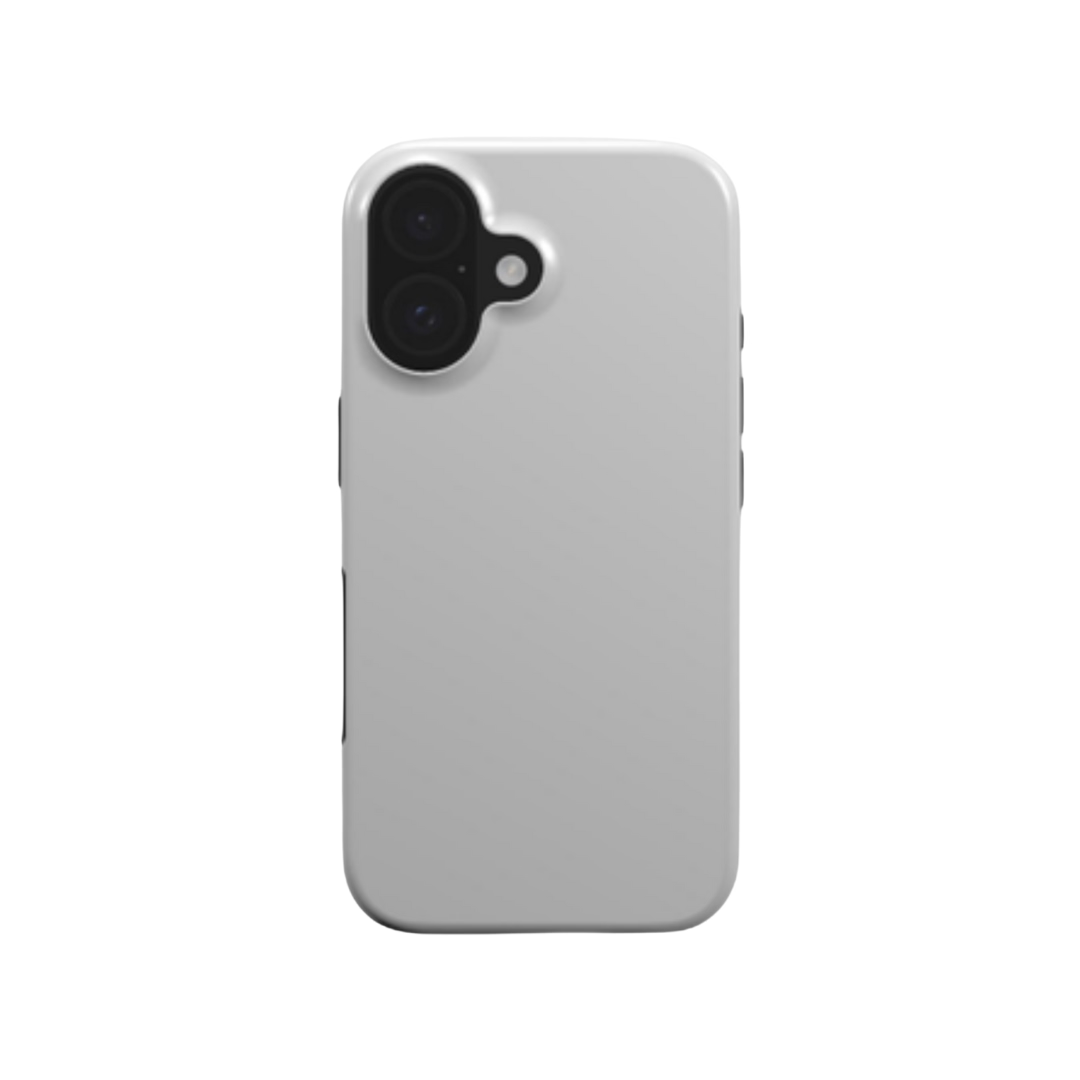
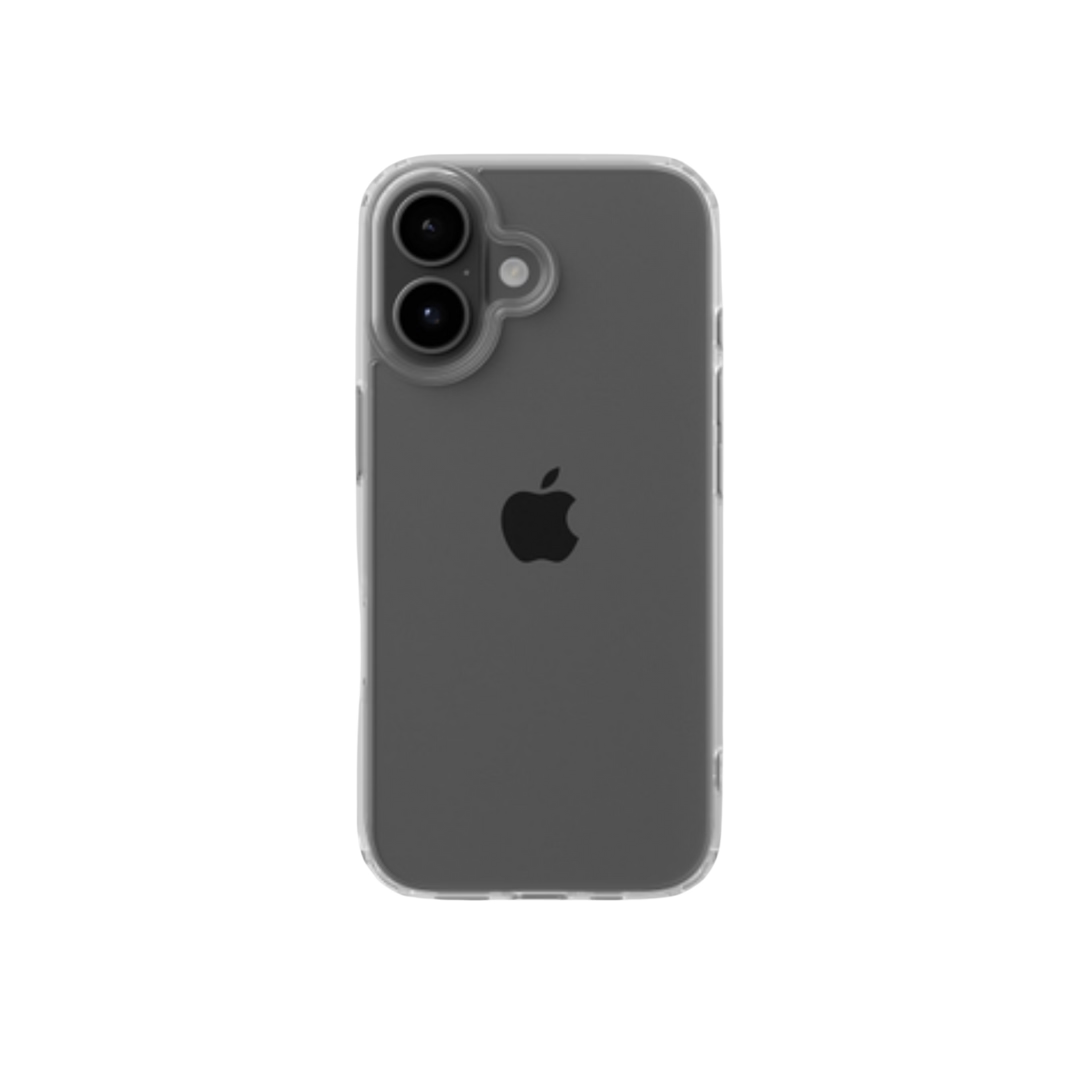
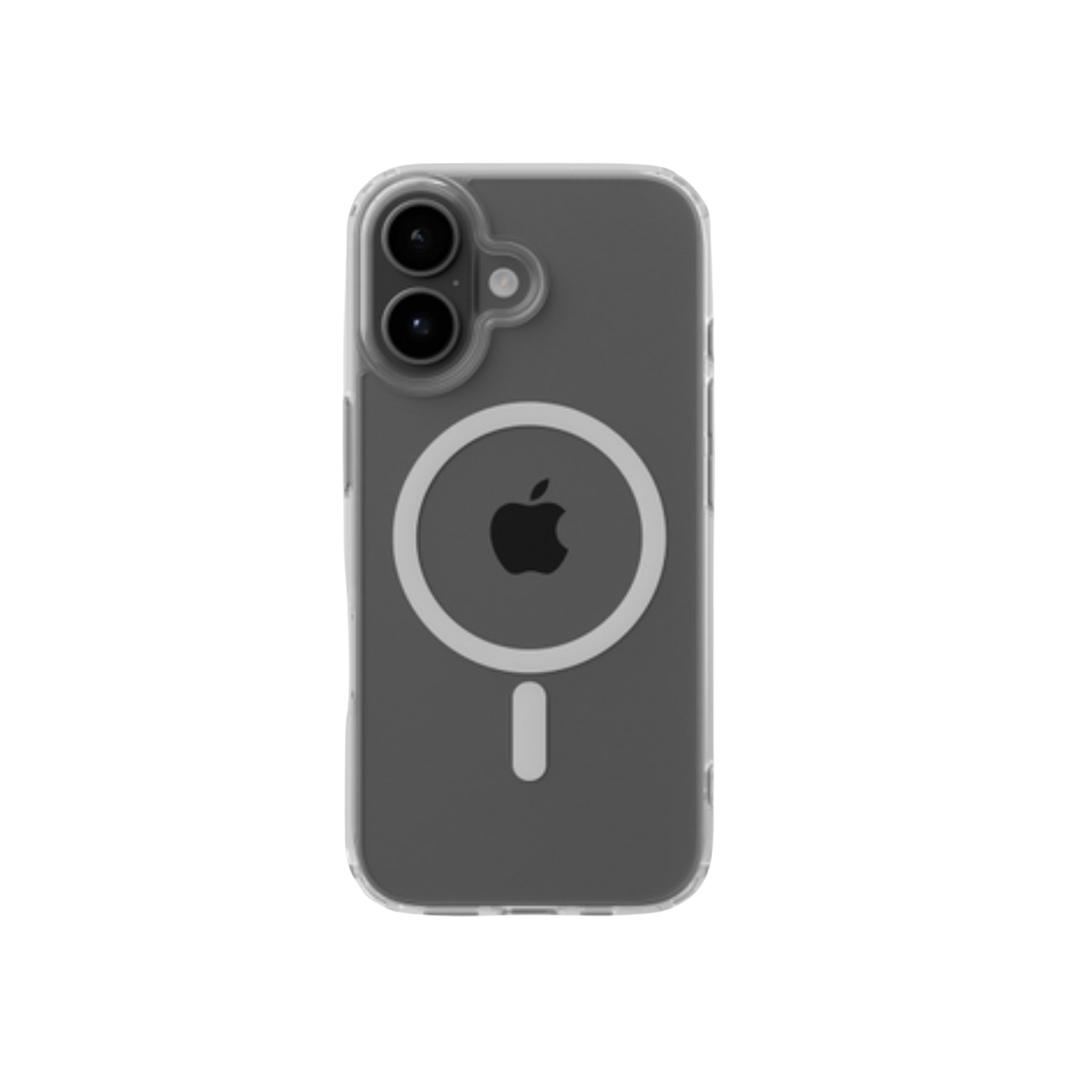
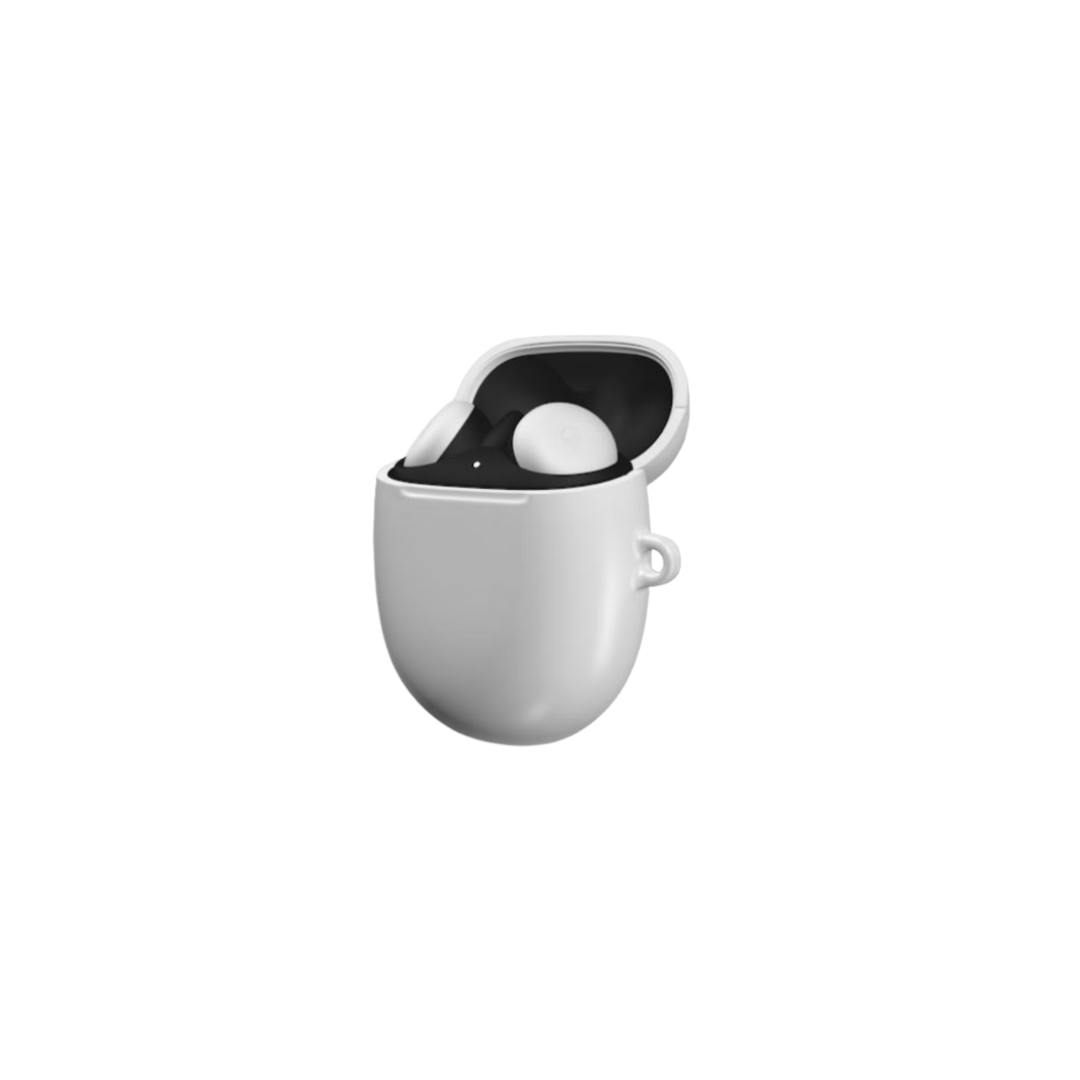
Podbase is a top Gelato alternative for selling custom products with no inventory, and it is the standout pick for the tech niche. Unlike Gelato's generalist catalog, Podbase focuses on custom tech accessories - phone cases, chargers, AirPods cases, and laptop sleeves - plus wall art and drinkware. Its signature edge is early access to device templates before phones even launch. As Justina, Head of Product Development, puts it: “when a new device launches, we usually have the materials and interface ready a couple of weeks before, so sellers can be proactive rather than reactive.” Production is in-house with quality checks at every stage, and migrated sellers report 15% more reviews and 30% fewer order-issue tickets.
Key features:
- Automated order management that reduces manual work and errors.
- Mockup generator to preview designs before ordering.
- In-house production with quality checks at every stage for consistent results.
- Early device templates - list cases the day a new iPhone or Samsung drops.
- Smooth Shopify, Etsy, and WooCommerce integrations.
Pricing: Free to sign up; you only pay for what you sell. A phone case costs from about €10 and sells for €35-60, with margins 10-15% better than competitors.
Pros: worldwide shipping with fast delivery; pay only for what you sell; wide customization options; responsive, human support.
Cons: catalog is more focused (tech-led) than the largest generalist platforms - by design.
Best for: creators, artists, designers, and online brands who want premium tech products, strong margins, and real support.
2. Printify

Printify is a popular print-on-demand platform built on a large network of print providers, so you focus on designs while Printify handles production and shipping. It connects to Shopify, Etsy, TikTok, eBay, and more, plus custom sites via its API.
Key features:
- Large product range: clothing, accessories, home decor, and more.
- Easy-to-use design tools for quick customization.
- Pop-up store option to sell without your own website.
- A network of 130+ print partners worldwide for localized shipping.
Pricing: Free to start; Premium $29/month; Enterprise is custom pricing.
Pros: user-friendly interface; no upfront costs or inventory; global print providers enable localized, faster shipping.
Cons: you must vet each print provider for reliability, and shipping times vary by provider.
Best for: small businesses that want the widest product selection and global shipping. See our Gelato vs Printify and Podbase vs Printify comparisons.

3. Printful

Printful turns creative ideas into branded products with deep customization. It integrates with Squarespace, Amazon, and WooCommerce, and simplifies the whole print-on-demand process.
Key features:
- Over 300 products, from clothing and footwear to stationery and drinkware.
- Free design maker plus a design team for professional help.
- AI model-swap tool for customizing mockups.
- Custom labels, packaging inserts, and branded packing slips.
Pricing: Free plan available; Printful Growth $24.99/month (or earn $12K in 12 months); Business tier for higher earners.
Pros: high-quality products with bulk-order discounts; customized order-tracking page; white-label packaging.
Cons: shipping can take longer for customers outside the US, and delivery fees can be high.
Best for: brands that prioritize product quality and a personal touch. Also see our 12 Printful alternatives.

4. Spreadconnect (SPOD)

Spreadconnect (formerly SPOD) brings 20+ years of print-on-demand experience and is known for speed - most orders ship within 48 hours. It connects with Shopify and Squarespace and lets you create unlimited products with no inventory.
Key features:
- Over 250 products for men, women, kids, and babies.
- Intuitive design tools and a library of 50K+ templates.
- Eco-friendly product options.
- Among the fastest production windows available (about 48 hours).
Pricing: Free account; you pay only shipping fees and order value, with reduced-price test samples.
Pros: discounted test samples; easy setup; fast production and shipping.
Cons: production and fulfillment are limited to the US and EU.
Best for: sellers who need quick fulfillment, especially targeting the US, EU, Canada, and Australia.
5. Redbubble

Redbubble began as a platform for independent artists and now connects thousands of creators with millions of buyers. It handles printing and shipping so artists can focus on creating, with 70+ products from stickers to pillowcases.
Key features:
- Personalized shopfront with social links and a share button.
- Free Google Shopping ads for extra visibility.
- Worldwide shipping with free returns within 90 days.
- Watermark and anti-piracy features.
Pricing: Account tiers (Standard, Premium, Pro); only Standard pays a flat fee based on monthly earnings.
Pros: you control profit margins; access to a large built-in audience; mobile app.
Cons: no third-party store integrations, and artists compete for visibility.
Best for: artists who want a high-traffic marketplace without running their own store.

Also Read:
6. Zazzle

Zazzle is a print-on-demand marketplace for selling art, designs, and photography across a huge product range. Like Redbubble, it is a standalone marketplace without direct Shopify or Etsy integrations.
Key features:
- Free design tools and royalty-free templates.
- Add up to 100,000 items per store.
- Royalty calculator to set your margin per sale.
- International shipping and 24/7 support.
Pricing: Free to set up; Zazzle takes a portion of sales based on your royalty percentage.
Pros: no upfront costs; officially licensed merchandise (Disney, Marvel); bulk-order discounts.
Cons: no third-party app integrations.
Best for: sellers targeting personalized gift items, with a dedicated gifts section.
7. Society6

Society6 is an online marketplace where artists sell designs across products, with a strong focus on home decor - art prints, furniture, and wall hangings. You do not need to be an artist to sell, and it offers wholesale and trade programs.
Key features:
- Curated marketplace with high-quality prints.
- Artist studio to upload and manage artwork.
- Free storefront to showcase designs.
- International shipping.
Pricing: Free plan (earn 10% of net sales); Basic $4.99/month; Pro $12.99/month for more price control.
Pros: comprehensive shipping options; promotes emerging artists; wide product range.
Cons: you cannot modify another artist's design, and the return policy is strict on bulk items.
Best for: artists and designers focused on home decor who want exposure.

8. Teelaunch

Teelaunch is a well-established print-on-demand platform with facilities in the US, UK, Australia, and the EU for faster delivery. Despite the name, it sells far more than tees - kitchenware, home goods, and even jewelry.
Key features:
- Over 300 products with color options on items like apparel.
- Online design tool plus downloadable templates with print specs.
- Order tracking with real-time updates.
- Integrates with TikTok, Etsy, Shopify, and WooCommerce.
Pricing: No subscription fee; you set retail prices and Teelaunch deducts base price and shipping after sales.
Pros: easy app-based setup; competitive pricing; free premium branding on shipments.
Cons: ships to selected countries, and support is via online form or email only.
Best for: small businesses wanting low prices, product variety, and corporate merch.
9. Spreadshirt

Spreadshirt is an online marketplace with over 100K daily visitors, welcoming creators to sell designs with zero risk. It stands out for bulk discounts on orders of as few as six items.
Key features:
- Over 300 customizable products.
- Access to a large built-in customer base.
- Customization tools with design tutorials.
- In-house graphic design service.
Pricing: Free to sign up; the platform pays you a commission on each product sold with your designs.
Pros: high visibility; fair 90-day return policy; multiple shipping options; eco-friendly production.
Cons: limited control over marketing and branding versus a dedicated store.
Best for: creators who want to focus on designing while leveraging an established marketplace.
10. Print Aura

Print Aura is a white-label print-on-demand platform best known for t-shirts, but it also offers mugs, bags, and phone cases. It ships worldwide, guarantees defect-free products, and has responsive support plus a detailed blog.
Key features:
- High-quality direct-to-garment printing.
- Mockup tool for professional product photos.
- Integrates with Etsy, WooCommerce, Shopify, and BigCommerce.
- Custom packing slips, neck labels, and return labels.
Pricing: Completely free - no membership fees.
Pros: consistent print quality across all order sizes; no minimum orders; up to 100 products.
Cons: the interface looks dated and can be harder to navigate.
Best for: designers, small businesses, and enterprises wanting white-label basics with minimal upfront cost.
How to Choose the Right Gelato Alternative for Your Business
With the top 10 Gelato alternatives in view, here is how to pick the one that fits your business. A few factors do most of the work.
Product Range and Quality
Check that the catalog covers what you want to sell, and always order a sample to test quality before scaling. Some platforms, like Spreadshirt, let you order and return test samples within 30 days. For consistency, in-house production helps: at Podbase, every order passes quality checks between print, assembly, and packaging stages.
Production and Shipping Capabilities
Choose production centers close to your customers to cut delivery time. Podbase ships worldwide with most economy orders arriving in about 3 to 16 days, and a typical print run takes 6 to 8 hours plus around 2 hours for assembly and packaging. Also confirm order tracking, delivery updates, and bulk shipping discounts.
Technical Features
Most platforms integrate with Shopify or Etsy, but not all - Redbubble, Zazzle, and Society6 are marketplaces without third-party store integrations. Look for built-in design tools and mockup generators (Podbase, Printify, and Printful all offer them), and for tech sellers, early device templates are a real differentiator.
Pricing Structure
Build a full cost analysis - subscription fees, shipping, and base prices on your core products. Margins are where alternatives separate from Gelato: Podbase pricing sits roughly 10-15% better than competitors across most categories, up to 20% in some, which is the difference our Head of Sales calls “a better margin combined with a better customer experience.”
Customization Options
If brand identity matters, look for white-label services, custom labels, and branded packaging - Printful and Print Aura are strong here. Some platforms, like Society6 and Teelaunch, also let you set your own profit margins for more pricing control.
Customer Support
Support quality is easy to underrate until something breaks. Read seller reviews on how each platform handles damaged products, returns, and shipping issues. This is also where focus beats scale - as our CEO puts it, “if your supplier is too big to care, response times get slower and attention to detail is not what you expect.” Podbase can meet the needs of sellers requiring custom solutions about 95% of the time.
FAQ
1. What is the best Gelato alternative in 2026?
The best Gelato alternative depends on your niche. Podbase leads for premium tech accessories and branding, Printify offers the widest product range, Printful is strongest for deep customization, and Redbubble or Zazzle suit artists selling on a marketplace. Match the platform to your products, margins, and support needs rather than picking by popularity.
2. Why do sellers switch from Gelato?
Sellers switch mainly for better margins, more customization, broader product variety, and more responsive support. Gelato limits branding and offers email and chat support only. Podbase sellers who migrated saw 15% more reviews and 30% fewer order-issue tickets - a sign of how much the supplier experience matters.
3. Is Podbase a good Gelato alternative?
Yes, especially for tech accessories. Podbase offers custom phone cases, chargers, wall art, and drinkware with in-house production, early device templates before launches, and Shopify, Etsy, and WooCommerce integrations. Pricing runs 10-15% better than competitors, and you only pay for what you sell with no inventory.
4. Are Gelato alternatives cheaper than Gelato?
Many are. Gelato's base pricing can be higher than competitors, so platforms with bulk discounts and lower base prices improve margins. Podbase pricing sits roughly 10-15% better than competitors across most categories, up to 20% in some. Always build a full cost analysis including base price, shipping, and subscription fees first.
5. Which Gelato alternative is best for tech accessories?
Podbase is the strongest Gelato alternative for tech accessories. It specializes in custom phone cases, AirPods cases, laptop sleeves, and chargers, and prepares device templates about two weeks before a new phone launches - so sellers can list products the day a device drops, backed by in-house production and quality checks.
6. Do Gelato alternatives integrate with Shopify and Etsy?
Most do, but not all. Podbase, Printify, Printful, Teelaunch, and Print Aura integrate with stores like Shopify, Etsy, and WooCommerce. Marketplaces such as Redbubble, Zazzle, and Society6 do not offer third-party store integrations - you sell on their site instead. Confirm integrations match your sales channels first.
Conclusion
Gelato is well known, but the Gelato alternatives above may fit your business better. Podbase specializes in tech accessories with strong margins and support, Printful offers deep customization, Redbubble and Zazzle suit artists, and Teelaunch wins on price. Here is the contrarian part: do not default to the platform with the biggest network or the most products. For tech and branding niches especially, a focused, in-house provider beats a giant generalist on quality consistency, support response, and margins. Run small test orders, weigh product quality, delivery speed, and support - then commit. If your niche is tech accessories, switch to Podbase and publish your first products in minutes.

Saulius Meilutis is the CEO of Podbase, helping creators and entrepreneurs monetize their ideas with print-on-demand. He shares insights on eCommerce, growth, and building lean online businesses.

.avif)






.avif)
.avif)
.avif)
.avif)
.avif)
.avif)

.avif)





.avif)

.avif)

.avif)

.avif)

.avif)