Starting a print-on-demand (POD) business in 2026? Gelato and Printify are two of the biggest platforms for selling custom products - t-shirts, mugs, posters - without storing anything yourself. Choosing between them can feel tricky, so this guide breaks down the real differences: features, pricing, shipping, product range, and integrations.
One honest note up front, because you should know who's writing this: Podbase is also a POD platform, so we're not a neutral referee. We'll keep the Gelato-vs-Printify comparison straight and accurate regardless - but we'll also flag the strategic point both platforms' own marketing tends to skip. Let's dive in.
Quick Comparison: Printify vs Gelato (2026 Snapshot)
Here's the high-level Gelato vs Printify comparison:
- Product count: Printify 1,300+ products; Gelato 250+.
- Fulfillment countries: Printify 12; Gelato 32.
- US shipping speed: Printify 2-5 days; Gelato 4-6 days (excludes production time - see the shipping section).
- Pricing plans: Printify - Free, Premium ($29/mo), Enterprise. Gelato - Free, Gelato+ ($29/mo), Gold ($129/mo), Platinum (custom).
- Branding tools: Printify - neck labels, packaging inserts, gift messages. Gelato - labels, inserts, personalization, white-label.
- Ecommerce integrations: Printify 10+ (Shopify, Etsy, WooCommerce, Amazon, etc.); Gelato 7.
- Sample t-shirt margin (at $20 selling price): Printify 29.25%; Gelato 36.85%.
Note: these margins use a $20 standard t-shirt; your actual profit depends on design, niche, and shipping destination. (Prices and plans change - verify on each platform's site before committing.)
Also Read:
- Print-On-Demand vs Dropshipping: A Comparison
- 10 Smart Ways to Make Money From Your Phone
- Podbase vs Gelato: Ultimate Print-on-Demand Showdown
Pricing and Profit Margins
Pricing is crucial when you're maximizing profit with a print-on-demand business. Here's how Gelato and Printify compare on a real product - and notice as you read that both worked examples are Gildan hoodies, the exact point we'll come back to.
Gelato Pricing Overview
Plans: Free (limited branding, no express shipping), Gelato+ ($29/mo), Gold ($129/mo), Platinum (custom).
Profit on a Classic Unisex Pullover Hoodie (Gildan 18500):
- Base cost: $19.29; shipping: $7.39; total: $26.68
- Selling price: $40.99
- Profit per unit: $14.31 → 34.91% margin

Printify Pricing Overview
Plans: Free (full access to 1,300+ products, up to 5 stores), Premium ($29/mo, 20% off all orders), Enterprise (custom).
Profit on a Unisex Heavy Blend Hooded Sweatshirt (Gildan 18500), Premium plan:
- Base cost: $21.24; Premium 20% discount: −$4.25 → $16.99; shipping: $7.39; total: $24.38
- Selling price: $40.99
- Profit per unit: $16.61 → 40.52% margin
Printify edges ahead here, mostly because the Premium plan's 20% order discount offsets its higher base cost at volume.

Margin by Volume (Estimates)
Most comparisons skip how earnings change with scale. Approximate net profit per month:
- 30 orders/month: Printify ~$592.50 · Gelato ~$429.30
- 100 orders/month: Printify ~$2,535.00 · Gelato ~$2,324.00
- 300 orders/month: Printify ~$7,605.00 · Gelato ~$6,969.00
Assumptions: Printify's per-order cost falls from $21.24 (free, 30 orders) to $15.64 (Premium, 100-300 orders), giving margins of 48.21% then 61.84%. Gelato's costs run $19.29 (free, 30), $17.75 (Gelato+, 100), $17.36 (Gold, 300), for margins of 34.91%, 56.67%, and 57.65%. Actual results vary by design, niche, and destination.
Here's the catch worth pausing on: every number above is a Gildan hoodie - a blank thousands of other POD sellers print on too. A 40% margin on a commodity garment still leaves you competing on price against identical products. The margin that's hard to compete away comes from a product buyers can't find elsewhere, which is the strategic point in the verdict below.
Product Catalog & Customization
Your product mix is what makes a store stand out. Here's how the catalogs compare.
Printify Product Range
1,300+ products across:
- Clothing and apparel
- Accessories - phone cases, mugs, glassware, tech accessories
- Home and living - rugs, towels, seasonal decor
- 50+ eco-friendly options
- Unique items - pet gear, LED lights
Gelato Product Range
250+ products, art-leaning:
- Clothing and apparel
- Art and design - wall art, photo books, calendars
- Essentials - hats, phone cases, cards
- Photo-based products (photo/art prints, custom photo books) and eco-friendly tote bags
- A smaller eco-friendly range
Branding Tools
Printify: branded neck labels, custom packaging inserts, gift messages, personalized designs. Gelato: branded labels, packaging inserts, personalized designs, and white-label printing. Both let you brand the unboxing - the differentiator most generic dropshipping can't offer.
Also Read:
- Shopify vs Etsy: Which Platform Is Right for Your Business?
- Top 13 Etsy Shop Ideas To Kickstart Your Creative Business
- How to Sell Print on Demand on Amazon: Beginner's Guide
Shipping & Fulfillment Speed
Customers expect fast, reliable shipping - and here's where you have to read the marketing carefully. Advertised "shipping" windows usually exclude production time, so judge the full order-to-doorstep timeline, not the shipping leg alone.
Printify Shipping
Partners with 12+ carriers across 12 countries. Production runs about 2-3 days, US shipping about 2-5 days, with express available. International orders can be delayed depending on the assigned print partner.
Gelato Shipping
A larger network - 140+ print partners in 32 countries - with around 90% of orders produced and shipped locally. Average delivery is 4-6 days, and Gelato says ~90% arrive within 5 days. The local-fulfillment footprint is its real edge, especially across Europe.
Integrations & Platform Support
Connecting your store to platforms like Shopify or Etsy automates orders, stock, and listings.
Printify Integrations
10+ platforms: Shopify, WooCommerce, Etsy, eBay (US), Wix, PrestaShop, BigCommerce, Squarespace, TikTok Shop (US), Amazon (US). It also offers a free pop-up store (sell with no website), a mockup generator, a price navigator, and API access.
Gelato Integrations
Six major platforms plus API access: Shopify, Etsy, WooCommerce, Wix, Squarespace, BigCommerce. Sufficient for most sellers, though narrower than Printify's lineup.
Also Read:
- How to Make Money as an Artist: A Practical Guide
- How to Avoid Copyright Infringement in Print-on-Demand
Who Should Use Gelato vs Printify?
- Beginners on a budget: Printify's free plan, huge catalog, and free pop-up store make it easy to test - and whether POD or dropshipping fits you - with a 20% discount when you upgrade.
- Sellers in Europe: Gelato's 32-country network and 90% local fulfillment mean faster, cheaper EU shipping.
- Eco-conscious brands: Printify's 50+ sustainable products outpace Gelato's smaller eco range.
- Businesses scaling fast: Gelato suits sellers who need fast local fulfillment and white-label products, with enterprise tiers for lower per-unit costs.
- Artists & designers: a tie - Printify's AI design tools and Shutterstock integration vs Gelato's Personalization Studio and art-print focus.
Final Verdict: Which Print on Demand Platform Wins?
Between the two: Printify wins on catalog breadth, integrations, and (with Premium) volume margins; Gelato wins on global/local fulfillment and art-paper products. Both have free plans, so testing costs nothing - and if your audience is mostly European, lean Gelato; if you want the widest product range and the best volume economics, lean Printify.
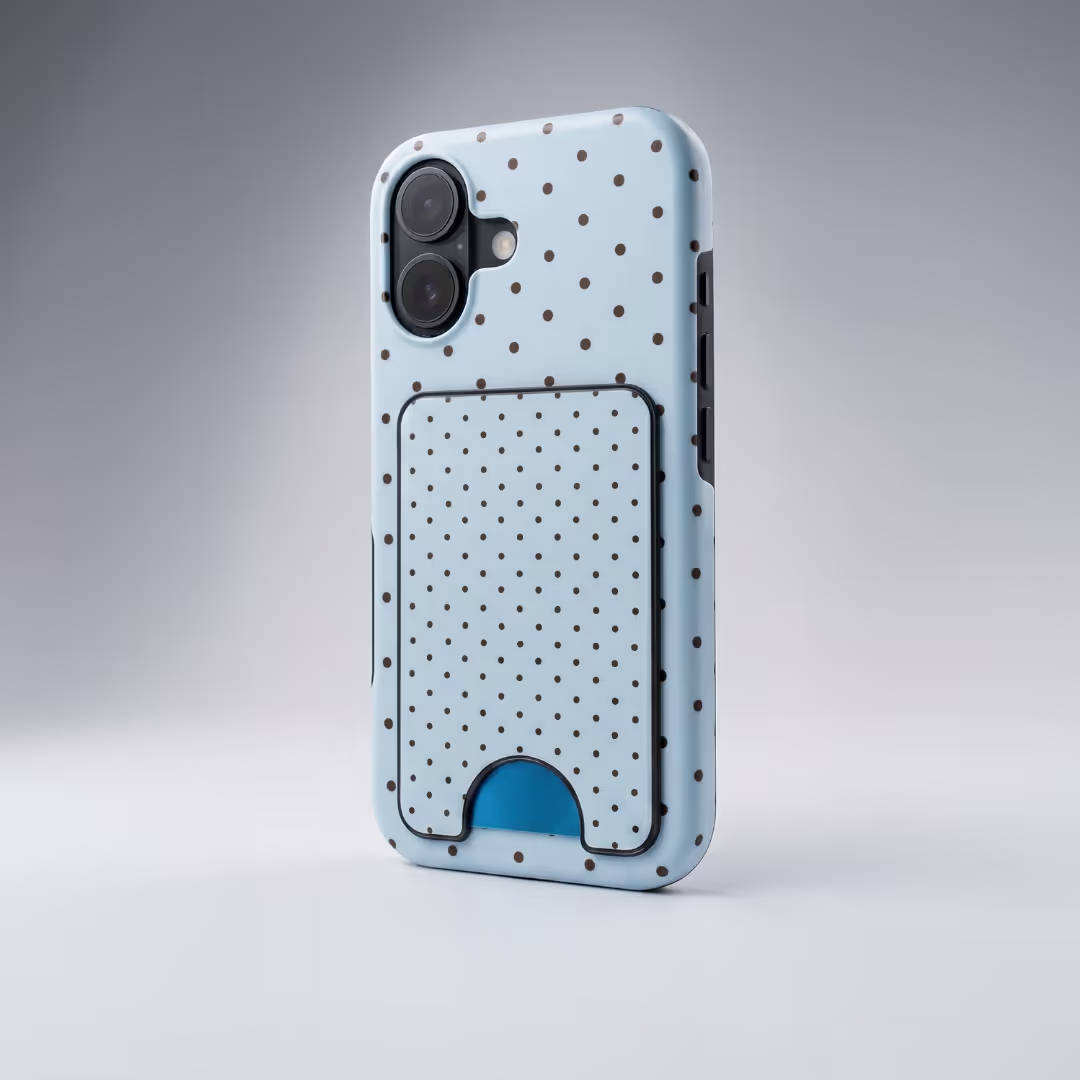
But here's the strategic reframe, and the reason we disclosed our stake at the top. Both platforms are apparel-first, and most sellers on them end up printing the same Gildan blanks - which means competing on price for an identical product. The more durable decision isn't Gelato vs Printify; it's *what you sell*. A custom tee nets a few dollars in a crowded race; a premium custom product - a phone case produced for about €10 and sold for €35-60, or museum-quality wall art - carries a personalization premium no one can price-match, and niche-focused sellers scale about 32% faster for exactly this reason.
So compare Gelato and Printify on the merits above - but also ask whether a tech-accessory-and-décor specialist fits your niche better than a general apparel marketplace. If it might, see how Podbase compares.
Also Read:
- What Is Print on Demand? The Complete Guide
- 7 Best Print On Demand Services For Artists
- The Best-Selling Print-on-Demand Products
FAQ
1. Is Gelato or Printify better in 2026?
It depends on your priority. Printify wins on catalog breadth (1,300+ products vs 250+), integrations (10+ vs 7), and volume margins when you use its Premium plan's 20% order discount. Gelato wins on global and local fulfillment (32 countries, ~90% locally produced) and art-paper products. Both have free plans, so testing costs nothing. If your audience is mostly European, lean Gelato; for the widest product range and best volume economics, lean Printify.
2. Which has better profit margins, Gelato or Printify?
On a sample $20 t-shirt, Printify shows about 40.52% margin (with the Premium plan discount) versus Gelato's 36.85%. Printify's edge grows at volume because its per-order cost falls with Premium. But both examples use a Gildan blank thousands of sellers print on, so a higher margin on a commodity garment still leaves you competing on price.
3. Is Gelato or Printify faster for shipping?
Read the claims as door-to-door, not advertised windows. Printify production runs about 2-3 days with US shipping of 2-5 days; Gelato averages 4-6 days delivery with about 90% of orders produced locally, which is its real edge across Europe. Always compare the full order-to-doorstep timeline including production, not just the shipping leg.
4. How much do Gelato and Printify cost?
Printify offers Free, Premium ($29/month, 20% off all orders), and Enterprise (custom). Gelato offers Free, Gelato+ ($29/month), Gold ($129/month), and Platinum (custom). Both free plans let you start with no upfront cost; you pay product and shipping costs only when a customer orders. Verify current pricing on each platform before committing.
5. What matters more than choosing between Gelato and Printify?
What you sell. Both platforms are apparel-first, so most sellers end up printing the same Gildan blanks and competing on price. A custom tee nets a few dollars; a premium custom product like a phone case made for about €10 and sold for €35-60, or museum-quality wall art, carries a personalization premium no one can price-match. Niche-focused sellers scale roughly 32% faster for exactly this reason.
6. Can I switch print-on-demand providers later?
Yes. Because POD requires no inventory, switching providers mostly means reconnecting your store and re-creating product listings. Many sellers test more than one provider in parallel, comparing real order-to-doorstep timelines and product quality before committing the bulk of their catalog to one.

Saulius Meilutis is the CEO of Podbase, helping creators and entrepreneurs monetize their ideas with print-on-demand. He shares insights on eCommerce, growth, and building lean online businesses.

.avif)




.avif)
.avif)
.avif)
.avif)
.avif)
.avif)

.avif)







.avif)

.avif)


.avif)

.avif)

.avif)