This is general information, not legal advice.
Running a print-on-demand business can be fun and profitable — until you get hit with a copyright infringement notice. Just ask SunFrog, a POD company that had to pay $19.2 million to Harley-Davidson for violating copyright laws. Avoiding copyright issues isn’t just smart — it’s essential to keeping your business alive.
Many print-on-demand sellers assume basic terms and conditions keep them protected. In practice, courts often hold the printing and selling party — not the marketplace — responsible, and the consequences hit both your finances and your reputation. This guide shows you what copyright infringement really means, how to check whether a design is safe to use, and the tools that keep you compliant as you grow your POD brand.
What Is Copyright Infringement in Print-on-Demand?
Copyright infringement happens when you use, copy, or sell content protected by copyright law without permission from the original creator. In print-on-demand, that means you can’t print or sell designs containing copyrighted content — logos, artwork, or characters — unless you hold the right license. Examples of copyrighted content include:
- Illustrations, photos, and paintings
- Slogans, quotes, and book excerpts
- Song lyrics and music
- Movie or TV characters
- Brand logos and symbols
Even if a customer uploads a copyrighted design, you are still legally responsible for printing and selling it. Two myths cost sellers the most: giving credit or slightly editing a copyrighted work does not protect you, and you always need written permission or a license to use protected content. The safest path is original designs or content licensed for commercial use — it shields your business from lawsuits, account bans, and platform takedowns.
Also Read:
- Unlocking Profit Potential: How Much Money Can Custom Phone Cases Make?
- Print on Demand: Your Complete Beginner’s Guide
Common Examples of Copyright Infringement in POD Businesses
In print-on-demand, infringement often looks harmless but carries real legal risk. A few common examples:
- Using popular characters or movie icons: adding superheroes or famous movie characters to tech accessories may feel creative, but doing it without permission violates copyright law.
- Printing song lyrics on products: a t-shirt with a well-known lyric needs approval from the copyright owner, usually the songwriter or music publisher.
- Using sports team logos or names: you can’t legally use team names, mascots, or emblems on custom items without a license — even if you tweak the design.
Even minor infringements can trigger large fines, legal fees, or account suspensions on major platforms. Below is how the three main types of intellectual property differ — and how to treat each in POD.
1. Copyright
Copyright protects original creative work like artwork, photos, and written content, stopping others from using your design on phone cases or laptop covers without permission. It’s automatic: the moment someone creates something original, they own the rights.
2. Trademarks
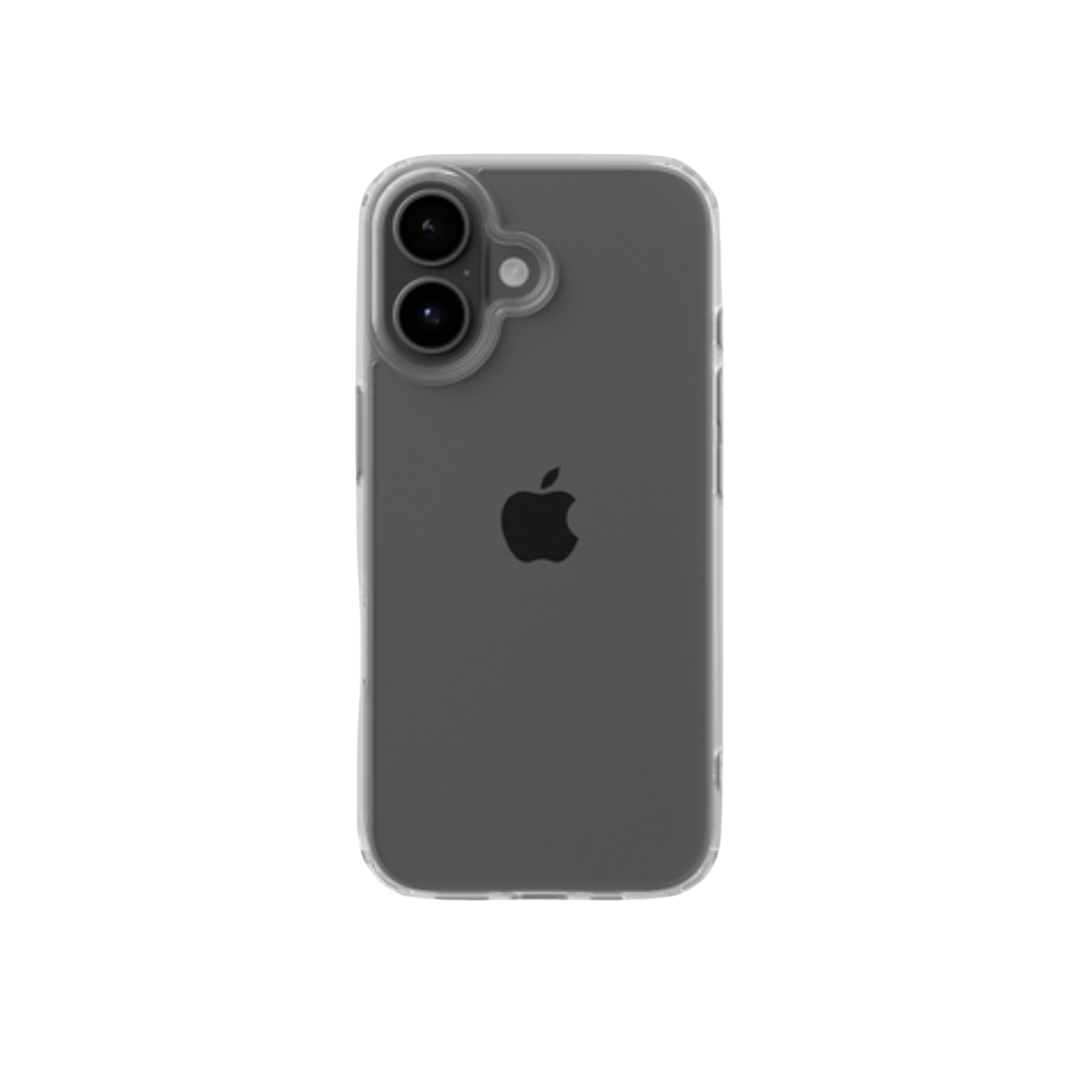
Trademarks protect brand identifiers — names, logos, and slogans. You can’t use Apple’s logo or the phrase “Just Do It” on tech accessories, because these are protected trademarks that help customers tell real brands apart. A few well-known examples:

3. Patents
Patents protect inventions and new product designs. They’re less common in print-on-demand, but they can apply if you create something genuinely original, like a unique mounting system. A famous example is Thomas Edison’s lightbulb design.

Here’s the quickest way to keep the three straight — and it doubles as your POD compliance cheat sheet for copyright vs trademark vs patent:
Why does intellectual property matter for your business? Think of IP rights as a two-way street: you respect others’ work, and your original designs deserve the same protection as they gain popularity. For Podbase sellers focused on tech accessories, it comes up daily — whether you’re designing custom phone cases, AirPods covers, or MacBook skins, every pattern, quote, and font must be original or properly licensed.
Also Read:
- How To Make Printables To Sell Online And Make Money
- How to Sell Podbase Print-on-Demand Products on Etsy
How to Avoid Copyright Infringement in Print-on-Demand
With clear guidelines, you can create engaging, profitable designs while staying on the right side of copyright law. Here are practical steps to protect your print-on-demand business.
Create Original Designs
Original work is the single best defense. A few ways to keep your designs truly your own:
- Start with fresh ideas: sketch concepts before browsing other products, so you don’t copy unintentionally.
- Document your process: keep early sketches and drafts as proof your work is original if anyone questions it.
- Focus on your unique style: build your brand around what sets you apart — geometric patterns, minimalist layouts, bold color — rather than chasing trends.
- Create signature templates: develop layouts that become your recognizable look. As Podbase’s Head of Product Development, Justina, puts it, the best designs are “an extension of who we are.”
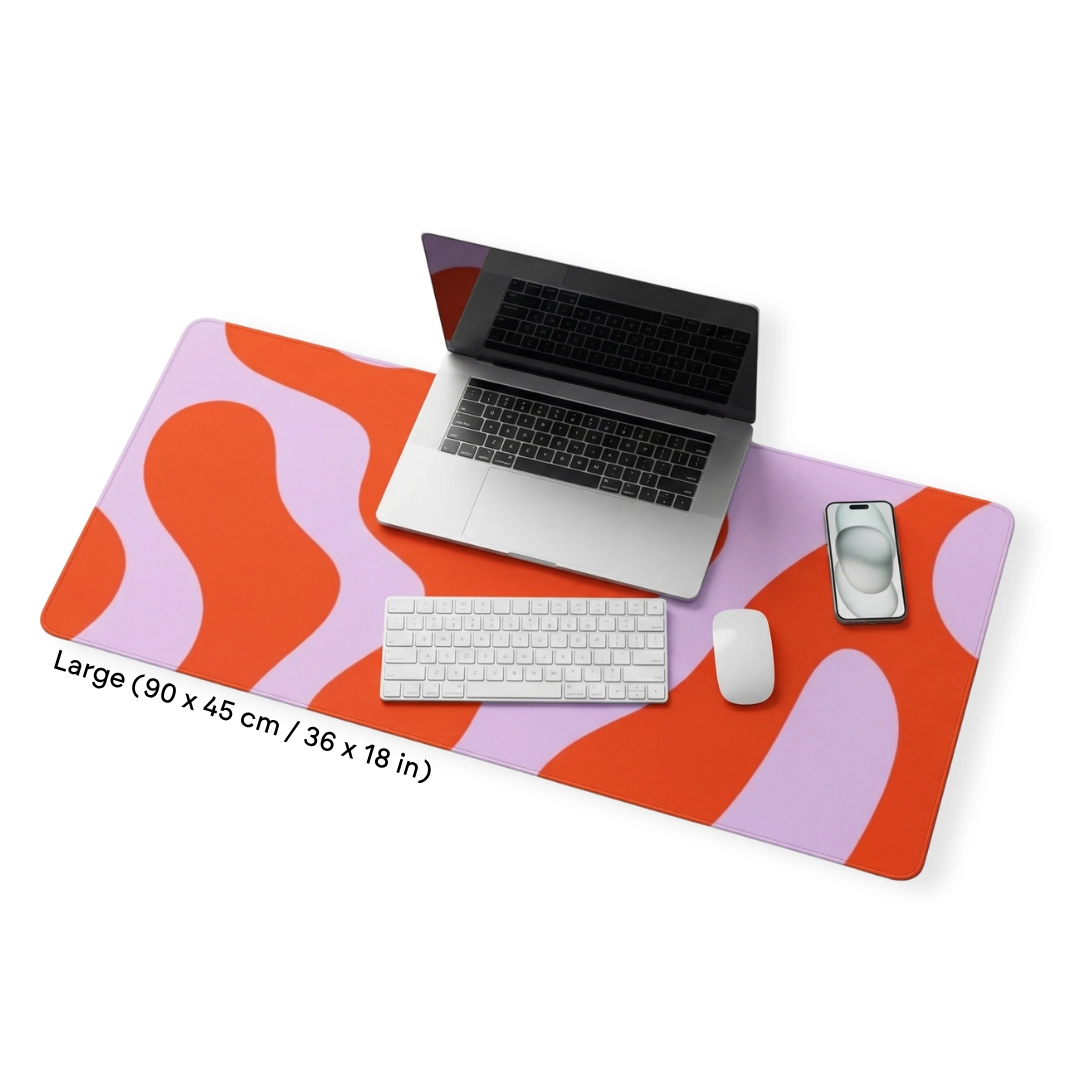
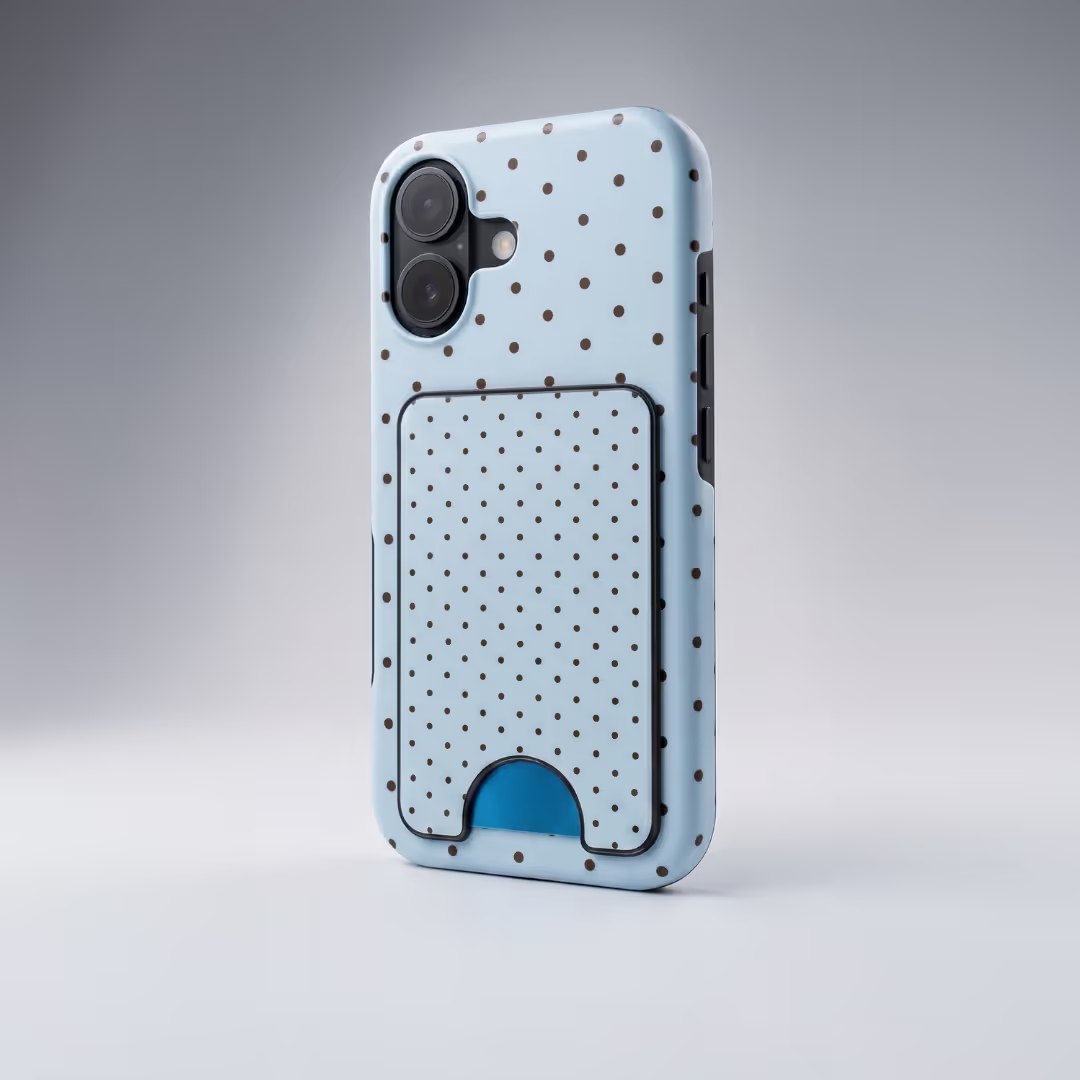
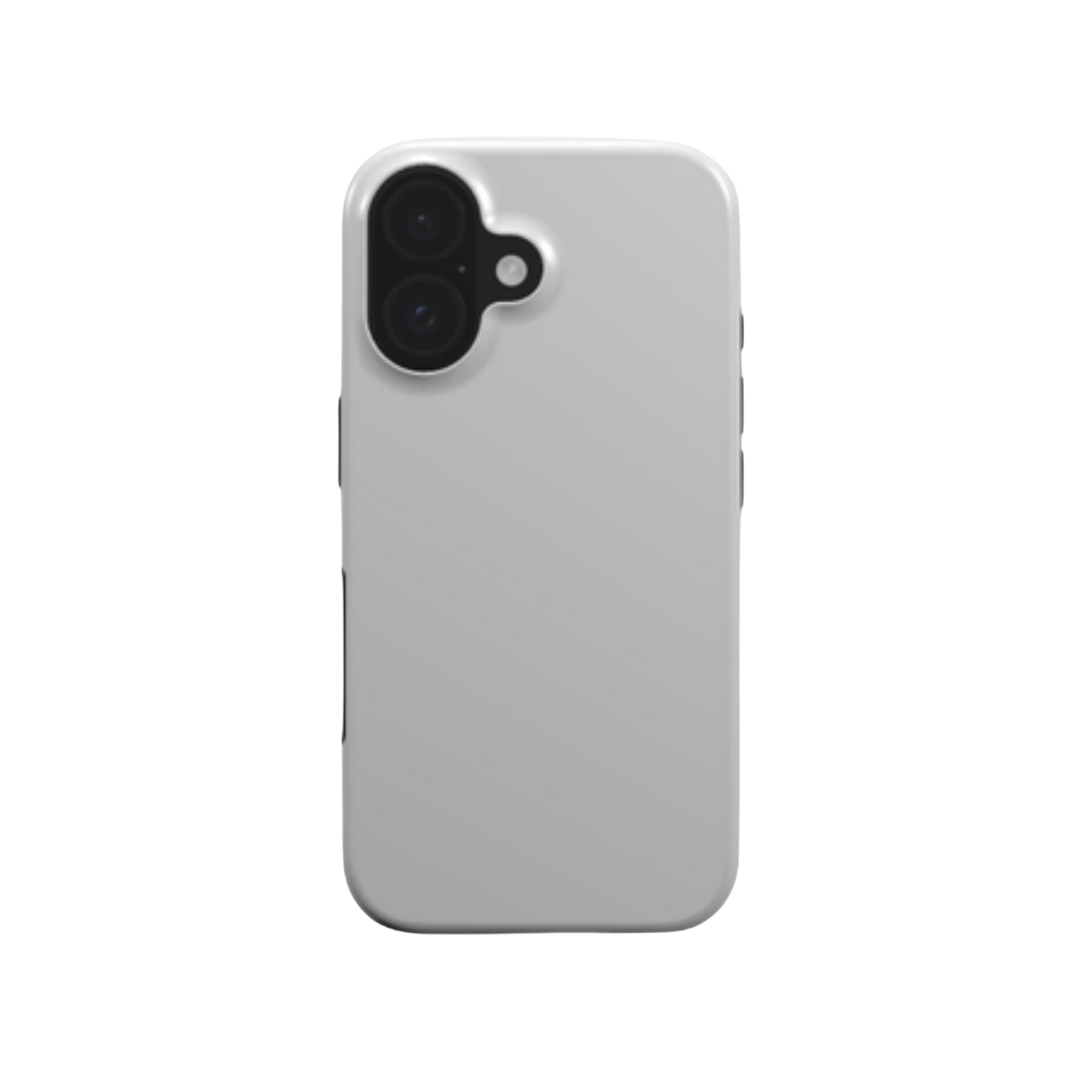
For example, the pattern below instantly reads “Podbase” to anyone who knows the brand’s tech accessories.

Also Read:
Use Licensed or Royalty-Free Content
External elements can help — if you understand the licensing rules. Four essentials:
- Know the license types: Creative Commons (reuse/edit, but rules and attribution vary), commercial licenses (use in products for sale), and limited licenses (caps on quantity or where you can sell).
- Use reputable sources: choose platforms with clear, commercial-use licenses, and always read the terms.
- Keep license records: save purchase receipts, license terms and usage rights, and any limits or expiration dates.
- Don’t assume paid equals commercial use: buying a design doesn’t automatically let you sell it — double-check the license, especially for long-term product use.
Perform Trademark and Copyright Checks
Before finalizing any design, check that you’re not infringing. Search for similar existing designs with image tools, paying attention to your specific print-on-demand niche. Check trademark databases for any text or logos — the USPTO database is essential for U.S. marks, though protection can be international. Then document the process: screenshot results, note dates, save findings in an organized system, and keep records of any changes. Because trademarks can be filed after you start selling, schedule periodic rechecks.
Seek Permissions and Licenses When Needed
If you want to use copyrighted content, get permission. Start by identifying the correct rights holder — it isn’t always obvious, since a company may own an artist’s work or several parties may share rights. Then send a clear request that includes a specific description of the content, how you plan to use it (products, quantities, timeframe), your business information, and proposed compensation if applicable.
Be ready to negotiate: rights holders may request a licensing fee or royalties, require specific attribution, or set conditions on use. Keep all communication and final agreements, and confirm every limitation before you start production.
Also Read:
Tools and Resources to Ensure Compliance
Staying compliant doesn’t have to be manual. These tools help you verify and protect your designs.
Online Tools for Copyright Checks
- Reverse image search: Google Images, TinEye, and Bing Visual Search find similar or altered versions of an image.
- Trademark search: USPTO (U.S.), TMview (Europe), and the WIPO Global Brand Database (international) verify names, logos, and slogans.
- Copyright registration databases: the U.S. Copyright Office Public Catalog and international registries show whether similar content is already registered.
- Monitoring tools: Pixsy, ImageRights, and Berify track where your images appear and help with enforcement.
Design Resources for Royalty-Free Content
When you need extra elements, these offer legally safer options — Shutterstock and Adobe Stock for commercial-use assets, Canva Pro for POD-licensed elements, Adobe Fonts / FontSquirrel / Google Fonts for typography, and Subtle Patterns, Pattern Lab, or Poly Haven for patterns and textures. Before using any of them, read the full license, check attribution requirements, verify commercial rights, save the documentation, and note any usage limits.
Also Read:
Consequences of Copyright Infringement in Print-on-Demand
According to Visual-AI company VISUA, 70% of print-on-demand companies fail to take proper steps to prevent copyright violations — a relaxed approach that puts the whole business at risk.
Legal and Financial Risks
Infringement can lead to serious legal action. In one high-profile case, Harley-Davidson was awarded $19.2 million in damages from a POD company that didn’t properly monitor its site for infringing content. Even smaller cases can mean six-figure settlements, expensive legal fees, and lasting damage to your brand’s credibility.
Business Operations at Risk
The impact goes well beyond the courtroom: lost trust with customers and suppliers, harder future partnerships, account suspensions on Etsy or Amazon, frozen payment-processor funds, and forced destruction of infringing inventory.
Long-Term Consequences
Court cases are public, so violations can hurt your reputation for years. Many POD businesses never fully recover from major infringement claims — which is exactly why prevention is far more valuable than damage control.
Best Practices for Ethical POD Selling
Build a culture of compliance into your print-on-demand business that protects both your company and the creative community:
- Develop a design review process: a step-by-step checklist for every new product — verifying artwork, text, and overall composition — mandatory no matter how rushed the launch.
- Document everything: copyright search results, design creation steps, source files and inspiration, license purchases and terms, customer submissions, and any modifications.
- Train your team: make sure designers and assistants understand basic copyright principles, your procedures, the red flags, and when to escalate.
- Build strong relationships: partner with original artists for custom collections, and keep good communication and prompt payment with rights holders.
- Undertake regular audits: schedule quarterly catalog reviews to catch issues and confirm every license is still current.
Conclusion
Starting or running a print-on-demand business comes with responsibilities, but protecting yourself from copyright infringement doesn’t have to be overwhelming. Start with one or two practices from this guide — original designs and a pre-publish checklist are the highest-leverage — then build up your compliance system over time. Podbase provides tools and support to help you create and sell original designs with confidence, and our design guide helps you prepare clean, print-ready files. Create a Podbase account today to get started. (This is general information, not legal advice.)
FAQ
1. What is copyright infringement in print on demand?
Copyright infringement in print-on-demand happens when you print or sell content protected by copyright — artwork, photos, logos, characters, or lyrics — without the owner’s permission or a proper license. It applies even when a customer uploads the design, and even if you credit the creator or make small edits. Only original or licensed work is safe.
2. Who is liable for copyright infringement in POD — the seller or the platform?
In print-on-demand, liability usually falls on the seller and the printing company, not a marketplace’s terms and conditions. Courts have often held the party that produced and sold the item responsible; POD company SunFrog paid $19.2 million to Harley-Davidson. This is general information, not legal advice.
3. Does giving credit or editing a design avoid copyright infringement?
No. Giving credit, adding a hashtag, or slightly editing a protected work does not make it legal to sell. Copyright protection is automatic the moment a work is created, and only written permission or a commercial license lets you use it. When in doubt, create something original instead.
4. What is the difference between copyright and trademark?
Copyright protects original creative works like artwork, photos, and text, and is automatic on creation. Trademarks protect brand identifiers — names, logos, and slogans such as Apple’s logo or “Just Do It.” For print-on-demand, treat both as off-limits unless you own or license them; trademarks especially cover look-alikes.
5. How can I check if a design is safe to use before publishing?
Run a reverse image search with Google Images, TinEye, or Bing to find similar artwork, search trademark databases like the USPTO and WIPO for any text or logos, and review each marketplace’s IP policy. Save screenshots, dates, and license files in one folder so you can prove your process later.
6. Is it legal to use AI-generated art on print-on-demand products?
It depends on the tool and how it’s used. Choose AI tools that grant commercial rights, and avoid outputs that replicate training-data images, mimic a living artist’s signature style, or reproduce a real person’s likeness without consent. Keep your prompts and license terms on file. This is general information, not legal advice.

Saulius Meilutis is the CEO of Podbase, helping creators and entrepreneurs monetize their ideas with print-on-demand. He shares insights on eCommerce, growth, and building lean online businesses.

.avif)



.avif)
.avif)
.avif)
.avif)
.avif)
.avif)

.avif)


.avif)

.avif)

.avif)

.avif)

.avif)