To start a print-on-demand business in 2026, you validate a niche, create designs, connect a print-on-demand supplier to an online store, and start marketing - all without holding inventory, because each product is manufactured only after a customer places an order.
That low-risk model is pulling in a wave of new sellers. The global print-on-demand market reached roughly $12.96 billion in 2025 and is growing about 25.3% a year, on track for $75.30 billion by 2033 (verified POD market statistics). But there is a catch the hype skips: only about 24% of POD shops are still operating three years after launch, and most never make ten sales.
So the real question is not “can I start one” - it is “how do I start one that survives”. This guide walks the full process step by step, with internal Podbase data and operator insight at each stage so you build for the 24% that last, not the 76% that fold.
How to Start a Print-on-Demand Business in 2026: Quick Start
- Pick a platform: Etsy for fast demand, Shopify for brand control, WooCommerce for flexibility.
- Validate a niche: 20 keyword ideas, 10 competitor checks, 5 sample designs, a 3-day test.
- Set up a design workflow: Canva or Figma templates at 300 DPI, exported as PNGs with transparent backgrounds, ideally in CMYK for print accuracy.
- Use a clear pricing formula: unit cost + shipping + fees + a 20 to 30 percent margin target.
- Plan a starter budget: $50 to $300 covers samples, listings, a small ad test, and a custom domain.
- Expect your first sale in 7 to 21 days with a daily listing cadence and basic ads.
- Track the KPIs that matter: CTR 1.5%+, conversion 2 to 5%, AOV $25 to $45, refund rate under 3%.
- Avoid the common pitfalls: low-res artwork, slow shipping, no niche focus, and weak mockups.
Want to launch faster with phone cases and accessories that ship on demand? Start with Podbase.
What Is a Print-on-Demand Business?
A print-on-demand business is one where products are produced only after an order is placed, and customers choose or customize the design before they buy. You market the products and take orders; your supplier manufactures and ships each item on demand. Nothing is made - or paid for - until a sale happens.
Products can be anything from apparel to mugs to phone cases. As Podbase Head of Product Development Justina puts it, “there are hundreds of phones with a new one being released almost every month. To manufacture and store them all requires massive resources. That is where POD comes in handy.” The model removes the two things that sink most first-time ecommerce sellers: upfront inventory cost and the risk of unsold stock.

How Does a Print-on-Demand Business Work?
A print-on-demand business works in ten repeatable steps, from market research to scaling. Here is the comprehensive walkthrough - with the data and operator insight that separates the stores that last from the ones that stall.
1. Conduct Market Research
Before you start a POD business, understand the market, its key players, and how demand moves. Collect data on market size, demand, your target audience, industry trends, and the level of competition for each niche you are weighing.
Anchor that research in real numbers. Apparel still leads global print-on-demand with a 39.7% category share, while tech accessories, home decor, and drinkware are the fastest-rising niches going into 2026. Knowing where volume and margin actually sit keeps you from guessing.
- Market size and demand: size each niche with search and sales data, not gut feel.
- Target audience: define one specific buyer before you define a product.
- Industry trends and competition: use Google Trends and tools like Semrush or Ahrefs to spot rising terms and gauge how crowded a niche is.
2. Choose a Niche
Based on your research, choose a niche that has low barriers to entry, real profit potential, room beyond one or two dominant players, genuine demand, and a topic you actually care about. Studying trends shows you which niches carry both demand and healthy margins.
Here is the contrarian part. The standard advice is to obsess over finding the “perfect” low-competition niche. Our seller data tells a different story: the niche matters less than execution speed and supplier quality. “If a seller places a sample order within the first two days of opening their store and has at least five products published within 30 days, they are already ahead of 80% of POD stores. If they make ten sales, they are in the top 10% - because most stores never reach that milestone,” says Podbase Head of Sales Sidas. A good-enough niche shipped fast beats a perfect niche you are still researching.
Specificity also beats coverage. Sellers who narrow to a sharply defined audience consistently outperform those who try to please everyone - and those with a community, mentor, or peer group scale roughly 32% faster than solo operators.
Also Read:
3. Decide Which Products to Sell
Even within a niche, you will have multiple product options. Strike a balance between unique and popular items, and curate a focused selection for one specific audience rather than spreading across many. Depth in a few products usually beats a shallow, sprawling catalog.
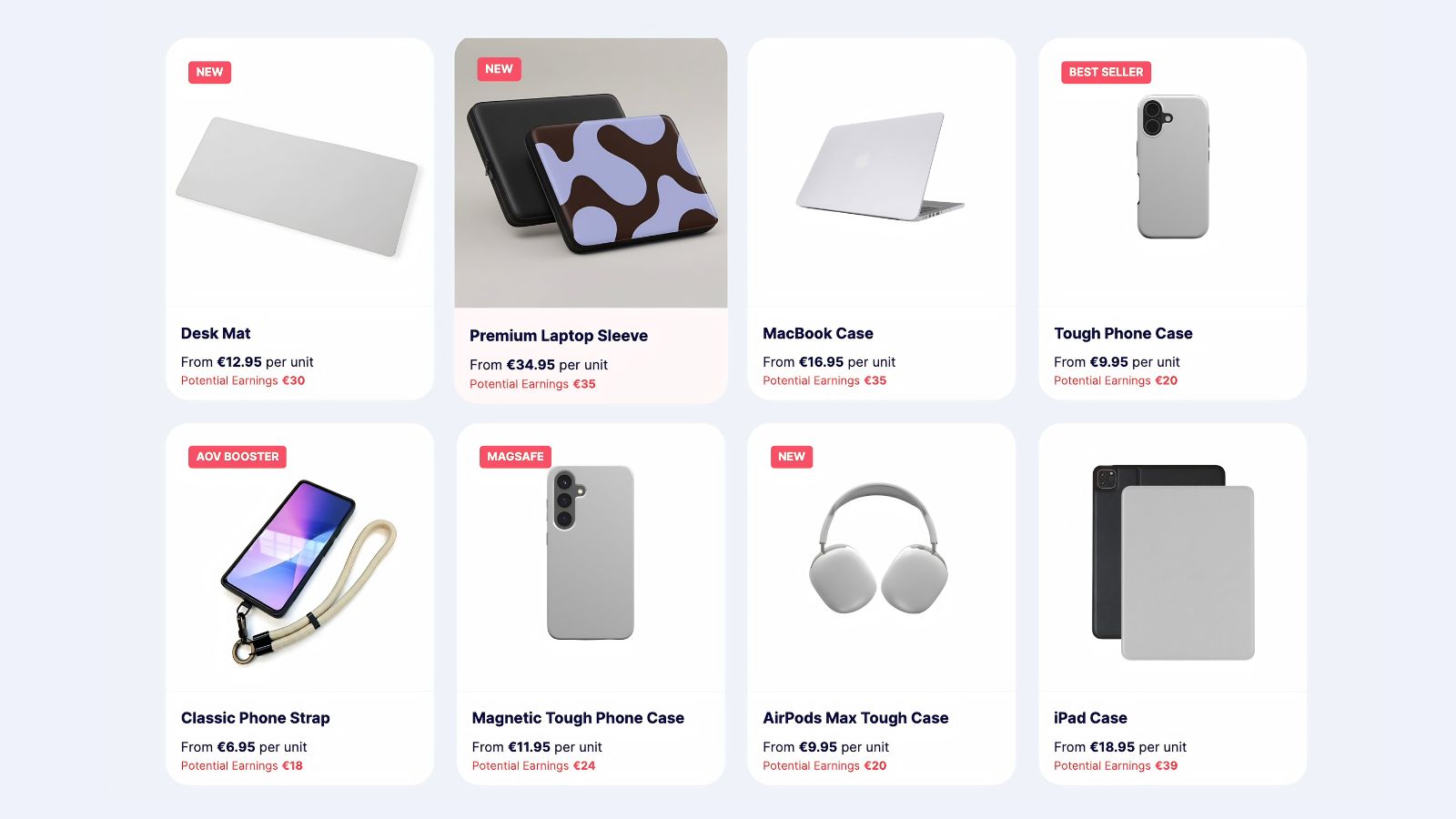
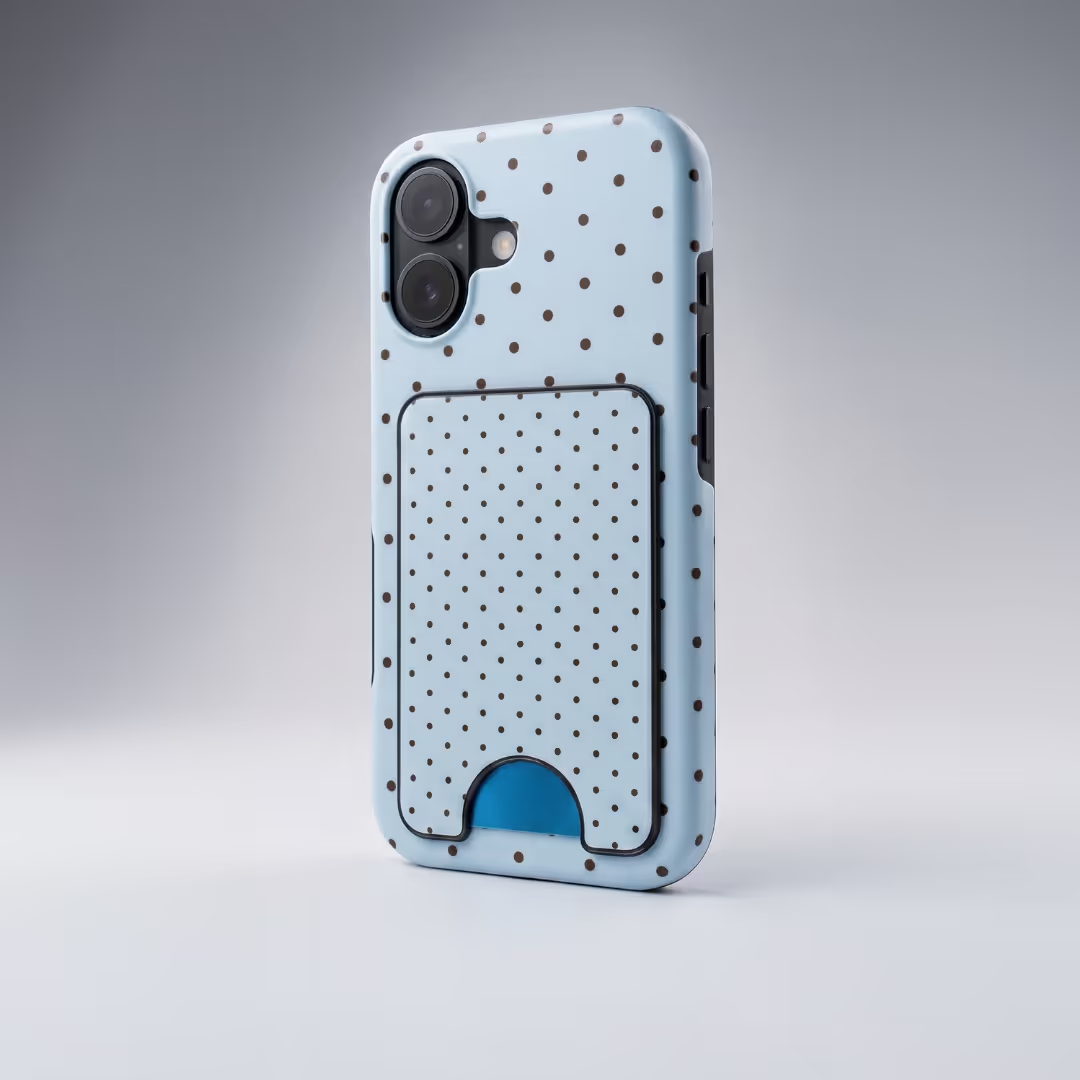
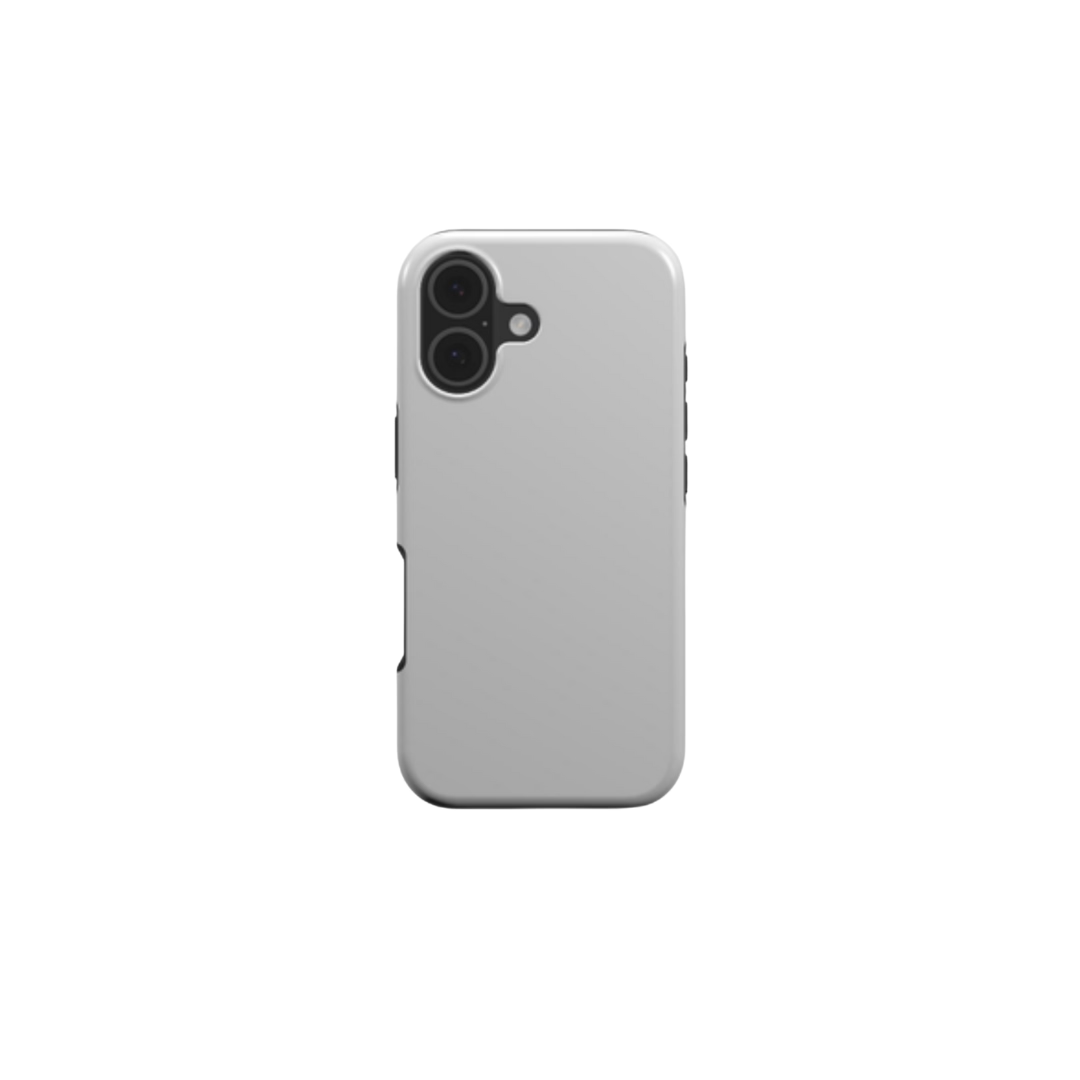
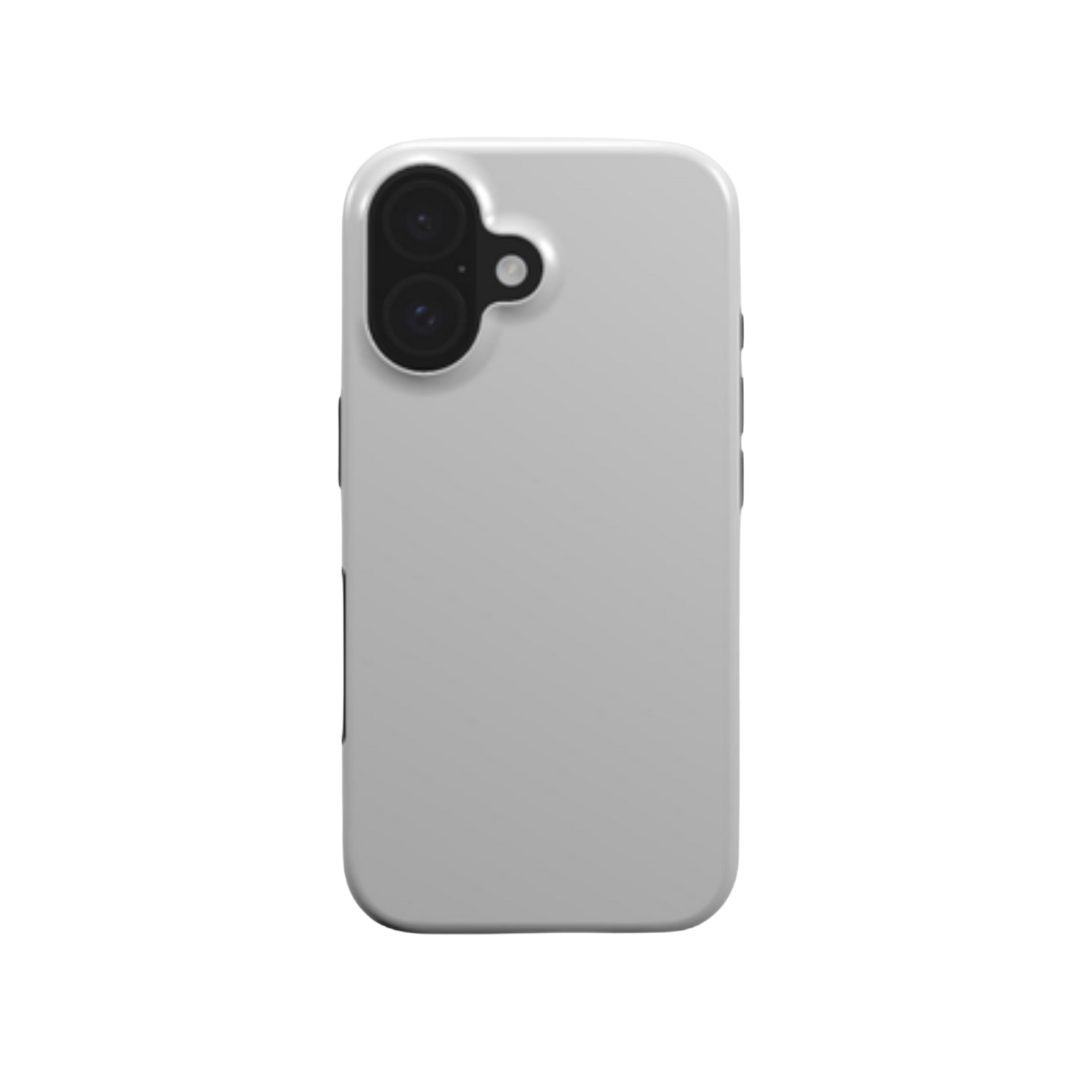
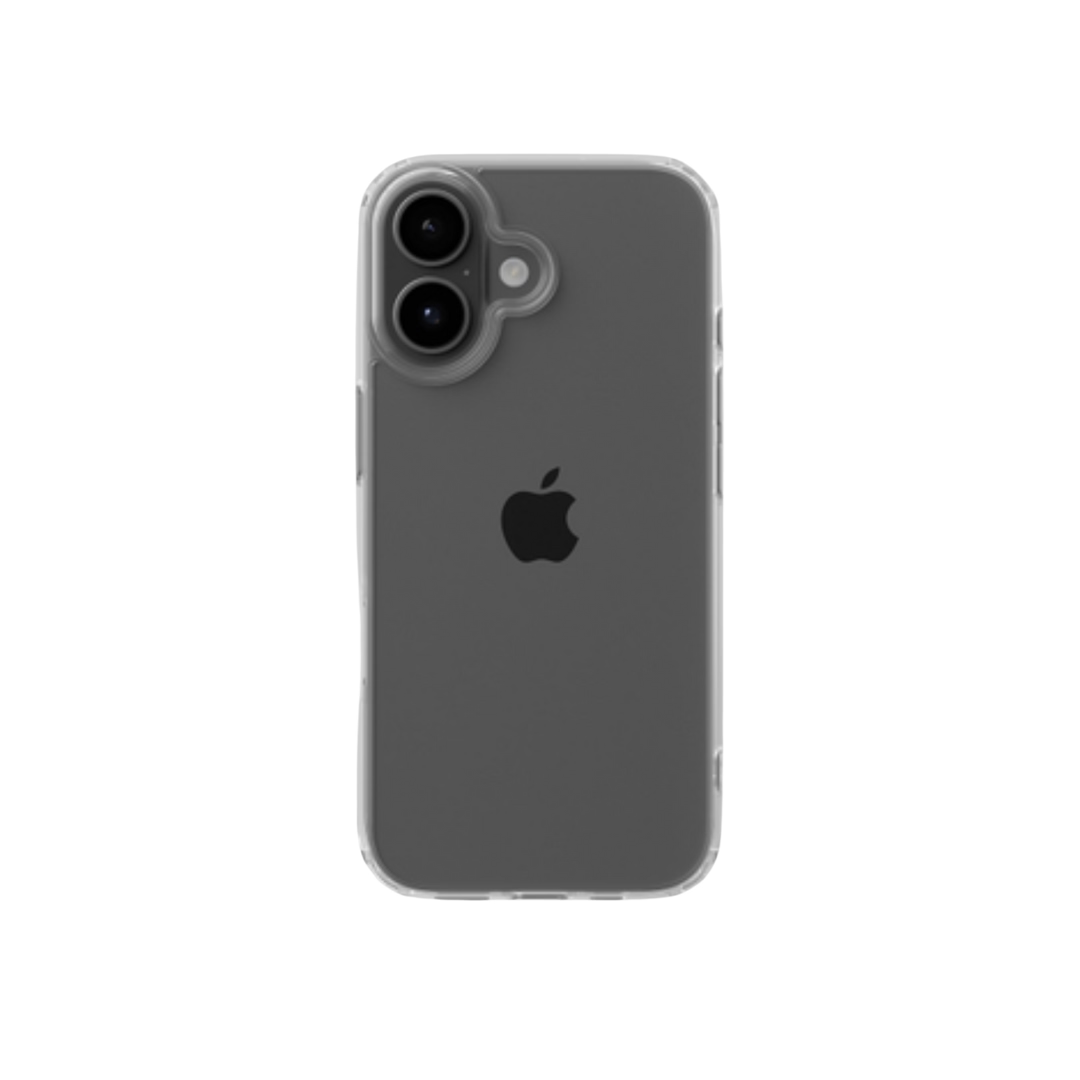
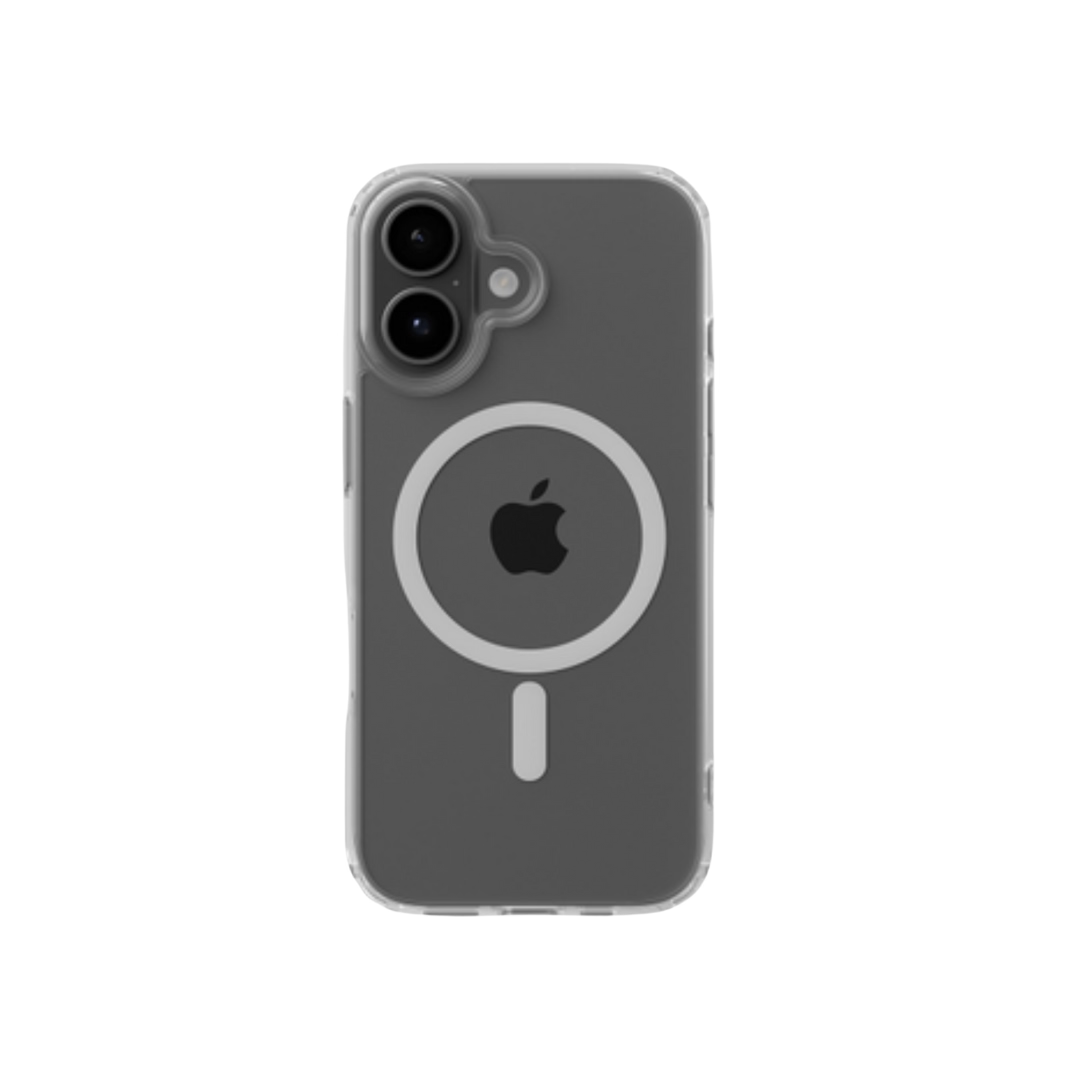
Podbase, for example, offers a focused range of custom tech accessories - phone cases, laptop sleeves, drinkware, and wall art - that customers personalize to their taste, all aimed at one audience: people who treat their devices as an extension of themselves. The repeat-purchase math is strong. Around 68% of smartphone owners use a case, the phone case market is projected to reach $41.4 billion by 2030, and buyers refresh accessories far more often than they replace devices (see the full phone case sales data).
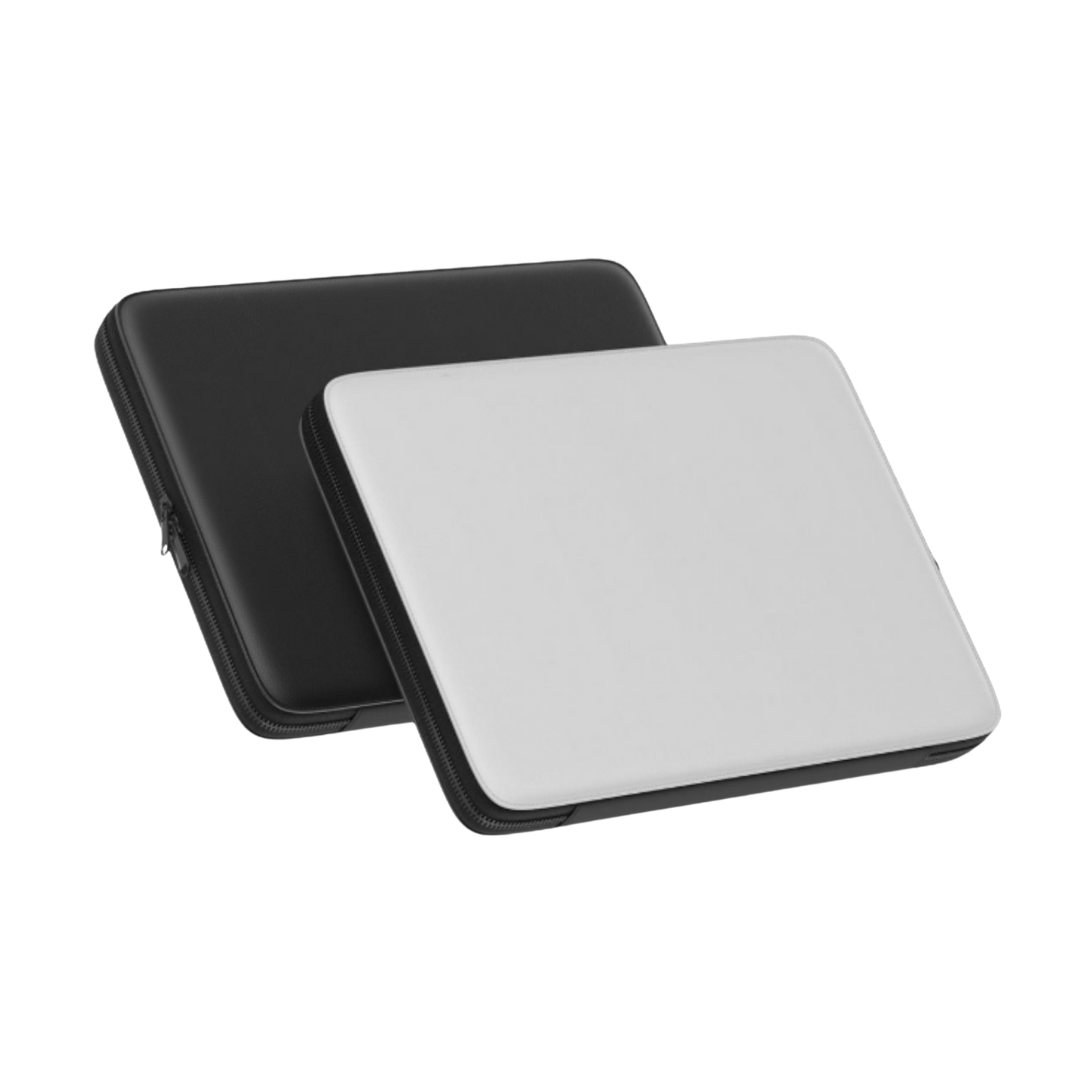
If you are unsure where to start, Justina names the most underrated product outright: “I would say a laptop sleeve. They are not tied to only one device - the only important variable is the size of the laptop. It has a bigger surface for the design, so it can be a fashion statement and perfectly represent the seller's brand.”
Finally, consider how hard a design is to print. Methods like direct-to-garment (DTG) printing, sublimation printing, and screen printing differ in cost and finish. Podbase Operations lead Ieva notes that “the most accurate results are achieved when designs are submitted in high resolution and in the CMYK color space” - a small prep detail that quietly protects your margins by cutting reprints.
4. Create Your Designs
With products and audience set, create designs that fit both. This is where you separate from competitors selling the same blank products - your art is the moat. As Podbase CEO Saulius Meilutis describes it, a custom case “became like your personal billboard on your gadget. You carry this art on your everyday commute, to your job, to your hobby.”
Find inspiration on Pinterest, but never copy. If you lack in-house design skill, hire freelancers on Upwork or 99designs at competitive rates. And lean on AI: Podbase sellers now turn a single static photo into multi-angle product mockups, which means you can validate a design before ordering a single sample - cutting weeks off a launch.
5. Decide on Which Platform to Sell
Next, choose where your store lives: your own website, or a storefront hosted through your print-on-demand provider. Building your own site costs more and takes more effort, but gives you control. A third-party platform is quick and convenient, with recurring costs - though many providers add marketing and SEO support that earns its keep.
Most successful stores, per our seller data, are up and running within two weeks using simple themes and basic tools - because the goal is to learn quickly, not to launch perfectly. A Shopify integration or WooCommerce store connected to your supplier is enough to start testing real demand.
6. Choose a Print-on-Demand Service
Choosing the right print-on-demand service is one of the most consequential decisions you will make - it controls product quality, shipping speed, and your margins. Compare providers on catalog fit, quality, shipping, and pricing, and pick one that operates in your niche.
- Product catalog: choose a service with a strong mix inside your niche and real customization depth.
- Quality: order samples and inspect them before you sell anything.
- Shipping options: favor fast, reliable, ideally worldwide shipping with transparent rates.
- Pricing: compare cost structures and pick the one that protects your profit margin.
The table below compares Podbase with two of the best-known providers so you can see where each fits.
Podbase focuses on customizable tech accessories, drinkware, and wall art, with products starting from EUR 5.95 per unit and flat, transparent shipping. It integrates with your store in minutes so you can launch quickly. The margin gap is the headline: per our Head of Sales, “Podbase pricing sits at around 10 to 15% better margins than our competitors across most product categories, with certain products reaching up to 20%.”
And do not optimize purely for the cheapest base cost. As Sidas frames it, “what we are really selling is not a cheaper product. It is a better margin combined with a better customer experience, a faster fulfillment process, and a product that reinforces rather than undermines what a seller is building.”
Try Podbase today and order a sample to judge the quality yourself.
7. Choose a Supplier
If you use a full POD service, it usually acts as your supplier and this step is handled. If you sell through your own store without a POD service, you will need to select a supplier yourself - and choose carefully, because they own manufacturing and fulfillment, which means they own much of your customer experience.
This is the step most beginners underrate. “A cheap product that fails after a few days carries a cost that never shows up in a margin calculation. That customer tells their friends. That return or complaint lands in a support queue,” warns Sidas. The reverse compounds in your favor: when sellers migrated to Podbase's quality-checked fulfillment, they saw a 15% increase in customer reviews and a 30% drop in order-issue support tickets. Behind that is real process discipline - Ieva notes each print runs 6 to 8 hours with multiple quality checkpoints and roughly 2 hours of assembly and packaging before anything ships.
8. Start Promoting and Building Your Online Presence
With everything set up, you need customers - and that means promotion. Use several channels rather than betting on one:
- Social media: announce your launch and post consistently to build a following and drive traffic. Podbase, for example, shares new-product updates on Instagram.
- SEO: optimize site and product pages for the right keywords to earn organic traffic. As Podbase CMO Vytautas Mikaila notes, the old approach of publishing broad, generic content no longer works - in 2026, relevance, specificity, and freshness win.
- Paid ads: use search and social ads for fast early customers, but treat them as a short-term lever, not a foundation.
- Email marketing: capture leads with lead magnets and forms, then nurture a segmented list consistently.
- Content marketing: build useful content that pulls in your audience, then link internally to your product pages.

Paid social is also your fastest testing lab. “It is not only about traffic. It is also about control. You can test faster, you can adjust faster, and you can find what actually resonates faster,” says Vytautas. Influencer marketing and referrals stack on top of these. One Podbase seller crossed seven-figure annual revenue selling phone cases just thirteen months after starting from zero - about ten launch designs and hard, fast iteration on influencer marketing.
9. Start Selling
Now you go live. Whatever platform or provider you chose, this is where you learn what actually works. Monitor your store closely, find the friction points - confusing checkout, weak product pages, slow-moving designs - and fix them quickly. Early sales are data, not just revenue.
10. Explore New Markets and Products
Once your business runs smoothly, expand into new markets or widen your product range. Do not get complacent: test new income streams and broaden your audience. Crucially, the POD model lets you do this without inventory risk. As Justina explains, “as demand for particular devices fades over time, Podbase also buys less and less material, so when the time comes to say goodbye to a particular product, we simply stop buying them - we don't have to throw away undesired materials.” Expansion stays low-risk because nothing is made until it sells.
Tips for Running a Successful Print-on-Demand Business
Beyond the process, a few best practices separate POD stores that last from the ones that quietly close. Follow these tips to run a successful print-on-demand business.
Choose a Reliable Print-on-Demand Service
Your success hinges on your provider, because product quality, shipping times, and consistency are largely out of your hands once an order is placed. Choose a reliable service - and weigh support, not just price. “What surprises switchers most is customer support. If your supplier is too big to care, their response times get slower and attention to detail is not what you expect,” says Saulius. Notably, when sellers need custom solutions or more responsive support, Podbase can meet their requirements about 95% of the time. Give Podbase a try.
Check the Product Quality
Always order samples of every product type before you sell it. Testing quality first-hand saves you from costly returns and bad reviews later. Quality is also the cheapest marketing you will ever buy. As Sidas puts it, “a high-quality product that holds up, looks good over time, and arrives quickly tells a completely different story - one that travels through word of mouth, builds brand trust, and sells without additional spend.”
Calculate Shipping Costs
POD pricing models can get complex, so calculate the real shipping cost for each product type before you set prices and margins. Favor providers with minimal or, at minimum, transparent shipping charges, and avoid anyone with hidden fees. Podbase, for instance, offers flat, transparent shipping on all products, so your margins are easy to predict.

Build Your Own Store Instead of Selling Only on a Marketplace
On a marketplace, competing brands sell similar products right beside you, which raises competition and buries your discovery. That is why building your own online store - even with some upfront investment - is usually worth it. A custom case is not really competing with the cheapest option on a giant marketplace anyway; as the CEO's “personal billboard” principle implies, a personalized product competes more on meaning than on price, and 1 in 5 buyers will pay at least 20% more for something custom.
Promote on Multiple Channels
Do not rely on SEO alone. Join the social platforms where your audience is active, use email to nurture captured leads, and cross-promote across channels to cast a wider net. Diversified traffic protects you when any single channel shifts - which, in the post-2026 search landscape, they regularly do.
Pros and Cons of the Print-on-Demand Business Model
Like any model, print-on-demand has clear strengths and real trade-offs. Weigh both before you commit.
Pros of Print-on-Demand
- Minimal upfront investment: no inventory to buy or store, so startup cost stays low (often $50 to $300).
- Low risk: products are made only after an order, so there is no unsold stock to eat your cash.
- Wide, testable product range: offer and validate many products without committing to any.
- Unlimited customization: no cap on designs, so every customer can get a unique product.
- Highly scalable: no manufacturing capacity or storage limits to manage as you grow.
Cons of Print-on-Demand
- Higher per-unit cost: on-demand production costs more per item than bulk manufacturing, which trims margins - though a strong supplier offsets this with better base pricing.
- Less control over quality: you depend on a third party, so quality can vary - which is exactly why supplier choice and sampling matter so much.
- More competition: low barriers to entry mean a crowded market, so differentiation through design and brand is essential.
- Dependence on fulfillment partners: shipping times and methods sit with your provider, making reliability non-negotiable.
Also Read:
- How to Make Your First Sale Online: A Step-by-Step Guide
- How to Increase Sales: Go From 100 to 1,000 Orders Fast
- How to Start a Card Business: Your Complete Guide
FAQ
1. How much does it cost to start a print-on-demand business?
Starting a print-on-demand business typically costs $50 to $300 upfront. Because products are made only after an order, you avoid inventory and bulk manufacturing. That budget covers sample orders, product listings, a small ad test, and a custom domain. Many sellers launch within two weeks using basic themes and free tools.
2. Is print-on-demand profitable in 2026?
Yes, print-on-demand is profitable in 2026, though margins depend heavily on your supplier. Typical sellers earn around 20% margins, with top performers reaching 30% or more. Podbase data shows a phone case bought at EUR 10 can sell for EUR 35 to 60, and our pricing runs 10 to 15% better than most competitors.
3. How long does it take to start a print-on-demand business and make a first sale?
Most print-on-demand stores go live within two weeks using simple tools and basic themes, and first sales usually arrive in 7 to 21 days with a daily listing cadence and a small ad budget. Podbase Head of Sales Sidas notes that five products published within 30 days already puts you ahead of 80% of stores.
4. What products sell best for print-on-demand?
Apparel leads global print-on-demand with a 39.7% category share, but tech accessories are among the fastest-growing niches. Around 68% of smartphone owners use a case, and the phone case market is projected to reach $41.4 billion by 2030. High-margin, repeat-purchase items like cases, drinkware, and wall art reward focused sellers.
5. Should I sell on my own website or a marketplace?
Selling through your own online store is usually the stronger long-term choice. Marketplaces put competing brands beside you and bury your products, reducing discovery and brand control. Your own store, integrated with a supplier through Shopify or WooCommerce, costs more upfront but protects your margins, customer data, and the brand you are building.
6. What is the best print-on-demand business for beginners?
The best print-on-demand business for beginners is a focused, high-margin niche paired with a reliable supplier. Low-risk categories like custom tech accessories let you test designs without inventory. Podbase CEO Saulius Meilutis notes that nearly 80% of phone users keep a case, making personalized cases a large, repeatable market for new sellers.
Conclusion
Starting a print-on-demand business in 2026 is genuinely low-risk - but lasting in it is not automatic. The sellers who survive validate a focused niche, choose a reliable supplier, launch within weeks instead of months, and treat quality and speed as growth engines rather than afterthoughts. The model removes inventory risk; your execution and your supplier decide the rest.
A strong partner makes all of it easier. Podbase gives you customizable tech accessories with transparent, flat-rate shipping, margins that run well above the industry norm, and fast integration with your store. Create a Podbase account today to get started.

Saulius Meilutis is the CEO of Podbase, helping creators and entrepreneurs monetize their ideas with print-on-demand. He shares insights on eCommerce, growth, and building lean online businesses.

.avif)




.avif)
.avif)
.avif)
.avif)
.avif)
.avif)

.avif)


.avif)

.avif)

.avif)

.avif)

.avif)