What started as an online bookstore in Jeff Bezos's garage is now the most popular ecommerce marketplace on the planet.
Amazon has millions of daily buyers and sellers, and its global reach makes it a tempting place to sell - especially for POD businesses. But selling on Amazon takes more than good products. You need data-driven tactics to stand out.
One honest note before the numbers: most Amazon statistics articles read these figures as "huge market, jump in." Read them like a seller and they say something more useful - and occasionally more sobering. I'll add that seller's reading under each stat.
This article breaks down the most important Amazon statistics: revenue, user trends, and marketplace insights.
What is Amazon?
Amazon is a global ecommerce platform where people buy and sell millions of products every day. It started in 1994 when Jeff Bezos launched it as a bookstore in Seattle, Washington.
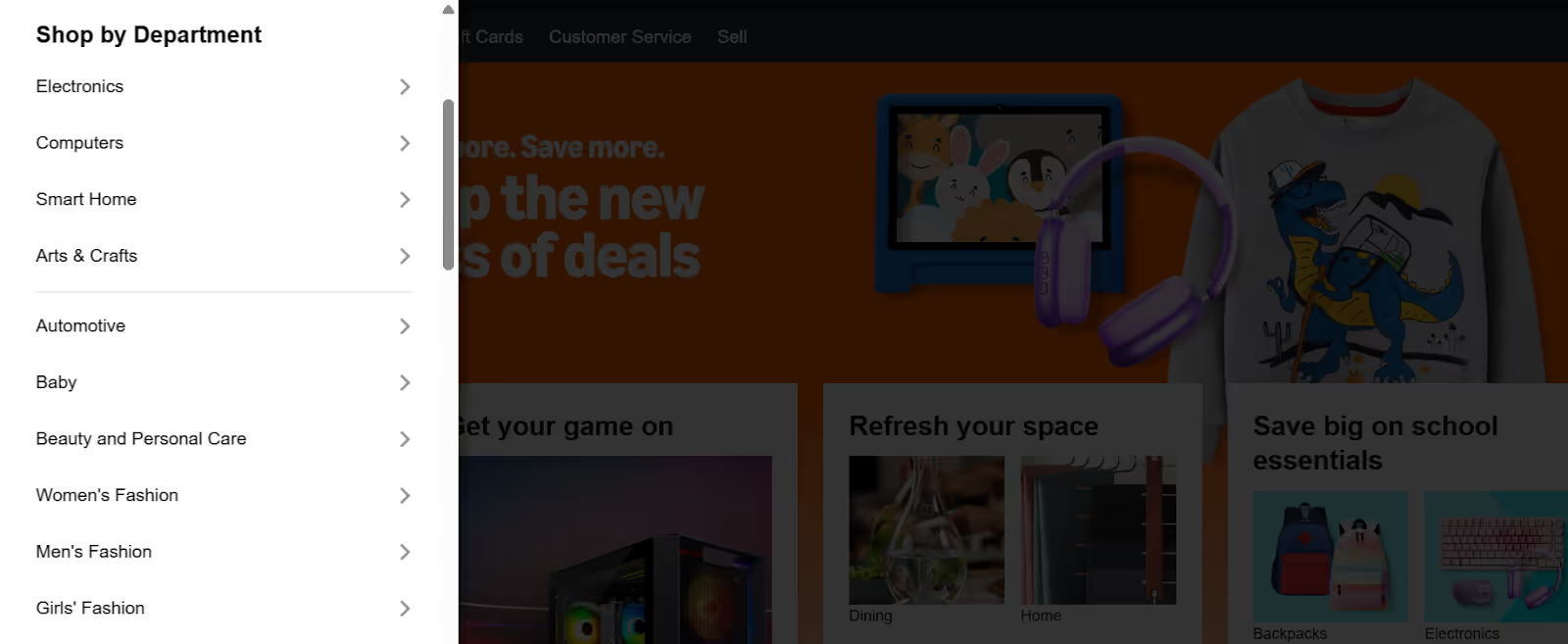
Today, Amazon is one of the world's biggest online retailers by market share, selling everything from electronics and clothes to books and home goods. It operates across North America, Europe, Asia, and the Middle East, and millions of third-party sellers use the platform to reach customers. Beyond shopping, Amazon also runs cloud computing, advertising, and artificial intelligence businesses.
Also Read:
- Dropshipping Statistics: Key Trends & Industry Insights
- Profitable Dropshipping Business Ideas You Can Start
- Top 5 Consumer Electronics Statistics You Must Know
Top 7 Amazon Statistics You Should Know
Here are the top Amazon stats to help you make smart decisions and stay competitive - each with the seller's reading attached.
1. Number of Amazon users
Amazon has more than 310 million active users globally, according to AMZScout - over 82% of them (about 255 million) in the United States. Millions visit every day to shop, browse, and search, which has made Amazon one of the most trusted ecommerce platforms in the world.
The seller's reading: those 310 million users are not your market. Our pipeline data is blunt about this: sellers who target one niche audience scale roughly 32% faster than generalists. The winning question isn't "how do I reach Amazon's users?" - it's "which 10,000 of them are mine?"
2. Amazon's Revenue
Amazon keeps growing on strong demand and relentless logistics investment. In the first quarter of 2025, net sales rose 9% to $155.7 billion, up from $143.3 billion in Q1 2024 - growth driven by online shopping, advertising, and cloud services.
The seller's reading: a meaningful share of that revenue is fees paid by sellers - referral fees typically run 8-45% per sale, plus fulfillment. Amazon's growth is partly your margin. Factor it into pricing before you list, not after.
3. In how many countries does Amazon operate?
Amazon has retail websites in over 25 countries, including the United States, the United Kingdom, Germany, France, Italy, and Japan, plus emerging markets like India, Brazil, Saudi Arabia, and the UAE. Each local site supports regional languages, currencies, and delivery; where there's no local site, Amazon ships internationally, helped by regional warehouses.
The seller's reading: international reach matters most if your fulfillment can follow. A POD partner that ships globally - without you renting warehouse space in five countries - gets you the same map with none of the overhead.
Also Read:
- Best Business Ideas for Women To Start
- Print on Demand: Your Complete Beginner's Guide
- Snapchat Statistics: Key Data For Ecommerce Sellers
4. Number of Amazon Prime Users
There are around 200 million Amazon Prime users globally, with the US leading at over 180 million members as of 2024. Prime members shop more often and spend more than non-members, drawn by free two-day shipping, Prime Video, Prime Music, and member discounts.
The seller's reading: Prime didn't just build loyalty for Amazon - it reset delivery expectations for every store, including yours. Buyers trained on two-day shipping won't wait two weeks for anyone. It's why we've engineered Podbase fulfillment to average about 23 hours from order to shipped: off-Amazon sellers have to clear the bar Amazon set.
5. Independent Sellers Fuel Amazon's Growth
Over 60% of Amazon's sales in 2024 came from independent sellers - everyone from solo business owners to global brands, selling online products through Amazon's delivery system, ads, and customer base. These sellers bring fresh, trendy, and personalized products, and their growth powers Amazon's expansion.
The seller's reading: this is the most double-edged stat on the page. It proves third parties can win on Amazon - and it means Amazon's marketplace is built on demand it owns and you rent. Amazon keeps the customer data; you can't email your own buyers. The sellers who compound pair Amazon's traffic with an owned store where the customer relationship - and the retention revenue - belongs to them.
6. The number of Amazon's Sellers
In 2024, Amazon had around 9.7 million registered sellers globally - but only about 2 million actively selling, roughly 20% of the total. Many register and never launch; others stop over competition, inventory problems, shipping issues, or account suspensions.
The seller's reading: this is the real headline of the article. Four in five registered sellers aren't actively selling. The pattern matches what we see in POD: the difference is rarely talent - it's launch momentum and overhead. Sellers who get five products live in their first 30 days are ahead of 80% of stores, and a no-inventory model removes the two failure causes (stock and shipping) that kill most of the rest.
7. The number of Amazon Downloads
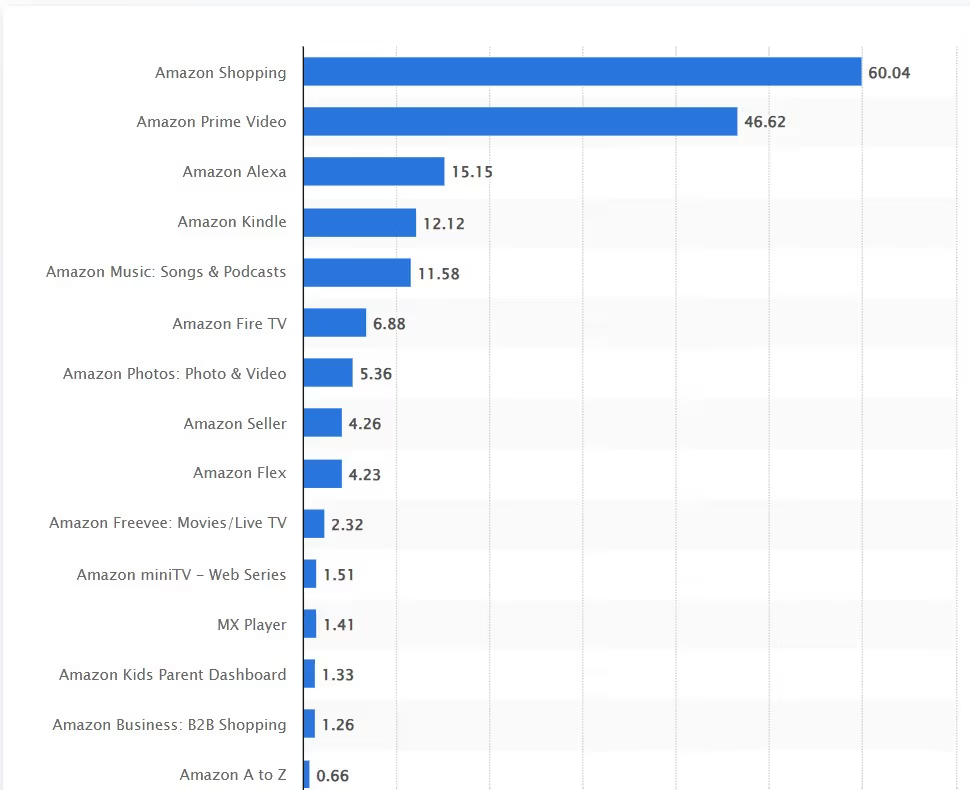
The Amazon Shopping app reached 60 million downloads by May 2025, per Statista - the top Amazon app on both iOS and Google Play from January to May. The app lets users shop, buy, and track orders across millions of products, and its momentum confirms how thoroughly shopping has gone mobile-first.
The seller's reading: design for a phone screen, full stop. Your product images, titles, and prices get judged in a thumb-scroll - on Amazon and on your own store alike. Products that photograph well small (bold, high-contrast designs on cases, mugs, prints) convert better in mobile feeds.
Also Read:
- How to Price a Product (Without Losing Profit)
- How to Avoid Copyright Infringement in Print-on-Demand
- How to Sell Digital Products on Amazon
Final Thoughts: Top Amazon Statistics You Must Know in 2026
Amazon keeps growing in 2026, and the latest numbers say it's a good time to sell - if you read them correctly.
To summarize: Amazon serves over 310 million active users across five continents through 25+ local websites. Quarterly net sales grew 9% year over year to $155.7 billion (Q1 2025), powered in part by roughly 200 million Prime subscribers. Third-party sellers - 9.7 million registered, about 2 million active - contributed more than 60% of sales, and the Amazon Shopping app topped 60 million downloads by May 2025.
The seller's summary is shorter: the demand is real, the competition is mostly inactive, and the winners niche down, launch fast, and own a store beside the marketplace. Good luck!
Also Read:
- Unlocking Profit Potential: How Much Money Can Custom Phone Cases Make?
- Shopify vs Amazon: Which Is Better for Sellers?
- Best Print On Demand Services For Artists
FAQ
1. How many users and sellers does Amazon have?
Amazon has more than 310 million active users globally, with about 82% (roughly 255 million) in the United States. It also has around 9.7 million registered sellers, but only about 2 million are actively selling - meaning roughly 80% register and never make it work. The market is huge, but so is the dropout rate.
2. How much revenue does Amazon make?
In Q1 2025, Amazon's net sales rose 9% year over year to 155.7 billion USD, up from 143.3 billion in Q1 2024, driven by online shopping, advertising, and cloud services. A meaningful share of that is seller fees - referral fees typically run 8-45% per sale plus fulfillment - so factor Amazon's cut into your pricing before you list.
3. In how many countries does Amazon operate?
Amazon runs retail websites in over 25 countries - including the US, UK, Germany, France, Italy, and Japan, plus emerging markets like India, Brazil, Saudi Arabia, and the UAE - and ships internationally where there is no local site. International reach matters most if your fulfillment can follow, which a globally shipping POD partner handles without you renting warehouses abroad.
4. How many Amazon Prime members are there?
There are around 200 million Prime members globally, with the US leading at over 180 million as of 2024. Prime did not just build loyalty for Amazon - it reset delivery expectations for every store. Buyers trained on two-day shipping will not wait two weeks for anyone, which is why Podbase fulfillment averages about 23 hours from order to shipped.
5. What share of Amazon sales comes from independent sellers?
Over 60% of Amazon's 2024 sales came from independent third-party sellers. It proves third parties can win on Amazon - but it also means the marketplace is built on demand Amazon owns and you rent, and Amazon keeps the customer data. The sellers who compound pair Amazon's traffic with an owned store where the customer relationship and retention revenue belong to them.
6. Is it worth selling on Amazon in 2026?
Yes, if you read the numbers correctly: the demand is real and most competition is inactive (only about 2 million of 9.7 million registered sellers actually sell). The winners niche down (one-niche sellers scale about 32% faster), launch fast (five products live in 30 days puts you ahead of 80% of stores), and keep an owned store beside the marketplace.

Saulius Meilutis is the CEO of Podbase, helping creators and entrepreneurs monetize their ideas with print-on-demand. He shares insights on eCommerce, growth, and building lean online businesses.

.avif)











.avif)
.avif)
.avif)

.avif)
.avif)
.avif)

.avif)







.avif)

.avif)


.avif)

.avif)


.avif)