Summary: Best Business to Start With Little Money in 2026
Starting a business no longer means massive upfront costs. In 2026, the best businesses to start with little money require just $0-$500 thanks to AI tools, digital platforms, and models like print-on-demand. This guide walks you through low-cost, high-potential ideas - from freelancing and online courses to POD stores - plus the AI tools and free platforms that replace expensive specialists. One honest framing from our own seller data before you start: capital is rarely what kills these businesses. Quitting in week two is.
Starting a business used to mean spending thousands right away: inventory, office space, costly software, big marketing budgets.
But things have changed in 2026. Now, the best business to start with little money needs a budget of $0 to $500.
Why? Digital tools have replaced pricey setups. AI handles tasks that once needed experts. Models like print-on-demand cut out inventory costs entirely.
You don't need everything to be perfect to begin. This guide shows you the best low-cost business options and how to get started with today's tech and platforms.
Why You Don't Need a Lot of Money to Start a Business Today
Thanks to the internet and easy-to-use tools, starting a business is simpler and cheaper than ever - and you can get things done faster, too.
The shift to digital and lean startup models
Instead of renting a store, new owners test ideas on free or low-cost platforms like Shopify. Instead of hiring a developer, they build sites themselves with Carrd or Wix.
A lean start lets you test your idea before any big decisions: create a basic version of your product - like a print-on-demand item - get feedback, and see if people buy. If they do, improve and grow.
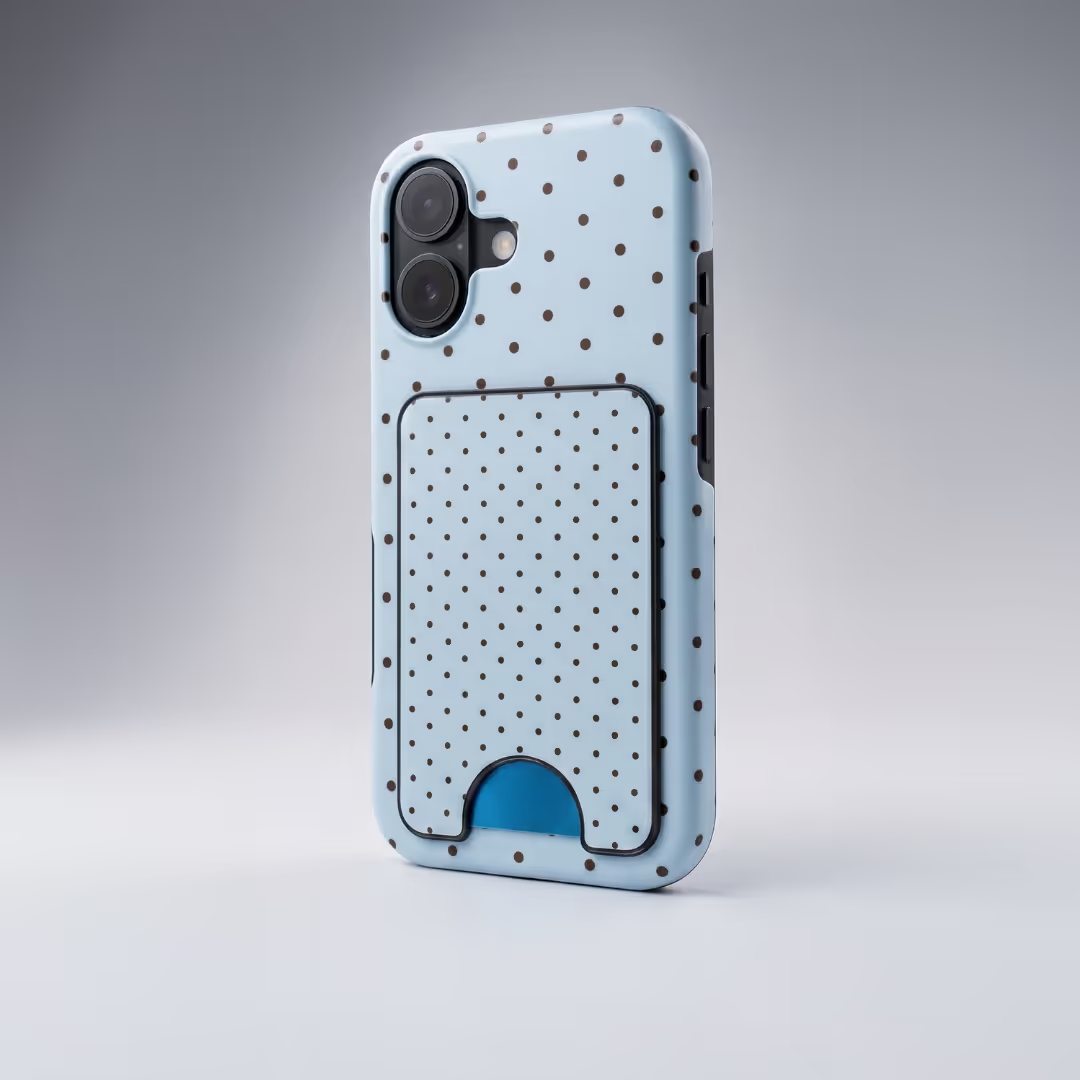
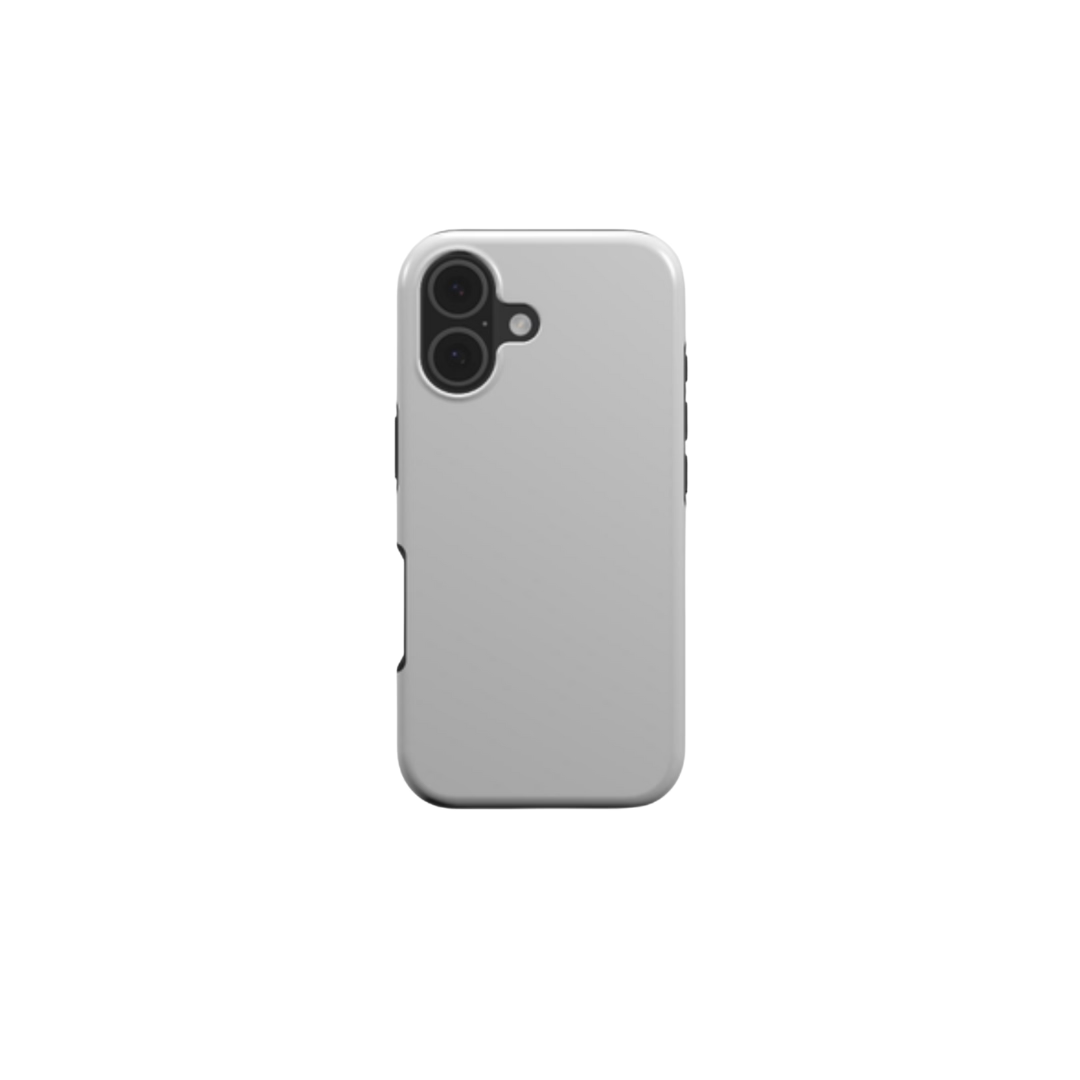
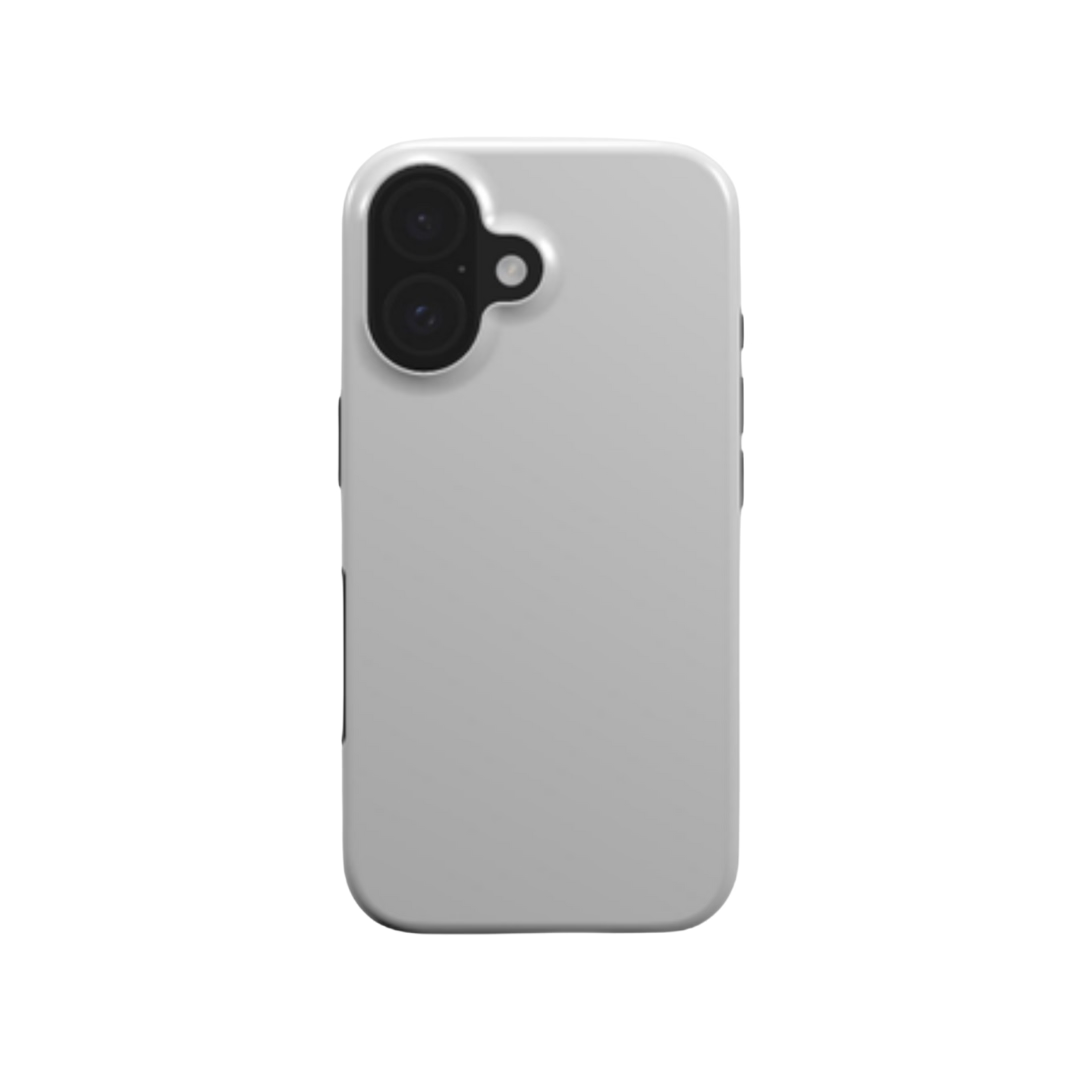
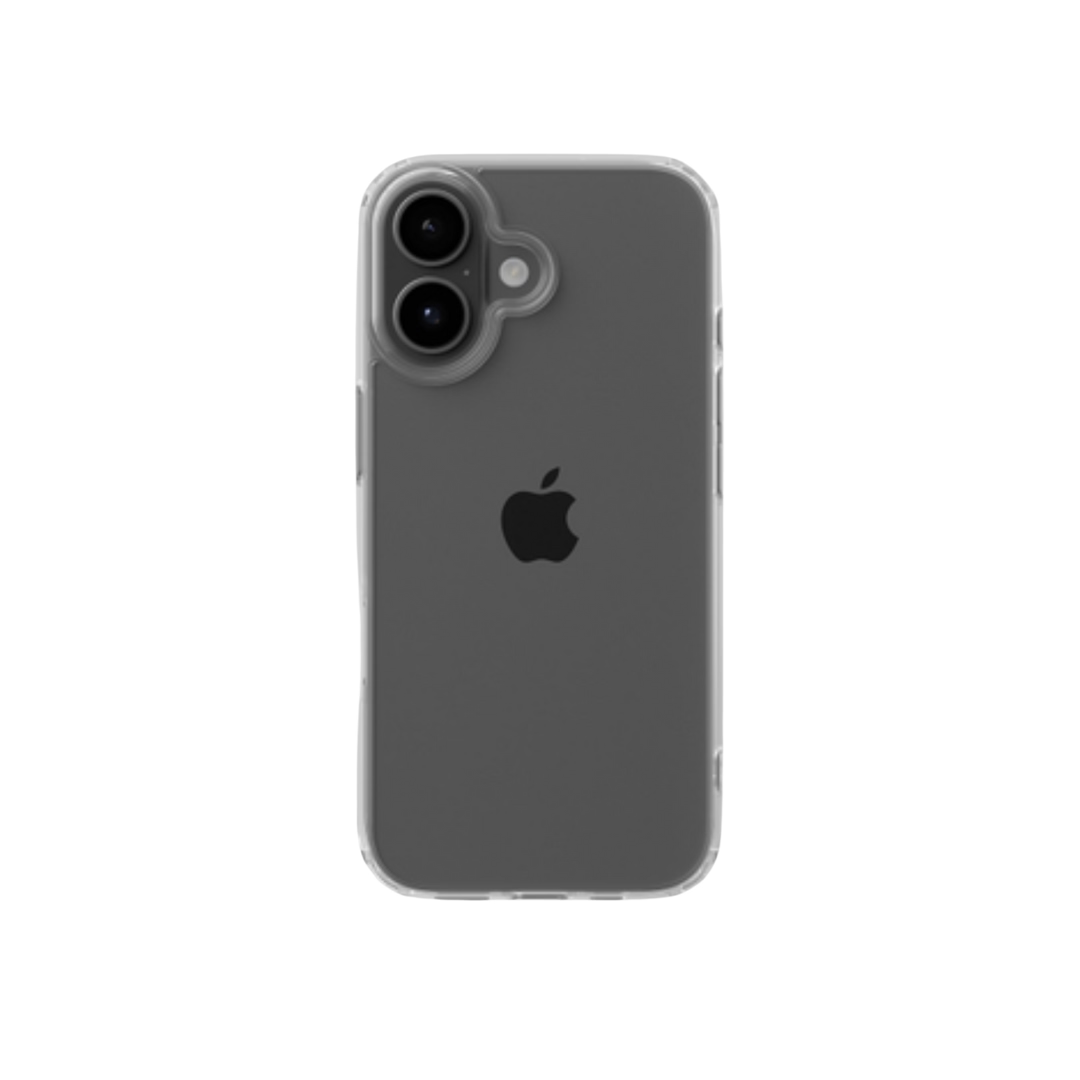
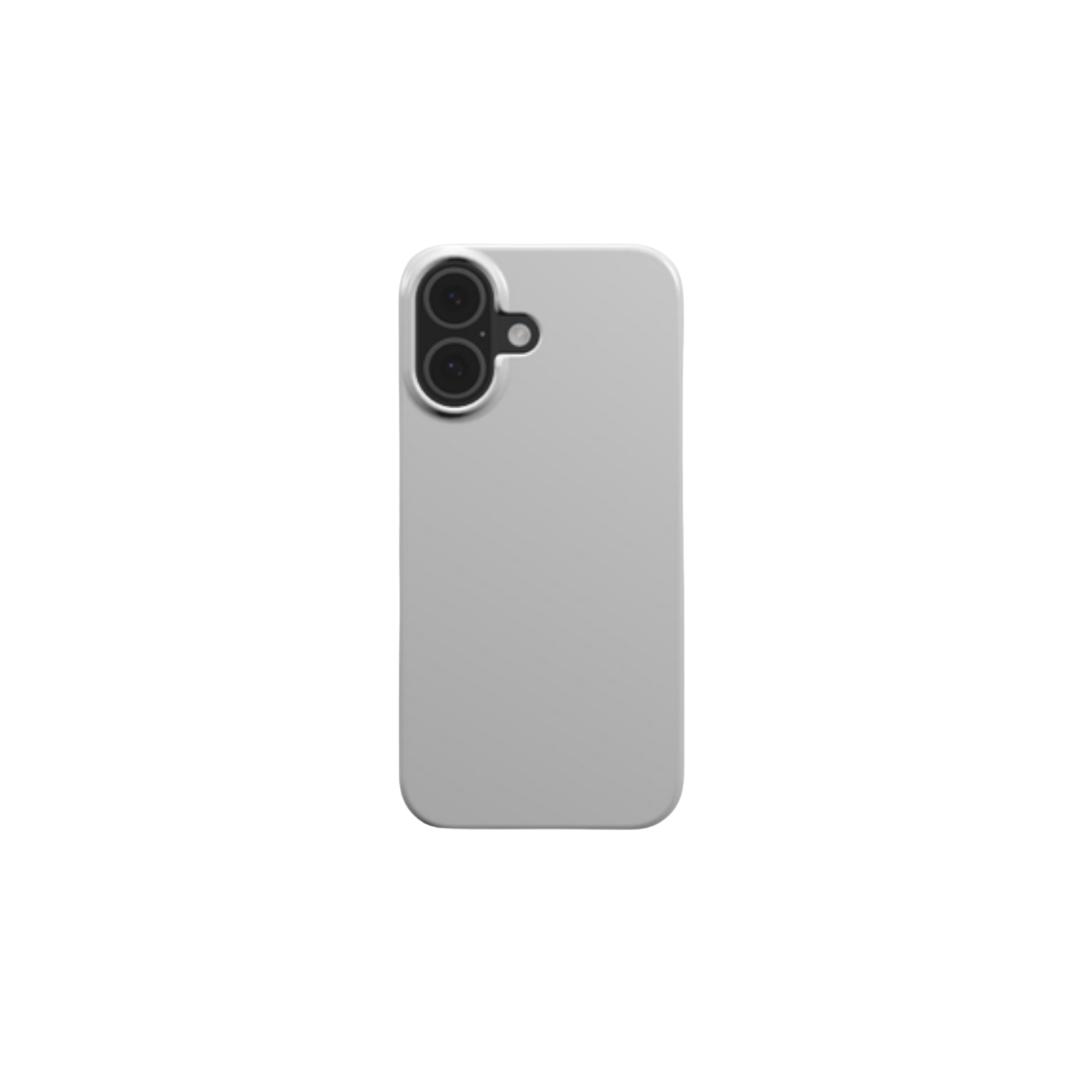
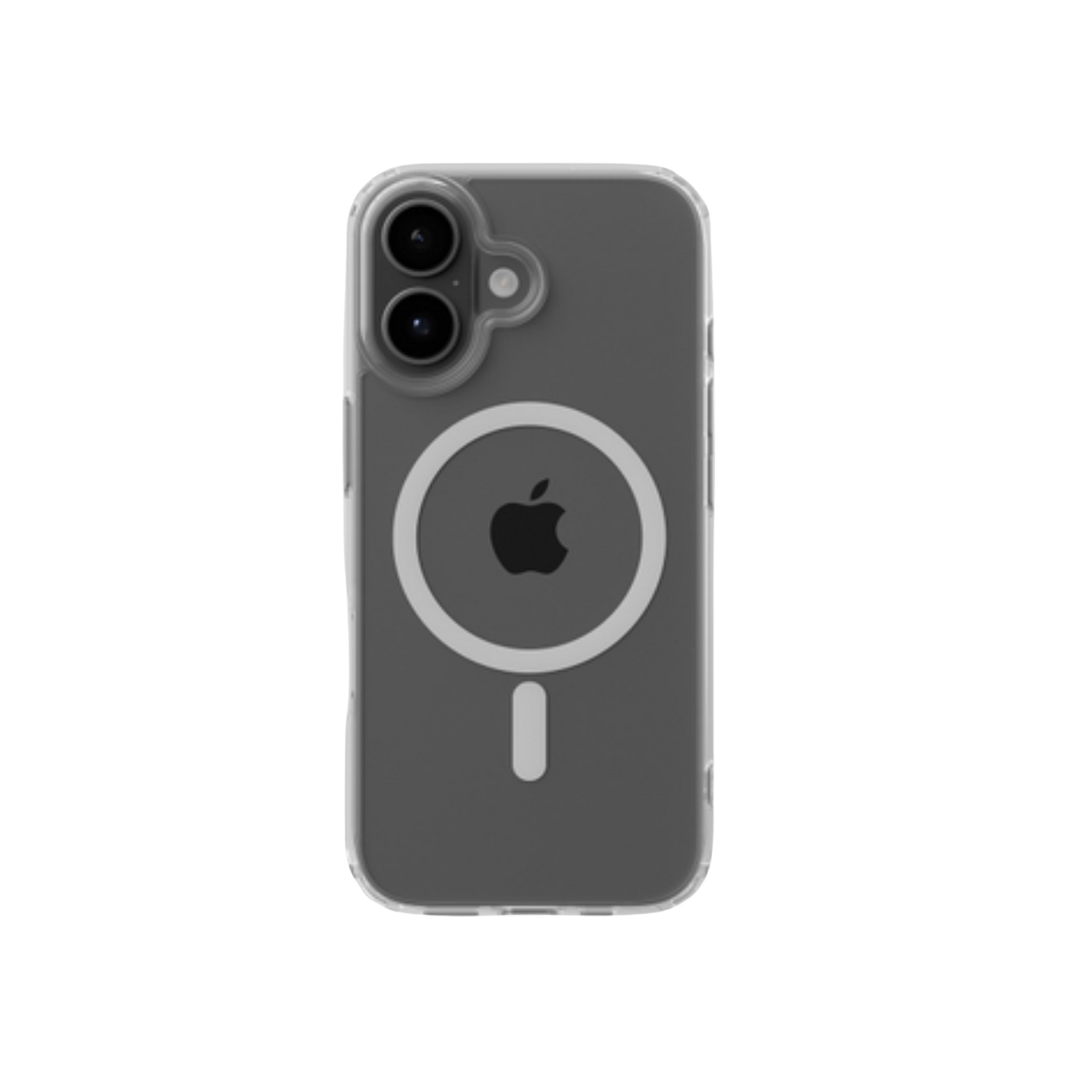
For instance, someone starting a phone case business could design cases on Canva, list them on Etsy, and launch for less than $100. The speed matters as much as the savings: in our data, sellers who put five products live within their first 30 days are ahead of 80% of POD stores - and most stores that fail never get that far, because their founders quit within the first two weeks.
The rise of AI and automation tools
AI tools cut costs by doing jobs that used to require paid specialists. ChatGPT writes product descriptions that freelance copywriters charge well for. Canva's AI designs logos without a graphic designer.
The compounding effect is real: across our own workflows, AI has cut the average time to launch a new POD project from about three months to under one. As our CEO puts it, "you can have your own orchestra of AI tools synchronised to help you do everything way faster and cheaper" - which is precisely what makes the $0-$500 launch possible.
Lessons from real low-cost entrepreneurs
Many successful businesses started with less than $200. POD stores often begin with low-cost design tools and small platform fees; freelance services take off with a laptop and internet.
The ceiling is higher than "side hustle," too: one seller we work with started from zero - no ecommerce background, simple first designs - and crossed seven-figure annual revenue in 13 months. The best low-cost business uses skills you already have, then compounds them with speed.
Best Business Ideas With Low or No Startup Costs
These digital, scalable models help you start earning fast while building long-term value. The best low-cost businesses to start in 2026 include:
Freelance Services (Writing, Design, Virtual Assistant)
Freelancing is one of the best businesses to start with little money from home: offer a skill you already have as a service.
AI makes the work faster and better - ChatGPT for proposals and content briefs, Canva for clean presentations, Notion for free project tracking. Upwork and Fiverr connect you with clients immediately. It's the fastest cash on this list; just know it sells your hours, so pair it with something that scales (see POD below).
Online Courses and Info Products
If you want to monetize knowledge, online courses are a great low-cost option. ChatGPT helps plan curriculum and write lesson descriptions; Canva designs the materials; Teachable and Gumroad handle payments and delivery. Your expertise is the defensible asset - AI just packages it faster.
Print on Demand (Sell Phone Cases, T-Shirts, Wall Art)
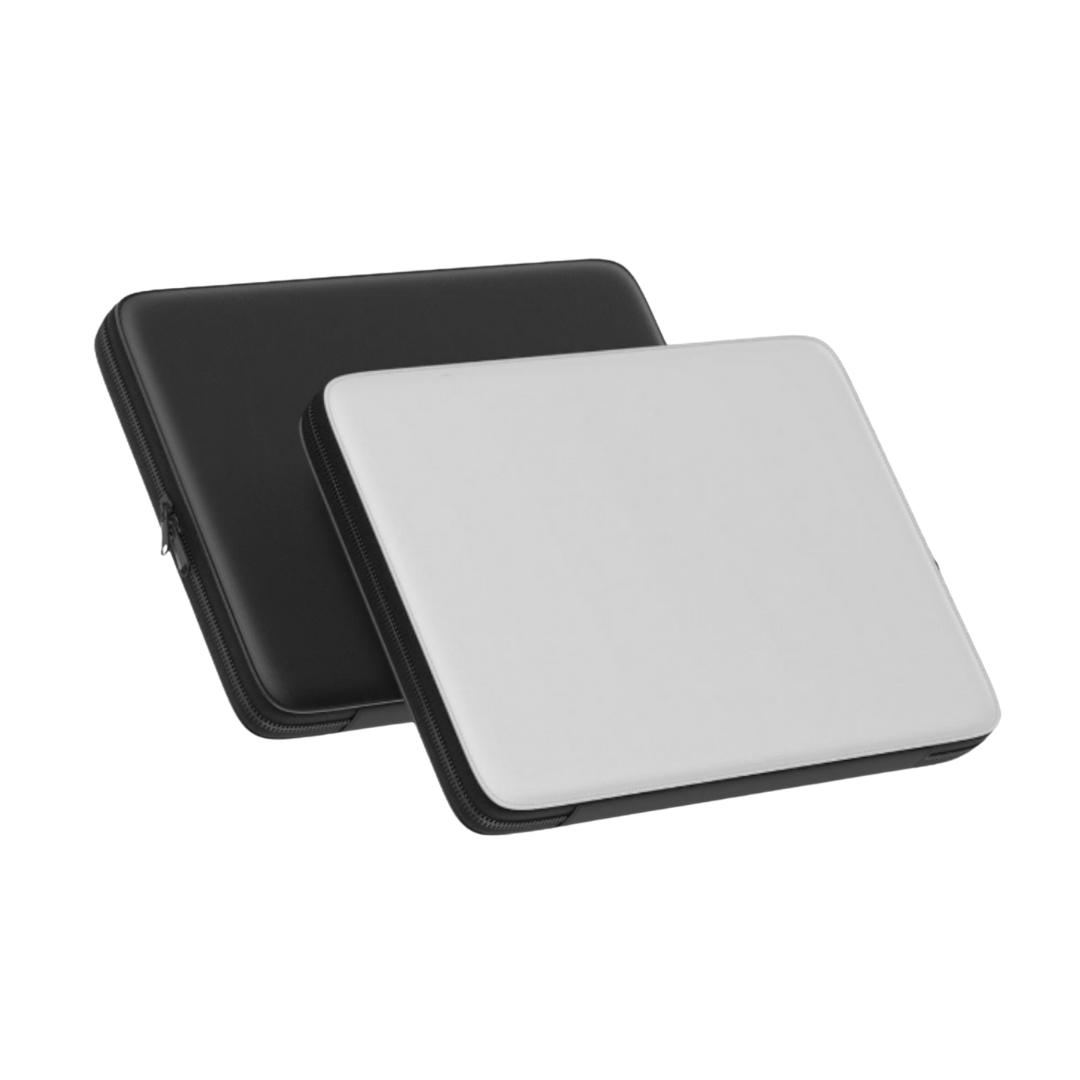
Print-on-demand removes inventory from the equation entirely. You create designs; when customers order, products are printed and shipped automatically - no storage, no shipping, no cash tied up in stock.
Designers and creatives can monetize their artwork immediately without using complex ecommerce platforms.
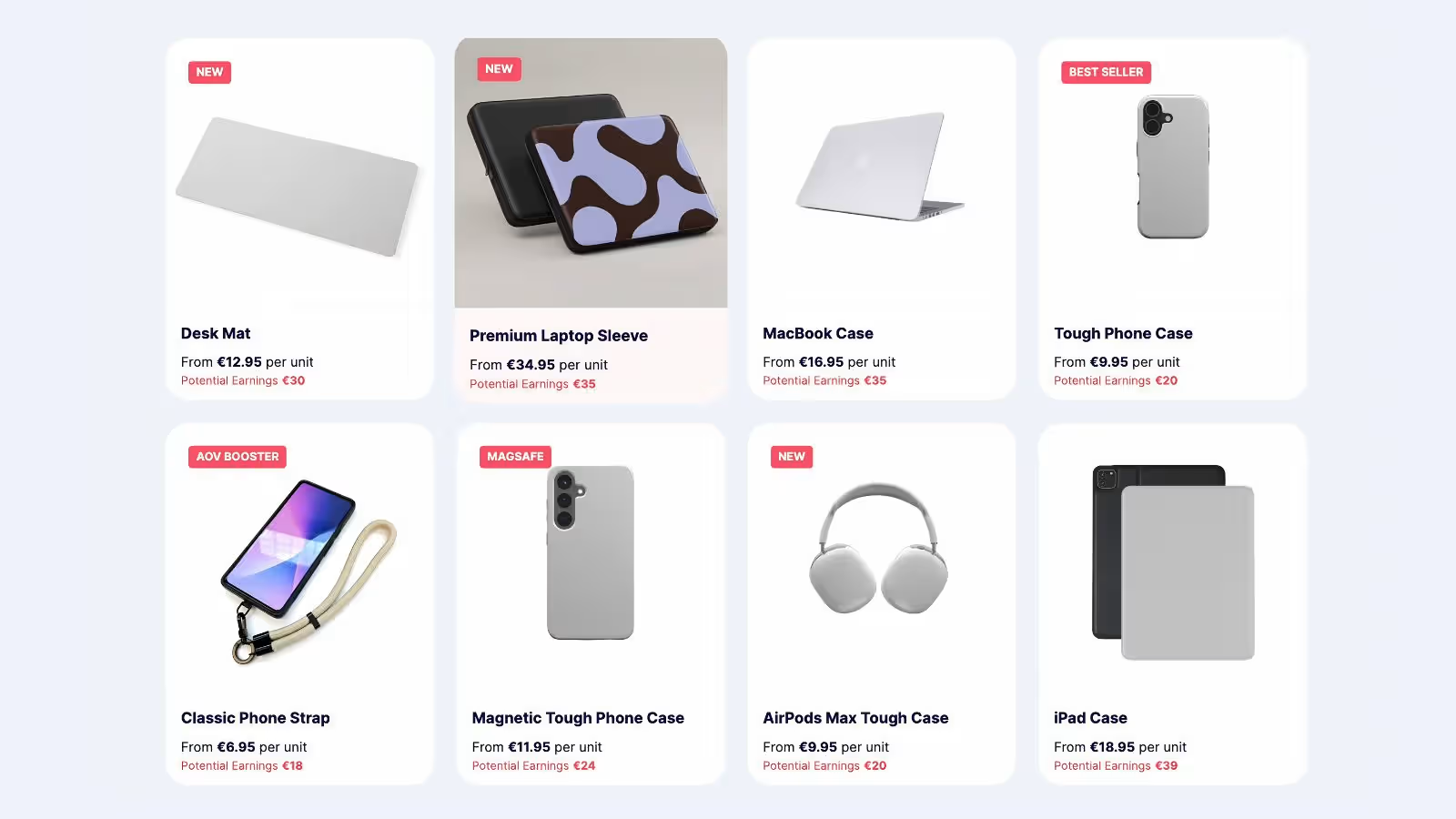
The economics are why it anchors this list: on Podbase, a phone case bought for ~€10 retails at €35-€60, printing starts within 24 hours of each order, and pro-level mockups plus store integrations mean designers can monetize artwork immediately without complex ecommerce platforms. It's also the rare low-cost model with built-in repeat demand - about 40% of Americans replace phone accessories every six months.
Social Media Management for Local Businesses
One of the cheapest businesses to start from home - especially if you know TikTok, Instagram, and AI tools. AI creates content calendars, writes captions, and schedules posts; you supply the strategy and local relationships. Demand is durable because social is where ecommerce attention lives, and small businesses constantly need fresh content.
Dropshipping with a Unique Angle
Dropshipping works best with a specific niche and a unique brand rather than the same trending items everyone sells. Better yet, prefer custom/POD-powered products - when your design is the differentiator, nobody can undercut you on the identical item.
Also Read:
Print on Demand - A Powerful Low-Investment Business Model
Print-on-demand deserves its own section because modern POD platforms offer faster fulfillment and better quality than ever - and the global POD market is growing from roughly $13 billion today toward $75 billion by 2033.
How Print on Demand Works in 2026
You create and upload designs to your POD platform. Customers buy; the platform prints and ships automatically; your profit is the gap between base cost and retail price. Integration with Etsy and Shopify makes selling easy without technical knowledge.
Best Niches for POD: From Memes to AI Art
Profitable POD niches target specific audiences willing to pay for personalized designs:
- Pet lovers: Breed-specific designs and funny pet quotes perform very well
- Hobby communities: Gaming, fitness, and crafting enthusiasts buy themed products regularly
- Professional groups: Teachers, nurses, and engineers appreciate job-related humor
- Local pride: City, state, and university designs appeal to residents and alumni
- Trending topics: Memes, viral phrases, and current events create short-term sales spikes
- Motivational quotes: Self-improvement messages attract broad audiences
The pattern behind every one of these: narrow beats broad. A tightly defined audience trusts you more and converts better - the same rule we apply to our own product catalog.
How to Start a POD Business With Podbase
Launch your POD business with these essential steps:
- Research your niche: Use Google Trends to check interest in your topic.
- Create designs with AI: Use Canva's AI tools or ChatGPT for design ideas and concepts.
- Sign up for Podbase: Create a free account and browse the product catalog.
- Upload designs to Podbase: Use the mockup generator to see designs on products.
- Choose product options: Pick colors, sizes, and styles for your audience.
- Connect Podbase to your store: Link with Shopify, Etsy, or WooCommerce.
- Set fair prices: Check similar products and factor in base costs.
- Optimize your listings: Write keyword-rich descriptions per your platform's best practices.
And one step most guides skip: order a sample in your first days. Across our pipeline, an early sample order is one of the strongest predictors of seller success - it catches quality issues before customers do and gives you real product photos.
Realistic Earning Examples
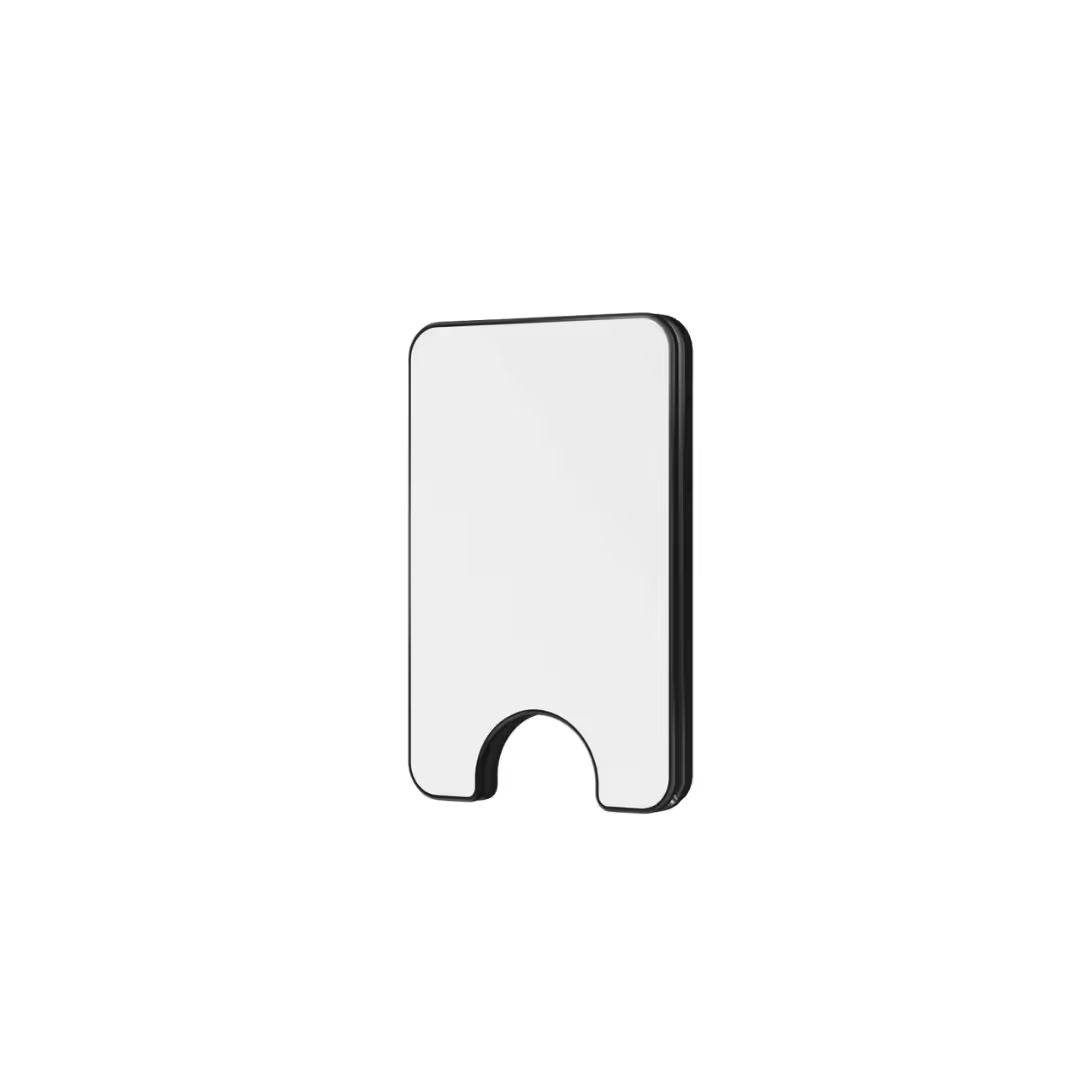
Many POD entrepreneurs earn $200-$500 monthly after three months of consistent effort - and the ceiling runs to the seven-figure store mentioned above. Success depends on niche selection, design quality, and marketing consistency. A simple lever once orders flow: a checkout add-on like a screen protector converts at 3-10% in our data, adding ~€10 profit per order at no extra cost.
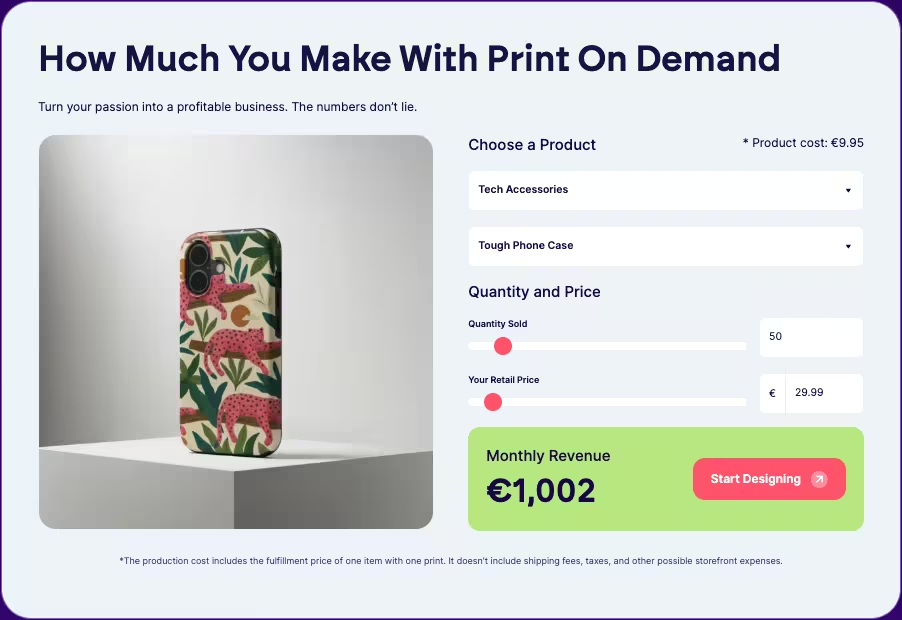
Use Podbase's profit calculator to model earning potential by adjusting quantity and retail prices.
Also Read:
- Shopify vs. Etsy: Which Platform Is Right for Your Business?
- How to Make Money Using AI (13 Proven Methods)
How to Use AI to Launch a Low-Cost Business
Smart entrepreneurs use these technologies while keeping monthly costs low.
Using ChatGPT for product ideas, content and branding
Think of ChatGPT as a creative business partner that never charges hourly. Generate niche product ideas with prompts like "Suggest 10 unique phone case designs for coffee lovers." Write product descriptions by giving it your product details and target buyer. Use it for brand naming by describing your business and audience.
One 2026 caveat we'll state plainly: AI output is everyone's floor now. Use it for speed, then add the taste, niche knowledge, and judgment only you have - that's what customers (and search engines) actually reward.

Free AI Tools for Design, Marketing, and Customer Service
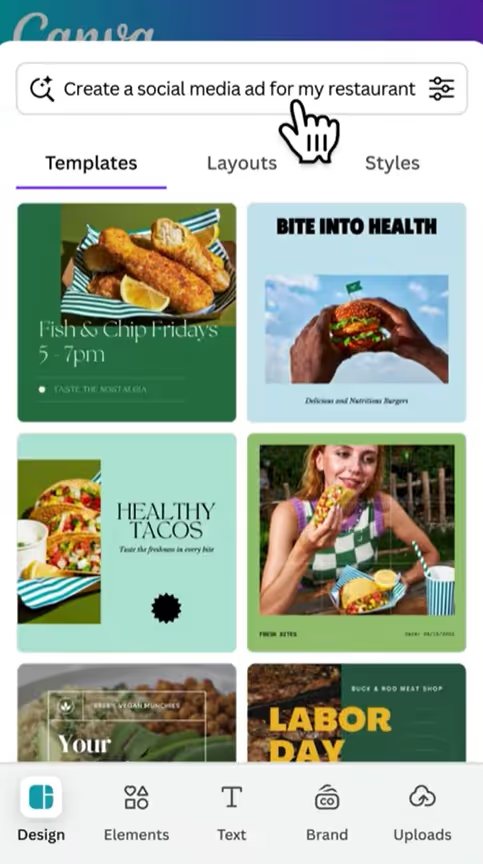
Canva's Magic Design turns text descriptions into professional graphics - logos, social posts, marketing materials - without design skills. Looka builds complete brand packages with logos, colors, and fonts. For support, connect ChatGPT with platforms like Tidio to answer common questions automatically.
Prompt engineering tips for better results
Instead of "write a product description," try "write a 150-word description for wireless earbuds targeting fitness enthusiasts who value durability." Specify formal, casual, or playful language based on your brand voice. Specificity in, quality out.
How to stand out and get cited in AI overviews (e.g., ChatGPT, Google SGE)
Use your brand name and niche keywords in product tags and content, and answer the exact questions your audience asks. This matters more every month: AI assistants are becoming a real discovery channel - traffic from AI platforms to retail sites jumped 670% year-over-year on Cyber Monday 2025. Small brands that are clearly described and genuinely useful get recommended; generic ones get skipped.
Also Read:
- How to Make Money as an Artist: A Practical Guide
- How to Avoid Copyright Infringement in Print-on-Demand
Business Planning Without Breaking the Bank
You don't need expensive consultants or premium software to plan well.
DIY Branding, Websites, and SEO
- Carrd: Professional single-page websites
- Canva: Logos, business cards, and social graphics with free templates
- Notion: Project management and content planning
- ChatGPT: Website copy and SEO meta descriptions
- Google Business Profile: Free local visibility in map searches
Free and freemium tools to scale lean
- MailerLite: Email marketing for up to 1,000 subscribers free - and worth setting up on day one, since an owned email list is among the strongest-ROI assets in ecommerce
- Buffer: Schedules social posts across three platforms free
- Ko-fi: Simple creator storefronts
- Calendly: Automated appointment scheduling
- Wave: Free accounting, invoicing, and expense tracking
Stick with free versions until revenue justifies upgrades.
When to Reinvest for Growth
Once you're earning $500+ monthly, consider paid ads, professional mockups, or upgraded hosting.
A budgeting reality check from our CMO that most "start cheap" guides won't give you: when you do move to paid ads, under-spending is as dangerous as over-spending. You need enough budget for the ad platforms to gather real data about your buyers - and patience, because "in the first three months you will often see a much higher customer acquisition cost" before the system learns and costs fall. Plan the learning phase; don't panic during it. The biggest mistakes we see are a weak store funnel, wrong budget expectations, and impatience - in that order.
Final Thoughts
Starting small is not only smart - it's the fastest way to learn what actually works. You discover real customer needs without risking major losses.
Print-on-demand and AI tools give you advantages that didn't exist five years ago. But they're tools, not autopilot - they reward strategy and consistency. And don't build alone: sellers who plug into a community scale roughly 32% faster than solo operators.
The best business to start with little money is the one you actually launch this week rather than plan for months. Your first version doesn't need to be flawless - it needs to exist.
Podbase helps creators launch with zero inventory, professional mockups, and minimal upfront costs. Sign up with Podbase today.
Also Read:
- Side Hustles for College Students: Smart Ways to Earn Money
- How to Make Money Without a Job - 18 Real Ideas
FAQ
1. What is the best business to start with little money in 2026?
The strongest low-cost options are freelancing (fastest cash), online courses (monetize expertise), print-on-demand stores (scalable products with zero inventory), social media management, and niche dropshipping. Most launch for $0-$500 using AI tools and free platforms. POD anchors the list because it builds an asset: designs that keep selling without your hours.
2. Can you really start a business with $500 or less?
Yes. A print-on-demand store can launch for under $100: free design tools (Canva, ChatGPT), a free Podbase account, and small marketplace fees. Products are printed only after customers order, so no money sits in inventory - a case bought for ~€10 retails at €35-€60. AI workflows have cut typical launch time from three months to under one.
3. Why do most low-budget businesses fail?
Rarely because of money. Podbase data shows most aspiring sellers quit within 10-14 days - before real market feedback - while those who publish five products within 30 days are ahead of 80% of stores. The other killers are weak store funnels, wrong budget expectations when scaling ads, and impatience during the learning phase.
4. How much can a print-on-demand business earn?
Many sellers reach $200-$500 monthly after about three months of consistent effort, with checkout add-ons converting at 3-10% to lift order profit. The ceiling is far higher: Podbase has seen a seller go from zero experience to seven-figure annual revenue in 13 months on focused designs and fast iteration.
5. When should a low-budget business start spending on ads?
Once revenue passes roughly $500/month and your store funnel converts. Then budget honestly: ad platforms need enough spend to learn who your buyers are, and acquisition costs typically run high for the first three months before falling. Under-spending at this stage wastes money as surely as over-spending - plan the learning phase.
6. Which free AI tools help launch a business?
ChatGPT for product ideas, descriptions, and brand naming; Canva Magic Design for logos and graphics; Looka for brand packages; Notion for planning; MailerLite for free email marketing; Wave for accounting. Use AI for speed, then add your own niche judgment - generic AI output no longer stands out to customers or search engines.

Saulius Meilutis is the CEO of Podbase, helping creators and entrepreneurs monetize their ideas with print-on-demand. He shares insights on eCommerce, growth, and building lean online businesses.

.avif)



.avif)
.avif)
.avif)
.avif)
.avif)
.avif)

.avif)


.avif)
.avif)

.avif)

.avif)

.avif)