Knowing how to choose the right ecommerce platform helps you build a strong online store - one that grows with your business instead of needing replacement in a year.
Shopify, BigCommerce, WooCommerce, and Wix are the top choices. They all cover the fundamentals, but each suits a different stage and skill set.
Before the comparison, one honest observation from watching thousands of stores connect to our fulfillment: sellers agonize over the platform choice, but the platform is rarely what decides their outcome. All four tools below can build a store that converts. The decisions that actually separate winners are the niche, the product economics, and the fulfillment behind the storefront. Choose your platform in an afternoon - spend the week you saved on those.
This guide compares the top ecommerce platforms, gives practical advice on choosing, and flags the hidden costs to watch.
Why Picking the Right Ecommerce Platform Matters
Selecting the right ecommerce platform still meaningfully impacts your online or POD business:
- Customer Experience: A smooth buying journey - fast pages, clean checkout, mobile-friendly design - is the foundation every sale stands on.
- Business Growth and Scalability: The best platform is one you don't outgrow. Migrating a live store costs weeks of momentum, so pick for where you'll be in two years.
- Overall Cost and ROI: Transparent, all-inclusive pricing helps you budget and protect ROI - but model the total cost of ownership, not the headline plan price.
Also Read:
- Money-Making Hobbies That Can Earn You Money This Year
- Low-Cost Business Ideas To Start (Podbase Advice)
- Side Hustles for College Students: Smart Ways to Earn Money
How to Start: Define Your Business Needs
Set your short-term and long-term goals before comparing tools - they'll make the decision nearly automatic.
Whether you sell physical or digital products, know your target audience's pain points: you make money when the store you build addresses your customers' problems, not when it has the longest feature list.
And be honest about your team's technical expertise. The "more powerful" option you can't operate is worse than the simpler one you'll actually use.
Must-Have Features When Choosing an Ecommerce Platform
Watch for these essentials when picking a platform for your business.
Mobile Responsiveness
Choose a platform that builds stores that work well on phones and tablets. Most of your buyers will judge your products in a thumb-scroll - if browsing is easy on any device, customers stay.
Payment and Checkout Options
Your platform should support multiple digital payment options with safe processing and a low-friction checkout. This is also where an owned store quietly out-earns a marketplace: you control the cart, so you can offer add-ons at checkout - across Podbase-connected stores, those convert at 3-10% and lift average order value with zero extra traffic.
SEO Capabilities
Make sure the platform has built-in SEO tools: meta descriptions, image alt text, XML sitemaps, and canonical tags. These help your store show up in search and bring in visitors you don't pay for - though fair warning, post-2026 search rewards stores with genuinely distinctive products and content, not just correct tags.
Integrations and Third-Party Apps
Pick a platform that connects easily with apps for marketing, automation, and fulfillment. For POD sellers this is the decisive feature: your storefront and your production partner have to talk to each other automatically, or you become the integration.
Support for International Sales
Your platform should support international selling - regional trade rules, multi-currency payments, localized checkout. Pair it with fulfillment that ships globally so the map your storefront promises is one your logistics can deliver.
Also Read:
- Creative Phone Case Design Ideas to Spark Your Inspiration
- How To Make Printables To Sell Online: And Make Money
- Top 10 Ecommerce Statistics You Must Know
Ecommerce Platform Comparison (2026 Overview)
Here's how the top four ecommerce platforms compare:
- Shopify - Ease of use: very easy. Hosting included. Multi-channel selling, mobile commerce, built-in marketing, and AI tools. Pricing from $27/month. Best for ecommerce businesses of all sizes.
- WooCommerce - Ease of use: moderate. No hosting included (it's a WordPress plugin). Multi-channel and mobile via plugins; built-in marketing; no native AI tools. Free core. Best for WordPress ecommerce websites.
- BigCommerce - Ease of use: easy. Hosting included. Multi-channel selling, mobile commerce, built-in marketing, basic AI tools. Pricing from $29/month. Best for growing ecommerce businesses.
- Wix - Ease of use: very easy. Hosting included. Multi-channel selling, mobile commerce, built-in marketing, AI tools. Pricing from $17/month (free plan available). Best for startups and small businesses.
(Prices change - verify on each platform's pricing page before committing.)
SaaS vs Open-Source vs Headless
Not sure which type fits? Start here:
- SaaS platforms (like Shopify) are easiest to set up - hosting, updates, and support included.
- Open-source platforms (like WooCommerce) give you full control, but you'll need some tech skills.
- Headless platforms separate the front and back ends for more design freedom and faster performance - best for teams with developers.
Shopify

Shopify is a complete ecommerce tool for businesses of any size, including B2B stores. Shopify Magic, its set of free AI tools, helps with store building, marketing, and customer support. Before you start a Shopify store, you can try it free for 3 days.
Key Features:
- Advanced store customization
- Own domain and hosting
- Social media integration
- Supports ecommerce SEO
- Real-time inventory management
WooCommerce
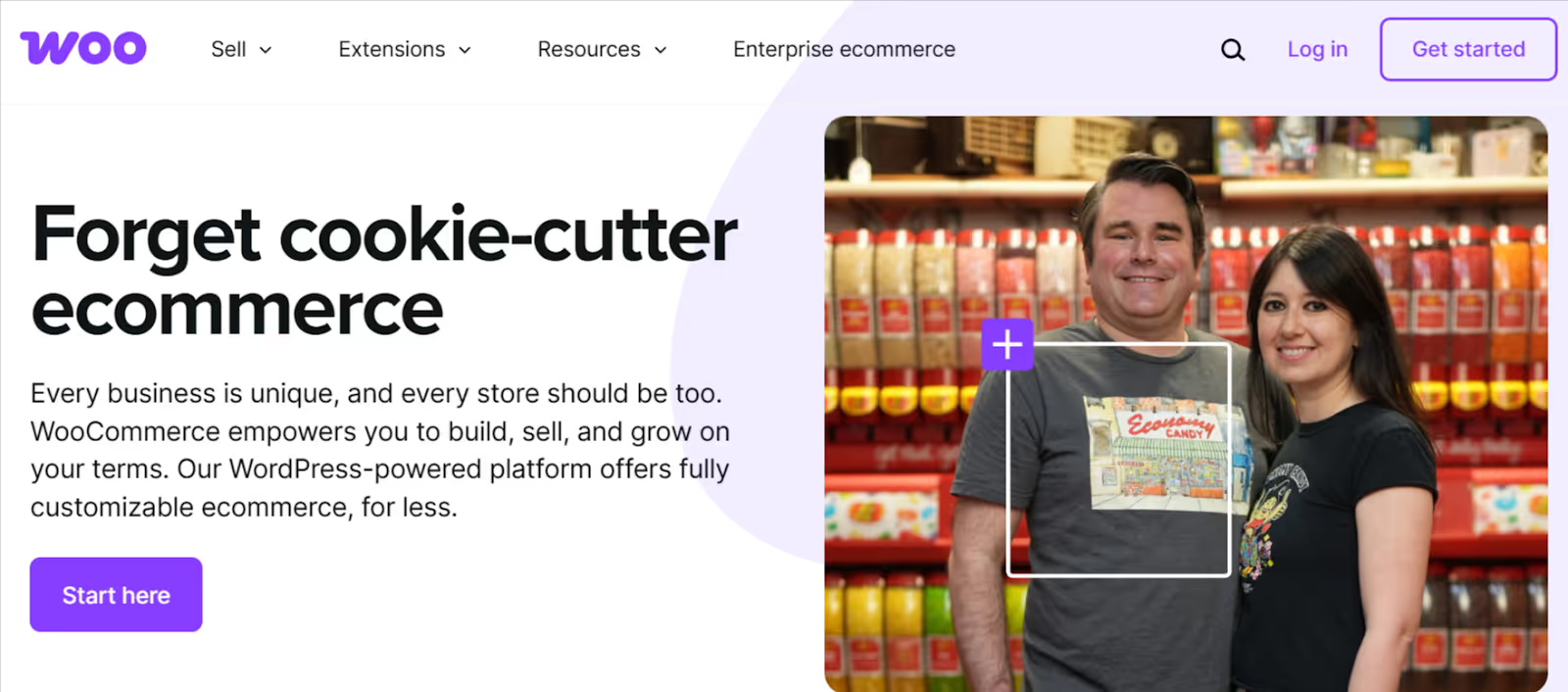
WooCommerce is a free plugin for WordPress with a clean dashboard and solid mobile performance. To run a store smoothly you'll typically buy extra plugins, which raises the real cost above "free."
Key Features:
- A thorough store setup process
- Hundreds of free themes
- Flexible and unlimited product blocks
- Standard inventory management features
- Basic automation
Also Read:
- What Is Print-On-Demand: Everything You Need To Know About It
- Best Print On Demand Services For Artists
- 15+ New & Classic Part-Time Business Ideas
BigCommerce
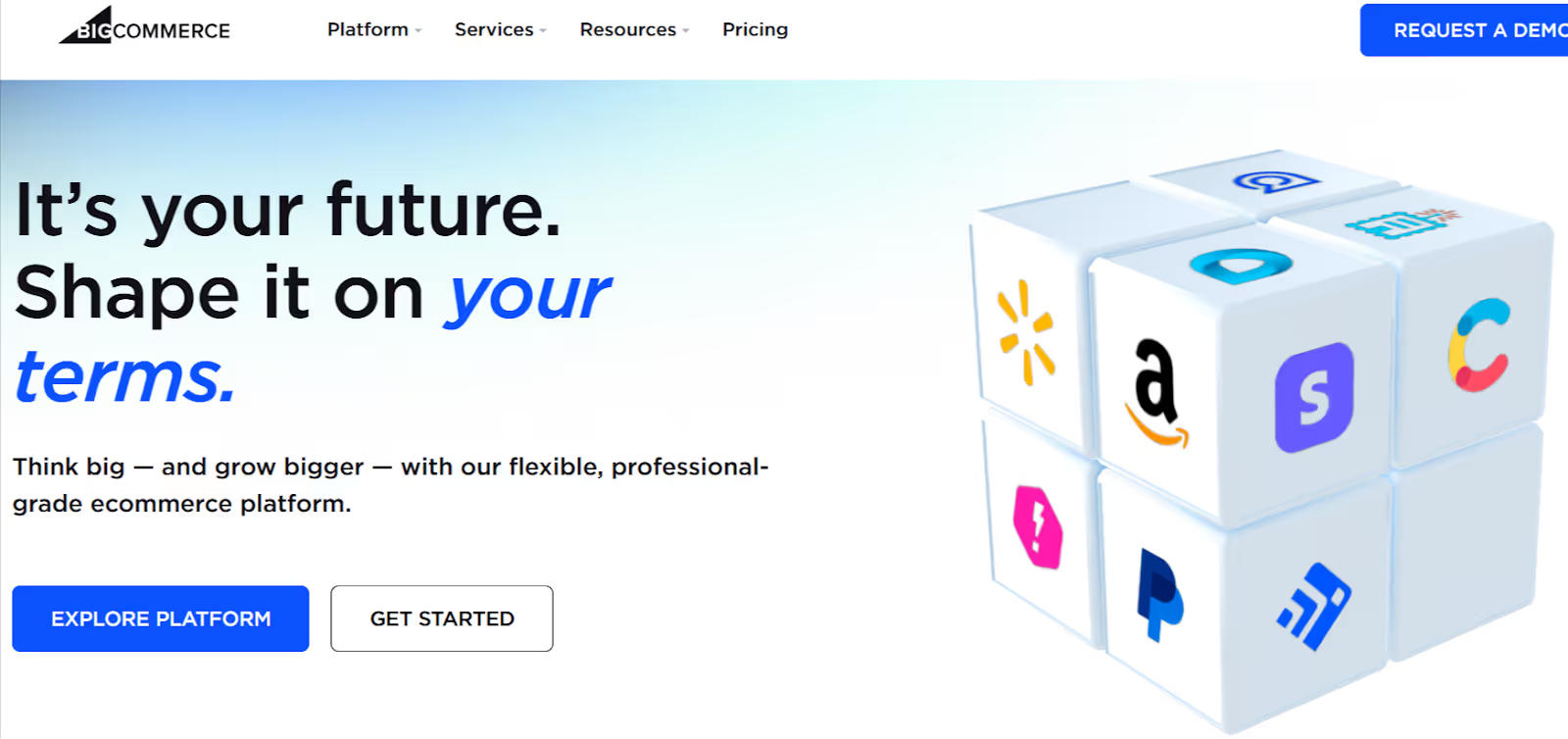
BigCommerce is a strong, feature-packed platform for growing businesses, with 600+ apps to extend your store and no extra transaction fees.
Key Features:
- Supports international sales
- Exceptional SEO support
- Extensive reporting and analytics
- Point of sale option
- Basic AI tools
Wix
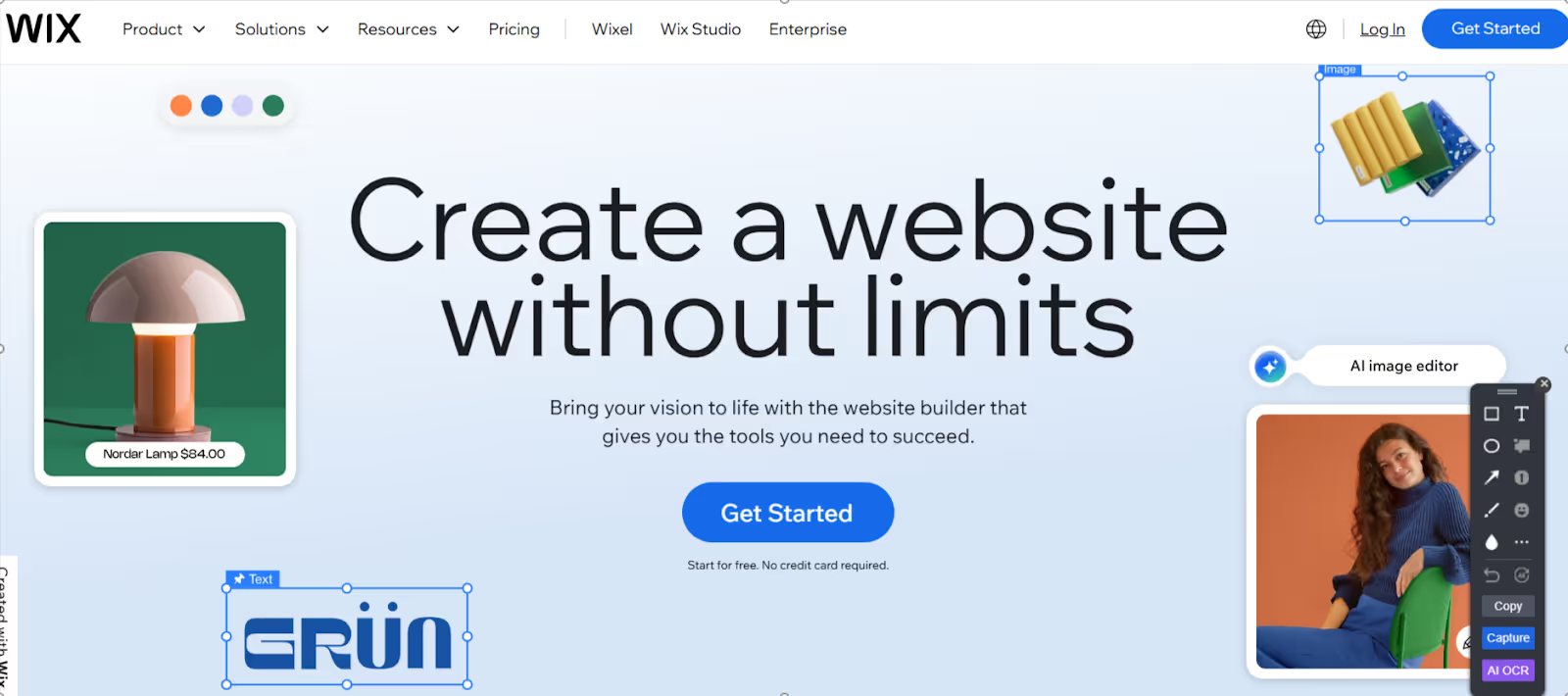
Wix is a popular choice for solopreneurs and startups, with AI tools that help you design, set up, and manage your store easily - and multi-marketplace selling from one dashboard.
Key Features:
- Over 900 free and customizable templates
- Website for the international market
- Custom domain and multi-cloud hosting
- Supports dropshipping and print-on-demand
- Built-in SEO tools
Hidden Costs and Pricing Models Explained
Every platform offers basic plans for beginners and advanced or custom plans as you grow. The headline price, though, is rarely the real price. Watch for:
- Setup fees
- Transaction fees
- Third-party app costs (the quiet budget-killer - $10-30/month apps stack fast)
- Hosting and security costs (especially on open-source)
Model the total cost of ownership for your expected sales volume, not just the plan price. A "free" platform with five paid plugins often costs more than a $27 SaaS plan.
Best Ecommerce Platforms by Business Size
Whether it's print-on-demand or dropshipping, here's the short version by stage:
Best Ecommerce Platforms for Small Businesses and Startups
Shopify and Wix are the best options - both user-friendly, both fast to launch. At this stage, speed to first sale matters more than feature depth: our seller data shows stores that get five products live in their first 30 days are ahead of 80% of new stores.
Best Ecommerce Platforms for Mid-Sized Businesses
Shopify, WooCommerce, BigCommerce, and Wix all work well here - they let mid-sized businesses grow without the complexity of enterprise-level plans.
Best Ecommerce Platforms for Scaling Large Brands
Go for Shopify or BigCommerce: advanced features, tailored plans, and infrastructure that holds up under volume.
Ecommerce Trends Influencing Platform Choice (2026)
Not very tech-savvy? Let the trends guide the checklist:
- Mobile-First Commerce: Shopping increasingly happens on the go. Choose a platform with a genuinely mobile-first storefront, not a desktop site that shrinks.
- Personalization and AI-Driven Recommendations: AI-powered personalization and product recommendations help win and keep customers - platforms with built-in AI tools (Shopify, Wix) bundle this without extra apps.
- Sustainability and Eco-Friendly Shipping: Customers increasingly prefer environmentally conscious shopping. Made-to-order models help here structurally: producing only what's sold means no overstock to landfill.
How Podbase Fits Into Your Ecommerce Growth Strategy
Whichever platform you choose, Podbase is the fulfillment layer that turns it into a product business. Connect your store via the Shopify or WooCommerce integration, sell on Etsy, or use the secure Open API for custom builds.
The economics are seller-friendly: premium custom products and tech accessories with pricing that leaves 10-15% better margins than competing POD platforms, production that averages about 23 hours from order to shipped, and no inventory or upfront cost - you pay only when you sell. Turn your creative, low-cost business ideas into a profitable store in a few clicks.
Also Read:
- Is Print-On-Demand Profitable? An In-Depth Guide
- Best Dropshipping Products to Sell for Big Profits
- Shopify vs Amazon: Which Is Better for Sellers?
FAQ
1. What is the best ecommerce platform in 2026?
Shopify, WooCommerce, BigCommerce, and Wix are the top choices, and all four can build a store that converts. The best one depends on your stage: Shopify and Wix are easiest for startups, all four suit mid-sized businesses, and Shopify or BigCommerce hold up best for scaling large brands. The platform is rarely what decides your outcome - niche, product economics, and fulfillment matter more.
2. Which ecommerce platform is best for beginners and small businesses?
Shopify and Wix are the strongest options for small businesses and startups - both are user-friendly and fast to launch. At this stage, speed to first sale matters more than feature depth: Podbase seller data shows stores that get five products live in their first 30 days are ahead of 80% of new stores.
3. Is WooCommerce really free?
The WooCommerce core plugin is free, but running a store smoothly usually means buying extra plugins, plus paying for WordPress hosting and security. Those 10-30 USD per month add-ons stack fast, so a free platform with five paid plugins often costs more than a 27 USD per month SaaS plan. Model total cost of ownership, not the headline price.
4. What features matter most when choosing an ecommerce platform?
Mobile responsiveness, low-friction checkout with multiple payment options, built-in SEO tools, easy integrations with marketing and fulfillment apps, and support for international sales. For POD sellers, integrations are decisive - your storefront and production partner must talk to each other automatically, or you become the integration.
5. What hidden costs should I watch for?
The headline plan price is rarely the real price. Watch for setup fees, per-sale transaction fees, third-party app costs (the quiet budget-killer, often 10-30 USD per month each), and hosting and security costs - especially on open-source platforms. Model the total cost of ownership for your expected sales volume before committing.
6. Does the ecommerce platform you pick decide whether you succeed?
Rarely. All the major platforms can build a store that converts, so sellers should choose one quickly and spend their energy on what actually separates winners: a clear niche, healthy product economics, and reliable fast fulfillment. Pair your storefront with a fulfillment partner that ships fast - Podbase averages about 23 hours from order to shipped and connects to Shopify, WooCommerce, and Etsy.

Saulius Meilutis is the CEO of Podbase, helping creators and entrepreneurs monetize their ideas with print-on-demand. He shares insights on eCommerce, growth, and building lean online businesses.

.avif)








.avif)
.avif)
.avif)
.avif)
.avif)
.avif)

.avif)




.avif)

.avif)


.avif)

.avif)

.avif)