Trying to choose between WooCommerce vs Shopify for your online store? Both are popular, but they work very differently - and the choice is less about tools than about how much control you want and how you plan to grow. In this guide we compare what each offers, how much they cost in 2026, how easy they are to use, and which works best for print-on-demand. Whether you want to sell custom phone cases with Podbase or digital products, we'll help you pick the right starting point.
Overview: WooCommerce and Shopify in 2026
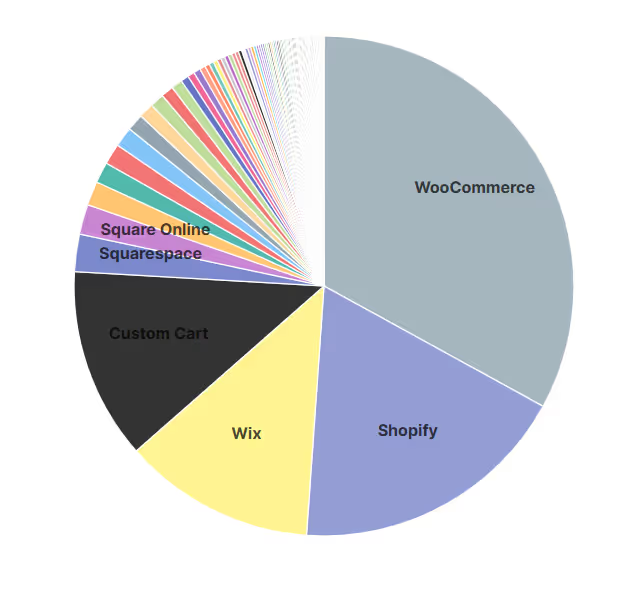
WooCommerce is a free WordPress plugin that turns your site into an online store. It's self-hosted, so you control everything from design to features. Shopify works differently: it's a hosted all-in-one platform starting at $39/month (or $29 billed annually) where Shopify handles the technical side. Across ecommerce platforms, WooCommerce holds roughly 32.6% share and Shopify about 20% (Store Leads).
Shopify vs WooCommerce: Key Differences at a Glance
The main differences come down to how you run your business. Here's what matters most for creators and POD sellers.
Hosted vs Self-Hosted
Shopify does everything for you - hosting, security updates, server care. You sign up, pick a theme, and start selling in hours. With WooCommerce you manage hosting, updates, security, and backups, in exchange for full control. The choice is simply control vs convenience.
Open-Source Flexibility vs Ease of Use
WooCommerce is open-source - change anything, add custom code, connect almost any service, with plugins for most features. Shopify is simpler to learn, but deeper customization means learning its Liquid coding language. For advanced customization, WooCommerce wins.
Best for Print-on-Demand and Creators?
Both work well for print-on-demand businesses. Shopify's app ecosystem makes it easy to connect Podbase, Printful, and Printify in a click. WooCommerce gives more control over your POD workflow - customize product pages and connect several services at once. Either way, the fulfillment partner you choose matters more than the platform.
Also Read:
Ease of Use
Shopify's Plug-and-Play Simplicity
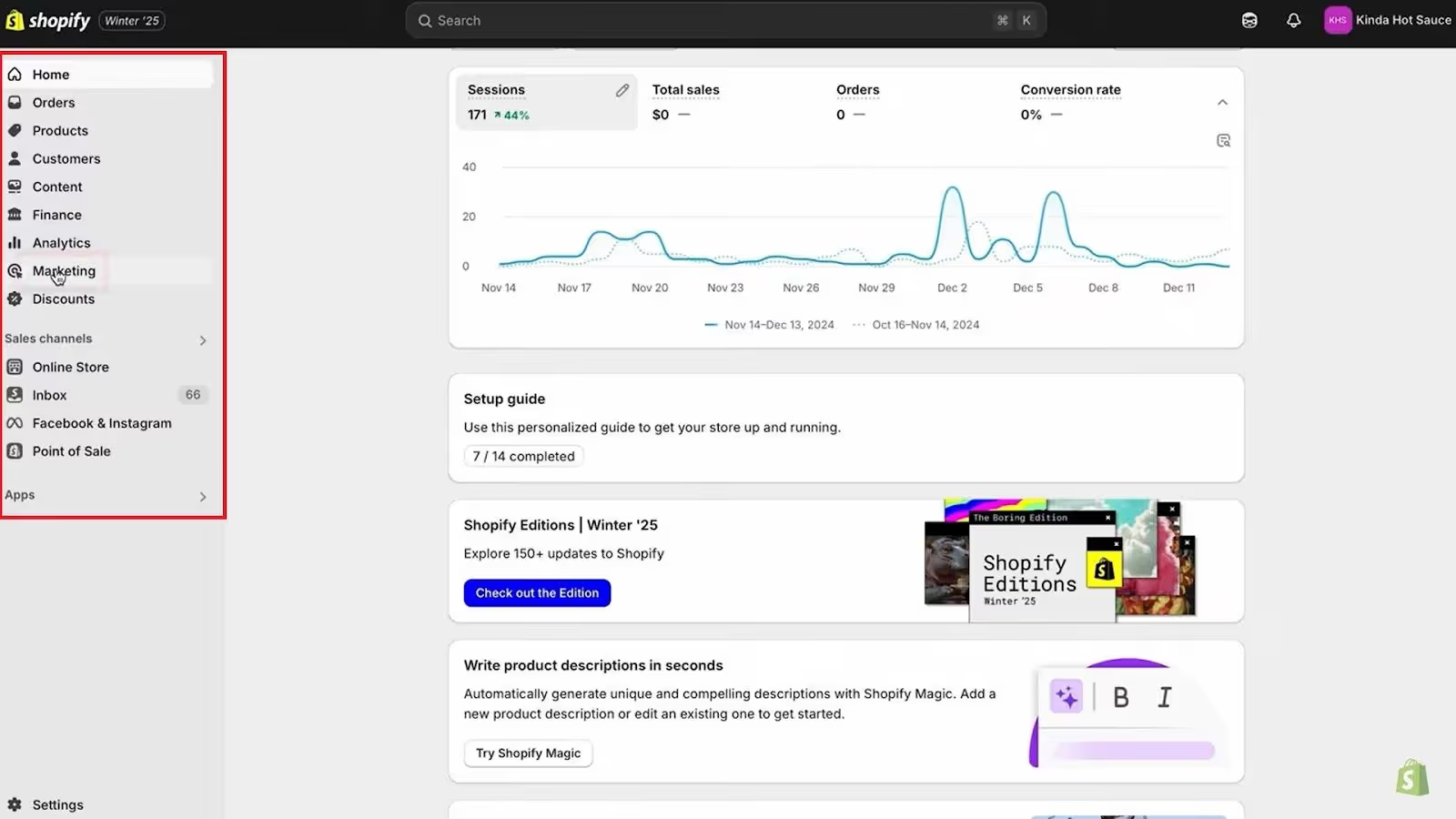
Shopify's dashboard is clean and beginner-friendly - no tech skills needed, with hosting and SSL included.
WooCommerce's Flexibility With Learning Curve
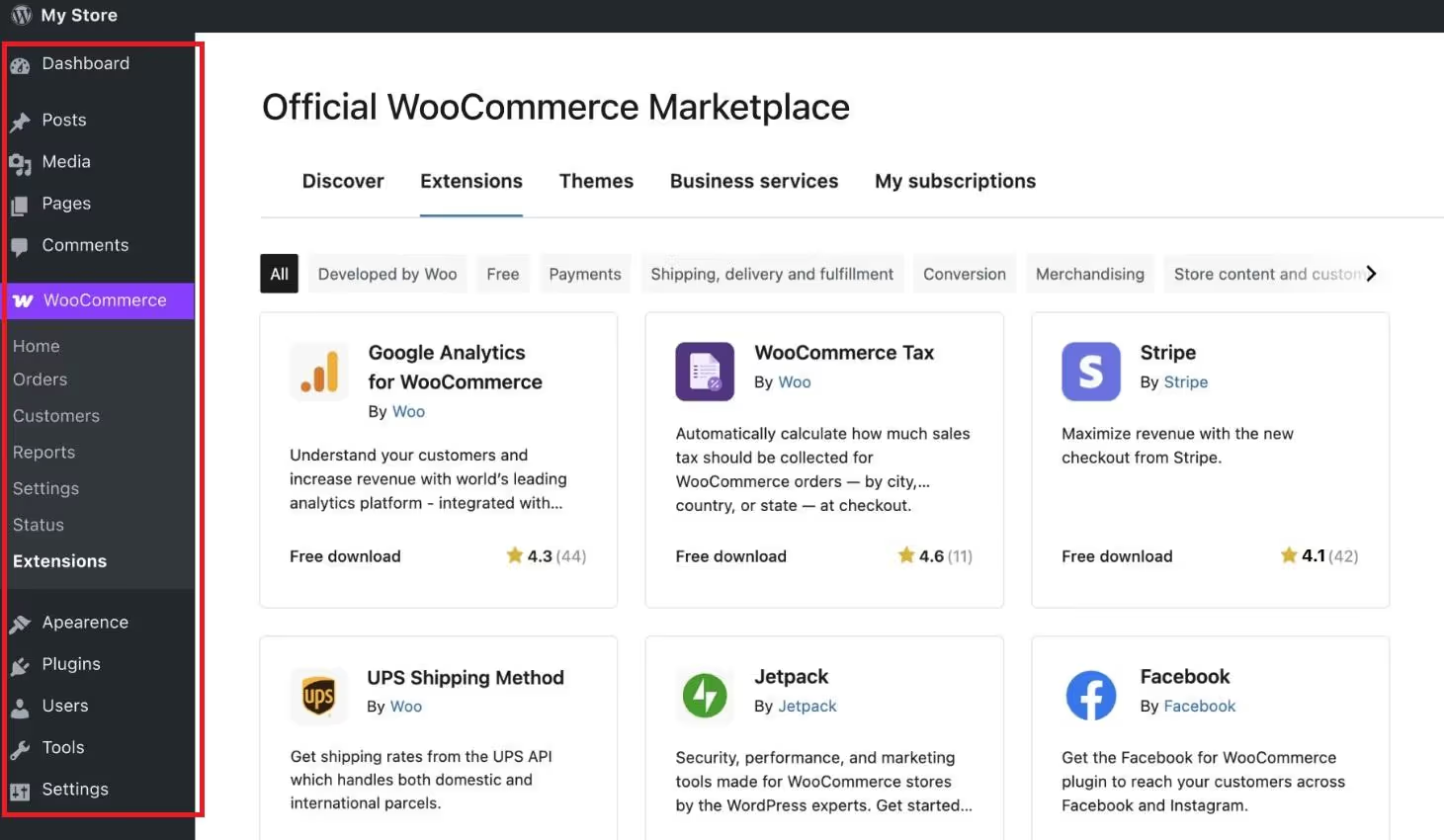
WooCommerce takes more setup - hosting, WordPress, a theme, and plugins. You can build custom checkout flows and integrate special shipping services in ways Shopify doesn't allow. Managed hosts like Hostinger and SiteGround now handle the technical heavy lifting, making it much easier than it used to be. And as our CEO notes, store owners increasingly build their own scripts and integrations with AI - no coding experience required - and the fulfillment flows still work well.
Design and Customization
Shopify Themes: Clean but Costly
Shopify's store offers 250+ polished designs that look great out of the box; premium themes cost about $120-$400, and advanced changes need coding.
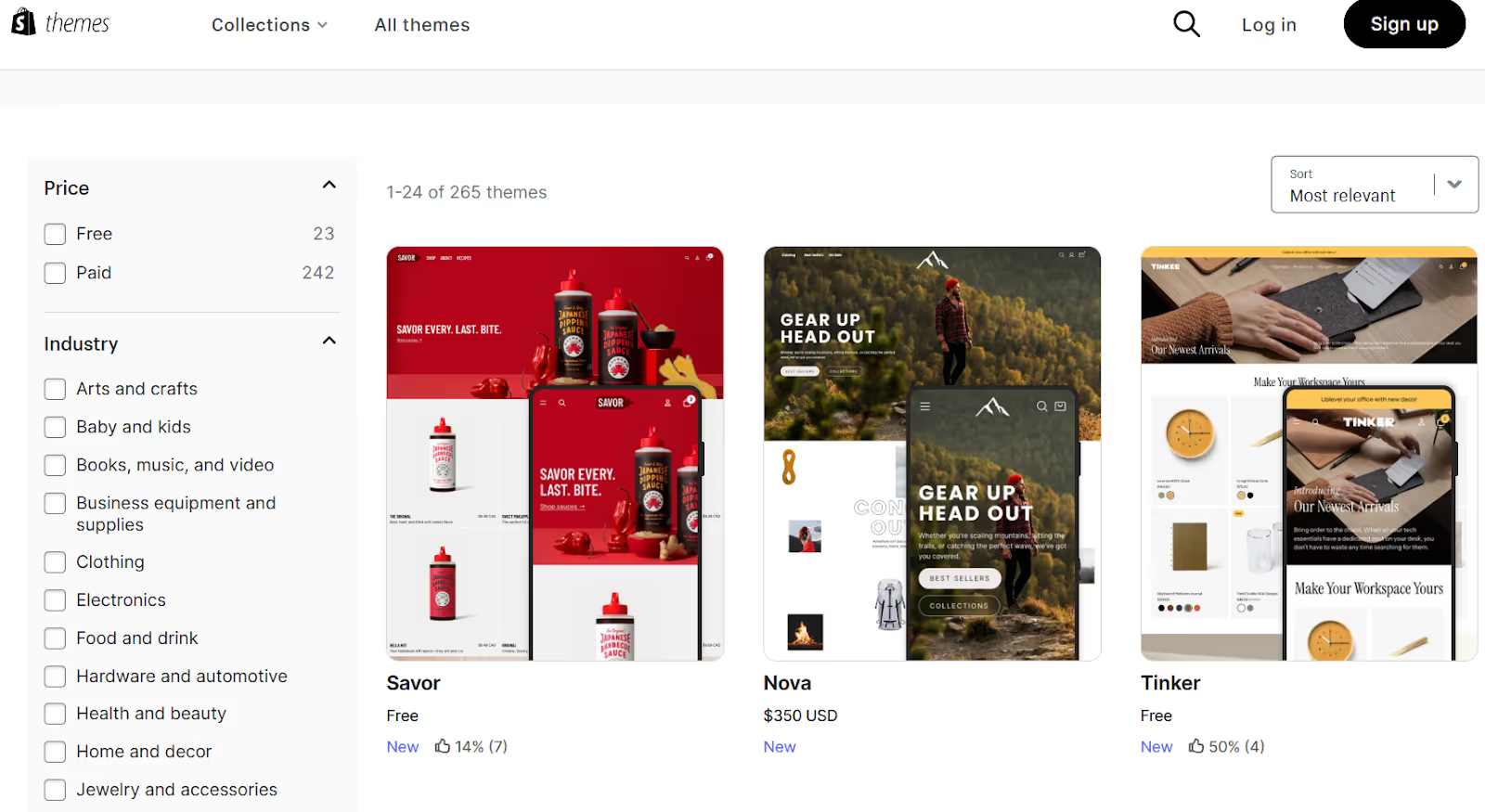
WooCommerce Themes: Flexible, Block-Ready
WooCommerce hosts 112 themes, with 1,500+ premium options on ThemeForest, plus full control via WordPress's block editor.
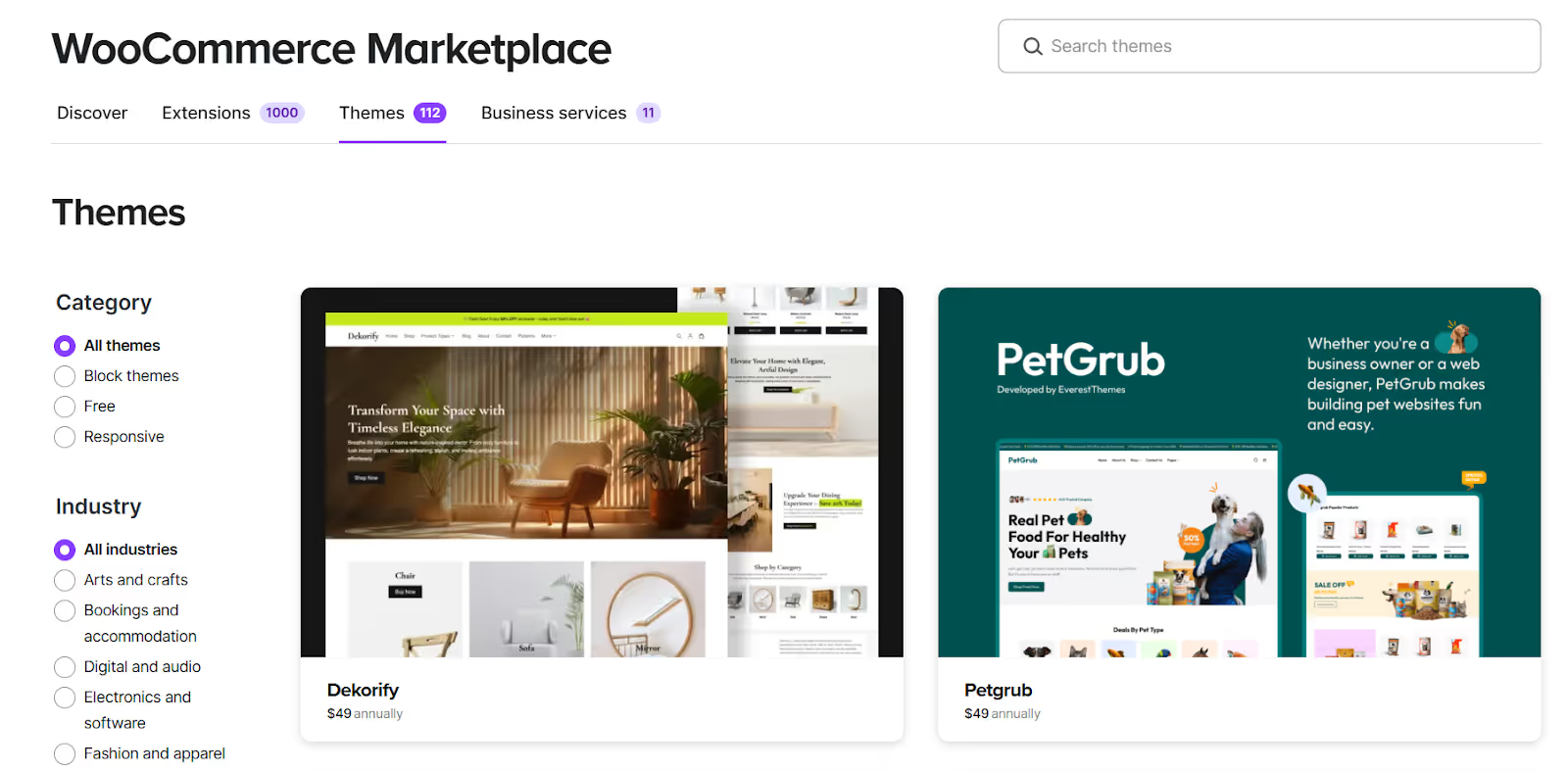
AI Site Builders and Customization in 2026
AI tools like ZipWP and 10Web can now build full WooCommerce stores for you, cutting setup time. For POD sellers, Podbase works with both platforms, adding design control and product previews that improve the customer experience.
Ecommerce Features and App Ecosystem
Shopify's Built-in Ecommerce Tools
Shopify includes everything you need - an app store with thousands of extensions, built-in analytics, fraud protection, smooth multi-device checkout, and abandoned-cart recovery. Because Shopify runs the whole system, it all works together.
WooCommerce + Plugin Flexibility
WooCommerce offers around 10,000 plugins on WordPress.org and 2,000+ elsewhere. The downside: too many plugins can slow your site and add security and upkeep overhead.
Pros and Cons for POD + Digital Products
Shopify's POD apps connect to suppliers with little setup. WooCommerce is great for hybrid stores - sell digital and physical products together, create bundles, even run a membership site.
Also Read:
- Shopify vs. Etsy: Which Platform Is Right for Your Business?
- Top Etsy Shop Ideas to Kickstart Your Creative Business
Best for SEO and Content Marketing
WooCommerce's SEO Edge
WooCommerce runs on WordPress, which is excellent for content marketing - post blogs, tutorials, and behind-the-scenes updates right on your store, with Yoast and RankMath to manage meta tags and settings. Content builds trust and brings in traffic.
Shopify's SEO Limitations (and Fixes)
Shopify's blog is basic next to WordPress; product-page SEO works fine, but content marketing takes extra apps like Smart SEO. Many top Shopify stores run a WordPress blog on a subdomain to get the best of both - great for creators sharing tips that funnel traffic to their POD products.
Sales, Shipping, and Payment Processing
Shopify's Shipping Discounts + Shop Pay
Shopify negotiates lower rates with USPS, UPS, and FedEx, calculates real-time carrier rates automatically, and offers Shop Pay - used on over 500,000 sites - for faster checkout.
WooCommerce's Plugin-Based Shipping
WooCommerce uses tools like ShipStation or WooCommerce Shipping for discounted rates - more setup, but more control, including advanced rules like free shipping thresholds, location-based rates, or product-specific rates.
POD Compatibility (Printful, Printify, Podbase)
Both platforms work well with print-on-demand services. Shopify makes setup easy with one-click apps; WooCommerce lets you control product display and pricing more. Podbase works with both, handling fulfillment while you focus on marketing.
Pricing and Transaction Fees (Updated for 2026)
Shopify Pricing: Transparent but Cumulative
Shopify's plans are simple, but costs add up with premium themes and apps. Current plans: Basic $39/month, Grow $105/month, Advanced $399/month, and Plus from $2,300/month. Annual billing cuts the core plans by about 25% (Basic $29, Grow $79, Advanced $299), and a $5/month Starter plan covers social and chat selling.
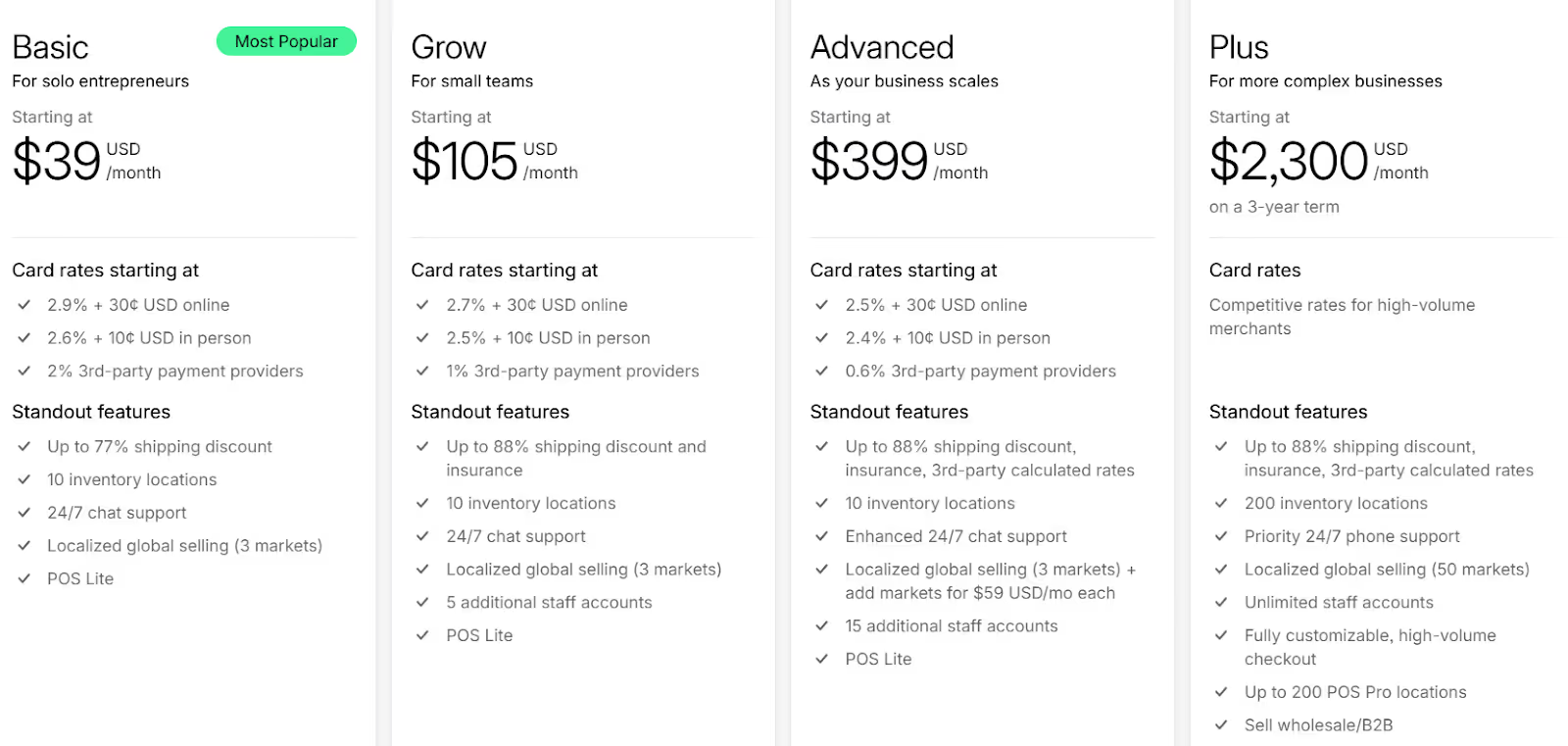
Image via Shopify
WooCommerce: Free Plugin, But Add-On Costs
The WooCommerce plugin is free; you pay for hosting (around $3-10/month), SSL, and premium extensions (up to $300+/year). Managed WordPress hosts like SiteGround or Hostinger handle maintenance and often optimize WooCommerce for you.
POD-Specific Expenses to Watch
Both platforms carry extra POD costs - but note Podbase itself is pay-per-sale with no subscription, so you only pay when you earn. Typical add-ons across the wider stack:
- POD service subscriptions ($0-99/month - Podbase is free to start)
- Product mockup tools ($12-15/month - included free with Podbase)
- Design software ($20-50/month)
- Email marketing ($20-100/month)
- Product research tools ($19-39/month)
Also Read:
- How to Make Money as an Artist: A Practical Guide
- How to Avoid Copyright Infringement in Print-on-Demand
Which Platform Works Best for Print-on-Demand?
Shopify + Podbase: Seamless Integration
Shopify is great for speed and simplicity - POD apps install in minutes and import products in one click, so you can have hundreds of products live in hours.
WooCommerce + Podbase: More Design Control
WooCommerce shines when you need control - custom product configurators, unique pricing, and sophisticated upsell sequences Shopify themes can't handle.
Key POD Tools That Work With Both
Both work with Printful, Printify, and Podbase. The difference is setup speed vs customization - choose based on whether you prioritize getting to market fast or building a custom brand experience.
Verdict: Shopify vs WooCommerce for Your Online Business
Here's the head-to-head at a glance.
For POD sellers, Shopify offers faster setup while WooCommerce provides better customization - and both work well with Podbase.
FAQ
1. Is WooCommerce or Shopify better?
Neither is universally better; it depends on your priority. Shopify is better for speed, simplicity, and a fully managed store that launches in hours. WooCommerce is better for control, customization, and content-driven SEO. For print-on-demand sellers, both work well with Podbase, so the platform choice is about workflow, not fulfillment.
2. Is WooCommerce cheaper than Shopify?
WooCommerce can be cheaper because the plugin is free; you mainly pay for hosting, around $3 to $10 a month, plus any premium extensions. Shopify starts at $39 a month (or $29 billed annually), with a $5 Starter plan for social selling. Factor in apps and themes when comparing real total cost.
3. Which is better for SEO, WooCommerce or Shopify?
WooCommerce has the SEO edge because it runs on WordPress, with full blogging and tools like Yoast and RankMath for content marketing. Shopify handles product-page SEO well but its blog is more basic; many Shopify stores add a WordPress blog on a subdomain to compete on content.
4. Which is better for print on demand, Shopify or WooCommerce?
Shopify is faster for print on demand thanks to one-click POD app installs, while WooCommerce gives more control over product pages, pricing, and upsell flows. Both integrate with Podbase, Printful, and Printify. Choose Shopify to get to market quickly, or WooCommerce to build a highly customized brand experience.
5. Is WooCommerce harder to use than Shopify?
Yes, WooCommerce has a steeper learning curve because you set up hosting, WordPress, a theme, and plugins yourself. Shopify is plug-and-play with hosting and SSL included. However, managed WordPress hosts like SiteGround and Hostinger, plus AI site builders, have made WooCommerce much easier than it used to be.
6. Can I use both Shopify and WooCommerce?
Yes. A common approach is to validate fast on Shopify (or Etsy), then scale content and custom UX with WooCommerce, or run a hybrid stack such as a Shopify store with a WordPress blog. Podbase connects to both via apps and an Open API, so your fulfillment stays consistent if you switch or combine platforms.
Conclusion
In the WooCommerce vs Shopify decision, there's no single winner - Shopify is best for a fast, managed launch; WooCommerce for control and content-led SEO. Here's the contrarian point for POD sellers specifically: the platform debate is overblown. Your store builder is a preference; your fulfillment partner is what customers actually feel. Pick whichever platform fits your stage, validate fast, and connect a reliable POD partner. Podbase works with both Shopify and WooCommerce (and any custom store via Open API), so you keep the same quality and margins whichever you choose. Sign up with Podbase today, or switch your provider to Podbase if you're already selling.

Saulius Meilutis is the CEO of Podbase, helping creators and entrepreneurs monetize their ideas with print-on-demand. He shares insights on eCommerce, growth, and building lean online businesses.

.avif)









.avif)
.avif)
.avif)
.avif)
.avif)
.avif)

.avif)






.avif)

.avif)


.avif)

.avif)

.avif)