When it comes to organic reach and engagement, timing matters. Post when your audience is active and more people see and interact with your content quickly; miss the window and even great content can get buried. Your ideal schedule depends on your audience's habits, time zones, and daily routines.
Major studies from Sprout Social, SocialPilot, and Later - each analyzing millions of posts - reveal clear patterns in when people are most active. In this guide we compare those studies, break down daily, content-type, industry, and regional patterns, and add something the generic timing guides skip: an honest, seller's-eye view of how much timing actually matters when your goal is sales, not just likes.
Why Posting Time Matters on Instagram
Millions of posts and social media ads compete for attention every second. Instagram's algorithm rewards content that gains quick engagement - likes, comments, and shares within the first hour push a post into more feeds. That early momentum drives reach.
It's also simple human behavior. People scroll more during morning and evening commutes, on lunch breaks around midday, and late at night before bed. Posting into those windows gives your content a running start instead of leaving performance to chance.
One caveat worth stating plainly, because it comes from running marketing for thousands of ecommerce sellers: timing is a multiplier on good content, not a substitute for it. We'll come back to that after the benchmarks.
Also Read:
- Social Media Advertising: How To Run Your First Ad Campaign
- How To Start A Print-On-Demand Business: Full Guide
The Best Overall Time to Post on Instagram (Latest Study Data)
There's no one-size-fits-all answer, but the major studies show consistent trends:
- Sprout Social found engagement peaks between 10 a.m. and 3 p.m. - mid-morning through mid-afternoon, aligned with work and school breaks.
- SocialPilot saw the strongest results in the early morning, 7-9 a.m., catching people's first scroll of the day.
- Later takes a global view and recommends 5 a.m. as the most consistent time worldwide - posting before feeds get crowded.
The throughline: early posting wins more often than it loses. Cross-reference these benchmarks with your own Instagram Insights for the best results.

Best Times to Post by Day of the Week
Engagement varies day to day. Here's the breakdown from the combined study data:
Monday - 5 a.m. or Mid-Morning (10 a.m.-12 p.m.)
Mondays set the tone for the week. Early risers scroll before work, and mid-morning catches the first break of the day. If you have important announcements or high-value content, the start of the week consistently performs.
Tuesday - 5 a.m. Strongest, With Secondary Peaks at Lunch
The early-morning scroll pays off again. Miss it, and lunchtime is your second window.
Wednesday - High Engagement From 10 a.m.-3 p.m.
Midweek is the sweet spot for many accounts, with a long, steady engagement plateau through the workday.
Thursday - 4-5 a.m. and Lunchtime Scrolls
Pre-dawn posting keeps performing, with a midday bump as people check feeds over lunch.
Friday - 11 a.m.-2 p.m. Before the Weekend Slowdown
Late morning and early afternoon stay steady; after 3 p.m., activity declines as people log off for the weekend.
Saturday - Early Morning, Around 5 a.m.
Weekend behavior is less predictable, but content posted early is already circulating when people wake up and browse casually.
Sunday - 12 a.m., 5 a.m., and Late Evening Around 11 p.m.
Sunday shows three peaks, reflecting relaxed late-night scrolling and the wind-down before the week begins.
Also Read:
Best Time to Post by Content Type
Different formats peak at different hours:
Reels - 12 a.m.-2 p.m. on Weekdays
Reels are Instagram's most-promoted format, and these hours capture both late-night scrollers and midday breaks. Because the algorithm pushes Reels hard, posting in these windows improves your shot at the Explore page.
Carousels - Tuesdays at 5 a.m.
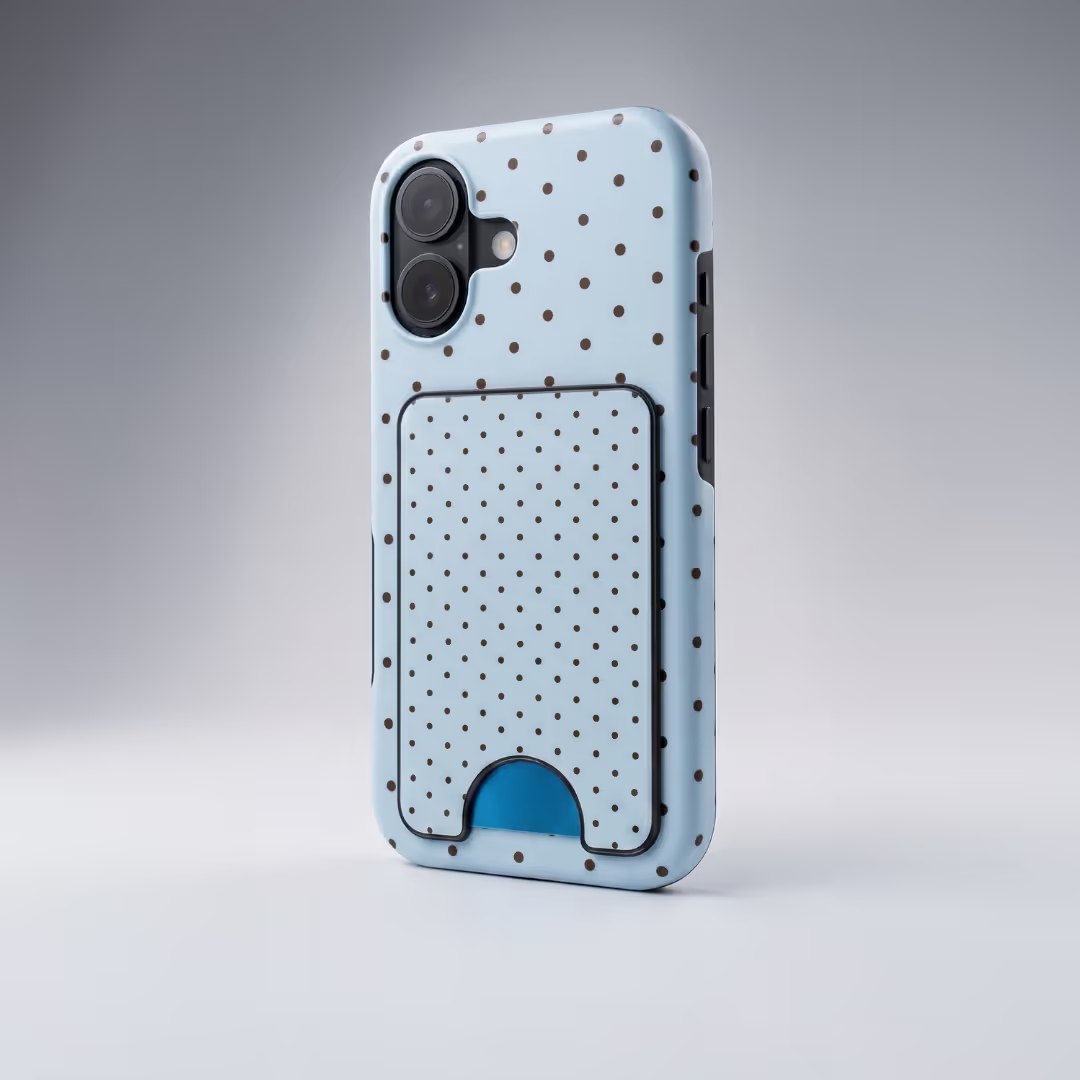
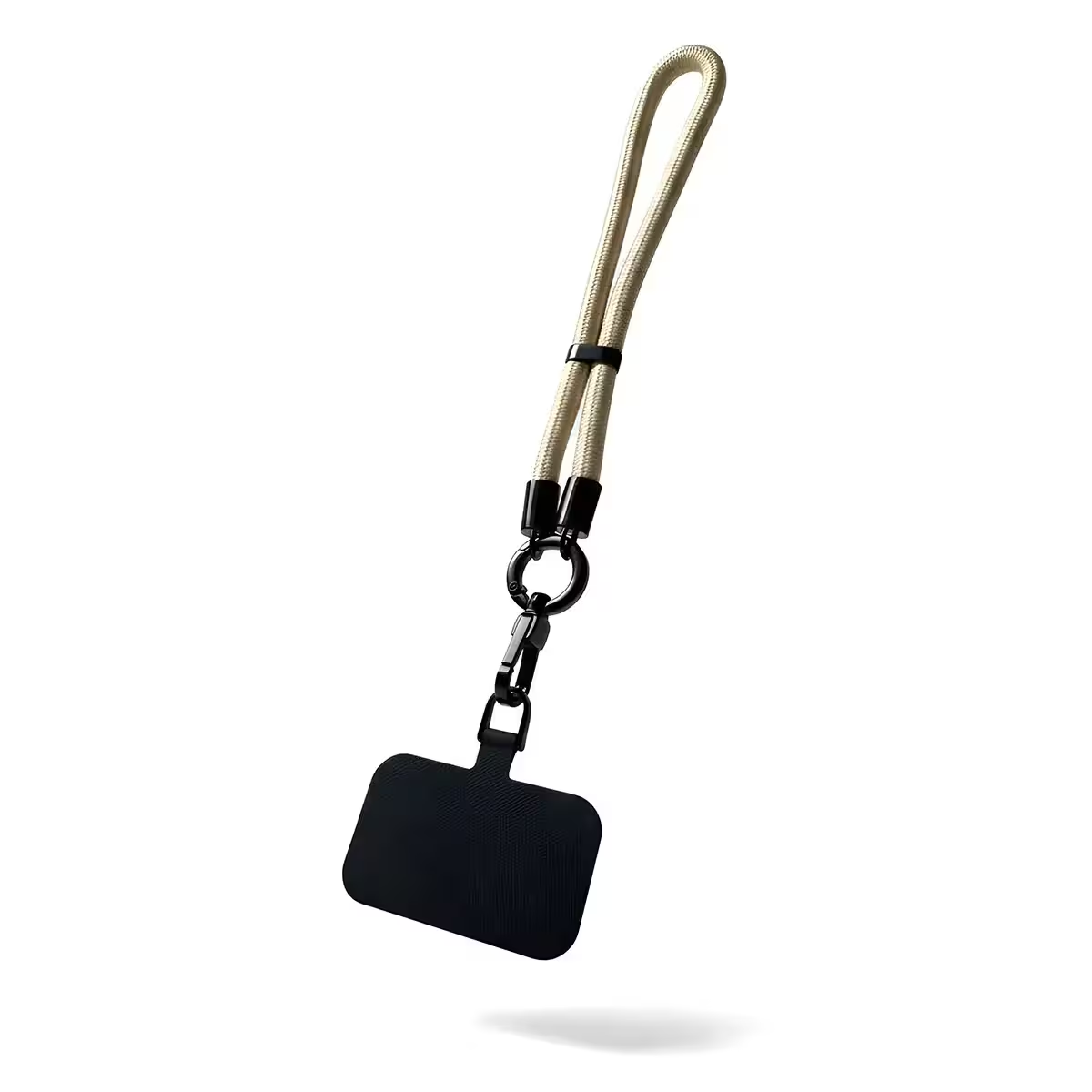
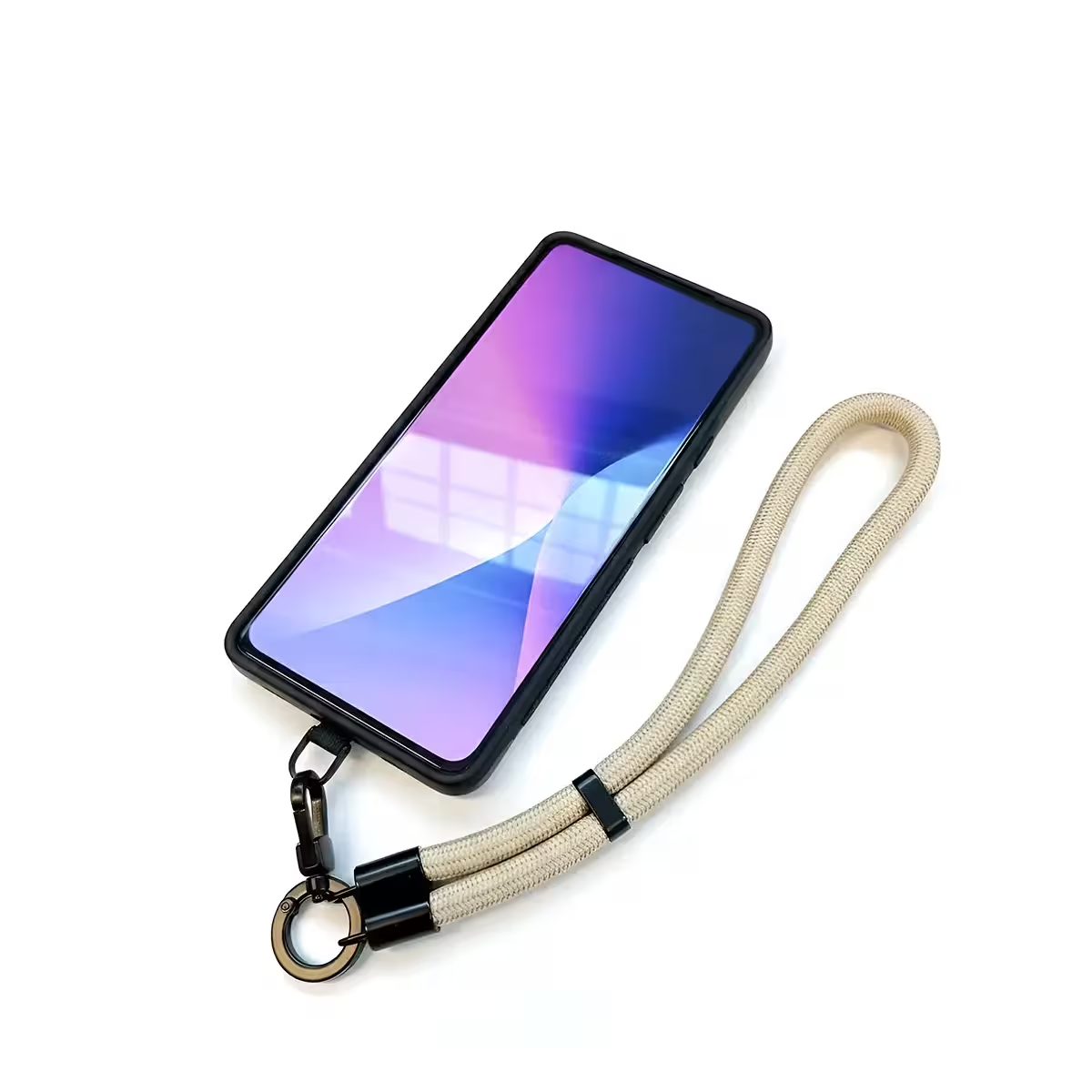
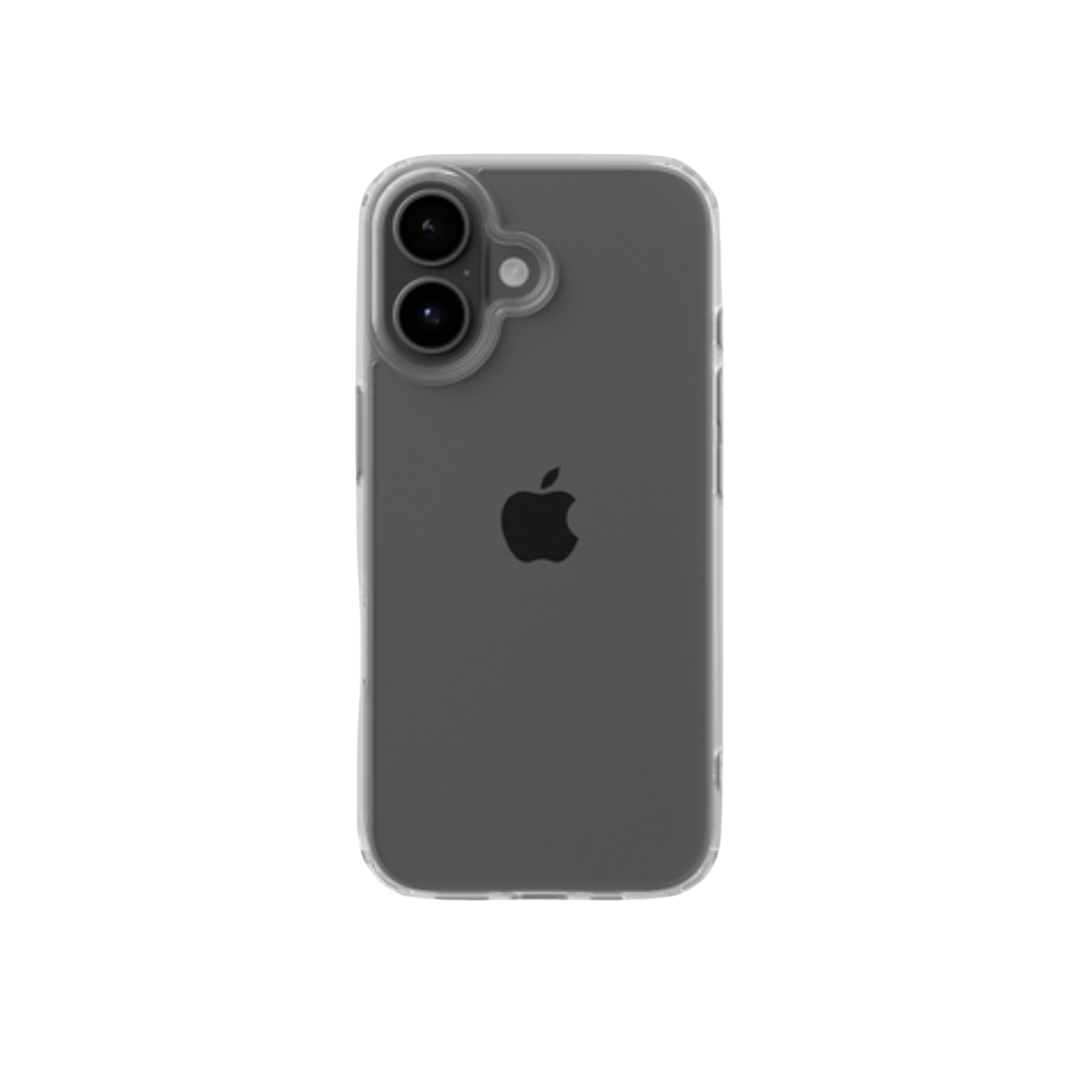
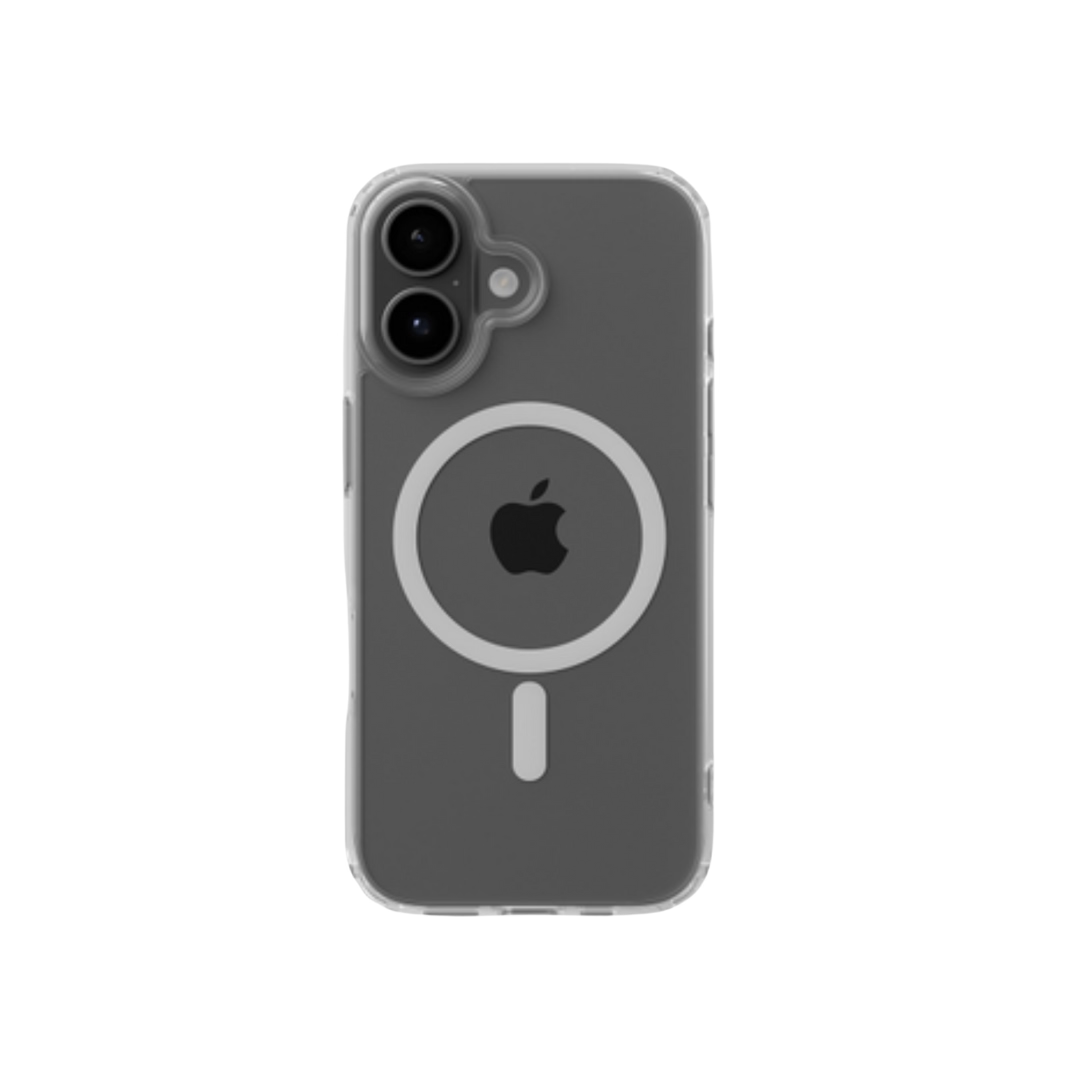
Carousels suit tutorials, storytelling, and multi-image product showcases - think phone cases, tablet cases, and laptop cases shown from multiple angles.
Stories - Lunch Breaks (11 a.m.-2 p.m.)
Stories are built for quick taps during short breaks, making midday the natural window.
Best Time to Post by Industry
Every audience differs - a fitness brand's peak hours won't match a print-on-demand store's. Industry benchmarks from the study data:
- Retail: Mondays and Wednesdays at 11 a.m.
- Education: Late morning, Wednesdays and Thursdays
- Finance: Early afternoon, Mondays and Tuesdays
- Fitness & Wellness: 6-8 a.m. and 6-10 p.m.
- Fashion: Weekends, especially Saturdays
- Travel: Sundays at 10 a.m. and 12 p.m.
Also Read:
Best Time to Post on Instagram by Region
Audience activity shifts with time zones, so plan globally:
- USA: Weekdays 9 a.m.-3 p.m. (EST) - work breaks and midday scrolling.
- Europe: Evenings, 6-9 p.m. local - after-work browsing.
- Asia (India, Philippines, Pakistan): Late evenings, 6-10 p.m. - post-work and post-school hours.
- Australia: Mornings 7-9 a.m. and early evenings 5-7 p.m. - commute windows.

What Timing Actually Means If You're Selling (The Part Most Guides Skip)
Here's the honest, first-party reframe - and it comes from data, not opinion. If your Instagram exists to drive sales rather than vanity metrics, posting time is a third-order lever. What our CMO sees across thousands of Podbase sellers: "The majority, 99% of our sellers right now, are getting the majority of their traffic from social media ads." Paid distribution doesn't care what time you posted - it cares whether the creative resonates and whether your store converts.
His blunt assessment of the organic game post-2026: "Organic content for organic traffic is already more of an advanced-player and advanced-seller tactic. It is not really a beginner game anymore." And on what separates winners: "Sellers who take social seriously and combine it with a proper store and proper retention usually perform much better than those who just run some ads and hope."
So the priority order for a seller is: (1) product and creative people actually want, (2) a store that converts the click, (3) consistent posting + paid amplification - and then (4) timing optimization to squeeze extra organic reach from the same content. Perfect timing on a weak offer earns you well-scheduled silence. One more practical trick from the seller playbook: organic posts are a free testing lab. The posts that earn unusual engagement - at any hour - are exactly the creatives worth putting ad budget behind, and the designs worth putting on products.
How to Find Your Best Time to Post
Benchmarks are the starting point; your own audience is the answer.
- Check Instagram Insights: Open the Audience tab → Most Active Times to see when your followers are online, and plan around it.
- Test for 2-4 weeks: Post at varied times and track which windows earn the most engagement.
- Use scheduling tools: SocialPilot's AI timing tool or Sprout's ViralPost can suggest windows based on your account's data.
Also Read:
Common Mistakes to Avoid
- Posting only when you're free: Your schedule isn't your audience's. Post when followers are online, not when it's convenient.
- Ignoring time zones: A 9 a.m. New York post can miss your London audience entirely. Adjust for where your followers actually live.
- Relying only on general studies: Benchmarks orient you; your Insights data decides. Test and track.
- Optimizing timing before the basics: The biggest mistake we see from sellers - fine-tuning posting hours while the store, offer, or creative is the real bottleneck.
Key Takeaways
Across the major studies, the strongest global windows fall in the early morning (roughly 3-6 a.m.) and the 10 a.m.-3 p.m. stretch, with Monday through Wednesday delivering consistently for most industries. Schedule high-value announcements early in the week, treat Reels differently from static posts, and always validate against your own Instagram Insights.
And if you're posting to sell: nail the product, creative, and store first - then let timing add the extra margin. When the attention comes, make sure there's something to buy. Set up your Podbase store free and turn your best-performing posts into products.
FAQ
1. What is the best time to post on Instagram in 2026?
Across Sprout Social, SocialPilot, and Later, the strongest global windows are early morning (roughly 5 to 9 a.m.) and the 10 a.m. to 3 p.m. stretch, aligned with commutes, work breaks, and lunch. Early posting wins more often than it loses, but you should still validate against your own Instagram Insights.
2. What are the best days to post on Instagram?
Monday through Wednesday deliver the most consistent engagement for most industries, making them ideal for high-value announcements. Wednesday in particular shows a long, steady plateau from 10 a.m. to 3 p.m. Friday afternoons slow down after 3 p.m., while weekends are less predictable and reward early-morning posts.
3. Does posting time actually matter if your goal is sales?
Less than most guides claim. For sellers it is a third-order lever: 99% of Podbase sellers get most of their traffic from social media ads, and paid distribution does not care when you posted. Product, creative, and a store that converts decide sales; timing only fine-tunes the extra organic reach from the same content.
4. What is the best time to post Reels, Carousels, and Stories?
Different formats peak at different hours. Reels do best from roughly 12 a.m. to 2 p.m. on weekdays, capturing late-night scrollers and midday breaks. Carousels suit early slots like Tuesday at 5 a.m. for tutorials and multi-angle product showcases. Stories perform during lunch breaks, about 11 a.m. to 2 p.m.
5. How do you find your own best time to post on Instagram?
Start with benchmarks, then let your audience decide. Open Instagram Insights, check the Audience tab for Most Active Times, and plan around it. Test varied posting times for two to four weeks and track which windows earn the most engagement, and use scheduling tools like SocialPilot or Sprout to suggest data-based windows.
6. How does the best posting time change by region?
Adjust for where your followers live. In the USA, weekdays 9 a.m. to 3 p.m. EST work well; in Europe, evenings 6 to 9 p.m. local; in Asia (India, Philippines, Pakistan), late evenings 6 to 10 p.m.; and in Australia, mornings 7 to 9 a.m. and early evenings 5 to 7 p.m. during commute windows.

Saulius Meilutis is the CEO of Podbase, helping creators and entrepreneurs monetize their ideas with print-on-demand. He shares insights on eCommerce, growth, and building lean online businesses.

.avif)






.avif)
.avif)
.avif)
.avif)
.avif)
.avif)

.avif)



.avif)
.avif)

.avif)

.avif)

.avif)