You can start an online store without inventory by selling made-to-order or third-party-fulfilled products - print-on-demand, dropshipping, or digital downloads - so you never buy or store stock before a customer pays.
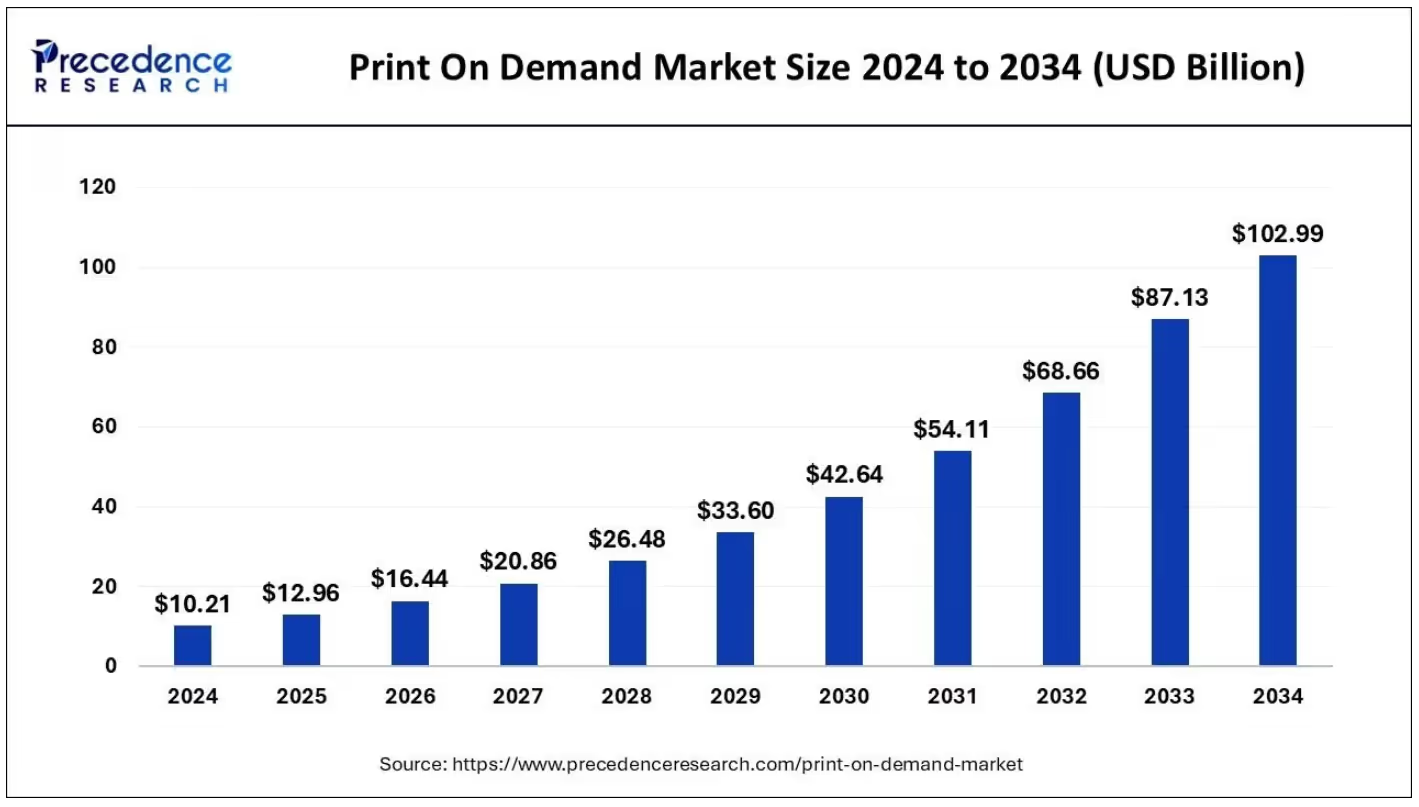
Traditionally, launching a store meant three things: a big up-front investment, storage space, and the constant worry of unsold stock. In 2026, that model is optional. According to Precedence Research, the print-on-demand market reached about $12.96 billion in 2025 and is projected to hit roughly $118.85 billion by 2035 - one of the clearest signals that inventory-free selling has gone mainstream. Our own print-on-demand statistics show the same shift across tech accessories, wall art, and drinkware.
This guide walks through every no-inventory model, the exact steps to launch, and where the real margins are - using first-party data from inside Podbase, not generic advice you have read ten times before. Let us get into it.
Why Should You Sell Without Inventory?
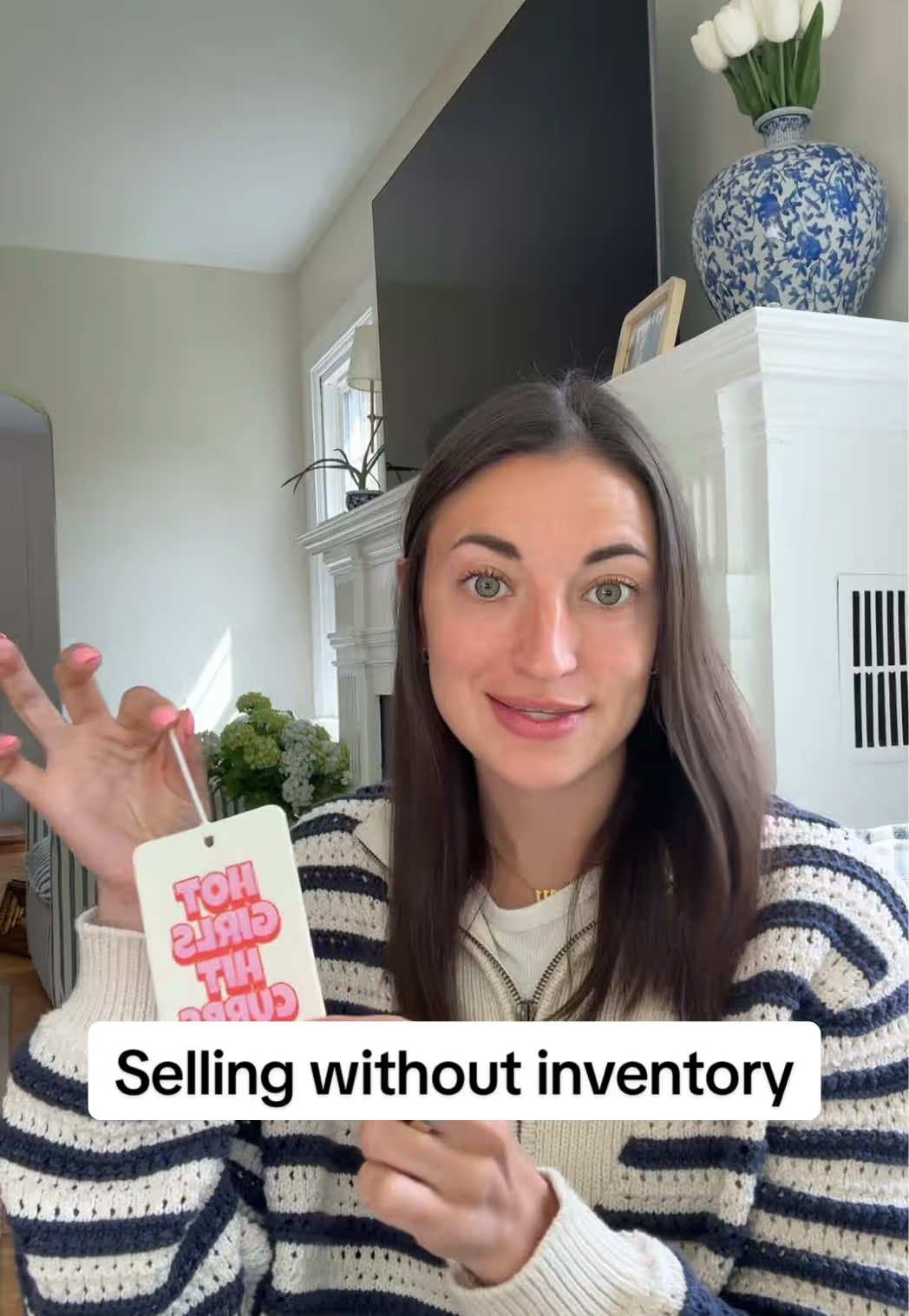
If you are low on funds or testing a business idea, no-inventory ecommerce is the smartest place to start because it removes the one risk that sinks most new stores: buying stock that never sells. Selling products without inventory lets you skip stocking, packaging, and minimum order quantities entirely.
This is not a small edge. Across the industry, only about 24% of print-on-demand shops are still operating three years after launch - and the up-front cost of inventory is one of the biggest reasons the rest fold. When your supplier only produces an item after a customer pays, that failure mode disappears.
Our Head of Product Development, Justina, puts the inventory math plainly: “POD significantly reduces the risk of overstocking the same items - it is not only clients that don’t have to buy hundreds of cases with hopes they will sell them all one day.” As demand for a device fades, Podbase simply buys less material, so nobody is left throwing away unsold stock.
All you need to begin is a:
- Great idea
- Simple product mockup
- Beginner-friendly platform to bring your idea to life
No-inventory businesses like dropshipping, digital products, or print-on-demand on Etsy lower the barrier that stops most people from ever starting. That simplicity makes selling without inventory ideal for:
- First-time entrepreneurs with limited funds
- Creators launching merch for an existing fan base
- Designers testing product ideas before going all in
Why the Model Works
In 2026, low-risk ecommerce gives you flexibility with minimal downside. Here is why this model works so well:
- Minimal startup costs: no bulk inventory to buy - platforms like Podbase are free to join.
- Quick product testing: you can launch and validate an idea in days, not months.
- No shipping stress: your supplier handles production and fulfillment.
- Scalable operations: you grow without warehousing or staffing limits.
5 Inventory-Free Business Models You Can Start Today
To create an online store without inventory, these five business models let you start and scale without ever touching stock.
1. Print-On-Demand (POD)
Print-on-demand is an ecommerce model where custom products are printed and shipped only when someone places an order. It is the strongest no-inventory model for anyone who wants to build an actual brand rather than resell generic goods.
To start a POD business, here is all you need:
- Unique designs
- A beginner-friendly platform
- A well-defined print-on-demand niche to serve (e.g., gamers, pet lovers)
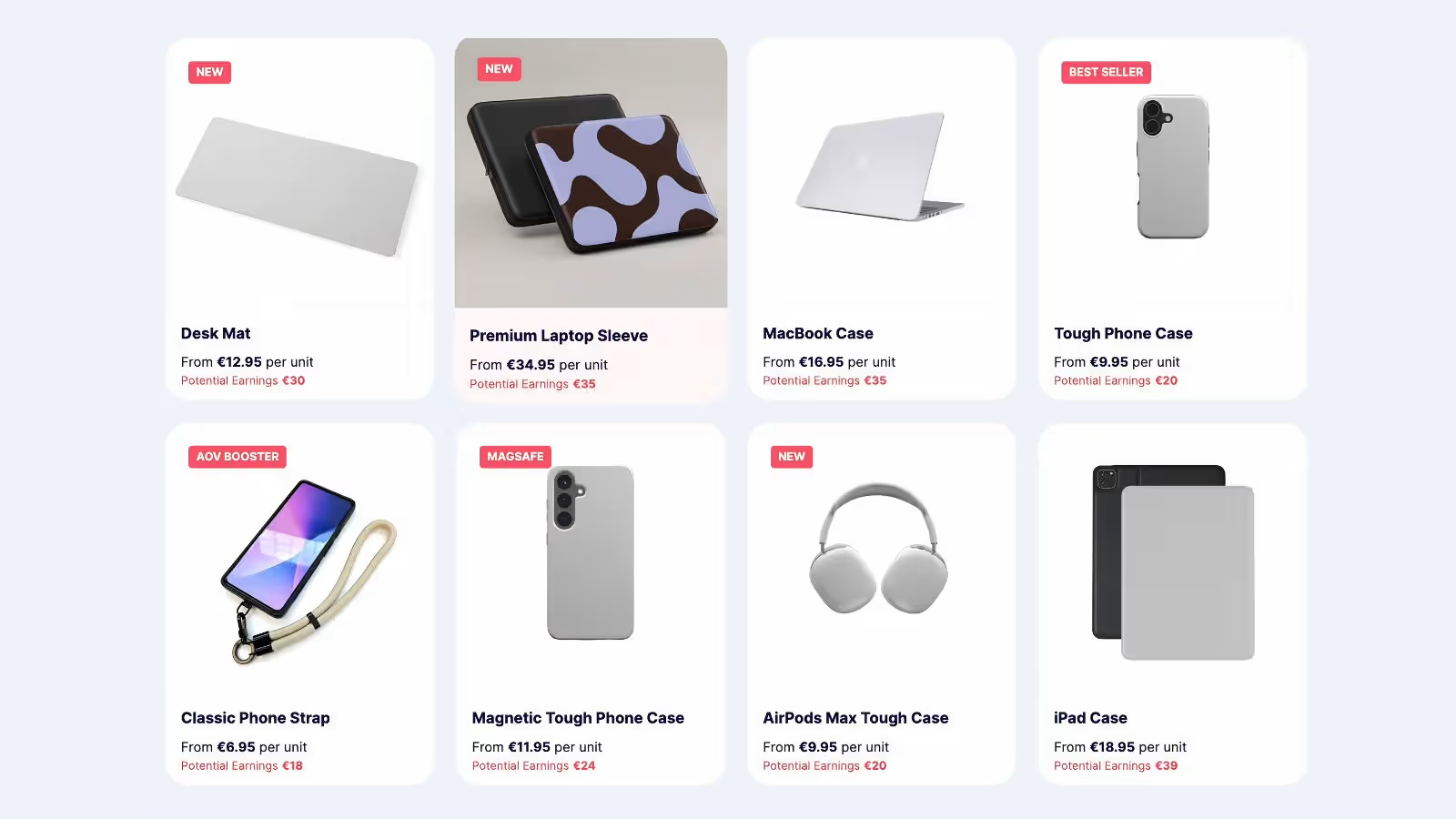
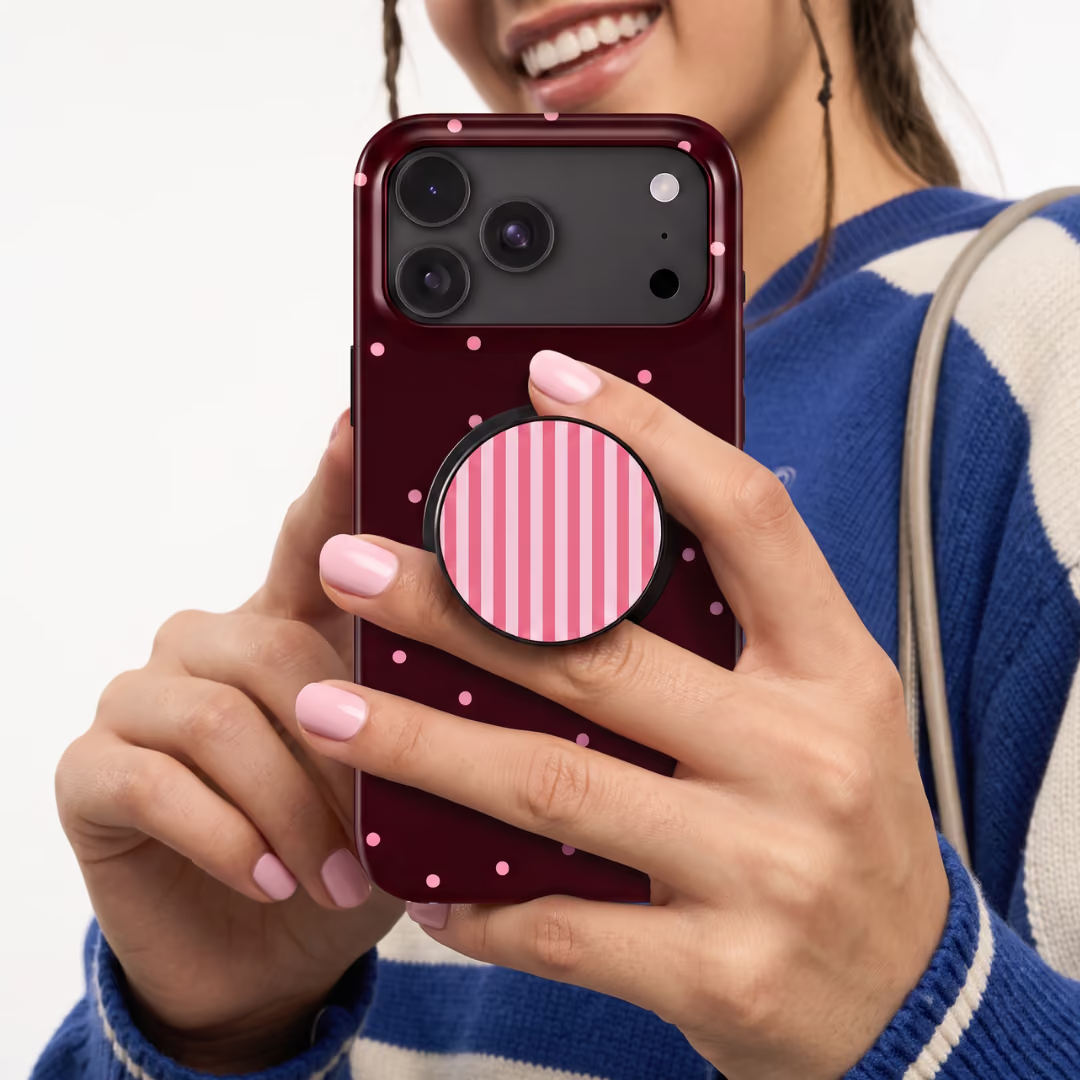
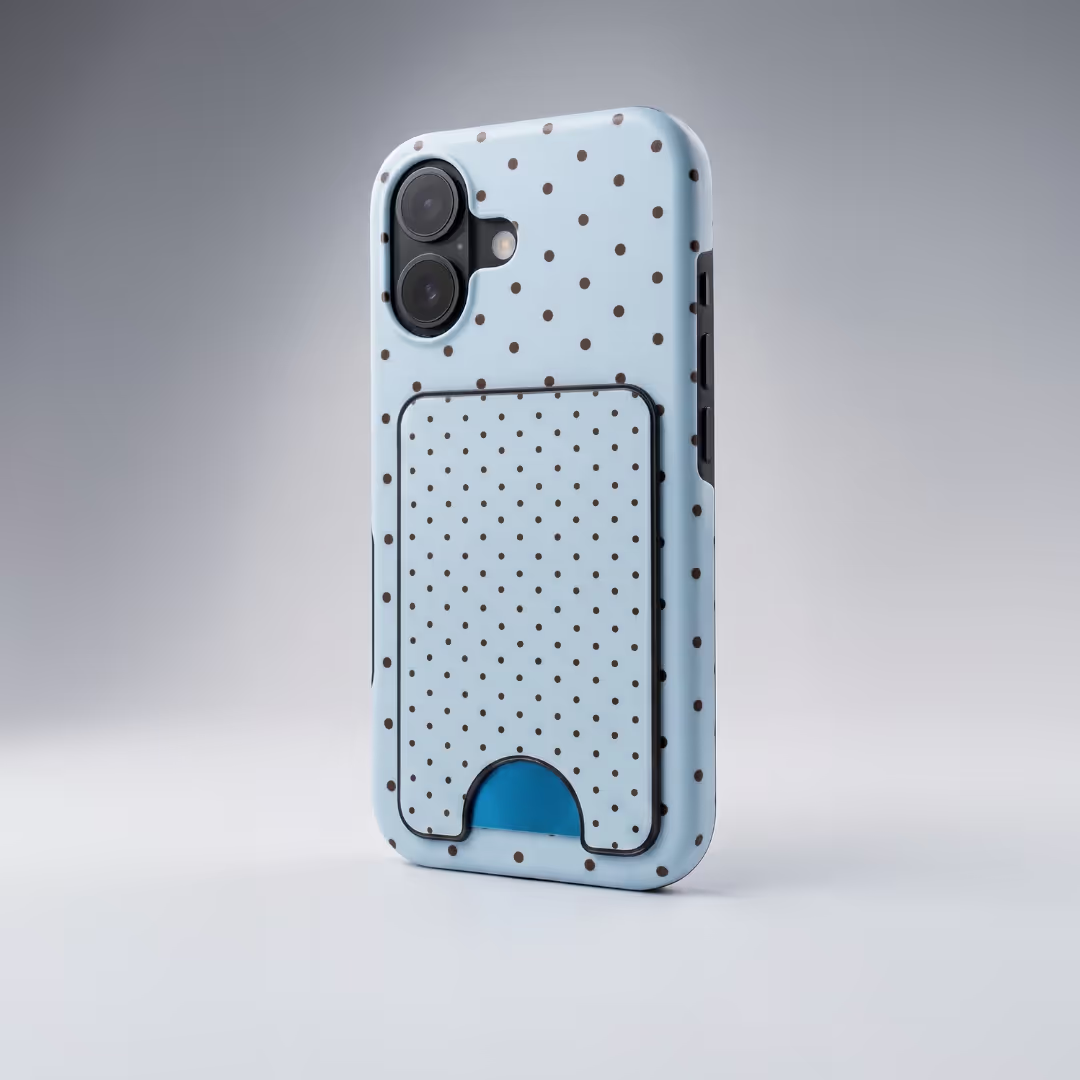
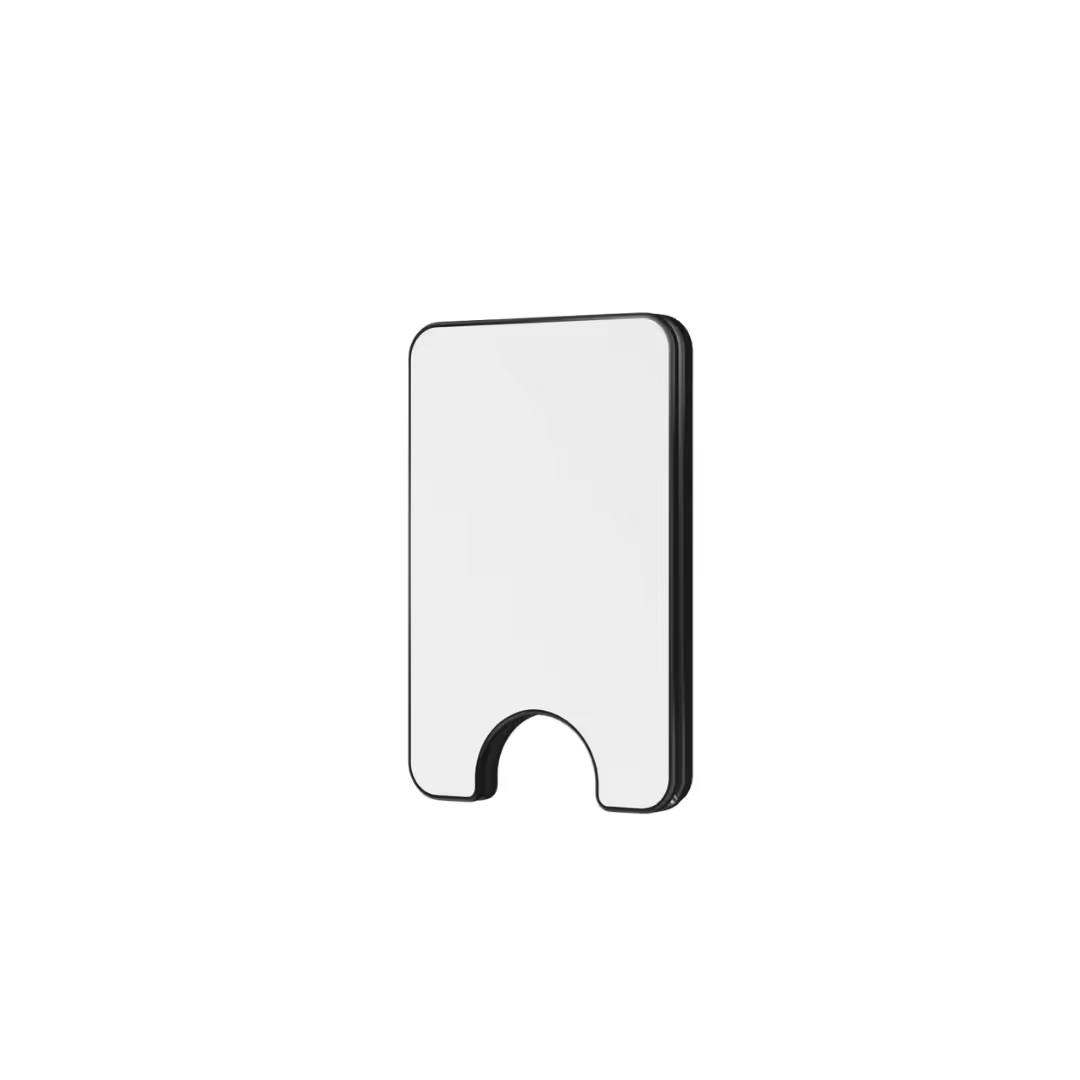
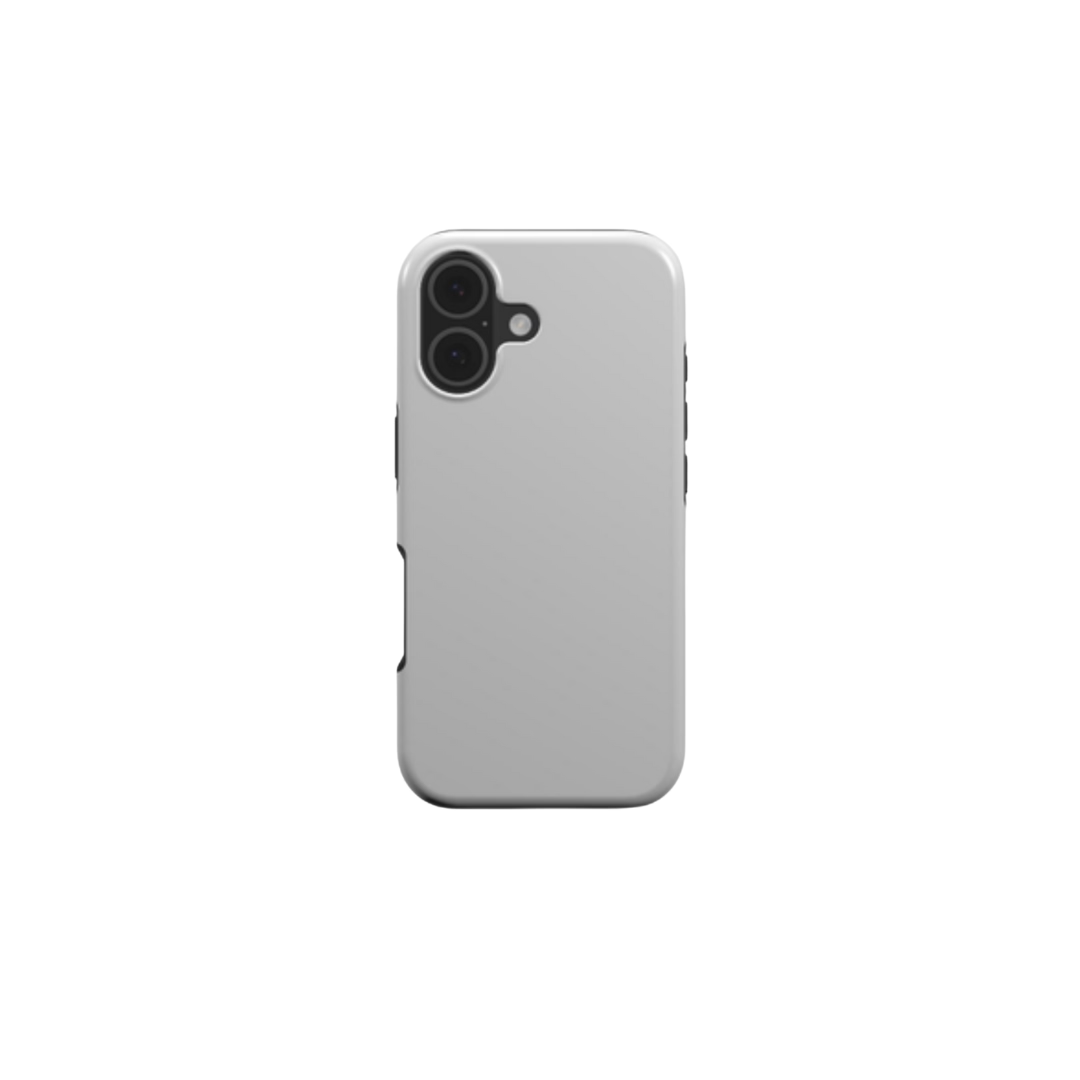
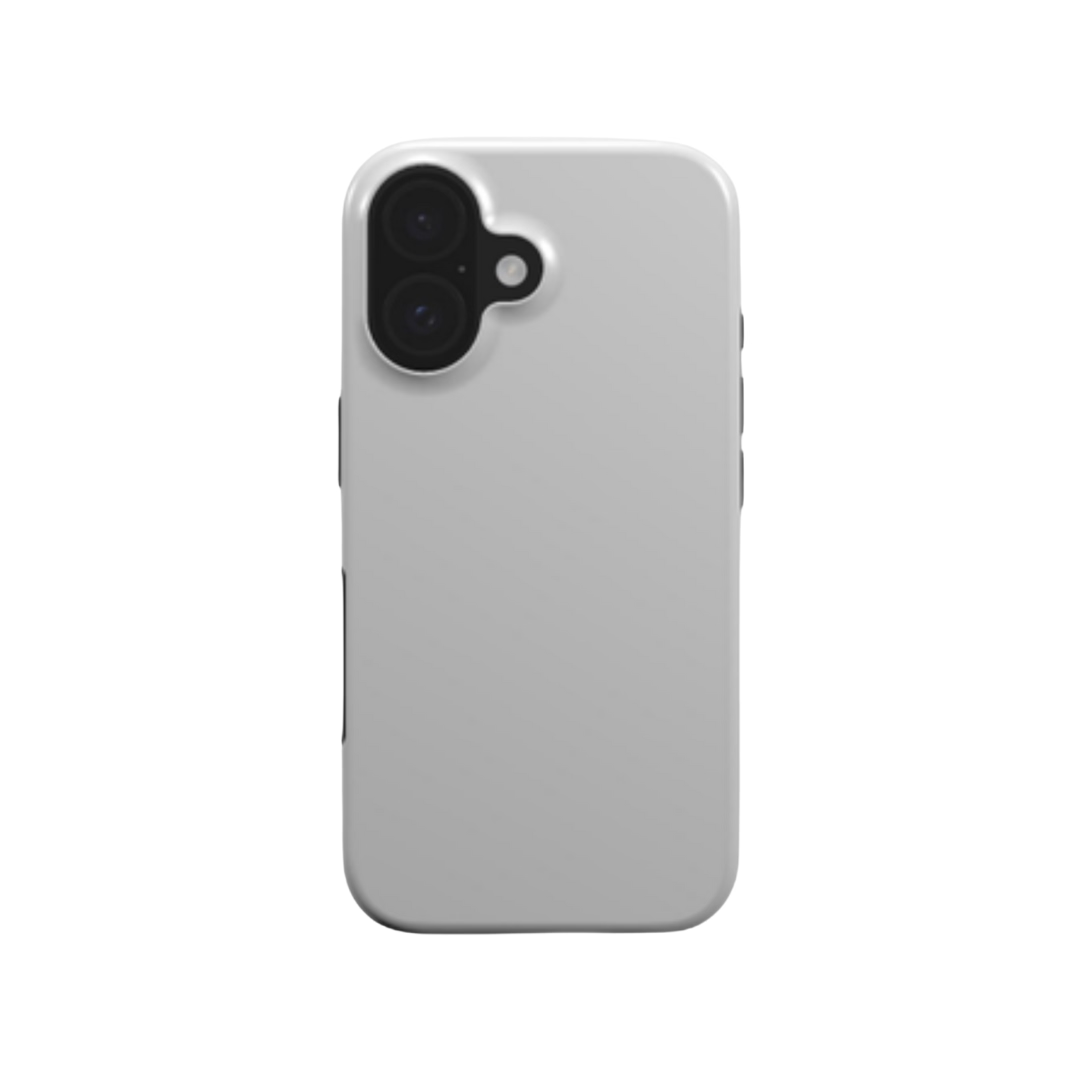
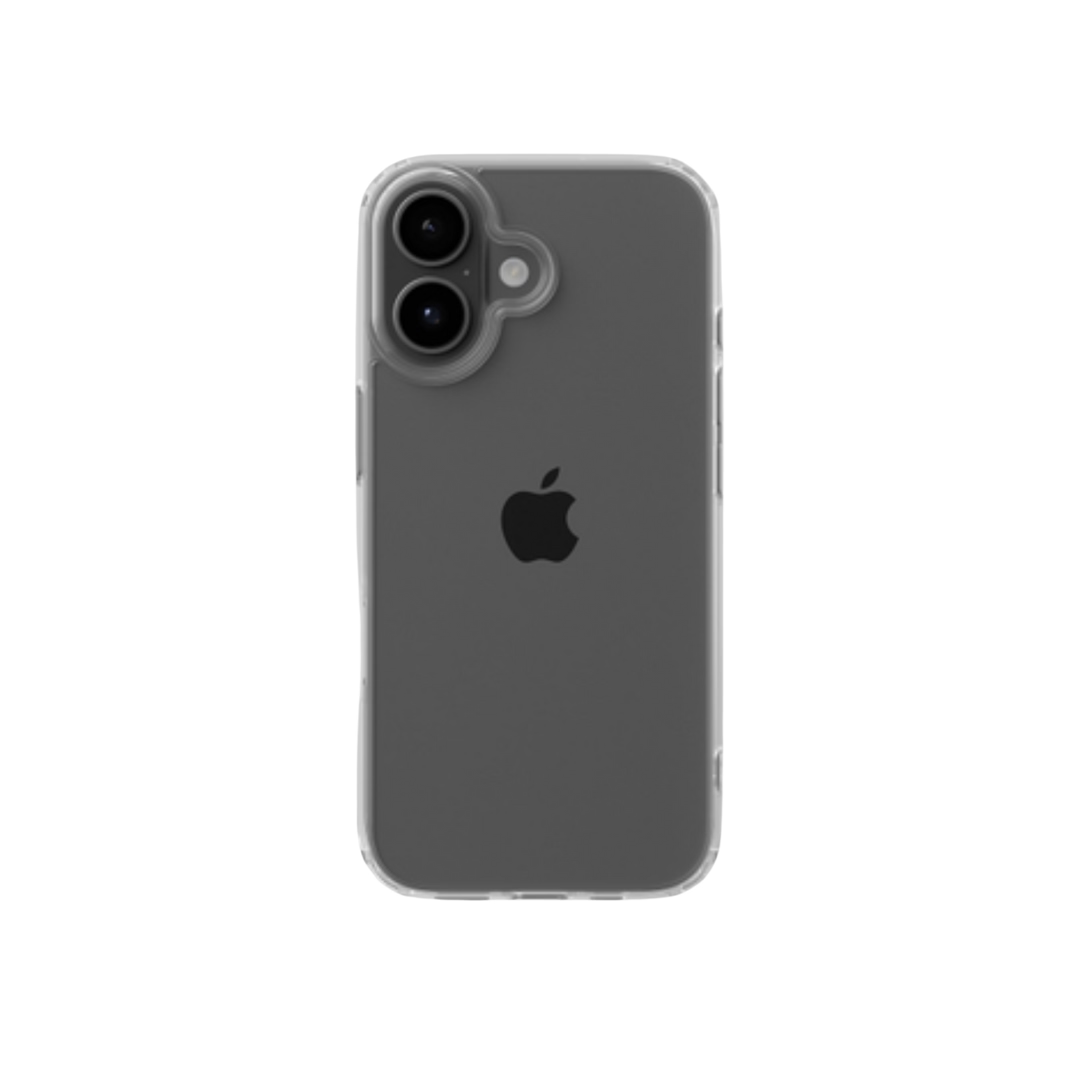
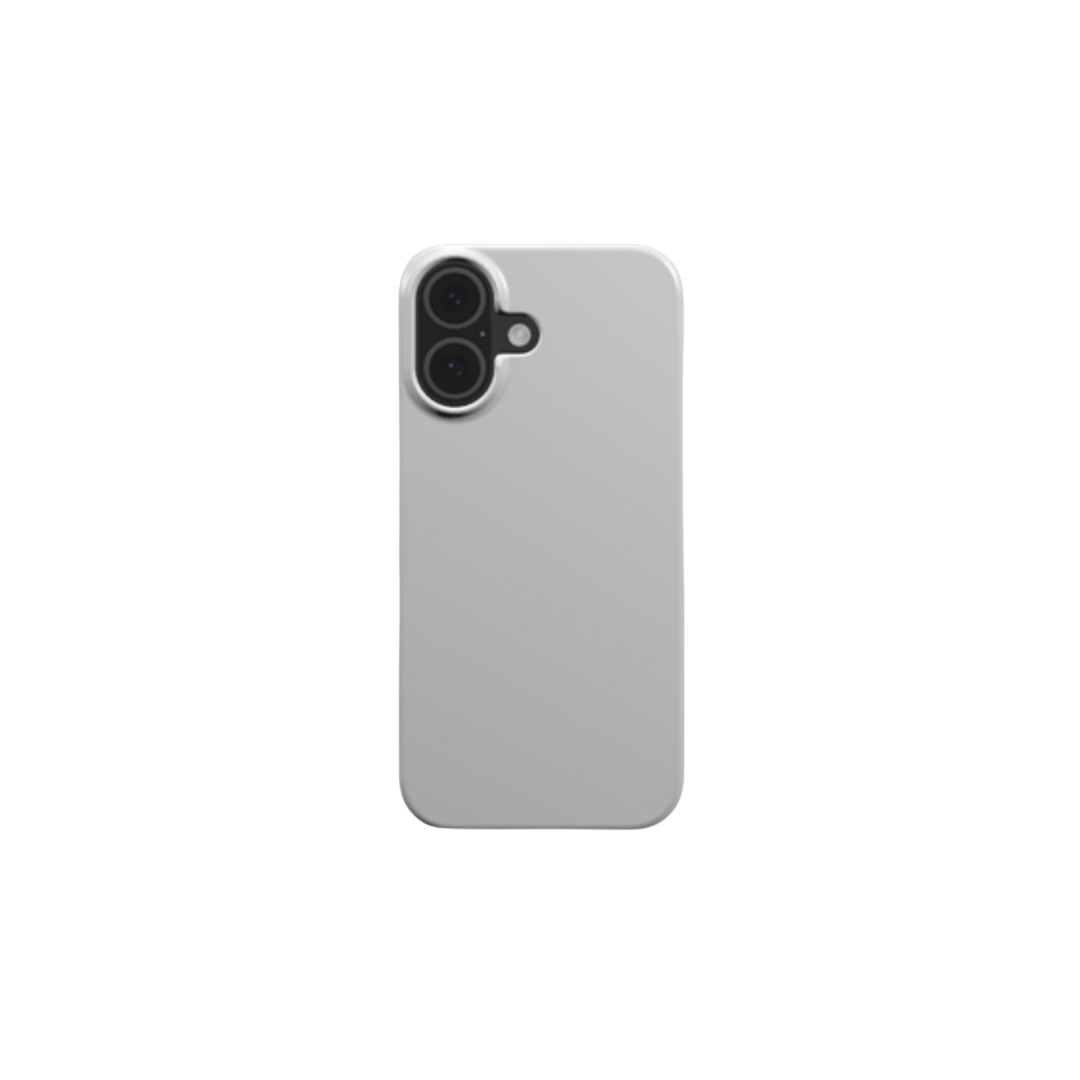
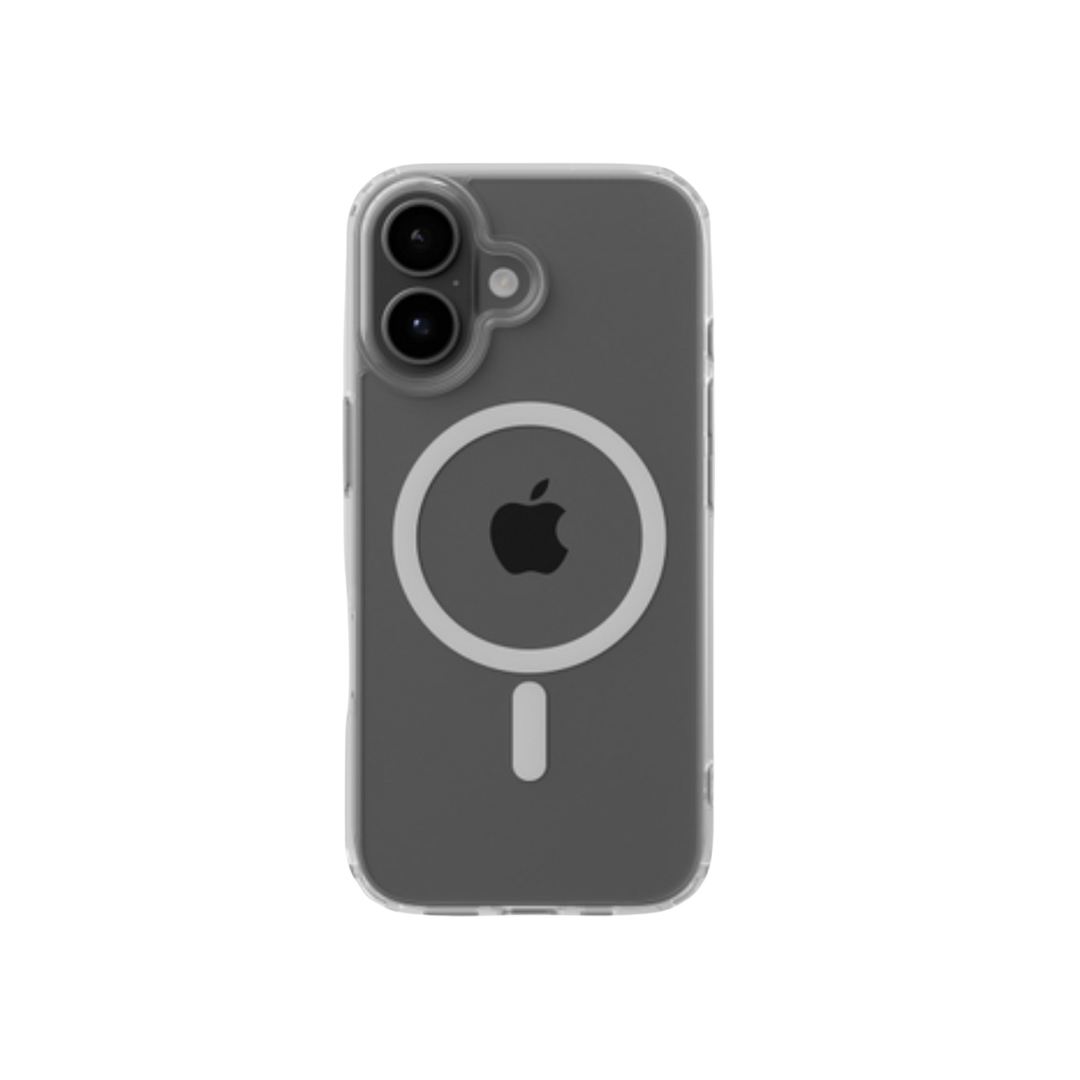
The economics are better than most beginners expect. As our CEO, Saulius Meilutis, explains: “Phone cases are a great example of a healthy, profitable POD business model. You can buy from Podbase for 10 euro and sell them for 35-60 euro.” Platforms like Podbase make POD easy with beginner-friendly tools and a catalog of trending tech accessories.
2. Dropshipping
In dropshipping, you run the storefront while a third-party supplier holds inventory and ships orders. It offers huge product variety, but it is also the model where it is hardest to stand out - because anyone can list the exact same item from the same supplier.
To build a profitable dropshipping business, focus on:
- Researching trends and demand to choose the right niche
- Selecting the best dropshipping products
- Prioritizing items with strong profit margins
- Finding reliable suppliers for smooth fulfillment
- Protecting customer satisfaction
Here is the contrarian part most guides skip: dropshipping and POD are not equals. Our Head of Sales, Sidas, frames the trade-off bluntly - “A cheap product that fails after a few days carries a cost that never shows up in a margin calculation. That customer tells their friends. That return or complaint lands in a support queue.” With generic dropshipped goods you inherit someone else’s quality; with POD you control it.
Video via YouTube
- How to Market a Product Online in 2026 (Step-by-Step Guide)
- How to Price a Product in 2026 (Without Losing Profit)
3. Selling Digital Products
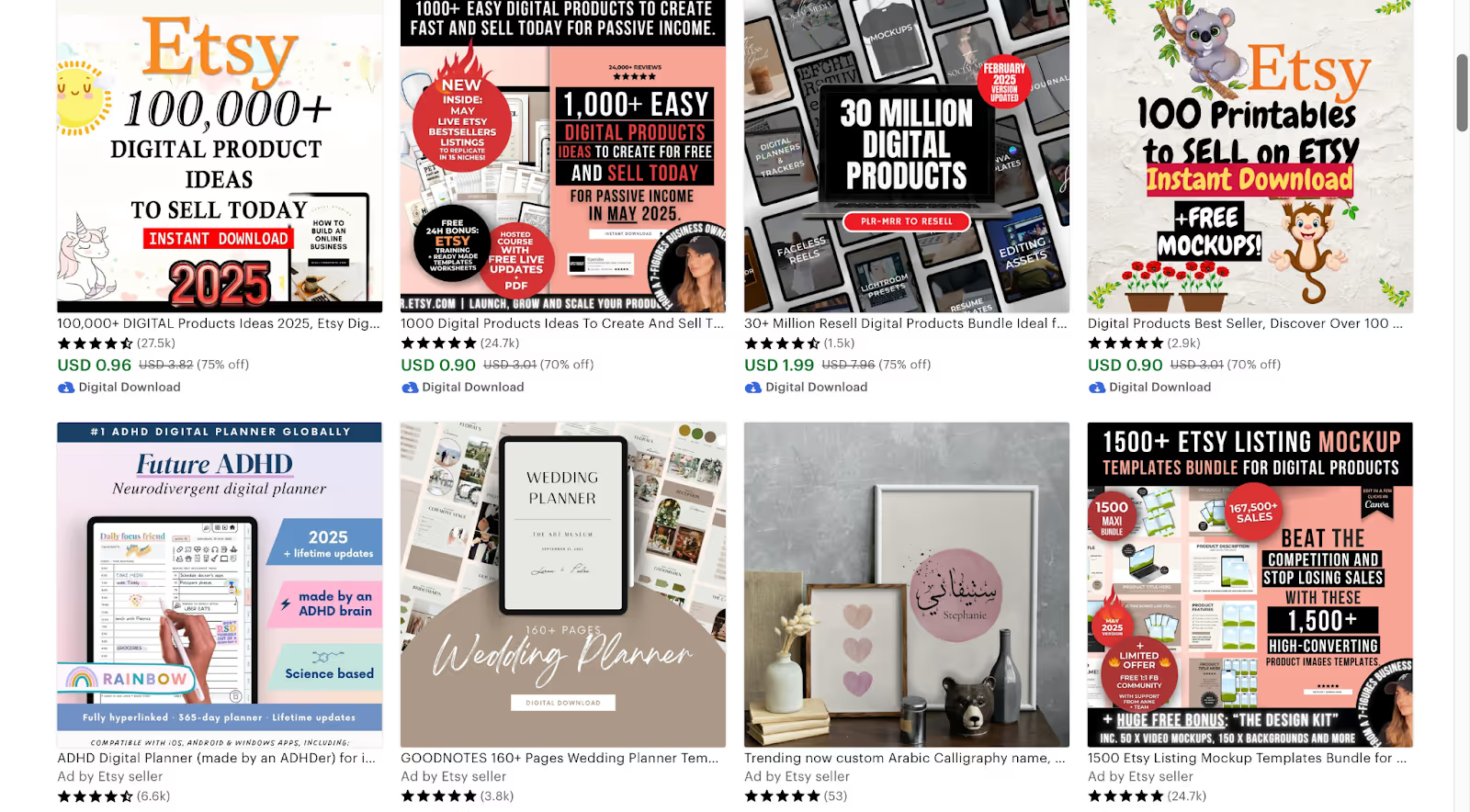
Selling digital products means offering instant downloads - eBooks, courses, or printables - with no shipping at all. They are easy to make once and sell repeatedly, with no restocking.
Popular digital product niches include:
- Self-improvement
- Education and productivity
- Health and wellness
- Finance and budgeting
- Photography, marketing, and social media
To get started, research the best digital product ideas, create content that genuinely solves a problem, and choose a platform with a ready audience. A smart move we see often: pair a digital download with a physical POD product so you capture both markets and lift average order value. You can also sell on Etsy or your own store.
4. Affiliate Marketing + Content
Affiliate marketing lets you earn commissions by promoting other brands’ products through your content. It is a low-risk, inventory-free way to monetize an audience by recommending items they will actually love.
Use these tips to drive sales and build trust as a creator:
- Choose products that align with your niche and audience
- Create honest reviews and comparisons
- Share valuable tutorials and how-to guides
- Add affiliate links to your bio with tools like Linktree
5. AI-Generated Product Bundles
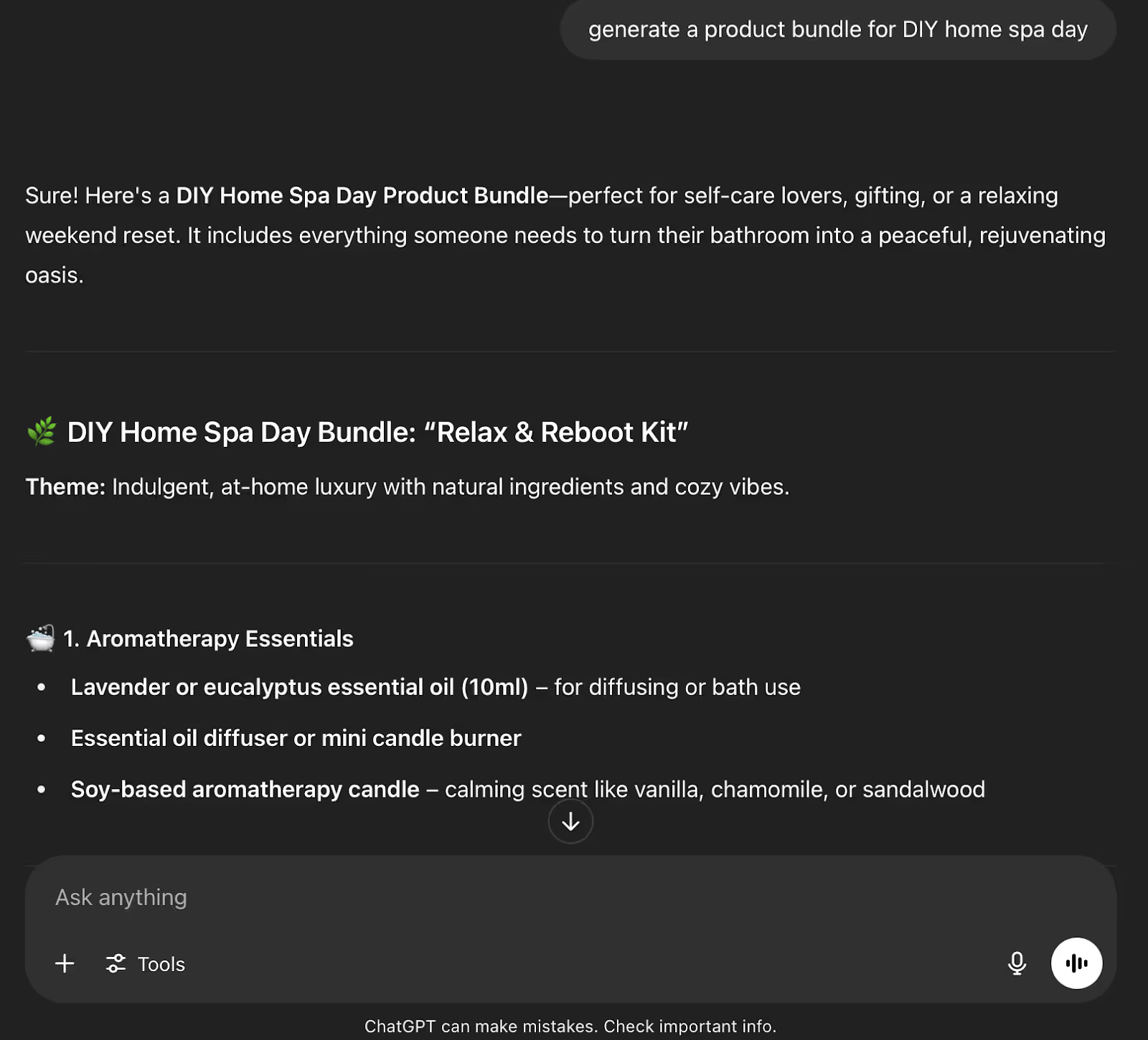
AI-generated product bundles are a fast-rising no-inventory trend: you create the concept, and AI handles the visuals and copy. The same shift is reshaping how POD sellers work day to day.
Our CEO describes the change inside Podbase: “You can take a static picture and generate high-quality multi-angle output of your products showcasing all the different unique selling points - you no longer have to order samples, organize photo shoots, and extend your product launch by weeks.” That is why average POD onboarding has fallen from three months to under one. Use ChatGPT to ideate, then a tool like Canva to design and list the bundle.
How to Launch an Online Store With No Inventory
Selling online without inventory is simple once you follow the right steps. Here is how to go from a bright idea to real income with little to no risk.
Step 1: Choose a Business Model
Start by picking an inventory-free model that fits your strengths and goals. Your choice shapes everything else - your tools, your suppliers, and your marketing - so getting it right early makes the rest far smoother.
Step 2: Pick a Platform
Choose a platform that matches your model, budget, and audience. A few solid options:
Podbase
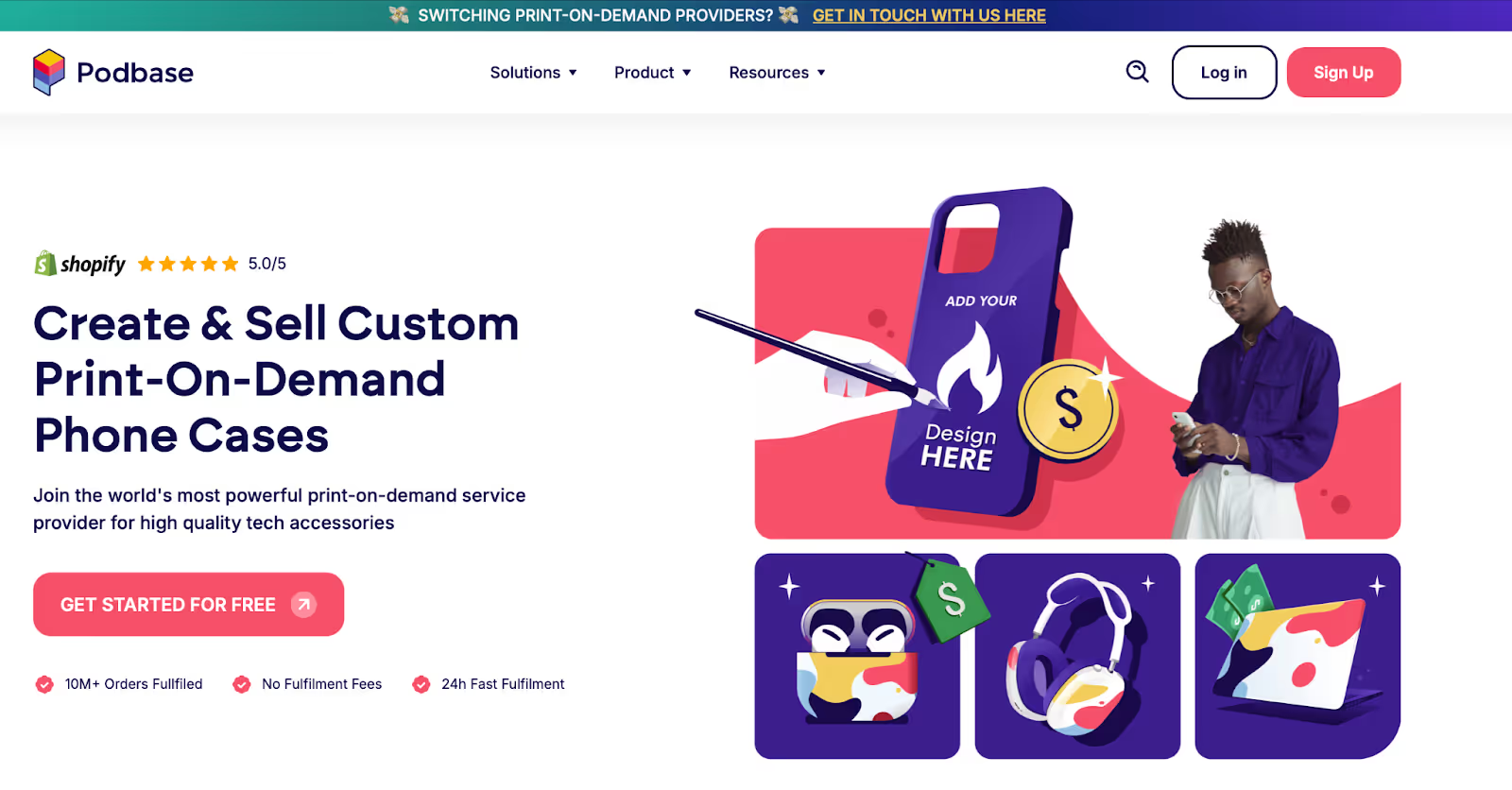
Easy to set up and built for beginners in print-on-demand tech accessories.
Shopify
Ideal for long-term growth, full control, and customization.
Etsy
Best for handmade, vintage, or niche products with a built-in traffic and audience
Gumroad
Great for selling digital products like courses, eBooks, and templates
For print-on-demand, Podbase also offers integration with Shopify and Etsy, so you are never locked into one storefront.
Step 3: Find the Right Suppliers and Tools
Your suppliers and tools handle the heavy lifting - production, payments, and delivery - so choose dependable ones. This is where POD quietly wins: Podbase pricing sits at 10-15% better margins than competitors across most categories, which compounds on every single order.
Step 4: Create Your Products
Focus on clean, niche-specific designs people want to buy and share. You do not need to be a pro designer - use Canva for layouts, or AI tools like Kittl, Midjourney, and ChatGPT for mockups and copy.
One production detail that quietly decides whether your prints look premium: file quality. As our Operations lead, Ieva, notes, “The most accurate results are achieved when designs are submitted in high resolution and in the CMYK color space.” Getting this right up front is the difference between a vibrant case and a dull one.
Step 5: Set Up Your Storefront
To build a professional, trustworthy storefront, keep these in mind:
- Customize your store to reflect your brand’s personality
- Write clear, benefit-focused product descriptions
- Organize products into easy-to-browse categories
- Make sure your store is mobile-friendly
- Add clear policies, FAQs, and high-quality mockups to build trust
Step 6: Promote and Optimize for Sales
No matter how good your products are, they will not sell themselves. Bring in traffic with these strategies:
- Showcase products on TikTok, Instagram, and Pinterest
- Collaborate with micro-influencers to expand reach
- Run giveaways to build buzz
- Test hashtags and track top-performing products, then adjust titles, visuals, and pricing
Our CMO, Vytautas Mikaila, makes the case for leading with paid social: “It is not only about traffic. It is also about control. You can test faster, you can adjust faster, and you can find what actually resonates faster.” And there is a clear finish line to aim for - Sidas notes that a seller who places a sample order in the first two days and has five products live within 30 days is already ahead of 80% of POD stores; reach 10 sales and you are in the top 10%.
Print-on-Demand vs. Dropshipping
Both print-on-demand and dropshipping let you sell without holding inventory, but they are not the same business. Understanding the difference helps you pick the right model for your niche, goals, and design involvement. Here is the breakdown:
Why POD Is Better for Personalization and Margins
If you want to build a brand around original products, print-on-demand gives you full creative control. POD items are unique - you design them to reflect your style, message, or audience, and you can even let customers personalize them.
That uniqueness is also why you can charge more. With dropshipping, anyone can sell the same item from the same source, so price is the only lever. With POD you compete on design and brand. As our CEO puts it, a custom case “became like your personal billboard on your gadget” - and people will pay a premium for that. Industry data backs it up: 1 in 5 buyers pays at least 20% more for a custom product.
Why Podbase Stands Out
Podbase is built for sellers who want speed, simplicity, and standout products. Here is why it stands out:
- Faster shipping times: most orders ship within 1-3 business days, backed by a print stage of roughly 6-8 hours plus about 2 hours of assembly and packaging, with quality checks between every stage.
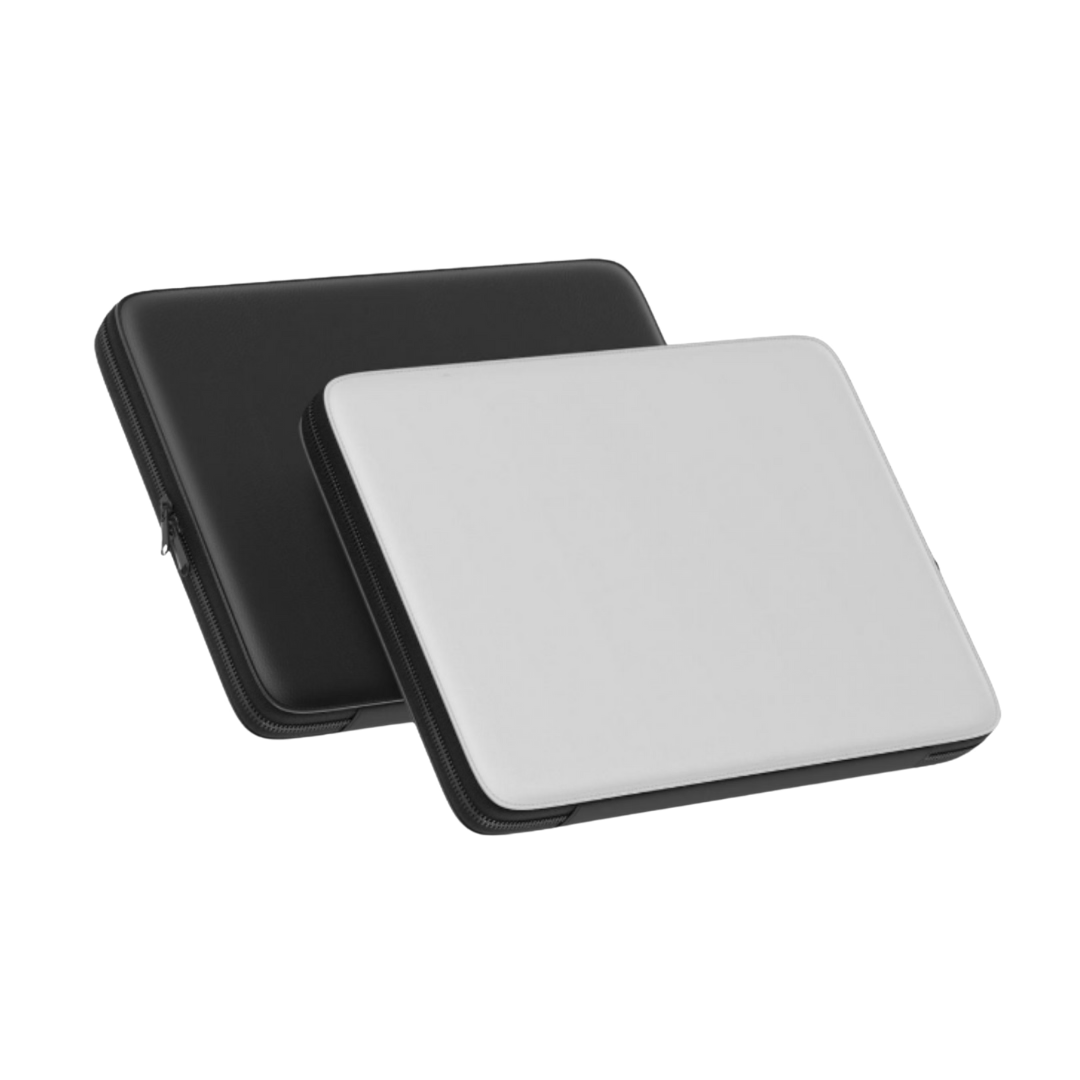
- Tech-focused catalog: we specialize in trending accessories - phone cases, laptop sleeves, drinkware, and wall art.
- Simplified setup: launch your store without advanced tech skills.
- Fewer customer issues: sellers who migrated to Podbase saw 15% more customer reviews and 30% fewer order-issue support tickets.
Hidden Tools & AI Tips for 2026 Entrepreneurs
Want to move faster and smarter? Here is a compact tech stack to help you brainstorm, design, test, and grow your no-inventory store.
Best Products to Sell Without Inventory in 2026
Choosing the right products is what separates a store that sells from one that stalls. In 2026, the winners are items that are easy to personalize and appeal to broad audiences. Some of the best include:
- Customized phone cases
- Laptop sleeves and tech accessories
- Wall art and posters
- Drinkware
- Digital planners and printable stationery
- Stickers, decals, eBooks, and digital guides
Tech accessories deserve special attention. As our CEO notes, “Nowadays, almost 80% of worldwide phone users have a phone case... multiply by 80% and you see the total addressable market. It is really huge.” Justina adds that the most underrated product is the laptop sleeve, because it is not tied to one device and “has a bigger surface for the design.” Wall art is another quiet opportunity - around 65% of wall art sales are still offline, leaving huge headroom online.
Combining digital and physical products creates bundles that rise in value. Selling a digital planner alongside printed accessories through print-on-demand lets you tap both markets with zero upfront stock.
FAQ
1. Can you really start an online store with no inventory?
Yes. Using print-on-demand, dropshipping, or digital products, your supplier prints and ships each order only after a customer buys - so you never purchase or store stock. This removes the biggest up-front cost and the overstocking risk of traditional retail.
2. How much does it cost to start an online store without inventory?
Almost nothing up front. Platforms like Podbase are free to join, and you only pay for a product after a customer orders it. Your main early costs are optional: a domain, a paid theme, and a small ad-testing budget to validate which designs sell.
3. Is print-on-demand or dropshipping better for beginners?
Print-on-demand is usually better for beginners who want a brand, with custom designs, full branding control, and higher margins - Podbase sellers run 10-15% better margins than competitors. Dropshipping wins on variety but competes mainly on price, with thinner profit per sale.
4. What are the best products to sell without inventory in 2026?
Personalized, easy-to-ship items: custom phone cases, laptop sleeves, wall art, drinkware, stickers, and digital planners. Tech accessories are especially strong - nearly 80% of phone users use a case, and a custom case bought for about 10 euro sells for 35-60 euro.
5. How long does it take to launch a no-inventory online store?
Most sellers launch within two weeks using simple tools and basic themes. With print-on-demand, average supplier onboarding has dropped from three months to under one. Sellers who publish five products within 30 days are already ahead of 80% of POD stores.
6. Is print-on-demand still profitable in 2026?
Yes. The global POD market reached about $12.96 billion in 2025 and is projected to hit roughly $118.85 billion by 2035. Typical seller margins run around 20%, rising to 30-60% in strong niches, with personalized products commanding premium prices.
Conclusion
Now you have a clear path to start an online store without inventory in 2026. With flexible models, near-zero startup costs, and fast fulfillment, there has never been a better time to begin - and the data shows the up-front inventory risk that sinks most stores is exactly the risk you can now skip.
All you need is the right idea, the right tools, and the confidence to start. If you are ready to test the print-on-demand waters, Podbase lets you launch with minimal upfront investment and 10-15% better margins than competitors. Create a Podbase account today to get started.

Saulius Meilutis is the CEO of Podbase, helping creators and entrepreneurs monetize their ideas with print-on-demand. He shares insights on eCommerce, growth, and building lean online businesses.

.avif)



.avif)
.avif)
.avif)
.avif)
.avif)
.avif)

.avif)


.avif)
.avif)

.avif)

.avif)
.avif)