.avif)
The fastest way to market a product online in 2026 is to lead with paid social, a tight product line, and creator partnerships, then layer email, SEO, and smart upsells on top. Great products don't sell themselves - without smart marketing, they're just more stuff people scroll past and forget, and with so many brands launching online, getting seen takes more than posting and hoping.
This guide shows you how to market a product online in 2026 step by step. You'll learn how to reach the right audience, convert online traffic into sales, and make money online consistently - and it's grounded in what we actually see work across Podbase sellers, not generic advice. Let's get into it.
Quick Wins First: What Matters Most in Online Product Marketing
To market a product online, you need to get it in front of the right people, build trust, and make buying easy. That sounds obvious - but the channel that does the heavy lifting has changed, and most “how to market a product” guides haven't caught up.
Here's the reality from our own seller base. As Podbase's CMO, Vytautas, puts it: “The majority, 99% of our sellers right now, are getting the majority of their traffic from social media ads.” For print-on-demand and digital-product sellers, social media marketing - and paid social specifically - is the engine behind most sales. The tactics below are ordered to reflect that: build a brand worth following, then use the channels that actually move product in 2026.
Also Read:
- The Best Digital Product Ideas To Sell Online
- How to Avoid Copyright Infringement in Print-on-Demand
- How to Monetize Social Media: 15+ Ways to Turn Followers Into Income
10 Proven Ways to Market a Product Online in 2026
Here are ten proven ways to market a product online in 2026, ordered to reflect how sales actually happen now: brand first, then the channels that move product.
1. Build a Brand That Sells (Not Just a Store)
You can easily build an online store without inventory, but people stay loyal to brands that make them feel seen. Your brand tells people what you stand for, who your product is for, and why it matters.
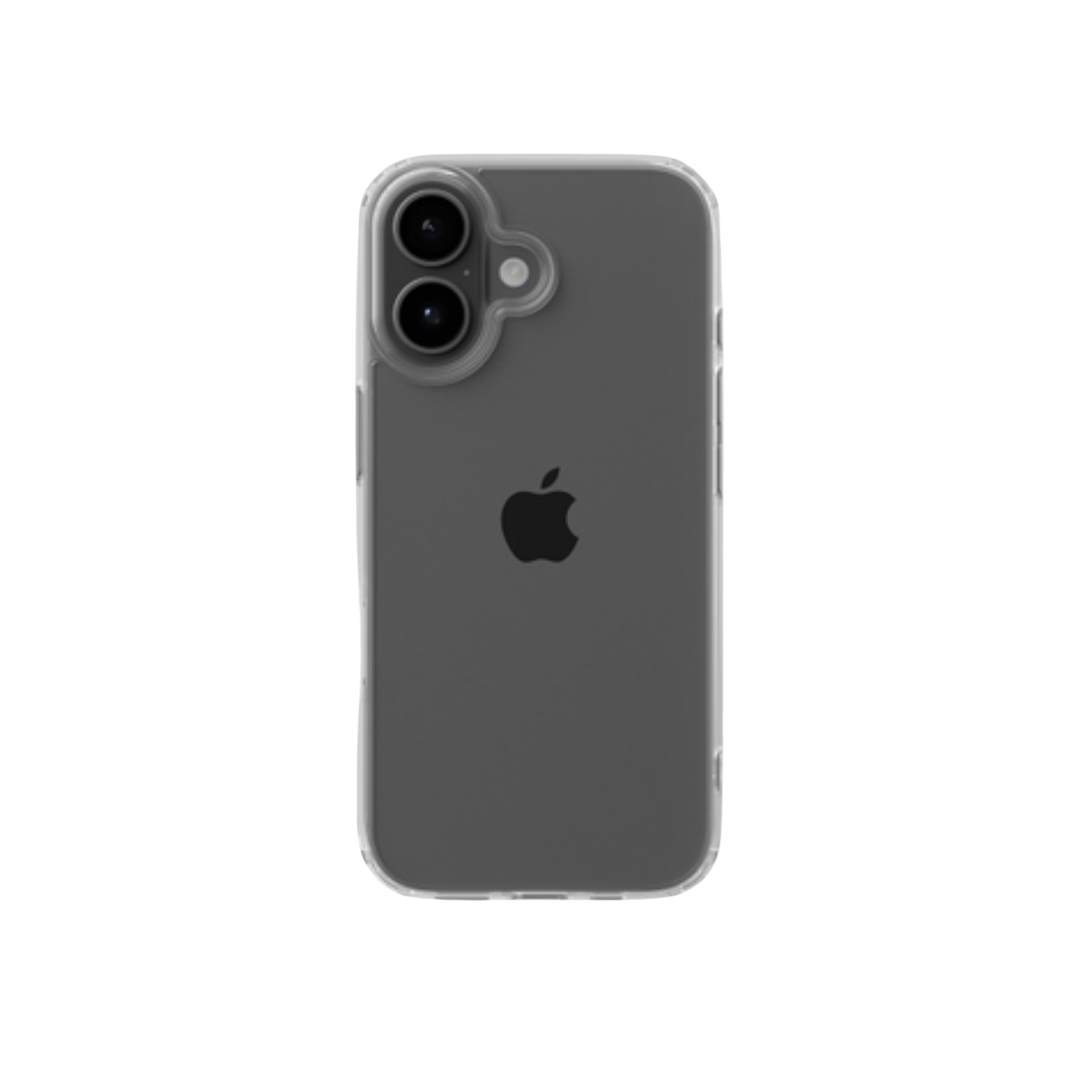
This matters more for tech accessories than almost any category, because of why people buy them. As our Head of Product Development, Justina, explains: “Tech accessories stopped being simply devices and became an extension of who we are as persons. That is why people are constantly looking for the cases that suit their personalities, hobbies and interests, lifestyle the best.” A phone case, in our CEO's words, is “your personal billboard.” Brands win by speaking to a specific identity, not by listing product features.
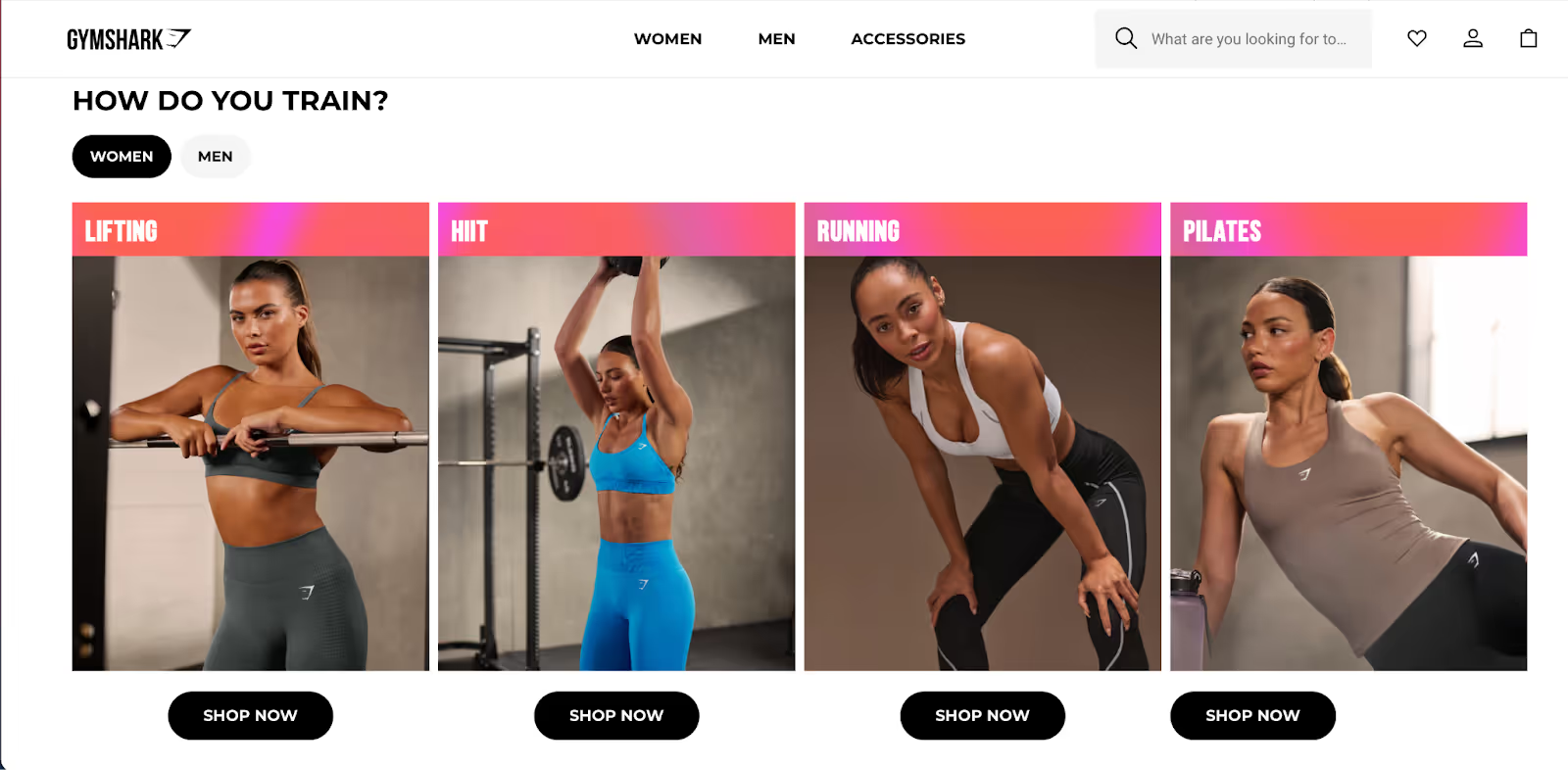
For example, Gymshark doesn't just sell workout gear - it built a fitness lifestyle, with bold visuals, a consistent tone, and athlete-led messaging.
2. Start With Organic Reach: SEO and Content Marketing
Organic reach can deliver long-term traffic and brand authority without paying for every click. But here's the honest version most guides won't give you: organic is no longer the beginner's channel. As our CMO puts it bluntly, “Organic content for organic traffic is already more of an advanced-player and advanced-seller tactic. It is not really a beginner game anymore.”
The rules also changed. “The old way of doing organic, where you just publish a lot, go broad, and expect traffic to keep coming the same way, is clearly not enough anymore,” Vytautas notes. “Right now the game is much more about relevance, usefulness, specificity, freshness.” His warning is worth pinning above your desk: “Do not treat SEO like passive free traffic. It is not that anymore… otherwise, you just become another page in the pile.”
So treat organic as a compounding asset you build alongside paid - not as the fast, free shortcut. If you're going to invest in it:
- Create specific, useful content. Start a blog on your store around your niche, like design trends or product-care tips - specific, not generic.
- Target buyer-intent keywords. Phrases like “how to promote your product online” or “how to bring a product to market” capture people ready to act.
- Link internally. Point to your other pages to keep visitors engaged and build topical authority.
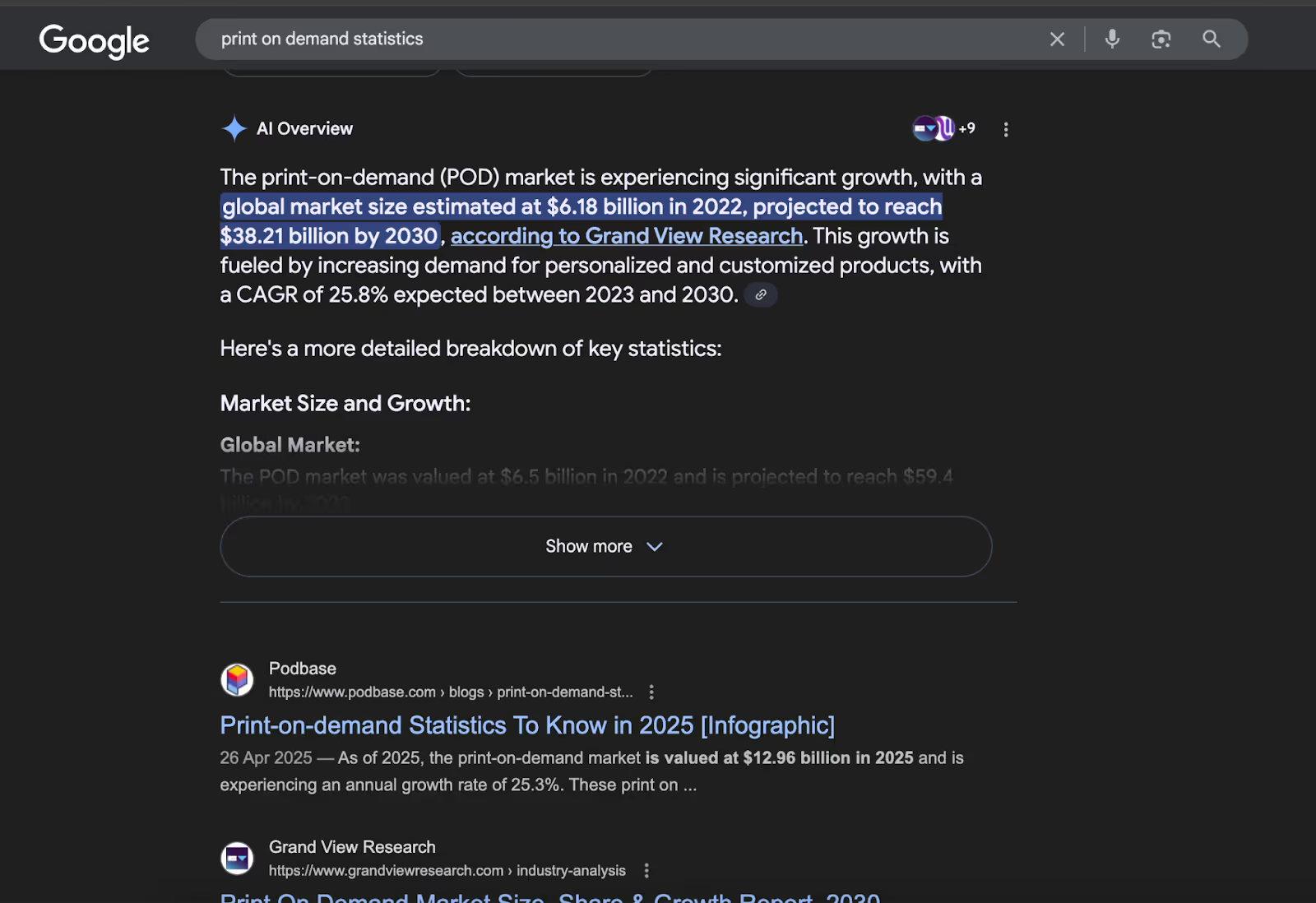
The screenshot below shows where Podbase ranks on Google for the keyword print-on-demand statistics - a page that earns traffic precisely because it's specific and data-rich, exactly what the CMO is describing.
Also read:
3. Leverage Influencer Marketing for Niche Reach
Wondering how to market a new product without a huge budget? Influencer marketing is one of the strongest starting points. It gives you access to the right audience and feels more authentic than a paid advertisement.
This isn't theory for us. Our Head of Sales, Sidas, describes one Podbase seller's trajectory: “Thirteen months after starting from zero, that business crossed into seven-figure yearly revenue - selling phone cases… They launched with around ten designs, pushed hard into influencer marketing, and iterated quickly.” The pattern repeats: a tight product line plus aggressive creator partnerships beats a sprawling catalog with no distribution.
Here's how to use influencer partnerships for effective product promotion:
- Pick for alignment, not size. Find niche creators who genuinely align with your product and audience.
- Favor micro-influencers. Creators under 50K followers deliver better engagement at more affordable rates.
- Lead with about ten strong designs rather than a huge range - concentrate your marketing firepower.
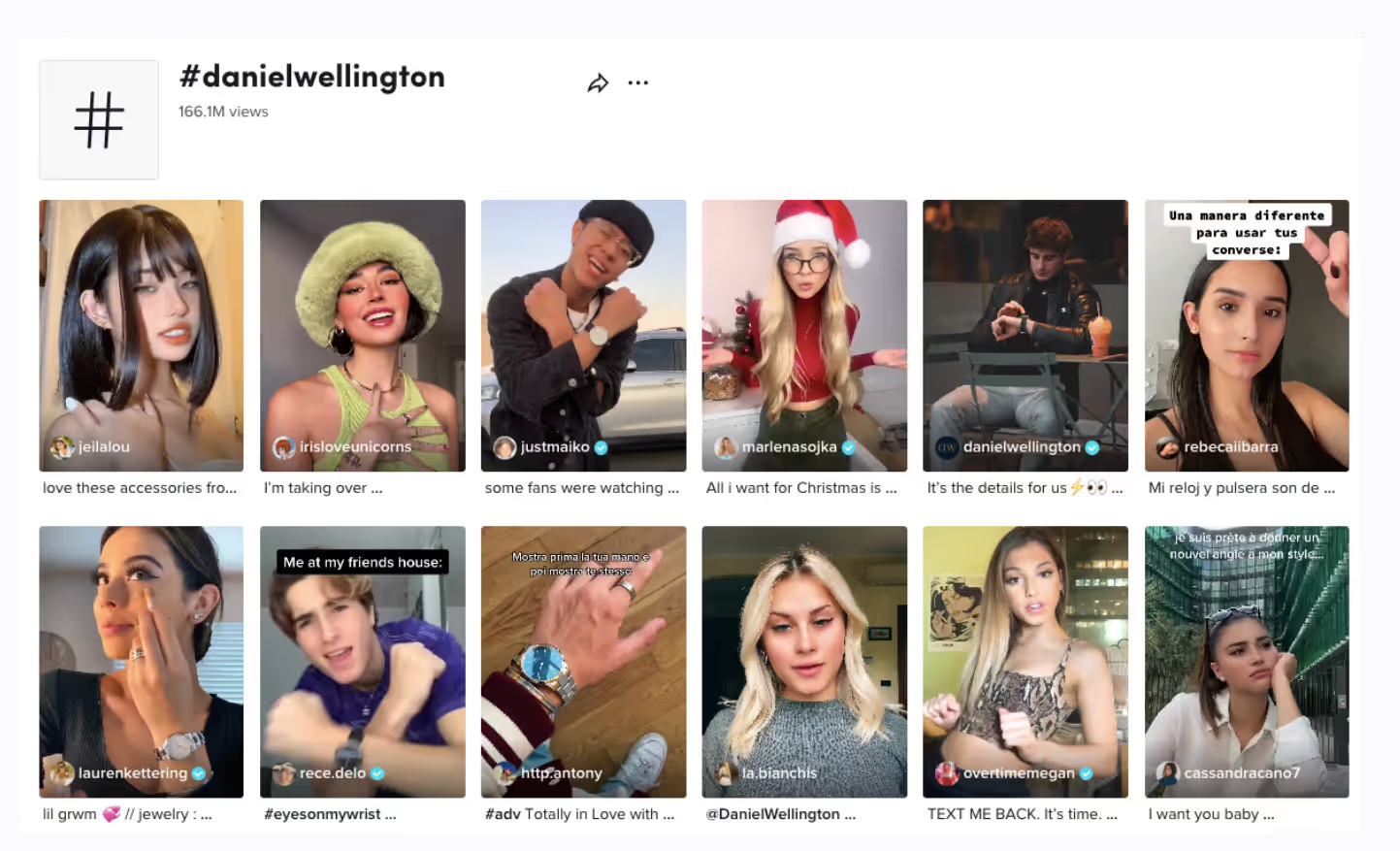
You can also use image generators to create pitch-worthy mockups before reaching out. Daniel Wellington famously built its brand almost entirely on influencer marketing.
Also Read:
- How to Start a Shopify Store with Podbase
- How to Start a Print-on-Demand Business
- How to Design Ads with Canva: Step-by-Step Guide
4. Use Paid Ads to Test and Scale
Given that 99% of our sellers get most of their traffic from paid social, this is the channel to master. Paid ads let you test product demand fast and scale what works - and to improve performance, test creatives using high-quality print-on-demand mockups.
The math works in POD's favor here. With Podbase, sellers typically buy a phone case at around 10 euro and sell it for 35-60 euro - that gross margin is what funds a profitable ad account. A product with thin margins can't absorb testing spend; a high-margin original design can. This is the quiet advantage behind aggressive ad spenders: they can afford to lose on the test and win on the scale.
Here's how to market your product using paid ads on different platforms:
- Facebook/Instagram ads: Great for interest targeting and retargeting visitors.
- TikTok Spark Ads: Boost creator content to reach a wider audience - pairs naturally with the influencer tactic above.
- Pinterest product pins: Ideal for visual products like tech accessories and prints.
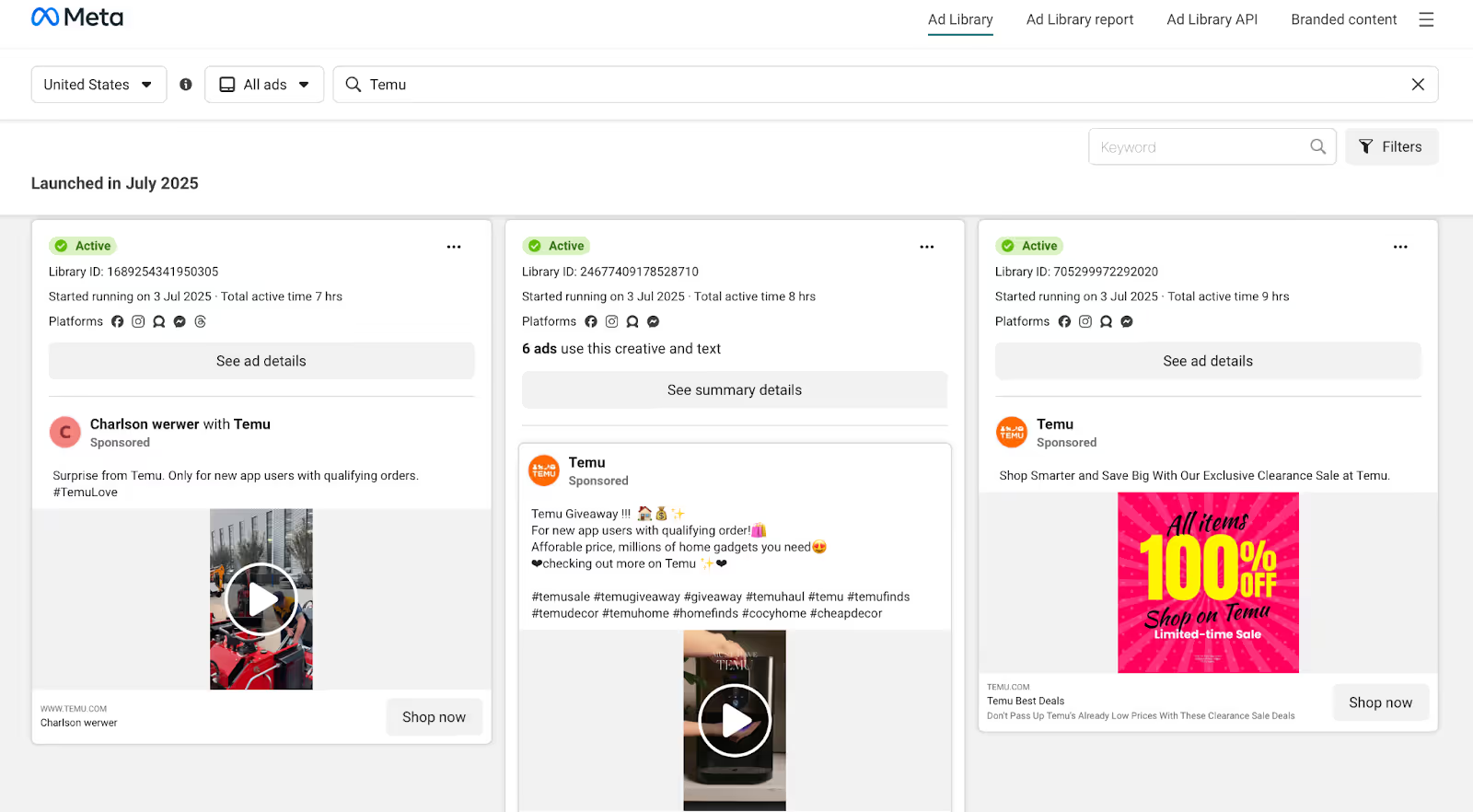
A good example is Temu, whose ads run everywhere from TikTok to YouTube to mobile games - visible in Meta's Ad Library running many display ads at once.
5. Promote Products Through Email and SMS
Email and SMS help you recover lost sales and launch new products directly to interested buyers - owned channels you don't have to pay for each time, which makes them the perfect complement to paid acquisition.
Here's how to market a product online using email and SMS:
- Win-back emails: Reconnect with past buyers using discounts or new arrivals.
- Cart-abandonment emails: Remind customers of what they left behind and nudge them to check out.
- SMS alerts: Announce product drops, flash sales, or restocks with short, compelling texts.
Keep emails short, visuals clean, and include one clear call to action. There's a repeat-purchase angle here too: about 40% of buyers replace phone accessories every six months, so a timed “new season, new case” email lands on an audience that's already ready to buy again.
6. Create Hype With Product Drops and Launch Campaigns
Product drops create urgency, boost engagement, and give your audience a reason to act fast. If you're starting a print-on-demand business, build buzz before you go live - but don't let “building buzz” become an excuse to never launch.
That's the most common failure we see. Our sales team calls it “the guessing phase”: “Most sellers who churn… spend months building the ideal store… Six months pass, the store has never gone live, and the initial drive that sparked the idea has quietly faded.” The sellers who win do the opposite - they “move fast and test first… most successful stores are up and running within two weeks.” Concrete benchmark from our data: a seller who places a sample order in the first two days and publishes five products within 30 days is already ahead of 80% of POD stores, and ten sales puts them in the top 10%.
So run your launch campaign on a real deadline:
- Add countdown timers on your store and social media.
- Tease the drop with behind-the-scenes content and sneak peeks.
- Promote across channels - email, SMS, and Instagram Stories.
- Create urgency with limited-time discounts or limited inventory.
7. Upsell, Cross-sell, and Bundle Smart
Once you've got a customer's attention, make the most of it. Smart product suggestions boost average order value with zero extra ad spend - which is the highest-ROI marketing you can do, because you've already paid to acquire the buyer.
Our CEO gives the cleanest example: “You can add just a simple button on the checkout page to add a screen protector additionally when a customer is ordering a phone case. The conversion rate from our internal data is usually from 3 to 10 percent, so with a single button in the checkout, you can get 10 euros more profit.” That's incremental margin with no incremental acquisition cost.
Ways to market your product using upsells and bundles:
- Bundle complementary designs into sets, like a phone case plus a matching laptop sleeve.
- Cross-sell related items based on cart contents or browsing history.
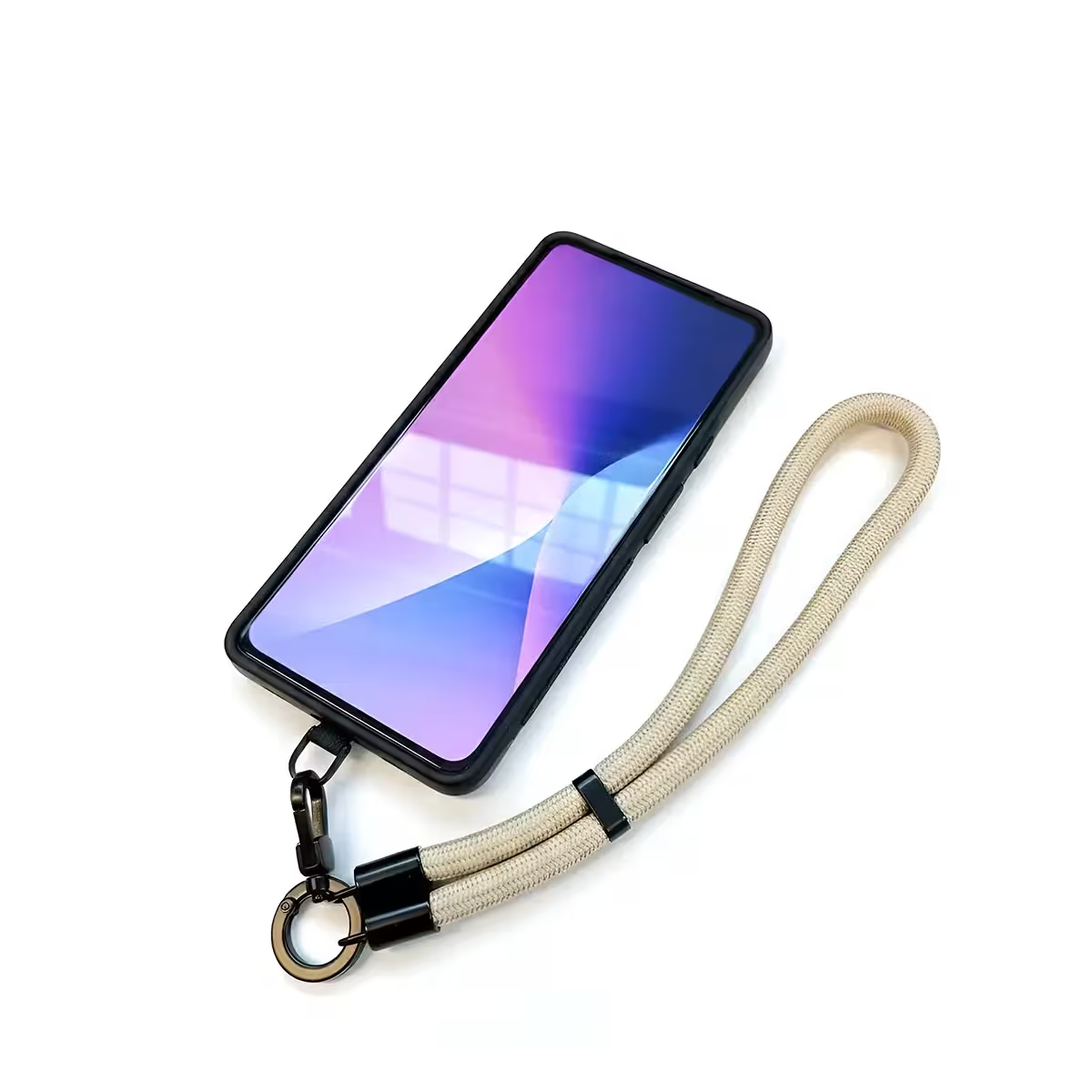
- Recommend best sellers and add-ons - a screen protector or phone strap - at checkout.
For example, Casetify pairs matching phone cases, grips, and screen protectors into smart bundles.

8. Run Strategic Giveaways and Viral Contests
Giveaways are one of the smartest ways to market a product online for free. If you're in the phone case business, offer your latest design as a prize - it attracts the right audience and introduces your brand to new people.
To run strategic giveaways:
- Use referral contests to reward people who invite friends.
- Offer your own products so entries come from genuine potential buyers.
- Promote on social media for viral traction.
- Create urgency with countdowns or limited-time entry windows.
9. Use Reviews and Social Proof to Build Trust
Many entrepreneurs assume a good product is enough to drive sales. But before buying, most shoppers want proof your product delivers - and social proof can tip the scale, especially for new products with little exposure.
Product quality is what makes social proof compound, and it's measurable. When sellers migrated their catalog to Podbase, our sales team recorded “a 15% increase in customer reviews left and a 30% drop in support tickets related to order issues.” Better products generate more positive reviews and fewer complaints - which is the raw material every social-proof tactic depends on.
Here's how to build trust with reviews:
- Ask for photo reviews from customers after delivery.
- Display testimonials on product pages, homepage banners, and checkout.
- Share UGC and positive feedback on social media as part of your content plan.
10. Track, Learn, and Optimize Weekly
The best brands improve by tracking what works and what doesn't. Whether you're running ads or testing bundles, measure performance to scale smart.
Here's how to track and improve your product marketing:
- Run A/B tests on emails, product pages, and ad creatives.
- Track ROAS (return on ad spend) to see if paid campaigns are profitable.
- Monitor conversion rates to spot leaks in your funnel.
- Check traffic sources to understand where your best visitors come from.
One underrated multiplier: don't optimize in isolation. Our sales data shows that sellers “who have a community, a mentor, or even a peer group working in the same space scaled approximately 32% faster than solo operators going it alone.” Marketing improves faster when you're comparing notes with people running the same playbook - which is exactly why Podbase runs a free Academy.
Also Read:
- How to Start an Online Store Without Inventory
- Smart Ways to Make Money From Your Phone
- Social Media Advertising: How To Run Your First Ad Campaign
Conclusion
Learning how to market a product online in 2026 comes down to sequencing: build a brand worth following, lead with paid social and influencers, and fund it all with margins healthy enough to absorb testing. Then compound the wins with email, SEO, social proof, and the upsells you've already paid to earn. Start lean, launch within two weeks instead of getting stuck in the guessing phase, and optimize every week. The easiest place to begin is with products worth marketing - original tech accessories with up to 100% higher margins than other POD providers. Create a Podbase account today to get started.

Saulius Meilutis is the CEO of Podbase, helping creators and entrepreneurs monetize their ideas with print-on-demand. He shares insights on eCommerce, growth, and building lean online businesses.

.avif)






.avif)
.avif)
.avif)
.avif)
.avif)
.avif)

.avif)




.avif)

.avif)


.avif)

.avif)

.avif)