In 2026, the dropshipping marketing strategies that actually work include organic social media, SEO for your product listings, and Pinterest marketing. They also include email marketing, paid advertising, influencer and UGC marketing, and SEO blog content to build long-term customer relationships.
Dropshipping marketing is the system that gets your store in front of the right buyers, turns traffic into sales, and keeps customers coming back. That system has evolved, and what works now is very different from what used to work.
You can have a great product, clean mockups, and a well-built store. But without a dropshipping marketing plan, you're relying on chance. Knowing how to market your dropshipping store from day one changes that.
The good news is that in 2026, your buyers are on TikTok, Instagram, Pinterest, and search engines, actively looking for what you sell.
This guide covers seven dropshipping marketing strategies for POD sellers and small store owners in 2026. The strategies here provide a clear path for getting your store in front of the right audience and turning that attention into consistent sales.
Why Marketing Is the #1 Skill for Dropshipping Success
In dropshipping, your product is rarely unique. Several other sellers are likely listing the same item, at a similar price, on the same platform. What separates the stores that grow from the ones that don't is how well they market what they sell.
This is even more true for POD sellers. A great design can stop someone mid-scroll, but it's your dropshipping marketing that actually gets them to click, trust, and buy.
The dropshipping market was valued at $464.44 billion in 2025, and it's on track to reach $1.25 trillion by 2030 (22% CAGR).
More sellers are entering the space every month. And the case for investing in dropshipping marketing early is clear. Setting up a store and waiting for customers to come will just not cut it anymore.
The seven strategies ahead cover ecommerce marketing for dropshippers at every level — and show you how to stay on the right side of it.
Strategy 1 — Organic Social Media (TikTok and Instagram)
For most POD sellers and dropshippers looking for print on demand marketing tips, organic social media is where dropshipping marketing actually starts. It costs little to nothing to post, and it lets you validate your messaging before spending a dollar on ads.
TikTok's algorithm gives brand-new accounts real reach without a following. For context, one in four TikTok users turn to the app to discover new products, and 59% say they've come across brands they weren't actively looking for:
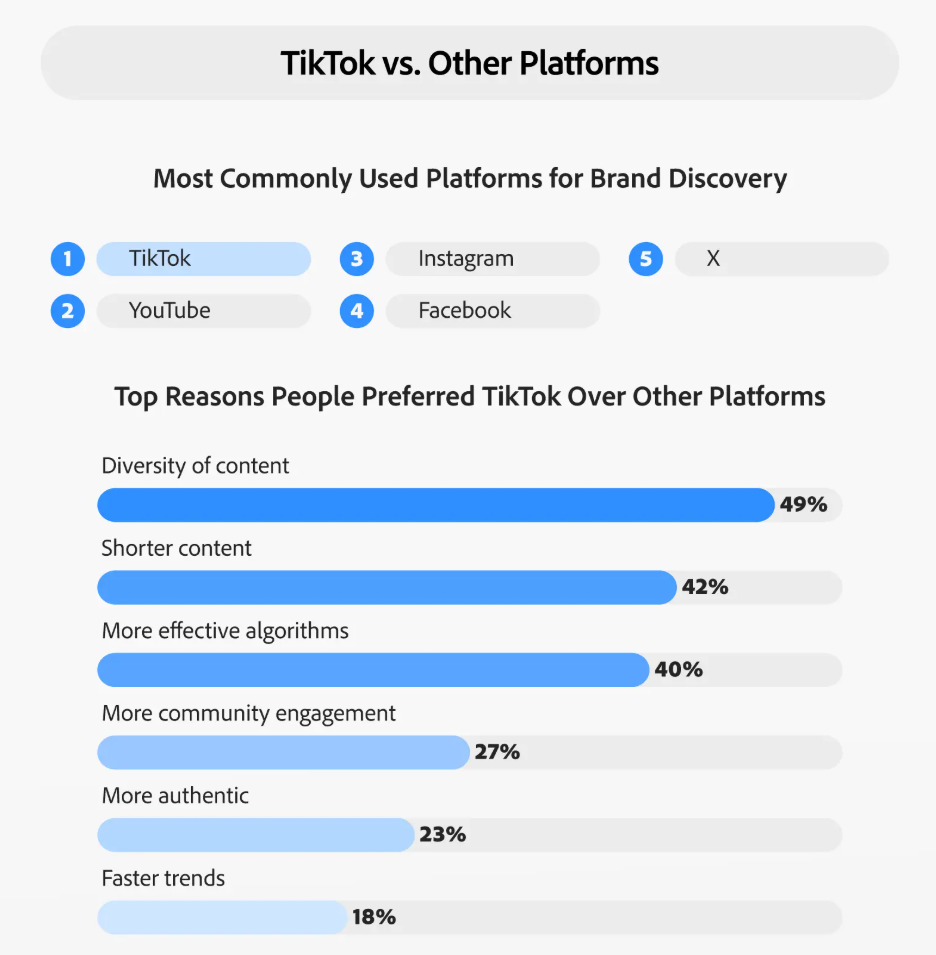
Also, according to Soci, 62% of Gen Z use TikTok as their search engine when looking for local businesses. So, keyword-rich captions help your content get found in-app and grow your TikTok followers over time.
For content, these formats work consistently well for POD and dropshipping stores:
- Behind-the-scenes: Packaging orders, the design process, fulfillment
- Product reveals: Unboxings, before/after, problem-solution formats
- Niche storytelling: Content speaking directly to your target community
On Instagram, Reels drive reach, carousels work well for comparisons and roundups, and shoppable posts cut the steps between discovery and purchase. Also, knowing the best time to post on Instagram helps your content land when buyers are actually scrolling.
Consider batching your content. Film multiple videos in a single session and schedule them throughout the week. Track important metrics like saves, shares, and profile visits over likes. Those metrics signal real purchase intent.
According to Statista, the typical internet user spends an average of 141 minutes on social media every day. For Gen Z, that climbs to nearly 3 hours.
Building your presence on those platforms now is one of the smartest early moves in social media marketing for dropshipping — especially before you touch paid ads.
Also Read:
- Dropshipping Statistics: Key Trends & Industry Insights
- Profitable Dropshipping Business Ideas You Can Start
Strategy 2 — SEO for Your Product Listings
Most sellers set up their listings and move on. But SEO for your product pages is one of the most underrated dropshipping marketing strategies available, and it keeps working long after you've hit publish.
Etsy has its own search algorithm, and three things drive it most:
- Title
- Tags
- Description
Use all 13 tags per listing that Etsy provides. Each one is a separate keyword opportunity that most sellers leave empty.
Also, front-load your most important keyword in the title, since Etsy prioritizes the first few words. Tools like eRank and Marmalead take the guesswork out of finding terms that actually get searched.
For Shopify, focus on your product page title and meta description first. Write descriptions that include keywords naturally, much like the way a real buyer would type them.
Google Keyword Planner and Ubersuggest are both free starting points for finding the right terms.
A buyer searching "custom laptop case for MacBook Pro 14" is far closer to purchasing one than a buyer searching "laptop case."
Long-tail keywords attract specific, high-intent buyers and face less competition. This can be a real advantage for dropshipping businesses and those looking to sell print-on-demand products on Etsy.
Strategy 3 — Pinterest Marketing
Pinterest is one of the most underused dropshipping marketing channels for POD sellers. TikTok and Instagram tend to get all the attention, which means Pinterest is far less crowded for sellers who do show up. That's exactly what makes it worth your attention.
Unlike TikTok or Instagram, where content fades within hours, Pinterest functions more like a search engine. Older pins keep surfacing and driving traffic long after posting.
Also, 85% of weekly Pinners have made a purchase based on a pin, and 96% of top searches on the platform are unbranded. This means buyers are actively open to discovering new stores.
Pinterest works best for sellers in profitable niches that are visually driven. If you sell in any of these categories, it's worth your time:
- Home décor and wall art
- Tech accessories and desk setups
- Gifting, stationery, and lifestyle products
To get started on Pinterest, here's what to do:
- Go to Pinterest and create a free business account — it unlocks analytics and rich pin features
- Complete your profile with a clear brand name, logo, and a keyword-rich bio
- Create boards that match your product niches (e.g., "Minimalist Desk Setups" or "Custom Phone Cases")
- Add product-linked pins that connect directly to your Shopify or Etsy listings
- Use the same long-tail keywords from your product pages in your pin titles and descriptions
Strategy 4 — Email Marketing
Email is one of the highest-ROI dropshipping marketing channels available, and the sellers who start early are the ones who benefit most.
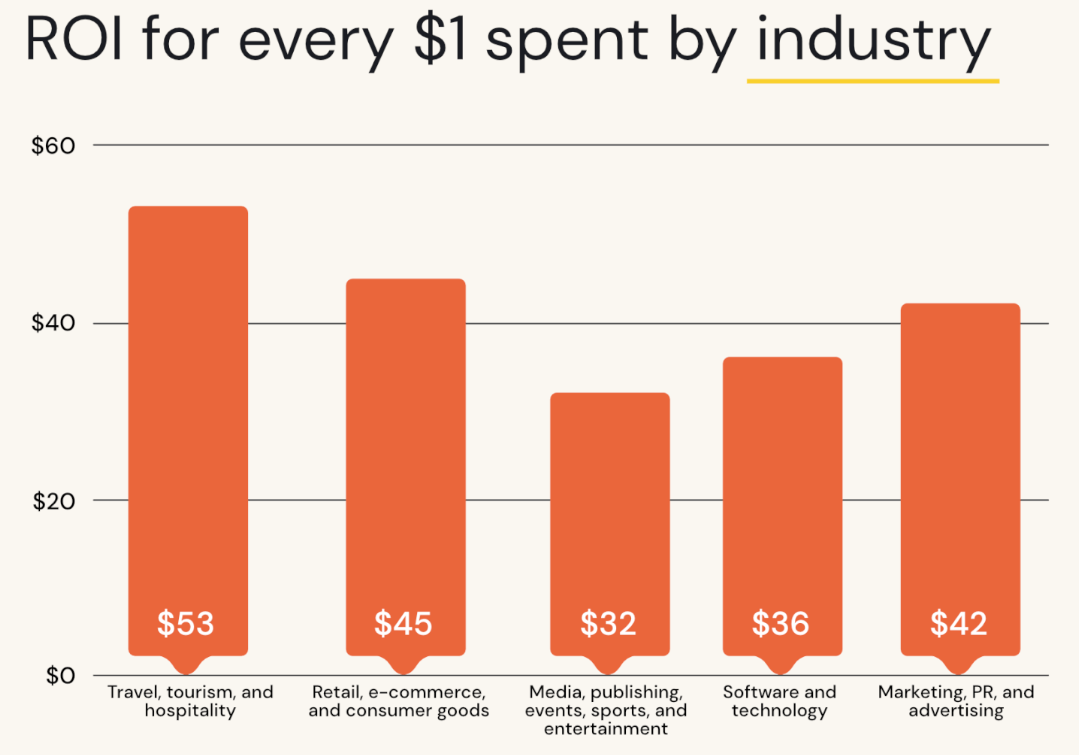
Email marketing generates $36 for every $1 spent, according to Litmus — more than any other marketing channel. For ecommerce and retail specifically, that figure climbs to $45 per $1 spent:
You don't need a complex setup to start email marketing. Three flows cover the essentials:
- Welcome email: These introduce your brand and offer a first-purchase incentive
- Post-purchase follow-up: These emails thank the customer and prompt a review or social share
- New product launch: These flows alert your list when new designs drop
These sequences do more than drive immediate sales. According to Smile.io's State of Ecommerce Customer Loyalty report, repeat customer rates and CLV grew across every major ecommerce industry in 2024.
A well-timed email is often what brings a one-time buyer back for their second and third purchase.
For email marketing tools, Klaviyo is the strongest option for Shopify stores. It provides built-in segmentation and automation that scales with you.
Mailchimp and ConvertKit both work well for Etsy sellers who are just getting started. Whichever you choose, set up your abandoned cart flow early.
Also Read:
Strategy 5 — Paid Advertising (When You're Ready)
Paid ads aren't where dropshipping marketing starts, but where it scales. Running ads before you've validated your product organically is one of the fastest ways to burn through a budget with nothing to show for it.
When you're ready, here are three platforms that are worth your attention:
- TikTok Spark Ads: This puts spend behind organic content that's already performing. This way, you're amplifying what you know works, not guessing.
- Meta Ads (Instagram and Facebook): This is best for retargeting people who've visited your store or engaged with your content. About 80% of dropshippers' ad budgets go to Facebook, per TrueProfit's analysis of 1,000+ Shopify stores.
- Etsy Ads: The lowest-risk entry point for POD sellers. You're essentially promoting listings to buyers who are already searching to purchase.
Before scaling ad spend, make sure you automate your store operations first. This way, scaling your ad spend doesn't create fulfillment headaches you're not ready for.
Strategy 6 — Influencer and UGC Marketing
You don't need a big budget to make influencer marketing work for your dropshipping store. A well-placed product in the right creator's hands can outperform a paid ad campaign. And it often costs far less.
Focus on creators with 5,000 to 50,000 followers in your niche. This could be tech reviewers, desk setup enthusiasts, or lifestyle accounts that align with your products.
Engagement rate matters more than follower count. Micro-influencer campaigns convert at 4.1%, compared to 2.6% for macro-influencer campaigns. Offer a free product in exchange for an honest review or unboxing, and keep it simple.
UGC works the same way — and it's one of the simplest ways to monetize your social media audience without spending on ads.
Ask buyers to share a photo or video of their order in exchange for a discount on their next purchase. 69% of consumers trust peer recommendations over brand messaging, per Matter.
Repurpose the best UGC across your social posts, ad creatives, and product pages.
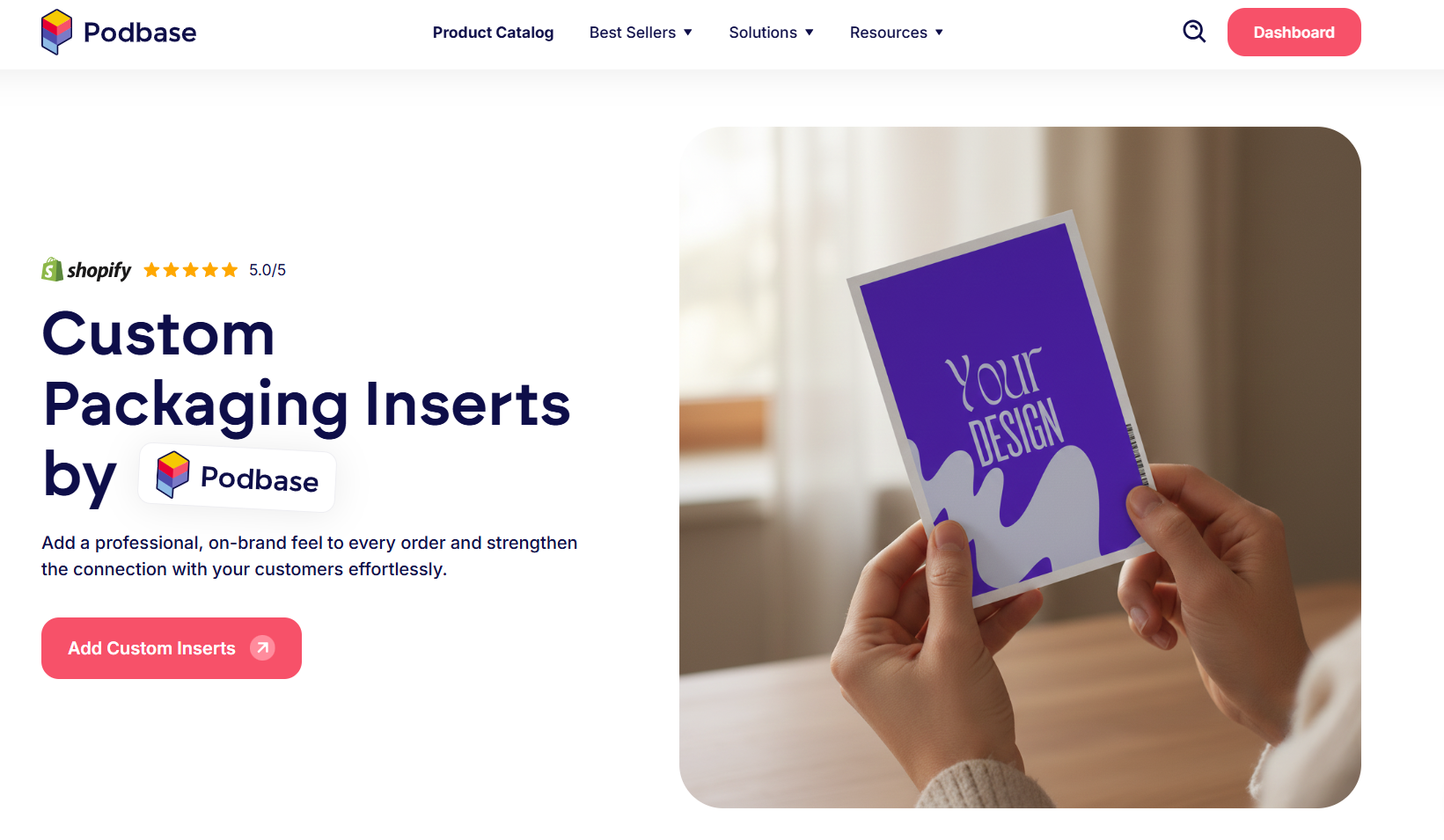
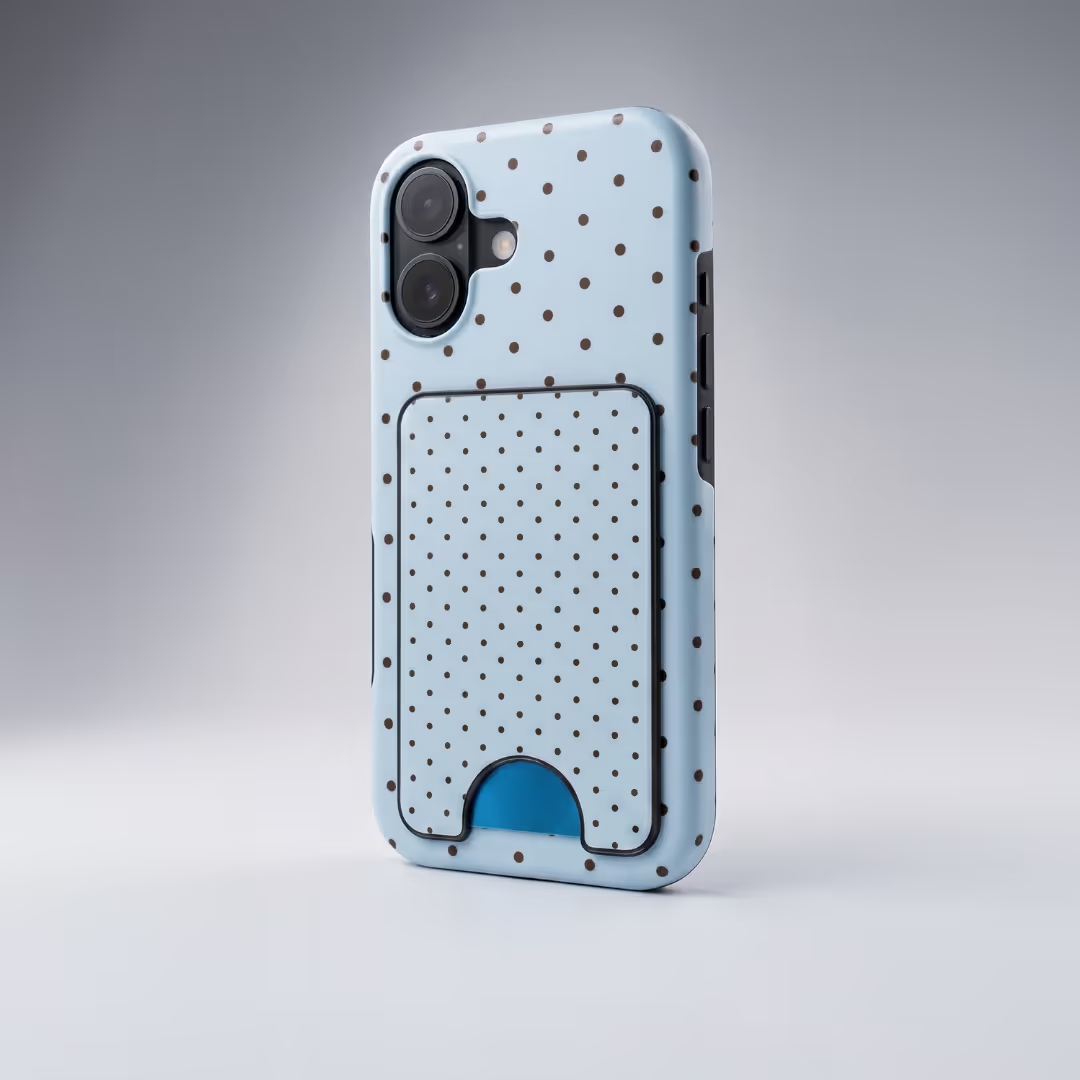
A simple packaging insert can extend this further. Podbase's packaging quality helps here. This is important since customers are more likely to post when the unboxing experience feels worth sharing:
Strategy 7 — SEO Blog Content
Most dropshipping marketing strategies bring traffic while you're actively working. But a blog keeps bringing it in long after you've moved on to other things.
Readers arriving via search already know what they're looking for. And that's why blog traffic converts better than most social traffic, where discovery is passive. A well-optimized post can rank and drive clicks for months.
The topics that perform best for POD and dropshipping stores are ones where the reader already has some purchase intent. Here are a few topic ideas that drive traffic and sales:
- "Best gifts for [niche]" — targets buyers who are ready to spend but haven't decided what to buy yet
- "How to set up a [niche item] on a budget" — pulls in readers who are shopping for the kind of products you sell
- "Trending [niche] products in 2026" — captures search spikes from people following trends
- "[Niche] aesthetic guide" — attracts inspiration-seekers and connects them directly to your catalog
Link from each post to relevant product pages on your store. Internal links keep readers moving toward a purchase and pass SEO value to your listings. Target long-tail keywords in your posts that your digital product pages can't naturally rank for.
Also Read:
- What Is Automated Dropshipping? How to Streamline Your Ecommerce
- Small Business Trends to Watch (And How to Adapt)
Conclusion on Dropshipping Marketing
You don't need to run every channel at once. Pick one or two dropshipping marketing strategies from this list, stay consistent, and build from there.
The stores that grow a dropshipping business with marketing aren't the ones doing the most. They're the ones who do a few things well and show up consistently.
When your dropshipping marketing starts working, you'll need a fulfillment partner that keeps up. Podbase offers 1-3 day shipping, zero inventory, and seamless integrations with Shopify and Etsy.
Get started with Podbase today and connect your store to make sure your fulfillment is ready before your next order comes in.
FAQ
1. What is the best dropshipping marketing strategy for beginners?
Start with TikTok. It's free, the algorithm gives new accounts real reach, and it helps you test your messaging before spending on ads. Add basic Etsy or Shopify SEO from day one, too.
2. How much should I spend on dropshipping marketing for my store?
Start at zero. Use organic channels for dropshipping marketing until you're hitting 15 to 20 orders a month, then put 10 to 20% of revenue toward testing paid ads.
3. Does SEO work for Etsy POD stores?
Yes. Optimizing your titles, tags, and descriptions directly affects how often your listings show up. Tools like eRank and Marmalead make keyword research straightforward.
4. How do I get my first sale with dropshipping marketing?
Share your store with people who already know you. Post 5 to 10 pieces of content on TikTok or Instagram and join niche communities before targeting cold audiences.
5. Is TikTok good for dropshipping marketing?
Yes. Small accounts get real reach, and the platform connects content directly to purchase decisions. Keep your content authentic and native-feeling.
6. How do I use influencers to market my POD products?
Work with micro-influencers who have 5,000 to 50,000 followers in your niche. Offer free products for an honest review. Focus on engagement rate, not follower count.

Saulius Meilutis is the CEO of Podbase, helping creators and entrepreneurs monetize their ideas with print-on-demand. He shares insights on eCommerce, growth, and building lean online businesses.

.avif)




.avif)
.avif)
.avif)
.avif)
.avif)
.avif)

.avif)


.avif)

.avif)

.avif)

.avif)
.avif)