In 2026, the landscape for small businesses is being redefined by rapid technological shifts and changing consumer values. This guide explores the most critical small business trends to watch - the integration of AI for task automation, the rise of the solopreneur and lean business models, demand for sustainable brands, and the continued strength of the Print-on-Demand (POD) model. But here's the part most trend lists skip, and what our own seller data at Podbase makes clear: the businesses that win in 2026 aren't the ones that adopt the most trends - they're the ones that move fastest on the few that matter. By pairing digital flexibility with speed and data-driven decisions, owners can reduce financial risk while scaling to meet a digital-first global market.
The way businesses work is changing fast - driven by new technology, shifting consumer expectations, and rising competition.
Business owners need to keep up with small business trends in 2026 to spot new opportunities, serve customers better, and stay ahead of competitors. In this post, you'll learn the key small business trends for 2026, practical ways to adapt, and where a print-on-demand business fits in today's market - backed by data from across our own seller base.
Why Following Small Business Trends Matters
Small business trends show how the market is changing. When you understand these shifts, it's easier to make smart business decisions. But a word of caution from what we see daily: following trends is not the same as adopting them. The most common failure mode isn't missing a trend - it's reading about ten of them and acting on none. "The majority are small wannabe entrepreneurs who get excited by the idea of it, but then stop within the first 10 days or two weeks," notes Vytautas Mikaila, Podbase's CMO. Track trends to act faster, not to feel informed. Below are four reasons it matters.
Staying Competitive in a Digital Economy
Customers expect quick service, simple websites, and easy online payments. Following digital trends helps your business compete with bigger companies - and the gap is closing fast. On Podbase, AI tools have cut the average time to launch a new POD project from roughly three months to under one. The barrier to looking professional has never been lower, which means execution speed is now the real differentiator.
Meeting Changing Consumer Expectations
Studying small business trends helps you understand what customers want: fast replies, fair prices, and honest communication. In our experience, the brands that win on expectations aren't the cheapest - they're the most consistent. As our Head of Sales puts it, "a cheap product that fails after a few days carries a cost that never shows up in a margin calculation. That customer tells their friends." Meeting expectations is a retention strategy, not a discount strategy.
Reducing Risk Through Early Adaptation
Learning about small business trends in 2026 helps you spot problems early and test new ideas, reducing the risk of losses. This is exactly where lean, made-to-order models shine: you can validate an idea without committing capital to inventory. We'll return to why that matters below.
Unlocking New Revenue Opportunities
Following trends shows where other businesses are investing and where profitable small business ideas are emerging. One revenue trend most consumer-facing lists overlook: branded B2B merch. Over the last six months we've fielded roughly three times as many B2B inquiries, with companies asking for quality over the lowest price - a signal that "promotional products" are quietly becoming a serious channel again.
Also Read:
8 Small Business Trends to Watch in 2026
Here are the eight key small business trends to watch to stay ahead in 2026 - with our honest read on which ones are genuine edges and which are now table stakes.
1. AI Adoption Across Operations
Artificial intelligence is the top small business trend in 2026. A report shows that 54% of small businesses use AI tools, and broader 2026 measures put regular AI use among US small businesses closer to 68%, up sharply from about 48% in mid-2024. You can use AI to answer customer questions, write emails and product descriptions, and generate images - saving time and cutting costs.
Here's our contrarian take, though: AI is no longer an edge - it's the floor. Because AI lowers the barrier to entry, the market gets more crowded every month. "Even though AI is starting to replace creativity in designs, mockups and processes, you will still need creativity in how to be more efficient than your competitors," says Saulius Meilutis, Podbase's CEO. We've seen AI compress project onboarding 3x (three months to under one), but that speed advantage is now available to everyone. The winners use AI to move faster than rivals, not just to keep up.
2. Stronger Focus on Cybersecurity
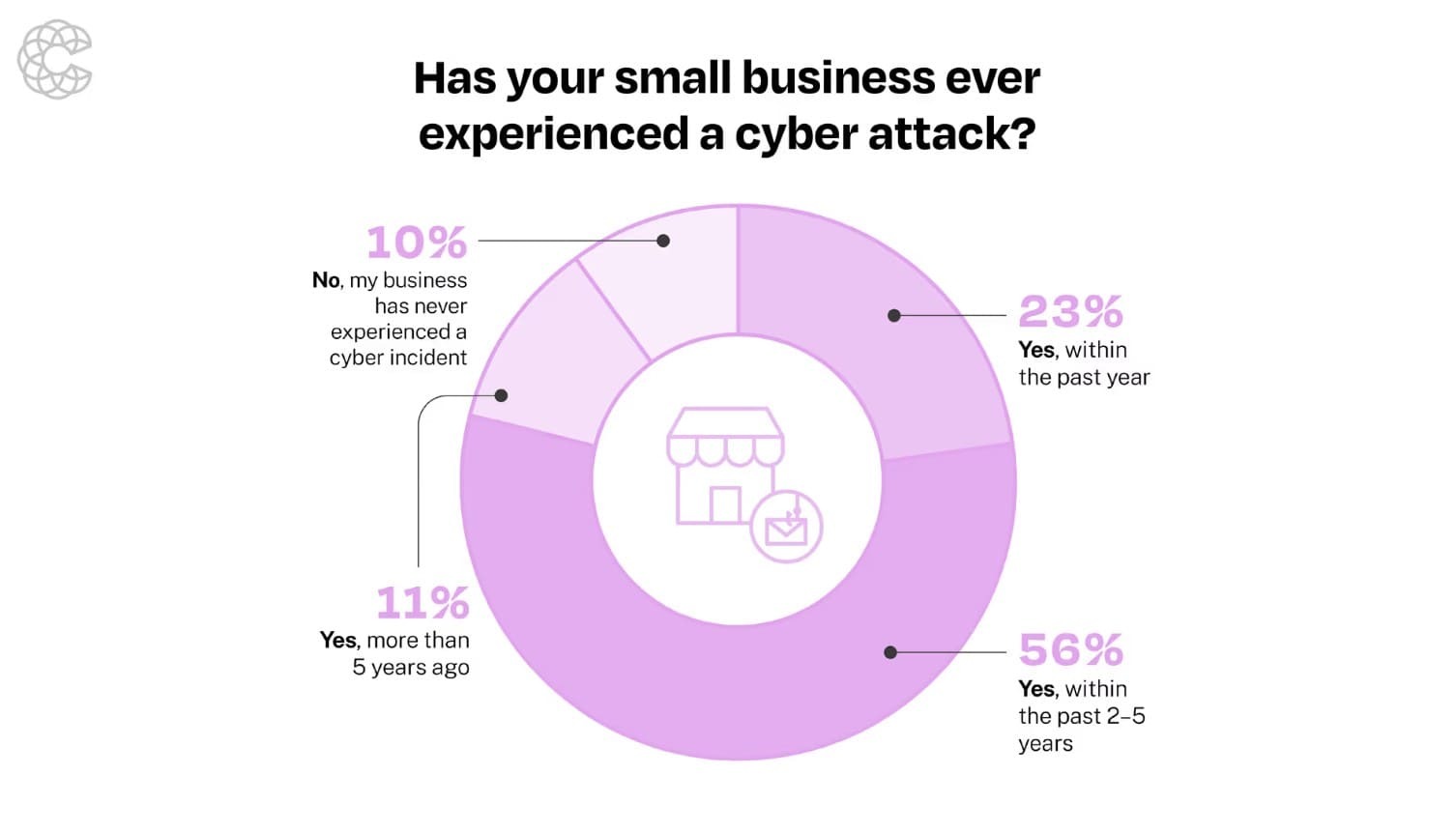
Online risks are growing. In fact, 79% of small businesses have been attacked by hackers in the past five years.
Customers want safe payments and secure data, so invest in secure payment systems and update your website regularly. There's an underrated angle here for lean sellers: choosing a trusted fulfillment partner offloads a large share of payment and data risk. When orders, payments, and personal data flow through established, compliant platforms (like a Shopify store connected to a vetted POD supplier), you inherit their security investment instead of building it alone.
3. Sustainability and Eco-Friendly Practices
More customers care how products are made. In the United States, 41% of shoppers say they're willing to pay more for eco-friendly packaging.
Most "sustainability" advice stops at recyclable packaging. The bigger structural win is producing on demand. Because POD products are made only after a customer orders, there's no speculative overproduction - the single largest source of retail waste. We take this further on the supply side: as demand for a specific device or design fades, we simply buy less of that material, so we're not discarding unsold stock. Made-to-order isn't a green marketing layer; it's a fundamentally leaner production model.
4. Mental Health and Work-Life Balance
Workers increasingly value flexible schedules and remote work. In a recent CIPD survey, 80% of workers said flexible work improved their quality of life.
For founders, the relevant version of this trend is that lean digital businesses are designed for flexibility from day one. A POD operation runs remotely on digital tools, with printing, packing, and shipping handled by a partner - which is part of why solo founders are choosing it. When the business doesn't depend on you being physically present, work-life balance stops being a perk and becomes the operating model.
Also Read:
5. Personalization at Scale
Many customers want personalized experiences. In fact, 39% of US consumers expect marketing that feels tailored to them.
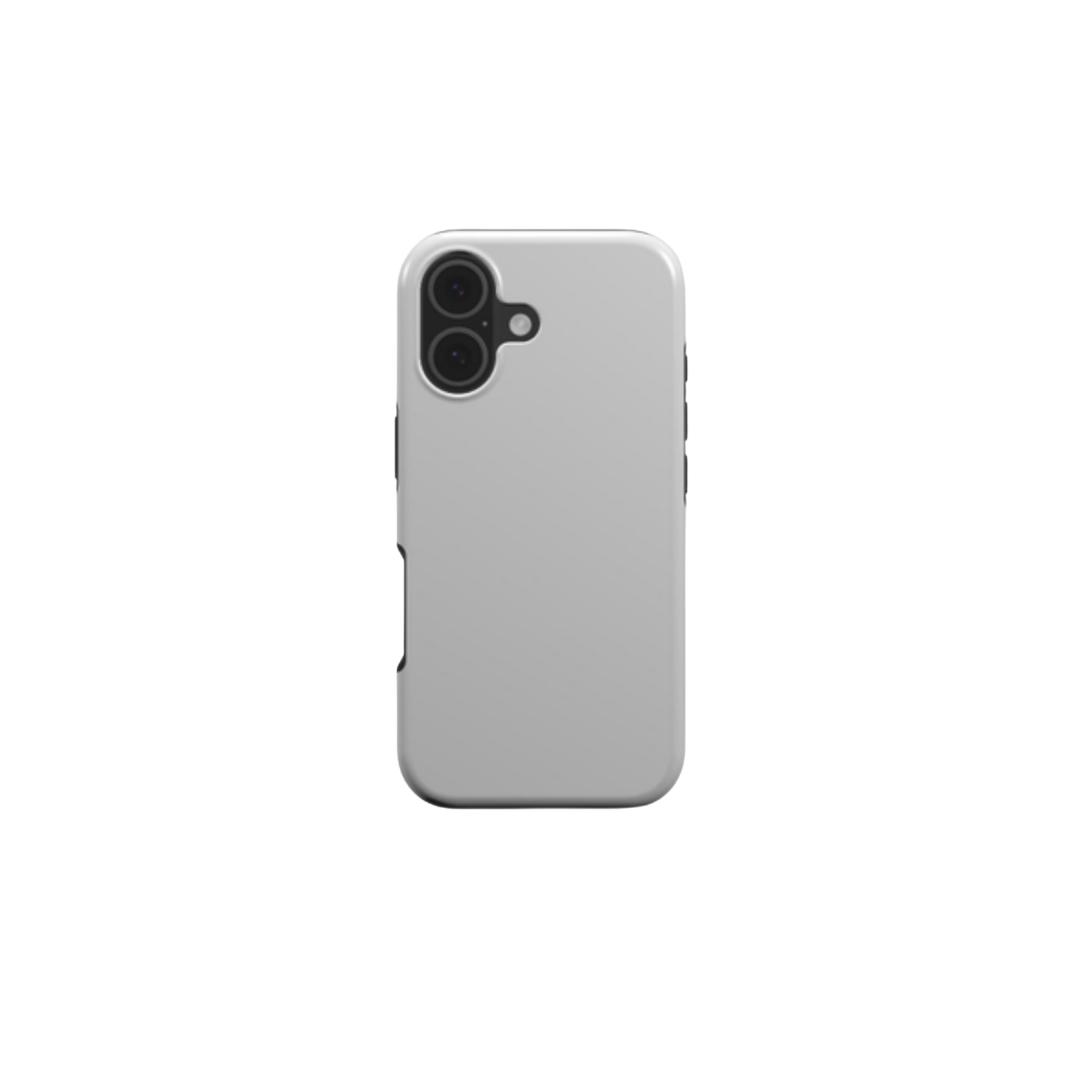
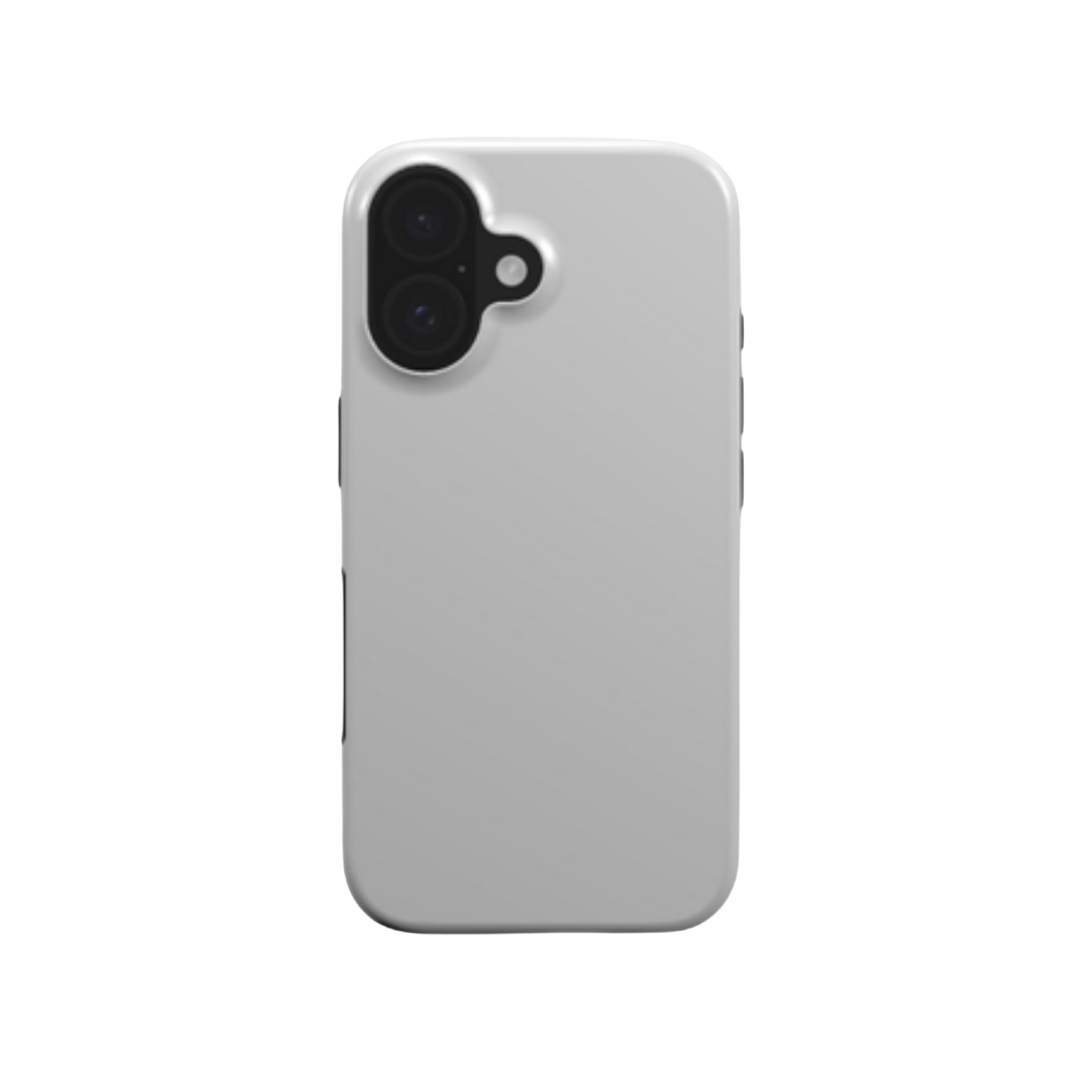
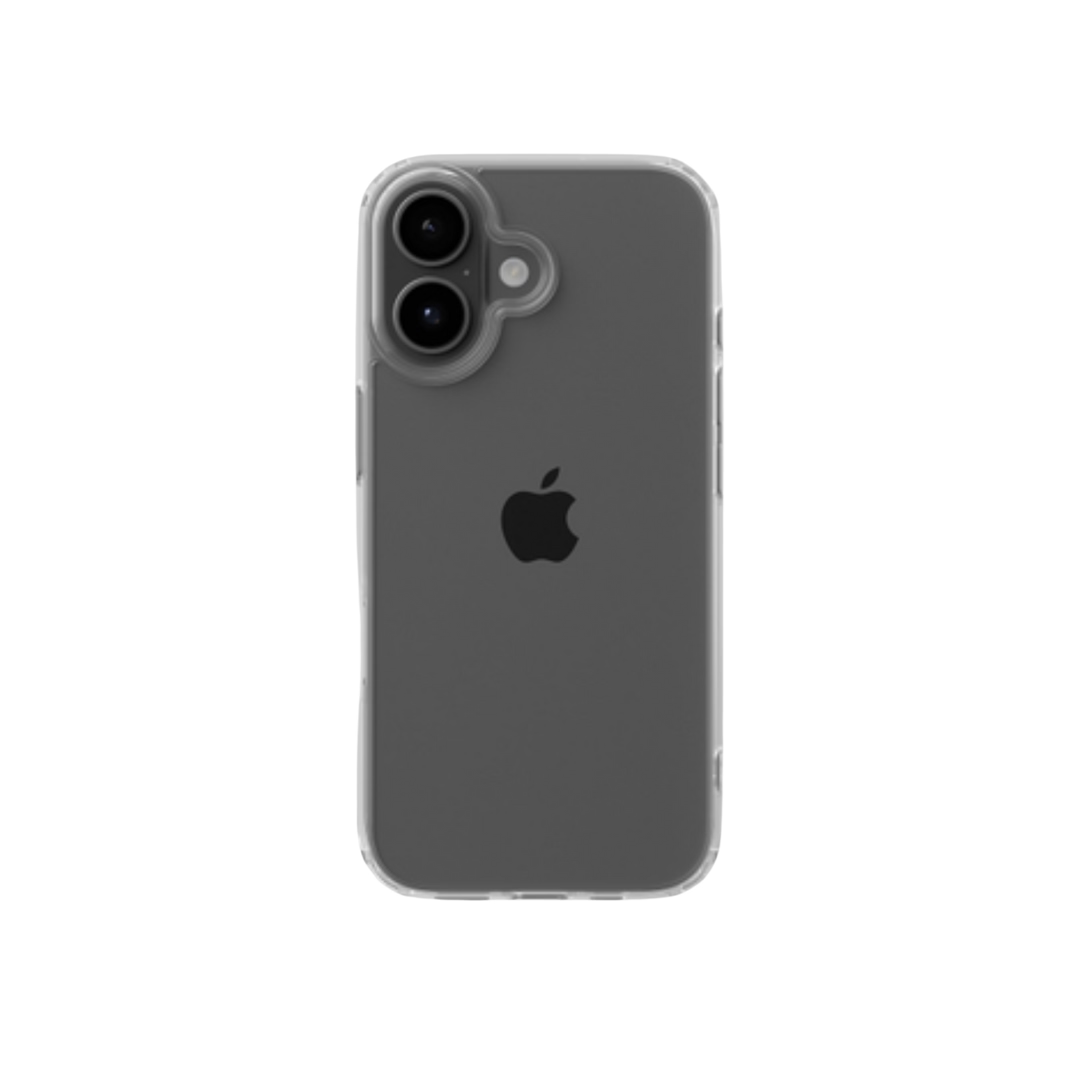
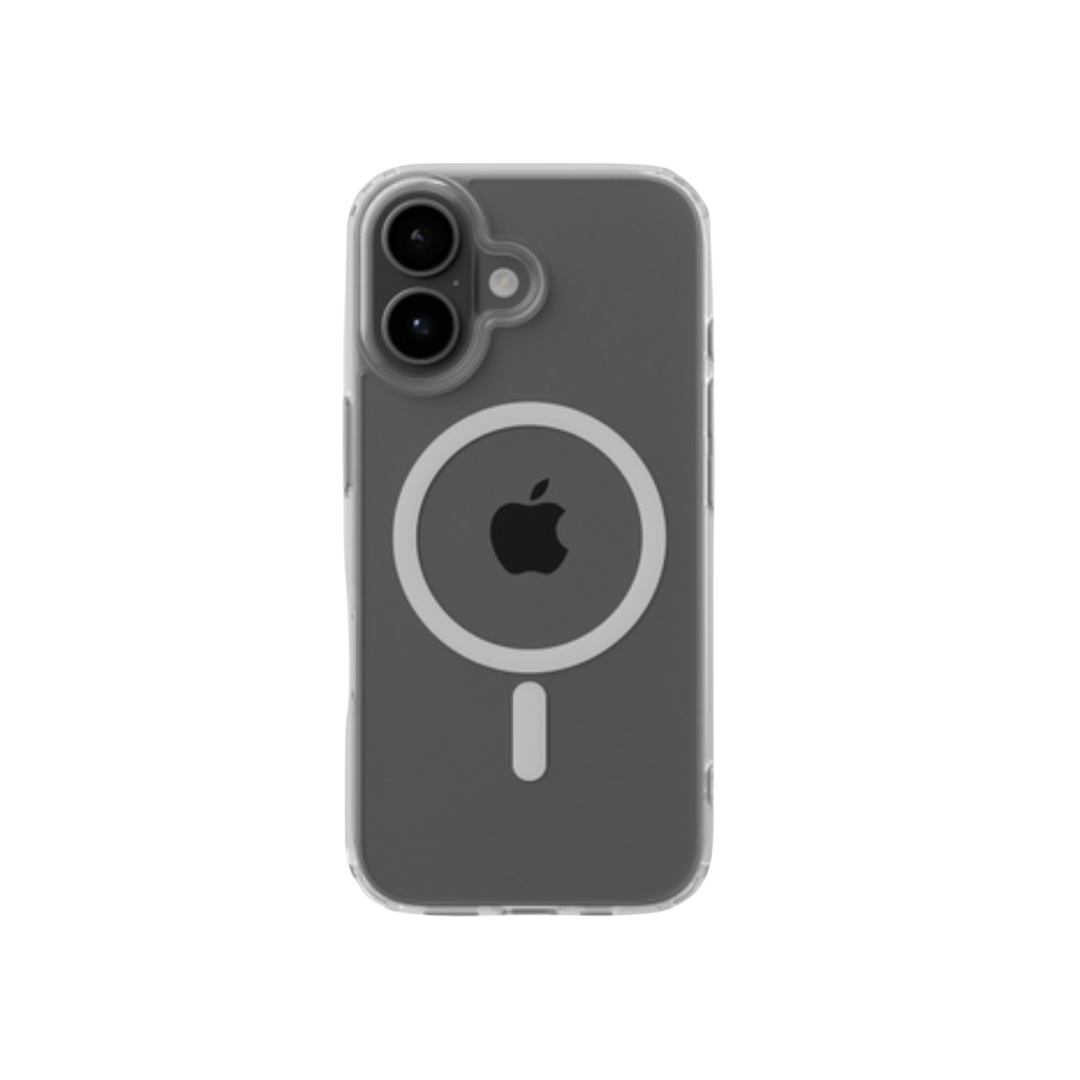
Personalization is where physical products quietly beat digital ones. A custom phone case is, as our CEO describes it, "your personal billboard on your gadget" - and the demand is structural, not faddish: about 68% of smartphone owners use a case and roughly 40% of Americans replace phone accessories every six months. That means personalization here isn't a one-time sale; it's a recurring one. Smart tools let even a solo seller recommend the right design to the right buyer at low cost.
6. Community-Driven Brands
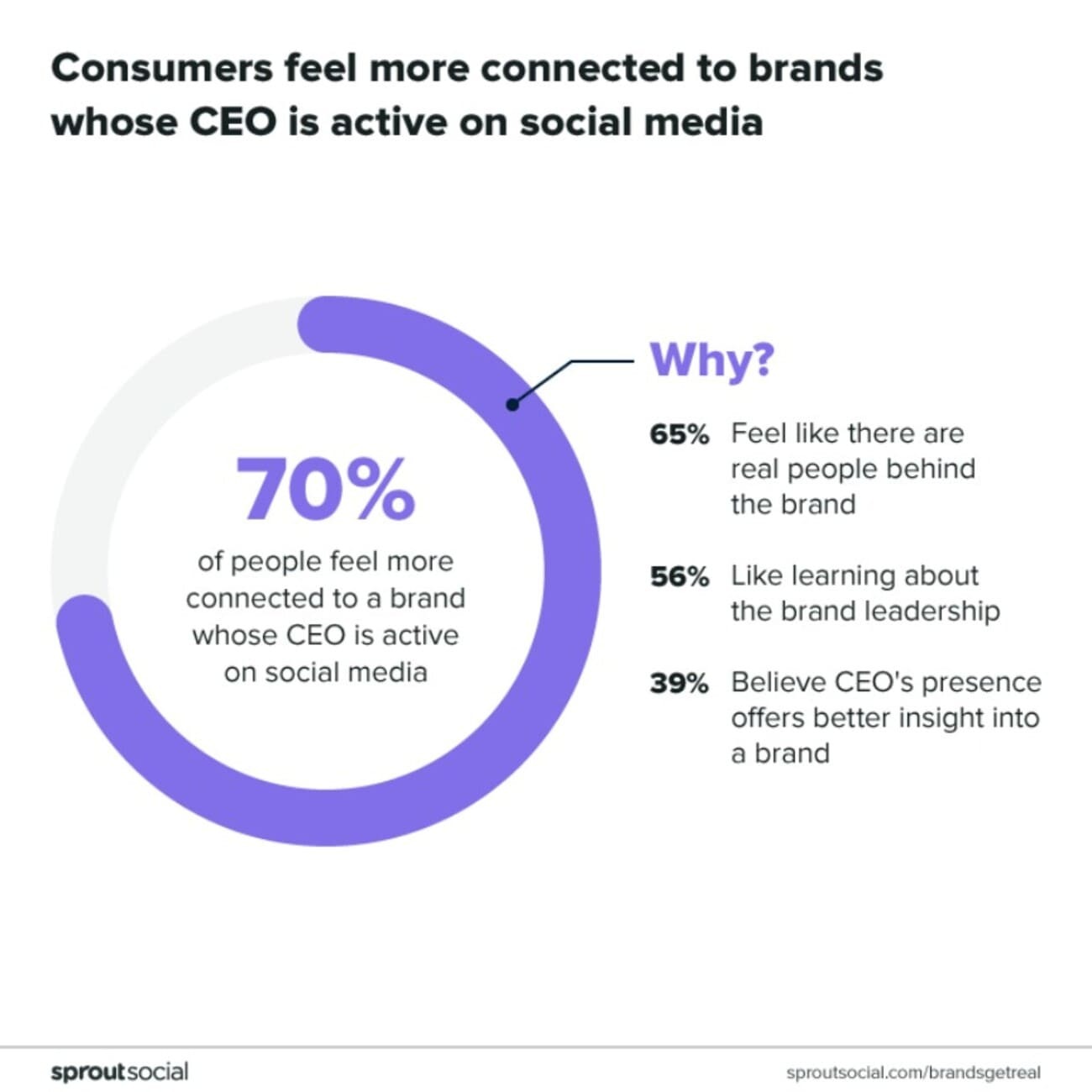
Many brands now build online audiences first. Studies show that 70% of consumers feel more connected to a brand when the CEO is active on social media.
This is one trend our data lets us quantify rather than assert. Sellers who plug into a community, a mentor, or a peer group scale roughly 32% faster than solo operators going it alone - a gap we identified directly from our pipeline. Community isn't just a marketing channel pointed outward at customers; it's also an accelerant pointed inward at the founder. The sellers who learn alongside others simply move faster and quit less.
7. Micro-Niche Businesses
Instead of selling several kinds of shoes, a micro-niche might sell only shoes for toddlers - and often outperform general stores. Experts predict niche subscription services could reach $97.73 billion by 2030.
Narrow focus is also how small POD sellers beat big ones. "We always look for niche products that work with different types of clients," says Justina, Podbase's Head of Product - the same logic applies to sellers. A tightly defined audience trusts you more and converts better, and tech accessories make this easy: hundreds of device models, each a micro-niche, refreshed almost monthly as new phones launch.
8. Lean and Low-Risk Business Models (The Rise of the Solopreneur)
Many entrepreneurs now choose low-risk, one-person business models - and the numbers are striking. There are about 29.8 million solopreneurs in the US, generating roughly $1.7 trillion in revenue, and 81.9% of US small businesses have no employees at all. The solopreneur is no longer the exception; it's the default.
Lean models let beginners test ideas without spending much upfront. But "low-risk" has a catch we see constantly: low risk only pays off if you actually launch. The sellers who win treat lean as a reason to move fast, not a reason to wait. "Sellers who launch fast with five simple designs outperform sellers who spend six months building the perfect store," says our Head of Sales - and the data backs it: place a sample order within two days and publish five products within 30 days, and you're already ahead of 80% of POD stores.
Also Read:
How Print-on-Demand Businesses Can Embrace These Trends
Small business trends in 2026 favor models that are flexible and low-risk. Print-on-demand (POD) businesses already match many of these changes. Here are six ways they fit the trends.
Using AI for Design and Marketing
AI tools help you create designs faster without a large team. For example, you can use ChatGPT to create mockup images, write product descriptions, and generate ad copy for the right audience. In our own workflows, AI now turns a single static product photo into multi-angle mockups and even video - collapsing what used to be a multi-week sample-and-photoshoot process into a same-day task. For a lean seller, that's the difference between testing one idea a month and testing ten.
Improving Cybersecurity in Ecommerce
Online stores must protect customer data at checkout. Use secure payment systems and add an extra login step to protect customers from fraud. Working with trusted fulfillment partners like Podbase also adds protection: orders and payment data flow through established, compliant infrastructure rather than a setup you have to secure alone. Just as importantly, keep privacy and return policies clear so buyers can trust you.
Supporting Sustainability Through On-Demand Production
Print-on-demand products are made only after an order is placed, so there's no upfront spend and far less material waste than in traditional retail production. This is sustainability built into the supply chain rather than bolted on - which is why many eco-conscious brands prefer on-demand. It also happens to be good business: no overstock means no markdowns on unsold inventory.
Promoting Mental Health Through Brand Messaging
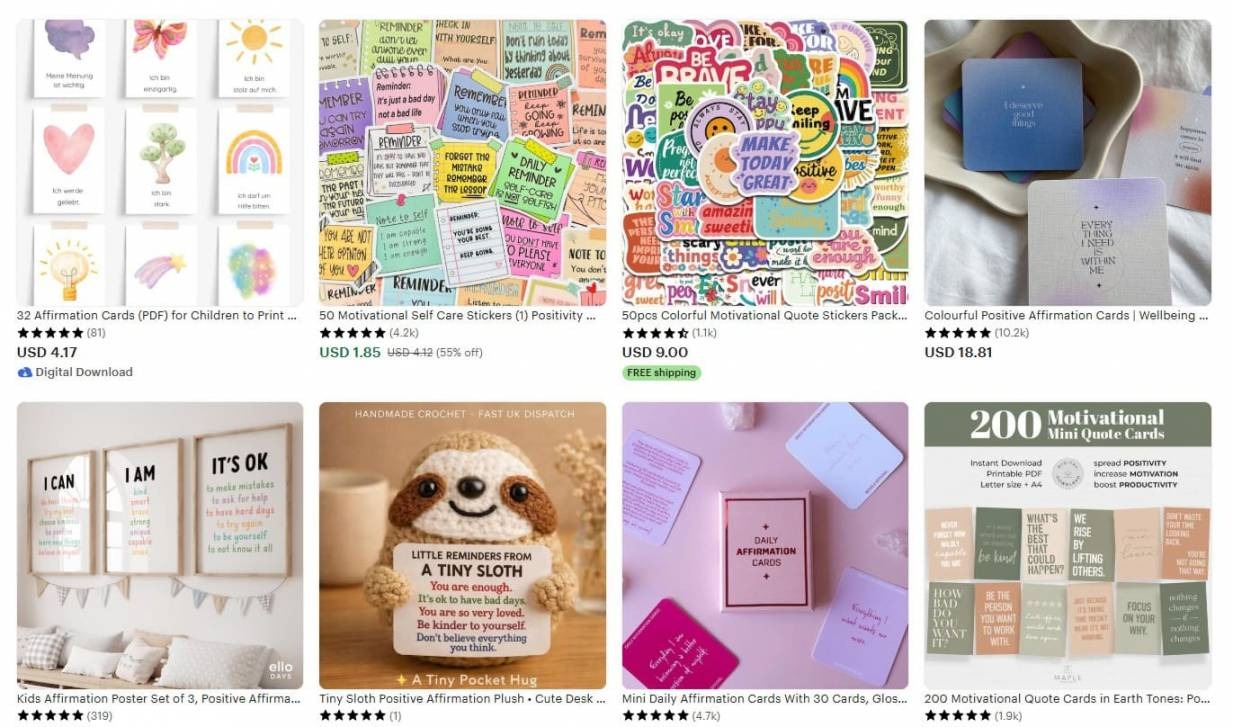
Some brands now sell products that advocate for mental health - designs with motivational quotes and affirmations that connect with customers who value wellness. POD also supports the founder's well-being: because production is automated and remote, owners maintain a healthier work-life balance rather than being chained to fulfillment.
Offering Personalization
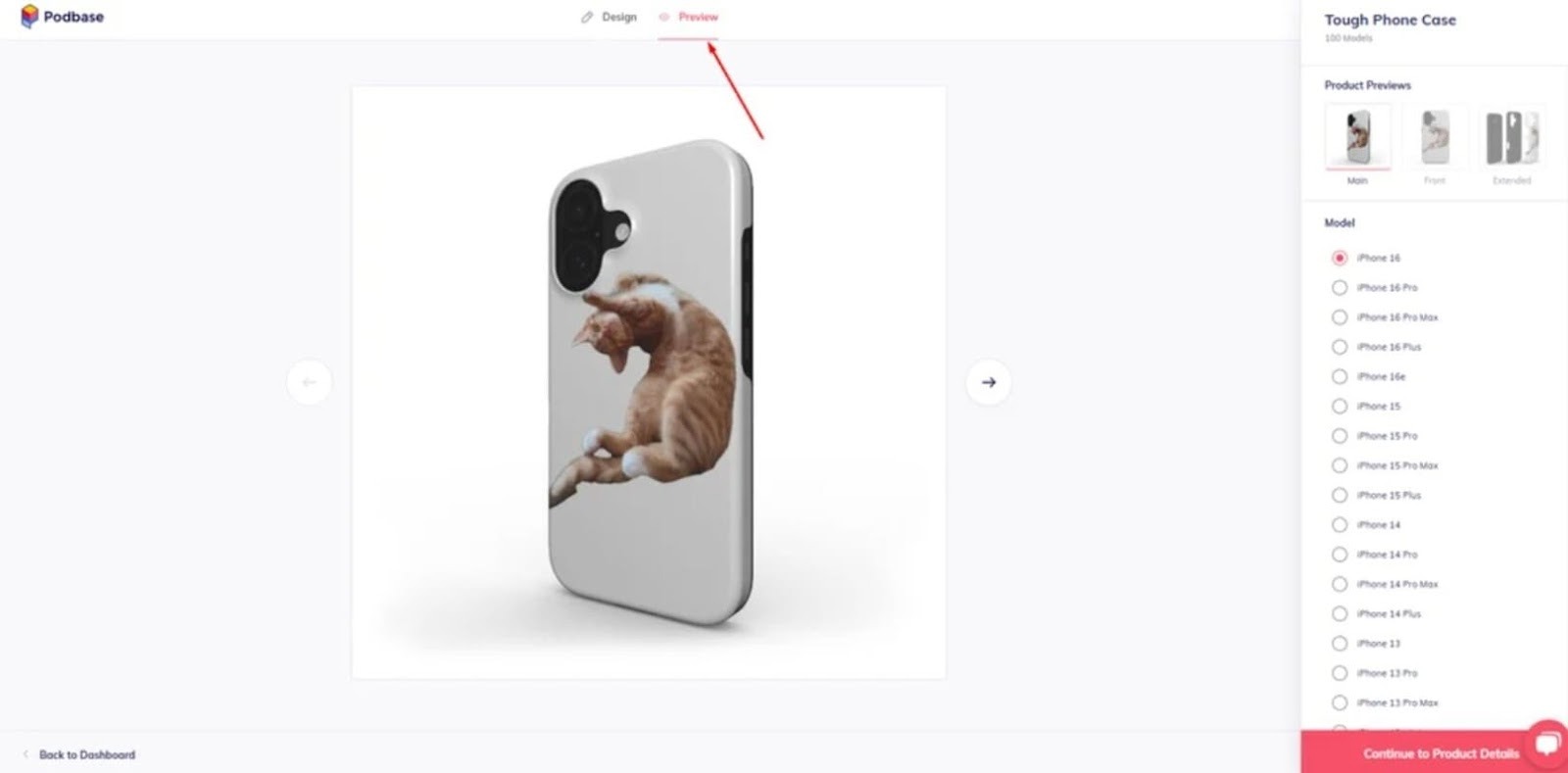
Many customers love products that feel personal. POD makes it easy to launch unique business ideas like custom phone cases and event merch, release limited-edition items, or even let your audience vote on upcoming products. When customers help choose designs, you focus production on items already proven to sell - personalization that doubles as market research.
Building a Community Around Your Brand
Strong brands build real connections with their audience. Ask customers to share photos of your products, reward loyal fans with exclusive launches, and keep the community active. Remember our pipeline finding: community accelerates the founder too. The fastest-scaling sellers we work with are rarely the most talented - they're the ones surrounded by people doing the same thing.
Also Read:
- How to Start a Print-on-Demand Tech Accessories Brand (Phone Cases & More)
- Print On Demand Design Ideas: What's Trending Now
Why Print-on-Demand Is a Future-Proof Business Model
Print-on-demand businesses are built to adapt quickly to changing market demands. And the market itself is expanding fast: the global POD market is on track to grow from roughly $12.96 billion in 2025 to about $75.30 billion by 2033. Here's what makes the model future-proof.
No Inventory Risk
POD products are only made after a customer orders, so you can start an online store without inventory and never sit on unsold stock. This is the single biggest reason POD survives downturns that sink inventory-heavy retailers.
Low Startup Costs
You don't need to rent a store or hire staff. With phone cases, for example, the unit economics are unusually friendly - on Podbase a case bought for about €10 sells for €35-€60, and our pricing runs 10-15% better than competitors across most categories (up to 20% in some). That margin headroom is what lets a solo founder fund their own growth.
Easy Product Testing
You can launch new designs quickly without spending much. If a product doesn't sell, remove it and try another. This is the lean, test-fast principle in action - and a simple revenue lever we've measured: adding a checkout upsell like a screen protector to a phone-case order converts at 3-10% in our data and adds about €10 of profit per order at no extra acquisition cost.
Scalable with Automation
Many POD companies automatically handle printing, packing, and shipping. Automation lets your business grow without hiring - the operational backbone of the solopreneur model. Behind the scenes, that automation is paired with quality control: every order passes checks between printing, assembly, and packaging, and color accuracy is verified with a spectrophotometer rather than eyeballed.
Global Fulfillment
POD businesses can deliver worldwide, letting small brands reach international customers and grow beyond a local market - without opening a single warehouse abroad.
How Podbase Supports Modern POD Businesses
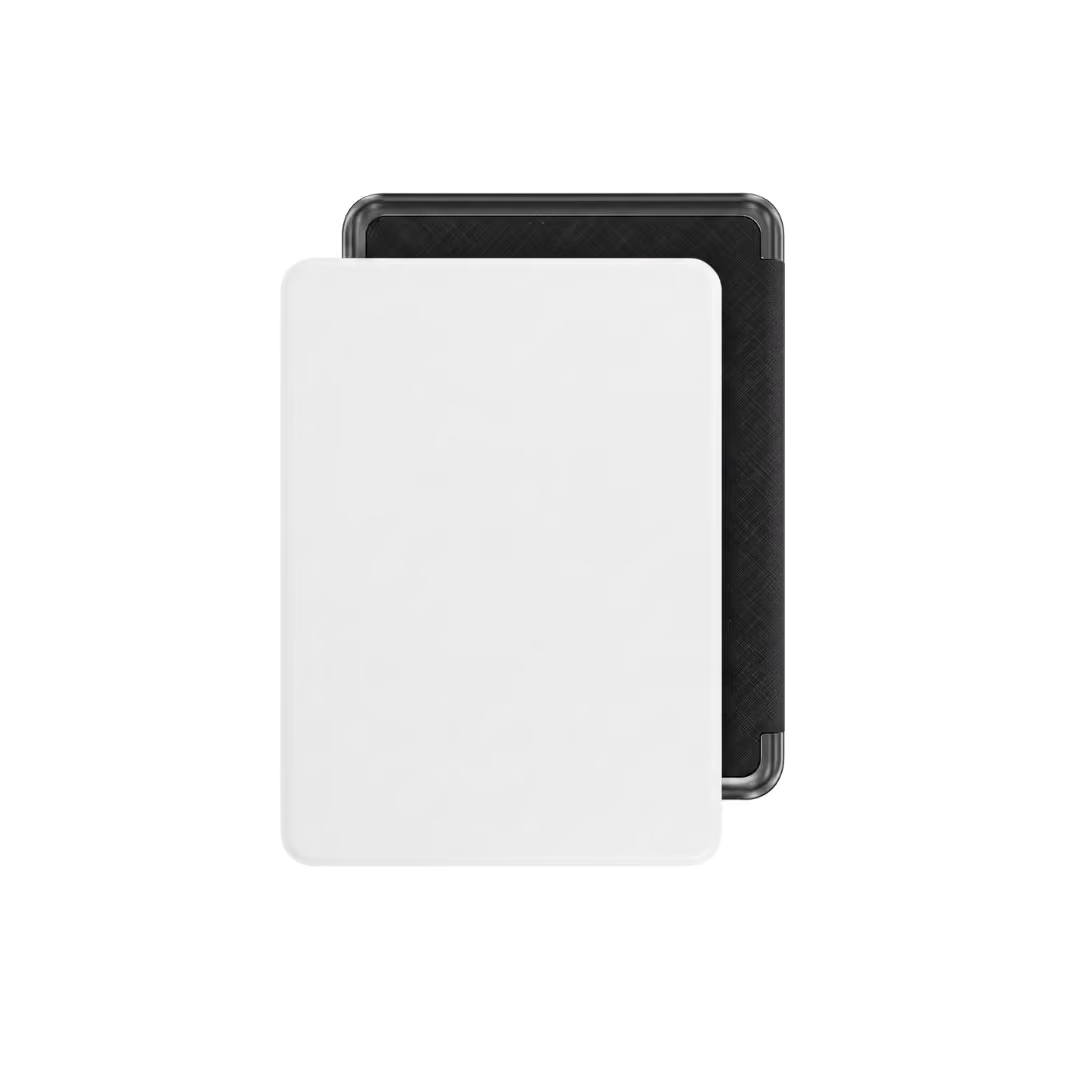
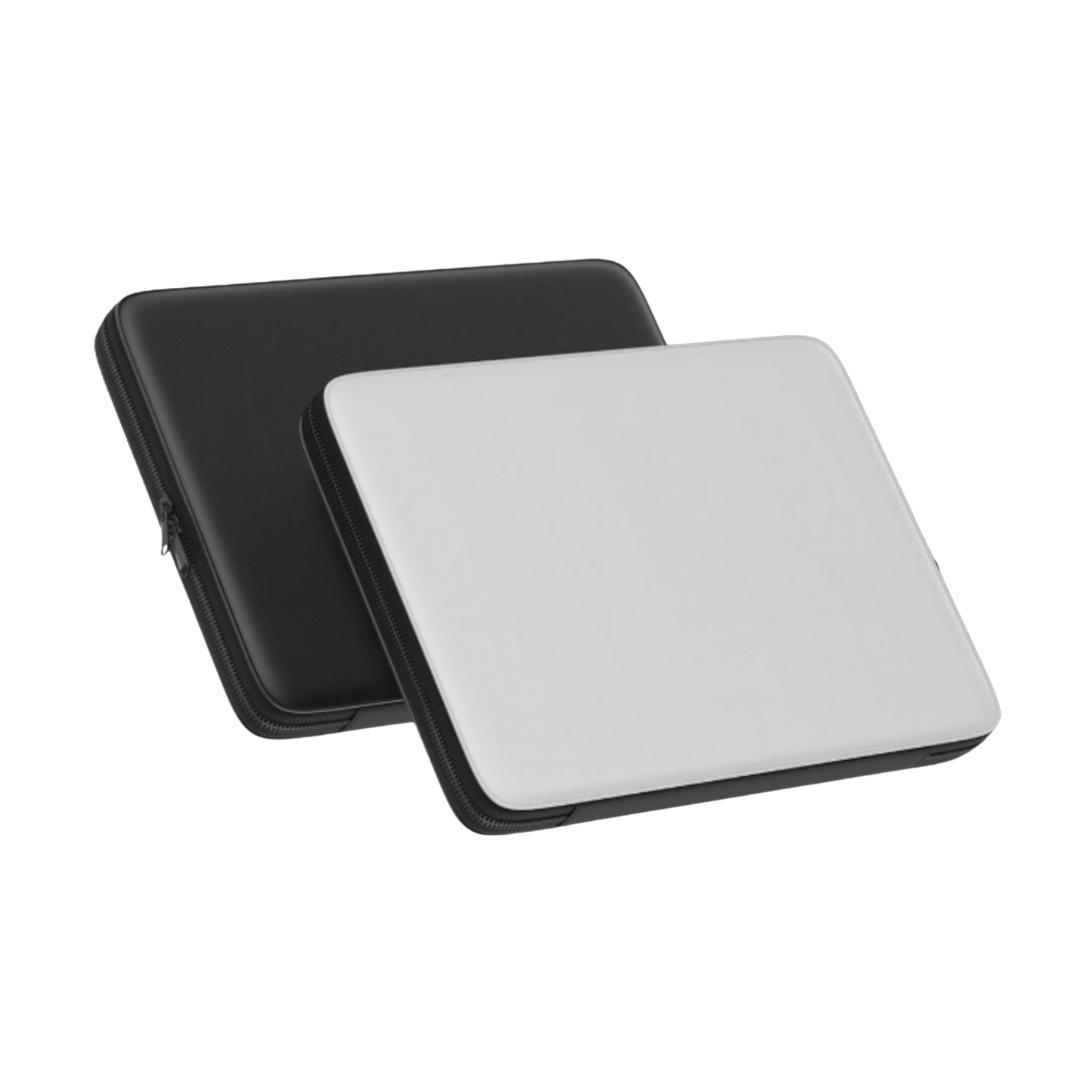
Choosing the right print-on-demand company makes it easier to start and grow. Podbase focuses on tech accessories like custom phone cases and laptop sleeves, and uses modern printing so designs stay bright and sharp.
The company starts printing your designs within 24 hours of an order and ships worldwide, including the US and EU. It supports lean, scalable, fully remote operations - you can use the mockup generator to test how designs look across products before committing. And the support model is built for small sellers, not just enterprise accounts: sellers who migrated to Podbase saw a 15% increase in customer reviews left and a 30% drop in order-issue support tickets, with about 98% still with us at the three-month mark.
Podbase connects with platforms like Shopify and Etsy. Once connected, Podbase receives orders directly and begins printing - a simple setup that lets you start a business with less money and effort, with margins up to 100% higher than other providers.
Also Read:
Conclusion
Small businesses will keep changing as new tools and customer needs reshape how they grow. But the throughline across every 2026 trend is the same: flexible, made-to-order, data-driven businesses win, and the founders who act fast win biggest. The trends reward speed, not study.
Print-on-demand sits at the intersection of all of them - AI-friendly, lean, sustainable by design, personalization-ready, and global from day one. With the right platform handling printing, fulfillment, and worldwide delivery, you spend your time growing your brand instead of managing operations. If you're ready to act on these trends rather than just track them, create an account on Podbase to get started.
FAQ
1. What are the biggest small business trends in 2026?
The key trends are AI adoption across operations, stronger cybersecurity, sustainability and eco-friendly practices, flexibility and work-life balance, personalization at scale, community-driven brands, micro-niche businesses, and lean low-risk models like solopreneurship and print-on-demand. The throughline is that flexible, made-to-order, data-driven businesses win - and the founders who act fastest benefit most.
2. Is AI still a competitive advantage for small businesses in 2026?
AI is now the floor, not the edge. Around 68% of US small businesses use AI regularly, up from about 48% in mid-2024, so the speed it provides is available to everyone. On Podbase, AI cut new-project onboarding from roughly three months to under one. The advantage now goes to founders who use AI to move faster than rivals, not just to keep pace.
3. Why is print-on-demand a good fit for 2026 small business trends?
POD matches nearly every 2026 trend: it's AI-friendly for design and marketing, lean and low-risk with no inventory, sustainable because products are made only after a sale, personalization-ready, and global from day one. The market is also growing fast - from about $12.96 billion in 2025 toward roughly $75.30 billion by 2033.
4. What is a solopreneur and why are they on the rise?
A solopreneur runs a one-person business with no employees. There are about 29.8 million in the US generating roughly $1.7 trillion in revenue, and 81.9% of US small businesses have no employees at all. Lean digital models like POD - where production, packing, and shipping are automated by a partner - make solo operation the default rather than the exception.
5. Does sustainability actually matter to small business customers?
Yes - 41% of US shoppers say they'd pay more for eco-friendly packaging. The bigger structural win, though, is on-demand production: making products only after a sale eliminates the speculative overproduction that is retail's largest source of waste, with no unsold stock to discard. Made-to-order is leaner production, not a green marketing layer.
6. How can a small business actually act on these trends instead of just tracking them?
Pick the few trends that matter and move fast. The most common failure is reading about ten trends and acting on none - most beginners quit within 10-14 days. Launch a lean test (Podbase data shows publishing five products within 30 days puts you ahead of 80% of POD stores), join a community (sellers in one scale about 32% faster), and iterate from real sales rather than perfecting endlessly.

Saulius Meilutis is the CEO of Podbase, helping creators and entrepreneurs monetize their ideas with print-on-demand. He shares insights on eCommerce, growth, and building lean online businesses.

.avif)




.avif)
.avif)
.avif)
.avif)
.avif)
.avif)

.avif)



.avif)

.avif)

.avif)

.avif)

.avif)