AI is no longer just a nice-to-have add-on for brands. It's now a core tool that helps teams of all sizes work smarter and faster - and for print-on-demand sellers, it has fundamentally changed what it costs to compete.
The shift is visible in Podbase's own data. "When we started, AI wasn't such a popular partner sitting beside you while optimizing your workflows," says Saulius Meilutis, CEO of Podbase. "Currently, at the scale of AI today, it's incomparable." That incomparability now shows up in how quickly sellers can launch, how professionally they can present products, and how efficiently they can adapt to market trends.
Small ecommerce sellers and print-on-demand brands use AI to do work that once needed full teams.
The payoff is clear: sharper targeting, quicker launches, and stronger sales.
In this article, we'll break down the key AI marketing statistics shaping 2026 and explain what they mean for your business.
AI Marketing Statistics That Show Real ROI and Growth
When people ask if AI really pays off, the numbers speak loudly. The following AI marketing statistics show strong gains in speed, cost savings, and revenue growth.
AI Marketing Adoption Statistics: Who's Using It Now
The high use of AI in marketing shows that it is now common.
- A 2025 McKinsey survey found that 88% of businesses use AI on a regular basis. This shows that AI is part of daily work.
For print-on-demand sellers, this adoption isn't just about automating copy - it's rebuilding the entire launch workflow. Saulius Meilutis describes what this looks like in practice: "We have some internal use cases where store owners build their own scripts and integrations with AI, with no coding experience, and their fulfillment flows work really, really great and fluent." What once required hiring a developer now takes an afternoon with the right AI prompt.
The Productivity Leap: AI Content Marketing Statistics
AI is transforming how quickly brands can produce and refine content.
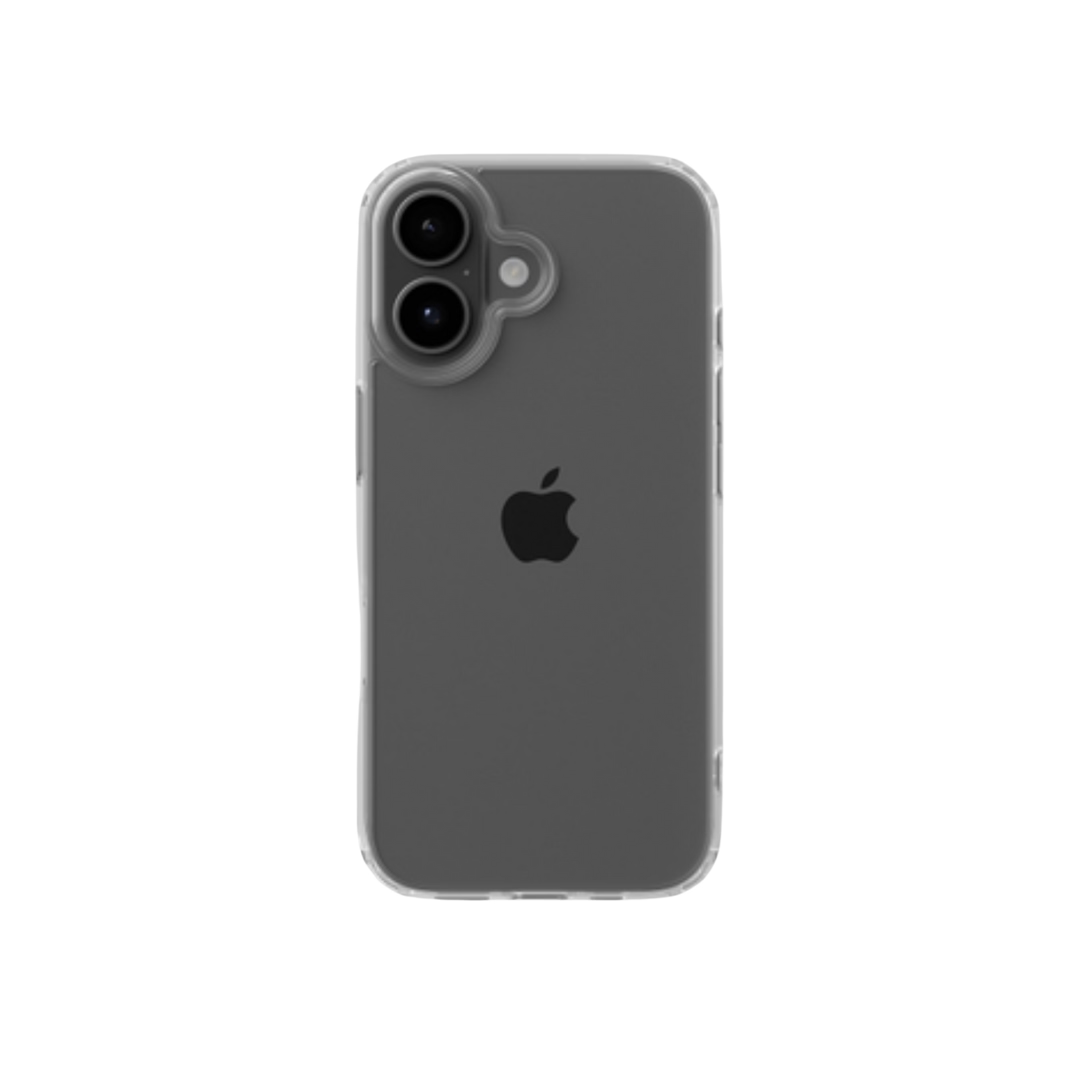
- A 2024 SurveyMonkey report found that 93% of marketers say AI helps them create content faster. This allows them to produce more products like tablet case designs, product listings, and social posts in less time.
- The same report shows that 91% of marketers say AI helps them find insights faster. These insights help them make better design and listing choices.
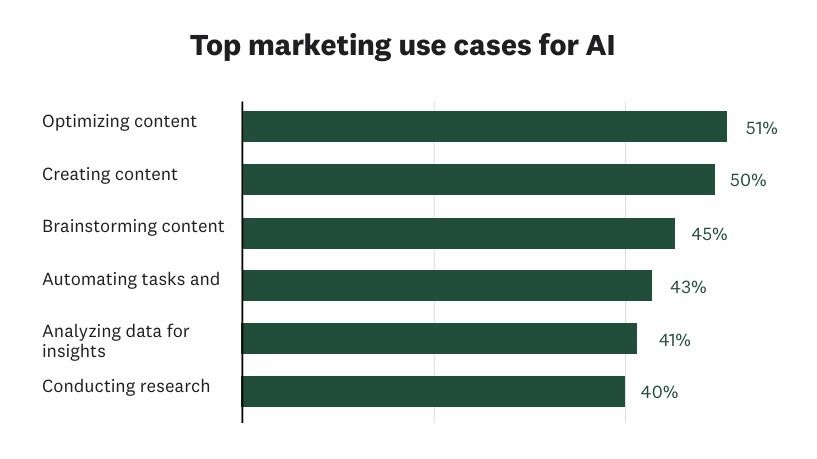
- Recent marketing data shows that 50% of marketers use AI to create content. At the same time, 51% use AI to improve content. Content creation and optimization now happen together.
The productivity shift extends well beyond copywriting. For Podbase sellers, one of the biggest time savings is product photography. "You had to order samples from your supplier, organize photo shoots, which extends your product launch already by a few weeks more," says CEO Saulius Meilutis. "Now you can just take a static picture and generate high-quality multi-angle output of your products showcasing all the different unique selling points, tailored to your ideal customer profile based on your brand's identity. You can even generate video output from the same static image." That's a weeks-long task reduced to minutes.
AI Marketing Statistics Show Measurable Revenue Impact
Speed is valuable, but results matter more.
- As of November 2023, 81% of US marketers surveyed by Statista said AI increased brand awareness and sales. That's four out of five marketers seeing real growth.
- In the same Statista survey, 75% of marketers said AI helped reduce marketing costs. Lower costs allow you to test more ideas and scale faster with less risk.
- A 2024 Contentful survey found that 37% of marketers save 5-10 hours each week using AI. That's nearly a full workday reclaimed each week, time that can be reinvested in business growth.
- Brands using AI pricing tools report margin improvements of around 15% and up to 25% revenue gains. For POD sellers, this means staying competitive without relying on constant discounts.
Also Read: Entrepreneur Statistics: Trends & Insights | Print-on-demand Statistics To Know (Infographic)
AI Marketing Statistics in Print on Demand: From Design to Distribution
AI is changing how print-on-demand brands work from start to finish. These AI marketing stats show clear gains in speed and efficiency across key parts of the business. Podbase's own seller data and leadership observations add a layer that generic AI marketing roundups cannot replicate.
AI Demand Forecasting and Inventory Management
Inventory management is one of the biggest cost drivers for POD brands.
- A 2024 McKinsey supply chain report found that AI-driven demand forecasting can cut inventory needs by 20-30%. This reduces waste and frees up cash tied up in stock.
The impact is even greater for fast-selling items like phone cases and tech accessories. Trends change quickly, and unsold designs can lose value fast. Podbase's internal data shows that sellers who monitor trend windows and adjust product launches in real time - increasingly enabled by AI analysis tools - avoid the inventory waste that erodes margins on time-sensitive SKUs.
AI Marketing Trends in Design-to-Ad and Market Cycle
Design cycles are now dramatically faster thanks to AI.
- Teams using AI tools design 10 times faster. They cut the time spent per image by 75%, according to a 2025 Superside report. POD brands can turn a design idea into a live ad within days.
- Fast fashion brands like Zara often take three to four weeks to launch new designs. Meanwhile, AI-powered POD sellers can move from design to ad testing in under 24 hours. This helps them catch trends early.
The workflow shift Podbase sellers are experiencing goes beyond design speed. CEO Saulius Meilutis describes what adapting designs used to cost: "You had to go to Photoshop, edit it manually, or try to automate with scripts, but it takes lots of time to tailor everything and set up your workflow so you can adapt your thousands of designs to meet new requirements. Now you can just simply write a prompt with all the requirements, upload your designs, and the output is here really fast and efficiently." For a seller managing hundreds of SKUs across multiple device models, this is a fundamental change in what a solo operation can execute.
The knock-on effect on platform onboarding is just as striking. Podbase's internal data shows average onboarding time for a new print-on-demand project dropped from three months to under one month - a 3× improvement attributable directly to AI-assisted setup workflows. "Previously, onboarding could take months or weeks," says Meilutis. "Now you can easily migrate even in a single day or at most a week."
AI Personalization Marketing Statistics for 2026 Show Strong Buyer Demand
Personalization is the real driver of conversions and higher order values.
- A 2025 Attentive survey found 71% of consumers want brands to learn from their shopping behavior. Shoppers expect relevance.
- In the same study, 71% found irrelevant messages frustrating. In fact, 81% ignored them.
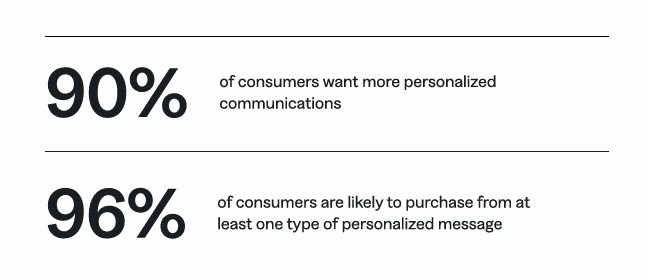
- 96% said they're more likely to buy when brands send personalized messages. For POD sellers, AI personalization can raise average order values through tailored product suggestions.
Vytautas Mikaila, CMO of Podbase, points to email marketing as the channel where personalization compounds most reliably: "Email marketing is usually one of the strongest ROI channels, simply because you are monetizing people that already know your brand and in many cases already bought from you." AI-powered email tools - segmenting by purchase history, browsing behavior, and device preference - make this personalization scalable for solo POD sellers without a dedicated marketing team.
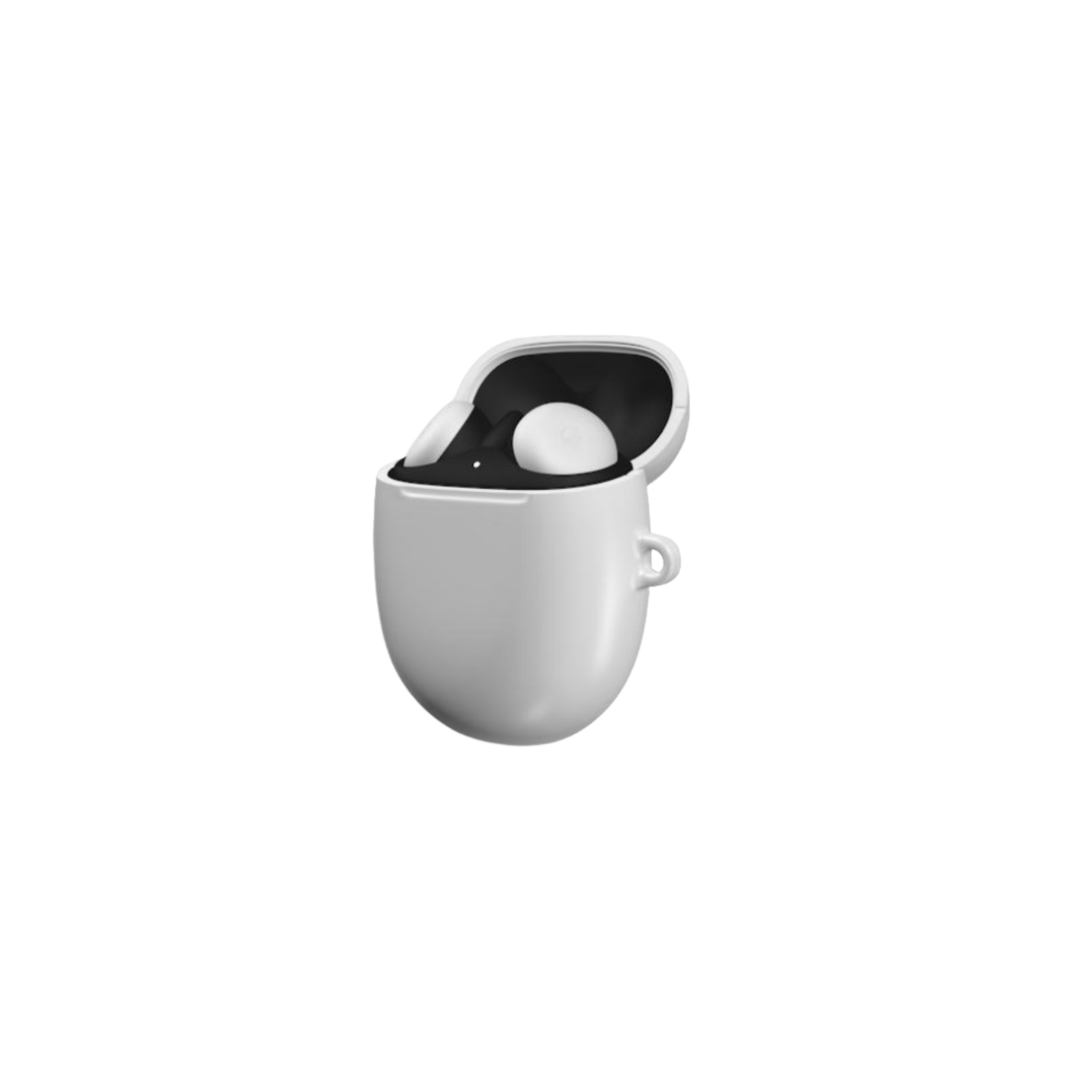
Show products like AirPod cases based on what shoppers look at. Use AI to tailor emails and show ads that change based on shopper interests.
AI in Marketing Statistics Highlight Smarter Print Production
AI is improving print operations and creative workflows.
- Gelato's 2025 State of Print Production report found 80% of print professionals see clear value in AI. Adoption continues to rise.
- In the same report, 55% use AI-driven tools to reduce costs and improve creative efficiency. This means faster mockups, smarter previews, and more personalized product options.
Also Read: Small Business Statistics: Key Trends | Mobile Commerce Growth Stats: Industry Guide
Consumer Sentiment in AI Marketing
AI is powerful, but people still want to feel seen. These AI marketing statistics reveal a gap between brand confidence and consumer belief - and that gap is a strategic opportunity for POD sellers who understand it.
AI Marketing Statistics Reveal a Trust Gap
Marketers are optimistic about AI. However, consumers are far more cautious.
- A 2025 Invoca study found 85% of marketers believe AI delivers great customer experiences. Only 37% of consumers agree.
- Just 26% of Americans trust AI in retail settings, according to a 2025 YouGov survey. Meanwhile, 33% say they don't trust it at all.
What's the lesson for POD sellers? The same one Podbase's CMO applies internally: AI should amplify the human element of your brand, not replace it. "The answer is not volume," says Vytautas Mikaila. "The answer is better judgment, better positioning, and staying much more current than before." Sellers who use AI to move faster - and then use that speed to be more specific, more relevant, and more genuine with customers - turn the trust gap into a competitive advantage. Brands using AI to publish more generic content will accelerate toward irrelevance. Brands using it to show up with more precision and personality will win the trust those others are burning.
Generational Differences Exist in AI Adoption
Age plays a massive role in how consumers perceive AI-powered experiences.
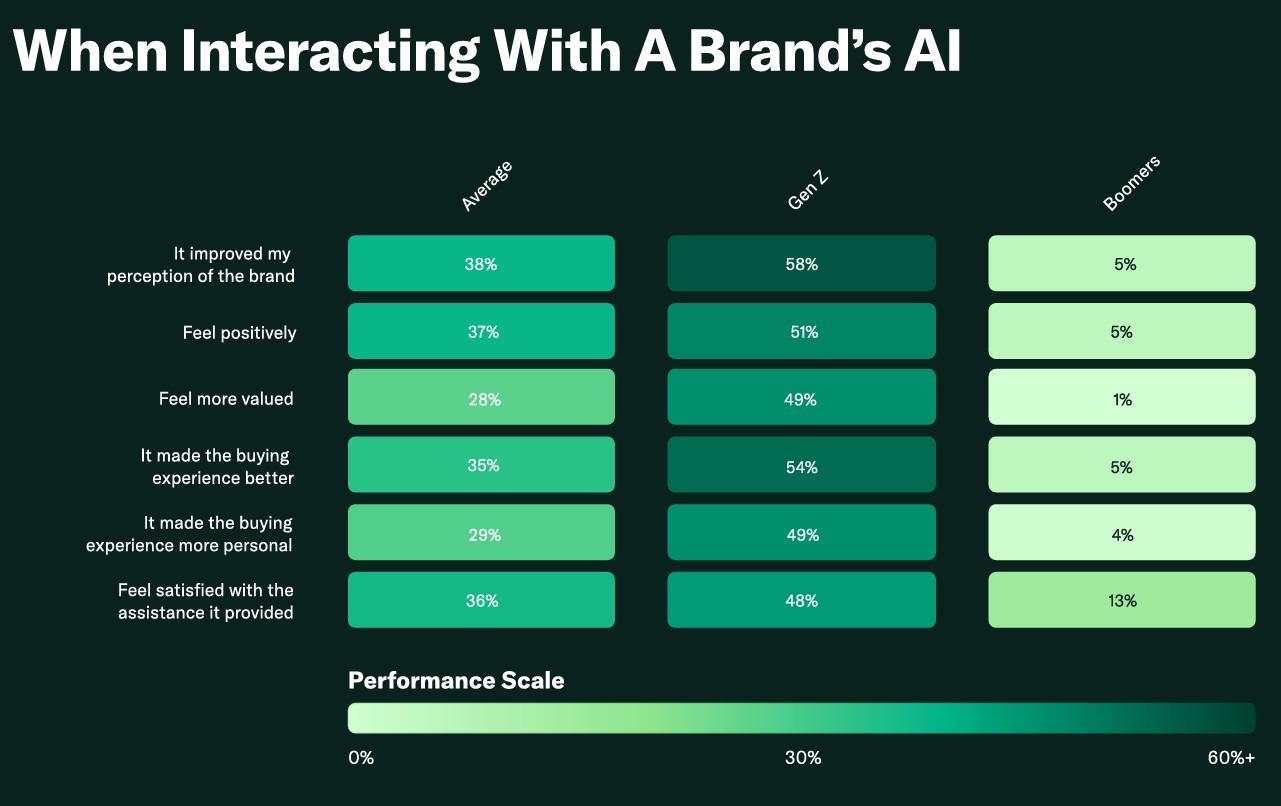
- 49% of Gen Z consumers feel valued by AI-powered shopping experiences, according to a 2025 Invoca study. In contrast, only 1% of Baby Boomers feel the same way.
- The same report showed 41% of consumers use generative AI for product research. This includes 61% of Gen Z and 57% of Millennials, but just 11% of Boomers.
- A 2025 Future Commerce study found 33% of Gen Z use AI platforms for product research. Gen Z using search engines stands at 37%.
- Comparatively, only 13% of Gen X and 3% of Boomers prefer AI for product research.
- More Millennials (27%) trust AI platforms for curated product recommendations. This is compared to 23% of Gen Zs.
For POD sellers, the generational data maps directly to product and channel strategy. Tech accessories - phone cases, AirPod cases, tablet cases - skew heavily toward Gen Z and Millennial buyers, the same demographics who are most comfortable with AI-assisted discovery and are most reachable through social media ads. Podbase CMO Vytautas Mikaila confirms this channel alignment: "The majority - 99% of our sellers right now - are getting the majority of their traffic from social media ads." That isn't a coincidence. It reflects where their buyers' attention is and how those buyers are now discovering products.
AI Marketing Statistics Highlight Authenticity Concerns
Younger buyers use AI, but remain skeptical of brands using it.
- 63% of Gen Z view AI-generated content as potentially inauthentic, according to 2024 Attest research. They use AI tools, but they don't trust brands using AI.
- Over 55% of Gen Z are not okay with brands using AI-generated models in ads. The top reasons? Inauthenticity, misleading visuals, and job displacement.
This data should shift how POD sellers think about AI-generated product imagery. The most effective approach - confirmed by Podbase seller data - is using AI for infrastructure (mockups, background generation, product staging) while keeping the design and brand voice distinctly human. Authentic founder stories, real customer photos, and creator collaborations paired with AI production efficiency outperform fully AI-generated campaigns with this demographic.
Conversational Commerce and the Human Edge in AI Marketing
AI is reshaping how people search, ask questions, and make decisions. These AI adoption in marketing statistics show why brands must adapt their communication style.
AI Marketing Statistics Show Trust Shapes Buying Behavior
- Only 46% of shoppers fully trust AI shopping recommendations today, according to a 2025 IAB study.
- As a result, 89% double-check AI suggestions before buying. Trust still needs human confirmation.
- The same study found that 95% of users take additional steps after interacting with AI to feel confident in their decision.
AI Marketing Trends Point to a Multi-Channel Shift in Search
Communication habits are shifting toward conversational commerce as voice assistants become more sophisticated.
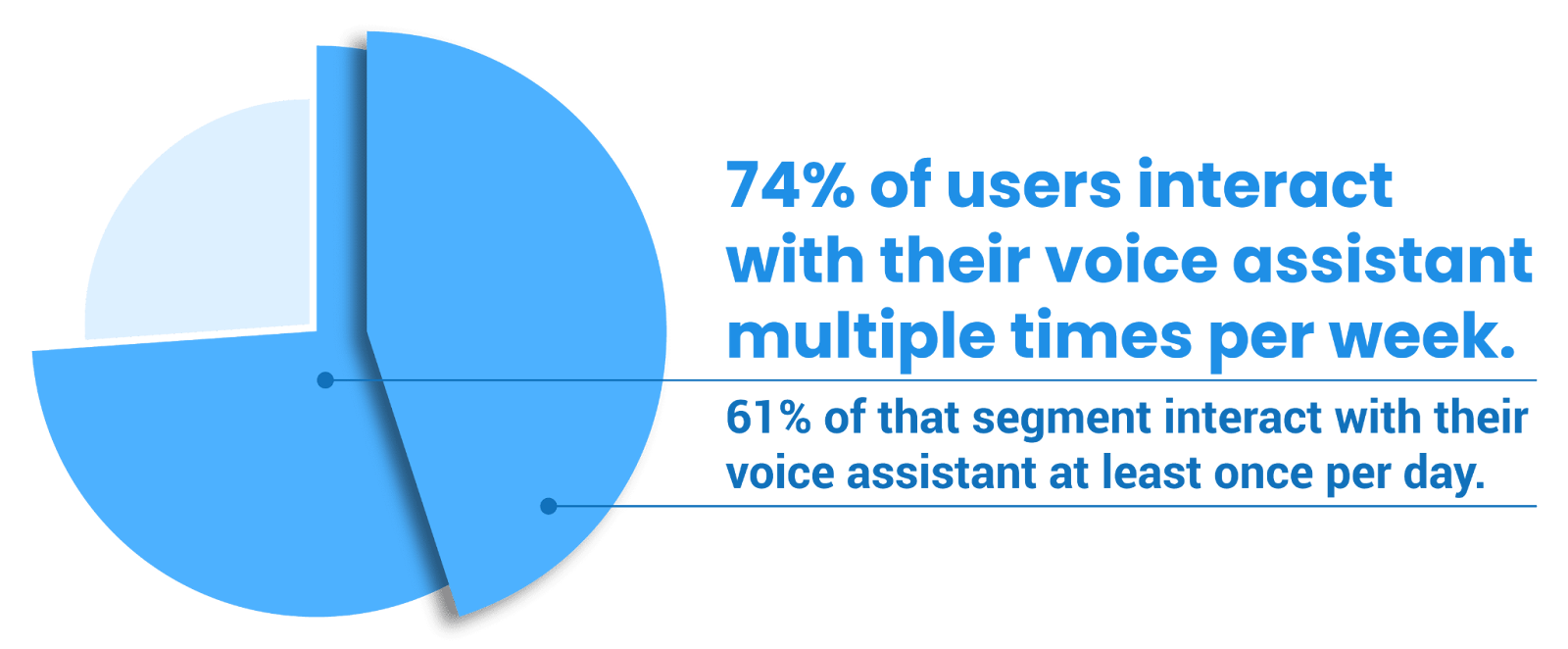
- A 2025 DataReportal report found that 22.5% of internet users worldwide used voice assistants weekly. Shoppers are asking questions instead of typing keywords.
- In the US, a 2024 Voices study showed 81% of Americans use voice assistants regularly. So, optimize for conversational commerce, especially as AI integrates with search.
- 67% of Gen X respondents reported using voice assistants once per day. This was in contrast to only 44% of Gen Z, as per the Voices study.
- 45% of users said they'd use voice assistants more if they were smarter. Therefore, create clearer product descriptions and use simple, natural language.
Agentic AI Marketing Trends and Adoption Statistics
Agentic AI represents the next phase of automation. Unlike chatbots, these systems can plan, decide, and act with minimal human input. For POD sellers, this trajectory matters: the same autonomous workflow logic that enterprise teams are building now is becoming accessible to solo brands through no-code AI platforms - and Podbase sellers are already seeing early versions of it in action.
AI Marketing Trends Show Rapid Growth in Agentic AI
Agentic AI is moving quickly from concept to market reality.
- The global agentic AI market reached $7.29 billion in 2025, according to Fortune Business Insights.
- The market is projected to grow to $139.19 billion by 2034, at a 40.5% CAGR. This surge positions agentic systems as one of the most important AI marketing trends heading into 2026.
- Agentic AI systems complete up to 12 times more complex tasks than standard large language models. According to a 2025 Market.us report, dynamic feedback loops and autonomous decision-making make this possible.
Agentic AI Statistics Point to Enterprise Momentum
Large organizations are already building agentic AI into their systems.
- In 2025, Gartner projected that by the end of 2026, 40% of enterprise applications would include task-specific AI agents. That's up from under 5% in 2025.
- 45% of Fortune 500 companies are actively piloting agentic systems (Market.us, 2025). There's rising trust in autonomous or self-directed agents.
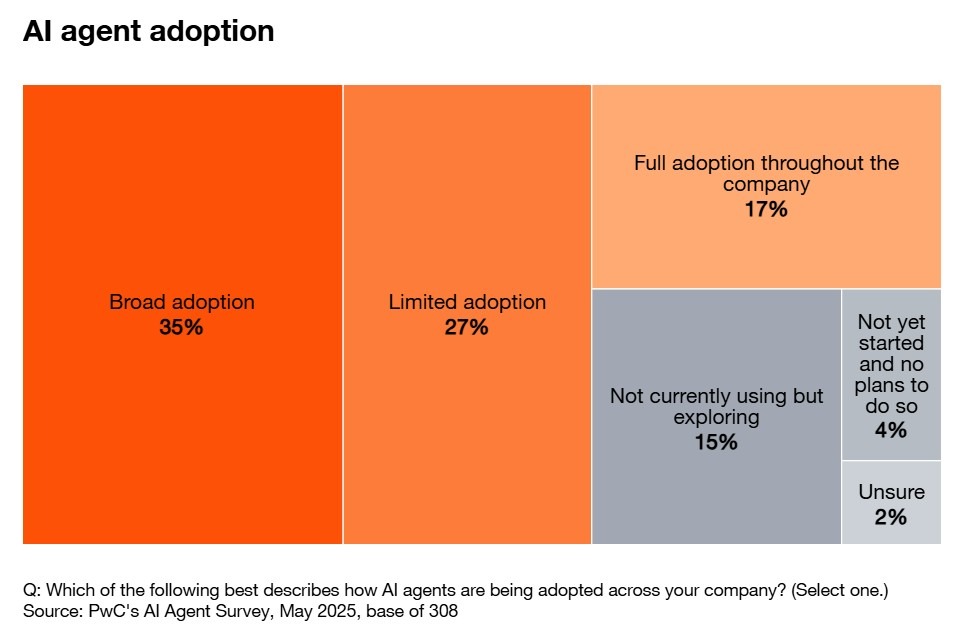
- A 2025 PwC AI agent survey found 17% of companies have fully adopted agentic AI. Meanwhile, 35% report broad adoption.
- In the same PwC study, 88% of respondents plan to increase AI budgets. The reason? Agentic AI.
Agentic AI Adoption Statistics Highlight Practical Use Cases
Organizations are ramping up investment in AI agents. The goal is to use these agents across key business functions.
- According to a 2026 Gartner research, two-thirds of brands will use agentic AI by 2028 to deliver personalized, one-to-one customer interactions. That's a massive shift from channel-based marketing to AI-driven personalization at scale.
- According to a 2025 Cloudera report, 49% of manufacturing firms are exploring AI agents for supply chain optimization.
- Another 48% are focused on process automation agents, aiming to reduce manual workflows.
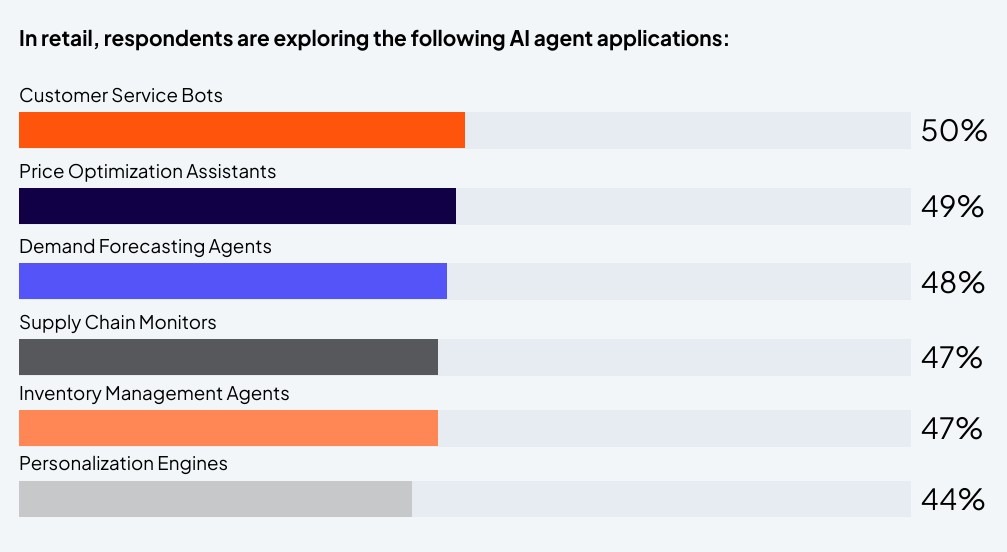
- In retail and ecommerce, 50% use AI agents for customer service. Meanwhile, 49% apply them to price optimization assistants.
Also Read: How to Make Money Using AI Quickly | Best AI Tools for Entrepreneurs to Scale Smarter
How to Compete in the AI-First Era
AI is now part of the core strategy that's separating winners from everyone else. The statistics above are useful context. What matters more is translating them into moves that work for POD sellers specifically - not enterprise teams with 50-person marketing departments.
Podbase CMO Vytautas Mikaila frames the current landscape clearly: "The old way of doing organic, where you just publish a lot, go broad, and expect traffic to keep coming the same way, is clearly not enough anymore. Right now the game is much more about relevance, usefulness, specificity, freshness, and whether your content actually brings something real to the user." That principle applies equally to ads, emails, and product listings.
Here's how the data backs up the best moves.
1. Make AI a Central Part of Your Strategy
AI works best when treated as a core system, not an experiment.
- 60% of marketers now use AI daily in their work, according to a 2025 Social Media Examiner report. If you delay adoption, competitors who moved earlier will outpace you on speed and insight.
CEO Saulius Meilutis describes the mindset shift required: "You can have your own orchestra of AI tools synchronised to help you out to do everything way faster and cheaper." For POD sellers, that orchestra starts with AI mockup generation, prompt-based design adaptation, and AI-assisted product listing copy - then expands from there as you identify the next constraint in your workflow. For POD sellers, early AI adoption means launching trending designs while others are still testing.
2. Lead with Social Ads - Not Organic
This is the most important channel correction the data supports, and the one most generic AI marketing guides miss because they're written for SaaS companies and enterprise marketers, not POD sellers.
Podbase CMO Vytautas Mikaila is direct about where POD sellers should focus: "The main one right now, and really by far the main one, is social media ads. The majority - 99% of our sellers - are getting the majority of their traffic from social media ads." The reason isn't just reach. It's the control that social ads provide: "With social media ads, sellers are able to leverage different offerings, different visual directions, different design styles, and different tastes and preferences of their audience. You can test faster, you can adjust faster, and you can find what actually resonates faster."
AI makes this even more powerful. Testing five visual directions at once used to require a team and a budget. Now it takes an afternoon and a free-tier AI image tool. The sellers winning in 2026 are the ones using AI to generate more creative variants, test them faster, and scale the ones that convert - not the ones waiting for organic traffic to build.
3. Personalize: It's Expected, Not Optional
Consumers now expect tailored experiences, and AI delivers them at scale. Granted, there are privacy concerns around personalization. But customers are willing to share data when they see they're getting value.
- 99% were willing to share data for a product recommendation, according to the previously mentioned Attentive study.
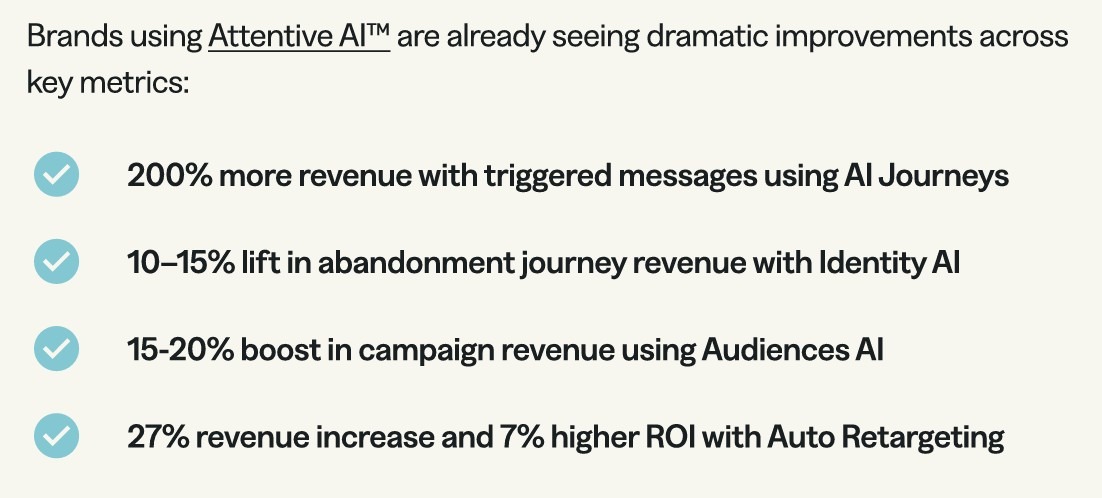
- 99.6% were ready to share for an incentive. Meanwhile, brands using Attentive's AI Personalization Engine saw incredible revenue growth.
Show products like AirPod cases based on what shoppers look at. Use AI to tailor emails and show ads that change based on shopper interests. Mikaila specifically highlights Q4 as the period when personalization compounds most: "The ones that actually start to work on email marketing properly usually do much better. Especially in Q4, because that is where repeat purchases, promotions, bundles, gift buying behavior, and all of these things become much more important."
4. Automate Routine Tasks to Free Up Time
AI changes what you work on, not just how fast you work.
- AI users are three times more likely to believe 30% of their work will be automated, per a 2025 McKinsey report.
Automation frees time for strategy, testing, and creative planning. Small POD brands can try more design ideas. The math is straightforward: if AI saves 5 hours a week on mockup creation, listing copy, and design adaptation, that's 5 more hours for the things only a human can do - creative direction, customer relationships, and brand positioning.
Summary: Winning in the AI-First Era
In 2026, the edge belongs to brands that move with speed and focus.
The AI marketing statistics we've shared show why smart automation now matters more than size. But the brands that will actually use this advantage aren't the ones with the biggest AI budgets - they're the ones who move fast, test constantly, and use AI to amplify what makes their brand worth buying from in the first place.
Podbase CEO Saulius Meilutis puts it plainly: "Most of the beginners have to understand that when you're testing a new idea, launching new products, AI is your partner to optimize it so you can get the results you're looking for way faster. You do not have to include different expertise people. You can have your own orchestra of AI tools synchronised to help you out to do everything way faster and cheaper."
AI gives POD sellers the power to launch quicker, personalize deeper, and compete smarter. But the real edge lies in using AI with purpose. Automate the busy work, personalize experiences, and keep the human touch. The brands that win won't be the biggest. They'll be the smartest and quickest to act.
Now is the time to build your AI-first advantage.
FAQ
1. How widely is AI used in marketing in 2026?
It is now standard. A 2025 McKinsey survey found 88% of businesses use AI regularly, 60% of marketers use it daily, and 93% say AI helps them create content faster while 91% say it surfaces insights faster. AI has moved from a nice-to-have add-on to a core tool that lets small teams do work that once required full departments.
2. Does AI marketing actually drive ROI?
Yes. 81% of US marketers said AI increased brand awareness and sales, 75% said it reduced marketing costs, and 37% save 5-10 hours per week using it. Brands using AI pricing tools report margin improvements of around 15% and up to 25% revenue gains - for POD sellers, that means staying competitive without relying on constant discounts.
3. How is AI changing print on demand specifically?
It compresses the whole launch workflow. Podbase onboarding dropped from three months to under one month (a 3x improvement), teams design about 10 times faster, and adapting designs to new product templates now takes a prompt instead of hours in Photoshop. Sellers also replace photo shoots by generating multi-angle mockups and video from a single static image, turning a weeks-long task into minutes.
4. Do consumers trust AI in marketing?
There is a clear trust gap. 85% of marketers believe AI delivers great experiences but only 37% of consumers agree, just 26% of Americans trust AI in retail, and 63% of Gen Z view AI-generated content as potentially inauthentic. The winning approach is to use AI for infrastructure - mockups, staging, background generation - while keeping the design and brand voice distinctly human.
5. Which marketing channel should POD sellers prioritize?
Social media ads, by far. 99% of active Podbase sellers get the majority of their traffic from social ads, because ads provide control: you can test multiple visual directions, adjust quickly, and find what resonates faster. AI multiplies this - testing five creative variants once needed a team and a budget, and now takes an afternoon with a free-tier AI image tool. Lead with paid social, not organic.
6. What is agentic AI and why does it matter for sellers?
Agentic AI systems plan, decide, and act with minimal human input, unlike simple chatbots. The market reached 7.29 billion USD in 2025 and is projected to hit 139.19 billion USD by 2034, and Gartner expects two-thirds of brands to use agentic AI by 2028 for one-to-one personalization. The same autonomous workflow logic enterprises are building is becoming accessible to solo POD brands through no-code AI platforms.

Saulius Meilutis is the CEO of Podbase, helping creators and entrepreneurs monetize their ideas with print-on-demand. He shares insights on eCommerce, growth, and building lean online businesses.

.avif)








.avif)
.avif)
.avif)
.avif)
.avif)
.avif)

.avif)





.avif)

.avif)


.avif)

.avif)

.avif)