Mobile commerce growth in 2026 means the majority of online shopping now happens on a phone - global m-commerce reached $2.51 trillion in 2025, roughly 59% of all ecommerce, and is climbing toward 63% by 2028.
Most shoppers now use their phones to browse and buy. If your store is not mobile-friendly, you could be losing customers and leaving money on the table without realizing it. With around 80% of the world's population owning a smartphone, mobile commerce makes it easy to reach more buyers and grow your sales.
If you run a print-on-demand (POD) business, this shift is a double opportunity - and not for the reason most guides give. By tracking the latest mobile commerce growth statistics, you can make wiser decisions about your store and your products. In this guide we break down the numbers every store owner should know in 2026, what each one means for your POD business, and how to use them to grow faster.
Growth of Mobile Commerce: 2017 to 2025
Mobile commerce sales hit an all-time high of $2.51 trillion in 2025, up from $2.07 trillion in 2024 - and now make up about 59% of global ecommerce revenue.
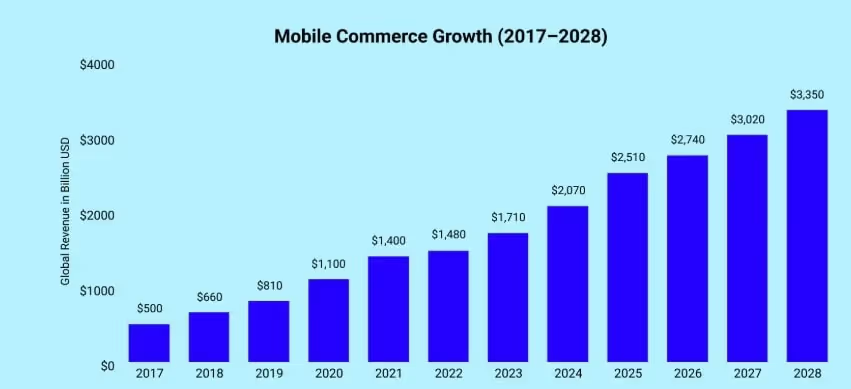
This mobile commerce growth stat shows how quickly shopping habits have changed. In 2017, mobile accounted for less than one-third of total ecommerce sales. Today, well over half of all online purchases happen on mobile devices. The table below shows the trajectory at a glance:
This means your business needs to meet shoppers where they are - on mobile. Even if you offer the best-selling POD products, you may lose sales if your store is not mobile-friendly. Here is how to improve the browsing experience:
- Ensure your Shopify or Etsy listings load fast and look great on phones.
- Use photos that are easy to view on smaller screens.
- Offer mobile wallets like Apple Pay or Google Pay for smoother checkouts.
- Simplify your navigation menu so customers find what they need fast.
- Compress images so product pages load quickly.
There is a deeper point here that most mobile-commerce advice misses. Optimizing your storefront for phones is table stakes. For POD sellers, the bigger opportunity is selling the products people hold while they shop - phone cases and tech accessories. “Tech accessories surround us every day,” notes Justina, our Head of Product Development. “Somewhere along the way they stopped being simply devices and became an extension of who we are.” Mobile commerce is not just a channel to optimize for - for a POD store, it is also the product category to sell into.
Also Read:
- Top Small Business Statistics You Should Know
- Entrepreneur Statistics: Insights for Business Builders
- Fashion Trends in 2026: What They Mean for POD Sellers
Forecasting Mobile Commerce Growth: 2025 to 2028 Revenue Insights
According to Oberlo, mobile commerce will make up $3 of every $5 spent online by 2028 - about 63% of all ecommerce sales, with global m-commerce reaching roughly $3.35 trillion at a compound annual growth rate near 12.8%.
The gap between mobile and desktop will keep widening. More people will shop on their phones, and businesses that adjust early will sell more and earn more. Consider starting your POD business with this mobile-first future in mind so you stay ahead of competitors still built for desktop.
Here is how to make the most of mobile commerce growth and scale your small business:
- Sell through TikTok Shop and Instagram Checkout so buyers can shop without leaving the app.
- Run vertical, mobile-friendly ads when marketing your product online to reach a wider audience and boost conversions.
- Use SMS or app notifications to promote offers and discounts to mobile shoppers.
One Podbase advantage worth planning around: when a major device launches, we usually have the materials and product interface ready a couple of weeks before the release. That lets sellers prepare mobile-ready listings and be proactive instead of reactive - capturing the spike in case and accessory demand the moment new phones hit the market.
Key Contributors to Mobile Commerce Growth
For several years now, more than 70% of all online shopping has happened on mobile devices. This mobile commerce growth comes down to a few main drivers:
- Convenience and connectivity: people shop on their phones because it is fast, easy, and always available - they can check out your designs anytime, anywhere.
- Immersive shopping experiences: phones make interactive shopping easy. AR previews and live video grab attention, keep buyers engaged, and push mobile commerce growth even higher.
- Technology advancement: AI tools and chatbots help customers find what they want faster, and better payment systems make checkout simple.
That last driver is where POD sellers have an unfair advantage today. “You can take a static picture and generate high-quality multi-angle output of your products showcasing all the different unique selling points,” our CEO explains - “you no longer have to order samples, organize photo shoots, and extend your product launch by weeks.” The same AI wave fueling mobile commerce lets a solo seller produce thumb-stopping, mobile-ready product images in minutes.
Also Read:
- Top Mobile Usage Statistics To Know
- Best Work From Home Ideas You Can Start Today
- 25 Best Side Hustles for Stay at Home Moms
Mobile Ecommerce Conversion Rates: Key Data
The average mobile ecommerce conversion rate sits around 2.9%, compared with roughly 3.9% on desktop. Anything between 2.5% and 3% is considered solid, and 5% or above is strong.
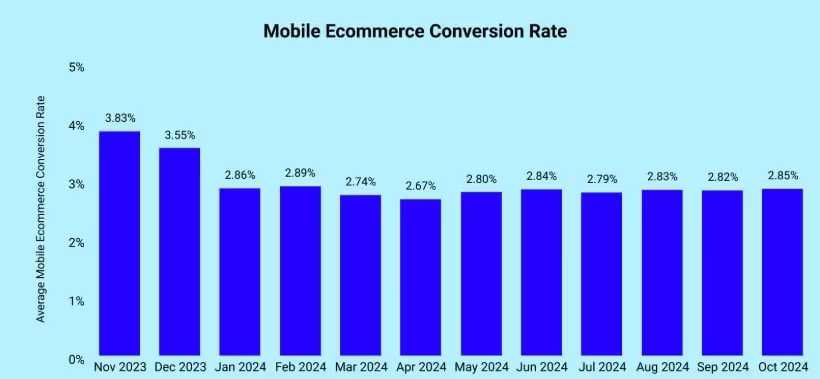
Here is the contrarian read: that mobile-versus-desktop gap is not a sign that mobile shoppers buy less - it is a sign of checkout friction on small screens. Mobile is where discovery and impulse happen, which makes low-consideration products like phone cases and accessories ideal mobile buys. Because so many people shop on phones, even a small lift compounds. Improve your conversion rate by 0.5% and you can increase your sales meaningfully. Here is how:
- Use large, clearly visible CTAs that are easy to tap with a thumb.
- Keep product pages and descriptions simple - short text, high-quality images.
- Reduce checkout steps to lower cart abandonment.
- Add reviews, photos, and testimonials to build trust.
A specific, high-ROI move we see work: add a one-tap upsell at checkout. “You can add a simple button on the checkout page to add a screen protector when a customer orders a phone case,” our CEO says. “The conversion rate from our internal data is usually 3 to 10 percent - so with a single button you can get 10 euros more profit, and you spent the same amount to attract that customer.” On mobile, where every extra field costs you sales, a single tappable add-on is the friction-free way to lift order value.
How Many People Shop Using Mobile Phones?
Roughly 76% of adults have bought at least one product using their mobile phone - nearly eight in ten. Most of your ideal customers already know how to shop on mobile; your job is to convince them to buy from you.
Whether you are selling photography prints or custom phone cases, here is how to attract and convert mobile shoppers:
- Design mobile-friendly email campaigns with short subject lines, clear CTAs, and tappable links.
- Enable autofill on checkout forms to reduce typing for mobile shoppers.
- Offer mobile-only discounts or free shipping to encourage purchases.
- Create mobile-friendly product mockups using a tool like Podbase.
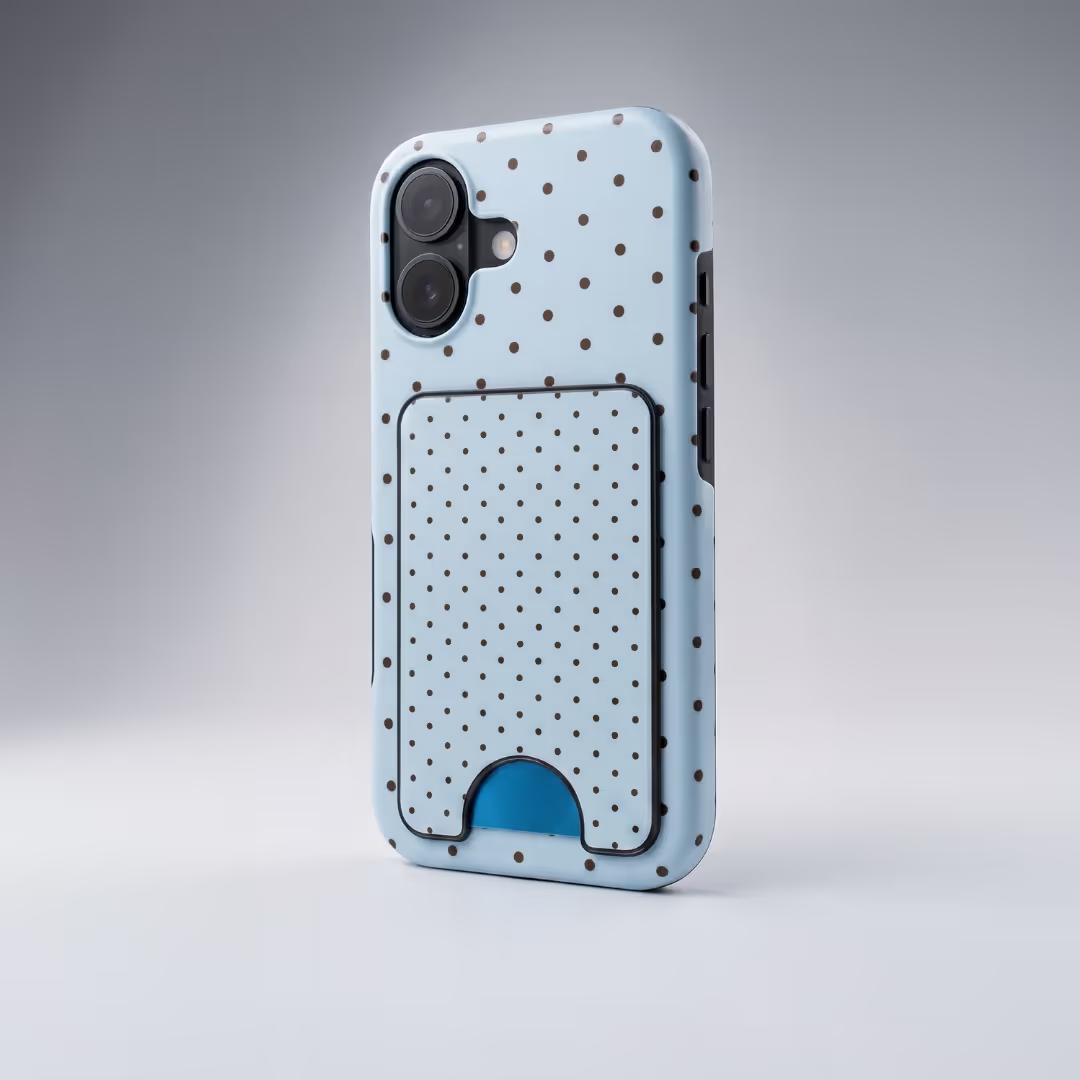
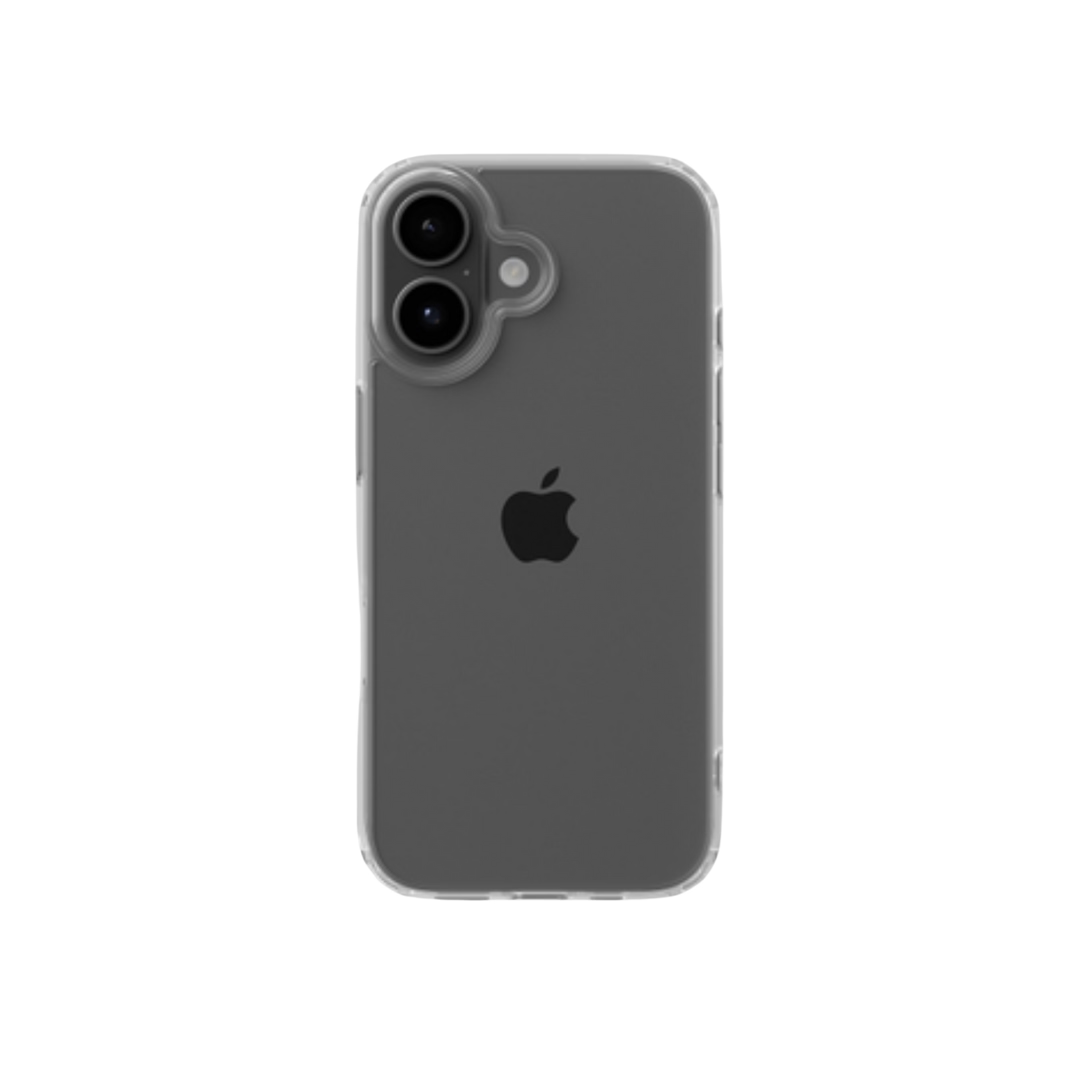
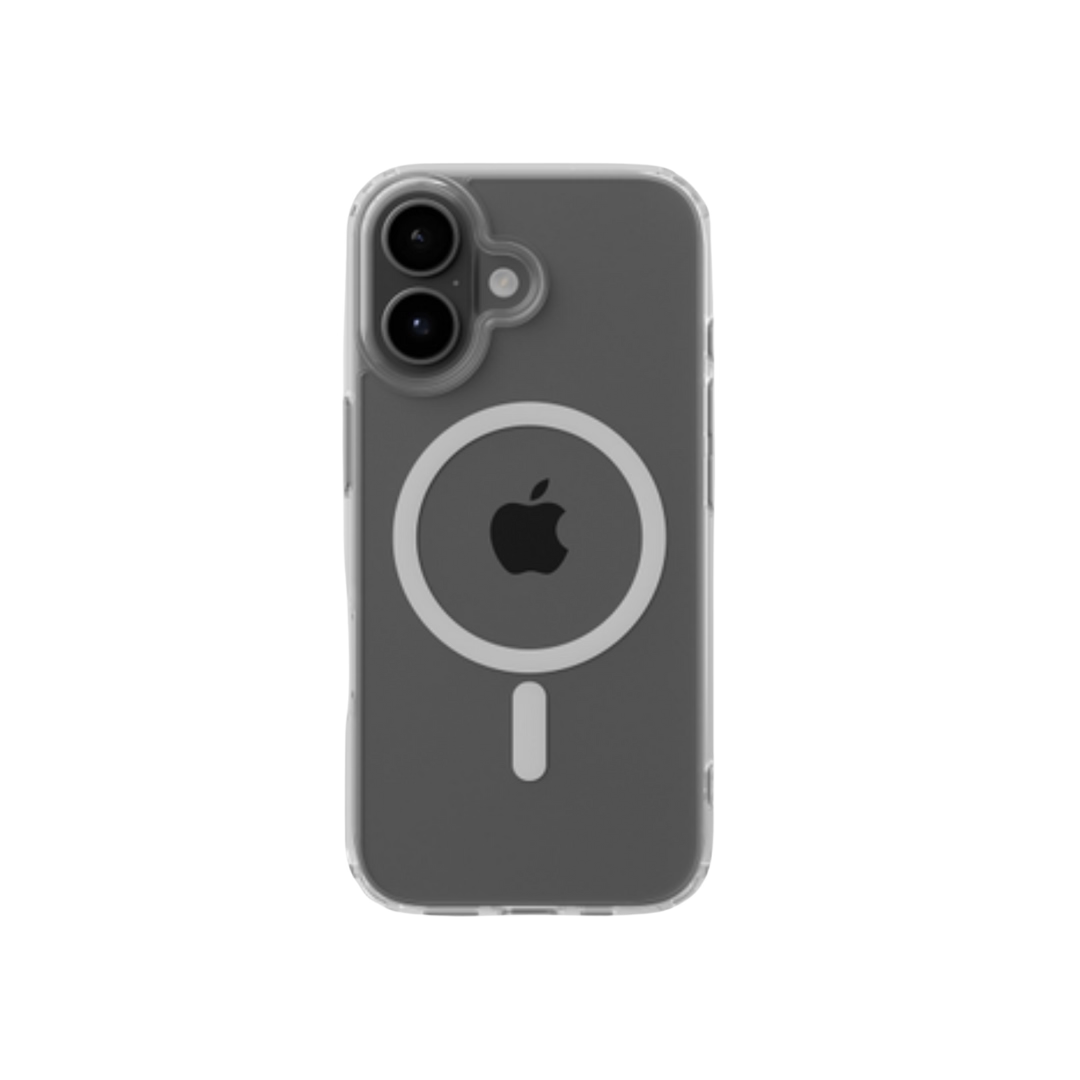
It helps that the core POD category is also the most-bought mobile accessory. About 68% of smartphone owners use a phone case, roughly a billion cases sell worldwide each year, and the phone case market is projected to reach $41.4B by 2030. “It became like your personal billboard on your gadget,” our CEO notes - which is why personalized cases convert so well with the same shoppers browsing on those very phones.
Also Read:
Mobile Commerce Trends 2026
Several trends are shaping the future of mobile ecommerce growth. Keep up with these and you can find new ways to grow your business.
- Voice commerce expansion: more people will shop using assistants like Siri, Alexa, and Google Assistant. Use conversational keywords in your listings to show up in voice results.
- AR and VR shopping: augmented and virtual reality let shoppers preview products in real life - viewing wall art on their walls or a case on their phone - which builds buying confidence.
- Seamless social commerce: TikTok Shop, Instagram Checkout, and Pinterest Shopping keep driving mobile commerce by letting people buy without leaving the app.
- Buy Now, Pay Later: apps like Klarna and Afterpay make products like tablet cases easier to afford.
- Instant checkout and one-click payments: as digital wallets spread, checkout gets faster and fewer carts are abandoned.
- Mobile live shopping: brands and influencers go live on TikTok and Instagram to demo products and make quick sales while streaming.
Social channels deserve special attention because they are where mobile discovery and buying merge. “It is not only about traffic. It is also about control,” says Podbase CMO Vytautas Mikaila. “You can test faster, you can adjust faster, and you can find what actually resonates faster.” Treat social commerce as both a storefront and a live testing lab for which designs convert on mobile.
Also Read:
FAQ
1. What is mobile commerce (m-commerce)?
Mobile commerce, or m-commerce, is any buying or selling of goods and services completed on a mobile device such as a smartphone or tablet. It includes shopping in mobile browsers, retail apps, social commerce, and mobile wallet checkouts. In 2026 it is the dominant form of ecommerce, accounting for the majority of online purchases worldwide.
2. How big is mobile commerce in 2026?
Global mobile commerce sales reached about $2.51 trillion in 2025, up from $2.07 trillion in 2024, and are projected to climb to roughly $3.35 trillion by 2028. That is a compound annual growth rate near 12.8%, confirming that phones, not desktops, now drive the bulk of ecommerce spending worldwide.
3. What percentage of ecommerce sales come from mobile?
Mobile devices accounted for about 59% of all retail ecommerce sales worldwide in 2025, and the share is forecast to reach 63% by 2028. In other words, nearly six of every ten online purchases already happen on a phone, so a store that is not mobile-optimized is invisible to most shoppers.
4. What is a good mobile ecommerce conversion rate?
The average mobile ecommerce conversion rate sits near 2.9%, compared with about 3.9% on desktop. Anything between 2.5% and 3% is considered solid, and 5% or higher is strong. The mobile gap is usually caused by checkout friction, so one-click wallets and fewer form fields lift conversion fast.
5. Why is mobile commerce growing so fast?
Mobile commerce is growing because smartphones are always-on and convenient, around 80% of people own one, and shopping experiences keep improving. Faster mobile wallets, social checkout, AR previews, and AI assistants remove friction, while social media turns discovery into instant purchases. Each advance shortens the path from scrolling to buying.
6. How can print-on-demand sellers benefit from mobile commerce growth?
Print-on-demand sellers benefit twice: they can optimize stores for mobile shoppers and sell the very products people use on their phones, like custom phone cases and tech accessories. With about 80% of phone users buying a case and AI mockups replacing photo shoots, POD sellers can launch mobile-ready products quickly and cheaply.
Conclusion
These mobile commerce growth statistics all point the same way: people reach for their phones to discover products, compare prices, and buy in a few taps. For POD owners that is a double opportunity - optimize your store for mobile, and sell the products shoppers hold while they browse.
Stay flexible, optimize for mobile, and meet customers where they already are. Do not let mobile shoppers slip away. Create a Podbase account today to start creating and selling high-converting, mobile-optimized custom products - including the custom phone cases your buyers shop for on the very devices in their hands.

Saulius Meilutis is the CEO of Podbase, helping creators and entrepreneurs monetize their ideas with print-on-demand. He shares insights on eCommerce, growth, and building lean online businesses.

.avif)



.avif)
.avif)
.avif)
.avif)
.avif)
.avif)

.avif)



.avif)

.avif)

.avif)

.avif)


.avif)