Running an online store - especially a print-on-demand shop - eats time: sending orders, managing inventory, answering customers. Automated dropshipping is the smarter way to run it. Software sends each order directly to your supplier, who prints, packs, and ships everything. Less work, fewer mistakes, more time for the things that grow the business.
What Is Automated Dropshipping?
Automated dropshipping means your store largely runs itself. Instead of typing in every order, software handles the flow:
- Orders route to your supplier automatically
- Product stock updates in real time
- Shipping and tracking sync back to your store and customer
It's a natural fit for print-on-demand products like custom phone cases, mugs, and wall art.
How It Works Behind the Scenes
- A customer buys from your store.
- The order flows straight to your supplier.
- The supplier makes, packs, and ships the product, with tracking pushed back automatically.
You never touch logistics.
Manual vs Automated Dropshipping: Key Differences
Manual dropshipping means typing in orders, copying addresses, and emailing suppliers - slow, and easy to get wrong. One mistyped address is a lost package and an angry customer. Automation sends orders instantly, updates tracking numbers, and syncs inventory. The decisive difference shows at scale: whether you get 10 orders or 1,000, the effort is identical. That's what lets a one-person store behave like a fulfillment team.
Also Read:
- How to Automate Print on Demand Order Management Across Every Channel
- Digital Dropshipping: The Smartest Way to Sell
The Three Layers of Automation (Most Guides Stop at One)
Here's the framing that separates stores that scale from stores that stall - and it comes from running production for thousands of sellers, not from an app store listing.
Layer 1 - Storefront automation. Order routing, inventory sync, tracking emails. This is what every "automated dropshipping" guide covers, and it is table stakes.
Layer 2 - Supplier-side production automation. This is the layer your customers actually feel, and you cannot install it - your supplier either has it or does not. At Podbase, peak-period quality holds because production itself is automated: "standardized production workflow - fixed presets, automated routing to prevent human variation," as our Operations team describes it, with quality checks built into each stage and color verified by spectrophotometer. The payoff is measurable: sellers who migrated to us saw 15% more customer reviews and 30% fewer order-issue tickets.
Layer 3 - Creative-pipeline automation. The newest layer. Tasks that used to require Photoshop sessions or photo shoots now run on prompts: adapting existing designs to a new product’s print specs, or generating lifestyle mockups - even video - from a single static product photo. This is how solo sellers maintain hundred-product catalogs.
When you evaluate "automated dropshipping," check all three layers - not just the app.
Why Automation Matters in 2026
It saves time. Once configured, the system runs identically at any volume - the foundation of scale.
Fewer mistakes, fewer support tickets. Automated order data eliminates typo’d addresses and wrong-item errors.
Focus shifts to what compounds. Designs, marketing, and brand - the work software cannot do. 99% of sellers get the majority of traffic from social media ads, and the sellers who win pair automation with serious creative and retention work.
And the barrier keeps falling: average onboarding for a new print-on-demand project has dropped from three months to under one month, with full store migrations now possible in a day to a week.
Top Automated Dropshipping Tools and Platforms

Shopify Dropshipping Automation Apps
Shopify is the easiest starting point, with apps like DSers, AutoDS, and Zendrop handling order routing and delivery tracking. POD platforms like Podbase plug in directly - import products, set prices, and add custom designs in minutes.
WooCommerce Integration Options
WooCommerce suits WordPress users who want full control. Tools like Spocket and Zapier add automation, and Podbase connects natively.
Podbase as a Print-on-Demand Automation Powerhouse
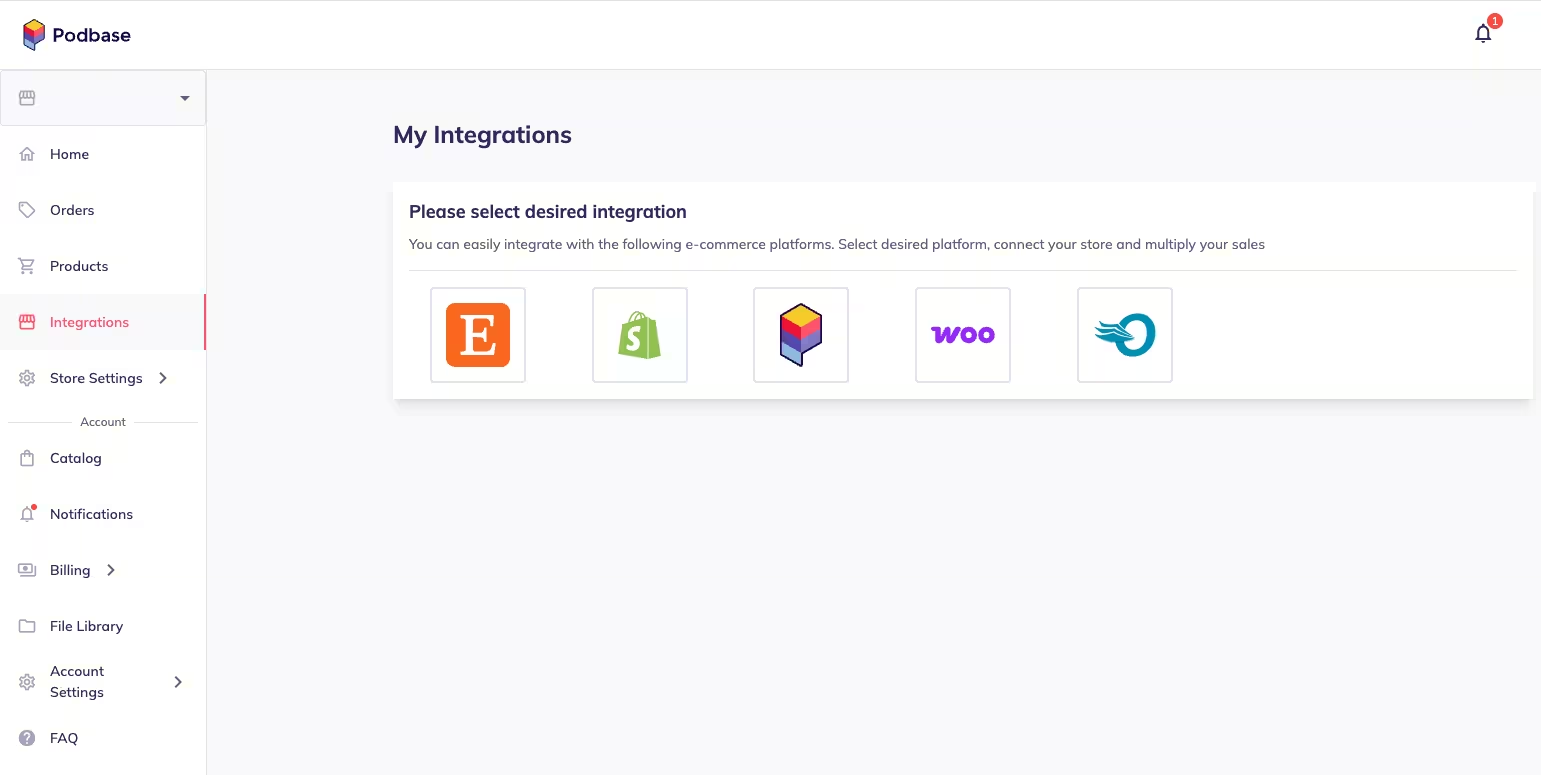
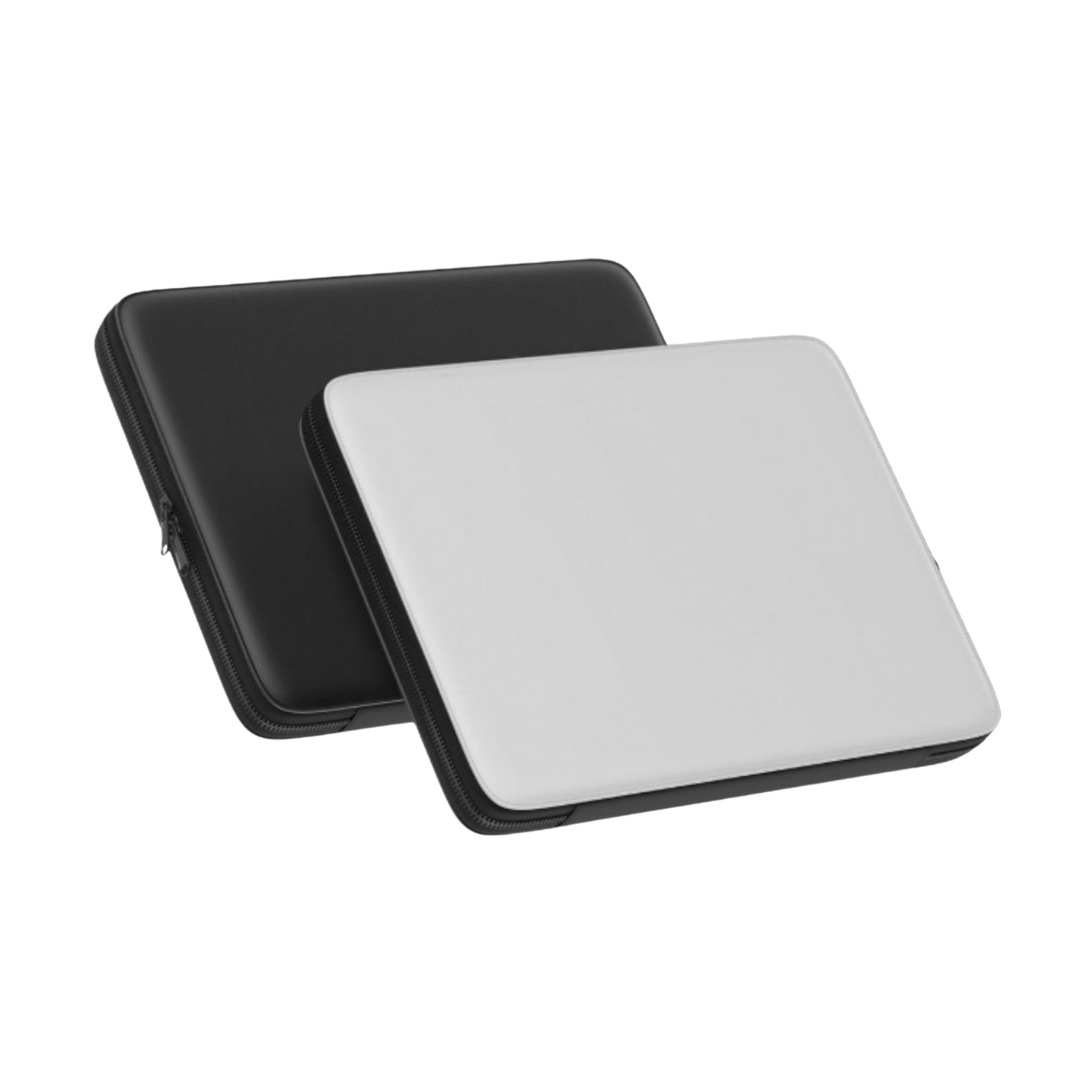
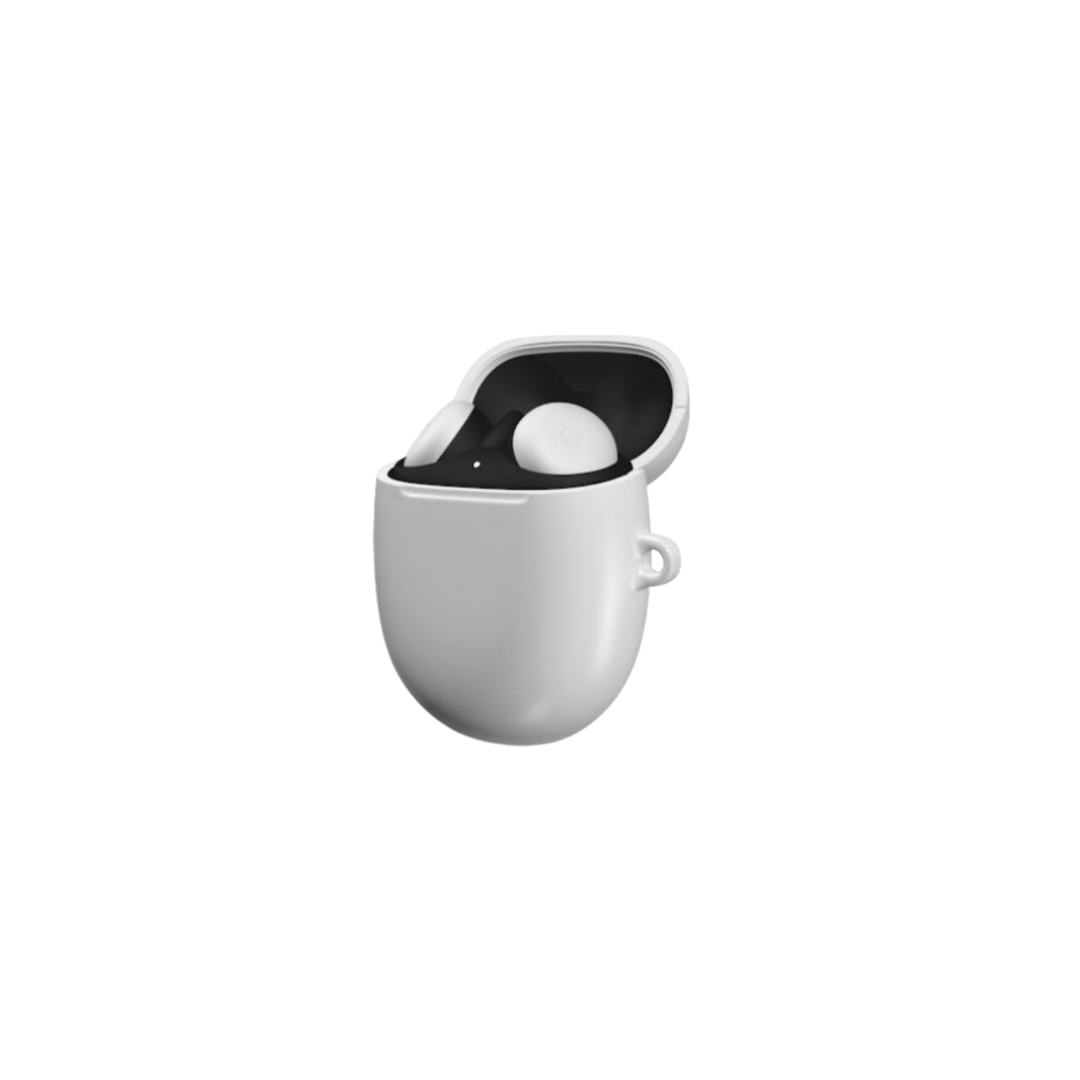
Podbase connects with Shopify, Etsy, and WooCommerce, and prints custom tech accessories, wall art, and drinkware. Orders process instantly, customers can preview designs before buying, and tracking flows back automatically.
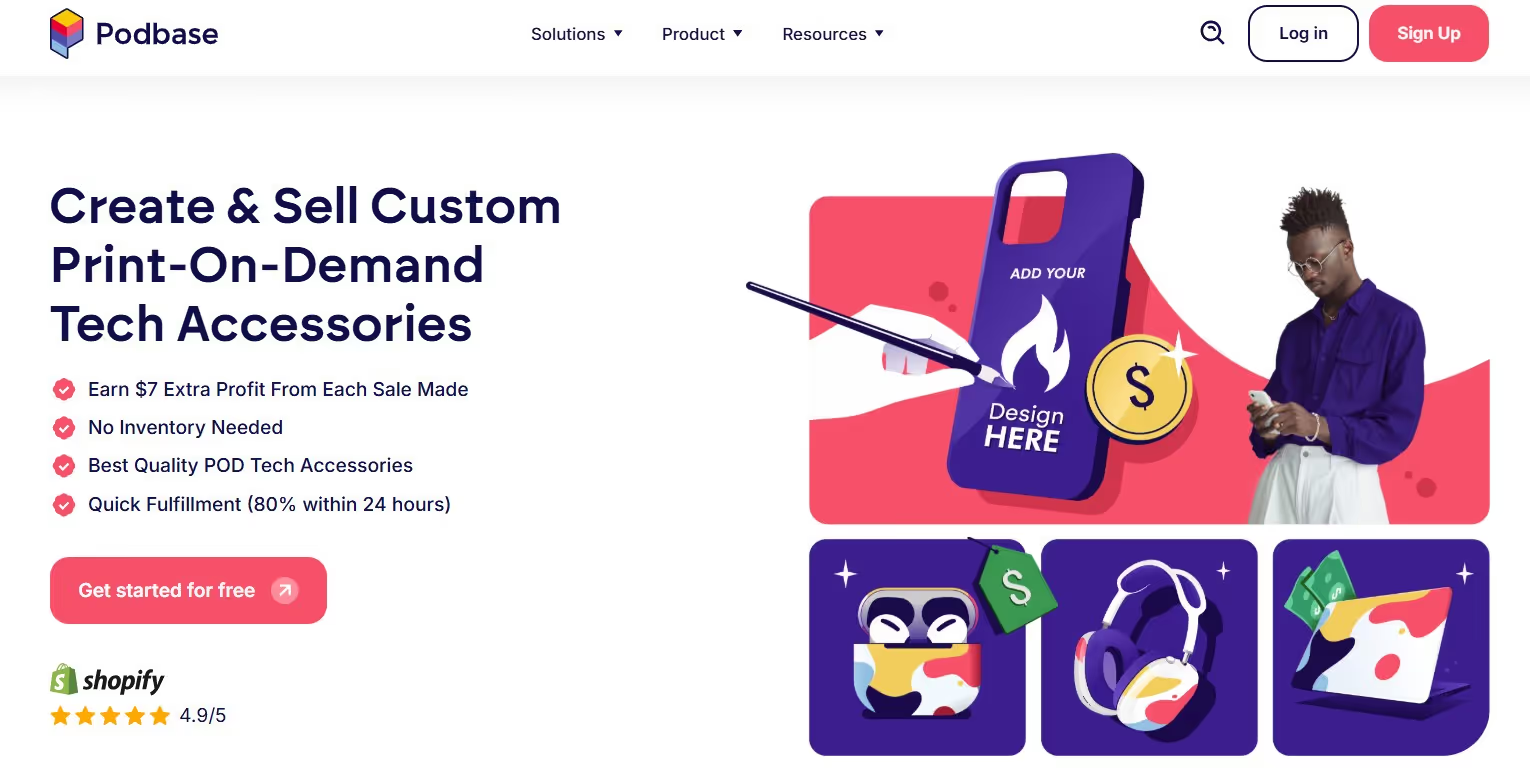
The differentiator is what happens past the integration: automated production with staged quality checks (Layer 2), and an Open API for custom setups. As our CEO notes, "store owners build their own scripts and integrations with AI without any coding experience, and still their fulfillment flows work really, really great." For businesses that need more, our team builds custom solutions regardless of order volume - requirements get met about 95% of the time.
Also Read:
How to Set Up an Automated Dropshipping Store
1. Pick the Right Platform
- Shopify - easiest for beginners
- WooCommerce - best for WordPress users
- BigCommerce - built for larger stores
2. Connect Your POD Supplier
With Podbase and Shopify, the connection takes minutes: log in to Podbase, open store settings, select Shopify integration, Connect to Shopify, and install the app from the Shopify App Store. From that point, orders move from store to production automatically. As our sales team puts it, businesses can "start sending orders the same day, while we prepare everything for a full automation that might take up to a week."

3. Automate Fulfillment, Inventory, and Customer Updates
Configure automated tracking emails so customers stay informed, and use AI tools for product descriptions and design adaptation (Layer 3). Then test the full flow with a sample order before going live.
Also Read:
Common Challenges and How to Overcome Them
Supplier Delays
Holiday peaks strain every supplier. Two defenses: pick a partner whose production is automated, and judge suppliers by the full order-to-doorstep timeline, not the advertised shipping window. As our Head of Sales warns: "A provider might advertise a three-to-five day shipping window, but if fulfillment takes another five business days on top, the real delivery window is closer to ten working days."
Order Errors
Even with automation, verify your setup: confirm addresses and product details sync correctly, set up automatic confirmations and tracking updates, and re-test the order flow after any change.
Keeping Margins Healthy
Count app fees and shipping in your pricing, and track profitability per product. The trap to avoid: chasing the cheapest supplier. A failed product’s true cost - the refund, the support ticket, the lost repeat buyer - never shows up in a margin calculation.
Is Automated Dropshipping Worth It?
If you want to run an online store without it becoming a second job - yes.
Pros: identical effort at any order volume; fewer errors; happier customers; your time goes to design and marketing.
Cons: you do not control shipping speed directly (choose the supplier carefully - see Layer 2); margins need active management.
Real Examples from Successful Sellers
- NotebookTherapy - sells globally on Shopify with deep automation
- Yin & Yang The Label - runs a clothing brand with minimal manual work
- The Peach Fuzz - handles thousands of Etsy orders with POD
And from our own pipeline: one Podbase seller went from zero to seven-figure annual revenue in 13 months - possible for a small team precisely because production, fulfillment, and tracking ran on automation while they focused on designs and ads.
Final Thoughts + Getting Started
Automated dropshipping is the difference between owning a store and being owned by one. The 2026 version goes beyond order-forwarding: automated production keeps quality intact at scale, and AI handles the creative grunt work.
Next steps: choose a platform (Shopify or WooCommerce); connect a supplier with automated production (Podbase); configure fulfillment, inventory, and tracking automation; test with a sample order, then publish a small collection - five products in your first 30 days puts you ahead of 80% of POD stores; promote, measure, and scale what works.
Also Read:
Written by: Saulius Meilutis - CEO of Podbase.
FAQ
1. What is automated dropshipping?
Automated dropshipping uses software to run your store's operations: orders route automatically to your supplier, who prints, packs, and ships, while inventory syncs in real time and tracking updates flow to customers. Full automation spans three layers: storefront apps, the supplier's automated production, and AI-powered creative tools.
2. Is automated dropshipping worth it in 2026?
Yes, for anyone serious about scale: the effort is identical at 10 or 1,000 orders, errors drop, and your time shifts to designs and marketing. You don't directly control shipping speed, so supplier choice is critical. Podbase sellers who switched saw 15% more reviews and 30% fewer order-issue tickets.
3. What is the best dropshipping automation software?
It depends on your stack: Shopify users pair apps like DSers, AutoDS, or Zendrop; WooCommerce users add Spocket or Zapier. For print-on-demand, platforms like Podbase combine the integration and the supplier in one, so orders process instantly and production runs on automated workflows with staged quality checks.
4. Can dropshipping be fully automated?
Operationally, almost: order routing, production, shipping, inventory, and customer notifications can all run hands-free, and AI now automates much of the creative pipeline. Businesses connecting to Podbase can start sending orders the same day, with full automation in about a week. What can't be automated is strategy: niche, design, and marketing.
5. Do I need a developer to set up automated dropshipping?
No. Standard integrations for Shopify, Etsy, and WooCommerce install in minutes with no code. Even custom workflows no longer require developers - Podbase's CEO notes that store owners now build their own scripts and API integrations using AI assistants without any coding experience, and their fulfillment flows run reliably.

Saulius Meilutis is the CEO of Podbase, helping creators and entrepreneurs monetize their ideas with print-on-demand. He shares insights on eCommerce, growth, and building lean online businesses.

.avif)





.avif)
.avif)
.avif)
.avif)
.avif)
.avif)

.avif)





.avif)

.avif)


.avif)

.avif)

.avif)