Making $1,000 a week is entirely possible with today's income options. The gig economy lets you leverage basic skills to earn steady money on your schedule. Online businesses scale from a side hustle to a full income with the right setup. And the platforms have never been more accessible to beginners.
But here is what almost every “make $1,000/week” article gets wrong: the bottleneck isn't picking the right idea. It's not quitting in week two. Most people who set out to build any of the income streams below stop before they reach the data needed to know whether their approach is working. We see this every day inside Podbase's seller pipeline - and we bring real data into each section so you can spot the moments where most plans die.
In this guide, we show you ten realistic ways to reach $1,000/week - what each one actually pays, who it's for, and (most importantly) the specific milestone that separates “still on track” from “about to quit.” Here they are at a glance:
The $1,000/Week Mindset: Active Income vs. Automated Passive Earnings
Three foundations to set up:
- Defining the target: $1,000/week is $52,000/year - real income, not a hobby. Treat the work like real income work.
- The fork in the road:
Active income pays you for your time and arrives quickly. Passive income takes more upfront work but compounds. It's the foundation for making money without a job.
- The strategy: use active income to fund passive streams. This is how you reach $1K/week without burning out.
The strategy frame matters because it explains why most “make $1,000 a week” plans fail in the first 90 days. People pick a passive income stream (a digital product, a print-on-demand store) and treat it like an active one - expecting same-month payback. Then, when month one shows $30 in revenue instead of $1,000, they quit. As Podbase CEO Saulius Meilutis puts it: “The third thing is impatience. You have to be patient. You have to be willing to spend. In some cases you have to be willing to run at a loss for maybe the first three to six months, and then things start to shift.”
The right mental model: pick one active stream that pays this week (freelancing, gig work, reselling) and one passive stream you'll build for 90 days (POD, digital products, niche audience). Stack them.
Phase 1: High-Leverage Digital Skills
Digital skills are one of the fastest paths to $1,000/week.
1. Freelance (Writing, Design, or Coding)
What it is: selling your digital skills on a per-project or monthly contract. Laptop + internet, work from home.
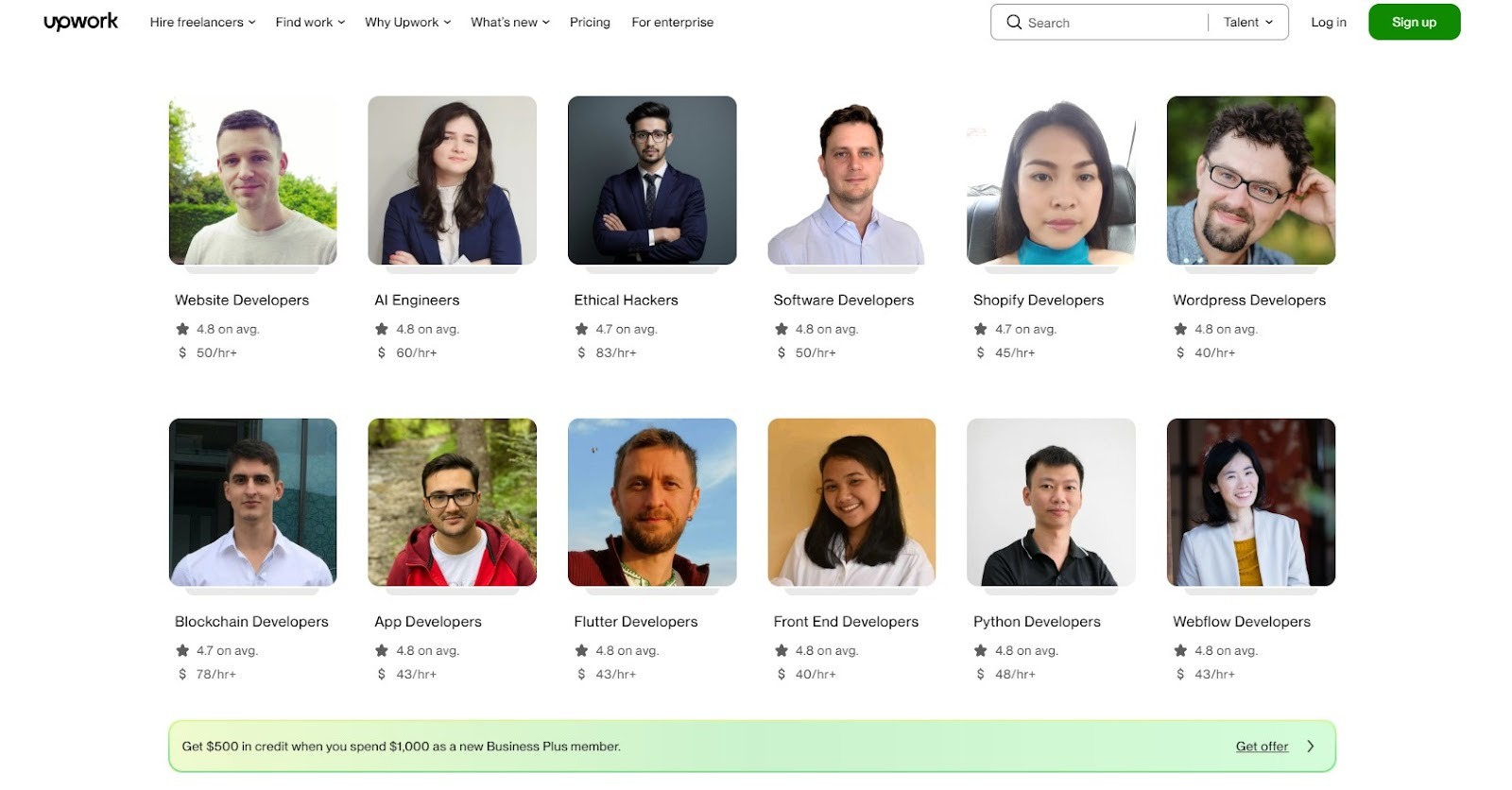
Why it works: skills like SEO writing, UI/UX design, and custom automation can clear $50/hour. Twenty-five billable hours a week at that rate = $1,250/week.
Best for: people who already have one of these skills. The skill-acquisition timeline is the gating factor - learning from scratch makes freelancing a 6-12 month path, not a 4-week one.
2. Virtual Assistant (VA) Services
What it is: virtual assistants provide remote business support - admin, scheduling, customer service, social media, basic bookkeeping.
Why it works: businesses outsource to save time. Specialized VAs (tech, social media) charge premium rates because their work directly supports revenue.
Best for: organized, detail-oriented people. Realistic timeline: 60-90 days from “no clients” to “two stable retainers” if you're consistent on outreach.
Also Read:
3. Selling Digital Products (Courses, Templates)
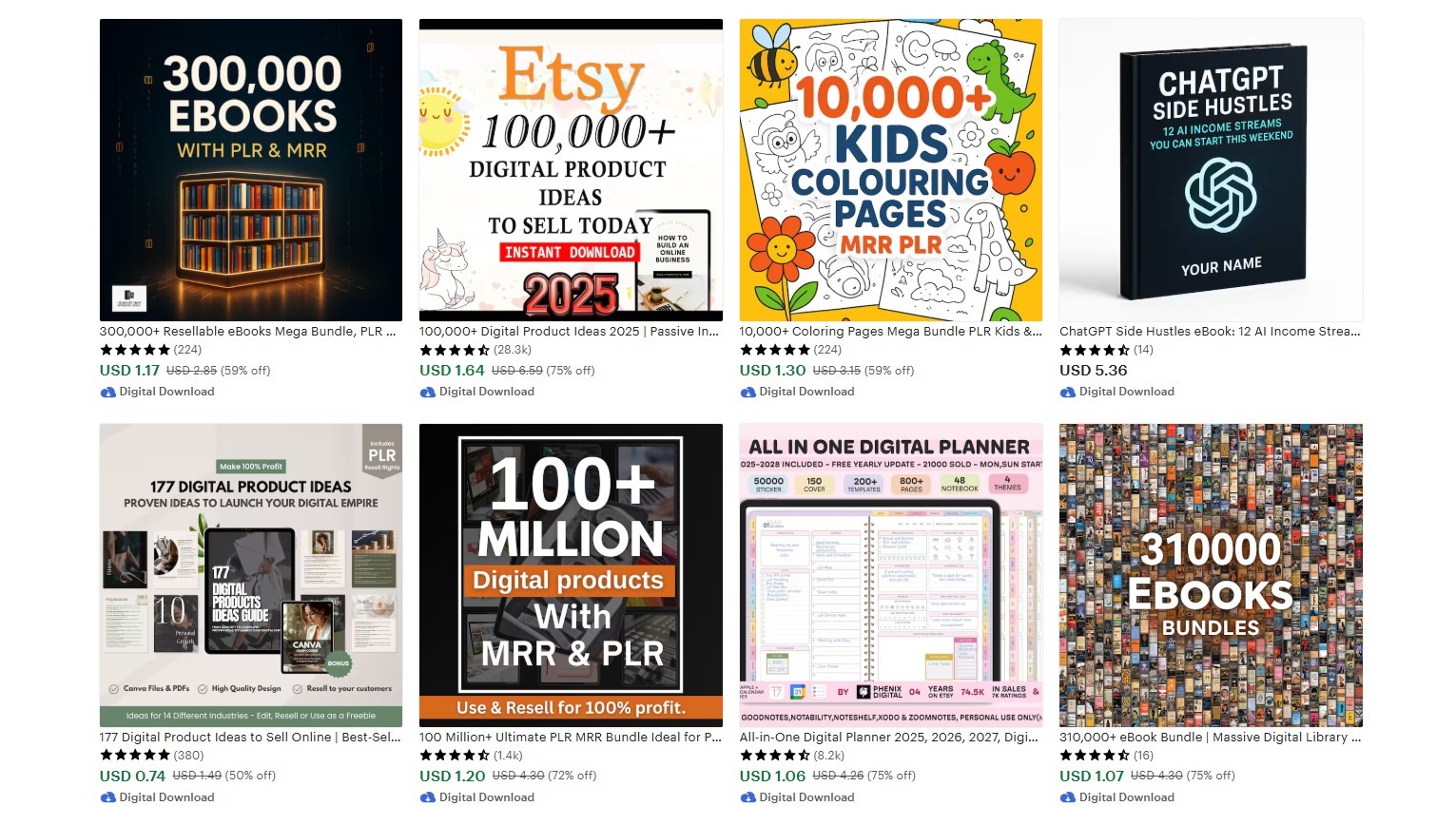
What it is: creating downloadable products - ebooks, courses, templates, checklists, AI prompt guides. Sell once, deliver infinitely.
Why it works: no inventory, instant delivery, near-100% gross margin. Platforms like Shopify or Etsy handle distribution.
Best for: subject-matter experts, but also beginners who can produce useful templates and pair them with paid social distribution. The biggest mistake: launching one product and waiting. The 2% who scale launch several products and let the market pick the winner - the same pattern we see in our POD seller data.
Phase 2: Building an E-commerce Brand
How to reach $1,000/week through online business.
4. Launch a Print-on-Demand (POD) Business
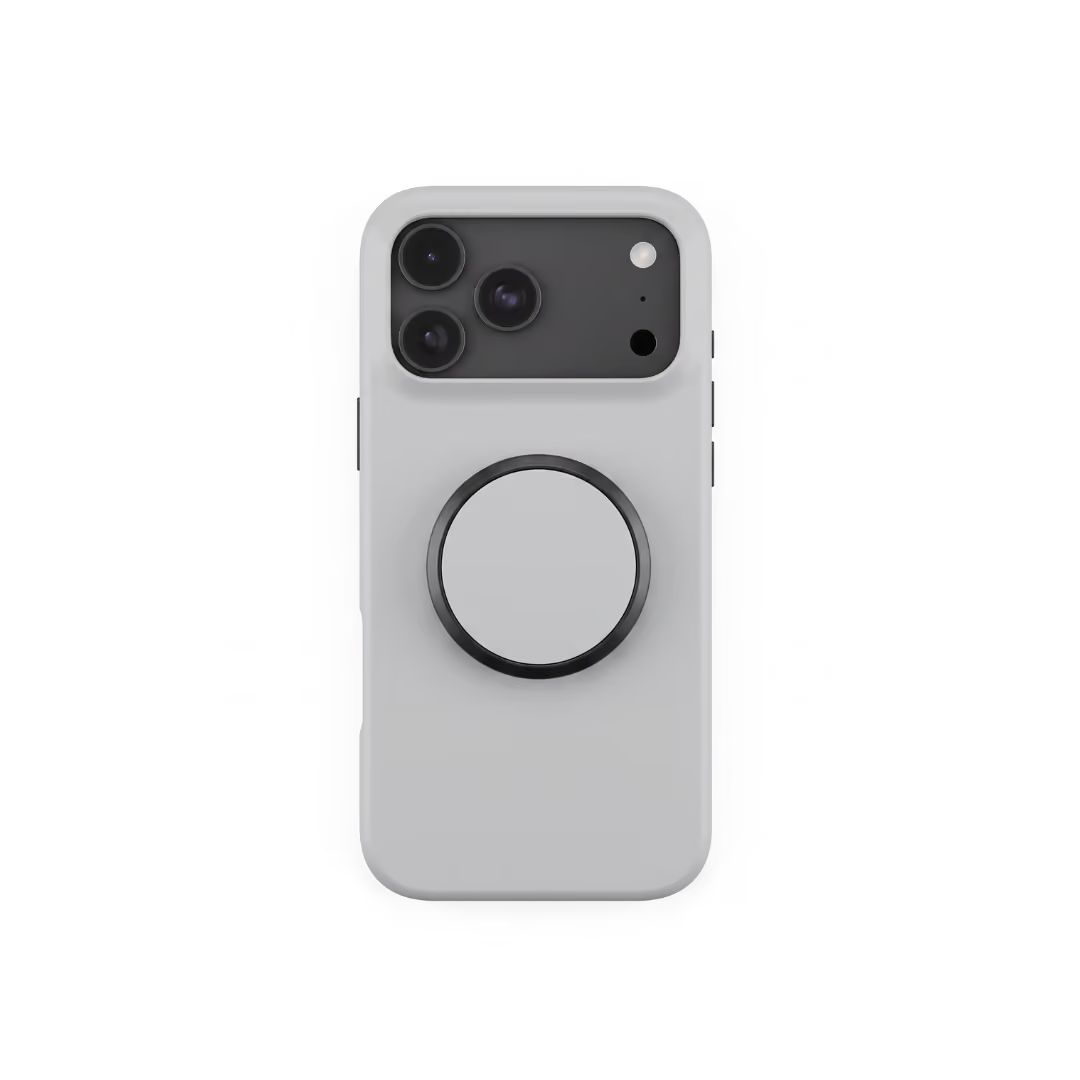
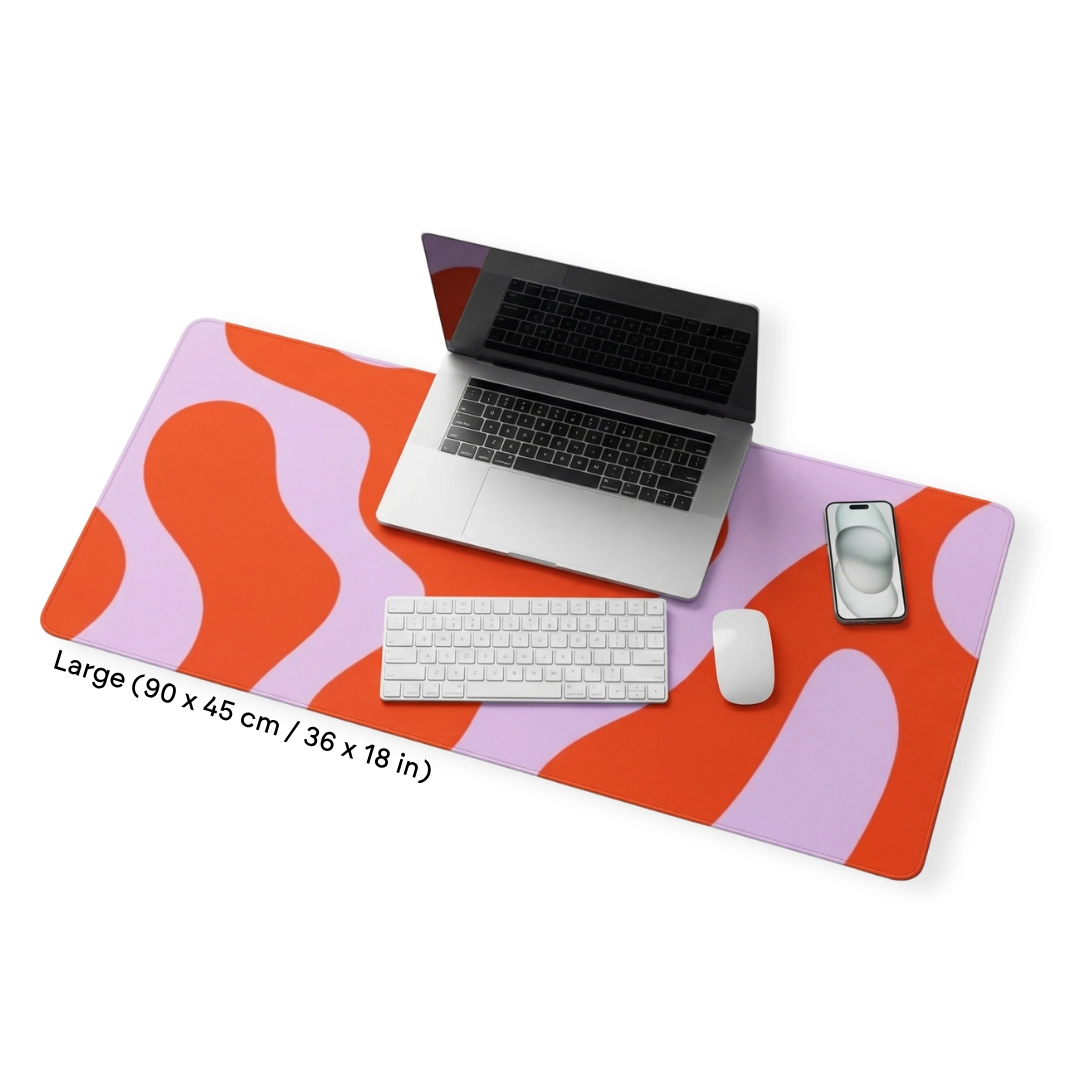
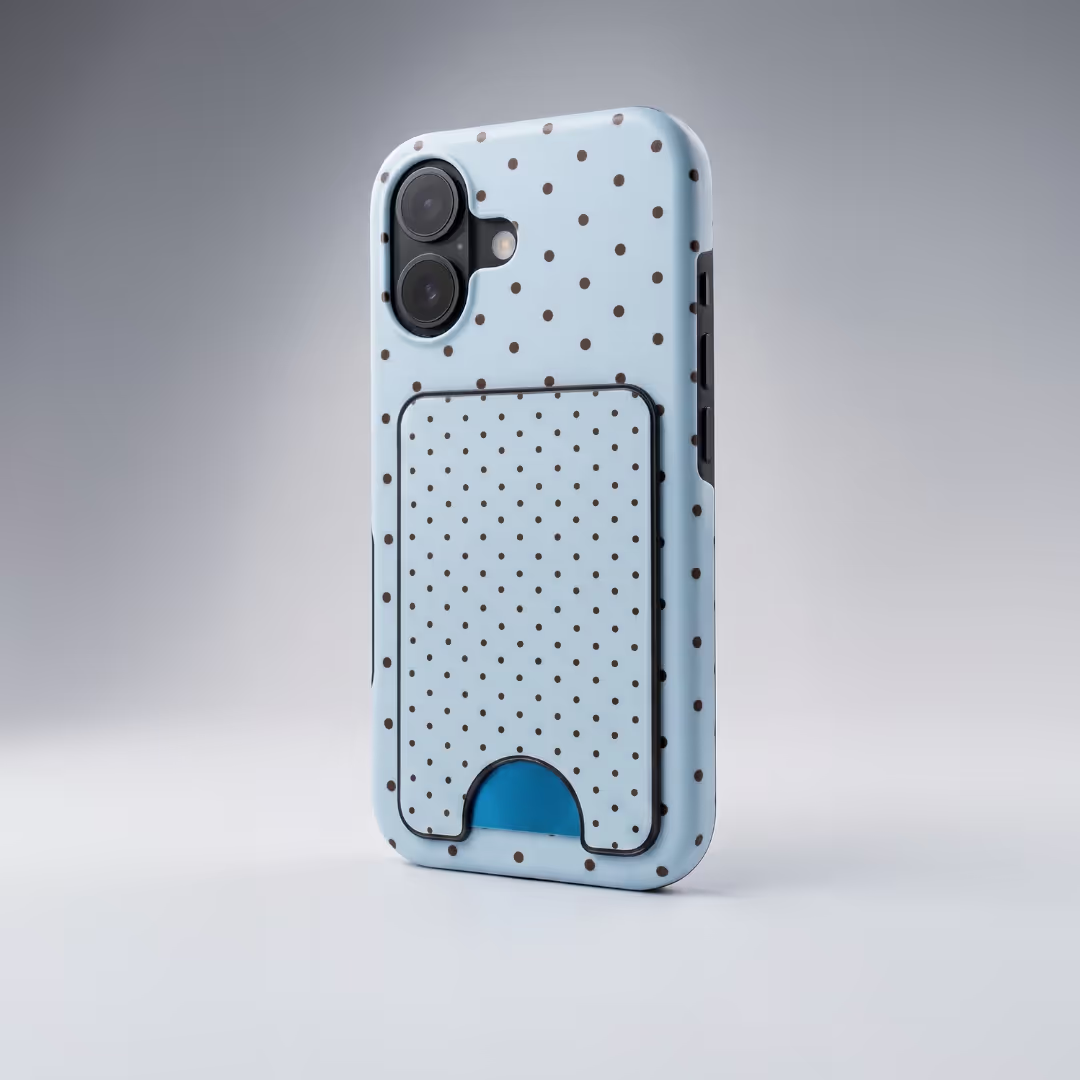
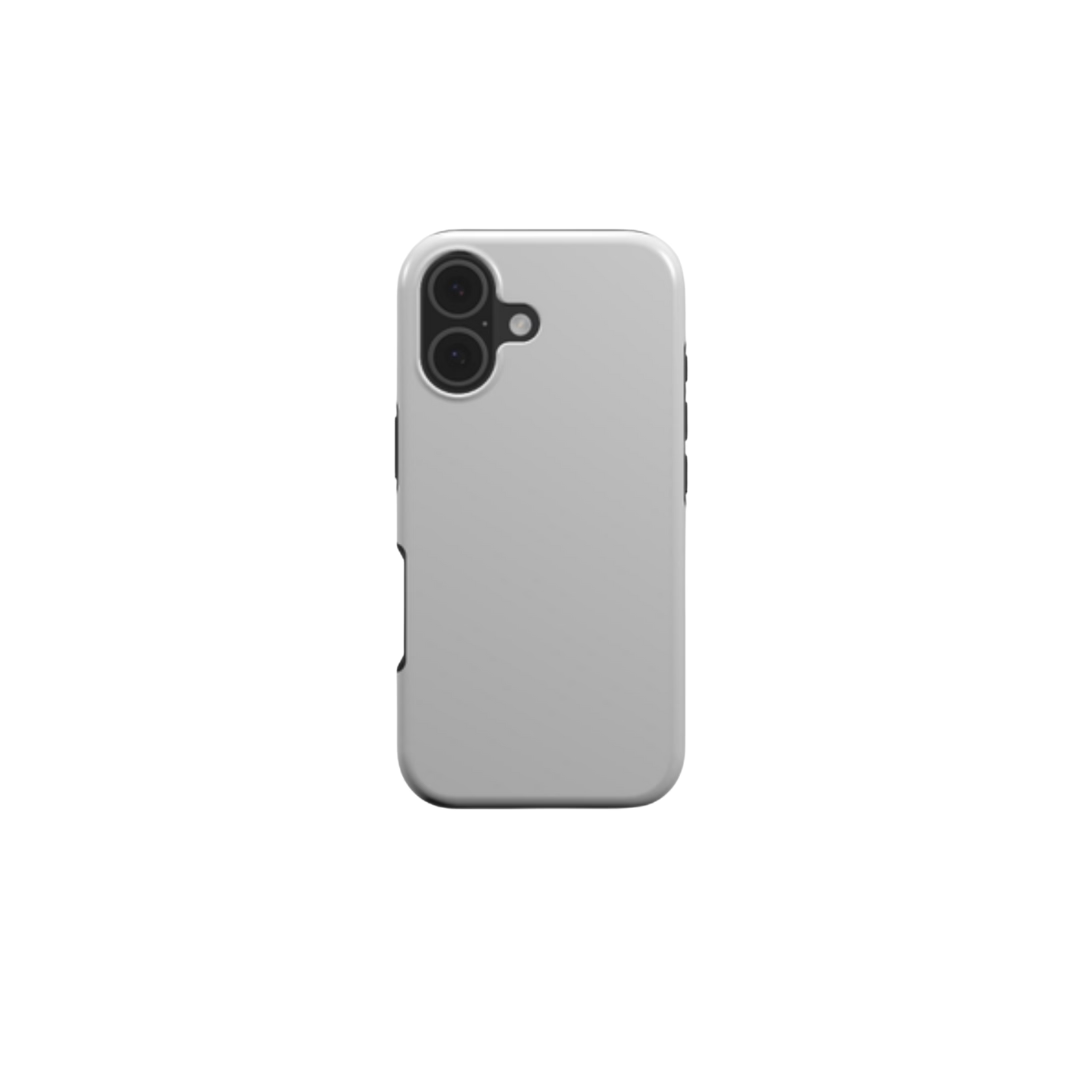
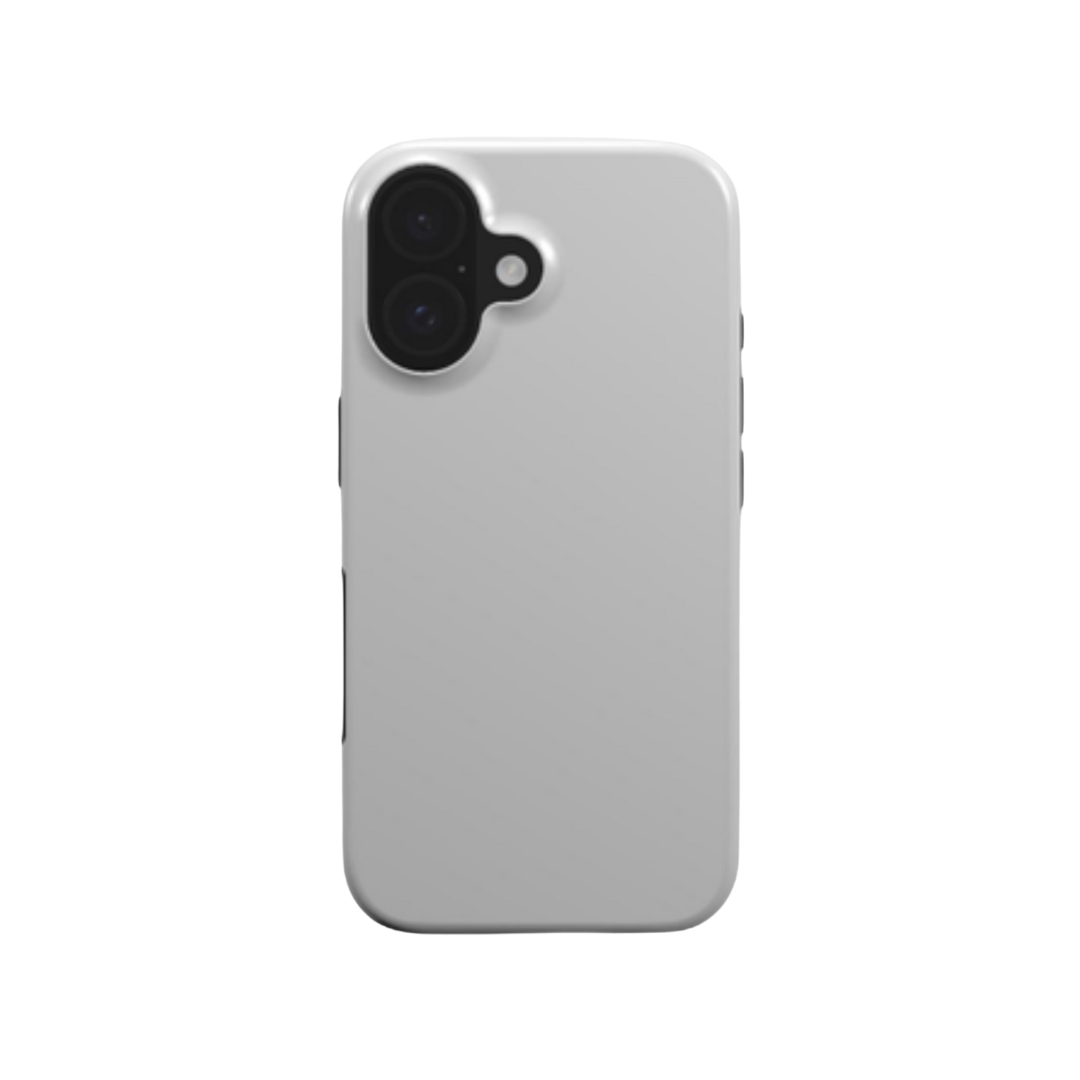
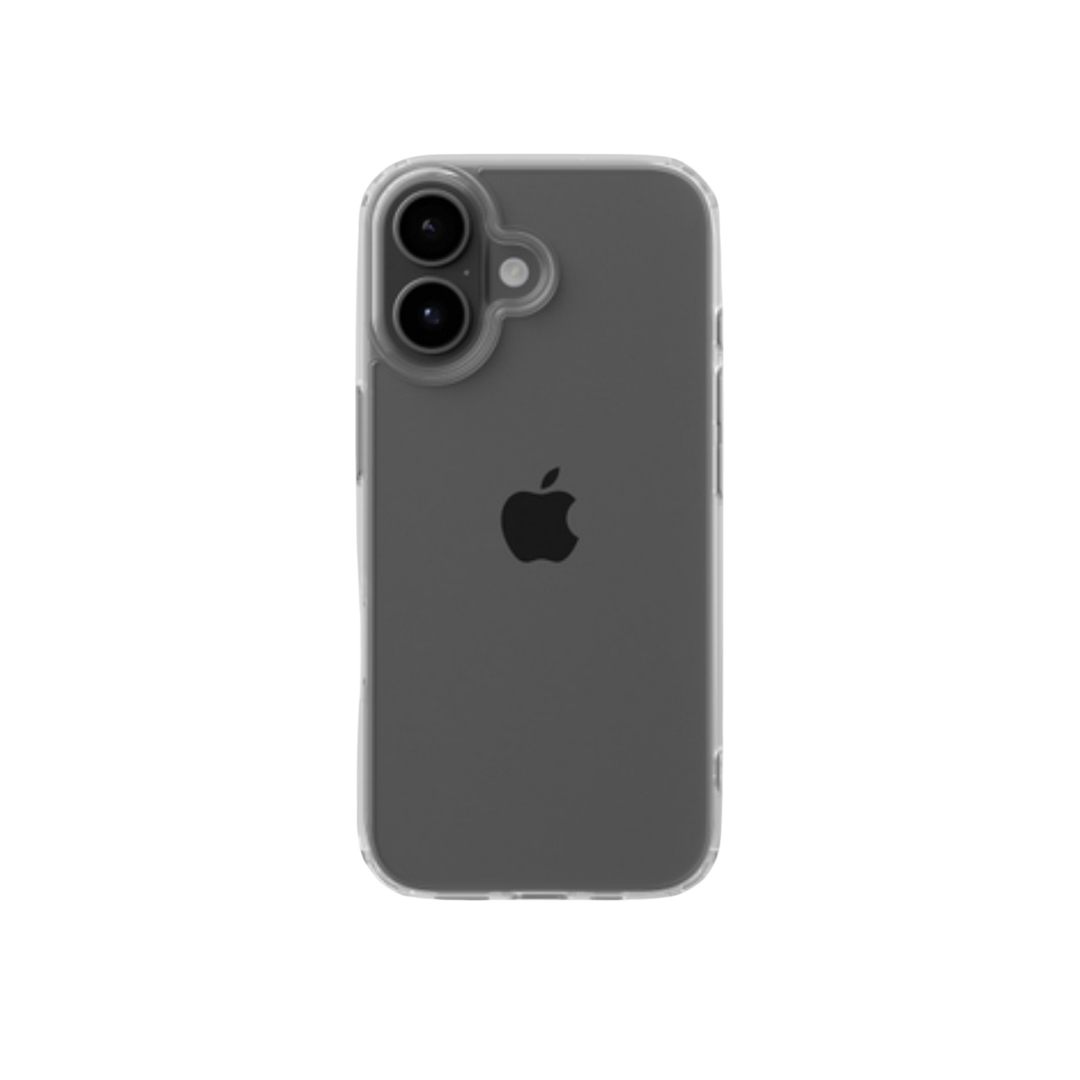
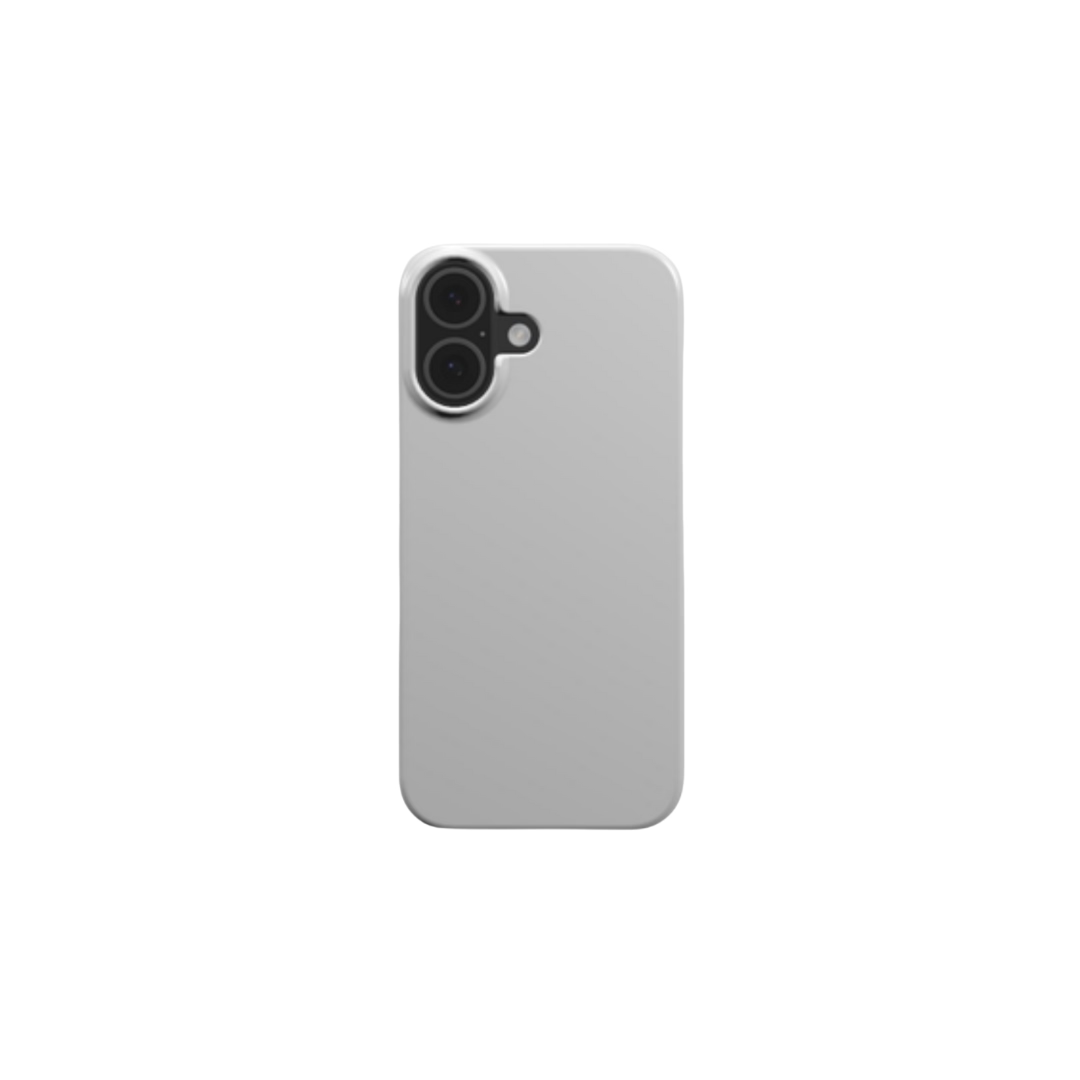
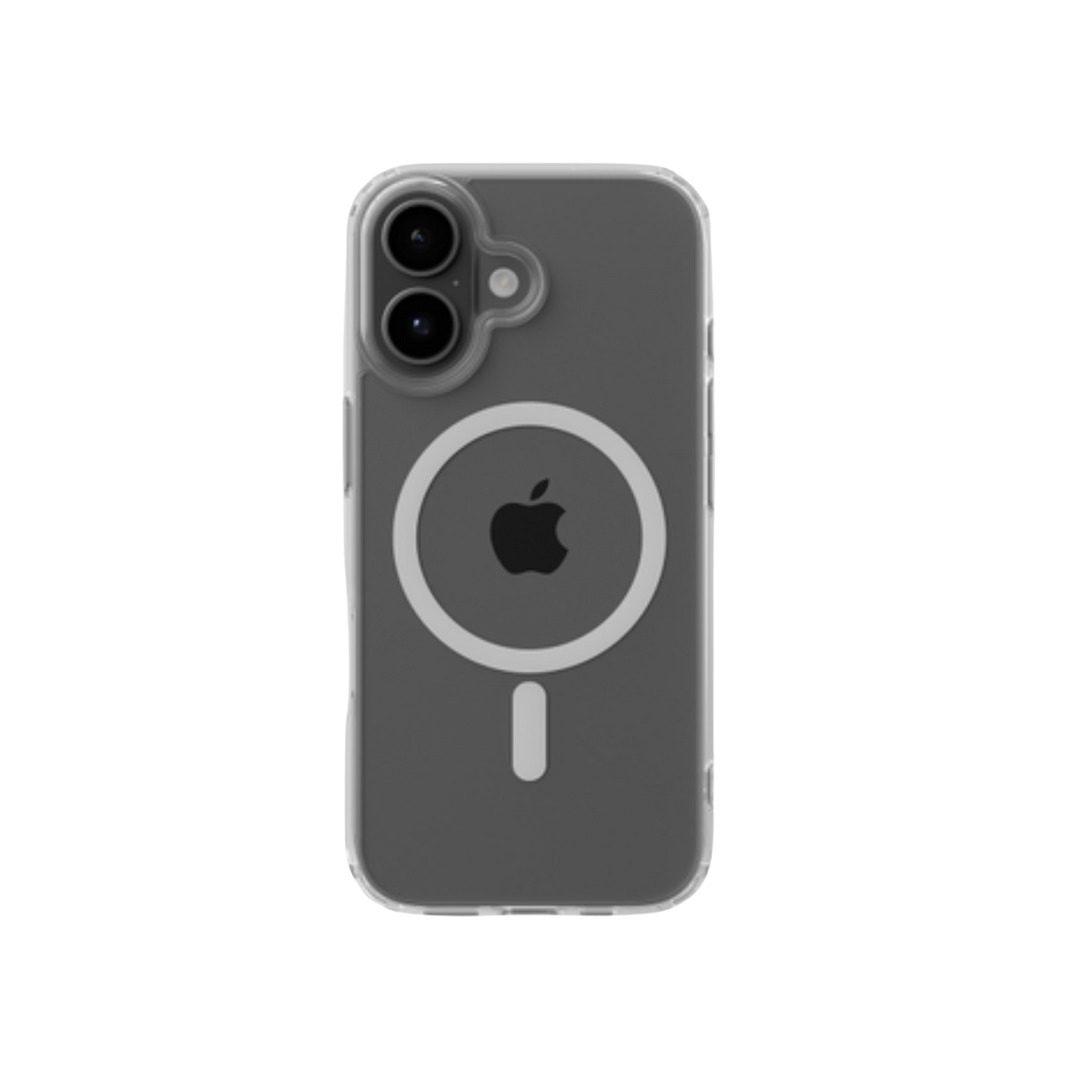
What it is: sell custom drinkware, shirts, posters, phone cases and more without holding inventory. Upload designs, your POD partner prints and ships each order.
Why it works: near-zero startup cost, no inventory risk, automated fulfillment. You focus on design, marketing, and customer experience.
The realistic timeline to $1,000/week - based on actual Podbase seller data. From our Head of Sales:
“If a seller places a sample order within the first two days of opening their store and has at least five products published within 30 days, they are already ahead of 80% of POD stores. If they make ten sales, they are in the top 10%, because most stores never reach that milestone.”
- Days 1-2: open your store, upload 3-5 simple designs, place a sample order - this alone puts you on the top-20% trajectory.
- Days 1-30: have 5+ products live. Run a small paid social test (€500-€2,000 in the first wave) to identify what resonates.
- Days 30-90: first 10 sales - you're in the top 10% of POD sellers. Iterate on what's working.
- Months 3-6: stable $200-$500 weeks if your product hits, scaling to $1K weeks as you reinvest.
- Months 6-18: sustained $1K+ weeks for the brands that have found their audience.
The proof point: one Podbase seller went from $0 to seven-figure yearly revenue in 13 months selling phone cases. They launched with about ten simple designs, pushed influencer marketing hard, and iterated based on what the market said. No “perfect store” phase - they moved fast and let the data drive them.
A few practical Podbase-specific notes:
- Onboarding has compressed. Average POD onboarding at Podbase dropped from three months to under one over the last cycle - a roughly 3x speedup, driven largely by AI design tools. An average user publishes a product in 2-5 minutes; power users in 1-2.
- Production speed matters. Podbase runs a 23-hour production-to-ship average, holding a 48-hour average during the 2025 winter peak while several major providers quoted week-plus lead times. Slow fulfillment kills repeat-purchase economics.
- Margins are real. Podbase pricing sits at roughly 10-15% better margins than competitors, up to 20% in some categories - the headroom that funds the marketing reinvestment that gets you from $200 weeks to $1,000 weeks.
- One operational warning: about one in three new Shopify-based POD sellers hit a “Shopify_Failed” wall on free trials when publishing. Skip the trial and go straight to a paid plan.
Best for: designers, niche enthusiasts, and side-hustlers willing to spend 90 days building. POD is also one of the strongest fits for making money as an artist online.
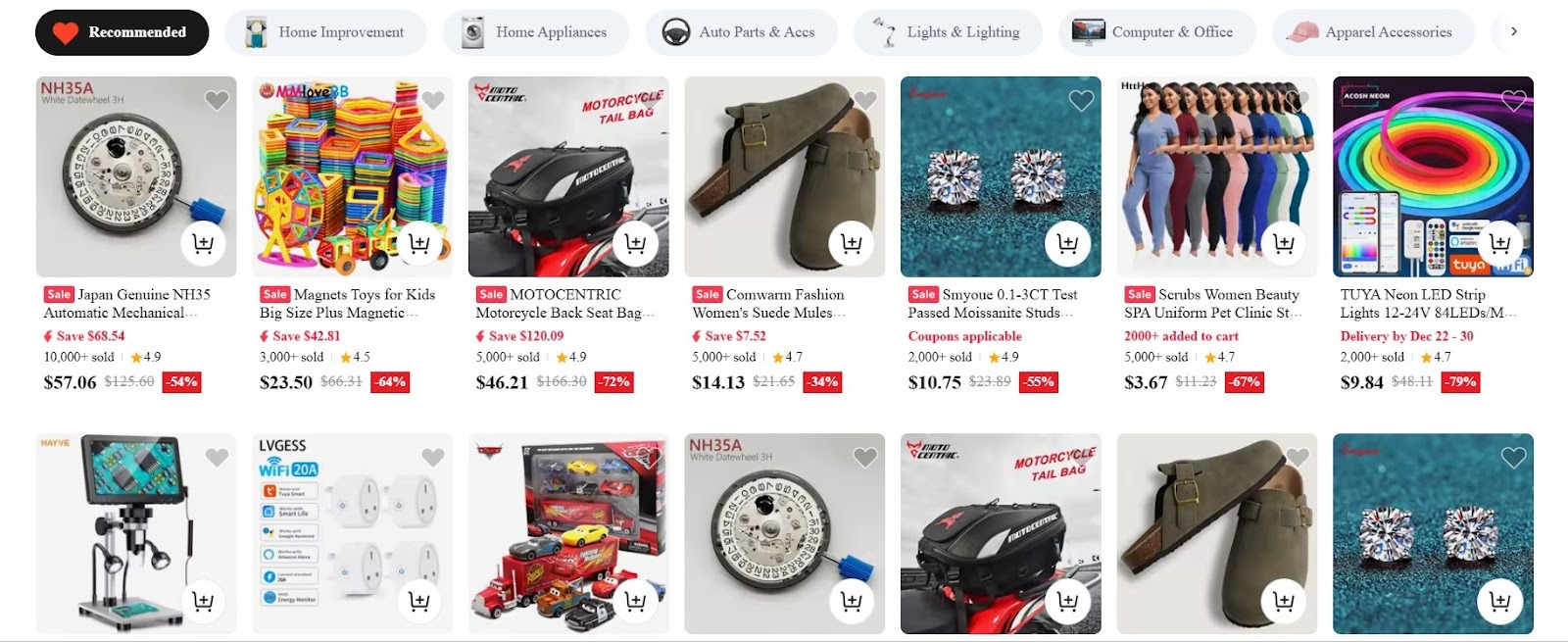
5. Start a Dropshipping Business
What it is: dropshipping lets you sell physical products without holding stock. A supplier handles storage, packing, and shipping; you run the store, test products, and handle support.
Why it works: very low startup cost, fast scaling on winning items. Focus is product research + marketing.
Best for: data-driven marketers who excel at Facebook or TikTok ads. The marketing bar is higher than POD - the products are commodity, so paid ads are the only differentiator.
6. E-Commerce Reselling and Flipping
What it is: buy items at low prices, sell them online on eBay, Facebook Marketplace, etc. Source from thrift stores, yard sales, auctions.
Why it works: items can sell for 2-3x what you paid, with a fast cash cycle and minimal startup cost.
Best for: people who can spot value and don't mind the operational reality. Realistic pace: ~25-40 sourced items per week at $30-$50 average margin - a meaningful weekend commitment.
Also Read:
Phase 3: Monetizing Your Audience and Expertise
More ways to reach $1,000/week online.
7. Become a Niche Social Media Creator or Influencer
What it is: build a dedicated audience in a specific niche - finance, gaming, fitness, DIY. Earn through social media via brand deals, ads, UGC, affiliate links.
Why it works: brands pay creators because trust converts. A focused following is worth more per dollar than a generic one.
Best for: creators who can stay consistent on a single subject. Honest timeline: 6-18 months to consistent $1K weeks. Not your fast path.
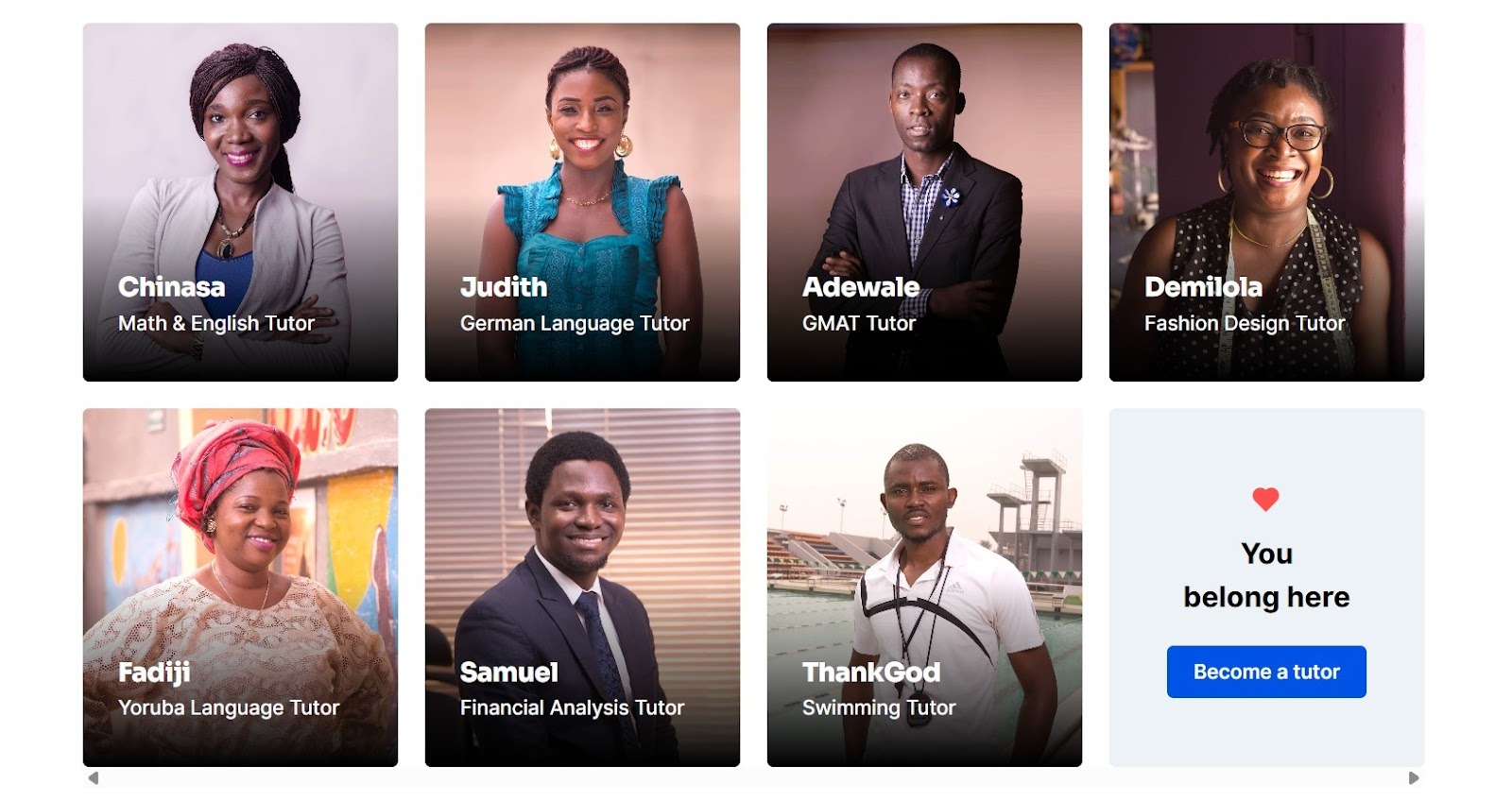
8. Online Tutoring or Expert Coaching
What it is: teach skills via video calls - coding, SAT prep, languages, business or life coaching. One-on-one or group.
Why it works: tutors and coaches can charge $40-$150/hour or more. Low startup cost, flexible schedule. 10 hours a week at $100/hour = $1K/week.
Best for: certified professionals, former teachers, subject-matter experts. The first $1K week is the hardest because pipeline-building takes 60-90 days; after that, retention and referrals do the work.
Phase 4: Fast Cash and High-Value Local Gigs
How to make $1,000/week from local work.
9. Targeted Gig Economy Work (Rideshare or Delivery)
What it is: apps like Uber, Lyft, DoorDash, Instacart. Drive people, deliver food, shop for orders. Set your own hours, earn on the same day.
Why it works: near-zero setup cost. Earnings start within hours of activation, and peak times raise hourly take meaningfully.
Best for: drivers who want flexible hours and immediate payouts. Realistic pace: 35-45 hours of active driving in a strong market. The most genuinely “active” income on this list.
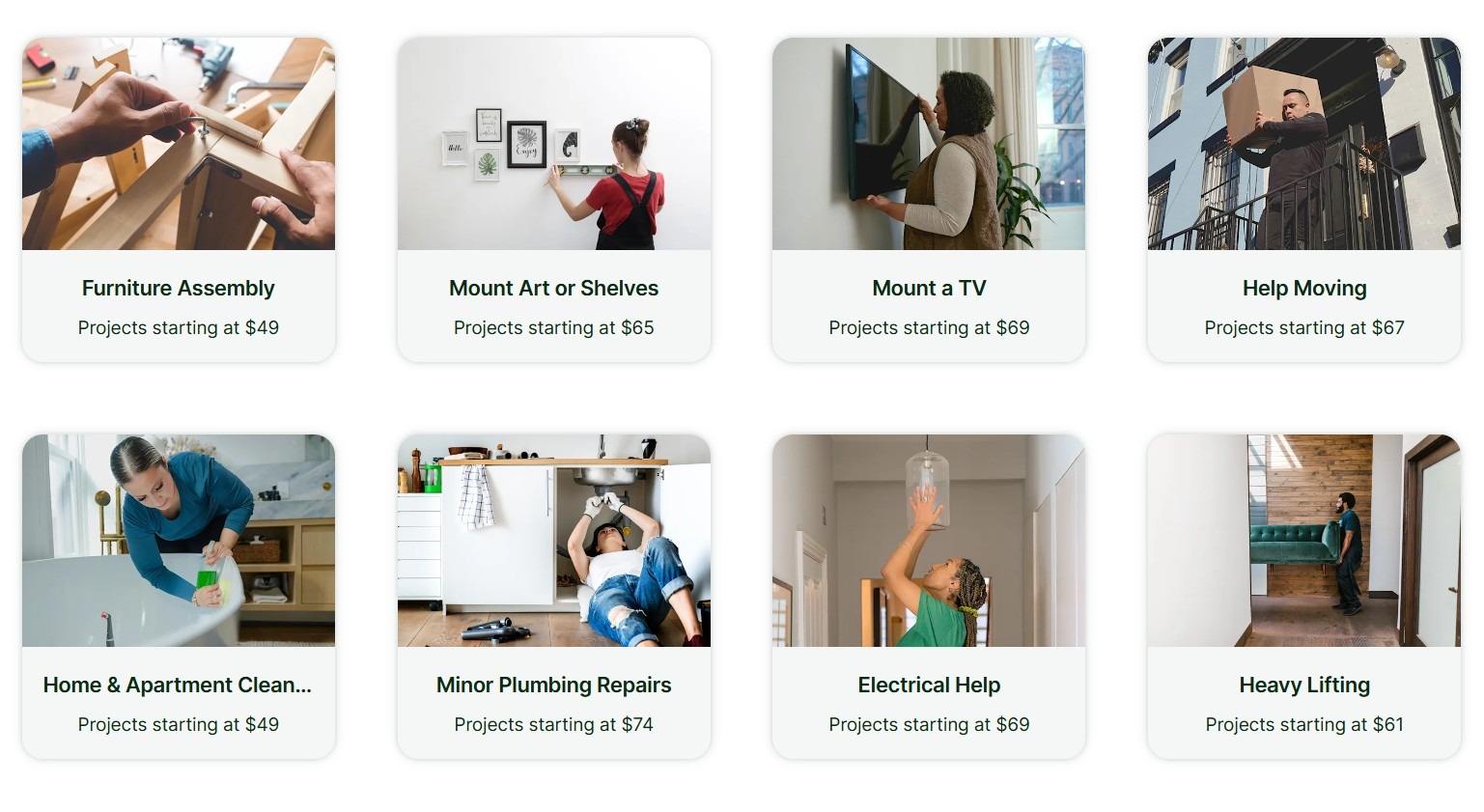
10. Start a Niche Local Service Business
What it is: hands-on local services - car detailing, power washing, house cleaning, pet care. Basic tools + simple marketing.
Why it works: demand stays high, startup cost is usually low, and repeat customers and referrals let you charge premium rates over time.
Best for: people who enjoy physical work and building trust. Realistic pace: 8-15 paid jobs a week at $80-$150 average. Most local service businesses cross $1K/week within 60-90 days of consistent marketing.
Also Read:
Key Strategies for Earning $1,000 Weekly in 2026
Three principles separate the people who reach $1K weeks from the ones who try and stop.
Stack Income - Don't Pick One
The fastest path is one active stream paying you this month plus one passive stream you're building for the next 90 days. Freelancing or gig work can fund a POD store, a digital product line, or a niche audience build - and that combination compounds in a way no single channel does. The most successful POD sellers on Podbase didn't quit their day jobs to launch; they used active income to bankroll the first 60-90 days of testing, found their winners, then scaled.
Lean on Your Strongest Acquisition Channel - Don't Spread Thin
A practical observation from inside Podbase: 99% of our most successful sellers drive the majority of their traffic from social media ads, with email marketing as the second-strongest channel for retention. As our CMO puts it: “Email marketing is usually one of the strongest ROI channels, simply because you are monetizing people that already know your brand and in many cases already bought from you.”
The rule: pick one social channel and one email tool, master both, and don't spread to channel three or four until those two are paying. Diluting effort across 5+ channels in your first 90 days is the most reliable way to underperform on every one of them.
For paid ads specifically, our CMO advises a calibrated middle range: “We are talking maybe a couple of thousand, but not over €5,000, or the equivalent amount in your own currency.” That's the budget needed to get enough data through Meta or TikTok Ads to know what your audience wants. Underspend and you get no signal; overspend in month one and you burn cash before product-market fit.
Reinvest Aggressively - Don't Pay Yourself First
Don't take your first profits home. Reinvest into ads, better tools, or skills that increase income. Compound growth comes from reinvestment - not from preserving the first $300. It's also the answer to “when should I quit my day job?”: not until your side income covers your living costs for three consecutive months and your reinvestment rate has dropped to 30-40% of profits (not 80%+). Sellers who quit before those benchmarks burn out fast.
Use AI for Repetitive Work - Don't Use It for Strategy
AI tools can write drafts, manage emails, schedule posts, and answer customer questions - compounding time savings into more reinvestable hours. But AI doesn't replace strategy, taste, or the willingness to iterate. The 13-month seven-figure seller didn't get there by automating the design step; they got there by moving fast, testing real designs with real customers, and listening. AI compresses production - the judgment on what to produce is still yours.
FAQ
1. Is it realistic to make $1,000 a week?
Yes. Making $1,000 a week ($52,000 a year) is realistic through freelancing, e-commerce, coaching, or gig work. The constraint is rarely the idea - it is staying in the game past week two, when the early numbers have not validated the plan yet. Most people quit before reaching the data that shows whether their approach works.
2. What is the fastest way to make $1,000 a week?
If you already have a digital skill like writing, design, or coding, freelancing is the fastest path - about 6-8 weeks to consistent $1,000 weeks. For immediate cash, gig work like rideshare or delivery pays within hours. Passive paths such as print-on-demand take a roughly 90-day build before consistent $1,000 weeks.
3. How can I make $1,000 a week without an existing skill?
Stack income streams: pair one active stream that pays this month, like gig work or reselling, with one passive stream you build over 90 days, like print-on-demand, digital products, or a niche audience. Use the active income to fund the passive one. This combination compounds in a way no single channel does.
4. Can you make $1,000 a week with print-on-demand, and how long does it take?
Yes. Based on Podbase seller data, expect a roughly 90-day build: place a sample and publish 3-5 designs in days 1-2, reach 5+ products and your first 10 sales by day 90 (the top 10% of stores), then scale toward $1,000+ weeks around months 6-18 as you reinvest in winning designs.
5. Why do most people fail to make $1,000 a week?
Most people quit at week two, before the early numbers validate the plan. A common mistake is treating a passive stream like print-on-demand as active income and expecting same-month payback, then quitting when month one shows $30 instead of $1,000. Patience and aggressive reinvestment are what separate those who scale.
6. How much should I spend on ads to reach $1,000 a week?
Podbase's CMO advises a calibrated range: a couple of thousand, but not over €5,000 (or your local equivalent), to get enough Meta or TikTok data to learn what your audience wants. Underspending gives no signal; overspending in month one burns cash before you reach product-market fit.
Conclusion
Reaching $1,000/week in 2026 is realistic. The constraint is rarely the idea; it's the willingness to stay in the game past week two when the early numbers don't validate the plan yet. If you have a digital skill already, freelancing is the fastest path - 6-8 weeks if you commit. If you don't, the highest-leverage option is stacking active income (gig work, reselling) with one passive path (POD, digital products, niche audience) and accepting a 90-day build. The seller pattern that predicts success is the same across every path: act in week one, test in month one, iterate by month three.
If POD is the path that fits, sign up for Podbase, upload three to five simple designs, and place a sample order in your first 48 hours. Most aspiring sellers plan to do that and never do - and that single delay is the most reliable early predictor of who churns versus who scales.
Also Read:

Saulius Meilutis is the CEO of Podbase, helping creators and entrepreneurs monetize their ideas with print-on-demand. He shares insights on eCommerce, growth, and building lean online businesses.

.avif)




.avif)
.avif)
.avif)
.avif)
.avif)
.avif)

.avif)


.avif)

.avif)

.avif)

.avif)

.avif)