Traditional printing demands large upfront orders, which makes testing new greeting card ideas risky. That is why print-on-demand greeting cards are more popular than ever in 2026: you avoid inventory costs and work with providers that produce quality cards on demand.
A note on positioning before we begin: Podbase does not currently manufacture greeting cards - our roadmap is tech accessories, wall art, and drinkware. We are writing this guide as a POD manufacturer who knows the industry from the inside, because an honest review of the card-specific providers is more useful than pretending cards are something we offer. If you also want phone cases, laptop sleeves, drinkware, or wall art alongside your card line, that is where we come in. If cards are your whole catalog, the four providers below are the ones to compare - and here are the 5 questions to ask any of them first.
Why Start a Print-on-Demand Greeting Card Business in 2026?
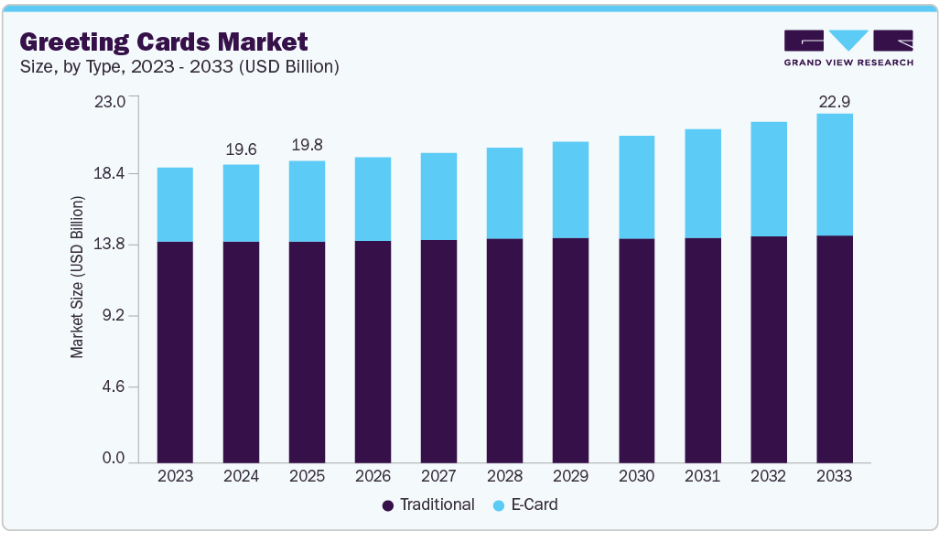
According to Grand View Research, the global greeting cards market was valued at $19.61 billion in 2024 and is projected to reach $22.9 billion by 2033. Physical cards continue to outsell e-cards - a quiet but durable signal that this category isn't being disrupted out of existence. The wider POD context helps too: per Podbase's own print-on-demand statistics, the global POD market reached $12.96 billion in 2025 and is growing at a 25.3% CAGR.
A few structural advantages of POD greeting cards specifically:
- No upfront print run: you commit to uploading a design and let the market decide, not to 5,000 cards of one design.
- Strong margins on a small unit: cards are cheap to produce relative to retail price, funding the marketing you need to build a brand.
- Niche-first design works: retail racks over-serve generic categories and under-serve specific ones (career milestones, niche humor, micro-communities) - a POD store can profitably serve audiences too small for a Hallmark run.
- Q4 is enormous: as our CMO frames it, “Q4 is the most important quarter of the year - repeat purchases, promotions, bundles, and gift-buying all peak.” Launch in mid-2026 and you have runway to be tested and optimized by November.
Also Read:
How to Start Your Greeting Card Business From Home (The 5-Step Launch)
The steps below combine the basics with what we've learned watching hundreds of thousands of POD sellers scale - and watching most quit at week two.
Step 1: Define Your Niche and Brand Voice
Find a profitable niche by targeting audiences poorly served by existing options: under-covered holidays, career milestones and life events, niche humor, or micro-community in-jokes. Then pick one brand voice - sharp humor, sentimental warmth, sarcastic-but-kind - and stay with it; a consistent voice across 5-10 cards beats 50 cards with mixed voice. As our CEO Saulius Meilutis notes, patience applies to operations, not niche selection: if you've researched for more than a week, pick something you can defend in two sentences and move on.
Step 2: Choose Your Ecommerce Platform
- Etsy: easiest start with built-in traffic - best for the first 6-12 months.
- Shopify: best for long-term scaling, more control and customer-data ownership. Skip the free trial and go straight to a paid plan - about one in three new Shopify POD sellers hit a publish error on trials.
- WooCommerce: most flexibility for deep control, higher technical lift.
Critical regardless of platform: go mobile-first. Per Adobe Analytics' 2025 Holiday Shopping Report, mobile was 56.4% of US online holiday sales in Nov-Dec 2025 and crossed 60% on Thanksgiving Day - if your store isn't mobile-first, you're optimizing for the minority.
Step 3: Master Card Design and File Prep
- 300 DPI minimum - anything lower prints fuzzy.
- Include bleed areas so no white edges show after cutting.
- Work in CMYK, not RGB, so screen and print colors match.
Standard sizing is 5″ x 7″. As our Manufacturing & Operations Coordinator puts it, “the most accurate results are achieved when designs are submitted in high resolution and in the CMYK color space” - the cleaner your file prep, the closer the print matches your screen.
Step 4: Choose Your Top POD Partner
Most articles say “compare base cost, speed, shipping, and cardstock.” Correct, but not enough. Here is the 5-question framework we use internally, applied to cards:
- Average production-to-ship time - and how it shifts at peak? Annual numbers are marketing; the Q4 peak number is operations. For reference, Podbase runs ~23h average and held 48h during the 2025 winter peak while several majors quoted week-plus lead times.
- How do you color-verify between batches? Podbase color-verifies every batch with a spectrophotometer. “We eyeball it” is the wrong answer.
- Support response time and CSAT? Podbase averages 11.8h first response, 24h full resolution, 6.4/7.0 CSAT year-round; giants can stretch to 24-72h+ at peak.
- Actual cardstock spec? Weight (gsm), finish, and paper source drive perceived value - 350gsm matte can sell for 2x lightweight stock. Ask for samples in every paper option.
- Place a sample order before you list anything. Sellers who sample within their first two days are already on the top-20% trajectory; the delay is the most common early predictor of churn.
Step 5: Market Your Brand and Drive Sales
99% of our most successful sellers drive most traffic from social media ads, with email as the second-strongest retention channel; Pinterest and Instagram suit visual, shoppable cards. Start the email list before you launch - as our CMO puts it, “email is usually one of the strongest ROI channels because you're monetizing people who already know your brand.” Bundle for higher AOV (wedding, birthday, holiday packs). On budget, our CMO advises a calibrated middle range - “a couple of thousand, but not over €5,000” - to get enough ad signal without burning cash. Milestones that predict success: 5+ products live in 30 days, first 10 sales by day 90 (top 10% of stores). Sellers who join a community scale ~32% faster than solo operators.
Also Read:
- Printful vs Printify: Which Print-On-Demand Platform Wins?
- Gelato vs Printify: Which Print-on-Demand Platform To Choose?
Best Print-on-Demand Greeting Card Companies for Quality and Speed
Four providers worth comparing in 2026 - strengths, weaknesses, and where the 5-question answers are public. Here's the head-to-head first.
1. Printify (Best for Lowest Price & Variety Sourcing)
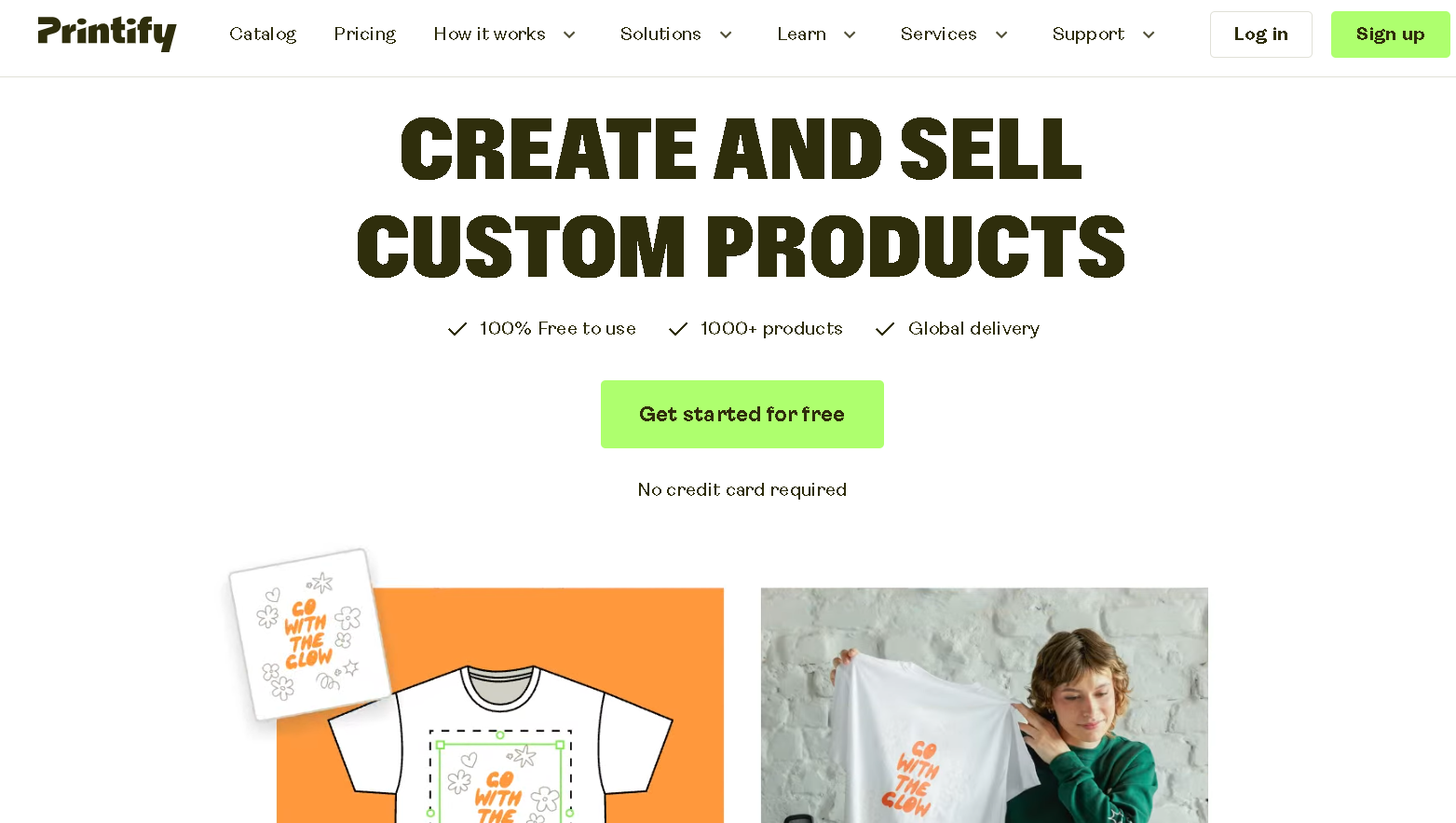
Printify is a network model - it connects sellers with print providers worldwide rather than running its own manufacturing, so you compare prices in one place and integrate with most stores. Pros: wide provider variety, highly competitive pricing, good mockups, large catalog. Cons: quality varies between providers (vet each), less in-house color control, and Q4 support can stretch to 24-72h+ unless you're on a top tier. Best for budget-conscious, high-volume catalogs - sample 2-3 of their card providers first.
2. Printful (Best for Consistent Quality and Branding)
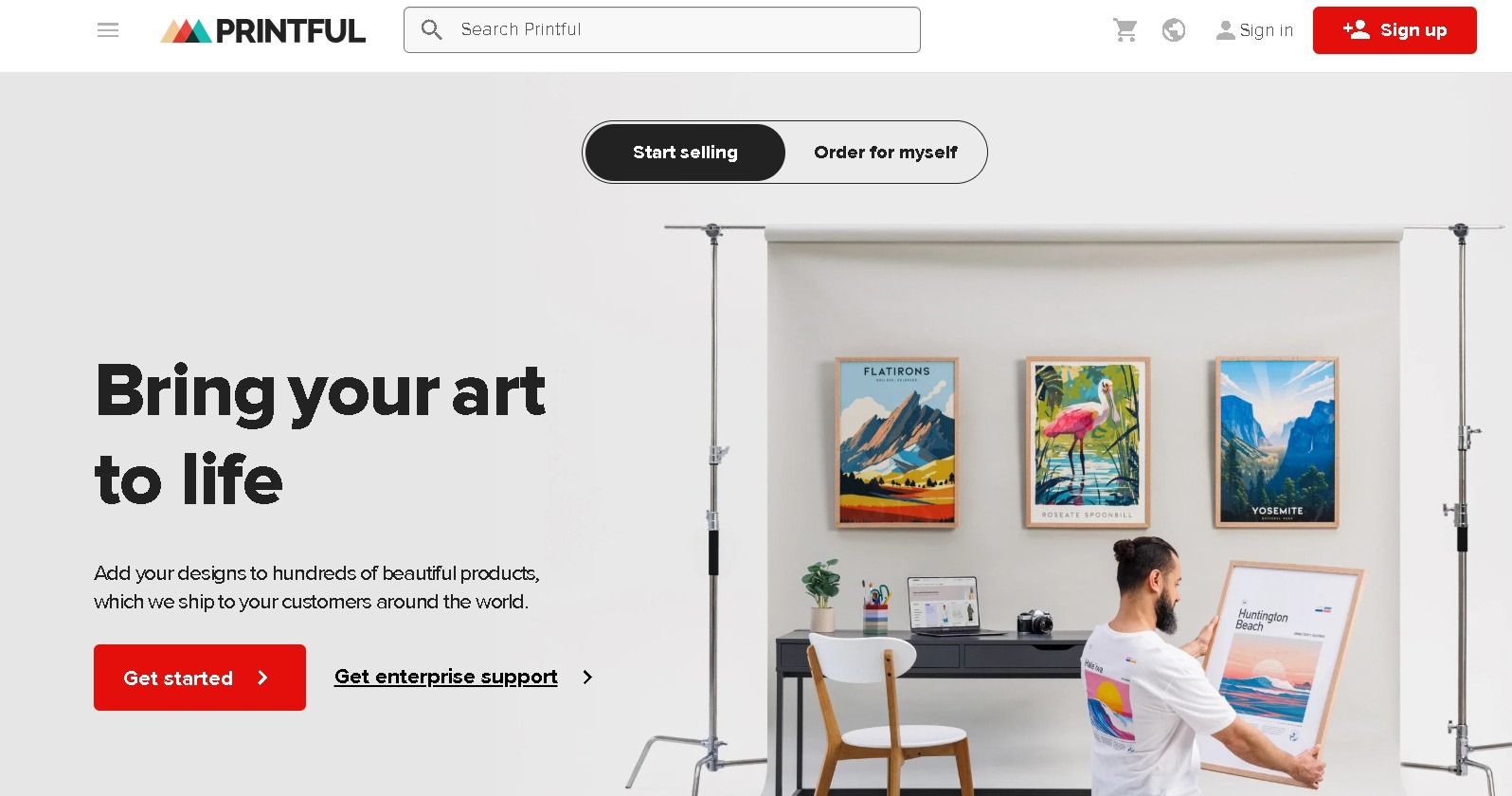
Printful runs most production in-house, which is why its quality tends to be more consistent, and it supports branded packaging and inserts. Pros: strong branding options, reliable end-to-end fulfillment, consistent batches, easy integrations. Cons: high base cost per card, less supplier flexibility, narrower card catalog than apparel. Best for premium, branded card lines - especially wedding/event sellers building referral-driven brands.
3. Gelato (Best for Global Speed and Local Production)
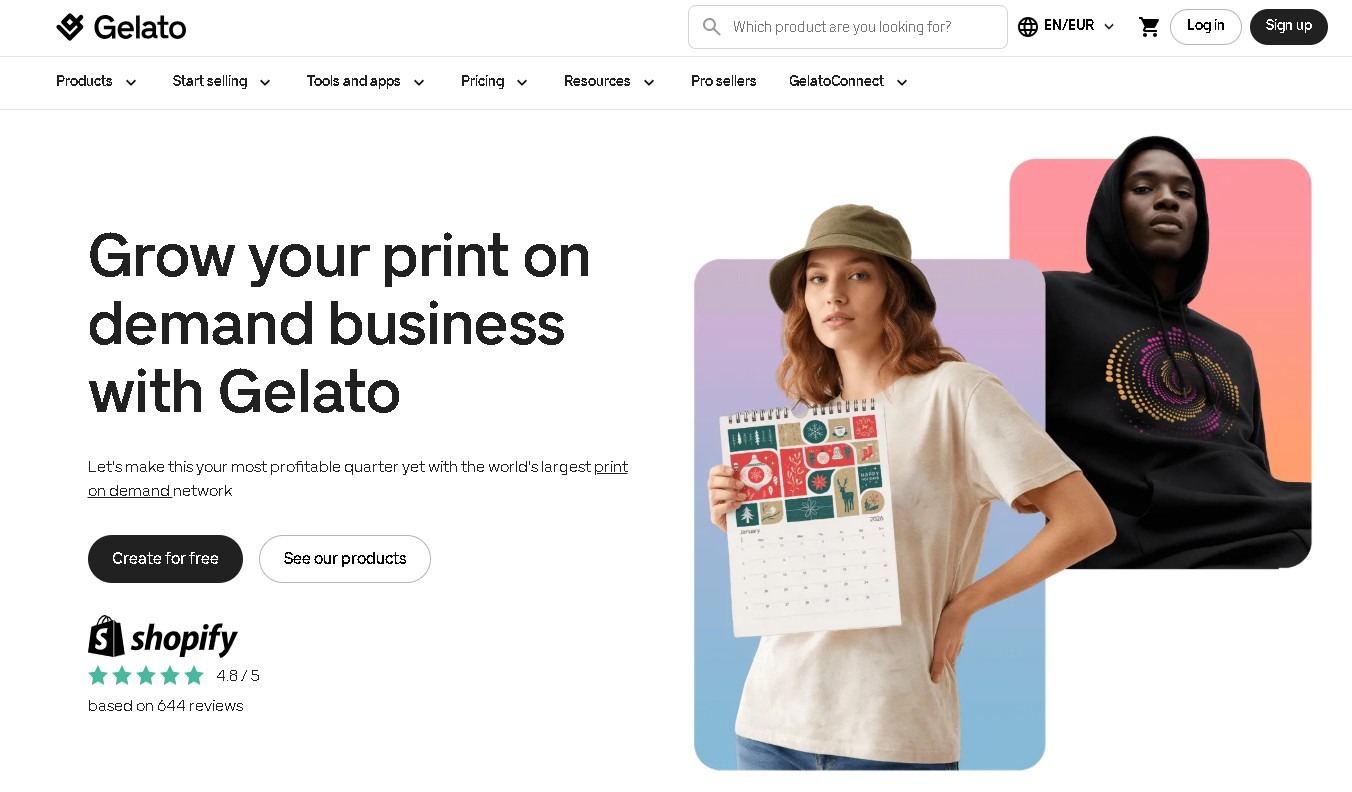
Image via Gelato
Gelato's advantage is 140+ local print providers in 30+ countries, so cards print close to your customer. Pros: largest global network, meaningfully lower international shipping, clean interface. Cons: product availability varies by region, shipping still varies by local courier, peak support behaves like other large networks. Best for card brands targeting international markets from day one.
4. Gooten (Best for Unique Paper Stocks and Extras)
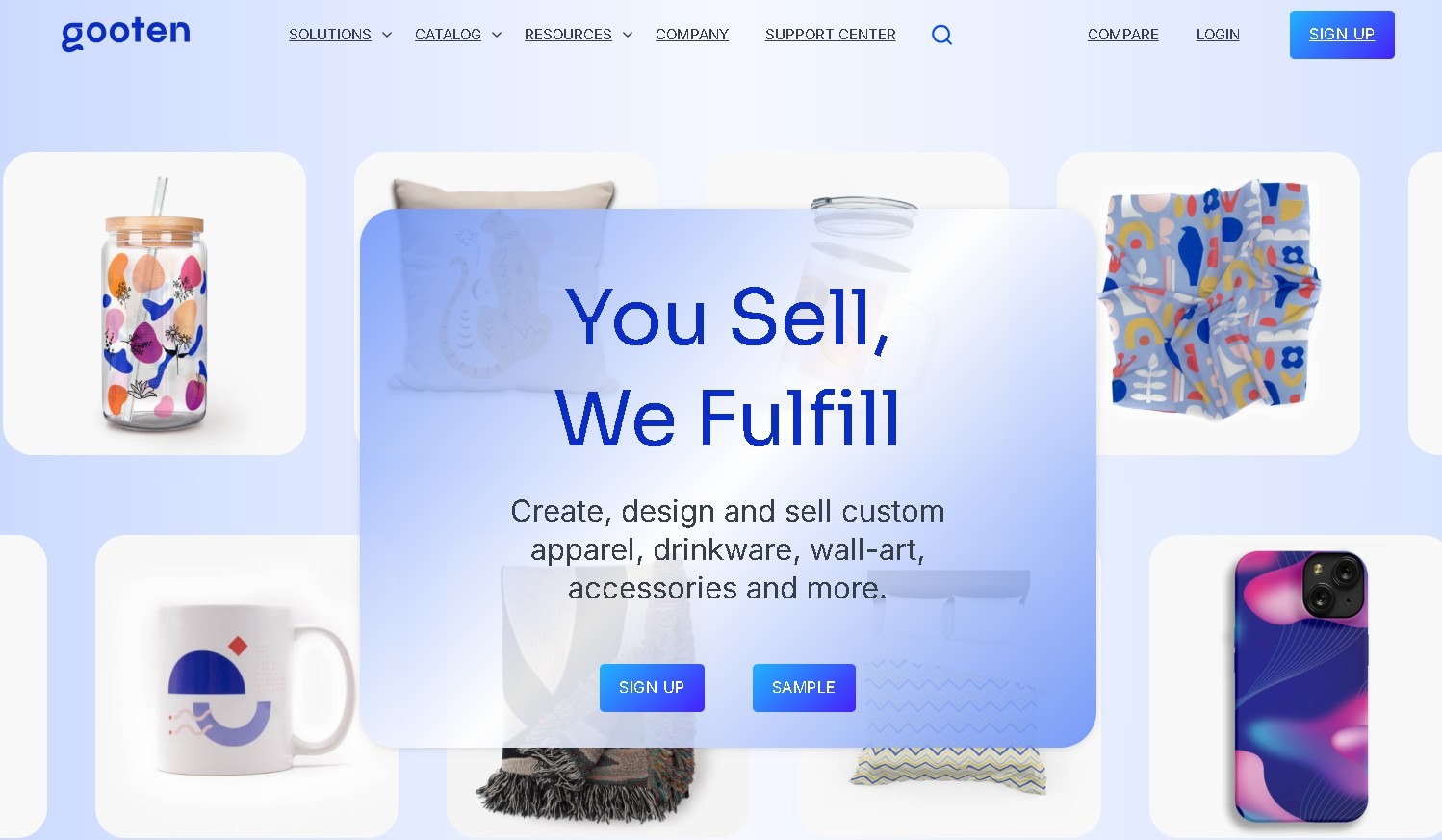
Gooten differentiates on paper quality - textured and specialty stocks make cards feel meaningfully more expensive. Pros: strongest paper-stock selection of the four, multiple integrations, flexible customization. Cons: less polished interface, smaller overall catalog for bundling with non-paper goods. Best for specialized brands where paper feel is the selling point - wedding invitations, milestone announcements, high-end thank-you sets.
Also Read:
- Best Print on Demand Companies for Etsy
- Printful Alternatives: Finding The Right POD For Your Business
Maximizing Profit: Design and Pricing Strategies
Design for Bundles
Bundles raise average order value with a “set for every occasion.” The most reliable structures: holiday packs (8-card assortments), life-event packs (wedding congrats + thank-you + anniversary), and coworker packs. On B2B specifically, Podbase has seen corporate-gifting inquiries grow roughly 3x in the last six months - companies want “high-quality branded merch that lasts.” For cards, that means corporate holiday packs, employee-appreciation cards, and event sets; build a “B2B / bulk orders” page once you have six months of consistent sales.
Tiered Pricing
Charge by size, paper, or finish. Standard cards stay affordable; premium cards (heavier cardstock, foil accents, custom messages) command a 2-3x premium. The customers willing to pay for premium exist - give them the option.
Upselling
Small add-ons - stickers, art prints, gift wrap - increase order value at minimal cost, and seasonal or limited-time bundles drive extra purchases when customers are most ready to buy.
FAQ
1. What is the best print-on-demand greeting card company in 2026?
For pure card brands, compare Printify (lowest price and variety), Printful (consistent in-house quality and branding), Gelato (global local production), and Gooten (premium paper stocks). The best choice depends on your priority - price, consistency, global speed, or paper feel. Order samples from at least two and evaluate color and touch before committing.
2. Does Podbase make greeting cards?
No. Podbase currently manufactures tech accessories, wall art, and drinkware, not greeting cards. We recommend card-specific providers here because that is the honest answer. If your brand also sells physical goods beyond cards, Podbase is a strong multi-category partner to run alongside a dedicated card supplier.
3. Is a print-on-demand greeting card business profitable?
Yes. Greeting cards have low unit production cost and high perceived value, leaving healthy margin headroom to fund marketing. There is no upfront print run, so risk is low. Bundles and tiered pricing lift average order value, and Q4 holiday demand can double a card seller's annual revenue if the store is ready.
4. How do I start a greeting card business from home?
Follow five steps: define a specific, underserved niche and brand voice; choose a platform (Etsy to start, Shopify or WooCommerce to scale); master file prep at 300 DPI CMYK with bleed; select a POD provider after sample-testing; and market through social ads and email. Aim for 5 products in 30 days and 10 sales by day 90.
5. What size and file format should greeting cards be?
Standard greeting cards are 5 by 7 inches, the size most buyers prefer. Design at a minimum of 300 DPI, include bleed areas so no white edges show after cutting, and work in CMYK rather than RGB so printed colors match your screen. Most providers offer templates with exact dimensions and safe zones.
6. How big is the greeting card market?
The global greeting cards market was valued at about $19.61 billion in 2024 and is projected to reach $22.9 billion by 2033, according to Grand View Research. Physical cards continue to outsell e-cards, a durable signal that the category is not being disrupted out of existence by digital alternatives.
Conclusion
Starting a greeting card business no longer requires an upfront print run or warehouse - print-on-demand makes the category accessible, and the market keeps growing. The honest summary: for pure card brands, compare Printify, Printful, Gelato, and Gooten using the 5-question framework and order samples from at least two before you commit. For card brands that also want tech accessories, wall art, or drinkware, add a multi-category partner - Podbase runs ~23h average production-to-ship, spectrophotometer-verified color, and 11.8h support response, but we don't make cards, so you'll likely want two providers. Either way, the pattern that predicts success is the same: sample within 2 days, 5 products in 30 days, 10 sales by day 90 - and don't quit at week two. Sign up for Podbase if your line includes non-card physical goods.
Also Read:

Saulius Meilutis is the CEO of Podbase, helping creators and entrepreneurs monetize their ideas with print-on-demand. He shares insights on eCommerce, growth, and building lean online businesses.

.avif)



.avif)
.avif)
.avif)
.avif)
.avif)
.avif)

.avif)


.avif)

.avif)

.avif)

.avif)

.avif)