Finding it hard to pick between Redbubble and Printful? Don't worry, many do. What many don't realize is they're choosing between two different business models: Redbubble is a marketplace, while Printful is a fulfillment service. They work very differently.
One thing before we break it down - and it's the reason this comparison is worth reading: the top result for this search is Printful's own comparison page, grading its own homework. We're Podbase, a print-on-demand provider that competes with both platforms and fulfills orders for sellers who have used each, so we have no stake in which of these two you choose. What we do have is data on what actually separates providers - and it's rarely the numbers sellers compare first.
We'll break down the real costs, how product quality differs, and which platform fits your business goals - with real price examples throughout.
Quick Verdict: Printful or Redbubble?
Printful is best if you want to build a brand: full control over pricing, packaging, and customer experience, plus integrations with every major shopping platform. Redbubble shines if you want a marketplace: instant access to its customer base, but fewer branding options and no integrations.
Comparing Redbubble vs Printful this way helps you choose a *model*. Choosing a *partner* within that model is a second decision - we'll flag what to compare when you get there.
What's the Difference Between Redbubble vs Printful?
Redbubble and Printful differ in how you sell. It's like choosing between renting a stall at a busy market or opening your own store.
Platform Type & Sales Channels
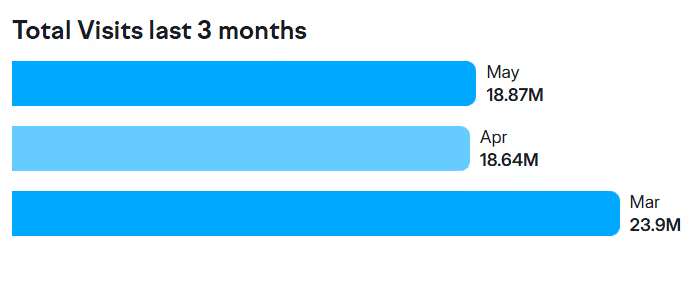
Redbubble is a marketplace where you upload designs and set a margin, and shoppers find your products on their own. You don't need to drive traffic or handle marketing - you get access to Redbubble's 18 million+ monthly visitors.
Printful works as a fulfillment partner. You connect it to your store on Shopify, Etsy, Amazon, WooCommerce, or your own website. When someone orders, Printful prints and ships - but you must bring the traffic and build the customer base.
This difference affects everything else. Running a print-on-demand business on Redbubble means competing with every other seller inside the same marketplace. With a fulfillment partner, you don't face in-platform competition - but you need to master marketing.
The honest framing from our own seller data: the marketplace's "free traffic" is real but it caps you, because the customer belongs to the platform, not to you. The sellers we watch scale to six and seven figures all own their storefront and their customer list. The trade is harder work upfront for an asset that compounds.
Also Read:
Branding Capabilities
Printful gives you full branding flexibility. You can:
- Add custom labels inside shirts.
- Include branded package inserts.
- Print your logo on sleeves or tags.
Your customers get packages that look like they came straight from your company.
Redbubble keeps its branding on products:
- Your customers see Redbubble packaging, labels, and more.
- You're mostly making designs *for Redbubble*, not building your brand. The only freedom you get is putting your art on their products.
This matters more than most sellers realize, and we can quantify why. Brand recognition drives repeat purchases - and repeat purchases are where POD economics actually work, because you already paid to acquire that customer. Without branding control, you start from zero with every sale. It's also why packaging inserts exist as a product category at all: a branded insert in the box is the cheapest retention marketing in e-commerce. The Redbubble vs Printful branding comparison has a clear winner, and it's any model where the brand in the box is yours.
Also Read:
- Print-On-Demand vs Dropshipping: A Comparison
- Best Print-On-Demand Niches: How to Find Profitable Ideas
Pricing Comparison: Redbubble vs Printful
To see the true cost, you need to look deeper than base prices.
Printful shows you exactly what each item costs upfront:
- A black t-shirt ranges from $10 to $13.
- A ceramic mug can range from $6 to $8.
- Hoodies range from $20 to $25.
Redbubble hides its base costs until checkout, which can frustrate sellers. Based on typical profit margins:
- The black t-shirt base cost sits around $18.
- Mugs cost approximately $13.
- Hoodies run about $45.
With Printful, you set retail prices and keep everything above base cost. Redbubble lets you set a margin percentage but you can't control the final retail price. On pricing transparency and control, Printful wins this round.
One caution from our sales team before you crown a winner on price alone: base cost is the *least* interesting number in a provider comparison. As Sidas, our Head of Sales, puts it, what sellers should compare is "not just raw shipping data, but the full timeline from when an order is placed to when it lands at the customer's door - and how many quality checks happen along the way." A provider that's $1 cheaper per unit but ships the wrong size or takes ten working days door-to-door costs you far more in refunds, support tickets, and lost repeat buyers than it saves in base cost. Compare the order journey, then the price.
Also Read:
Product Range & Print Quality
The Redbubble vs Printful product comparison reveals a big gap in product range. More products mean more revenue paths and more ways to serve different customers.
Number of Products
Printful offers over 370 products across several categories - from embroidered hats and swimsuits to cosmetic bags and phone cases - and regularly adds new items.
Redbubble stocks around 80 products, focused on apparel, art prints, and stickers. It covers the basics well, but your options remain limited, which affects your ability to build complete product lines or seasonal collections.
A counterpoint worth knowing from our own catalog strategy: bigger isn't automatically better. We deliberately run a focused catalog (tech accessories, wall art, drinkware) because depth in a category - more case models, better materials, faster new-device support - beats breadth for sellers who niche down. Judge a catalog by how well it covers *your* niche, not by the headline product count.
Print Techniques Available
Printful supports five printing methods:
- Direct-to-garment (DTG)
- Direct-to-film (DTF)
- Sublimation
- Embroidery
- All-over-print (AOP)
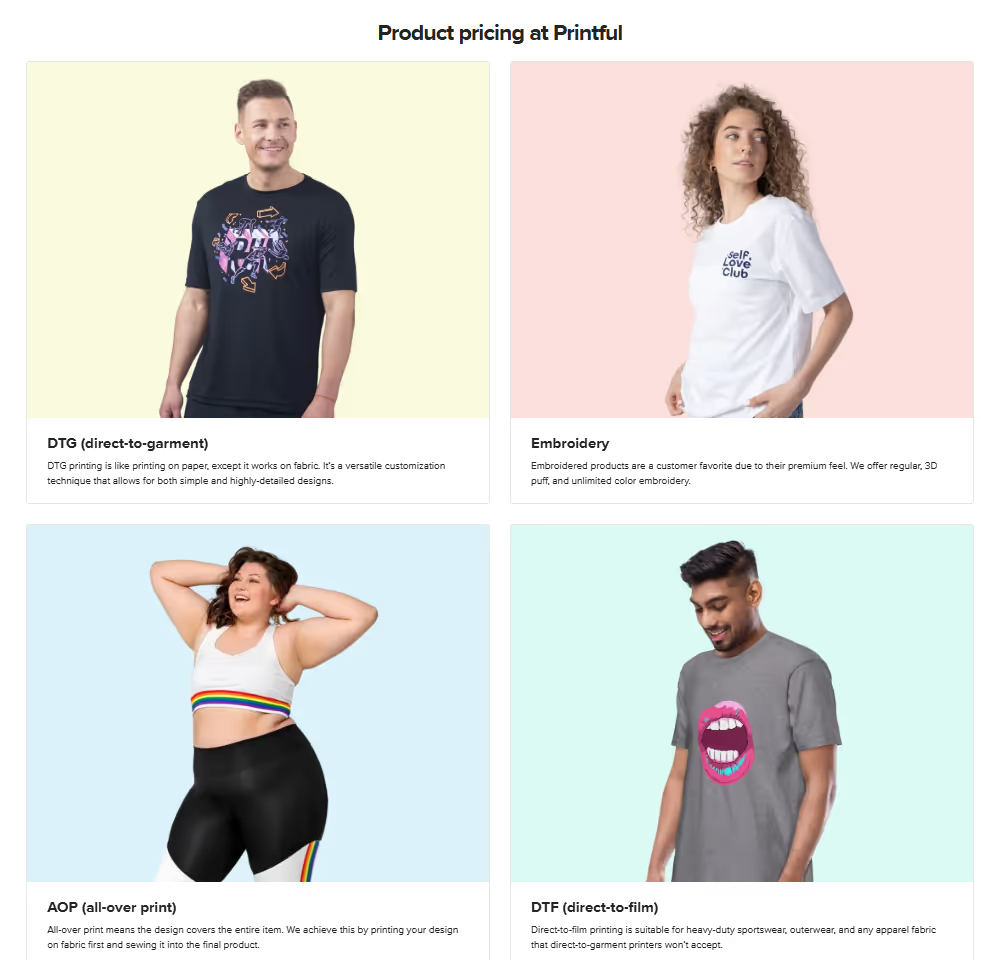
You can choose the best method for each design. Redbubble uses only DTG and sublimation. These work well for most designs, but you can't offer embroidered items or premium techniques.
Quality Control Standards
When comparing Redbubble vs Printful, you can't ignore product quality. Both keep good standards but handle problems differently. Printful provides photos before shipping and offers free reprints for flaws. Redbubble handles quality checks itself with no seller involvement - easy, but it stops you from enforcing your own brand standards.
Here's what our operations experience adds to this section: consistent quality isn't a policy, it's a production system. The most common cause of POD quality problems is variation - temperature, pressure, ink behavior, material coatings - which is why we standardize production settings, use only tested material combinations, and verify color with a spectrophotometer. When you evaluate *any* provider, ask how they prevent variation, not just how they fix defects after the fact. Prevention is what keeps one-star reviews from existing; reprints just apologize for them.
Also Read:
Pros & Cons at a Glance
To make a smart choice, understand the real trade-offs. Each platform is strong in different areas, so choose based on your business goals.
Printful's biggest pro is business control and scalability: you own customer relationships, control pricing, and build real brand value. The downside is you drive all traffic and handle customer service.
Redbubble's strengths are simplicity and instant market access: upload designs, set margins, and reach a large audience immediately. The cost is giving up control over pricing, branding, and customer relationships.
Experienced entrepreneurs can manage Printful's cons - starting a Shopify store and building marketing skills pays off later. For designers testing ideas, Redbubble's limits may not matter initially. The choice depends on whether you want to build a business or just sell some designs.
Also Read:
Printful vs Redbubble: Who Should Use Which?
Your choice depends on your business goals and how much time you have. Each serves different sellers at different stages.
Choose Printful If You...
- Want to build a distinct brand and a loyal customer base.
- Need to connect with existing sales channels on ecommerce platforms.
- Want maximum profit and pricing control - clear base costs and markup options help you earn more per sale.
- Want to diversify income and rely less on a single platform's algorithm.
Choose Redbubble If You...
- Want quick market access without store setup - upload-and-sell works well for testing design ideas.
- Prefer focusing only on designs, not business management.
- Have limited time for marketing - 18M+ monthly visitors provide exposure without paid ads.
- Want to test the print-on-demand waters before committing to a business.
The Third Option Most Comparisons Skip
If you've decided you're building a brand (the Printful side of this comparison), the next question isn't settled - because fulfillment partners differ enormously on the things this article said matter most: the full order journey, quality prevention, and support when something goes wrong.
That's where we'll briefly make our own case, with the numbers we publish to every prospective seller. What surprises sellers most when they switch to Podbase from the big providers, in our CEO's words, is customer support: when a supplier gets "too big to care," response times slow and problems compound. Every Podbase client gets a dedicated account manager - not a ticket queue - and the operational results are measurable: our average production-to-ship time is about 23 hours, sellers who migrated saw roughly 15% more customer reviews and 30% fewer order-issue support tickets, and around 98% of sellers who work with us for three months keep growing their share of orders with us. Pricing runs 10-15% better margins than major competitors across most of our categories.
We're specialized - tech accessories, wall art, and drinkware - not a 370-product generalist. If your brand lives in those niches, that focus is exactly the point. See the full Podbase vs Redbubble comparison, or compare migrating to Podbase if you're already selling elsewhere.
Also Read:
- Part-Time Business Ideas That Work
- Smart Ways to Make Money From Your Phone
- Podbase vs Redbubble: Best POD Platform
FAQ
1. What is the main difference between Redbubble and Printful?
They are different business models. Redbubble is a marketplace: you upload designs, shoppers find them through Redbubble's 18M+ monthly visitors, and Redbubble controls pricing, packaging, and the customer relationship. Printful is a fulfillment service: you connect it to your own store (Shopify, Etsy, WooCommerce, Amazon), control branding and prices, and bring your own traffic.
2. Is Printful or Redbubble cheaper?
Printful has lower, transparent base costs: black t-shirts run $10-13 vs ~$18 on Redbubble, mugs $6-8 vs ~$13, hoodies $20-25 vs ~$45 - and Printful gives full retail-price control while Redbubble only lets you set a margin percentage. But base cost is the least decisive number: the full order journey (production time plus shipping, and quality checks) determines real profitability.
3. Which is better for building a brand, Redbubble or Printful?
Printful, decisively. It supports custom labels, branded inserts, and your own storefront, so customers buy from your brand. On Redbubble, customers see Redbubble's packaging and branding, and the customer relationship belongs to the marketplace - every sale starts from zero. Brand ownership is what drives repeat purchases.
4. What should I compare when choosing a print-on-demand fulfillment partner?
Compare the full order journey, not just base price: total time from order to delivery (production + shipping), how the provider prevents quality variation (standardized settings, tested materials, color verification), and support depth when something goes wrong. Podbase data shows these factors drive outcomes - sellers who switched to a quality-first provider saw 15% more customer reviews and 30% fewer order-issue support tickets.
5. Are there alternatives to both Redbubble and Printful?
Yes. If you're building a brand, specialized fulfillment providers compete with Printful on the factors that matter most. Podbase, for example, focuses on tech accessories, wall art, and drinkware, ships orders in about 23 hours on average, assigns every client a dedicated account manager, and prices at 10-15% better margins than major competitors in its categories.

Saulius Meilutis is the CEO of Podbase, helping creators and entrepreneurs monetize their ideas with print-on-demand. He shares insights on eCommerce, growth, and building lean online businesses.

.avif)



.avif)
.avif)
.avif)
.avif)
.avif)
.avif)

.avif)


.avif)
.avif)

.avif)

.avif)
.avif)