

UV Printing for POD Sellers: What Podbase Data Shows
- You almost certainly don't need to buy a UV printer. Most "what is UV printing" articles online frame it as an equipment-buying decision ($3,000–$20,000+). For 99% of POD sellers, that's the wrong question. The right question is: can my POD supplier produce UV-quality output reliably? Podbase runs UV printing, sublimation, and heat press as production methods — sellers don't buy any of the equipment.
- UV printing's biggest hidden risk is color drift between batches. Podbase tests every batch with a spectrophotometer and uses custom color formulation — the same process we used to fix the color reproduction issues Omnisend had with their B2B branded merchandise. Suppliers that don't color-profile produce visibly inconsistent output across runs.
- Material spec separates a real UV-quality phone case from a knock-off. Podbase Tough Cases use dual-layer polycarbonate + thermoplastic polyurethane construction. Most competitors use cheaper single-layer thermoplastic polyurethane or low-grade polycarbonate — UV ink looks fine on day one, but the case fails first.
UV printing is a manufacturing capability, not a product you buy. Sell UV-printed POD products on Podbase →
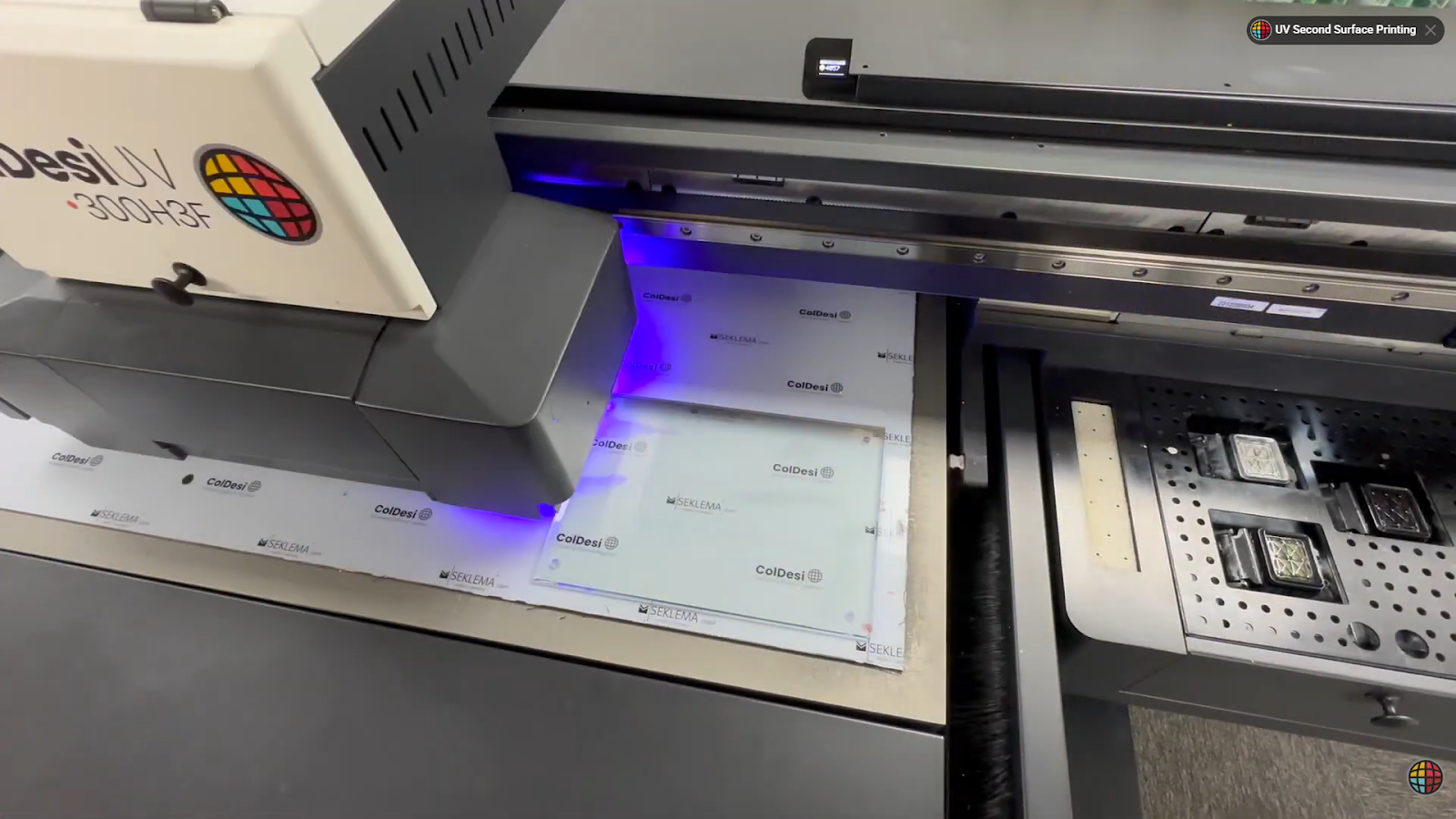
UV printing uses special inks that cure instantly under ultraviolet (UV) light. You've likely seen the results: phone cases with raised designs, metal signs with bold colors, wood products with a textured finish.
Unlike traditional inks that dry with heat or air, UV inks cure immediately. This speeds up production and lets manufacturers print on materials that nothing else handles cleanly — non-porous surfaces like plastic, metal, glass, and wood.
If you sell custom products online, UV printing is one of the production methods that makes your catalog possible. The catch is that almost every article on this topic frames UV printing as something you, the seller, would buy equipment for. For 99% of print-on-demand sellers, that's the wrong frame entirely. The right frame is: how do I evaluate the UV printing capability of the supplier I'm already paying to fulfill my orders? That's what this guide is actually about.
Defining UV Printing: The Technology Behind Instant-Cure Ink
UV printing is a digital printing method that uses ultraviolet light to cure ink. The ink contains compounds called photoinitiators, which harden the moment they're exposed to UV light.
Traditional printing relies on heat or air to dry ink, which can take minutes or even hours. UV printing removes that delay. The ink cures in seconds under UV LED lamps.
The functional difference is where the ink ends up. Regular ink absorbs into the surface and dries slowly. UV ink stays on top and hardens right away. That's what creates the raised, durable finish that resists scratches and moisture — and it's also why UV is the production method of choice for most POD products you can't squeeze into sublimation or DTG.
Most modern UV printers use UV LED technology. LED lights use less energy, produce less heat, and protect delicate materials. As a category, UV LED printer demand is growing fast: industry analysts project the UV LED printer market to grow from $2.87 billion in 2025 to $7.26 billion by 2035, a CAGR of about 9.7%. The reason is simple — customization is the dominant trend in physical goods, and UV is one of the few methods that prints customization onto a phone case, a wood plaque, and a glass tumbler from the same machine.
Inside the Podbase production line, UV printing sits alongside two other core methods. As Ieva, Podbase's Manufacturing & Operations Coordinator, puts it: "We have sublimation — when the ink turns into gas and becomes part of the material. There is also UV printing — ink is sprayed on an object and instantly cured by UV light. And there is also a Heat Press which uses heat and pressure to transfer designs." Each method serves a different material class. UV is the one that handles phone cases, hard cases, and rigid surfaces.
How UV Printing Works (The Step-by-Step Process)
UV printing follows a four-step process. Most articles stop at step four. We'll go further, because the steps that matter operationally are the ones that happen between the four obvious ones — and that's where good suppliers separate from bad ones.
Step 1: Preparation
The surface is cleaned and placed onto the printer bed. The material must be flat and secured. Most UV printers have adjustable beds that hold different thicknesses. The design file is then uploaded to the printer software.
What the article rarely mentions: this is where most quality problems originate. If the file isn't submitted in CMYK at high resolution, on-screen colors and on-product colors will drift. Inside Podbase, we've seen this exact issue surface repeatedly — which is why "the quality is a collaborative process," as Ieva notes. "The most accurate results are achieved when designs are submitted in high resolution and in the CMYK color space, which allows the printed products to match the original design that we see on the screen."
Step 2: Ink Application
The print head moves across the surface and applies UV ink. It works like an inkjet printer, but with thicker, specialized ink. Multiple colors print in one pass. Some printers add white ink as a base layer for dark materials.
Step 3: Instant Curing
UV LED lights follow immediately behind the print head. They cure the ink the moment it hits the surface, usually in under a second. The ink hardens instantly and doesn't smudge or run.
Step 4: Final Product
The item is ready immediately after printing. There's no drying time or post-processing. Products can be packed and shipped right away — which is why suppliers running UV well can compress production-to-ship times dramatically. Podbase's overall production-to-ship average across all categories currently sits at 23 hours, a 31% improvement vs. the previous six months. During the 2025 winter peak, while several major POD providers were quoting lead times of more than a week, we held a 48-hour average. That speed is downstream of UV's instant-cure property combined with proper production calibration.
The fifth step nobody talks about: color verification.
Between step 4 and shipping, a serious POD supplier color-checks the output. At Podbase, that means a spectrophotometer reading on the product itself — a tool that, in Ieva's words, "lets you instantly see the exact color code in real life, the same way you can move your cursor onto a specific color on screen." Suppliers that skip this step run the risk of color drift between batches, especially under the variations in temperature, pressure, ink behavior and material coatings that creep into any production line over time. We learned this the hard way on a 90-unit B2B reorder: small color-profile changes during a manufacturing technical update made the bulk run look noticeably different from the seller's initial sample. The recovery was hands-on (we sent fresh sample-by-sample with closely tracked profiles until we nailed it), and the seller eventually placed a 319-unit follow-up — but the lesson stuck. UV printing is fast, but color consistency is a discipline, not a default.
Also Read:
- How to Make a Website to Sell Stuff (Without Any Inventory)
- Proven Secret Websites To Make Money Online
Pros of UV Printing
UV printing has clear advantages for print-on-demand sellers. Here's what actually matters in practice.
Unmatched Versatility on Hard Goods
UV printing works on most hard surfaces — glass, metal, wood, ceramic, acrylic, hard plastics. That makes products possible that other printing methods can't handle.
The contrast with other methods is sharp. Sublimation only works on coated polymer items or polyester fabric. DTG is limited to cotton and cotton-blend fabrics. UV removes those barriers and opens up entire product categories — phone cases, signs, coasters, tech accessories — using a single production method.
Inside the Podbase catalog, UV is what makes the tech accessories line possible. It's also what's powering our active expansion into wall art and drinkware. Saulius Meilutis, Podbase's CEO, frames the strategy directly: "Podbase in the next 12 months will become from a single-category supplier like tech accessories, a provider of three strong categories: tech accessories, wall art, drinkware." UV is the production thread that runs through all three.
Superior Durability and Water Resistance
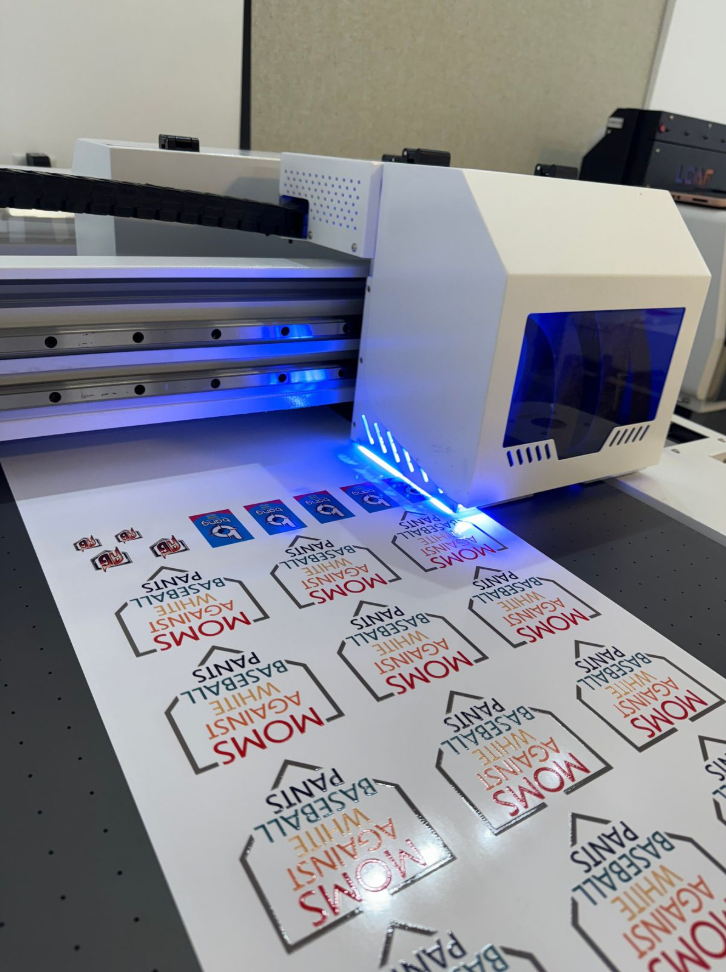
The cured ink resists scratches, fading, and water damage. UV ink hardens into a solid layer that bonds with the surface — designs stay bright even with frequent handling or moisture exposure.
This matters more on some products than others. Phone cases get tossed around in pockets and bags every day. Outdoor signs face sun, rain and heat. Drinkware survives dishwashers (or it doesn't — and you find out fast). UV-printed items typically outlast equivalents made with cheaper methods, which is why durable-niche sellers gravitate to UV. Fewer returns, better reviews.
But — and this is the operational reality every "UV is durable" article skips — UV ink durability is only as good as the substrate underneath it. A beautifully UV-printed phone case made on a cheap shell will still crack on the third drop. Podbase Tough Cases use dual-layer polycarbonate plus thermoplastic polyurethane, which is what enables the protection claim. Snap cases, clear cases and MacBook cases use single-layer polycarbonate. As Ieva explains: "Most competitors use cheaper single-layer thermoplastic polyurethane or low-grade polycarbonate, which do not ensure durability and quality." The UV print is the visible part. The case underneath is what determines whether the ink is still on something usable in 18 months.
The Power of Textured and Embossed Effects
UV (and spot UV) printing lets ink be layered, creating raised, tactile designs. You can produce textures that feel like leather, raised 3D logos, or selectively glossy elements on otherwise matte surfaces. These effects help products stand out online — and on photos, they're the single most "premium-looking" detail a POD seller can add at zero design cost.
So what is spot UV printing? It's a technique that applies glossy, raised ink to specific design areas. For example, a matte background paired with a shiny raised logo creates a premium look without extra tools or steps. Within the Podbase production line, this is one of the design choices we encourage sellers to test in their first wave of products — texture has an outsized impact on perceived value at almost no additional unit cost.
Production Speed (the unsung benefit)
Most UV-printing articles list speed as an afterthought. For POD sellers, it's actually one of the most important benefits.
Inside Podbase, an average seller publishes a single product in 2–5 minutes, including loading times. Power users with pre-formatted designs trim that to 1–2 minutes. Once an order is placed, our overall production-to-ship time averages 23 hours. UV's instant-cure step is a significant contributor — without it, the same workflow would have to bake in drying time. As a result, Podbase's average POD onboarding time has dropped from three months to under one month over the last cycle (a roughly 3x speedup). UV printing is part of the infrastructure that makes that timeline real.
Cons of UV Printing
UV printing has limitations. Most online articles describe these as if you, the reader, are evaluating whether to buy a UV printer for your garage. For 99% of POD sellers, that framing is wrong. Below, we cover the actual cons of UV printing — the ones that affect you whether your supplier owns the equipment or you do.
Higher Equipment and Setup Costs (Mostly Not Your Problem)
UV printers cost far more than standard inkjet or DTG machines. Entry-level models start around $3,000–$5,000. Professional-grade machines run $20,000+. UV ink itself costs more than regular ink. UV printing also requires proper ventilation — the curing process produces fumes, so airflow systems are part of the setup.
For POD sellers, this is almost entirely a non-issue. You don't buy the printer. You partner with a manufacturer that already has it, runs it, color-profiles it, and ventilates it. The economics flip from "can I afford a $20,000 machine?" to "is my margin healthy on UV-printed SKUs from my supplier?" — which is a much easier question. Podbase pricing across hard-good categories sits at roughly 10–15% better margins than competitors, with certain products reaching up to 20% better margins, because we own the manufacturing economics.
The "high cost" framing is mostly a problem for in-house printers, sign shops, and full-stack production companies. If that's not you, skip the equipment debate and focus on supplier capability.
Limited Effectiveness on Soft or Porous Materials
UV printing works best on hard, smooth surfaces. It performs poorly on fabric, uncoated paper, and porous materials, because the ink sits on top instead of absorbing. The result on fabric specifically is a stiff, plastic-like feel — not the soft hand customers expect from apparel.
If you want to sell cotton shirts or canvas bags, UV printing isn't your method. DTG or sublimation handles those better, and a real POD supplier offers all three under one roof. At Podbase, that's exactly the setup — UV for hard goods, sublimation for polymer-coated items and polyester fabric, heat press for transfer-style applications. The article's framing should not be "UV vs. DTG vs. sublimation, pick one." It should be "UV plus DTG plus sublimation, in one supplier, picked by the product."
Design Limitations on Curved or Irregular Surfaces
UV printers work best on flat surfaces. Printing on curved items like bottles or rounded cases requires specialized rigs. Some UV setups can't handle thick or oddly shaped objects at all.
This is the one con that genuinely affects POD sellers, because it affects what you can offer. The fix is the same as everything else in this section: pick a supplier that has invested in the right rigs and calibrated jigs for the curved categories you want to sell. Inside Podbase, this is where significant operational investment happens. Tough phone cases, MacBook cases, mug curvature, and laptop sleeve geometry each have their own production setups. New device launches (iPhone, Samsung) trigger weeks of upstream R&D — researching rumored device specs, prepping raw material, testing manufacturing fit — before products go live for sellers. As our Head of Product Development describes it: "We usually have the materials and user interface ready a couple of weeks before the device launch. It helps us stay competitive in the POD field, because our users can also prepare their stores for the device launch before it happens and be proactive rather than reactive."
The Con Almost Every Article Misses: Color Drift Between Batches
Here's the operational risk that most "what is UV printing" articles never mention. UV ink chemistry interacts with substrate, temperature, pressure and machine calibration. Suppliers that don't actively color-profile their output produce visibly inconsistent batches — the customer's first order looks great, the reorder looks "off," and the seller eats the support ticket.
At Podbase, this is why every batch goes through spectrophotometer-based color verification. It's also why our recovery process for the 90-unit B2B order (described above) became a defining moment in the manufacturing playbook — catching drift early is a workflow problem, preventing drift is an instrumentation problem. As Ieva notes: "Podbase reduces this risk by standardizing production settings and materials so only tested and stable combinations are used."
If you're evaluating a UV printing supplier, ask them this question: "How do you color-verify between batches?" If the answer is "we eyeball it," walk away.
Goods to Sell with UV Printing
UV printing works well for specific product types. Here are three profitable categories worth building around — ranked by what we've seen perform on Podbase seller catalogs.
Custom Phone and Tech Cases
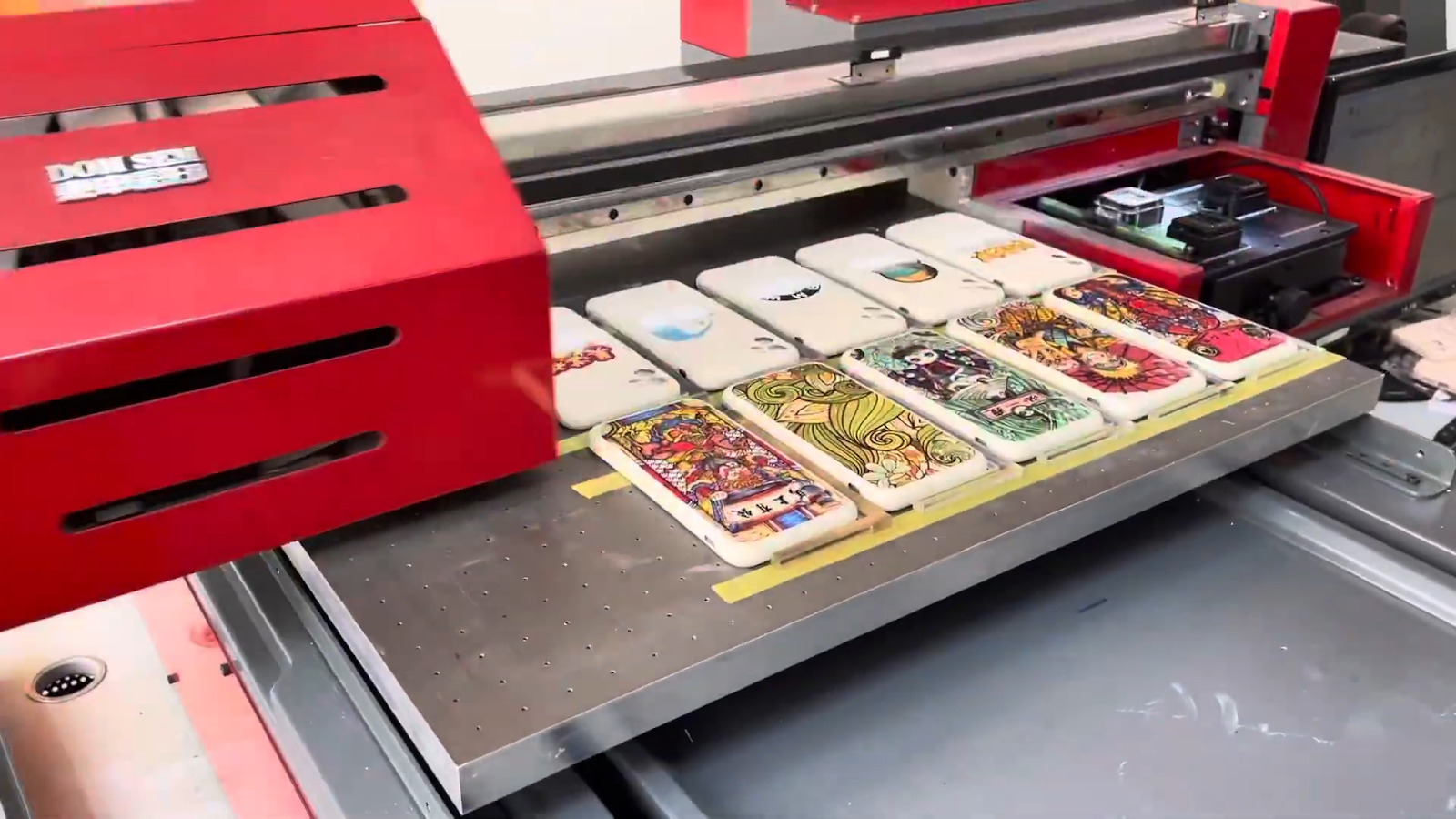
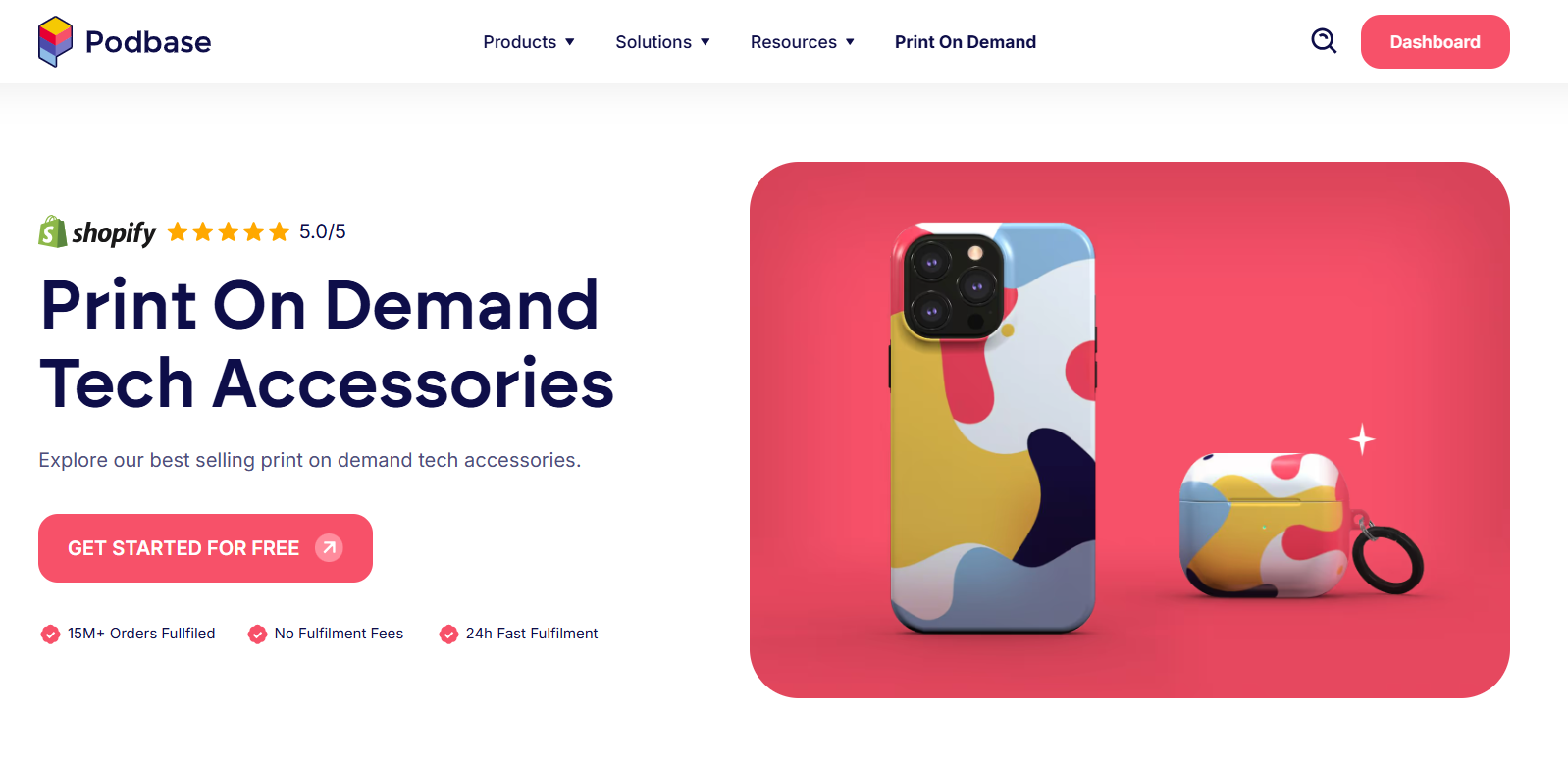
These are hard plastic, wood, or metal cases for phones, tablets and AirPods. UV ink prints directly onto the case material, allowing full-color designs with raised textures.
The market math is strong. Per Podbase's phone case sales statistics, the global phone case market is projected to roughly double to $41.4 billion by 2030, 68% of smartphone owners use a case, and 2 in 5 Americans replace phone accessories every six months. Pair that replacement frequency with UV's design flexibility and you get the highest-conversion category in the POD playbook.
Phone cases sell consistently because people replace them often, and UV gives sellers full-color designs, edge-to-edge coverage, raised logos and fade-resistant durability. As Saulius Meilutis puts it: "On average, every two years people tend to renew their phone, so they buy a new device. With a new device, you also start looking for different design cases for your current device to match different outfits and style choices. The case market started booming because you do not only wait for two years to buy a new device, but you also started looking for different design cases for your current device."
Operational warning: iPhone 17 cutouts are shaped differently than Samsung S25 cutouts. New sellers regularly design on a single device model and assume it translates across the catalog. It doesn't. Always proof on at least three device variants before publishing — UV-printed cases are some of the most expensive units to remake when a cutout clips a logo.
Best For: Sellers targeting gift buyers, personal brands, and corporate clients ordering bulk logo cases.
Personalized Wood and Acrylic Signs
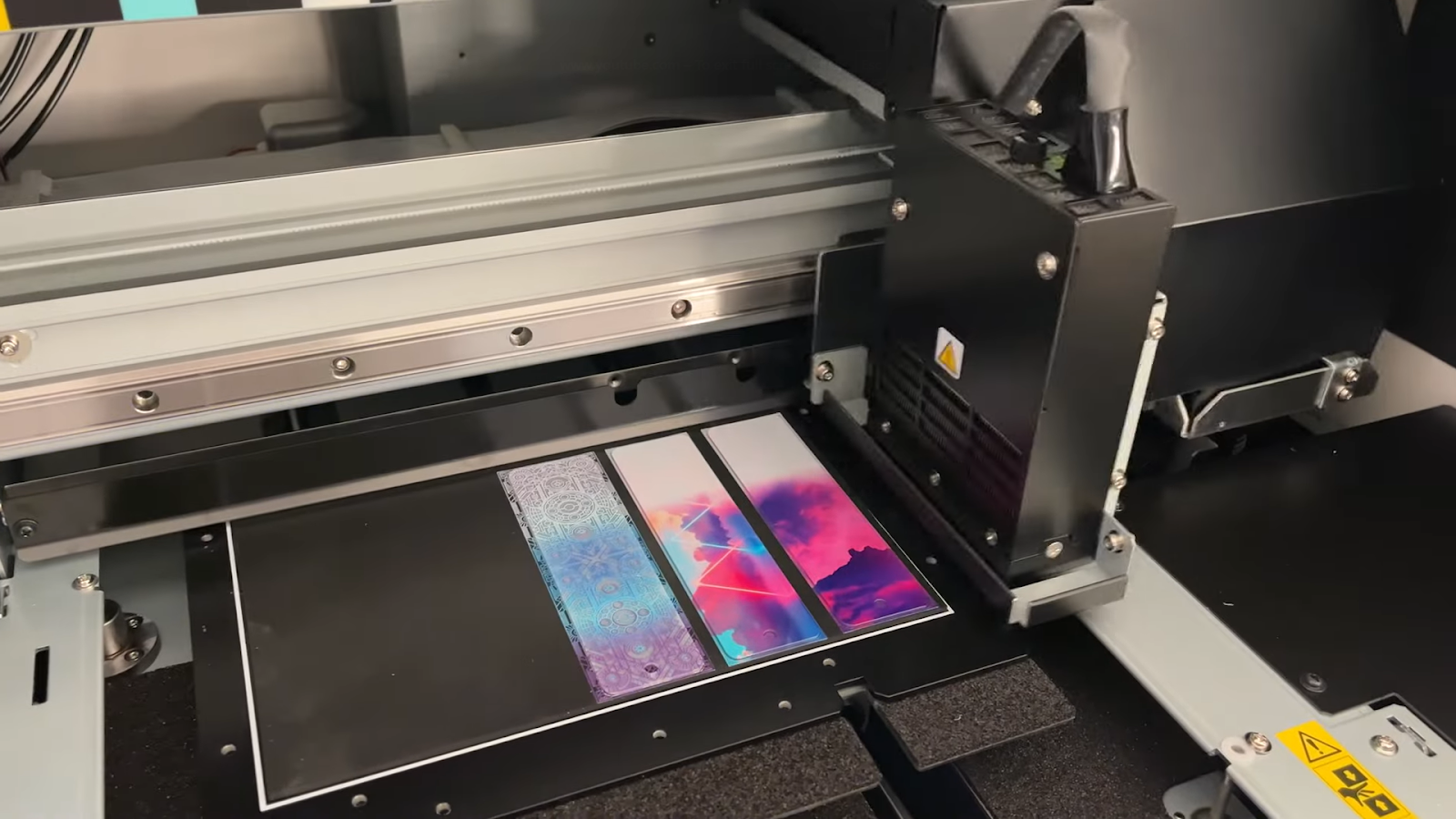
Small desk signs, plaques, and custom coasters. Names, quotes, dates, or business logos UV-printed on natural or painted surfaces.
Wood signs create a warm, handcrafted look that fits gift and home decor markets. Acrylic signs feel clean and modern, ideal for offices and events. Wall art is currently in active expansion at Podbase — we recently refurbished the wall art category specifically because so many of our digital-artist customers were sourcing wall pieces from a separate supplier. Sellers asked for matte and thicker paper options plus framing, and we built them. Saulius notes that "almost 65% of wall art sales are still offline, so there is a huge potential for digital web sales from ecommerce stores as it became really simple to produce and ship to the destination of the customer's home address."
Best For: Sellers in the wedding, corporate gift, and home decor niches. Small signs have low shipping costs and high markup potential.
Custom Metal and Glass Items
Dog tags, metal business card holders, promotional glassware. UV printing creates sharp designs that read as engraved without the cost of real engraving.
Metal and glass are perceived as premium materials in gifting and promotional contexts. UV printing adds a polished finish that stands out. These items work well for corporate gifts, awards, and special occasions — and corporate gifting is one of the fastest-growing segments at Podbase right now. Our Head of Sales: "Over the last six months we have seen almost three times as many B2B inquiries compared to the period before, and the conversations are consistently about finding the right quality level rather than the lowest price point. Companies want products that hold up, look good over time, and carry their brand story forward in a way that reflects well on them."
Best For: B2B sellers and those targeting the luxury gift market. Metal items are lightweight and ship easily; glass products often command higher prices.
Also Read:
UV Printing vs. DTG vs. Sublimation
Each printing method serves different product types. Here's how UV printing compares to other popular options — and why a serious POD supplier offers more than one.
UV Printing
UV printing works on hard, non-porous materials — wood, metal, plastic, glass. The ink cures instantly under UV light, so the print is ready right away. UV creates durable, raised designs and works on surfaces that other methods can't handle. It's ideal for rigid products, signs, and tech accessories.
Direct-to-Garment (DTG)
DTG printing works on cotton and cotton-blend fabrics. Ink soaks into the fibers, creating a soft print that feels natural on clothing. It's limited to apparel and soft textiles — it can't print on hard surfaces and performs poorly on most synthetic materials. DTG is the right call for t-shirts, hoodies, and fabric-based products.
Sublimation
Sublimation works on polymer-coated items or polyester fabric. Heat turns the ink into gas, which bonds with the material, producing a vibrant permanent print that won't crack or peel. It requires white or light-colored polyester materials, and doesn't work well on dark fabrics or non-coated surfaces. Sublimation is the right call for mugs, mouse pads, and polyester apparel.
Quick comparison:
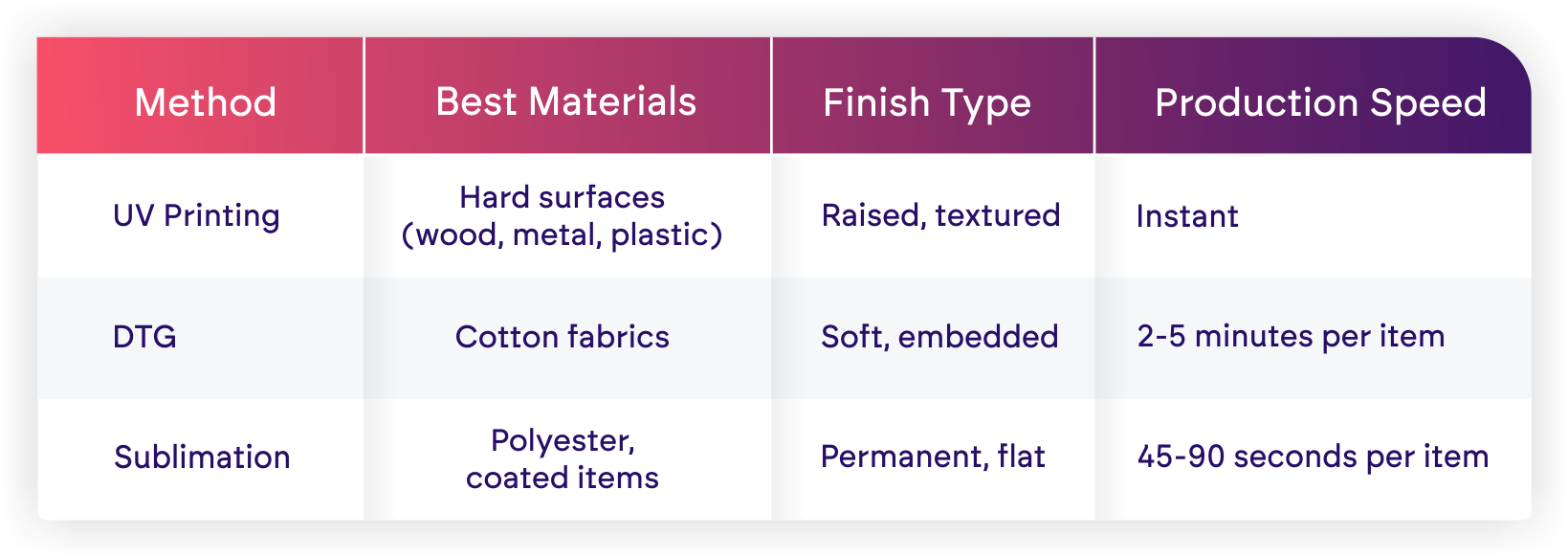
The honest takeaway: don't pick one method, pick a supplier with all three. Most POD sellers' catalogs span multiple material classes — apparel, hard goods, drinkware — and one print method can't serve them all. Podbase runs UV, sublimation, and heat press in production. The print method is selected per product, not per seller.
Also Read:
- DTF vs Sublimation: Which Printing Mode to Choose
- What Is Printing? Types, Purpose & Apparel Printing Explained
Maximizing Profit with UV Printed Products
Pricing and positioning decide whether UV's quality advantages translate into margin. Here's how to do it right.
Embrace Texture
Add raised details — layered ink, embossed effects, spot UV — wherever the product allows. Textured logos and patterns make products feel premium, and customers notice the difference the moment they touch them. Spot UV creates contrast between flat and glossy areas. A shiny raised logo on a flat phone case is one of the highest-impact zero-cost design upgrades available to POD sellers. Show close-up photos that highlight the texture in your listings — UV's strongest visual selling point is tactile, and product photography is where that translates to a buyer's brain.
Target Corporate and Bulk Orders
Businesses need branded items for events, employee gifts, and client appreciation. UV-printed products fit those needs precisely. Reach out to local businesses with samples. Offer discounts for bulk orders. Create package deals across product types.
The B2B opportunity is structural, not seasonal. As Saulius notes: "We expect the market for promotional products and B2B to grow by 20% in our case. Internal data from the beginning of 2026 compared to 2025 already provides historical evidence and a clear path toward that." One Podbase corporate client recently placed a 1,000-unit laptop-sleeve order for a single event because, as they framed it, "the cost-per-impression on a product that lasts five to ten years approaches zero." That's a UV-quality buyer mindset — and it's a separate revenue stream from individual gifters.
Price for Durability
Don't compete with cheap options. Position UV-printed items as investments that last. Explain how cured ink resists fading, scratches and water. Show before/after photos of items after heavy use. Offer fade-resistance and durability assurances that budget sellers can't match. Price at a premium vs. standard prints. The customers who value quality over the lowest unit price are exactly the ones UV products are made for.
There's also a quality-cost argument worth using directly with customers. "A slightly cheaper product that disappoints your customer generates a support ticket, a return, a negative review, and a lost repeat purchase," our Head of Sales explains. "A high-quality product that holds up for years becomes a brand story your customer tells on your behalf. The margin difference people obsess over at the start is almost never the number that matters most twelve months in."
Conclusion
UV printing gives print-on-demand sellers access to product categories nothing else can produce well — durable items on metal, wood, glass, and plastic, with instant cure speed that lets a 23-hour production-to-ship window actually be achievable. The instant-cure process means faster production, immediate shipping, and a real foundation for a same-week-fulfillment customer experience.
But the most important reframe in this entire article is the simple one: you don't need to buy a UV printer to use UV printing. You need a supplier that runs it well, color-profiles it consistently, ventilates it correctly, and has invested in the rigs that handle curved and irregular substrates. Pick the supplier, not the printer.
Start with one or two product types that fit your audience — phone cases and a small wood/acrylic sign category are the most data-backed entry points. Test designs that use texture and raised details. As you grow, focus on quality over volume.
The investment pays off when you attract customers who value durability and uniqueness — and when your supplier doesn't compromise on the things customers can't see (substrate, color profile, production calibration) but will absolutely notice 12 months later.
Ready to expand your product line? Sign up for Podbase — UV printing across phone cases, wall art, drinkware and more, with manufacturing speed, color verification and material spec built in.