Stuck at 100 orders and want to hit 1,000 fast? Break growth into clear milestones, then fix the bottlenecks that cap conversions. Start with product page upgrades that spotlight benefits, add trust signals like reviews and guarantees, and streamline mobile UX. Build an engine that compounds over time with buyer-intent content and internal links, then amplify winners with low-budget ad tests, retargeting, and creator-led UGC. Raise average order value (AOV) using bundles, one-click upsells, and limited-time offers, while improving repeat sales through fast shipping, easy returns, loyalty perks, and surprise gifts. Let data guide every move with analytics and A/B tests, scaling only what works. We've watched these exact moves take Podbase sellers from their first sale to seven figures - and we'll show you which ones actually move the needle, using our own fulfillment and seller data rather than generic advice.
Hitting your first 100 sales is no easy feat. Celebrate it. It's proof that your idea works, customers are interested, and you've built something worth buying.
But now you have to reach a new milestone: 1,000 orders.
In this guide, we'll show you how to increase sales from 100 to 1,000 orders in a practical, step-by-step way. Where most "how to increase sales" guides stop at generic tips, we'll back each move with data from our own production line and from the thousands of sellers who fulfill through Podbase - because what actually works at scale is rarely what the textbooks say.
Why You're Stuck at 100 Sales
Getting 100 sales is exciting, but does scaling to 1,000 feel like a stretch? Let's look at why sellers stall - and where our data says the real bottleneck sits.
Common Growth Bottlenecks
The usual suspects are low visibility, weak conversion rates (unclear product pages, missing trust signals, slow mobile experiences), too few repeat customers, and no data discipline. Those are all real.
But here's what we see from the inside that most guides miss: the single biggest thing separating stuck stores from scaling ones isn't a tactic - it's tempo. "Most sellers who churn go through what we call the guessing phase," says Sidas, Podbase's Head of Sales. "They spend months building the ideal store... Six months pass, the store has never gone live, and the initial drive that sparked the idea has quietly faded." The stores that break past 100 don't out-plan their competition. They out-ship it.
Beginner vs Scaling Strategies
The strategies that got you your first 100 sales - friends, family, small organic wins - won't carry you to 1,000. To go further, you need a repeatable way to attract and convert new customers. The good news: there's a measurable line you're trying to cross. By our numbers, a seller who places a sample order within the first two days of opening and has at least five products live within 30 days is already ahead of 80% of POD stores. Hit 10 sales and you're in the top 10%. Those aren't motivational figures - they're the benchmarks we see across our seller base.
Set Smart, Data-Driven Sales Goals
Clear goals help you track progress and steer your growth. But here's our contrarian take, and it matters for everything below.
Use the S.M.A.R.T. Goal Method - But Don't Let It Become Stalling
S.M.A.R.T. goals (Specific, Measurable, Achievable, Relevant, Time-bound) are useful. A vague "I want more sales" becomes "Increase monthly sales from 100 to 300 orders within six months by improving conversion rates." Trackable, clear, good.

The common assumption is that more planning equals more success. Our data says the opposite past a certain point. "The sellers who succeed do the opposite. They move fast and test first. They put three to five designs live, push their marketing hard on those specific products," says Sidas. "Most successful stores are up and running within two weeks." So set the goal - then treat speed of execution as the real metric. A goal you'll act on this week beats a perfect plan you'll launch "soon."
Define Milestones: 100 → 300 → 500 → 1,000
Aiming straight for 1,000 can feel overwhelming, so break the journey into 100, 300, 500, and finally 1,000. Tie each milestone to a concrete action, not just a number: at 300, your job is to find the one product and one channel that's working; at 500, it's to raise AOV; at 1,000, it's repeat purchases. One pattern we've watched play out: one seller went from zero to seven-figure annual revenue in 13 months selling phone cases - they launched with around ten designs, pushed hard into influencer marketing, and iterated quickly. They didn't wait for milestone three to start selling.
Know Your Ideal Customer Inside Out
You're not selling to everyone. You're selling to someone specific, and knowing that person's needs and pain points is the key to increasing sales.
Build a Buyer Persona
Your buyer persona is a simple profile of your ideal customer. It helps you market a product smarter because you know exactly who you're selling to. Look at age, interests, shopping habits, and reasons for buying.
For example, if you sell laptop cases, your buyer might be a professional who prioritizes durability and style. But the deeper insight from our customer data is that tech accessories aren't bought as protection anymore - they're bought as identity. "[Tech accessories] stopped being simply devices and became an extension of who we are as persons," says Justina, Podbase's Head of Product Development. "People are constantly looking for cases that suit their personalities, hobbies, interests and lifestyle." Build your persona around *what they want to express*, not just what they want to protect, and your conversion rates climb.
Use Surveys, Reviews, and Analytics
Use real insights, not guesses. Start with surveys and short polls about what customers like and what needs improvement. Study your reviews. Use tools like Google Analytics or Shopify dashboards to see where visitors come from, which pages they click, and where they drop off. One often-missed signal: phone-case and accessory buyers run on a roughly six-month replacement cycle - about 40% of Americans swap phone accessories every six months. If your analytics show a quiet period, it may be a re-engagement window, not a dead customer.
Also Read:
- How to Start a Shopify Store with Podbase: The Ultimate Guide for Success
- How To Make Phone Cases And Start Selling Online
Optimize Your Product Pages to Convert
Great product pages turn browsers into buyers. Here's how to increase online sales with simple page changes - and where our seller data shows the biggest lifts.
Clear Headlines, Benefits > Features
Visitors should instantly understand what you're selling and why it matters. Your headline should show the core benefit in seconds. Instead of "Custom Phone Cases," try "Protect Your Phone in Style with Personalized Designs."
Then sell the benefit, not the spec. Features tell customers what a product does; benefits explain why it matters to them. With personalized products, the benefit *is* the emotion. As our CEO puts it, a case has become "your personal billboard on your gadget" - and for digital artists, "their audience can have a piece of art which is not €1,000 for a custom framed canvas; it's €40-€60 for a case that has your favorite artist's design on it." Frame the page around that transformation and you're no longer competing on price.
Add Trust Signals: Reviews, Guarantees
Trust signals remove hesitation fast. Reviews matter more every year: BrightLocal's latest survey found 41% of consumers now "always" read reviews when evaluating a business - up sharply from 29% the year before - and the vast majority read reviews before buying at all.
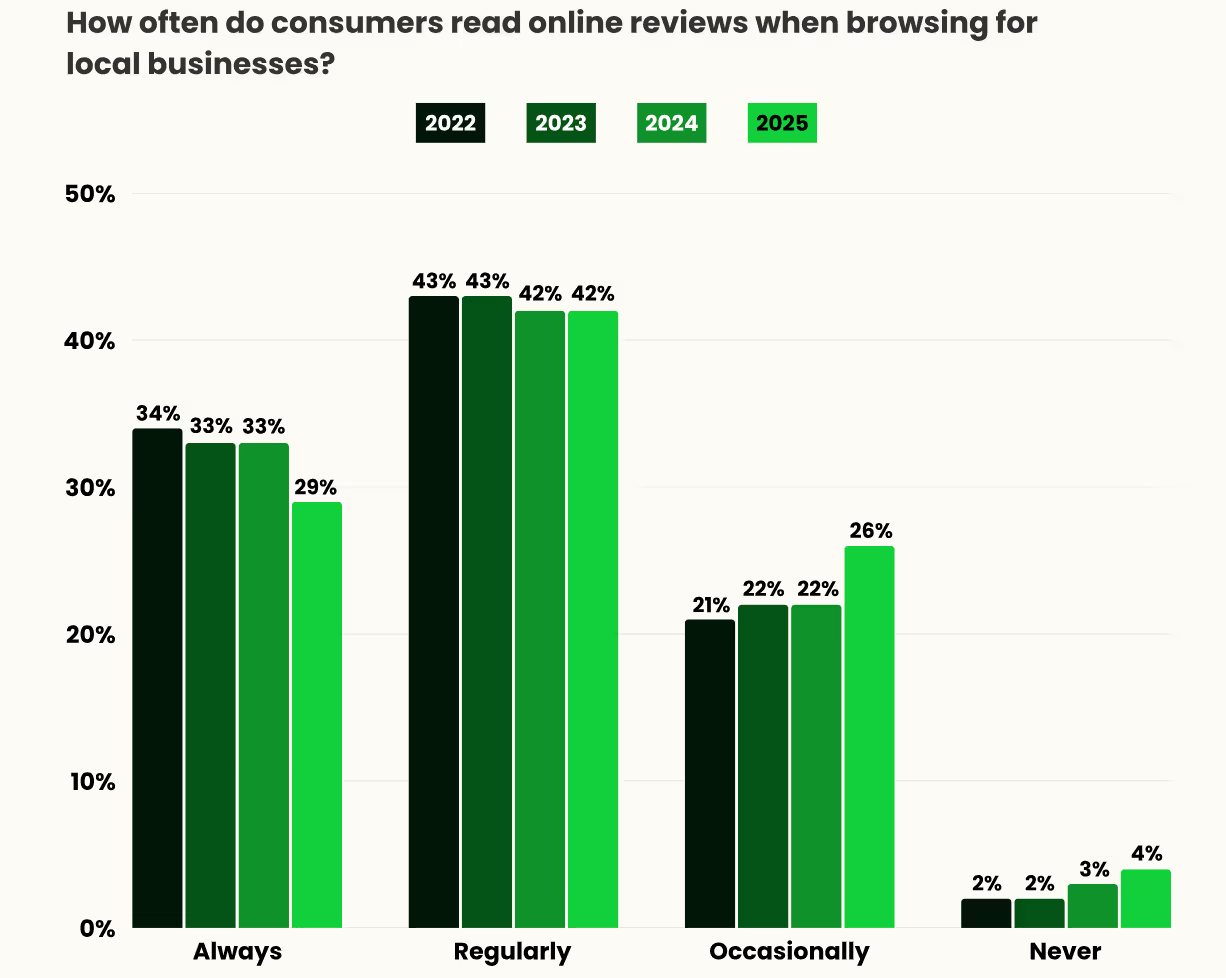
Highlight reviews directly on your product pages, especially ones that mention quality, fast shipping, or great design.
Guarantees like a "30-Day Money-Back Guarantee" or "Free Returns" encourage more people to complete the order, even if few ever use them. Add smaller signals too: secure-checkout badges, clear shipping details, influencer social proof, and user-generated content.
A trust factor most sellers overlook is *who fulfills the order*. When top sellers migrated to Podbase, we measured a 15% increase in customer reviews left and a 30% drop in support tickets tied to order issues. Fewer fulfillment problems doesn't just save you headaches - it directly compounds the review base that drives your next sale.
Improve Mobile Experience
Make your store mobile-friendly. Mobile is where the buying happens: global mobile-commerce sales are projected to reach roughly $2.5 trillion in 2025, close to 59% of all e-commerce, and the share keeps climbing toward an estimated 63% of e-commerce by the end of the decade. More shoppers are browsing and buying on their phones than on desktop.
Start with speed: compress images, simplify layouts, and test on different devices. Check navigation - menus and buttons should be easy to tap with a thumb, with clear product categories, big call-to-action buttons, and an easy checkout. Make product pages readable on small screens: bold headlines, short descriptions, and clear, zoomable images.
Also Read:
Master Sales Funnels and Lead Nurturing
A well-designed sales funnel guides prospects toward a purchase. Here's how to master the process and turn more leads into loyal customers.
Awareness → Interest → Decision → Action
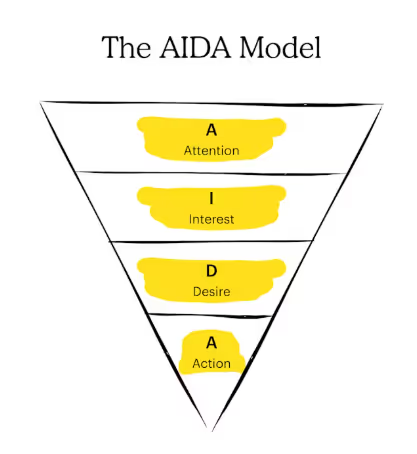
- Awareness: Someone first finds your brand - a social ad, a post, word of mouth. Your goal is reach.
- Interest: They explore - reading reviews, browsing products, joining your email list. Keep them engaged with relevant content.
- Decision: They compare options. Strong reviews, guarantees, and professional product pages win here.
- Action: They buy. A smooth, mobile-friendly checkout with one-click payment closes the gap.
One thing we'd add from our own conversion data: the Decision-to-Action step is where most revenue leaks, and it's also where the cheapest wins live (see one-click upsells below). Don't pour your whole budget into Awareness while a clunky checkout quietly loses buyers who already decided to pay.
Use Email Flows and Retargeting
Don't rely on one-time purchases. Use email flows - a welcome series to introduce your brand, plus cart-abandonment and post-purchase flows to recover lost sales and drive repeats. Retargeting works the same way outside the inbox: if someone visits and leaves, show them what they viewed via ads on Instagram, Facebook, or Google.
Leverage Content and SEO to Drive Traffic - With Eyes Open
Content and SEO can bring steady traffic. But we'd be doing you a disservice to repeat the old advice without a warning, because the rules changed in 2026.
The Honest Truth About SEO in 2026
The common assumption is "blog a lot, target keywords, and free traffic follows." That model is dying. "The old way of doing organic, where you just publish a lot, go broad, and expect traffic to keep coming the same way, is clearly not enough anymore," says Vytautas Mikaila, Podbase's CMO. "Right now the game is much more about relevance, usefulness, specificity, freshness." His blunter version: "Do not treat SEO like passive free traffic. It is not that anymore... Otherwise, you just become another page in the pile."
So if you're early and need sales *now*, know that "organic content for organic traffic is already more of an advanced-player tactic. It is not really a beginner game anymore," per our CMO. Treat SEO as a compounding asset you build alongside paid - not your first growth lever.
Blog About Customer Problems
When you do invest in content, solve customer problems instead of only describing products. Content that answers real questions attracts readers already interested in what you sell and earns rankings that generic product copy never will. The bar is higher now: every piece should connect to a real product, a real user need, and something only you can say.
Rank for Buying-Intent Keywords
Target the phrases customers use when they're close to buying. Brainstorm what someone types right before purchase, use free tools like Google Keyword Planner or Google autocomplete, then work those terms into headlines, product descriptions, and content naturally.
Use Internal Links to Relevant Podbase Articles
Internal links guide visitors to related content, keep them engaged, and reduce bounce. If you're writing about design tips, link to a piece on how to design ads with Canva. You can also link straight to products like laptop cases, tablet cases, and AirPod cases. For the data behind these tactics, see our print-on-demand statistics and phone case sales statistics.
Advertise Smarter, Not Harder
Running ads doesn't have to drain your budget. And here's where our data points you in a clear direction: don't diversify too early.
Concentrate Your Budget Before You Diversify
Conventional advice says spread across many channels. Our reality is more focused: 99% of Podbase sellers get the majority of their traffic from social-media ads. For a store moving from 100 to 1,000 orders, that means the winning move is usually to find one channel and one creative that works and pour fuel on it - not to thin your budget across five platforms.
Facebook/IG/Google Ads with Low-Budget Tests
Start small. Platforms like Facebook, Instagram, and Google let you run ads for a few dollars a day. Test three creatives, compare results after a few days, then scale budget toward the winner. The key is consistency: keep testing, refining, and scaling gradually.
Retargeting Campaigns
Show ads to people who already interacted with your brand - visited your site, clicked an ad, or added to cart. If someone browsed your custom laptop cases but didn't buy, a retargeting ad can put that exact product back in front of them. Adding free shipping or a customer review to the retargeting creative makes it even stronger.
UGC and Influencer Collaborations
User-generated content and influencer collaborations build trust faster than traditional ads because they come from real people, not your brand. Reposting UGC shows potential buyers that others already love your product. Influencer collaborations extend reach - and you don't need celebrities. Micro-influencers with engaged audiences are often more effective, and partnerships don't always cost cash: product exchanges or affiliate deals (commission on sales they generate) work well. This isn't theory for us - the seller who scaled to seven figures in 13 months did it primarily through influencer marketing on a tight set of designs.
Also Read:
- Social Media Advertising: How To Run Your First Ad Campaign
- How to Monetize Social Media: 15+ Ways to Turn Followers Into Income
Use Upsells, Bundles, and Scarcity to Raise AOV
Sometimes customers just need a little push - and raising average order value is the fastest way to grow revenue without finding a single new customer.
Limited-Time Offers
Customers hesitate even when they love a product. A countdown timer, flash sale, or "offer ends tonight" message creates urgency. You don't have to discount everything - tie urgency to limited availability instead. Shoppers are meaningfully more likely to commit when a product looks like it's selling out.
"Buy More, Save More" Bundles
Bundles lift order value. If you sell custom cases, offer a discount for buying two or three together, or build themed sets like a "Back-to-School Tech Pack" with a laptop case and an AirPod case. Bundles also lean into a powerful behavioral fact: 1 in 5 buyers will pay at least 20% more for a personalized product. When the bundle is customized to them, the discount isn't even the main draw - the personalization is.
One-Click Upsells at Checkout
Don't overlook checkout. This is where you can add a last-minute, frictionless offer - and it's the single highest-ROI lever we can point to with hard numbers. "You can add a simple button on the checkout page to add a screen protector when a customer is ordering a phone case," says our CEO. "The conversion rate from our internal data is usually 3 to 10 percent, so with a single button in the checkout, you can get 10 euros more profit." No new traffic, no extra ad cost - just more profit per order you were already getting. With base phone-case economics of roughly €10 cost to €35-60 sale price, a 3-10% attach rate at +€10 each is one of the cleanest margin gains in ecommerce.
Improve Customer Experience for Repeat Sales
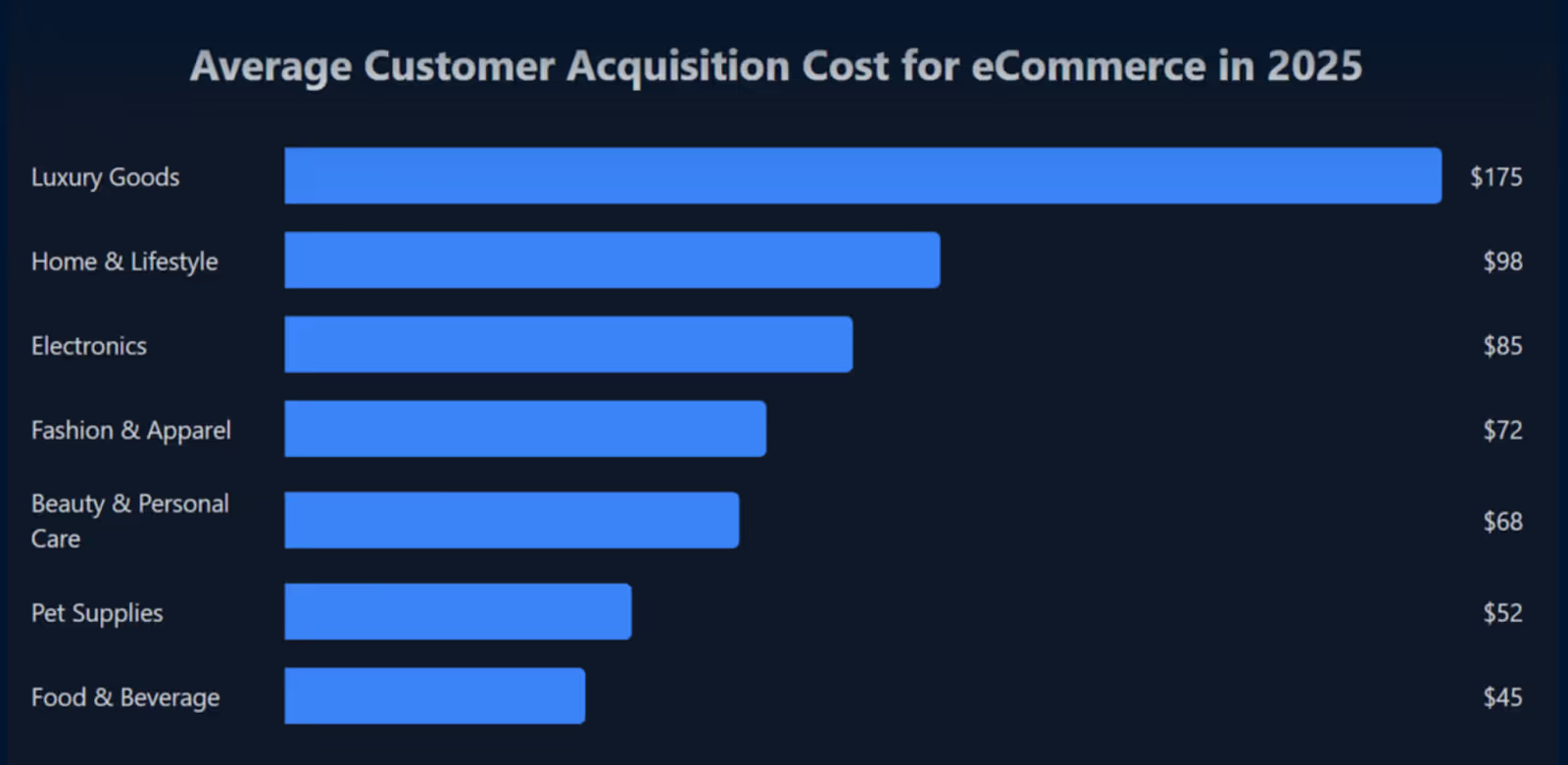
Happy customers come back, and repeat buyers are far cheaper than new ones - acquisition costs now routinely top $100 per customer. So customer experience isn't a "nice to have"; it's a growth channel.
Fast Shipping and Easy Returns
Shoppers increasingly expect speed, and delivery time is consistently one of the top drivers of satisfaction. Here's the nuance our Head of Sales insists on: "What sellers should be comparing is not just raw shipping data, but the full timeline from when an order is placed to when it lands at the customer's door - and how many quality checks happen along the way." That's where fulfillment quality compounds. Our current average production-to-ship time is 23 hours - a 31% improvement over the previous six months - with print taking 6-8 hours, assembly and packaging about 2 hours, and quality checks between every stage. A clear, hassle-free return policy matters just as much; make it easy to find. Highlight "Fast shipping" or "30-day free returns" badges right on your product pages.
Loyalty Programs and Surprise Gifts
Loyalty programs and surprise gifts turn one-time buyers into repeat shoppers. Use point systems, VIP tiers, or "buy X, get Y free" promotions to make people feel valued. Surprise gifts - a thank-you note or a discount code for the next purchase - add a personal touch that strengthens the relationship. Pair this with the accessory replacement cycle (~40% of buyers refresh every six months) and a well-timed loyalty email can land exactly when they're ready to buy again.
Use Data to Refine Your Strategy
Guessing isn't a strategy. Data tells you the truth about your customers.
A/B Test Everything
Test product headlines, email subject lines, checkout button colors - one variable at a time so you know what actually drove the change. Test ads, email campaigns, and loyalty offers too, letting real customer behavior guide your decisions.
Learn From What Didn't Work
Every campaign, launch, and ad experiment produces data. Analyzing failures - and customer feedback - is as valuable as celebrating wins. The sellers who scale treat each dead creative as a paid lesson, not a setback.
Summary
Scaling from 100 to 1,000 sales is absolutely possible, and we've walked through the moves that actually drive it. Start by diagnosing why you're stuck - and remember that, in our experience, the most common culprit isn't a missing tactic but a missing sense of urgency. Set SMART goals, then execute fast. Optimize product pages around identity and benefits, stack trust signals, and win on mobile. Concentrate your ad budget before diversifying. Raise AOV with bundles and one-click upsells (that single checkout button is the easiest €10 you'll make). Earn repeat sales with fast, quality fulfillment and loyalty perks. And let data - not guesses - decide what you scale.
If you want speed, quality, and flexible order sizes to test and scale without inventory risk, Podbase's print-on-demand cases and accessories let you launch promos and bundles, re-price freely, and fulfill in about a day - so the only limit on going from 100 to 1,000 is how fast you execute.
FAQ
1. How do I increase sales from 100 to 1,000 orders?
Break growth into milestones (100 to 300 to 500 to 1,000) and prioritize execution speed over planning. Podbase seller data shows that placing a sample order within 2 days of opening and publishing 5 products within 30 days already puts a store ahead of 80% of POD stores; reaching 10 sales puts it in the top 10%. From there, optimize product pages, raise average order value with upsells and bundles, and reinvest in the one ad channel that works.
2. What is the fastest way to increase average order value (AOV)?
Add a one-click upsell at checkout. Podbase internal data shows a screen-protector add-on offered alongside a phone case converts 3-10% of buyers, adding roughly 10 EUR of profit per order with no extra ad spend. Bundles and personalized add-ons compound this, since 1 in 5 buyers will pay at least 20% more for a customized product.
3. Does SEO still work for ecommerce stores in 2026?
It works, but the old publish-broadly-for-free-traffic model no longer does. Podbase's CMO notes that organic content is now an advanced-seller tactic focused on relevance, specificity, and freshness - content must connect to real products and real user needs. New stores should treat SEO as a compounding asset built alongside paid ads, not as the first growth lever.
4. How important is fast shipping for increasing repeat sales?
Very. Delivery speed is a top driver of satisfaction, but the full order-to-door timeline and quality checks matter more than raw shipping numbers. Podbase's average production-to-ship time is 23 hours - a 31% improvement over six months - with quality checks between every production stage. Faster, higher-quality fulfillment drove a measured 15% increase in reviews and a 30% drop in order-issue support tickets for sellers who migrated.
5. Why is my online store stuck at 100 sales?
Common causes are low visibility, weak product pages, missing trust signals, slow mobile UX, and too few repeat customers. But Podbase's most common observed cause is the guessing phase - sellers over-plan and delay launching. Stores that break past 100 ship and test quickly, typically getting up and running within two weeks.
6. Should I advertise on multiple channels to increase sales?
Not at first. 99% of Podbase sellers get the majority of their traffic from social-media ads. For a store scaling from 100 to 1,000 orders, it is usually more effective to concentrate budget on the one channel and creative that is working, then diversify later. Sellers with a community or mentor scale about 32% faster than solo operators.
7. How much can I make selling print-on-demand phone cases?
Phone cases are a high-margin POD product: a typical Podbase base cost of about 10 EUR sells for 35-60 EUR. Average POD seller margins run around 20%, up to 30% for top performers. One Podbase seller scaled from zero to seven-figure annual revenue in 13 months selling phone cases, launching with around ten designs and reinvesting in influencer marketing.
You can use point systems, VIP tiers, or “buy X, get Y free” promotions. These can make people feel valued and give them a reason to return.
Surprise gifts also add a personal touch and strengthen customer relationships. It can even be small surprises, like a thank-you note or discount code for their next purchase.
Use Data to Refine Your Strategy
Guessing what works isn’t an effective strategy for increasing sales. Luckily, data tells you the undeniable truth about your customers. Let’s see how you can analyze data to improve your sales.
A/B Test Everything
If you want to know how to increase sales, start testing everything, from headlines to post-sale campaigns.
Try different product headlines, email subject lines, or checkout button colors. Then, change just one variable at a time to see what drives conversions.
You can also test ads, email campaigns, and even loyalty program offers. This way, you’re letting actual customer behavior guide your decisions.
Learn From What Didn’t Work
Every campaign, product launch, or ad experiment provides data. And analyzing failures is a solid strategy on how to increase sales. You can also learn from customer feedback.
Summary
Scaling from 100 to 1,000 sales is possible. And we’ve explored different ways to approach this growth strategically.
Start by figuring out why your business is stuck right now. Then, implement several or all of the strategies we’ve highlighted to increase sales. You can set SMART goals, optimize your product pages, offer upsells, and more.
Don’t forget to always use data. Then, test and refine your strategy as you go.

Saulius Meilutis is the CEO of Podbase, helping creators and entrepreneurs monetize their ideas with print-on-demand. He shares insights on eCommerce, growth, and building lean online businesses.

.avif)









.avif)
.avif)
.avif)
.avif)
.avif)
.avif)

.avif)





.avif)

.avif)


.avif)

.avif)

.avif)