
This guide ranks the 10 best blogging platforms for making money in 2026. Success relies on choosing a platform with flexibility, strong SEO tools, and multiple monetization options. For long-term profit and full ownership, self-hosted WordPress and Ghost lead; beginner-friendly Wix and Squarespace offer ease and beautiful templates with more limited monetization. The biggest lever, though, isn't the platform - it's the income mix. The bloggers who earn most diversify beyond display ads and affiliates into products they *own*, like digital downloads and print-on-demand merchandise, where the margin is theirs to keep.
Starting a blog in 2026 is still one of the best ways to build a brand and earn online - but the rules have changed. Blogging gives you control over your content, and on the right platform a blog can grow into a steady business through display ads, affiliate products, courses, or your own merchandise.
One honest caveat before the list, from someone who runs content for a living. Our CMO, Vytautas Mikaila, puts it plainly: "Organic content for organic traffic is already more of an advanced-player and advanced-seller tactic. It is not really a beginner game anymore." After the 2026 search updates, "the game is much more about relevance, usefulness, specificity, freshness" - not publishing volume. So choose a platform that supports your goals, but go in knowing the platform is the easy part; differentiated content and owned revenue are what actually pay.
What Makes a Blogging Platform Profitable?
The best blogging platforms to make money share these features:
- Ease of monetization: Support for ads, affiliate links, and - crucially - your own digital or physical product sales. The easier it is to add income streams, the faster you earn.
- SEO and analytics tools: Built-in SEO and clear traffic reports so you can attract readers and see what content earns.
- Customization options: Design freedom to match your brand; overly restrictive free platforms can cap growth.
- Scalability: A platform that grows with your traffic and revenue instead of forcing a migration later.
- Ownership and control: The more control you have over your content and income streams, the more durable your earnings - which is exactly why owned products beat rented ad placements (more on that below).
Also Read:
10 Best Blogging Platforms to Make Money Easily
Here are our top picks. Choose the one that fits your goals.
1. WordPress.org

If you want full control over your content and income, self-hosted WordPress.org is the most flexible choice - you own everything, with thousands of SEO plugins to drive organic traffic and easy integration of POD tools like Podbase to sell branded products. You pick a host, install WordPress, and customize.
- Pricing: Software is free; you pay for hosting, a domain, and any premium themes or plugins.
- Best for: Serious bloggers who want maximum control and the widest monetization options.
2. WordPress.com
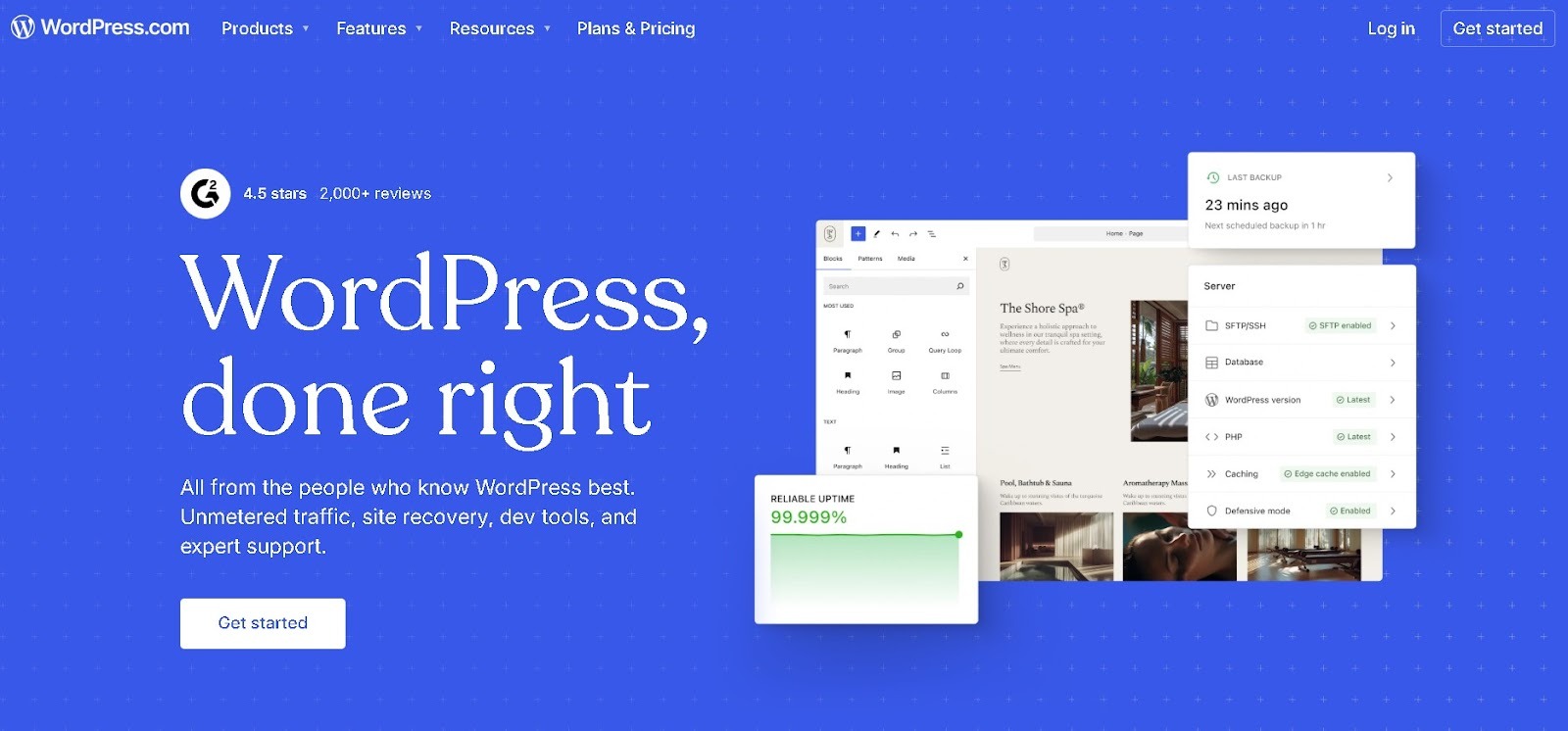
A hosted, simplified WordPress that removes the technical setup - no hosting to buy or security updates to manage. Sign up free, pick a theme, and upgrade as you grow to unlock custom domains and ad placements.
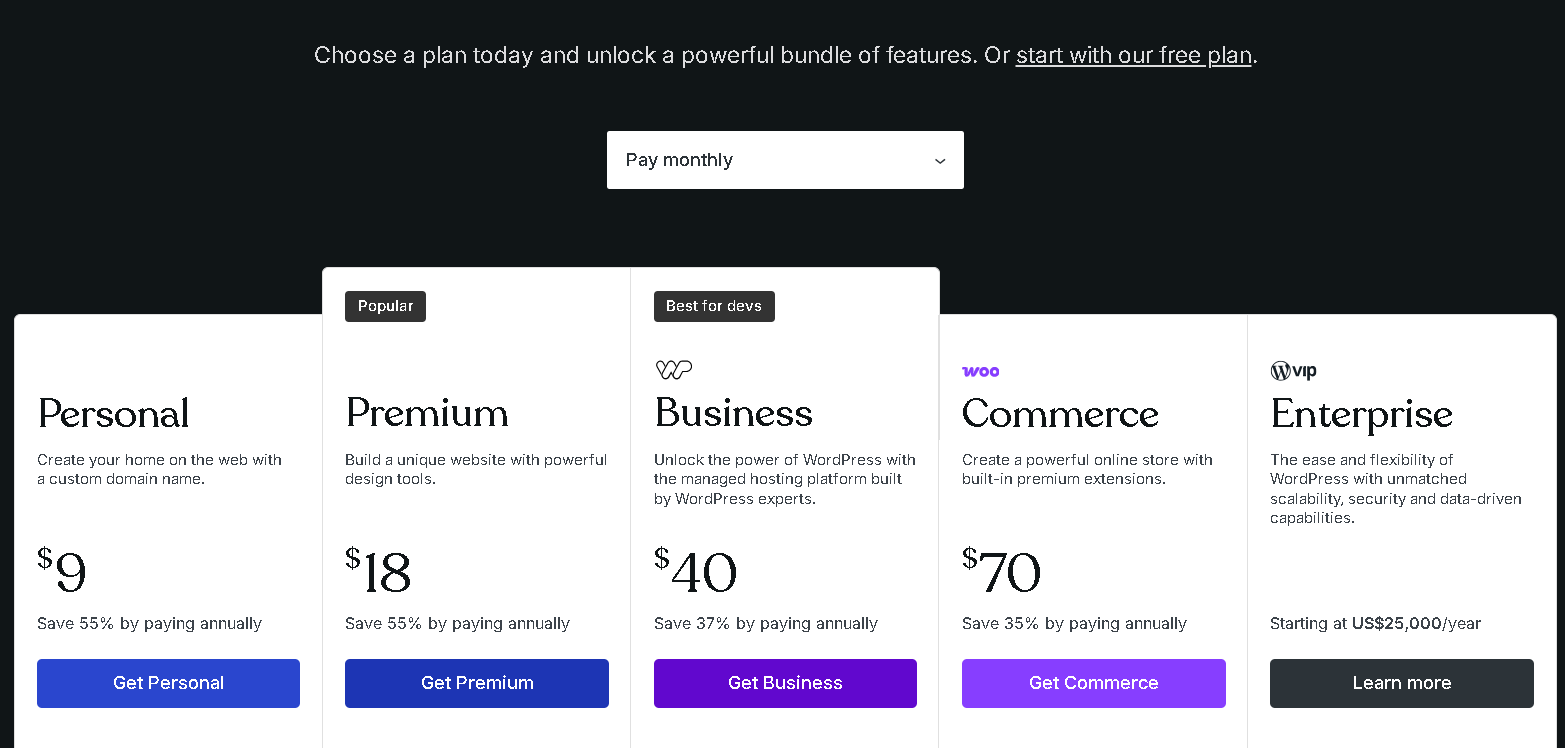
- Pricing (billed annually): Free · Personal $9/mo · Premium $18/mo · Business $40/mo · Commerce $70/mo.
- Best for: Beginners who want WordPress flexibility without the maintenance.
3. Wix
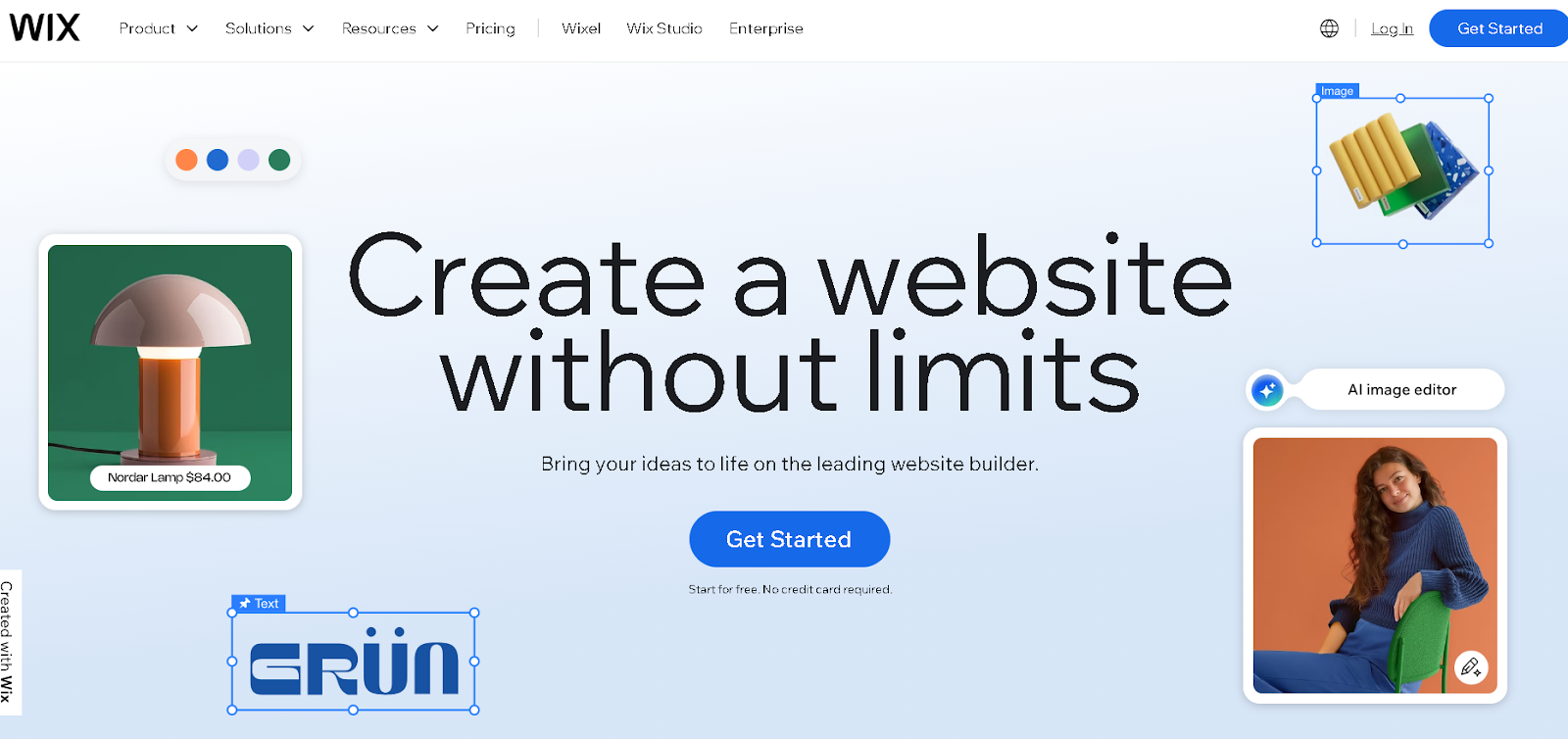
A drag-and-drop builder for beginners, with 900+ templates, analytics, and built-in ecommerce (product pages, checkout). Monetize with Google AdSense, affiliate links, and digital downloads.
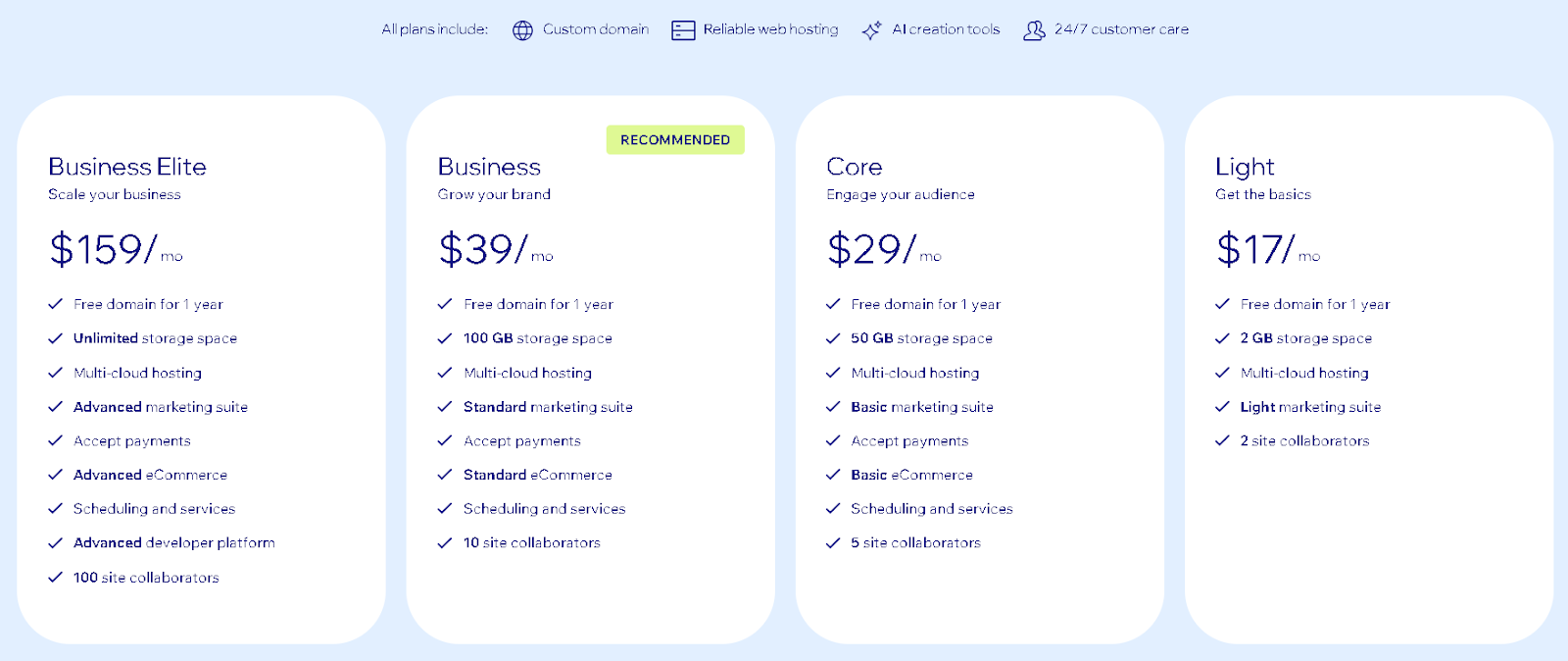
- Pricing (billed annually): Light $17/mo · Core $29/mo · Business $39/mo · Business Elite $159/mo.
- Best for: Brands that want easy design plus merchandise sales.
Also Read:
- How to Make Money on Social Media (Even Without Followers)
- Best Automated Business Ideas to Start
- Best Print On Demand Greeting Card Companies to Use in 2026
4. Squarespace
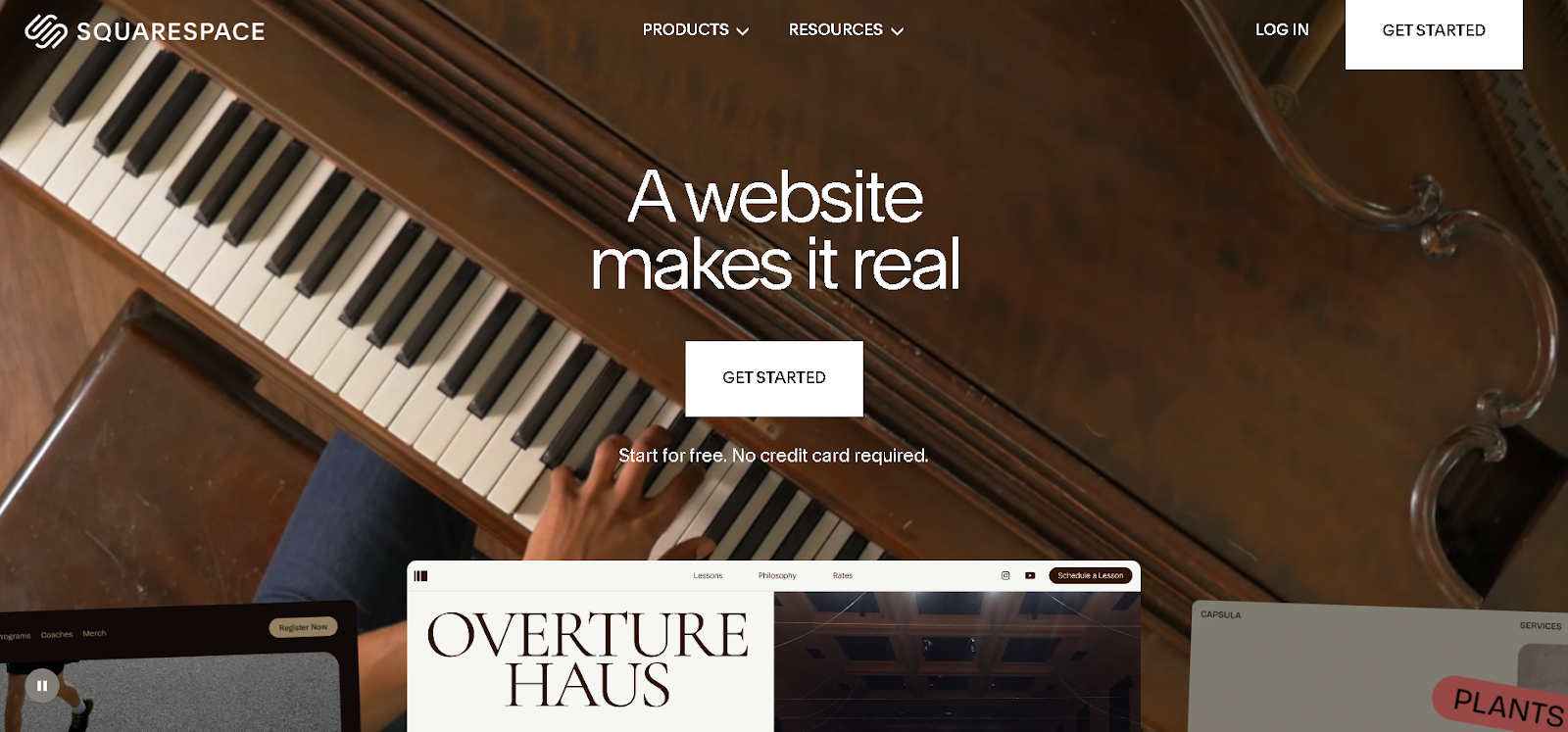
Polished, mobile-optimized templates ideal for creative and profitable niches. Includes ecommerce, marketing tools, paid content, and memberships.
- Pricing (billed annually): Personal $16/mo · Business $33/mo · Commerce Basic $36/mo · Commerce Advanced $65/mo.
- Best for: Design-led creators monetizing through content and a small store.

5. Hostinger

An AI-assisted site builder that bundles domain, hosting, and SSL, with 150+ templates and ecommerce for digital, physical, or POD products.
- Pricing: Premium $12.19/mo · Business $13.99/mo (promotional rates; verify current term).
- Best for: Bloggers who want an all-in-one setup without plugin complexity.

6. Medium
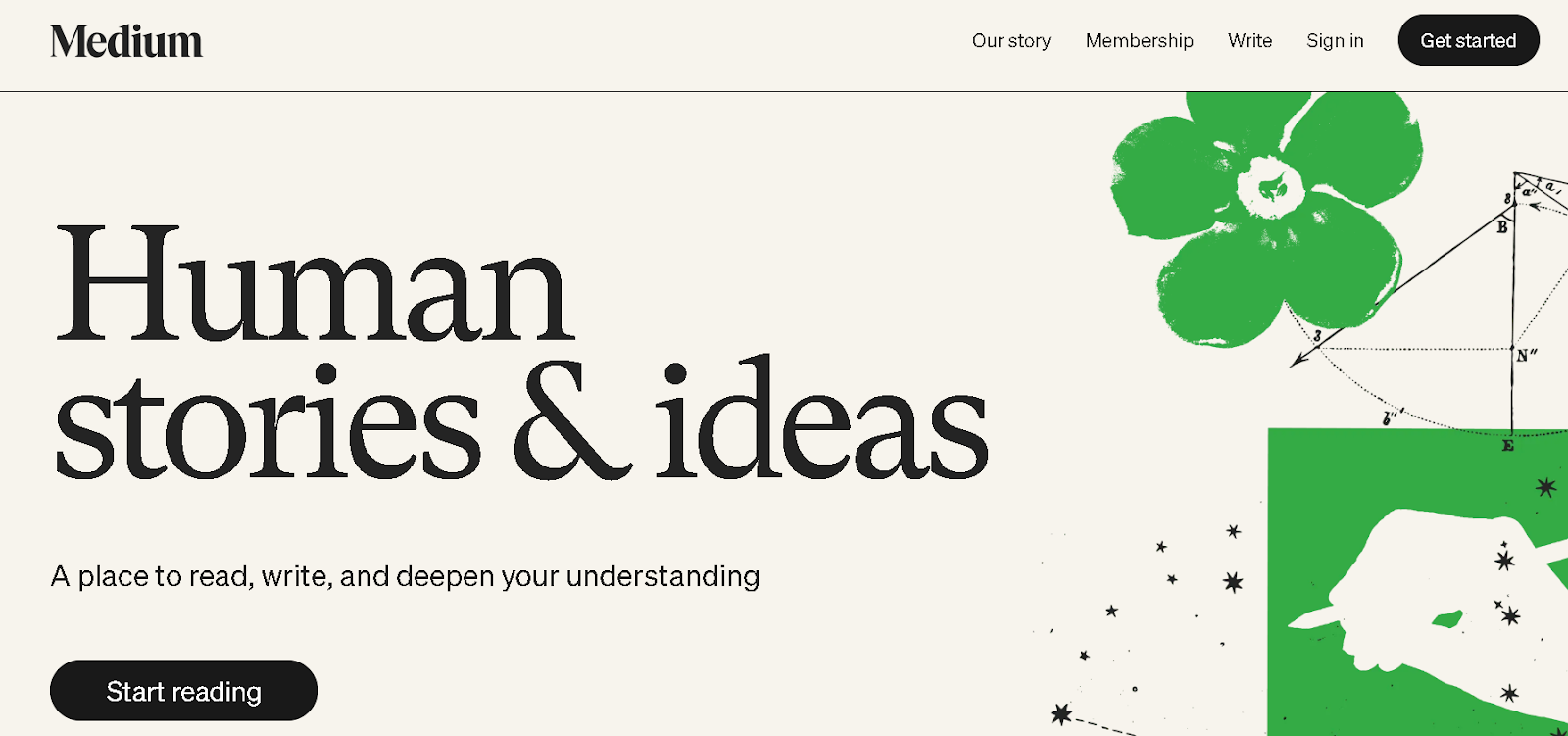
Built for writers who don't want to manage a site. Millions of readers and built-in search visibility mean articles can get traffic without SEO setup; you earn through the Partner Program based on member read time.
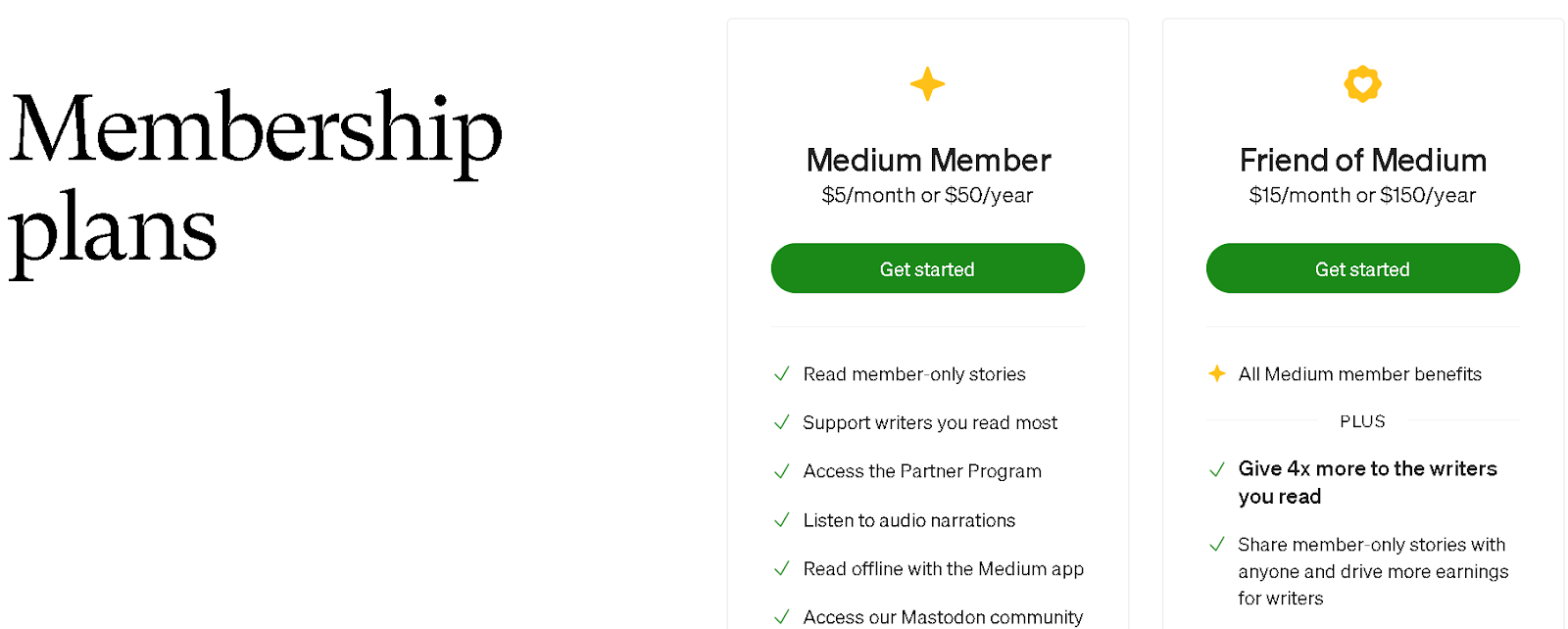
- Pricing: Free to post · Medium Member $5/mo · Friend of Medium $15/mo.
- Best for: Writers who want reach without running a website (but note: you don't own the audience).
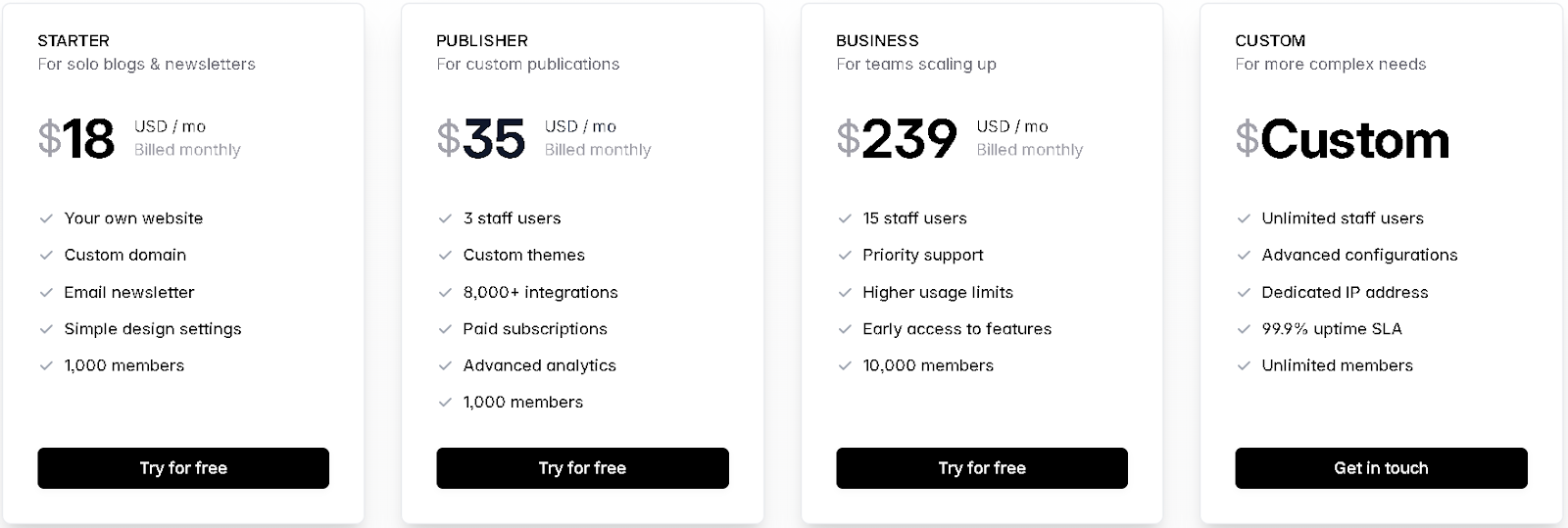
7. Ghost
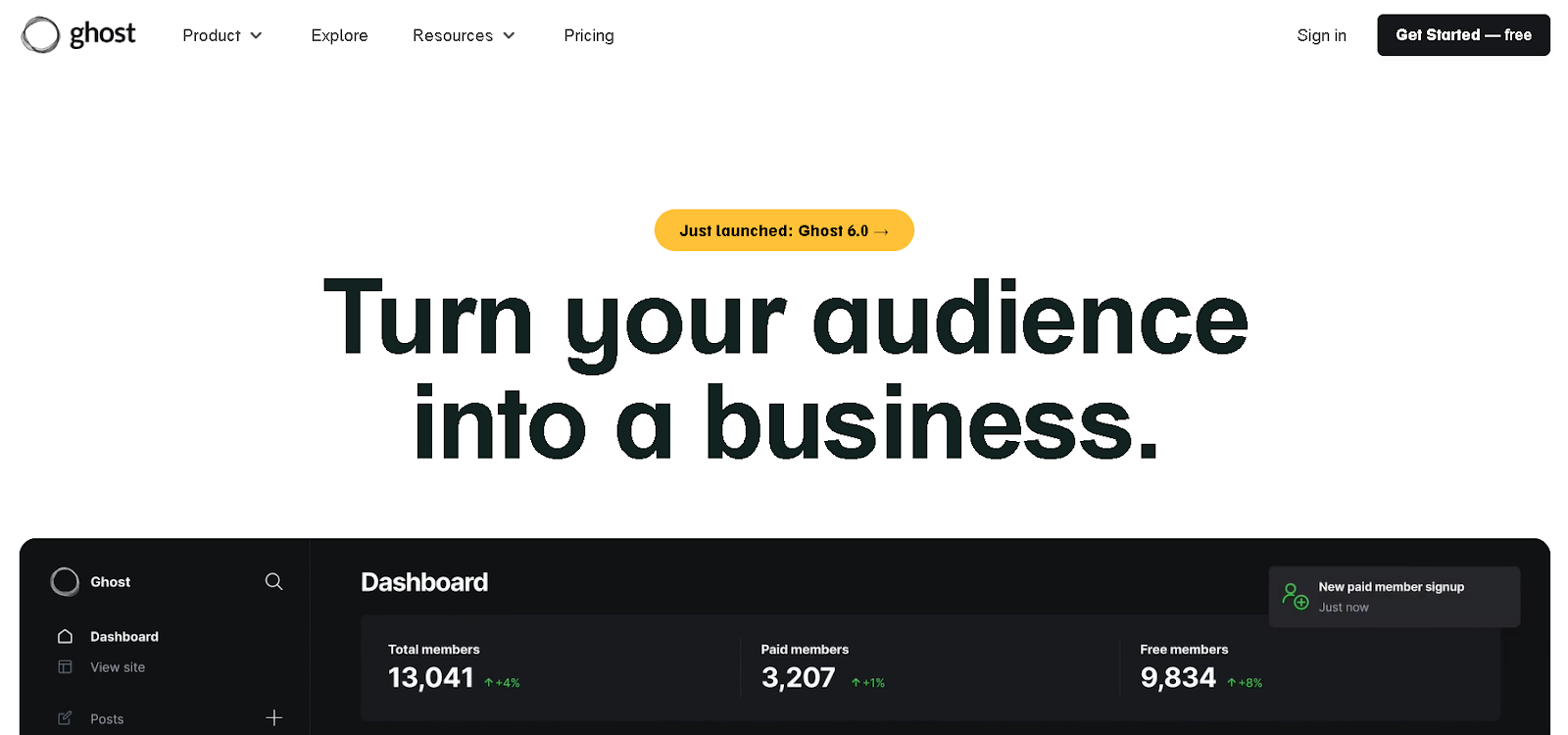
An open-source platform for professional publishers, strong for paid newsletters and memberships, with flexible themes and integrations (Stripe, Zapier, Google Analytics, and more).
- Pricing (Ghost(Pro), billed annually): Starter $15/mo · Publisher $29/mo · Business $199/mo · Custom. (Self-hosting the open-source software is free.)
- Best for: Publishers monetizing through subscriptions and newsletters.
8. Blogger
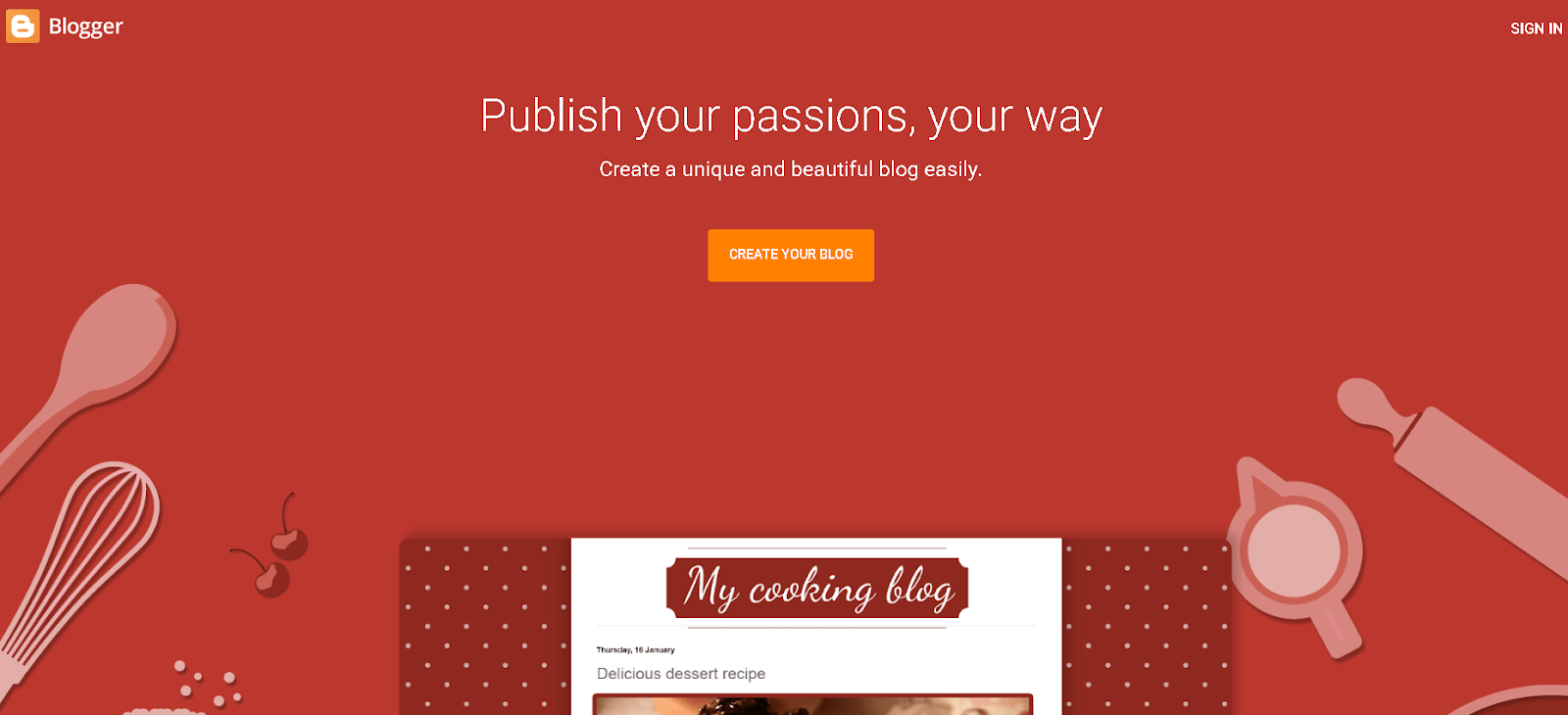
Google-owned and free, with hosting included and a built-in blogspot.com subdomain (custom domains supported). Connects to Google AdSense for display ads.
- Pricing: Free.
- Best for: New bloggers on a zero budget testing the waters.
9. Weebly
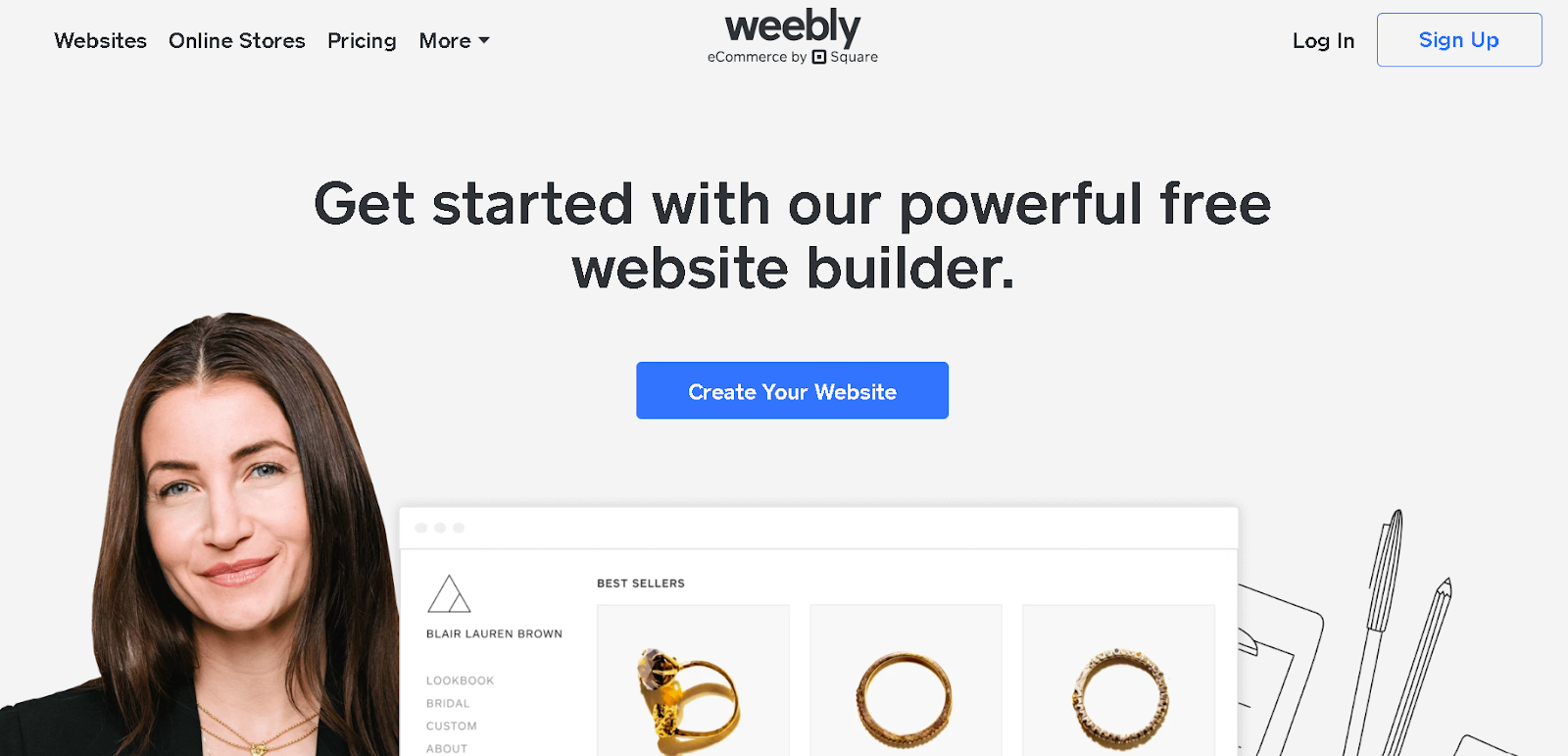
A beginner-friendly builder owned by Square, with drag-and-drop design, ecommerce tools, AdSense, affiliate support, and SEO features.
- Pricing: Free · Personal $10/mo · Professional $12/mo · Performance $26/mo.
- Best for: Beginners who want simple publishing plus light selling.

10. HubSpot CMS
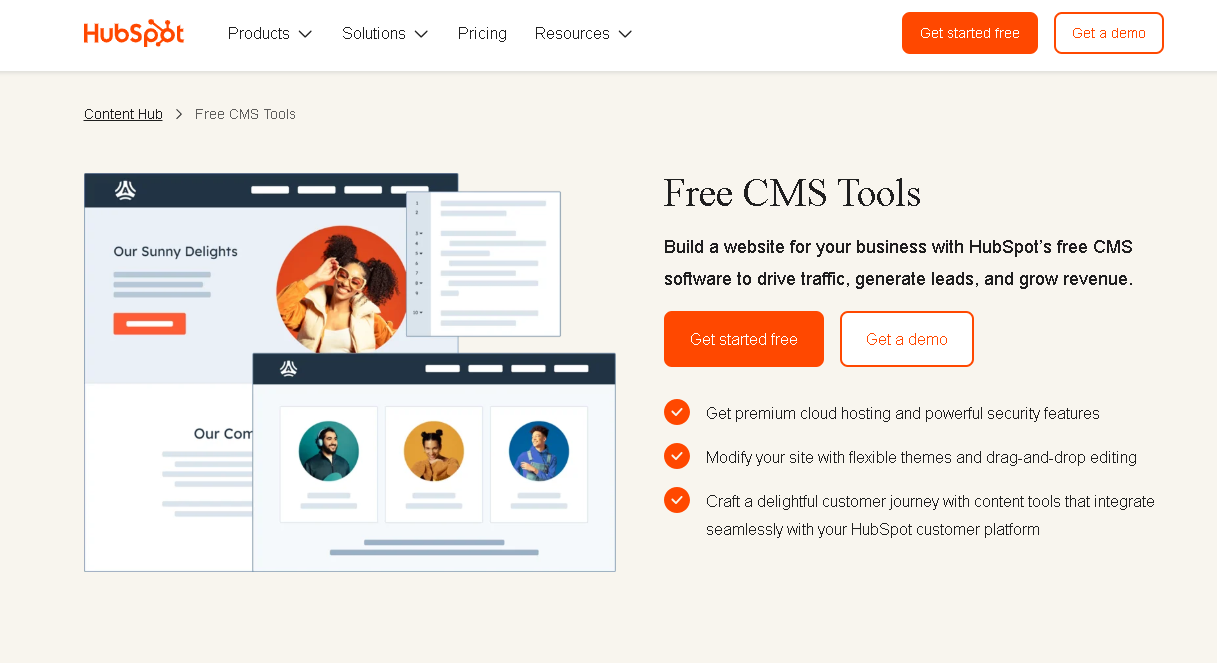
Best for businesses that want content and lead generation in one place - drag-and-drop building, built-in forms, popups, and email marketing, with hosting and security handled.
- Pricing: Free tier available.
- Best for: Businesses monetizing via services, coaching, or digital products with strong lead capture.
Also Read:
Paid vs Free Blogging Platforms - Which Is Better for Earning?
Free platforms (Blogger, the free tiers of WordPress.com, Weebly) are excellent for learning and testing an idea at zero cost. Paid plans typically unlock the things that actually compound revenue: a custom domain that builds brand trust, removal of platform branding, deeper SEO control, and full ecommerce. The honest rule of thumb: start free if you're unsure of your niche, but move to a paid, owned setup the moment you're serious about income - because on free tiers you're building on land you don't control.
How to Choose the Best Blogging Platform for You
- Budget and goals: Define what you want to achieve and what you can invest. Free is fine for learning; paid usually delivers better tools.
- Technical skill level: Self-hosted WordPress and Ghost reward those willing to manage setup; Wix, Squarespace, and Weebly minimize it.
- Type of monetization: Decide how you'll earn - ads, affiliates, or your own products. The best platform for monetization supports several income streams without strict limits.
- Design freedom: More control means you can test layouts and improve the experience as you grow.
- Support and integrations: Reliable support and clean integrations with email, analytics, and ecommerce platforms make scaling easier.
Also Read:
The Highest-Ceiling Way to Monetize a Blog: Sell Products You Own
Here's the part most "make money blogging" guides underplay. Display ads and partner programs are *rented* income - you earn pennies per visitor, and the payout is set by someone else's formula and traffic thresholds. Selling your own products is *owned* income, and the margin is yours.
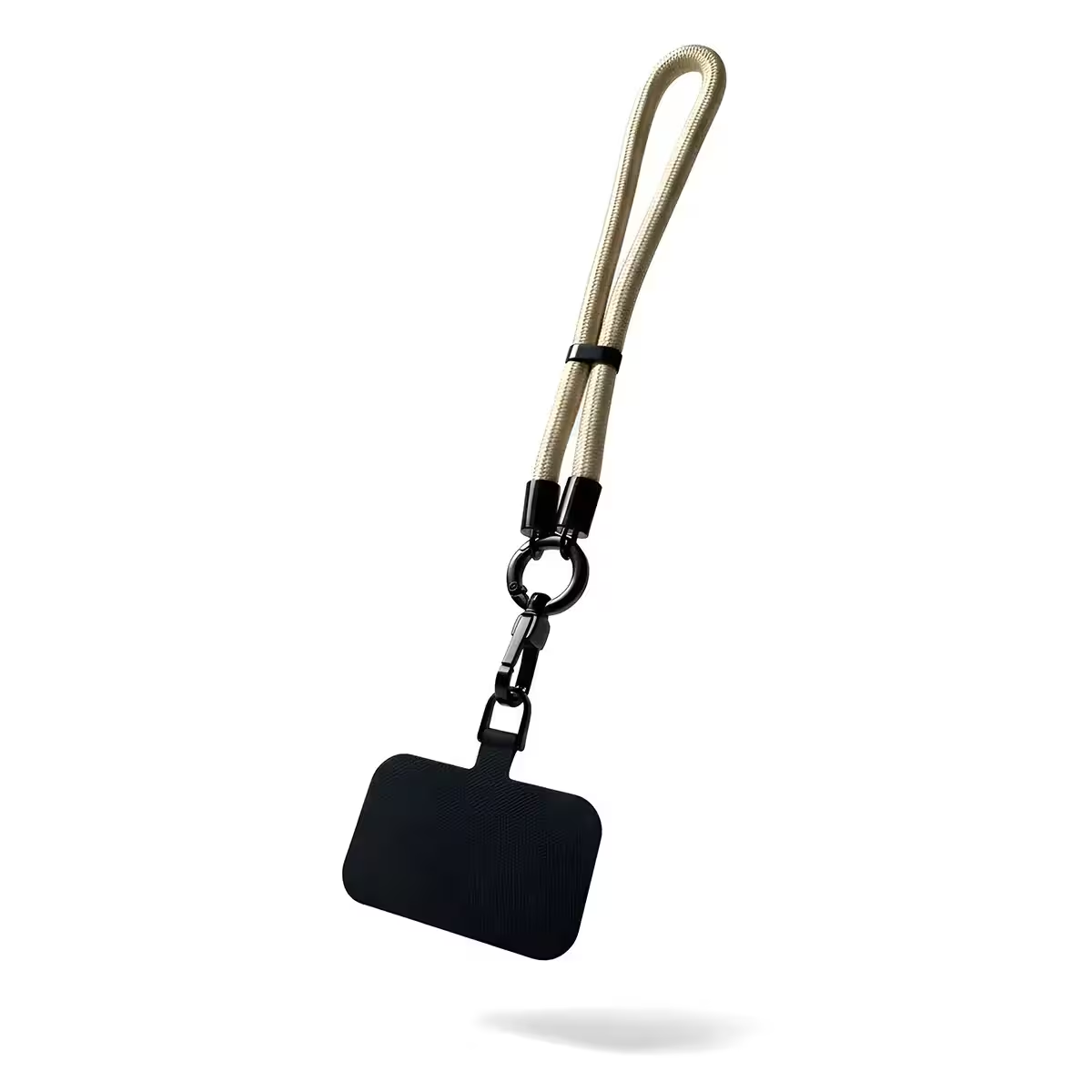
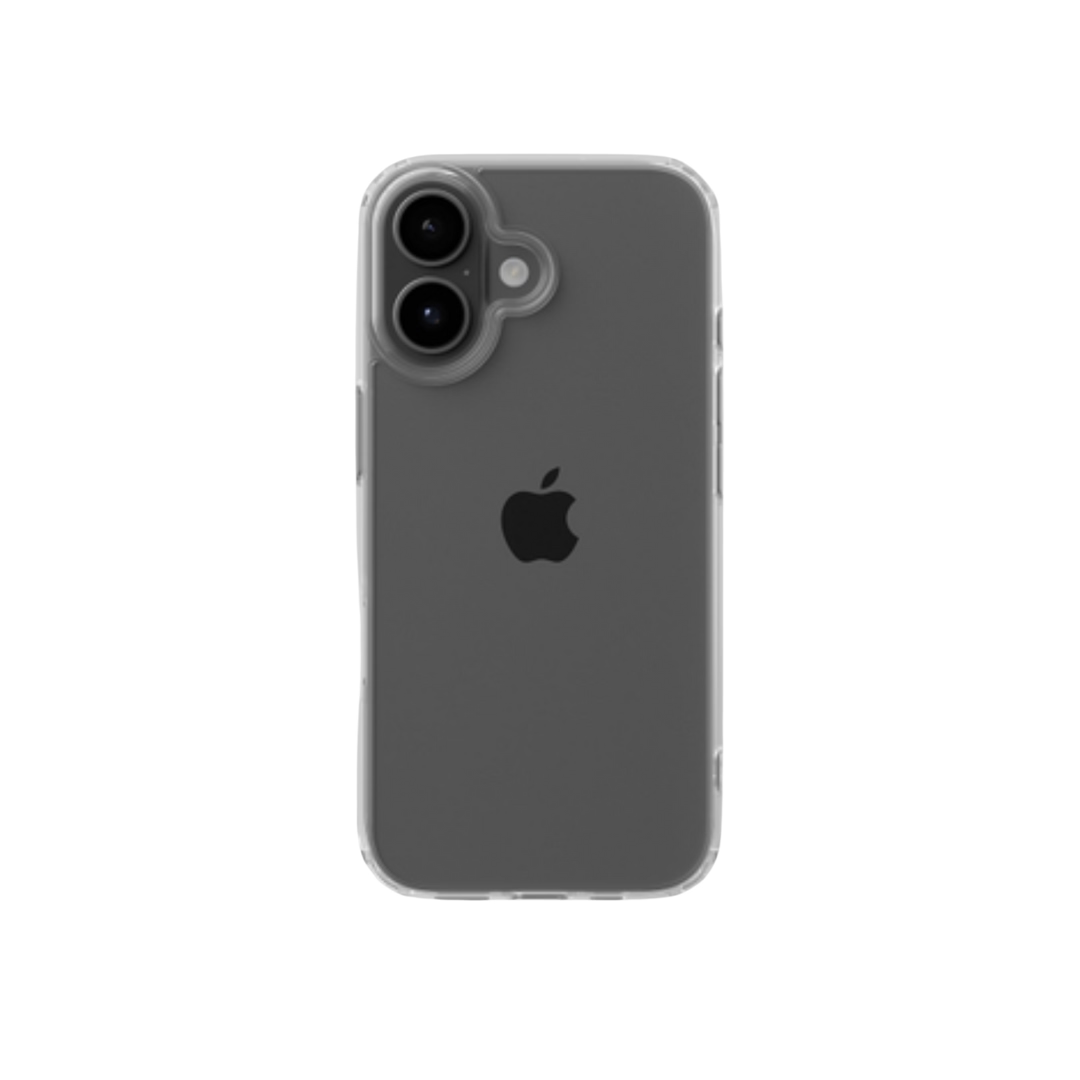
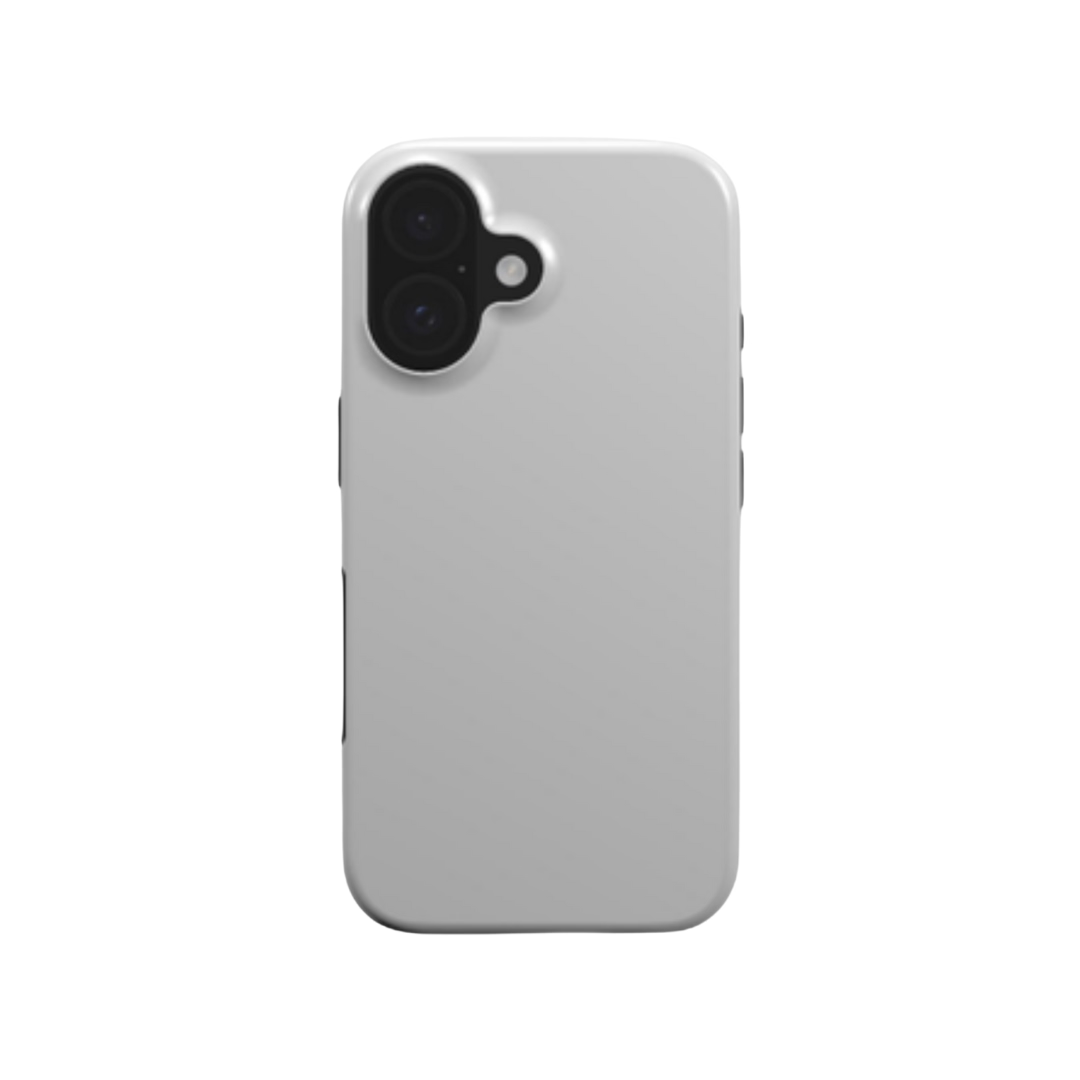
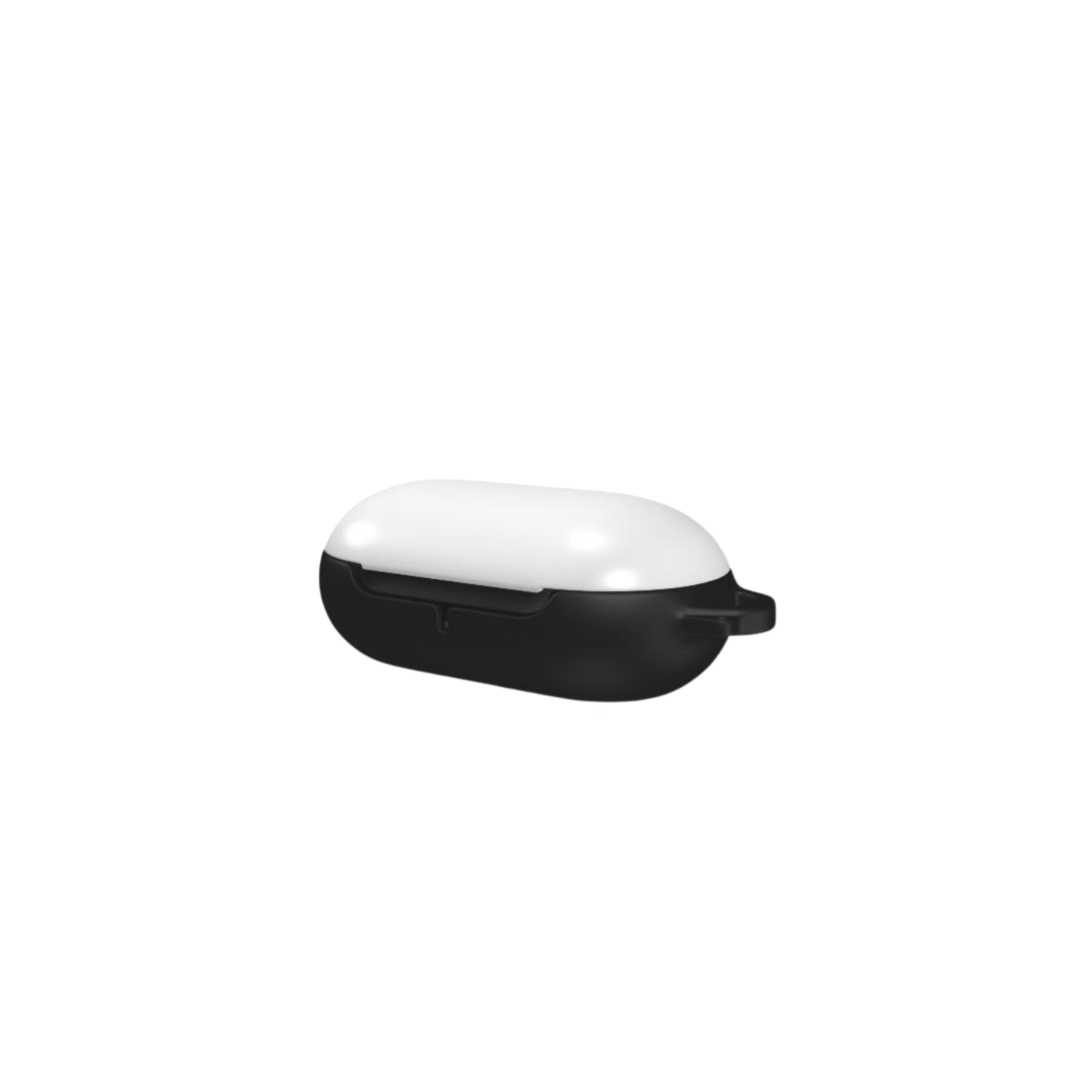
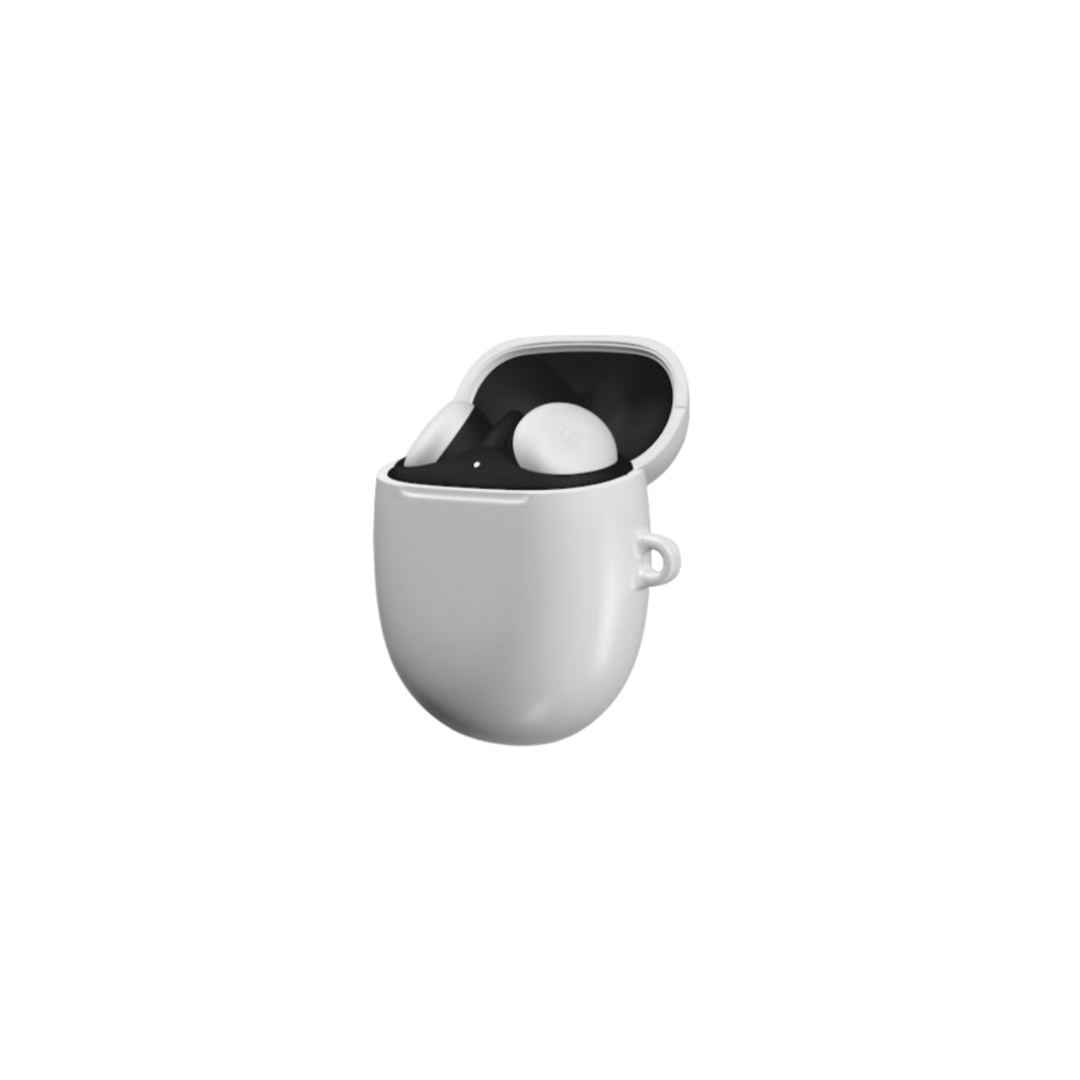
The numbers make the gap obvious. Display ads might pay a few dollars per thousand visitors; a single print-on-demand product can clear far more from one sale. A phone case costs around €10 from Podbase and sells for €35-60 - one sale can outearn thousands of ad impressions. And because POD carries no inventory, you add products with zero upfront risk: you design, set prices, and the supplier prints, packs, and ships only after a purchase.
This is also the most durable play against the algorithm shifts our CMO described. When your blog sells products your audience genuinely wants, you're not just chasing ad-friendly traffic - you're building a brand. Our seller data backs the approach: creators who move fast (a sample order in the first days, five products live within 30 days) are ahead of 80% of POD stores, and one went from zero to seven-figure annual revenue in 13 months. You don't need a huge audience to start; you need products worth buying and the discipline to launch.
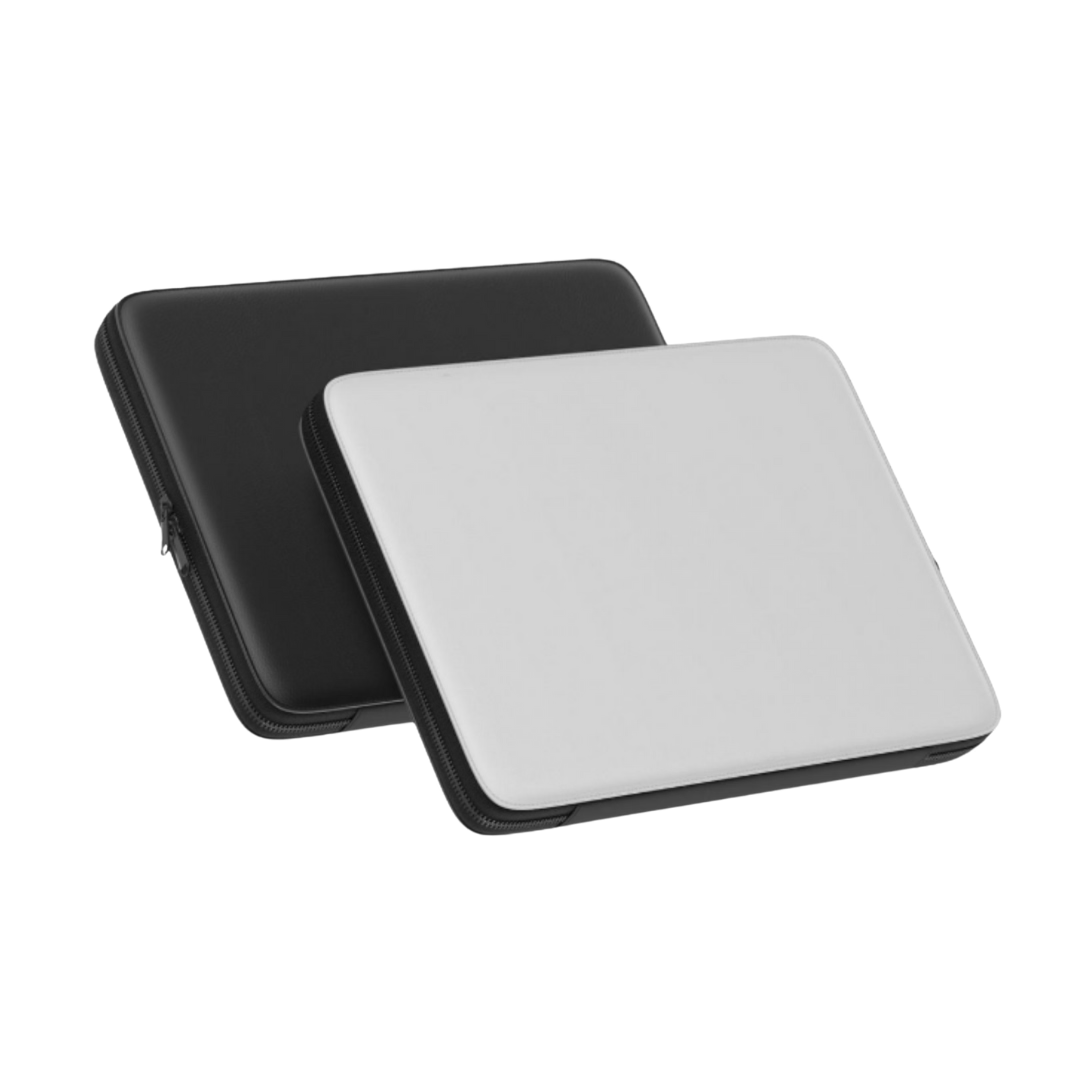
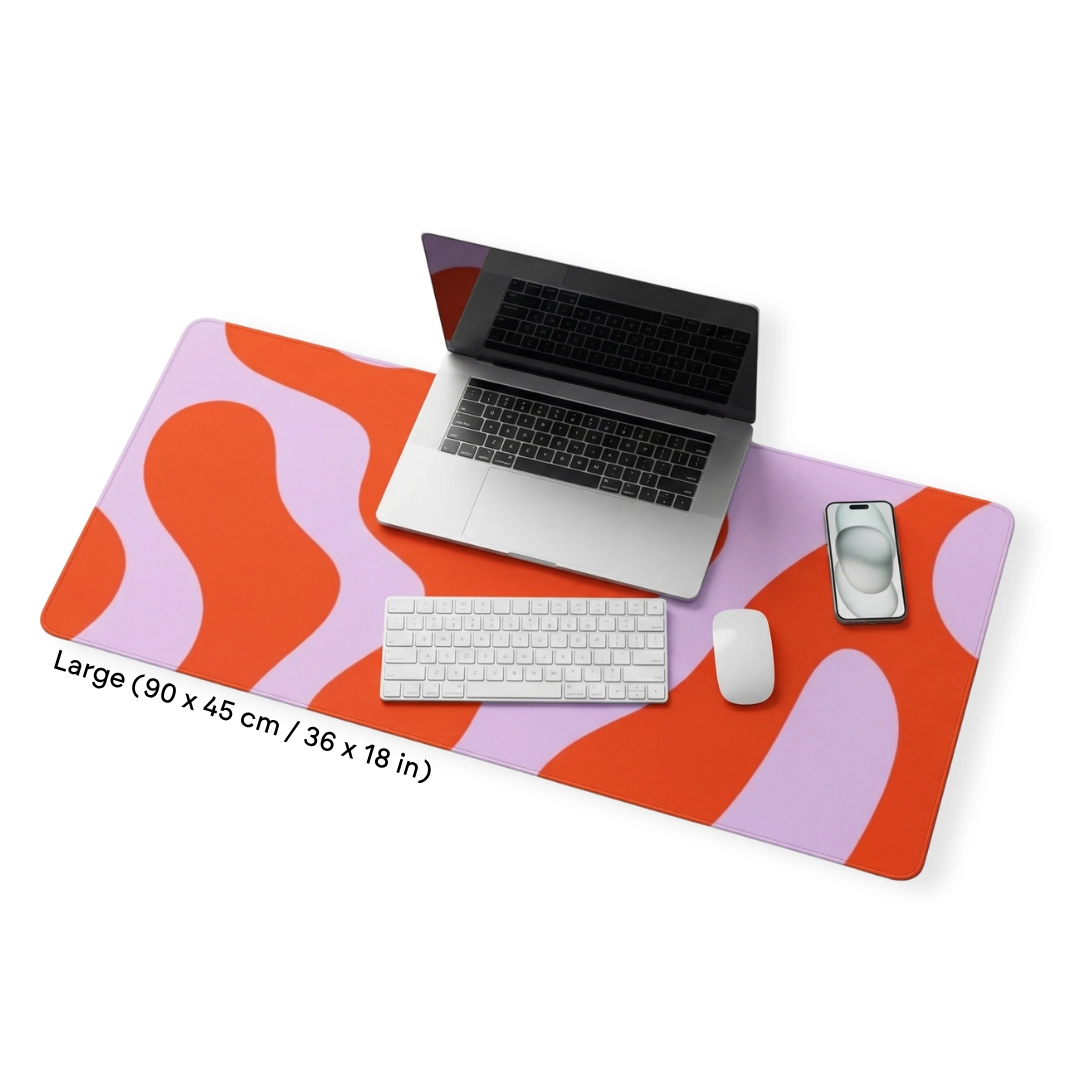
There are several print-on-demand niches to match your blog's focus, from tech accessories to wall art. The key is choosing products that resonate with your readers.
Ready to turn content into owned profit? Start selling POD products with Podbase today.
FAQ
1. What is the best blogging platform to make money in 2026?
For long-term profit and full ownership, self-hosted WordPress.org and Ghost lead, thanks to flexibility, SEO control, and easy product integration. Beginner-friendly Wix and Squarespace offer ease and polished templates with more limited monetization. The best choice depends on your skills and goals, but the platform matters less than your content and income mix.
2. Can you still make money blogging in 2026?
Yes, but the rules changed. Podbase's CMO notes organic content is now an advanced-player tactic, not a beginner game, and the post-2026 search updates reward relevance, usefulness, specificity, and freshness over publishing volume. Bloggers who succeed differentiate hard and diversify into owned revenue rather than relying on passive ad traffic.
3. What is the best way to monetize a blog?
Selling products you own. Display ads and affiliate programs are rented income that pays pennies per visitor on someone else's formula, while a single print-on-demand product can outearn thousands of ad impressions. A phone case costs about 10 euros from Podbase and sells for 35 to 60, with no inventory and no upfront risk.
4. Are free or paid blogging platforms better for earning?
Free platforms like Blogger and free tiers of WordPress.com or Weebly are excellent for learning and testing an idea at zero cost. Paid plans unlock what compounds revenue: a custom domain, removal of platform branding, deeper SEO control, and full ecommerce. Start free if unsure of your niche, then move to an owned setup once you are serious.
5. How do you choose the right blogging platform?
Weigh your budget and goals, your technical skill, and how you plan to earn. Self-hosted WordPress and Ghost reward those willing to manage setup, while Wix, Squarespace, and Weebly minimize it. Prioritize design freedom, several monetization options without strict limits, and clean integrations with email, analytics, and ecommerce tools.
6. How much can a blog earn from products versus ads?
The gap is large. Display ads might pay a few dollars per thousand visitors, while one print-on-demand sale can clear far more: a phone case bought for about 10 euros sells for 35 to 60, so a single sale can outearn thousands of ad impressions. Owned products also build a brand that survives algorithm shifts.

Saulius Meilutis is the CEO of Podbase, helping creators and entrepreneurs monetize their ideas with print-on-demand. He shares insights on eCommerce, growth, and building lean online businesses.

.avif)

.avif)




.avif)
.avif)
.avif)

.avif)
.avif)
.avif)

.avif)

.avif)

.avif)



.avif)
.avif)

.avif)