Passive income is one of the most overused promises on the internet, and most guides oversell it. Here is the honest version: you can earn passive income with print on demand, but it takes upfront work, the right products, and a setup that runs without you. Once those are in place, a single design can sell indefinitely, on autopilot.
The global print-on-demand market is projected to grow from about $13 billion in 2025 to over $100 billion by 2034 - a signal that print on demand passive income is a model with staying power, not a fad.
But is print on demand profitable enough to build real income? This guide answers that honestly. Whether you are evaluating POD or refining an existing store, you will find practical guidance here - plus how print-on-demand sites like Etsy and Shopify, paired with a zero-inventory platform like Podbase, make the passive model actually work.
What “Passive Income” Actually Means in Print on Demand
Most people hear “passive income” and picture money with zero effort. With print on demand, the reality is more nuanced. Income sits on a spectrum: fully active work like freelancing on one end, truly passive income like dividends on the other. POD lands in between - it needs groundwork (niche research, design creation, store setup, early marketing) before it runs quietly.
So, is print on demand a passive income source? It can be, but only after that foundation is firmly in place. Here is what stays passive once you are set up:
- Print fulfillment: your platform handles production, packaging, and shipping automatically after every sale.
- Live listings: published products stay active around the clock with no manual input.
- Repeat sales: a strong design can keep generating orders for months or years.
And here is what still needs occasional attention:
- SEO on listings: search visibility shifts, so listings benefit from periodic updates. As our CMO Vytautas Mikaila notes, the post-2026 game is about “relevance, usefulness, specificity, and freshness” - update, do not just publish.
- Design trends: buyer preferences evolve, so some designs need refreshing.
- Light marketing: a little visibility effort goes a long way, especially in the early months.
On timelines, most sellers see their first sales within 30-60 days, while consistent income typically takes 3-6 months. According to Podbase’s print on demand statistics, only 24% of POD stores are still active three years after launch - the ones that last are almost always the ones that stayed consistent through the slow early months. And catalog size is the biggest lever: sellers running 50-100+ active listings generate far more consistent revenue than those with just 5-10. Our own seller data backs this up - as Head of Sales Sidas puts it, a sample order in the first two days plus five products in 30 days already puts you “ahead of 80% of POD stores.”
Also Read:
Why Print on Demand Is One of the Best Passive Income Models in 2026
Building passive income with print on demand is far easier with the right model. Compared to other income streams, POD has structural advantages worth understanding before you commit:
- No inventory risk: every product is made only after a customer orders. No upfront stock, no unsold inventory.
- Pay only on what you earn: many platforms charge monthly fees that cap passive income. Podbase runs on a pay-per-sale model, so you only pay when you earn - and our margins run 10-15% better than competitors across most categories.
- Automatic print jobs: once your store is connected, orders flow straight to production and ship with no action from you - a typical print run takes 6-8 hours plus about 2 hours for assembly and packaging, with quality checks between stages.
- Evergreen products keep working: a well-designed phone case or wall art print does not expire - it can generate sales for years.
Compare that to other hands-off business ideas: affiliate marketing needs constant fresh traffic, stock photography is oversaturated and pays pennies, and digital downloads avoid product costs but bring refund disputes and no tangible product. POD sits in a stronger position than all three, with average profit margins of 20-30% across most categories. The table below shows how the models stack up.
Also Read:
The Best Print on Demand Products for Passive Income
Not every product is built for passive income with print on demand. Some need constant trend-chasing; others sell steadily for years untouched. The best print-on-demand niches for passive income share one trait: evergreen demand. Here is where that demand lives in 2026:
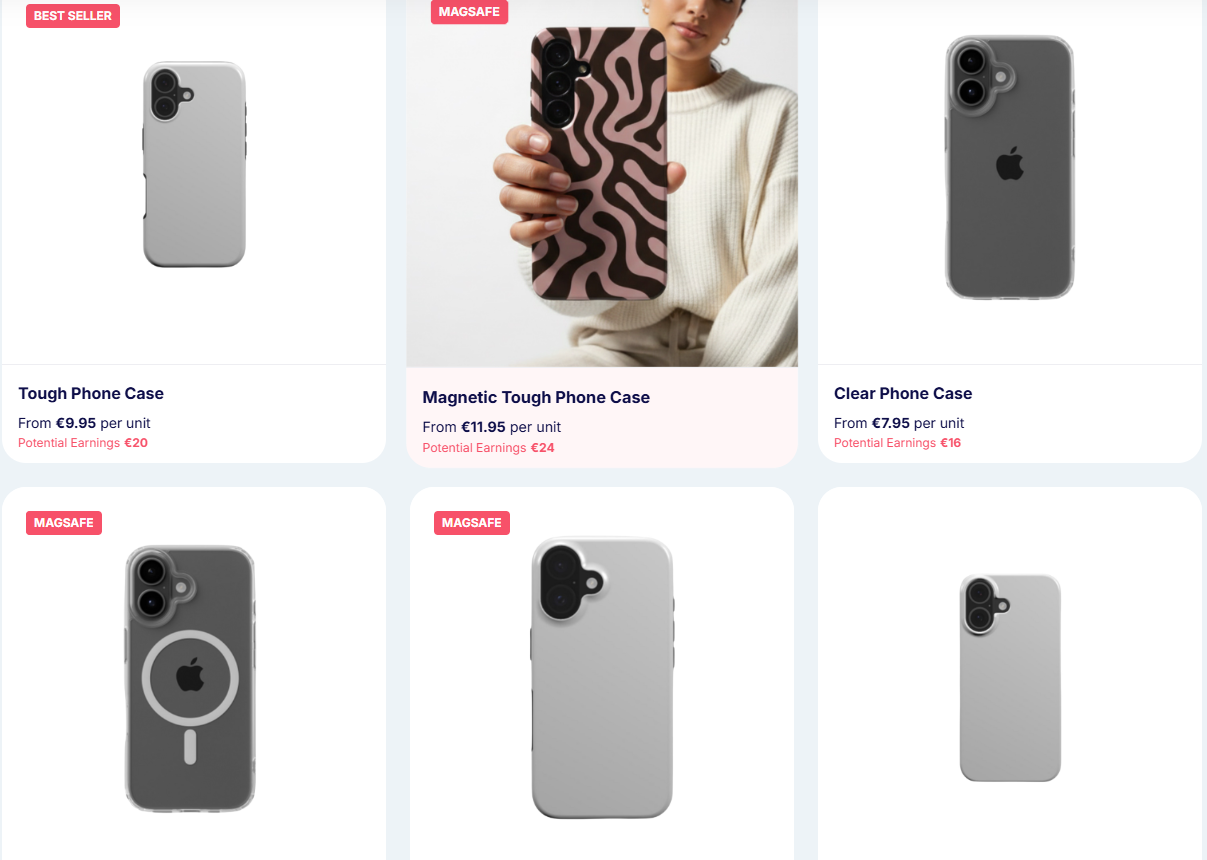
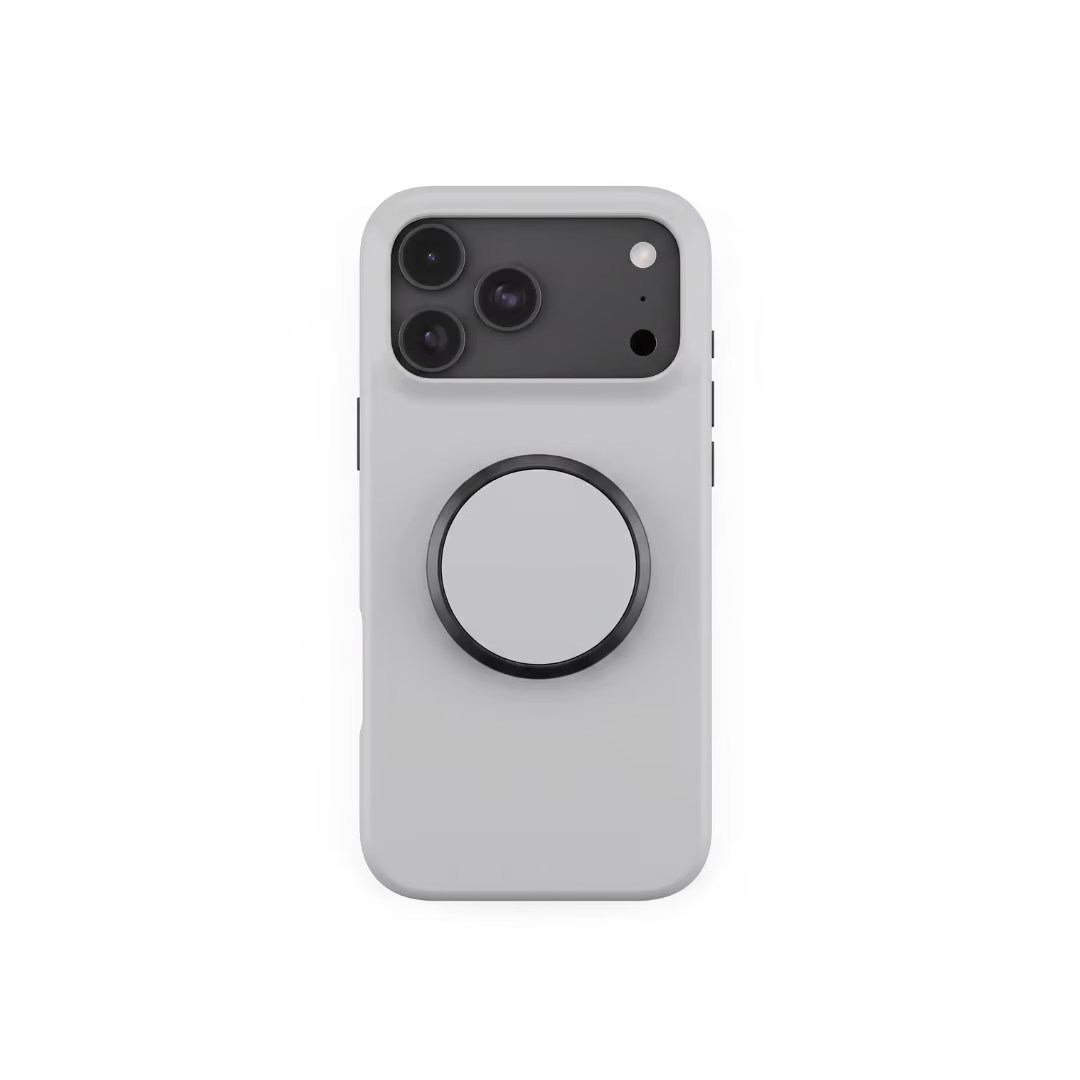
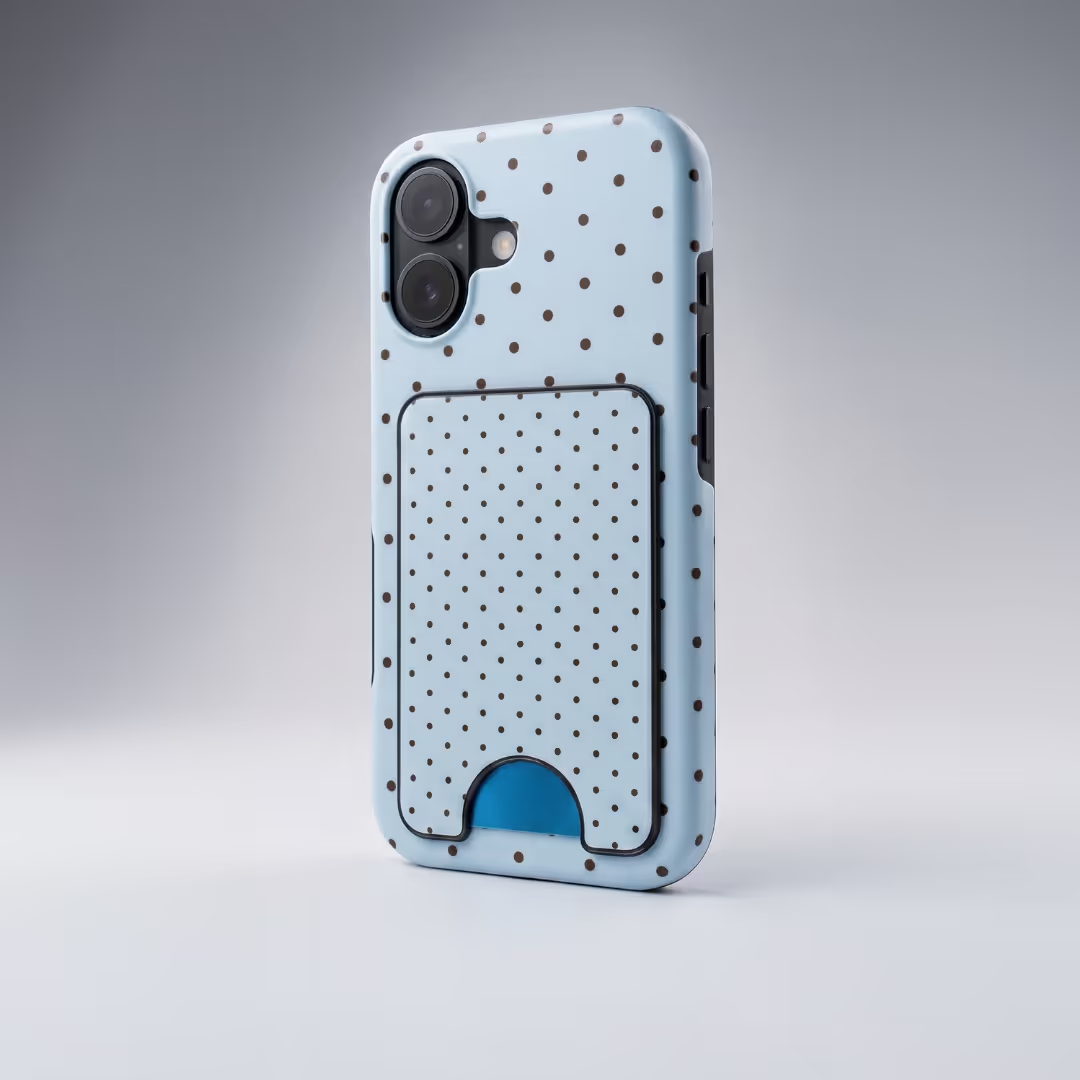
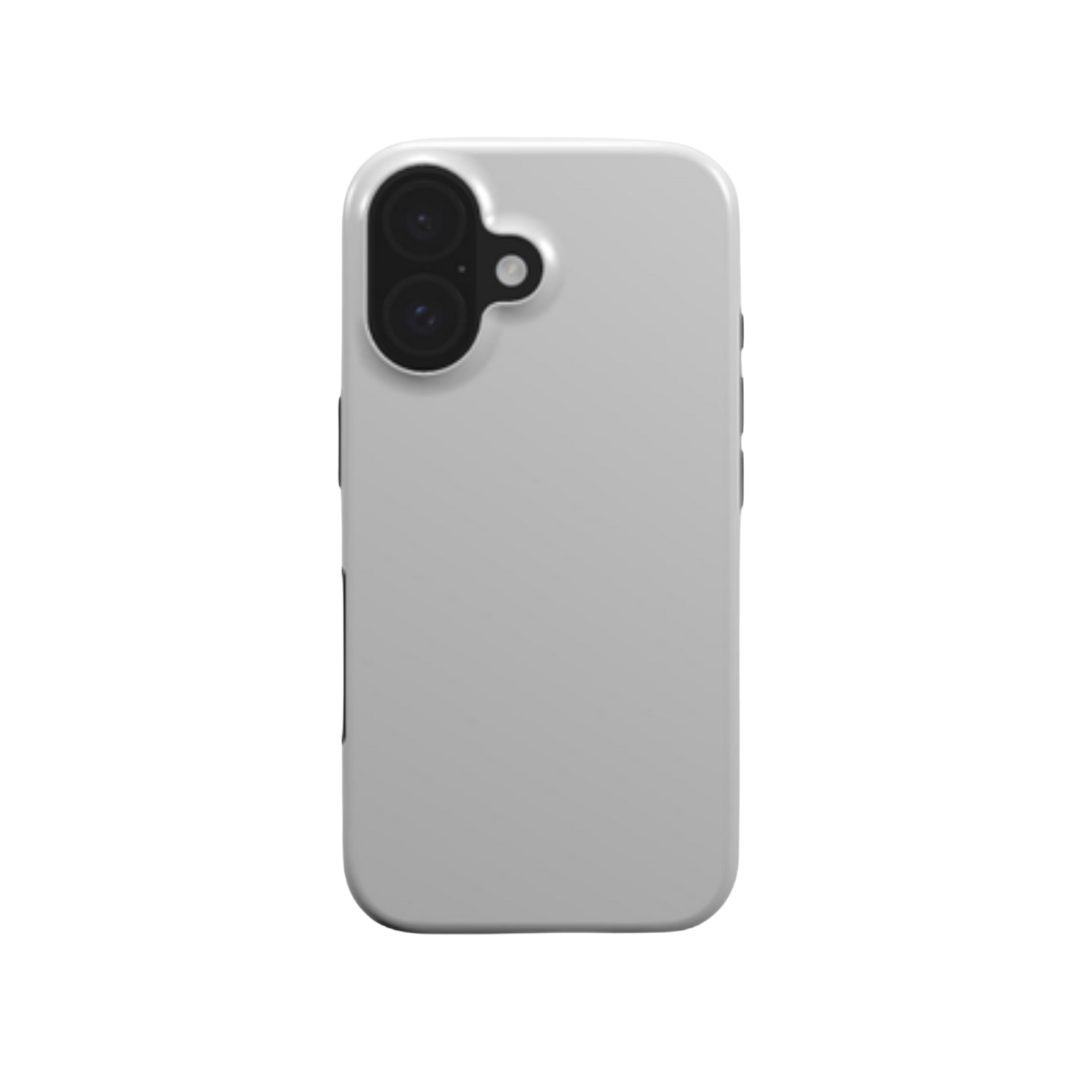
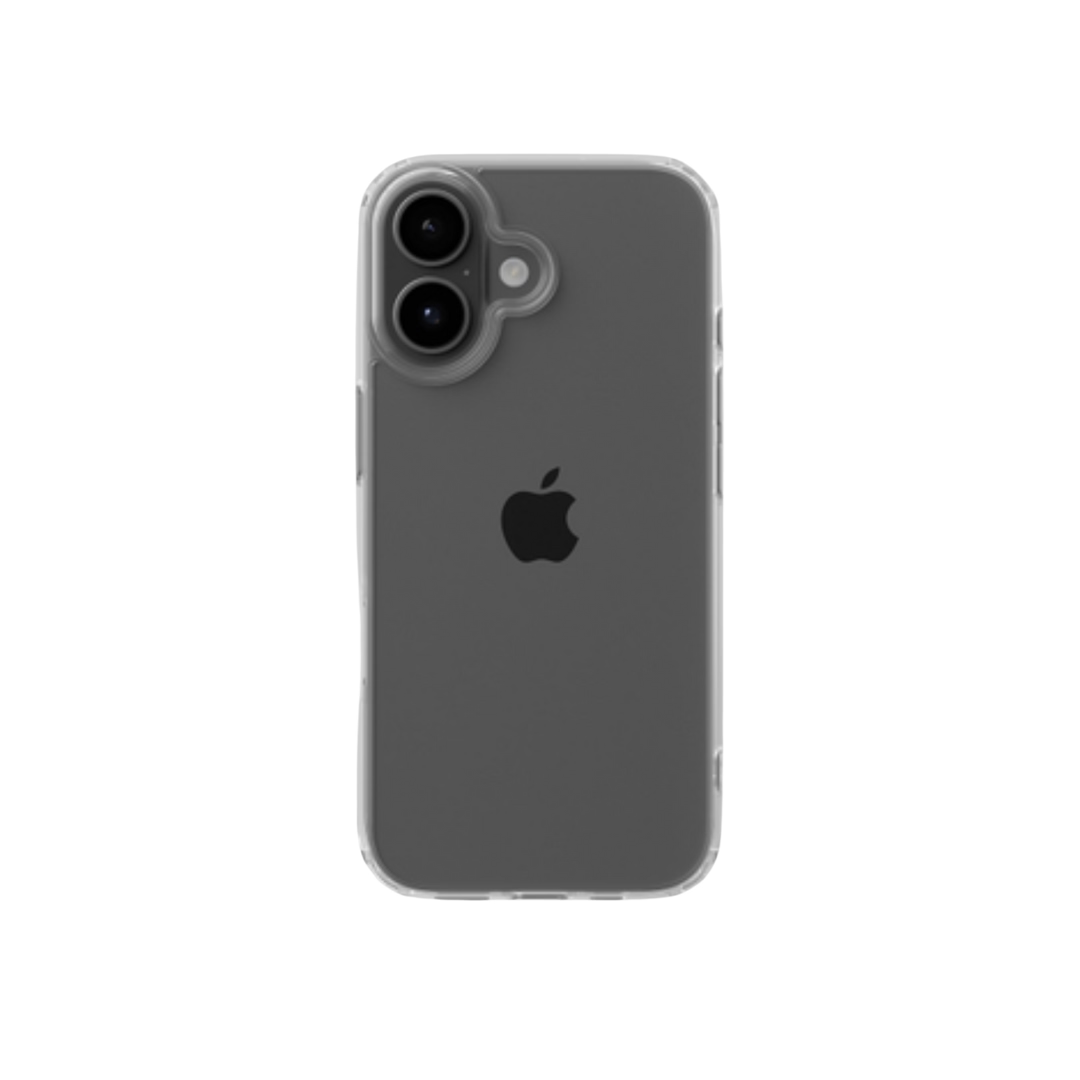
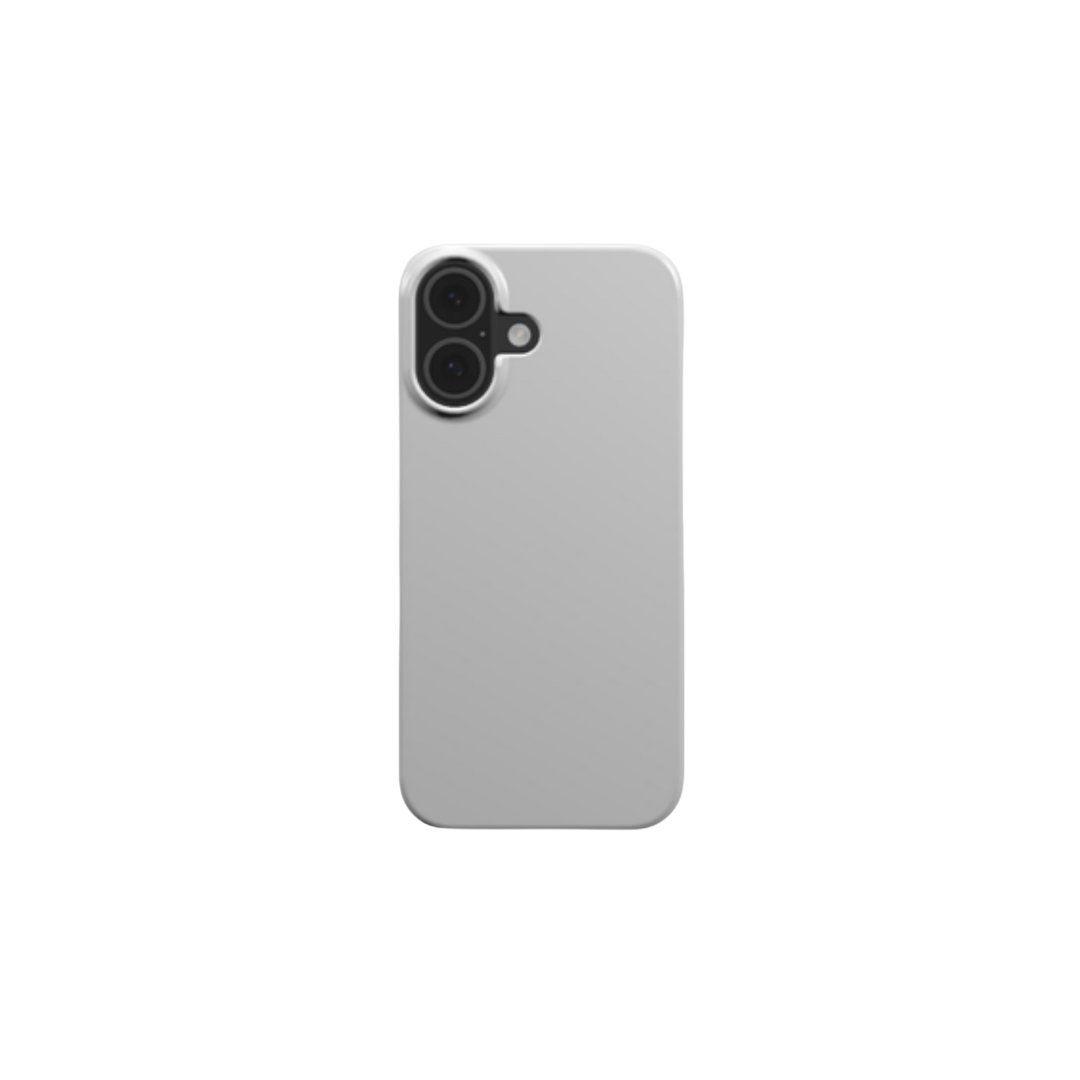
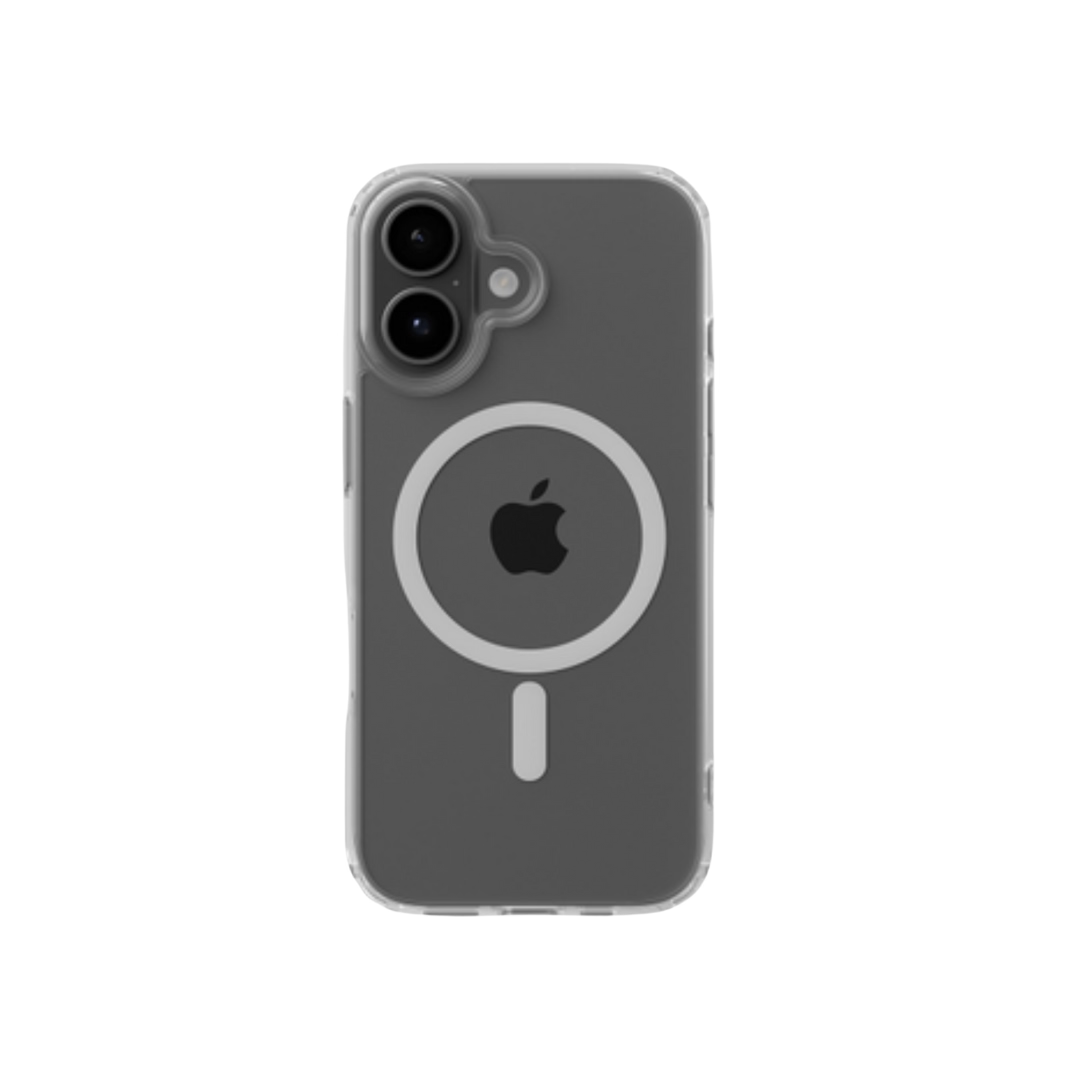
- Phone cases: they sell year-round, and Podbase’s 24-hour fulfillment with early access to new device models keeps listings current automatically. As Head of Product Development Justina notes, “we usually have the materials and interface ready a couple of weeks before a device launches,” so you list the day it drops.
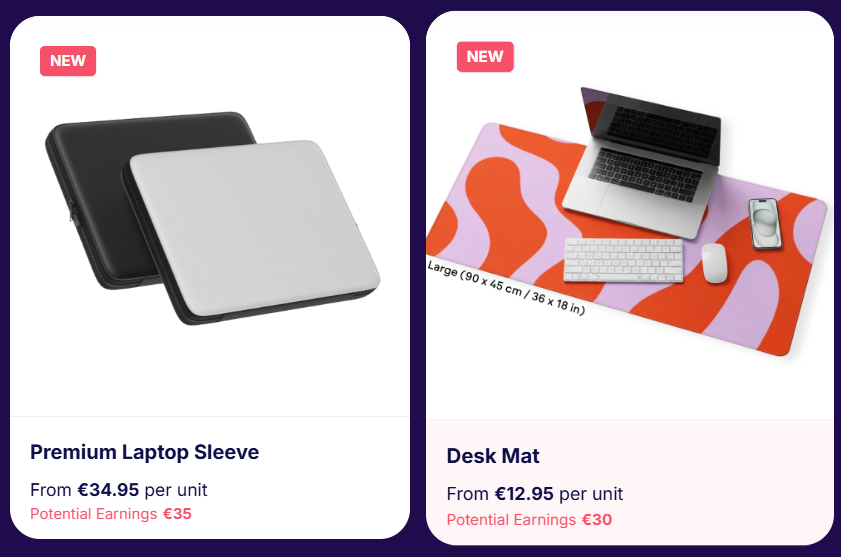
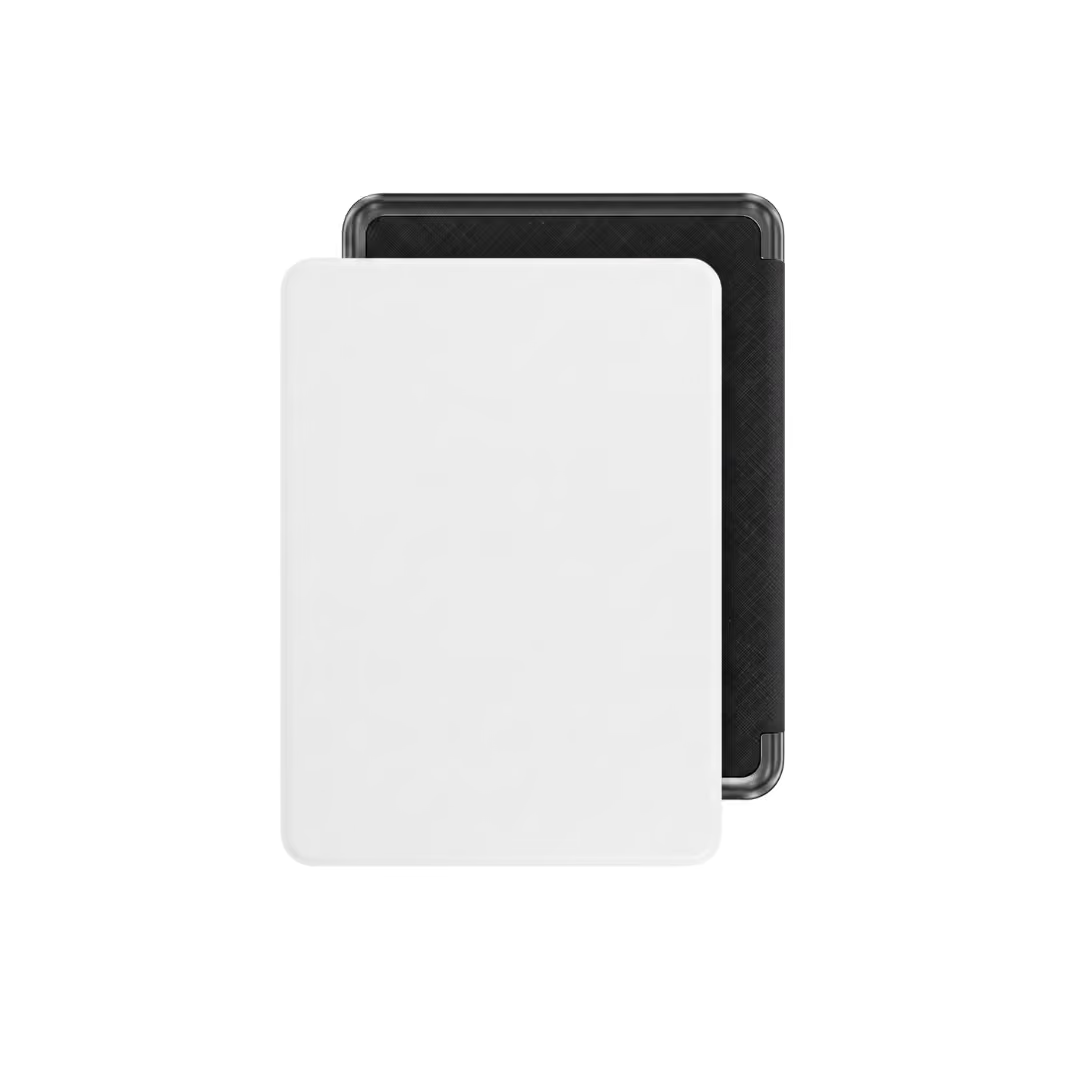
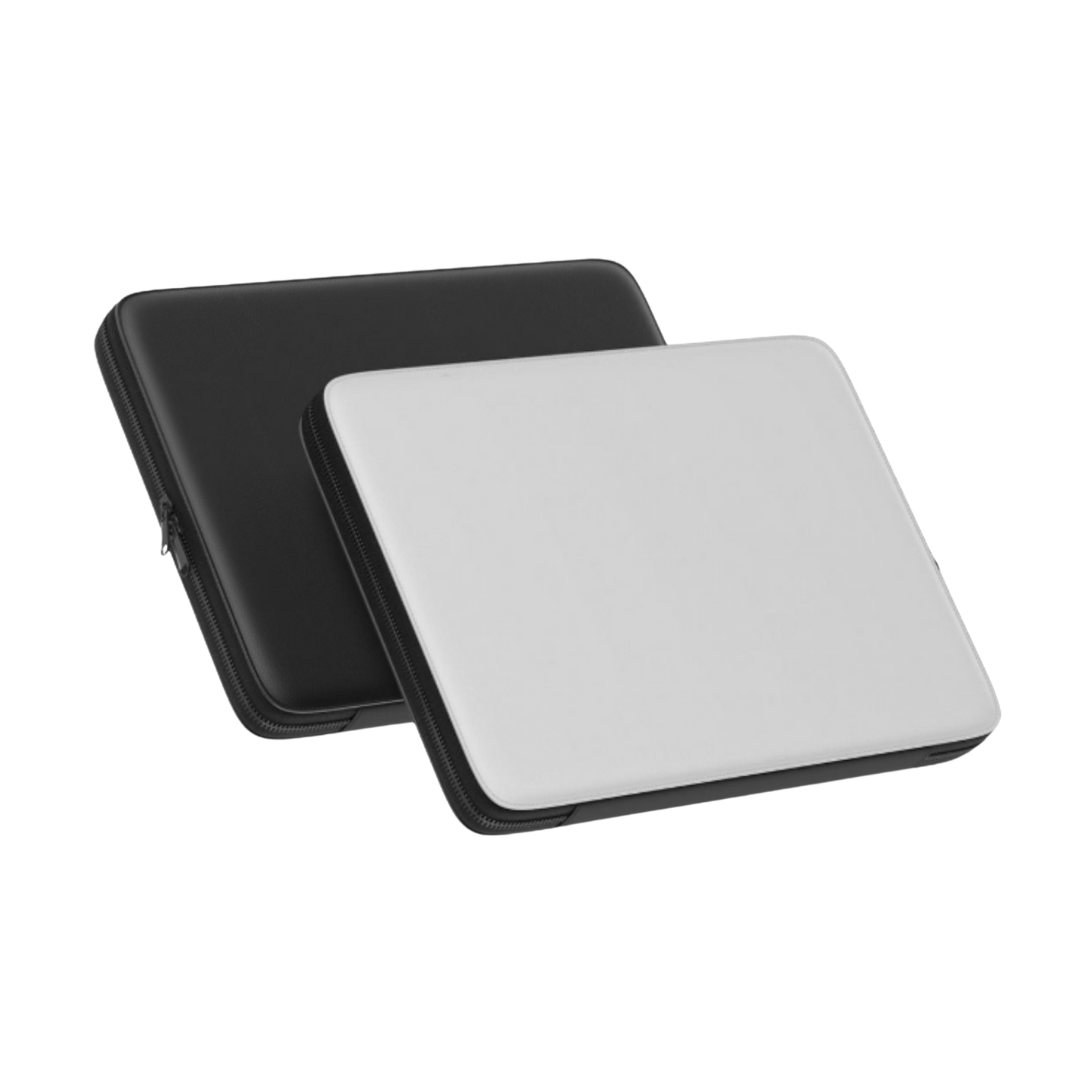
- Laptop cases and MacBook sleeves: a higher average order value of around €35, popular with remote workers and students. Justina calls the laptop sleeve our most underrated product - “it is not tied to one device, and it has a bigger surface for the design.”
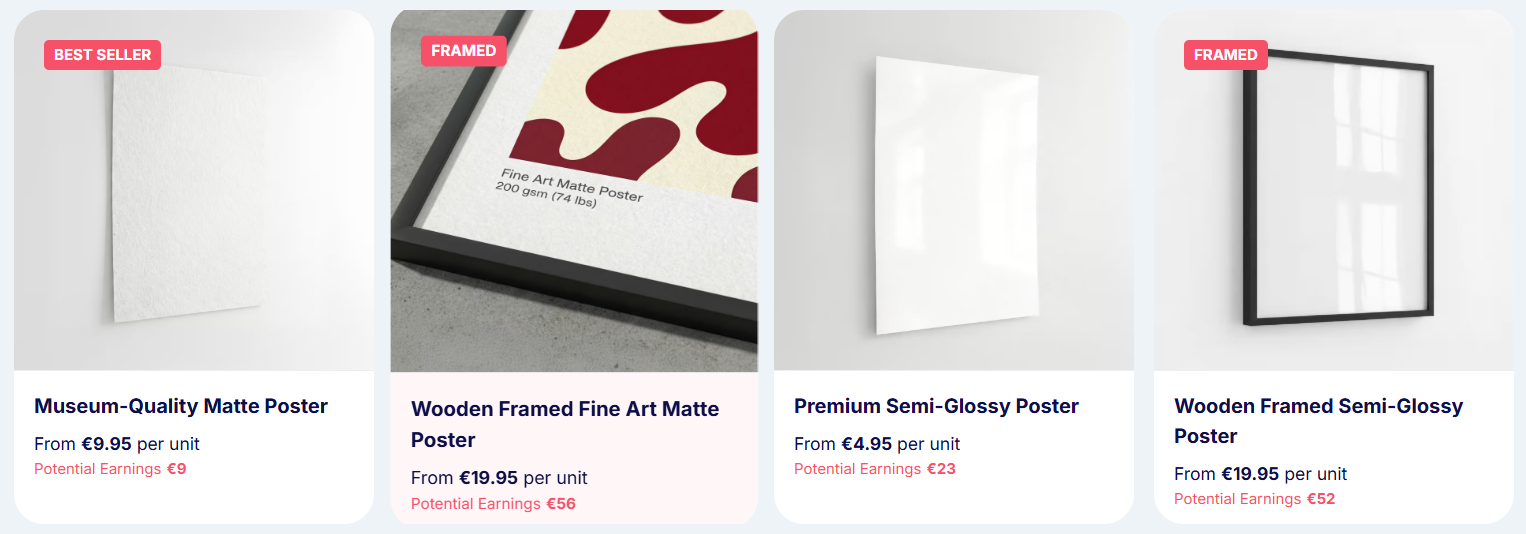
- Wall art posters: One of the best passive income streams for artists and designers in POD — once you design and list a poster, it can keep selling for years with no extra effort. There's a hidden opportunity here: roughly 65% of wall art sales still happen offline, so the online market is far less saturated than apparel. As Podbase CEO Saulius Meilutis notes, a digital artist can "scale down their digital art on the phone case and their audience can have a piece of art which is not like €1,000 for a custom framed canvas; it's like €40–€60" — turning a single design into a long-tail income stream.
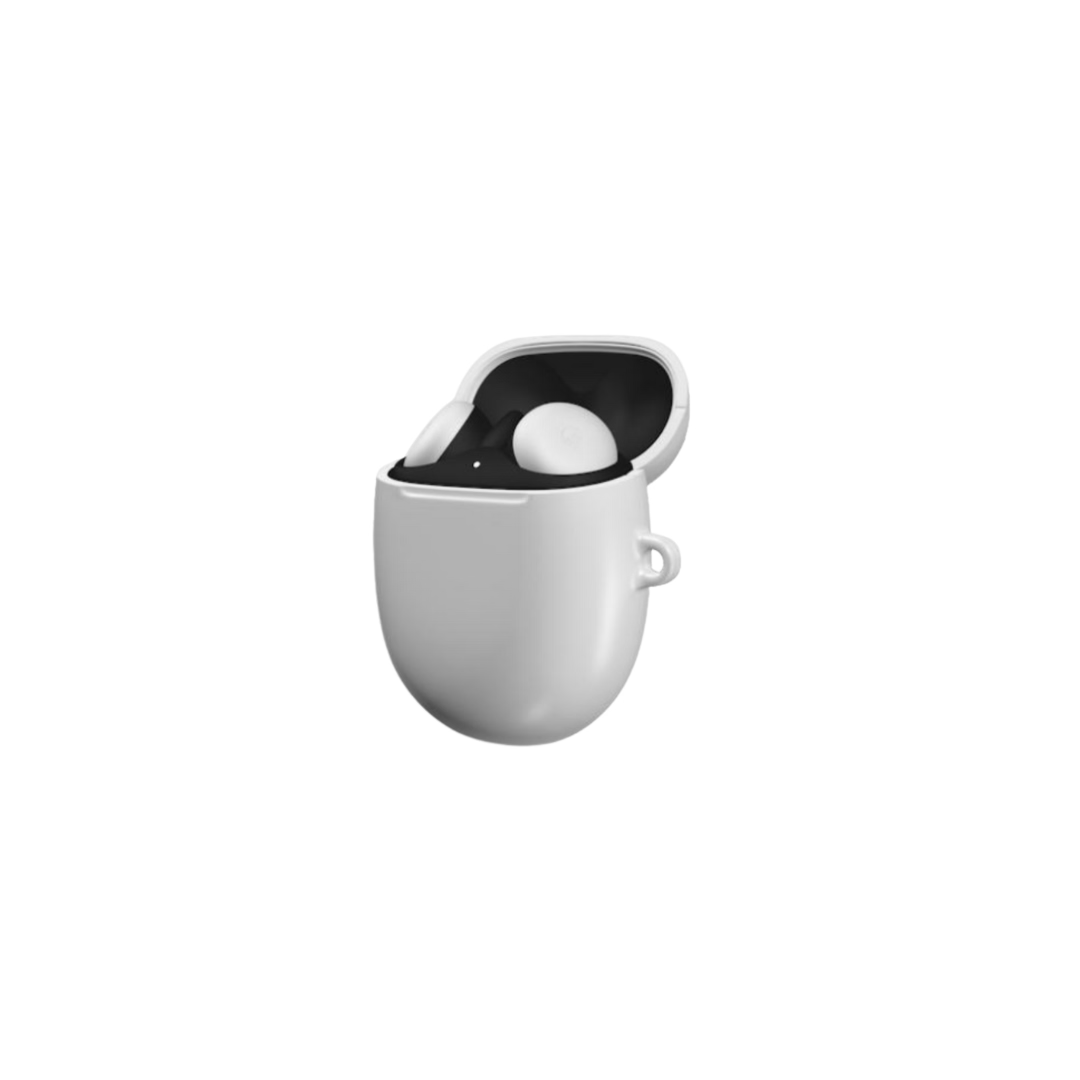
- AirPod and earbud cases: These cost little to produce and pair well with phone cases as a bundle, raising your AOV
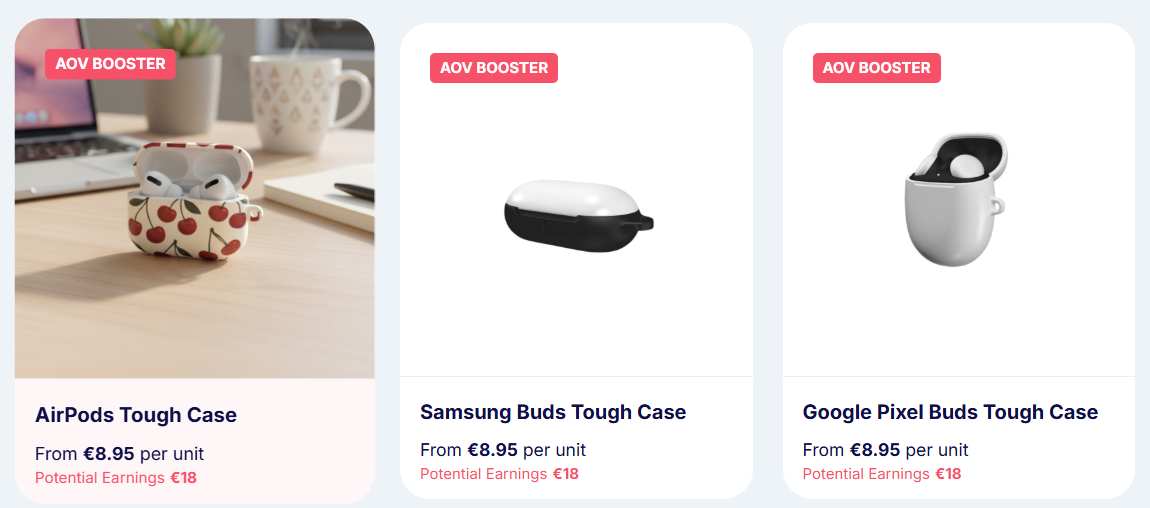
- Drinkware: sells reliably across seasons and ranks among the top non-apparel POD products globally.
Evergreen products hold value month after month. Seasonal items like holiday apparel need constant new designs to stay relevant - so for print on demand business ideas centered on passive income, evergreen is always the stronger foundation.
How to Set Up Your POD Store for Maximum Automation
Picking the right products is only half the work. Your setup decides whether fulfillment runs quietly in the background or keeps pulling you back in. Start with your platform - each of the major print-on-demand sites works differently:
- Etsy brings built-in search traffic but needs regular listing updates to stay visible.
- Shopify gives you more control but requires you to drive your own traffic.
- WooCommerce fits best if you already use WordPress.
None is wrong - just know the trade-off. Next, connect your fulfillment partner before you publish. With Podbase linked to your store, every order moves from purchase to delivery with no input from you, and you can get started with Podbase in a few steps and go live the same day. That speed is real: our CEO notes onboarding a new POD project dropped “from three months to under one month.” Here is what a well-automated store looks like:
- Mockup generation: Podbase creates free product mockups automatically, so listings look polished with no photoshoot.
- SEO from day one: write keyword-rich titles, descriptions, and tags so buyers find you without paid ads.
- Pricing formula: set price once - base cost plus platform fees plus your target margin. A phone case bought at about €10 comfortably sells for €35-60.
- Post-purchase emails: a short sequence after each sale is one of the easiest ways to bring buyers back. A simple checkout add-on like a screen protector converts at 3-10% for extra profit.
This setup works well if you want to make extra income while working full-time. Done right, passive income from print on demand stops being a goal and becomes a result.
Also Read:
How Long Does It Take to Build Passive POD Income?
Most sellers see their first sale within 30-60 days, but consistent income takes longer. Print on demand passive income in 2026 tends to follow a clear three-phase pattern:
- Months 1-3: build your catalog - aim for 50+ products across 3-5 niches to gather data on what buyers respond to before going deep.
- Months 3-9: double down on what works. Improve SEO on listings gaining traction and expand winning POD designs into new product types.
- Month 9 and beyond: with 100+ optimized listings and proven demand, the store sells with little input - most sellers spend just 1-3 hours a week on maintenance.
For sellers with strong catalogs, a monthly passive income of $1,000-$5,000 is a realistic target. Six-figure stores exist but usually require a major upfront investment of time or design budget. A practical next step is to set a clear milestone and work toward it - building toward your first $1,000 a week is a good place to start. For perspective on the ceiling, one Podbase seller went from zero to seven-figure yearly revenue selling phone cases in 13 months by launching around ten designs and iterating fast.
Common Mistakes That Prevent POD Passive Income
Most sellers who struggle with earning passive income from print on demand do not fail because the model is broken - they fail on avoidable early mistakes:
- Listing too few products: ten listings will not build passive income. Catalog volume drives consistent organic sales - treat each listing as its own income stream.
- Chasing trends over evergreen niches: a viral design sells for a week; an evergreen design sells for years.
- Ignoring listing SEO: no traffic, no sales. Every title, description, and tag needs keyword research - using AI tools can make this faster.
- Underpricing: thin margins mean strong sales still will not add up. Podbase’s pay-per-sale model gives you room to price confidently.
- Spreading too thin too early: a weak presence on five platforms beats a strong one on two - in reverse. Master one platform first.
- Picking a high-fee subscription provider: fixed monthly fees make early passive income harder. A zero-subscription model removes that pressure.
FAQ
1. Is print on demand really passive income?
Print on demand is semi-passive. It requires upfront work - niche research, designs, store setup, and early marketing - but once that foundation is in place, fulfillment, live listings, and repeat sales run automatically. A strong design can keep selling for years with only occasional updates to SEO, trends, and light marketing.
2. Is print on demand profitable in 2026?
Yes, print on demand is profitable in 2026, with average margins of 20-30% across most product categories and no inventory risk. The global POD market is projected to grow from about $13 billion in 2025 to over $100 billion by 2034. Profit depends on catalog size, niche choice, and pricing discipline rather than luck.
3. How long does it take to make passive income with print on demand?
Most sellers see their first sale within 30 to 60 days, and consistent income usually develops over 3 to 6 months. The pattern is clear: build a catalog of 50+ listings in months 1-3, double down on winners in months 3-9, and by month 9 a 100-listing store often needs just 1-3 hours weekly.
4. How much passive income can you make with print on demand?
For sellers with strong, well-optimized catalogs, $1,000 to $5,000 in monthly passive income is a realistic target. Six-figure stores exist but usually require a major upfront investment of time or design budget. Earnings scale with catalog depth and evergreen niche selection rather than with any single viral product.
5. What are the best print-on-demand products for passive income?
Evergreen products are best: phone cases, laptop and MacBook sleeves, wall art posters, AirPods and earbud cases, and drinkware. They sell year-round without constant redesigns. Tech accessories are especially strong because new device launches refresh demand continuously, and Podbase prepares templates before each device releases.
6. Why do most print-on-demand stores fail?
Only about 24% of POD stores are still active after three years. Most fail from avoidable mistakes: too few listings, chasing trends over evergreen niches, ignoring listing SEO, underpricing, spreading across too many platforms too early, and picking high-fee subscription providers that make early profit harder to reach.
Conclusion
Building passive income with print on demand is a slow burn that pays off. Here is the contrarian truth the hype skips: the sellers who make it work are not the most talented designers or the most experienced marketers - they are the ones who built a deep catalog, got their SEO right, and stuck with it through the slow months while 76% of stores quit. Podbase gives you the fulfillment infrastructure to make the passive side actually passive, with pay-per-sale pricing, in-house production, and early device templates. Sign up for free and start building a store that works for you - or switch your current provider to Podbase to keep more of every sale.

Saulius Meilutis is the CEO of Podbase, helping creators and entrepreneurs monetize their ideas with print-on-demand. He shares insights on eCommerce, growth, and building lean online businesses.

.avif)




.avif)
.avif)
.avif)
.avif)
.avif)
.avif)

.avif)



.avif)

.avif)

.avif)

.avif)

.avif)