Starting an ecommerce business without money is genuinely possible in 2026 - you can launch an online store using free tools and low-capital models like print-on-demand, dropshipping, and digital products, with no inventory, office, or developer.
But here is the part most “start with no money” guides skip: free is not the same as effortless, and money is rarely the real bottleneck. Inside Podbase, the single biggest reason new sellers fail isn't a lack of cash - it's what our Head of Sales calls the guessing phase. So this guide gives you the steps and the free tools, but it also tells you, using data from our own seller base, where the zero-budget approach quietly works against you.
Is It Possible to Start an Online Store with Zero Investment?
Yes - if you do it right, starting an ecommerce business with no money is possible in 2026, and the macro numbers are on your side. Global ecommerce sales reached roughly $5.7 trillion in 2024, about 2.77 billion people now shop online, and 74% of Gen Z shop online at least once a month, usually from their phones. You can see the full breakdown in our 2026 ecommerce statistics.
Shopify statistics show more than 6.8 million live Shopify stores worldwide as of 2026. Print-on-demand is growing fast too: there are roughly 228,000 active POD stores globally, about 11.4% of all Shopify stores now run POD, and you don't need to hold inventory to start. The global POD market hit about $12.96 billion in 2025 and is on track for roughly $75.30 billion by 2033 - a ~25.3% annual growth rate. See our print-on-demand statistics for the full picture.
Dropshipping is another low-capital path: the global dropshipping market is estimated at around $604.94 billion in 2026 (Straits Research). These numbers prove demand exists. But here is the honest counterweight that belongs in every “no money” guide: only about 24% of POD shops are still operating three years after launch. The opportunity is real, and so is the failure rate - which is exactly why the how matters more than the how much.
Also Read:
Top Free Ecommerce Business Models for Beginners
These low-capital ecommerce models show how to start an ecommerce business without money or experience. Each removes the biggest traditional cost - inventory - but they differ sharply in margins and how much the product quality is in your control.
Print-on-Demand (POD) Business
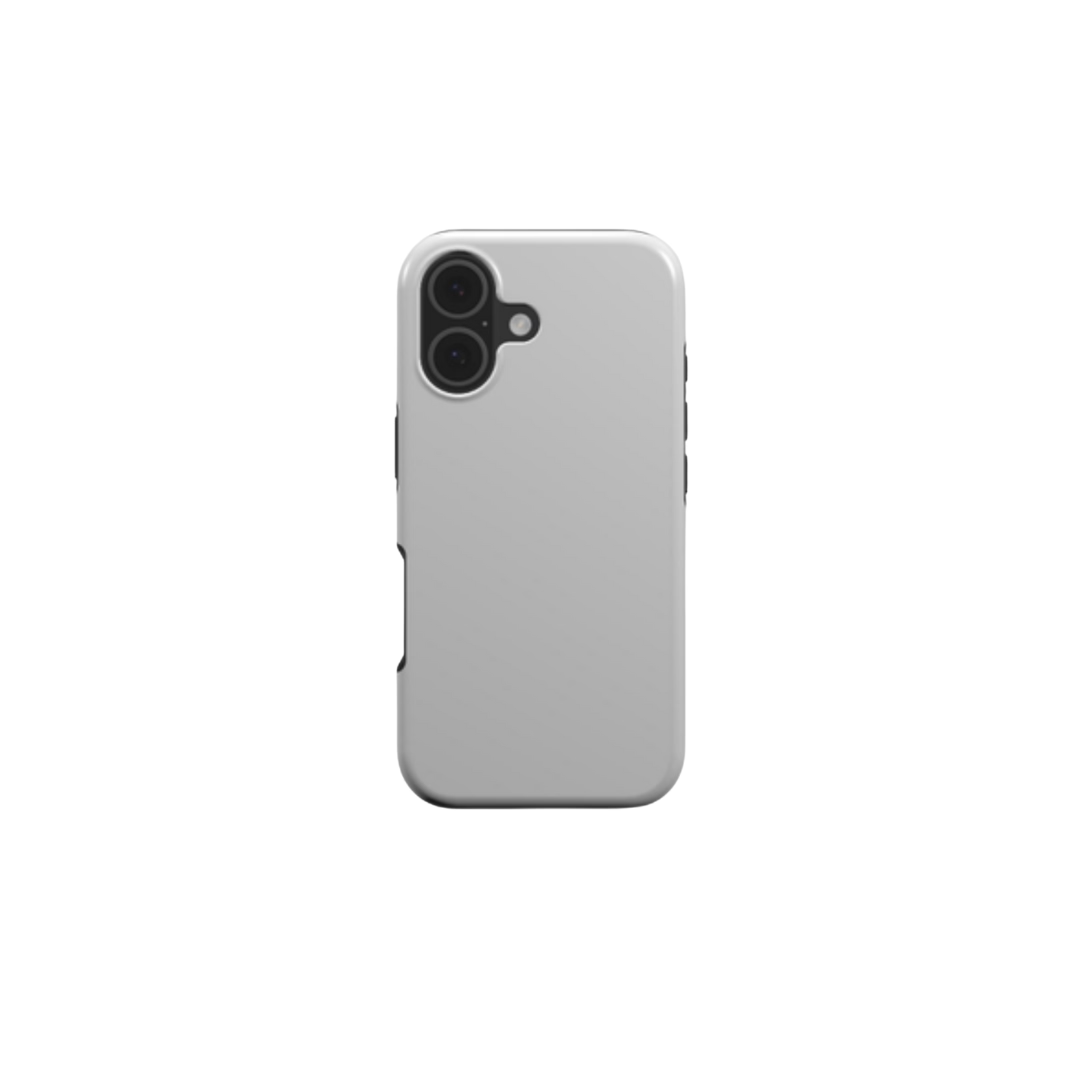
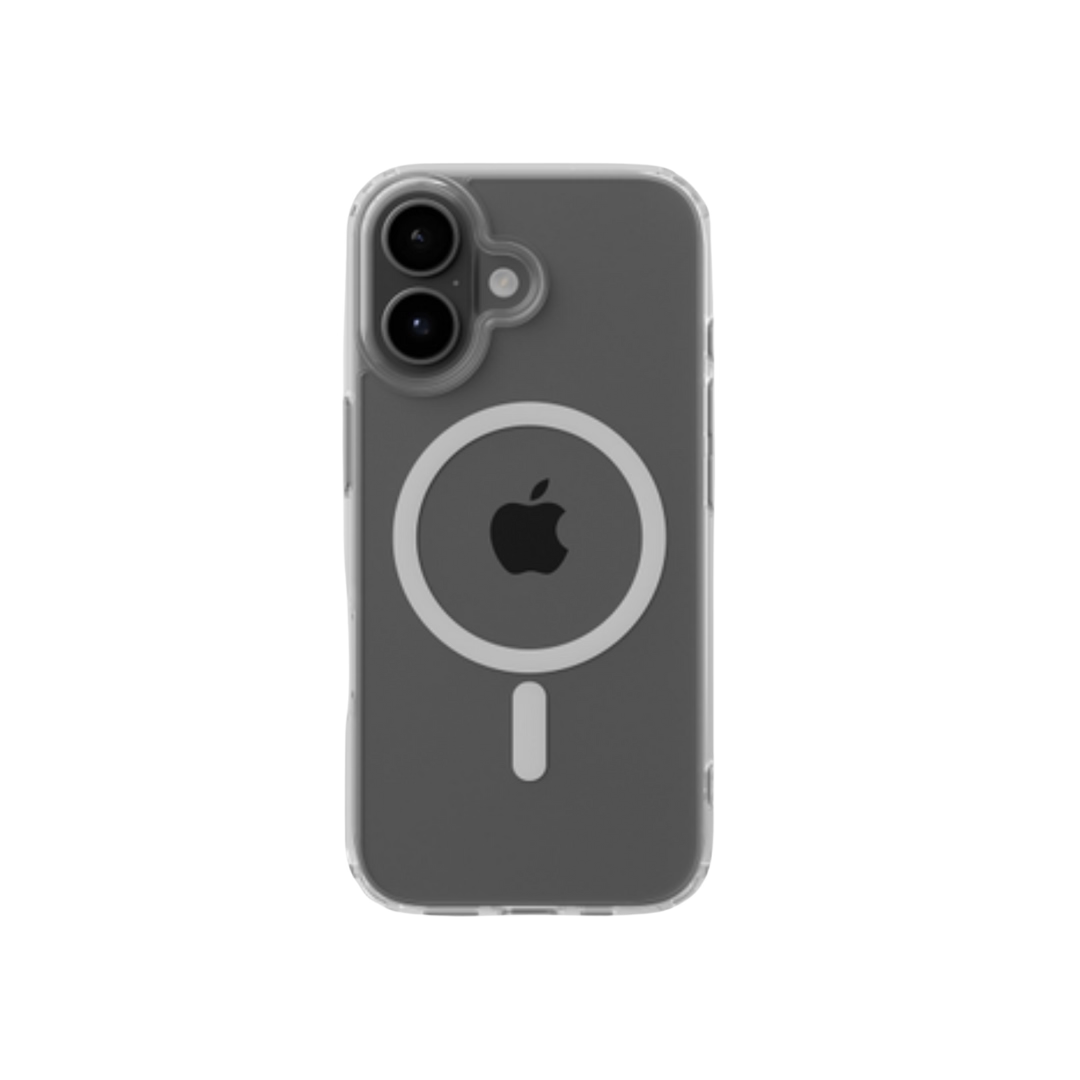
A print-on-demand business lets you sell custom items like phone cases, shirts, or mugs without buying inventory first. You upload designs, and a provider prints and ships each order only after a customer buys - so there's no upfront spending and zero stock. On the supply side, on-demand production also cuts roughly 20-40% of system-level waste versus batch manufacturing, because overproduction drops to near zero - our operations team confirms this from our own line.
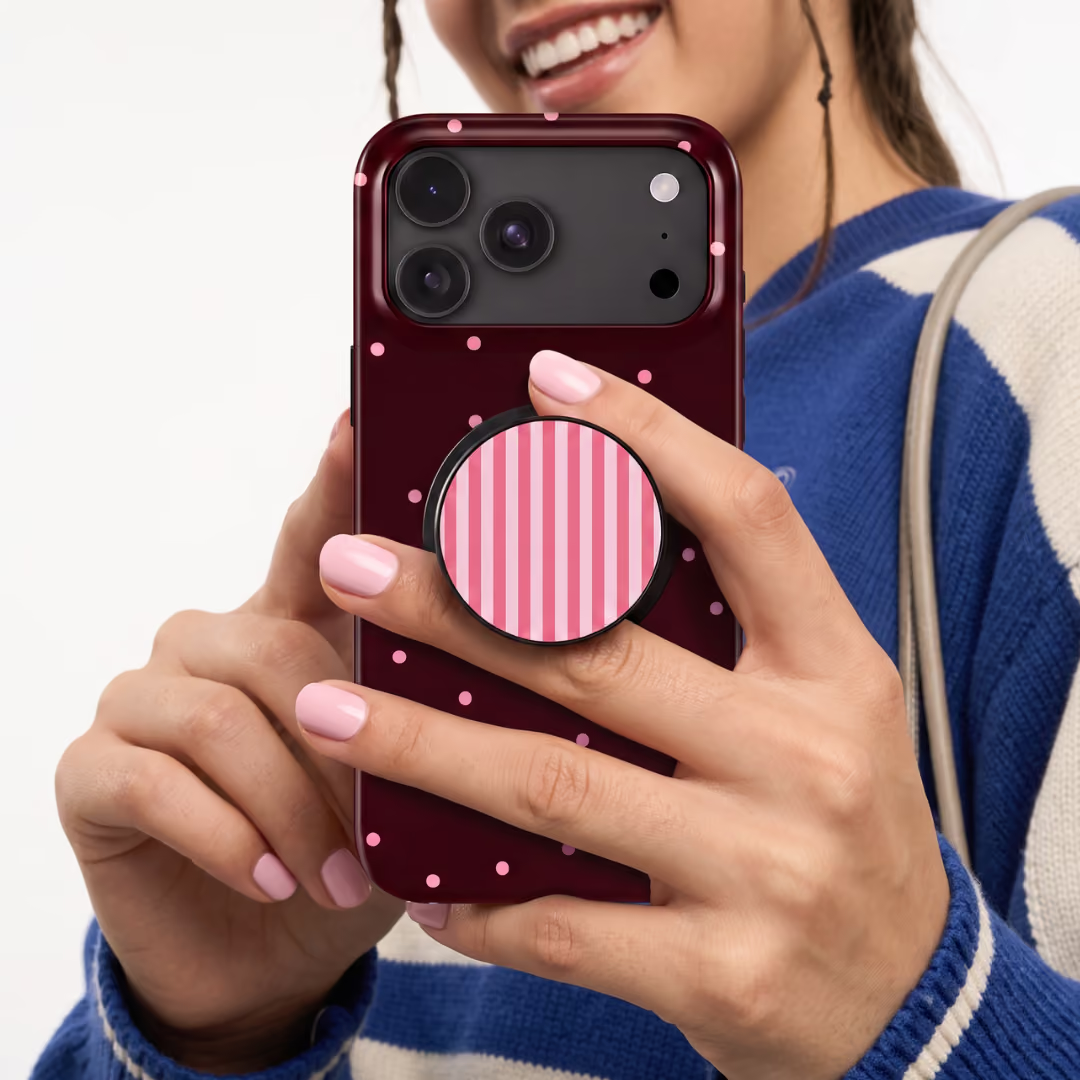
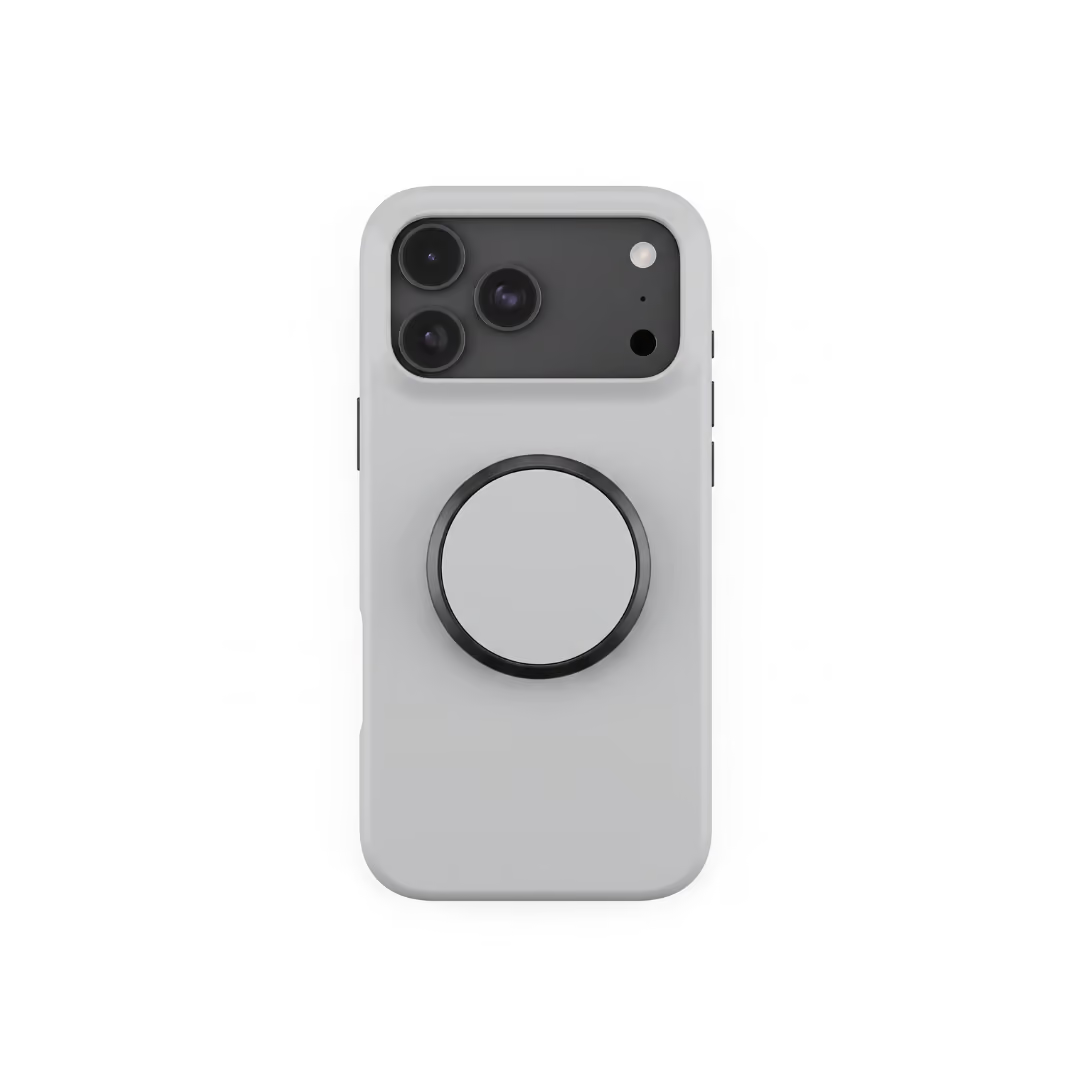
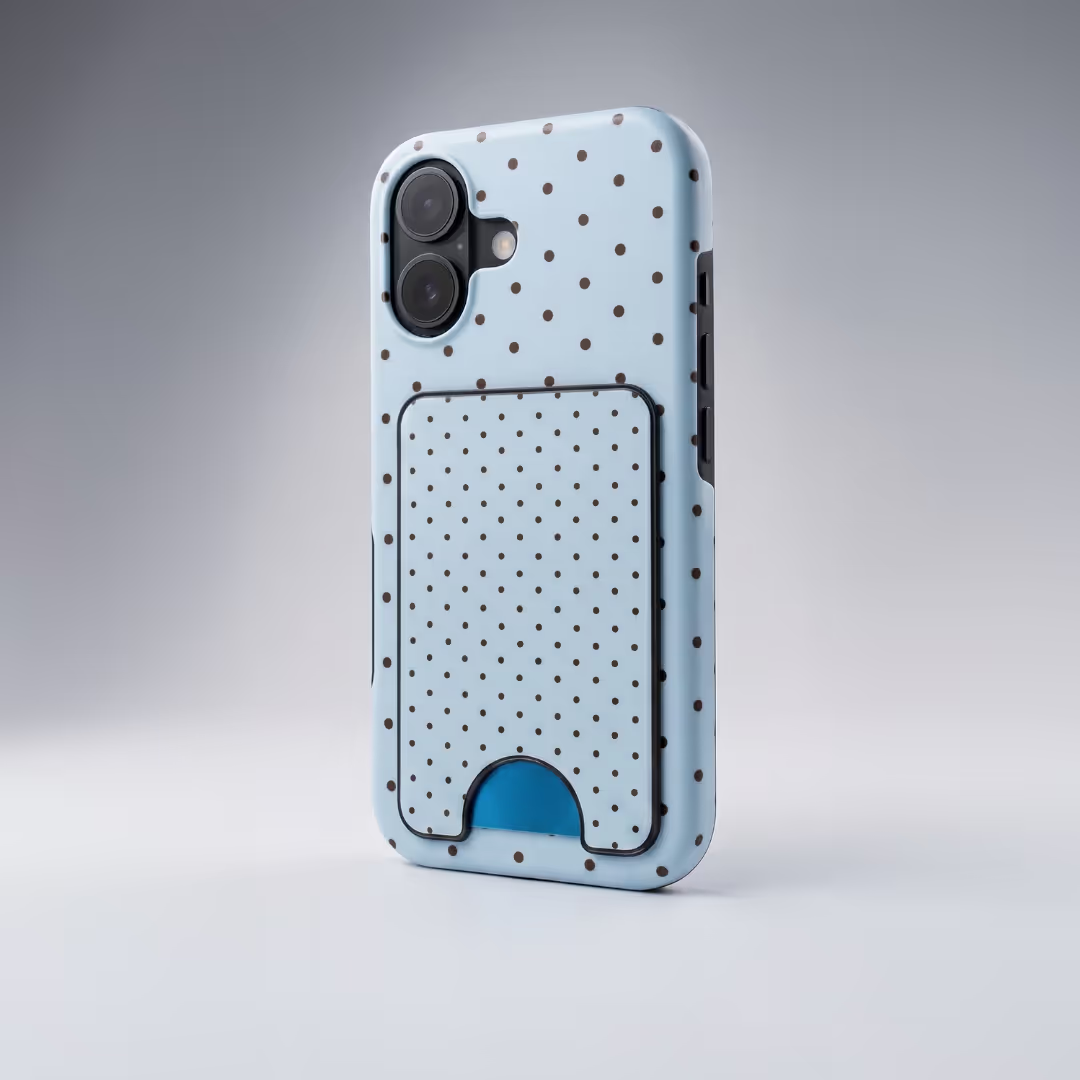
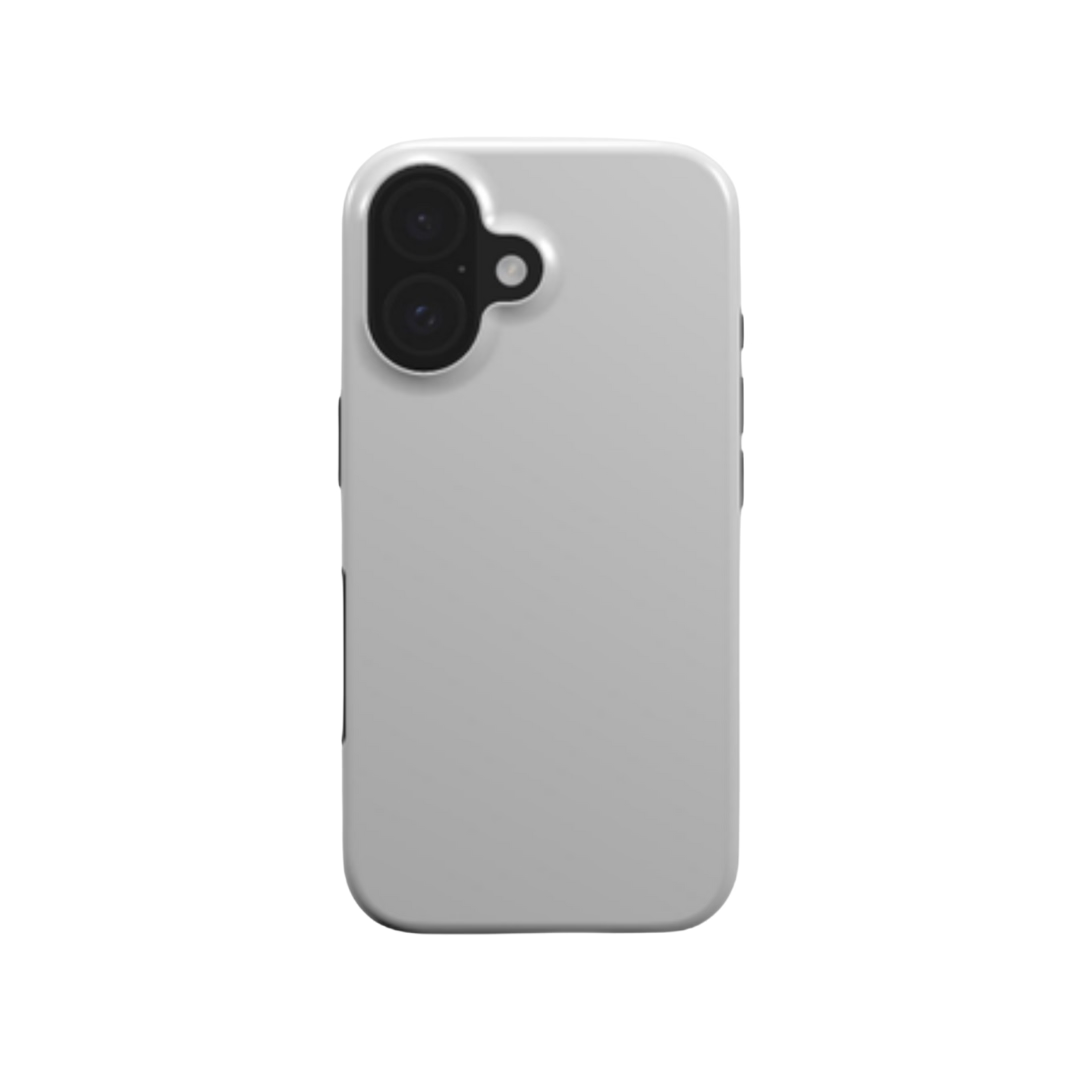
Two things most guides won't tell you about POD margins. First, the model is genuinely profitable when the unit economics are right: as our CEO Saulius Meilutis puts it, “Phone cases are really a great example of a healthy and profitable POD business model... you can buy from Podbase for 10 euro and sell them for 35-60 euro.” Second, the cheapest provider is rarely the cheapest choice. “A cheap product that fails after a few days carries a cost that never shows up in a margin calculation,” warns our Head of Sales, Sidas. “That customer tells their friends. That return or complaint lands in a support queue.” Typical POD seller margins sit around 20%, reaching 30%+ for strong niches - but only if the product holds up.
Dropshipping Without Upfront Costs
Dropshipping lets you sell products from suppliers without storing them yourself. You list the products, and the supplier ships when an order comes in. Many platforms let beginners start for free using tools like DSers or Zendrop. If you want a real brand rather than a generic reseller storefront, private label dropshipping lets you design the product, the packaging, and the logo - which is what makes repeat customers possible.
Affiliate Marketing or Digital Products
Affiliate marketing pays you a commission when someone buys through your link - no product, no shipping. You can also sell digital products like ebooks, templates, or courses with zero inventory and near-100% margins. These are the lowest-cost entry points of all, though they trade physical-product defensibility for easy replication, so differentiation and audience matter more.

10 Steps to Start an Ecommerce Store Without Money
To start an ecommerce business without money, follow these steps - in this order. The sequence matters, because the most common failure isn't doing the wrong step, it's never finishing the sequence at all.
- Pick a niche: Choose a product that matches your interests or skills. High-profit niches include tech accessories, fashion, and home decor.
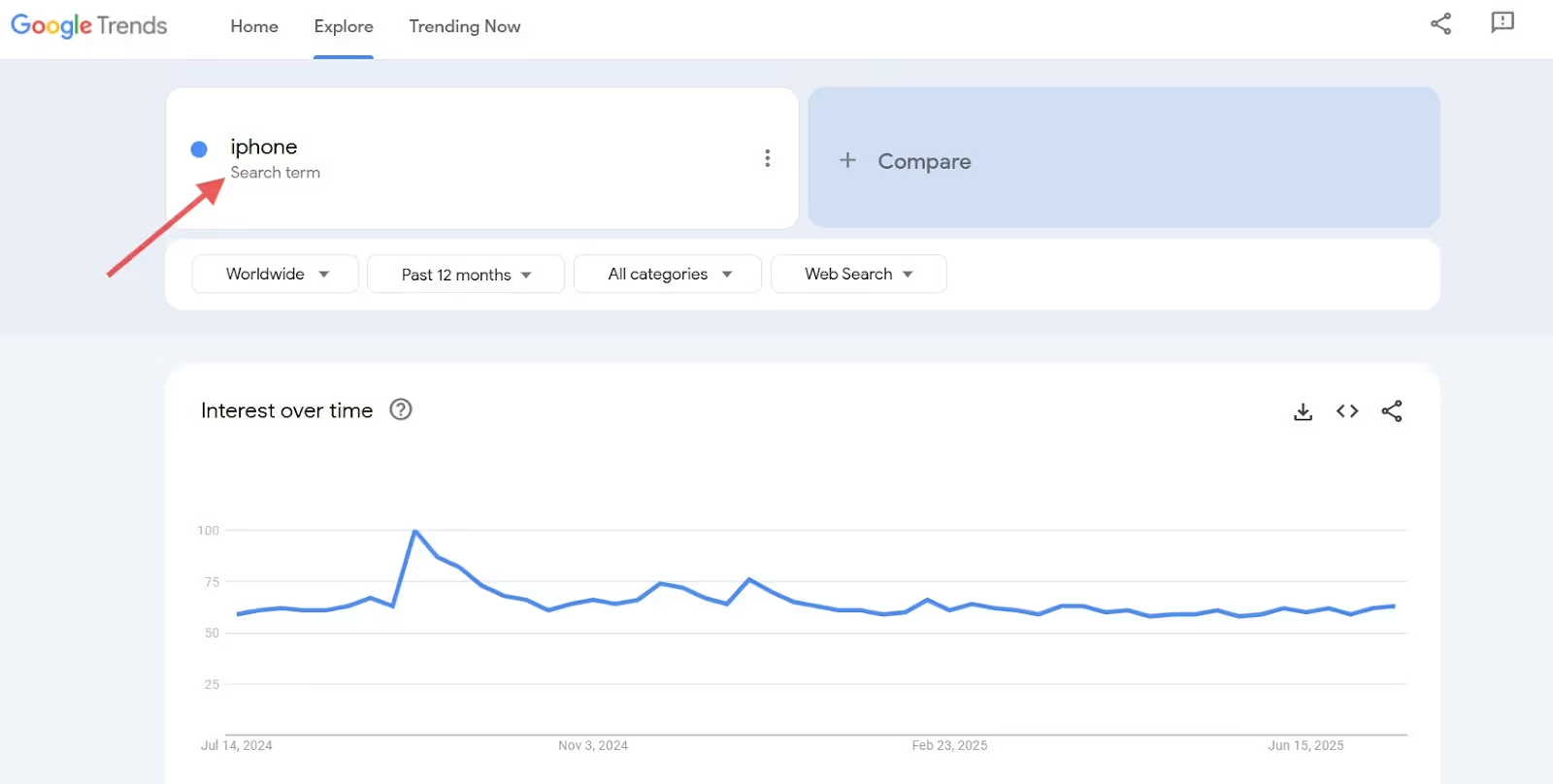
- Do free market research: Use Google Trends, TikTok, and Amazon to see what people actually want to buy before you commit.
- Decide what to sell: Custom items, trending products, or digital downloads - this choice decides your business model.
- Create free logos and designs: Use Canva, or generate images with ChatGPT image tools, even with no design skills.
- Set up a free online store: Start with WooCommerce, Wix, or Ecwid's free plan to build a store with zero upfront cost.
- Add products from free suppliers: Use print-on-demand companies like Podbase, which only charge after a sale. Getting a POD project live used to take about three months across the industry; on Podbase that's now under a month.
- Place a sample order early: This step is missing from most “no money” guides, and it's the one that correlates most with success. Our data is blunt: a seller who places a sample order within the first two days and publishes at least five products within 30 days is already ahead of 80% of POD stores.
- Write keyword-rich product descriptions: Keep them short, focus on why someone should buy, and include the terms shoppers actually search.
- Promote where your buyers are: Free platforms like TikTok, Instagram, and Pinterest can work - but read the promotion section below first, because “free traffic” is harder than it sounds in 2026.
- Scale with profits, not debt: Once you're profitable, reinvest into better tools and ads. Ten sales already puts a new store in the top 10% of POD launches - so early traction compounds fast.
How to Choose a Niche That Sells (Even Without Cash)
Learning how to start an ecommerce business without money starts with picking the right niche. A profitable niche makes sales easier without spending cash. Here's how to find one for free:
- Use Google Trends to check whether demand for your idea is rising or fading, and compare it against alternatives.
- Search TikTok hashtags to see which products are getting views, shares, and comments - repeat appearances signal real demand.
- Browse Etsy bestsellers for Etsy shop ideas that cost nothing to validate.
- Pick something with demand but not dominated by big brands.
One proprietary insight worth applying here: specificity beats coverage. Across our seller base, the stores that win don't target “phone cases” - they target a personality, a fandom, or an aesthetic. As our product team frames it, tech accessories “stopped being simply devices and became an extension of who we are.” A niche tied to identity is far easier to market for free than a generic category, because the audience self-identifies and shares. For context, the global phone case market alone is projected to reach $41.4 billion by 2030, and about 68% of smartphone owners use a case - see our phone case statistics.
Free Tools and Platforms to Launch Your Store
These free tools cover everything you need to launch when learning how to start an ecommerce business without money:
- Shopify: free trial to build a store in a few hours.
- Etsy: great for handmade, vintage, or digital products with no website required.
- Gumroad: sell digital products with no monthly fees.
- WooCommerce: a free WordPress plugin that turns a blog into a store.
- Canva: free templates for logos, product images, and social posts.
- Free logo makers: Looka or Hatchful to design a logo fast.
- AI tools: ChatGPT or Jasper for product descriptions, image prompts, and business name ideas.
Mistakes to Avoid When Starting with No Money
When learning how to start an ecommerce business without money, avoid these costly mistakes - the first one quietly kills more stores than any budget shortfall.
Getting Stuck in the Guessing Phase
This is the real killer, and it deserves top billing. “Most sellers who churn go through what we call the guessing phase,” says Sidas, our Head of Sales. “They spend months building the ideal store... Six months pass, the store has never gone live, and the initial drive that sparked the idea has quietly faded.” The sellers who succeed do the opposite: “They move fast and test first. They put three to five designs live, push their marketing hard... Most successful stores are up and running within two weeks.” A zero-dollar budget makes this trap worse, because there's no financial pressure forcing you to launch. Set a two-week deadline and ship.
Overpaying for Domains
You don't need an expensive custom domain to start. Begin with a free or low-cost option like a .store or .shop address, and upgrade once you're making sales.
Treating Free Social as Guaranteed Free Traffic
The standard advice - “just post on TikTok and Instagram for free” - is oversold for beginners in 2026, and our marketing team is candid about it. “The majority, 99% of our sellers right now, are getting the majority of their traffic from social media ads,” says our CMO, Vytautas Mikaila. “Organic content for organic traffic is already more of an advanced-player and advanced-seller tactic. It is not really a beginner game anymore.” Free promotion can absolutely work, but treat it as a skill to build, not a guaranteed channel - and expect a small ad budget to often out-earn months of unpaid posting once you have profit to reinvest.
Not Validating Product Ideas
Don't guess what people want - check. Use Google Trends, Amazon, TikTok, and Etsy to confirm demand before you build designs or descriptions around a product.
How to Promote Your Store Without a Budget
Free promotion is real, but in 2026 it rewards relevance and consistency over raw volume. Our CMO's warning applies directly here: “Do not treat SEO like passive free traffic. It is not that anymore.” With that framing, here are the channels worth your unpaid effort:
- Use TikTok trends: post short product-in-use videos with trending sounds and hashtags to extend reach.
- Promote on Instagram: share product photos, behind-the-scenes Reels, and tag niche pages to reach new buyers.
- Engage communities on Reddit: join niche groups, add genuine value, and mention your store only when it fits naturally.
- Boost visibility with SEO: use specific keywords like “custom phone case” in titles, image file names, and descriptions - but write for real buyer intent, not for search engines.
- Post on Pinterest: create linked, eye-catching pins; because Pinterest users plan purchases, pins keep driving traffic for months after posting.

Also Read:
- Shopify vs Amazon: Which Is Better for Sellers in 2026?
- How to Make Money Using AI (Proven Methods)
- High Demand Products With Low Competition to Launch in 2025
Free Monetization Tips That Actually Work
You don't need money to start, but you do need to know how to turn traffic into profit. These five strategies drive sales without upfront spend - several pulled straight from what works in our own seller base:
- Bundle products: sell two or more items together so buyers get more value and your average order value rises.
- Add a checkout upsell: one simple add-on button at checkout (a screen protector, say) converts 3-10% of buyers in our data and adds roughly €10 of profit per take - at no extra acquisition cost.
- Use custom packaging: a thank-you note or light branding makes you memorable and drives repeat purchases.
- Run influencer outreach: offer small creators a free sample for a review. One Podbase seller scaled from zero to seven-figure annual revenue in 13 months selling phone cases with about ten designs and exactly this kind of influencer push.
- Lean on community and email: sellers with a community or mentor scale roughly 32% faster than solo operators. Pair that with a free email tool like MailerLite to bring buyers back.
FAQ
1. Can you really start an ecommerce business without money in 2026?
Yes. Low-capital models like print-on-demand, dropshipping, affiliate marketing, and digital products let you launch with no inventory using free tools such as WooCommerce, Etsy, Canva, and a Shopify free trial. You pay suppliers only after a sale. The real challenge is not money but launching fast and choosing products with healthy margins.
2. What is the best free ecommerce business model for beginners?
Print-on-demand is the most beginner-friendly low-cost model because there is no inventory, no upfront spend, and you control product and branding. Typical seller margins are around 20% (up to 30%+ in strong niches). Dropshipping and digital products are also viable, each trading off margin, control, and defensibility.
3. Why do most no-money ecommerce stores fail?
The biggest cause is the guessing phase: spending months building a perfect free store that never goes live. Only about 24% of print-on-demand shops survive three years. Sellers who launch within two weeks, place a sample order in the first two days, and publish five products within 30 days are ahead of 80% of stores.
4. Is free social media traffic enough to grow an online store?
It can work, but in 2026 it is an advanced skill, not a guaranteed channel. About 99% of Podbase sellers get the majority of their traffic from paid social. Use free TikTok, Instagram, Pinterest, and Reddit promotion to start, then reinvest early profits into a small ad budget, which often outperforms months of unpaid posting.
5. How do you make money from a store you started for free?
Raise average order value with product bundles and a checkout upsell (a screen-protector-style add-on converts 3-10% of buyers and adds about 10 euro profit each), add custom packaging for repeat purchases, run influencer outreach with free samples, and use free email tools like MailerLite. Sellers with a community or mentor scale about 32% faster.
6. How much is the dropshipping and print-on-demand market worth in 2026?
The global dropshipping market is estimated at around $604.94 billion in 2026 (Straits Research). The global print-on-demand market reached about $12.96 billion in 2025 and is projected to reach roughly $75.30 billion by 2033 at a ~25.3% annual growth rate, with about 228,000 active POD stores worldwide.
7. What mistakes should beginners avoid when starting with no money?
Avoid the guessing phase (never launching), overpaying for a custom domain too early, assuming free social traffic is guaranteed, and skipping product validation. Validate demand with Google Trends, TikTok, Amazon, and Etsy before building, and set a two-week deadline to go live.
Conclusion
Starting an ecommerce business without money is real, but the win comes from speed, real products, and reinvested profit - not from the zero-dollar start itself. Pick a low-capital model, set a two-week deadline, place that early sample order, and let early sales fund your growth instead of debt. Create a Podbase account today to launch your store for free and get your first products live this week.

Saulius Meilutis is the CEO of Podbase, helping creators and entrepreneurs monetize their ideas with print-on-demand. He shares insights on eCommerce, growth, and building lean online businesses.

.avif)



.avif)
.avif)
.avif)
.avif)
.avif)
.avif)

.avif)


.avif)
.avif)

.avif)

.avif)

.avif)