Is Dropshipping Actually Profitable in 2026? (What No One Tells You)
- Yes, but only with sharp execution on product, brand, and ops. Most newcomers fail without a plan.
- Market size: About $464.4 billion in 2025, tracking toward $500 billion by 2027.
- Typical margins: Average 15 to 30 percent. Clearing 20 percent is doing well.
- Reality check: Shopify data suggests 90 percent plus of dropshipping stores fail. Execution is everything.
- Where profits live: North America is largest; fashion leads at roughly 34 percent of sales.
- Models that work: Low-ticket, high-ticket, private label, and digital dropshipping. Pick based on budget and support capacity.
- How to improve ROI: Target 30 percent margin products, build a real brand, use email to lift LTV, and test ads by channel.
- When to avoid it: If you cannot invest $500 to $1,000, need profit inside 3 to 6 months, or only sell commodity products. Customer support load is real.
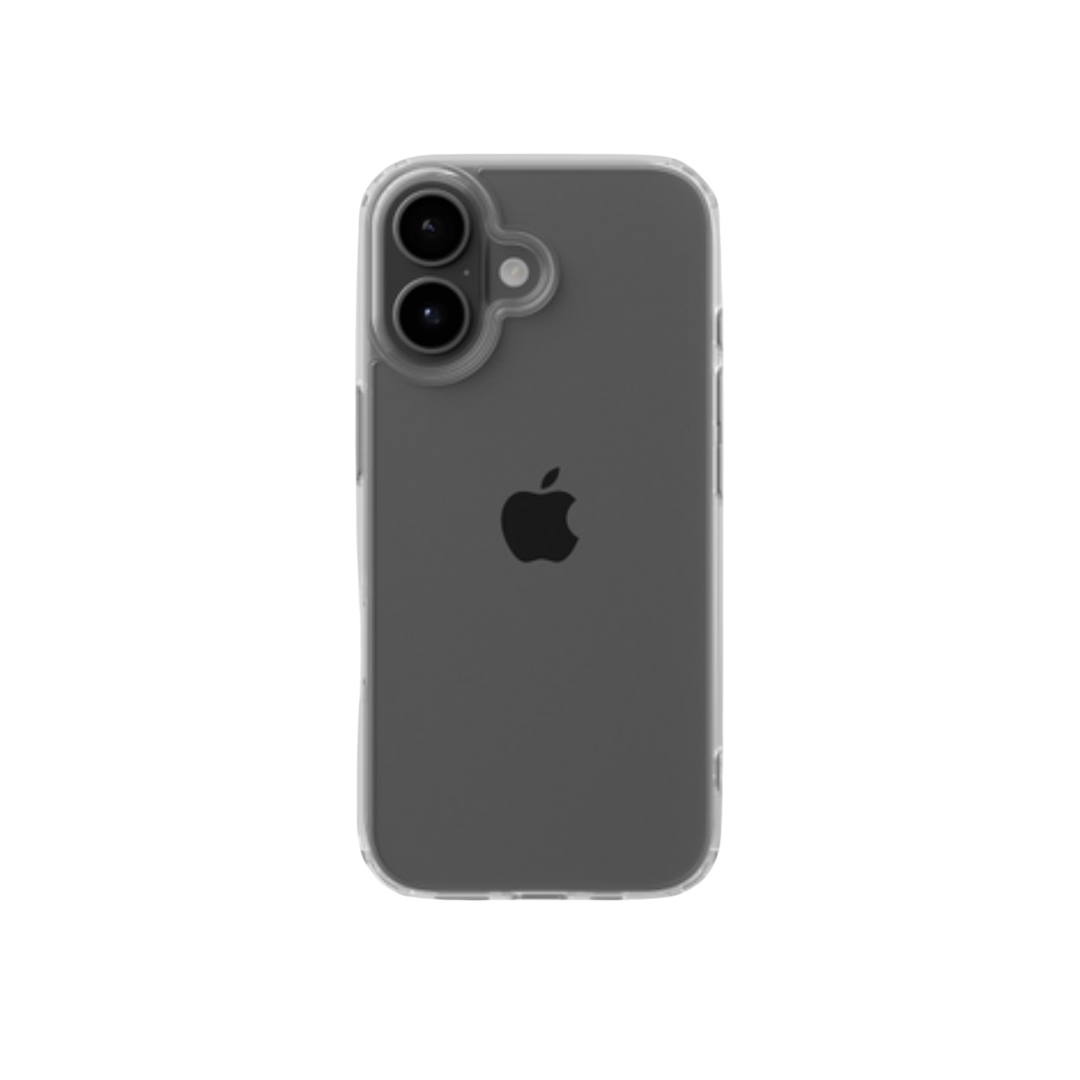
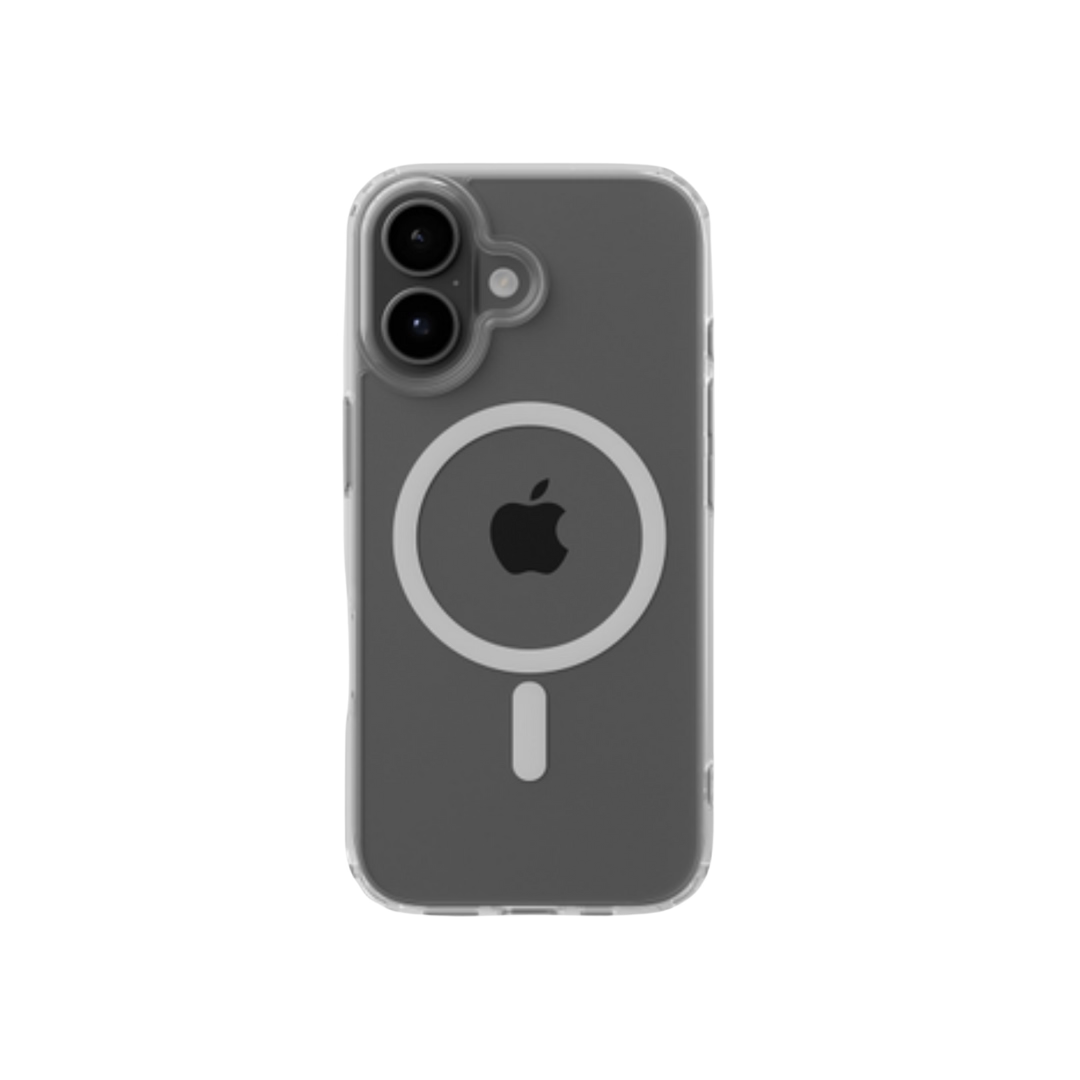
- POD alternative: Print on demand offers higher control and stronger margins for creators and small teams - a €10 phone case sells for €35-60.
Prefer higher control and brand-first margins? Connect Podbase, publish in minutes, and ship worldwide on demand. Start with Podbase
Is dropshipping profitable in 2026? If you've seen people earning from it, you probably have a lot of questions.
The dropshipping market is now huge - worth $464.4 billion - and more people want in every year. We run a fulfillment business on the made-to-order side of this industry, so we watch thousands of stores succeed and fail up close. In this post you'll get the honest version: dropshipping profits, average margins, top-selling products, why most stores fail, and what the survivors do differently.
By the end, you'll know whether dropshipping is the right model for you - and where print-on-demand, its higher-margin cousin, may suit you better in 2026.
What Is Dropshipping and How Does it Work in 2026?
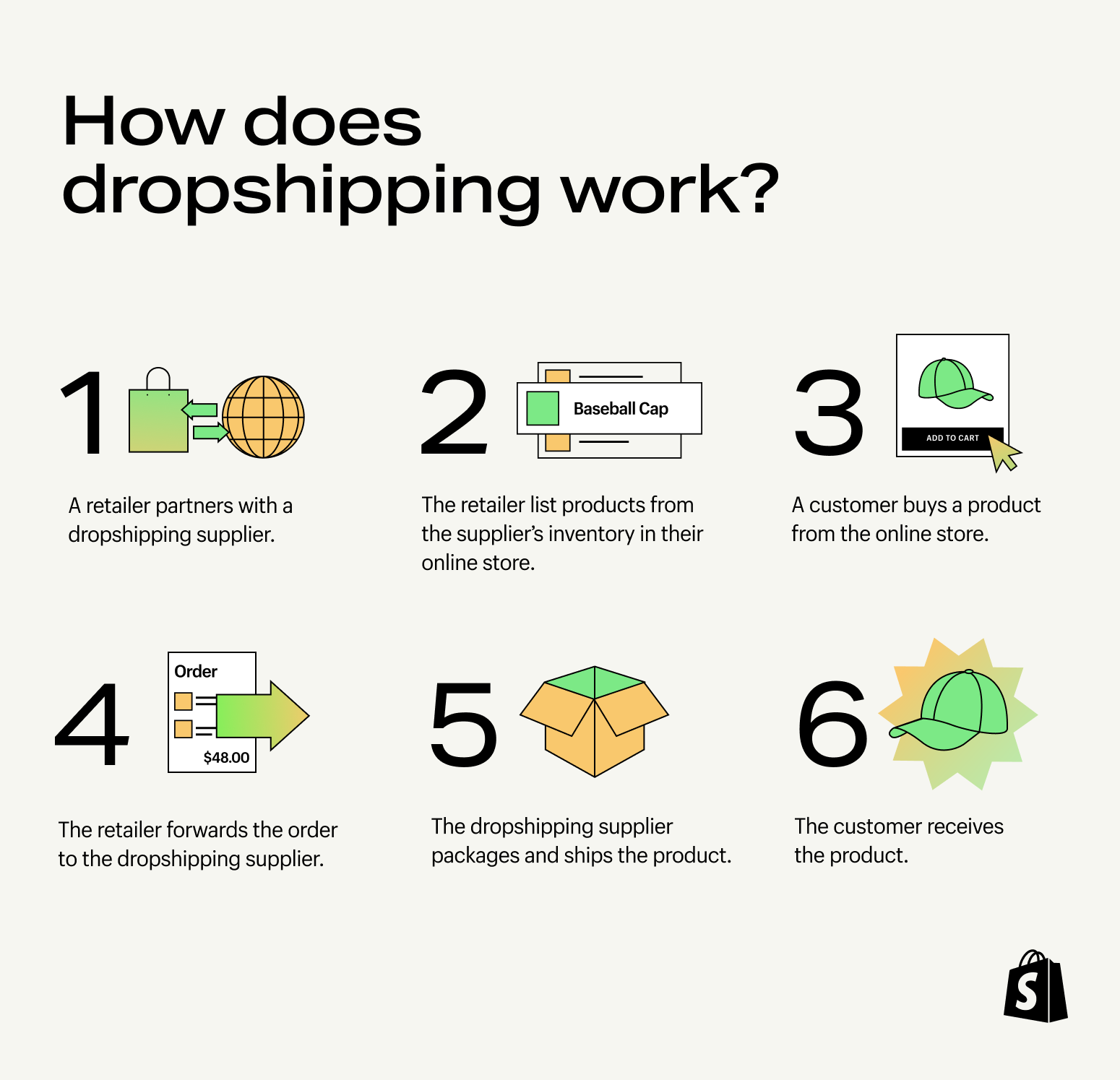
Dropshipping is running a store without holding any inventory.
You set up an online shop and add products from suppliers. When a customer buys something, you order it from the supplier at a lower price and keep the difference as profit. The supplier packs and ships the product straight to your customer.
In 2026, dropshipping runs on automation: tools connect your store to suppliers, and most dropshippers use platforms like Shopify with apps that process orders automatically. The automation ceiling keeps rising - our CEO notes that store owners now build their own order-flow integrations with AI and no coding experience, something that used to require hiring a developer.
You can dropship both physical and digital products. Physical products still make up most of the market, with fashion items leading at 34% of global dropshipping sales.
But is dropshipping profitable as a standalone business? Let's look at the numbers.
Also Read:
- How to Start a Shopify Store with Podbase: The Ultimate Guide for Success
- How to Sell Print-on-Demand on Shopify - A Detailed Step-by-Step Guide

Is Dropshipping Still Profitable in 2026?
Yes - but only if you do it the right way, and the two headline numbers explain the whole industry.
The first: the market has grown past $464.4 billion and could hit $500 billion by 2027. The second: Shopify reports that more than 90% of dropshipping businesses fail.
Both numbers are true at once because the money concentrates with operators who escape the commodity trap. Here's the failure mechanism we see from the fulfillment side: most new dropshippers sell the same items, from the same suppliers, at the same prices, into the same ad auctions. When the product is identical, price is the only lever left - and a 15-30% margin doesn't survive a price war. The 10% who win sell something the next store can't list tomorrow: a real brand, a specific niche, or a customized product.
Your location also affects profitability. North America remains the biggest market, and Europe is growing quickly - for context from the adjacent print-on-demand market, the UK and Germany together account for around 55% of Europe's POD spending, a good proxy for where European e-commerce demand concentrates.
So is dropshipping a profitable business model in 2026? It can be - if you pick the right niche, differentiate the product, and set up efficient processes.
Also Read:
- Shopify vs. Etsy: Which Platform Is Right for Your Business?
- Top 13 Etsy Shop Ideas To Kickstart Your Creative Business
Pros and Cons of Dropshipping
Is a dropshipping business profitable for you specifically? Weigh these advantages and challenges first.
Advantages
- Starting a dropshipping business is cheaper than opening a regular store - no upfront product purchases, no warehouse.
- All you need is an internet connection and a reliable computer or phone.
- You can run your store from home or while traveling.
- When sales rise, suppliers handle packing and shipping, so volume doesn't bury you.
So, is dropshipping profitable? It can be - especially with low upfront costs and flexible growth.
Challenges
- Because it's easy to start, competition is brutal. New dropshippers end up selling identical items from identical suppliers, which compresses margins and makes standing out hard.
- You have less control over quality and shipping, since you never touch the product.
That second challenge deserves more weight than most guides give it, because it's where reputations die. As Sidas, our Head of Sales, puts it: a supplier "might advertise a three-to-five day shipping window, but if fulfillment takes another five business days on top, the real delivery window is closer to ten working days" - and the worst outcome is a partner who ships fast but sends the wrong or faulty item. When you evaluate any supplier, dropshipping or POD, interrogate the full order journey and the quality checks, not the advertised shipping line. It's also the strongest argument for the made-to-order model: with a partner like Podbase, quality control is the supplier's core job - standardized production settings, tested materials, color verified with a spectrophotometer - and the average order still leaves production in about 23 hours.
How Profitable Is Dropshipping?
According to Dropshipping.com, the average dropshipping store makes 15% to 30% profit, and clearing 20% means you're doing well. Your actual profits depend on what you sell, how you market it, and how efficiently your store runs.
Successful dropshipping stores also generate 50% more profit than businesses relying solely on inventory, because they can offer more products without warehouse costs.
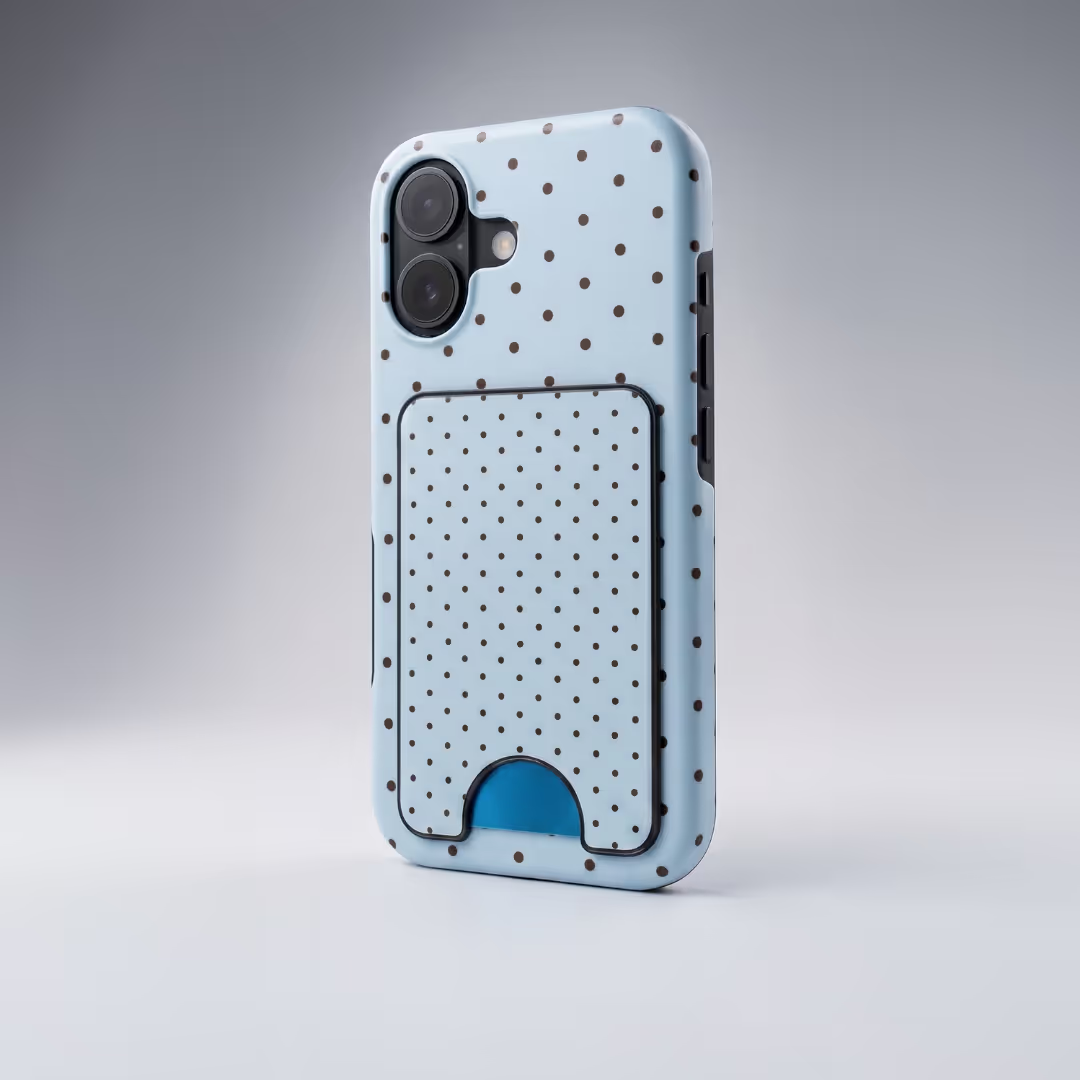
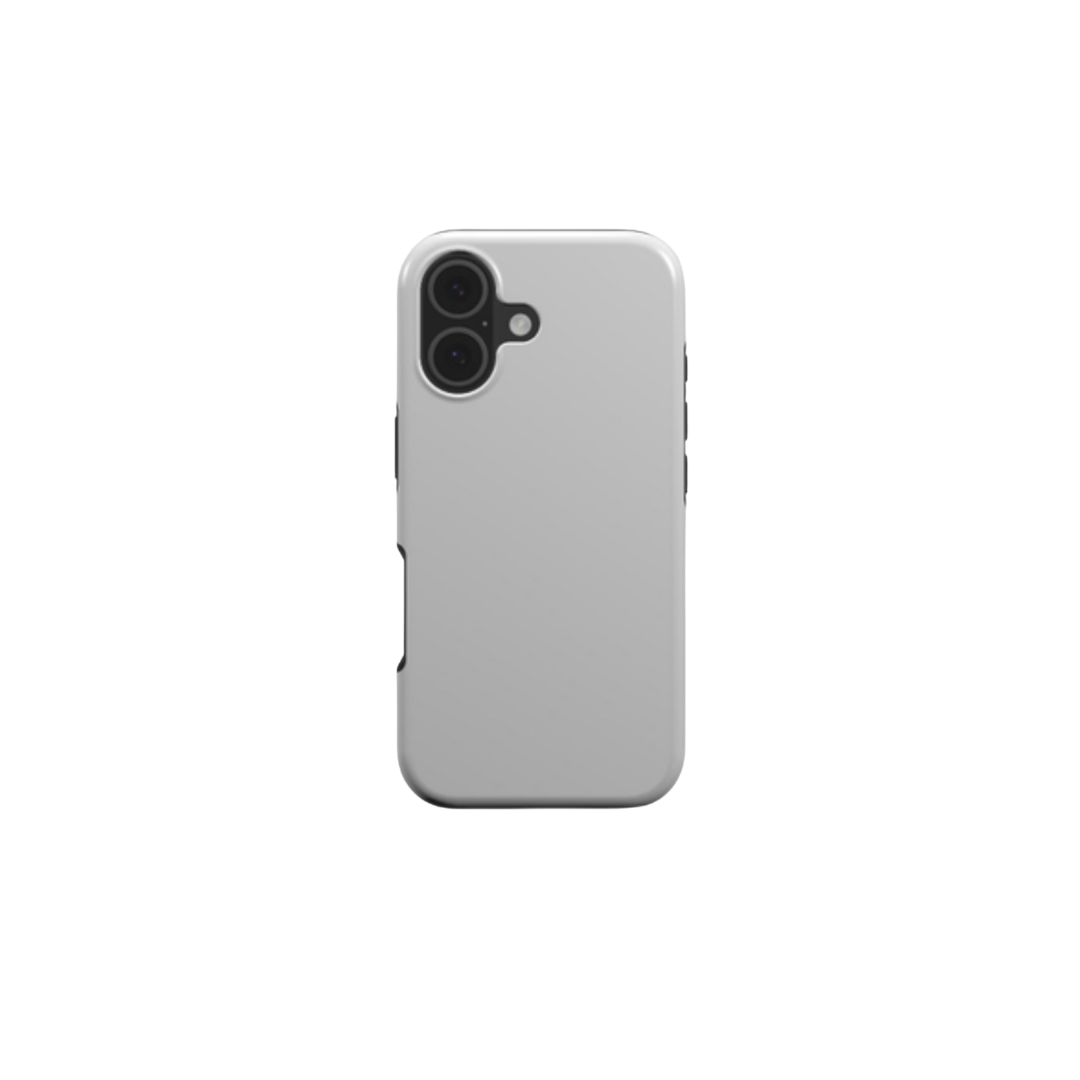
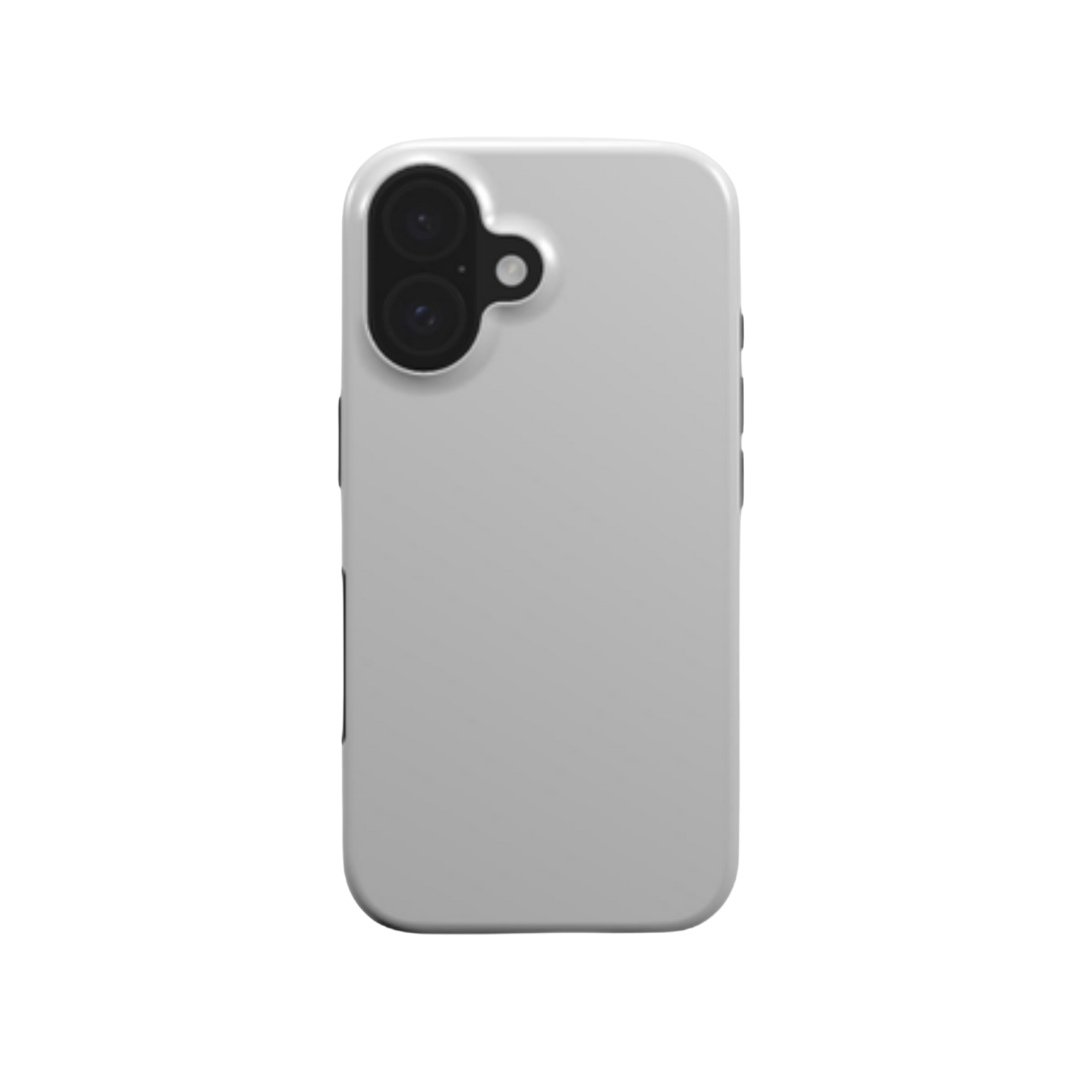
Now the comparison no one shows you: a customized product breaks that 15-30% ceiling entirely. A custom phone case we produce for about €10 typically retails at €35-60 - a margin profile generic dropshipping can't reach, because personalization commands a premium (1 in 5 buyers pays at least 20% more for a custom product) and a personalized item never competes on price with an identical listing. Same no-inventory model, different economics.
What is the most profitable dropshipping business?
Some categories outperform. Women's clothing can be very profitable - Dropshipping.com finds women make up 84.5% of all dropshipping customers. And dropshipping financially outperforms many online models; according to Analyzify, it's 15 times more profitable than affiliate marketing.
To succeed in 2026, build a brand people remember: helpful content, a loyal community, and great customer service. Our pipeline data adds a number to that advice - sellers who commit to one niche audience (and surround themselves with a community of sellers doing the same) scale roughly 32% faster than generalists.
Popular Dropshipping Models in 2026
The dropshipping business has evolved beyond the basic model. Different approaches offer different profitability:
1. Low-Ticket Dropshipping
The classic model: affordable, low-cost items. You need strong ads and low customer-acquisition costs. Fashion accessories, beauty products, and household goods sell well here - but this is also the most commodity-exposed model, so differentiation matters most.
2. High-Ticket Dropshipping
Sell expensive items and earn more per sale - furniture, workout gear, specialty electronics. You'll need better customer service, but competition is usually lower.
3. Private Label Dropshipping
Sell products under your own brand name while suppliers handle fulfillment. Better brand control and higher margins, but more startup investment and supplier management. (Print-on-demand delivers most of private label's branding upside - your designs, your brand on the product - without the minimum orders.)
4. Digital Dropshipping
Sell non-physical products: software, courses, printables. No shipping costs, so margins can be much higher than physical models.

Also Read:
- 20+ Creative Phone Case Design Ideas to Spark Your Inspiration
- Unlocking Profit Potential: How Much Money Can Custom Phone Cases Make?
How to Increase Dropshipping Profitability
Want to make more money with dropshipping? Here's what actually moves the needle:
- Pick products with at least 30% profit margins: use research tools to find high-demand items with fewer sellers, aimed at specific groups of people.
- Build a unique brand: your own logo, brand packaging, and unique product descriptions. Customers pay more for brands they trust - and from our CMO's experience, a weak, generic-feeling store is where ad spend goes to die: traffic arrives but "will not be incentivized enough to buy."
- Use email marketing to sell more: it costs 5 to 25 times more to acquire a new customer than to keep one. Our CMO calls retention email one of the strongest-ROI channels - and the one most sellers neglect.
- Test different ad platforms: Facebook works for some products; TikTok or Google for others. Start with small daily budgets and scale what converts.
- Grow average order value: the cheapest revenue is a second item in the same cart. Our checkout data shows a simple add-on offer (like a screen protector next to a phone case) converts at 3-10% - roughly €10 extra profit per take, with zero additional acquisition cost.
When Is Dropshipping NOT Worth It?
Dropshipping isn't always the right model. Knowing the difference between dropshipping and print-on-demand helps you pick the right approach. Skip dropshipping if:
- You can't afford any startup costs. It's cheaper than traditional retail, but you still need $500-$1,000 for website setup and marketing.
- You need income right away. Most successful stores take 3-6 months to become profitable. (One honest accelerator from our data: sellers who launch 3-5 products fast and iterate - rather than perfecting the store for months - get to first sales dramatically sooner; five products live within 30 days puts you ahead of 80% of POD stores.)
- You're selling commodity products without a unique angle. Competing purely on price with generic items leads to frustration and shrinking profits.
- You struggle with customer service. You'll spend real time on questions, complaints, and shipping issues - and with a generic supplier, those issues aren't in your control.
Instead, consider digital products or print-on-demand, which typically carry fewer service demands - switchers to a quality-first POD provider in our data saw roughly 30% fewer order-issue support tickets.
Final Thoughts
Is dropshipping profitable in 2026? It can be - but the 90%+ failure rate shows it won't be easy. The diagnosis behind that number is consistent: commodity products, no brand, no margin room. The most successful dropshippers build unique brands, focus on customer experience, and adapt constantly.
If you want the same no-inventory model with structurally better margins and more creative control, print-on-demand is the compelling alternative: custom products escape the price war (a €10 case selling for €35-60), the quality and shipping risk sits with a specialized partner (about 23 hours from order to shipped, with verified color accuracy), and you pay nothing until something sells.
Ready to explore a more profitable alternative to dropshipping? Sign up with Podbase today.
Also Read:
- Print-On-Demand vs. Dropshipping: A Comparison | Podbase
- +10 Smart Ways to Make Money From Your Phone
FAQ
1. Is dropshipping still profitable in 2026?
Yes, for well-executed stores. The market has grown past 464 billion USD and is tracking toward 500 billion by 2027, with average store margins of 15-30%. But Shopify data suggests over 90% of dropshipping businesses fail - typically because they sell commodity products from shared suppliers with no brand. Profitability concentrates with sellers who differentiate via niche, brand, or customized products.
2. What is the average dropshipping profit margin?
The average dropshipping store earns 15-30% profit margins, and clearing 20% is considered good. By comparison, customized print-on-demand products break that ceiling: a phone case produced for about 10 EUR typically sells for 35-60 EUR, because personalization escapes commodity price competition.
3. Why do most dropshipping businesses fail?
Over 90% fail, and the mechanism is consistent: new dropshippers list the same items from the same suppliers at the same prices, leaving price as the only competitive lever - which destroys a 15-30% margin. Lack of quality and shipping control also generates support issues and bad reviews. Survivors build real brands, niche audiences, or sell customized products competitors cannot copy.
4. What is the most profitable dropshipping model?
Four models work in 2026: low-ticket (cheap items, ad-driven), high-ticket (furniture and electronics, fewer competitors), private label (your brand, higher margins, more investment), and digital dropshipping (no shipping costs, highest margins). Print-on-demand offers private label's branding benefits without minimum orders, plus made-to-order custom products at 70%+ effective margins.
5. When is dropshipping not worth it?
Skip dropshipping if you cannot invest 500-1,000 USD in setup and marketing, need income faster than the typical 3-6 month profitability window, plan to sell commodity products without a unique angle, or cannot handle a real customer-service load. Print-on-demand is the common alternative - sellers who switched to a quality-first POD provider saw roughly 30% fewer order-issue support tickets.
6. Is print-on-demand more profitable than dropshipping?
For creators and brand-builders, usually yes. Both are no-inventory models, but POD products are customized, which commands a premium (1 in 5 buyers pays 20%+ more for custom) and avoids identical-listing price wars. Podbase's economics illustrate it: about 10 EUR production cost vs 35-60 EUR sell price, about 23-hour average production-to-ship time, and pay-per-sale pricing with no upfront cost.

Saulius Meilutis is the CEO of Podbase, helping creators and entrepreneurs monetize their ideas with print-on-demand. He shares insights on eCommerce, growth, and building lean online businesses.

.avif)




.avif)
.avif)
.avif)
.avif)
.avif)
.avif)

.avif)


.avif)
.avif)

.avif)

.avif)

.avif)