Side Hustle Statistics in 2026: Quick Insights
- 72% of US Workers Are In or Eyeing a Side Hustle: 72% of US workers either already have a side hustle or are actively thinking about starting one (MyPerfectResume).
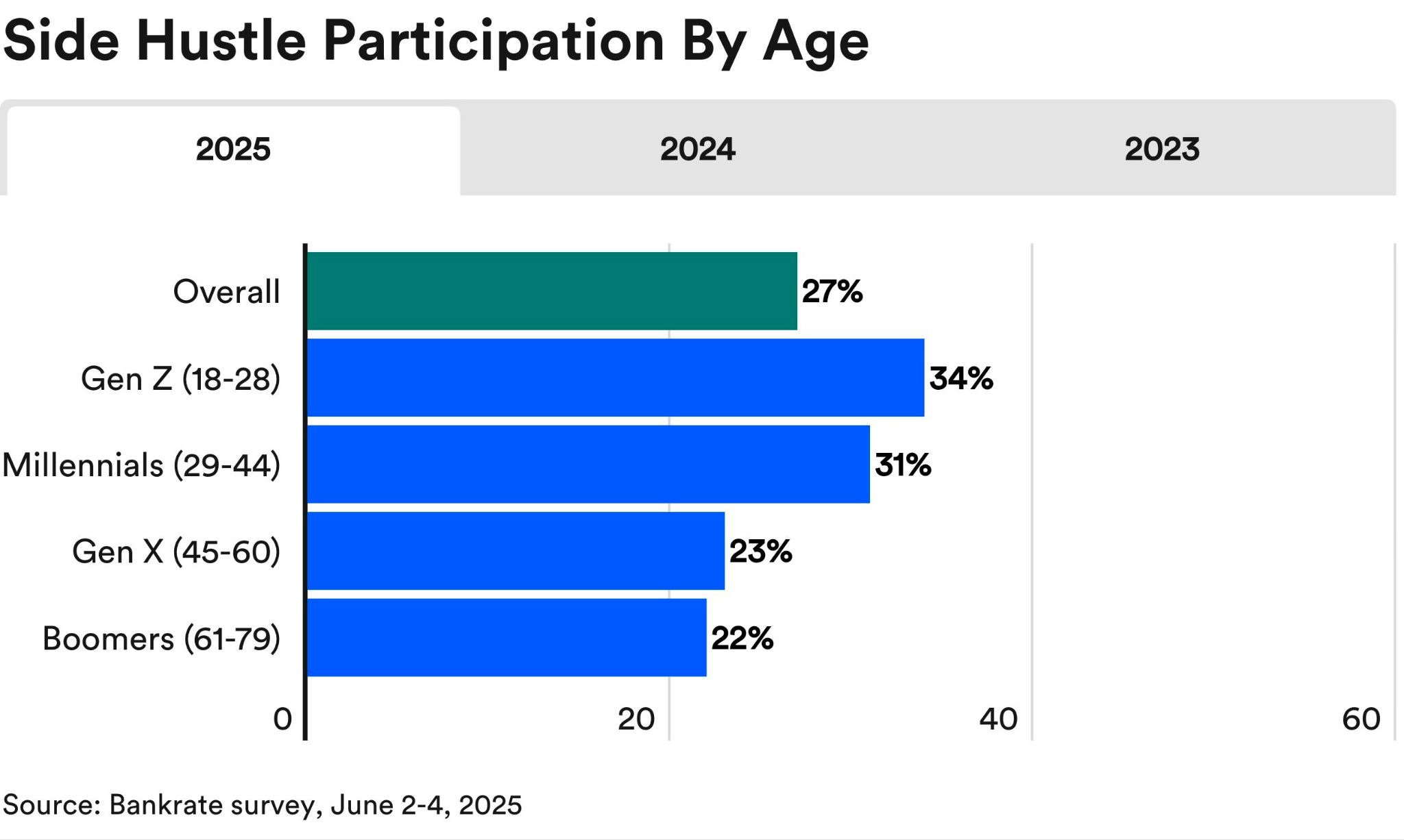
- Current Side Hustle Participation: 27% of US workers currently have an active side hustle - roughly 90 million people - with Gen Z leading at 34%, millennials at 31%, Gen X at 23%, and boomers at 22% (Bankrate).
- Average vs. Median Side Hustle Income: The average side hustle earns $885/month, but the median is just $200 - a gap driven by high earners pulling up the average while 32.1% of side hustlers earn $51-$250/month (Bankrate).
- Scaling Past Startup Is Rare: 36% of side hustlers who move past the startup phase earn over $1,000/month, but only 11% of all side hustlers reach that level - and just 2% exceed $5,000/month (Side Hustle Nation).
- Burnout Is a Real Risk: 67% of side hustlers report burnout, and 52% say the effort only feels worth it above $500/week (SideHustles, 2025).
- Economic Pressure Is the Primary Driver: 49% of Americans start a side hustle to make ends meet, with inflation cited by 42% (LendingTree).
- Online Sales Lead Side Hustle Popularity: Online sales is the #1 side hustle type at 15%, followed by professional services at 14% (Bankrate).
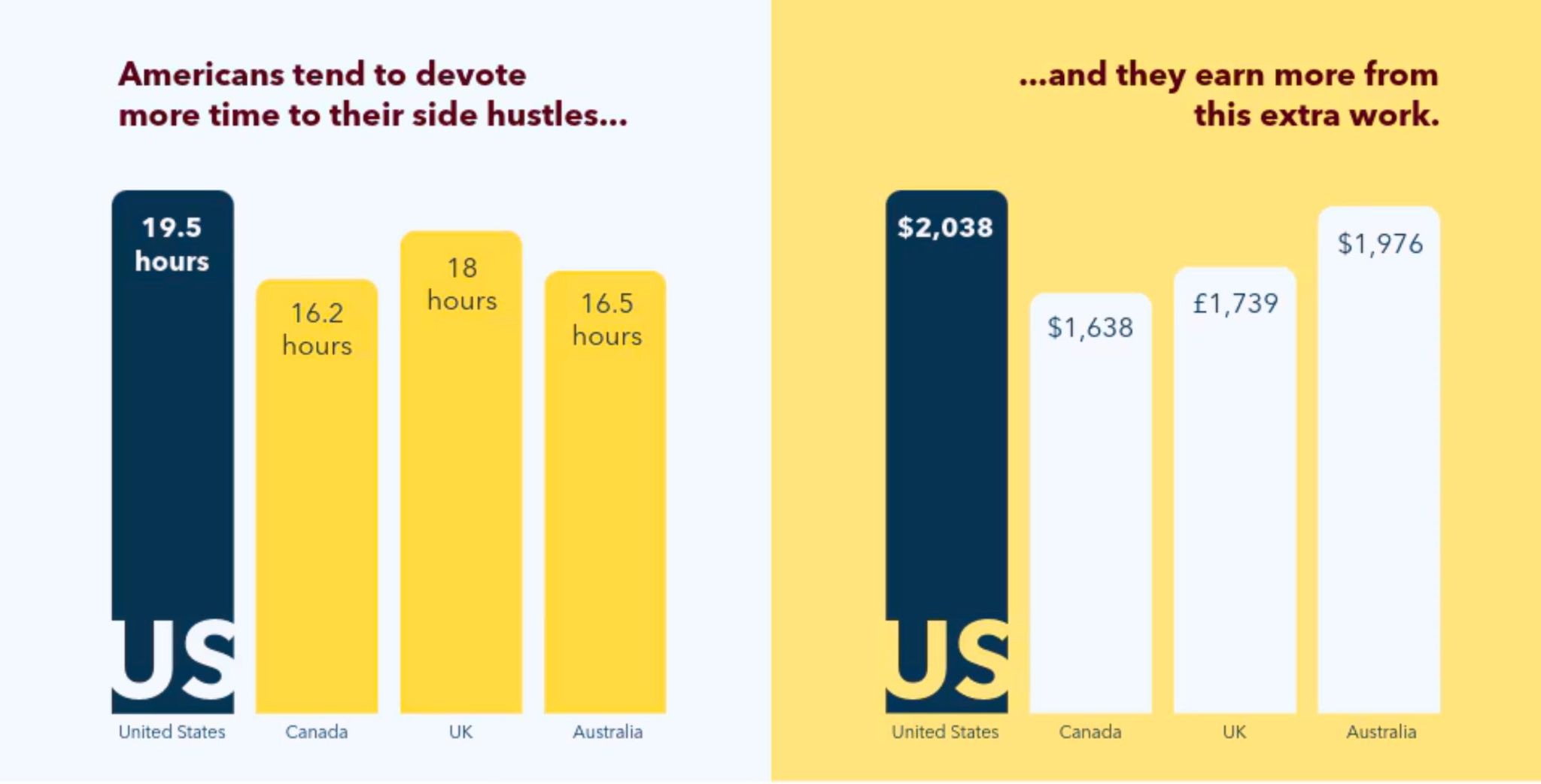
- Time Investment Averages 19.5 Hours/Month (QuickBooks, 2026).
- Gen Z Is Treating Side Hustles as Career Paths: 77% of Gen Z and 52% of millennials started within the last two years; 21% of Gen Z aim to go full-time (Bankrate).
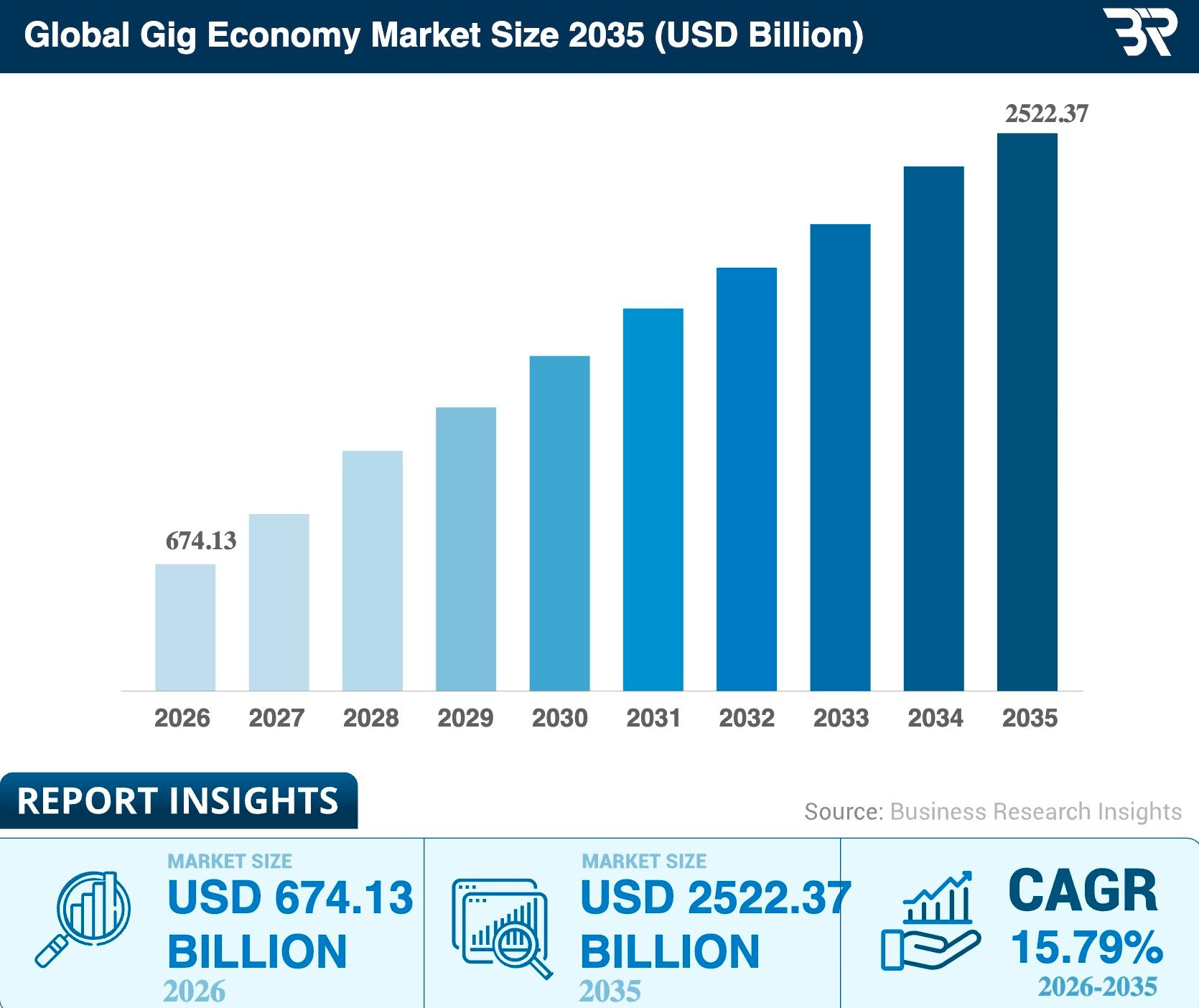
- Global Gig Market Heading Toward $2 Trillion: Worth over $674 billion in 2026, projected to reach $2 trillion by 2035 (Business Research Insights).
Starting a side hustle is easier than ever in 2026 - but scaling it is what separates supplemental income from financial independence. Here's the pattern the headline numbers hide: the hustles most people pick trade time for money, so they cap out. Print-on-demand removes inventory risk *and* the time-for-money constraint, which is why it's one of the few models that compounds rather than just accumulates. Build your POD brand with Podbase →
Rising inflation, stagnant wages, and a higher cost of living have pushed many people to look beyond a single paycheck. The 2026 side hustle statistics show that 72% of US workers already have a side hustle or are thinking about starting one.
If you're weighing one of the best side hustles to start, this post shows what people actually earn, why most plateau, and which models scale. We'll lean on public data for the landscape - and on our own seller data for the part most "side hustle statistics" posts can't tell you: what it really takes to scale a print-on-demand side hustle past the startup phase.
How Many People Have a Side Hustle in 2026?
According to a recent Bankrate survey, about 27% of US workers have a side hustle - roughly 90 million people. Gen Z accounts for 34%, followed by millennials at 31%, Gen X at 23%, and boomers at 22%.
These side hustle statistics show that earning beyond a main job is now common. A 2025 SurveyMonkey report found 70% of workers prioritize seeking extra income streams.
The trend isn't a straight line, though. Per Bankrate, participation declined from 36% of US workers holding multiple jobs in 2025 to 27% in 2026. That 36% → 27% drop reflects a real downward move within a consistent methodology; figures from other sources use broader definitions, so the differences aren't contradictions.
What we see internally fits this picture: enthusiasm is high, follow-through is the bottleneck. Our CMO describes the pattern bluntly - most aspiring sellers "get an urge to build their business, get excited by the idea of it, but then stop within the first 10 days or two weeks." The headcount of side hustlers fluctuates with the economy; the headcount of side hustlers who *stick* is far smaller, and that's where the real money is.
Also Read:
- Dropshipping Statistics: Key Trends & Industry Insights
- Entrepreneur Statistics: Insights for Business Builders
Side Hustle Earnings: What People Actually Make
Bankrate's data shows an average income of $885/month, but the median is just $200. That gap matters: a small group of high earners pulls up the average while most people earn far less. Around 32.1% of side hustlers earn $51-$250/month - modest early income while people test ideas.
Income grows for those who stick with it. Per Side Hustle Nation, about 36% of side hustlers who move past the startup phase earn over $1,000/month - but only 11% of all side hustlers reach that level, and just 2% make more than $5,000/month. Age shapes earnings too: millennials lead at $1,029/month, then Gen Z at $968, boomers at $918, and Gen X at $512. Men earn more on average ($1,195) than women ($611). Americans dedicate an average of 19.5 hours/month to side hustles (QuickBooks, 2026), and 67% report burnout.
Here's the contrarian reading of these numbers, and it's the most important takeaway in this article. A $200 median, an 11% ceiling, and 67% burnout are largely artifacts of time-for-money hustles - ridesharing, delivery, freelancing, tutoring - where income stops the moment you stop working and more income only comes from more hours. That's why burnout tracks so closely with earnings.
Print-on-demand sits on the other side of that line, and our own data shows it. The threshold the public stats say almost no one reaches - past startup, into real money - is mostly a function of *behavior*, not the model. As our Head of Sales puts it: "If a seller places a sample order within the first two days of opening their store and has at least five products published within 30 days, they are already ahead of 80% of POD stores. If they make ten sales, they are in the top 10%." The same data shows the ceiling is far higher than a $200 median implies - one seller went "thirteen months… from zero" to seven-figure annual revenue selling phone cases, launched with around ten designs. The difference isn't luck or talent; it's that POD income isn't capped by hours in the day.
Why Are People Starting Side Hustles in 2026?
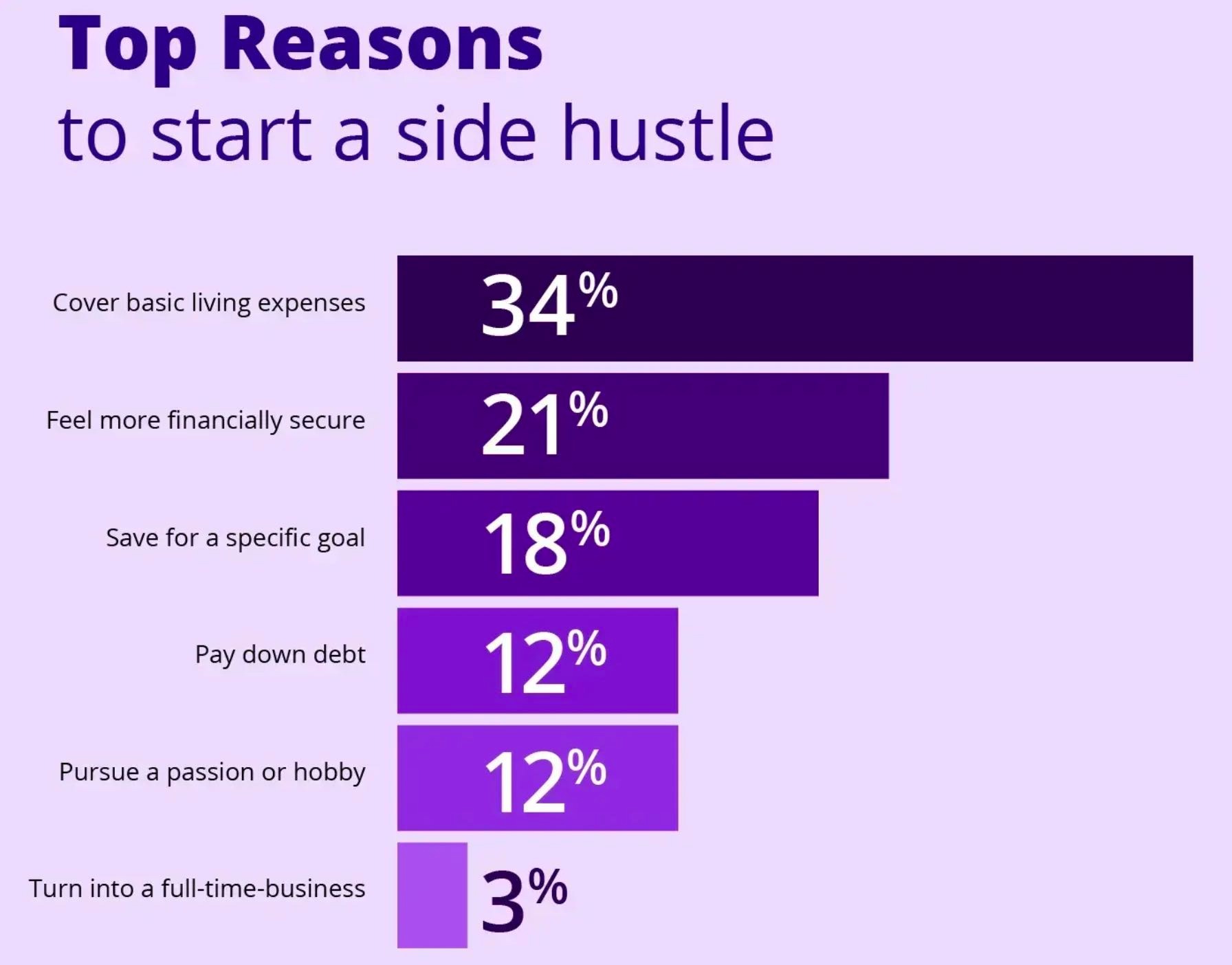
The most immediate driver is the economy. Per LendingTree, 49% of Americans turn to side gigs to make ends meet. Other cited reasons: inflation (42%), rising interest rates (20%), and stock market dips (14%). Another 28% needed side gigs for discretionary spending and 24% to pay off debt.
The same survey found 65% of side hustlers would prefer a single income source if they could - and if their hustle ended, they'd first cut dining out (46%), entertainment (39%), and shopping (39%). A 2025 Patriot Software survey found 12% start a side hustle because they care about the work, and 3% hope to turn passion into a full-time business.
That "I'd quit if I could" sentiment is the tell. It signals people are stuck in hustles that feel like a second job - because they are. The appeal of a model like POD is that the barrier to start has collapsed: our CEO notes that average onboarding for a new print-on-demand project has fallen "from three months to under one month" as AI tools handle design prep, mockups, and store setup. Lower barrier, lower upfront risk, and no hours-for-dollars trap is a fundamentally different proposition than picking up delivery shifts.
Also Read:
The Most Popular Side Hustles in 2026
The most popular side hustle in 2026, per Bankrate, is online sales at 15%, followed by professional and business services at 14%. Side hustles are predominantly digital: social media content creation leads at 35%, ecommerce at 27%, gaming/streaming at 24%, and graphic design at 14%.
Other popular side hustles include food delivery and crafts (9%), pet care (7%), teaching/tutoring (6%), landscaping (4%), childcare (4%), healthcare (4%), fitness (3%), ridesharing (3%), and home rental (2%).
Platform choice shapes reach. The same Bankrate report shows TikTok leads with 41% of side hustlers, YouTube at 40%, Instagram at 37%, and Amazon at 21%. That mix matches what we see drive actual sales: our CMO notes that "the majority, 99% of our sellers right now, are getting the majority of their traffic from social media ads" - so the platforms where attention lives are also where POD products convert.
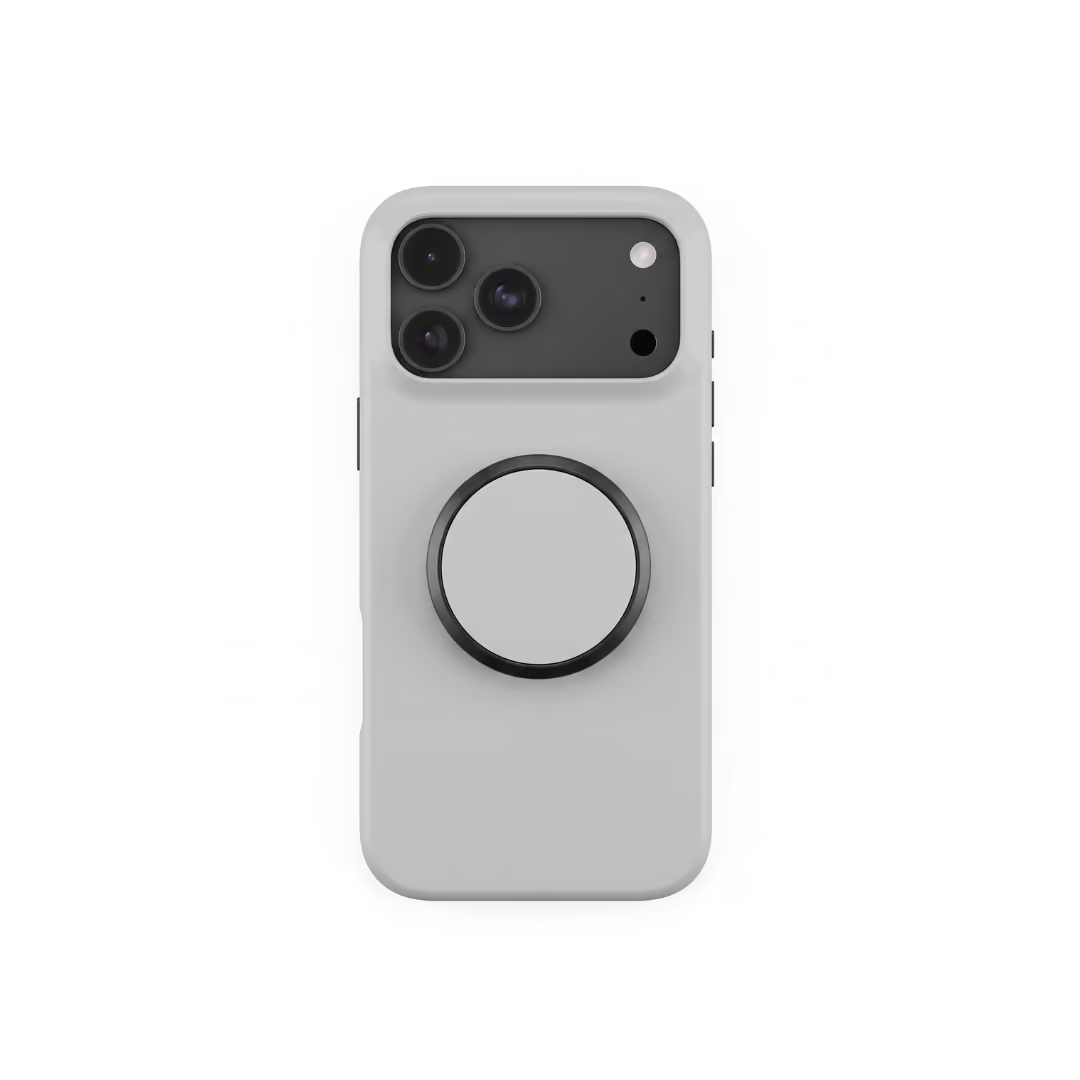
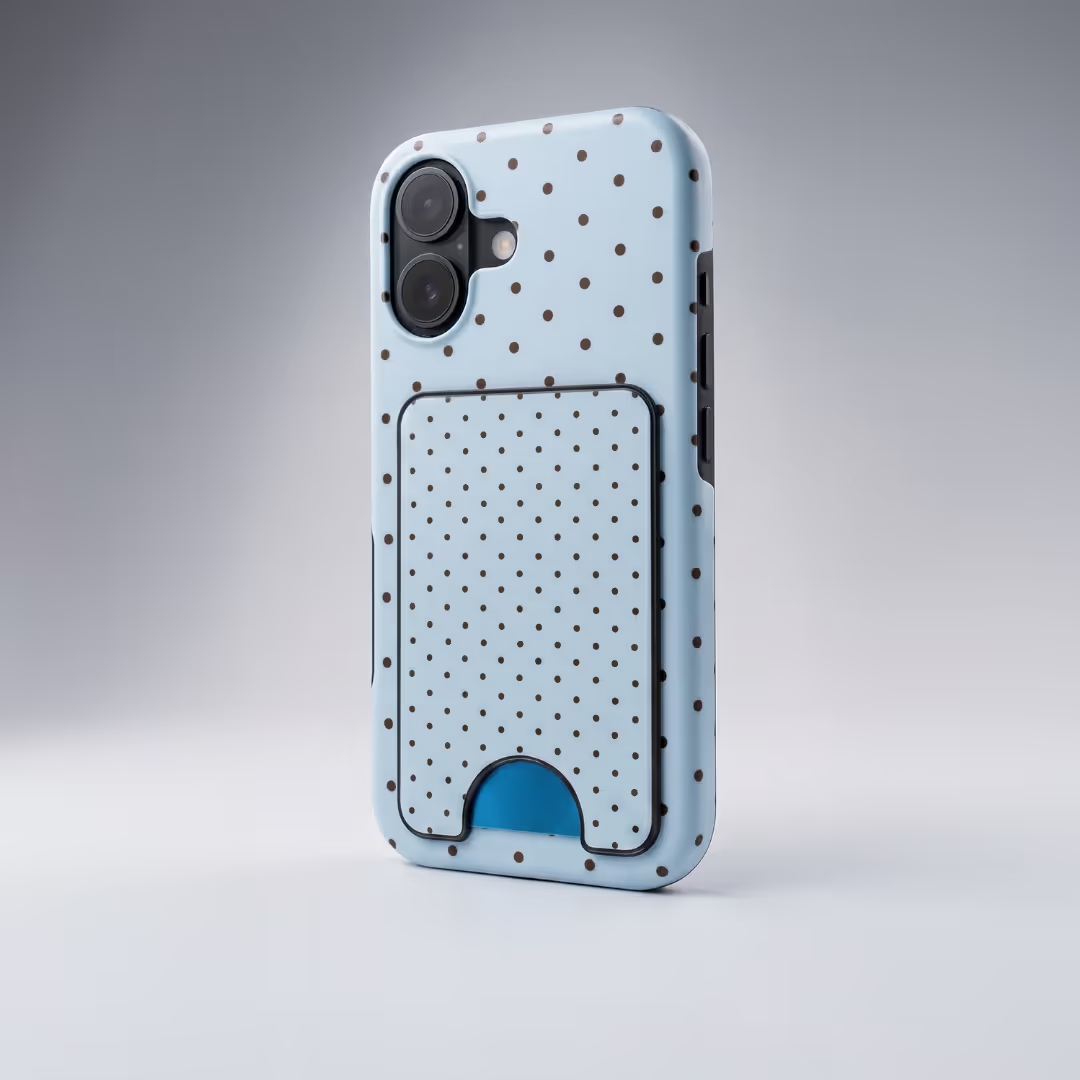
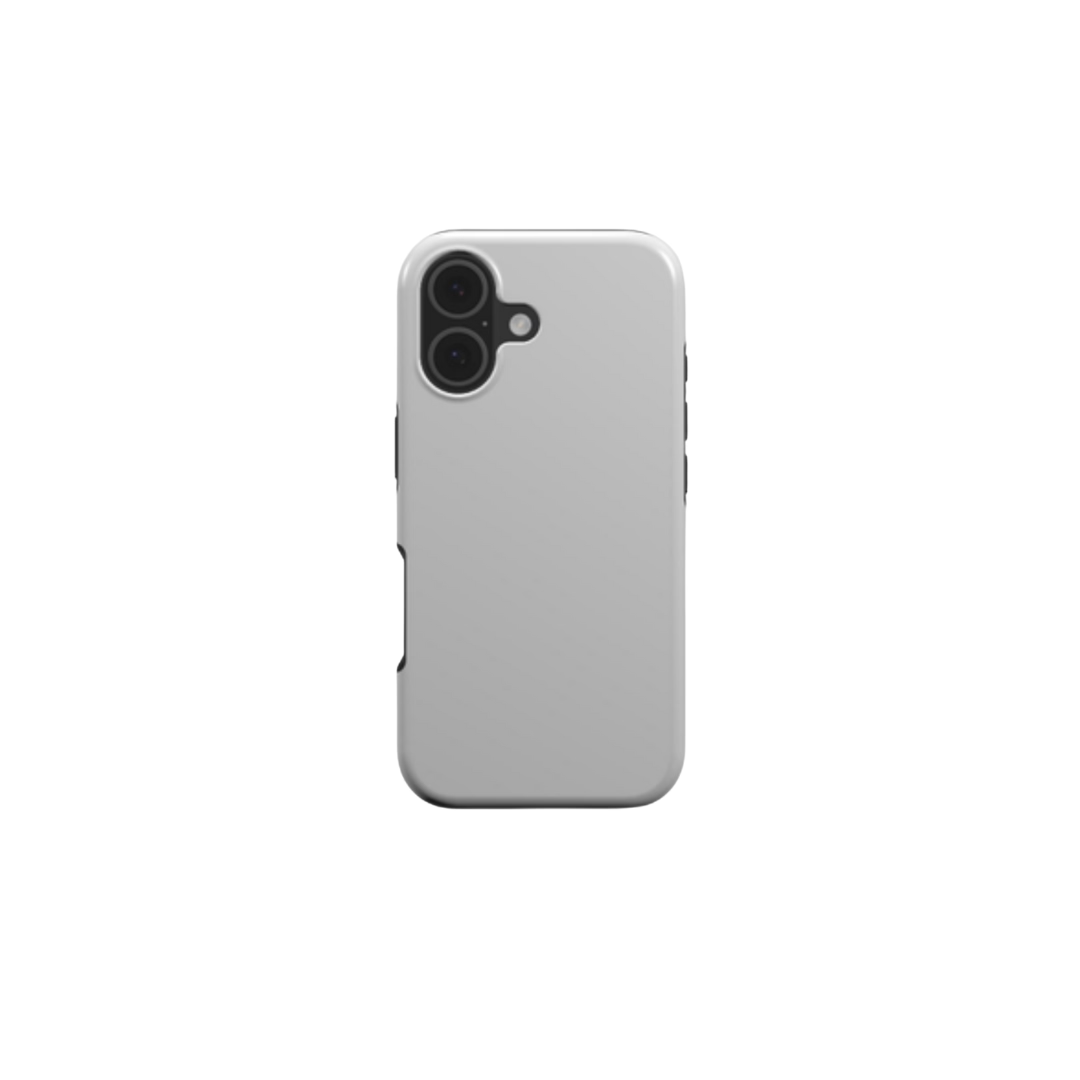
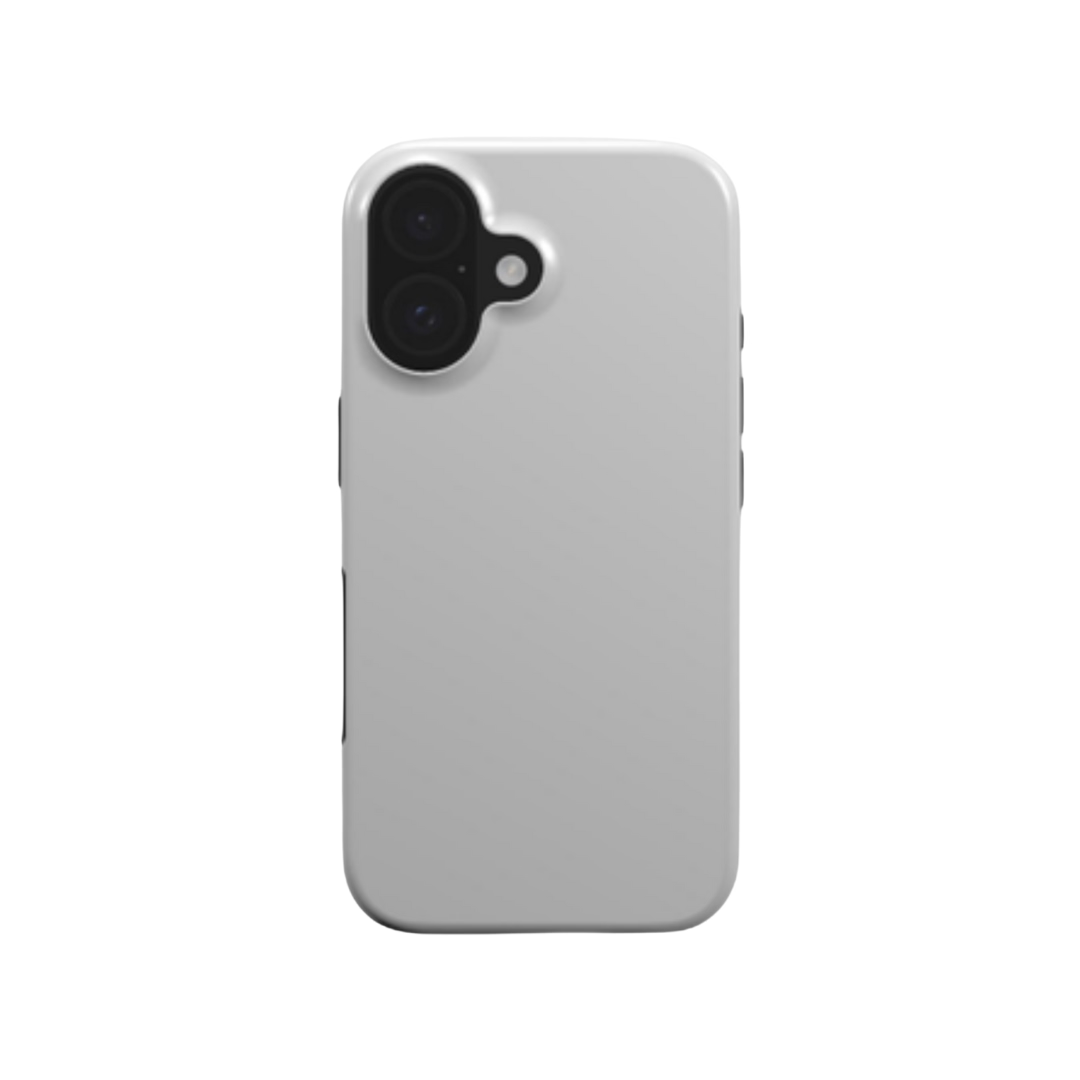
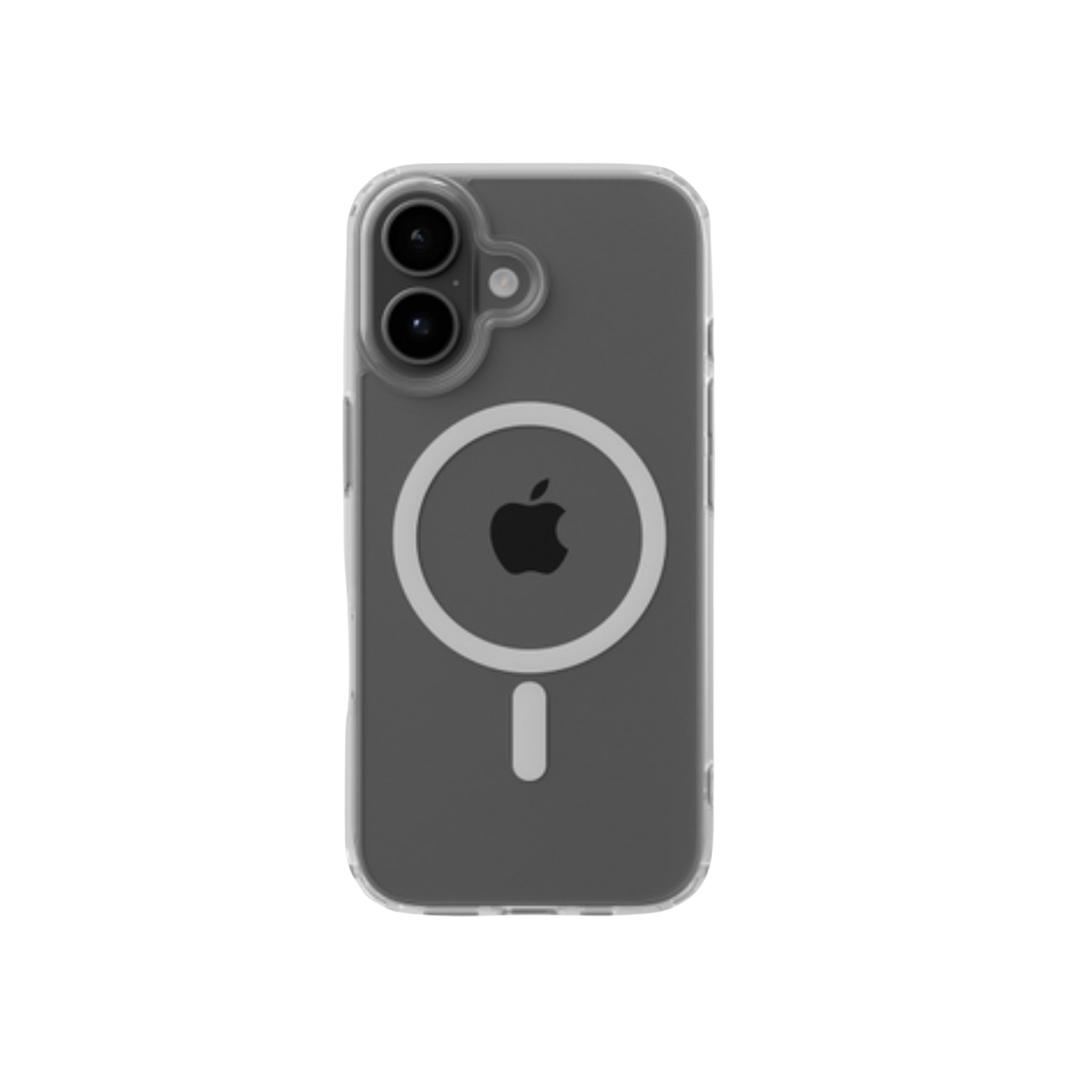
Among these models, print-on-demand is one of the most viable to start, and the cleanest example of why "online sales" tops the list. You don't buy inventory up front - you upload designs, and a supplier prints and ships only after a sale. That removes stock risk and lowers financial pressure. The unit economics are the part the generic "online sales" bucket hides: a phone case costs around €10 from Podbase and sells for €35-60, and a simple checkout add-on like a screen protector converts 3-10% of buyers for roughly €10 more profit on a customer you already acquired. Platforms like Podbase handle production and fulfillment so you focus on designs - which is why it's consistently one of the higher-margin print-on-demand side hustles available.
Side Hustles by Generation: Who Is Doing It Most?
Side hustles skew young. Bankrate shows Gen Z leads with 34% participation, millennials at 31%, Gen X at 23%, and boomers at 22%. About 77% of Gen Z and 52% of millennials started within the last two years, and 21% of Gen Z hustlers want to turn their side hustle into a full-time career.
That ambition is the interesting signal for anyone choosing a model. If a fifth of young side hustlers want to go full-time, they need a hustle that can actually carry that weight - one that scales without scaling hours. This is also where community matters more than people expect: our pipeline data shows sellers "who have a community, a mentor, or even a peer group working in the same space scaled approximately 32% faster than solo operators going it alone." Going full-time is far more achievable with guidance than in isolation, which is exactly why isolation-driven burnout shows up so often in the data.
Why Print-on-Demand Breaks the Side Hustle Ceiling
Pull the threads together and a clear contrarian conclusion emerges. The discouraging headline stats - $200 median income, an 11% chance of clearing $1,000/month, 67% burnout, two-thirds wishing they could quit - describe a population dominated by time-for-money work. Change the model and the math changes.
Print-on-demand is structurally different in three ways our data keeps confirming:
- Income decouples from hours. As our team puts it internally, you "list a product once and keep selling it." A design can sell across time zones whether you're working or asleep - the opposite of a delivery shift.
- The startup phase is short if you let it be. The sellers who stall are the ones stuck in what we call the "guessing phase," spending six months perfecting a store that never goes live. The ones who win publish three-to-five designs fast, push marketing on the winners, and are usually "up and running within two weeks."
- The downside is capped. No inventory means no dead stock. As our Head of Product Development notes, hundreds of phone models launch almost monthly - impossible to stock physically, trivial with POD; when a device fades, "we simply stop buying" materials. Your risk per experiment is a design file, not a warehouse.
None of this makes POD effortless - quality, consistency, and patience still decide who scales. But it does mean the side hustle ceiling most people hit isn't a law of nature. It's a property of the hustle they chose.
The Future of Side Hustles: What 2026 and Beyond Looks Like
Workers are no longer simply trading time for money - they're building systems that earn even when they're offline. The global gig and side hustle market is worth over $674 billion in 2026 and is projected to reach $2 trillion by 2035.
AI tools are lowering the barrier to entry - drafting content, generating mockups, building stores in a fraction of the time. Our CEO frames AI as "your partner to optimize" a new project so you "get the results you're looking for way faster," which is precisely why onboarding times have collapsed. The flip side is more competition, so quality and consistency matter more than ever.
Ecommerce and print-on-demand keep growing because income isn't tied to time. List a product once and keep selling it - passive earnings, not one-off payments. That scalability is why so many side hustlers now build digital storefronts: a product reaches buyers across time zones with no extra effort, turning a side hustle into steady income rather than a second shift.
Also Read:
- eBay Statistics: Key Insights for Sellers and Ecommerce Brands
- Top Small Business Statistics You Should Know
Conclusion
Side hustle statistics show they're no longer just extra income - they're a core part of how people pursue financial stability. But the averages hide the real lesson: most hustles plateau because they trade hours for dollars. The ones that scale decouple income from time.
Print-on-demand remains one of the highest-ceiling side hustles for exactly that reason, and Podbase is built to help you scale it - better margins, no inventory, and fast time to market. The data is consistent: starting is easy, scaling is what matters, and the sellers who move early and treat it like a business are the ones who break past the $200 median. Sign up to Podbase and start testing your designs today.
FAQ
1. How many people have a side hustle in 2026?
About 27% of US workers currently have an active side hustle - roughly 90 million people - and 72% either have one or are thinking about starting one. Gen Z leads at 34%, followed by millennials (31%), Gen X (23%), and boomers (22%). Participation actually declined from 36% in 2025 to 27% in 2026 within Bankrate's methodology.
2. How much does the average side hustle make?
The average side hustle earns about $885/month, but the median is just $200 - a gap driven by a small group of high earners. Around 32% earn $51-$250/month, only 11% of all side hustlers clear $1,000/month, and just 2% exceed $5,000/month. These low medians largely reflect time-for-money gigs whose income stops when the work stops.
3. What is the most popular side hustle in 2026?
Online sales is the #1 side hustle at 15%, followed by professional and business services at 14%. Side hustles are heavily digital - social media content creation (35%), ecommerce (27%), gaming/streaming (24%), and graphic design (14%). TikTok (41%), YouTube (40%), and Instagram (37%) are the leading platforms side hustlers use.
4. Why do most side hustles fail to scale?
Most popular side hustles - delivery, rideshare, freelancing, tutoring - trade time for money, so income caps with available hours and burnout sets in (67% of side hustlers report it). Scaling past the startup phase is rare not because the goal is unrealistic but because the models chosen can't decouple income from hours. Print-on-demand can, which is why its ceiling is far higher.
5. Why does print-on-demand scale better than other side hustles?
Three structural reasons: income decouples from hours (a design sells while you sleep), the startup phase is short if you publish fast instead of perfecting, and the downside is capped because there's no inventory to write off. Podbase data shows sellers who publish five products within 30 days are ahead of 80% of POD stores, and one seller scaled from zero to seven-figure annual revenue in 13 months.
6. How big is the side hustle and gig economy?
The global gig and side hustle market is worth over $674 billion in 2026 and is projected to reach $2 trillion by 2035. Growth is driven by economic pressure (49% of Americans start a side hustle to make ends meet), AI tools lowering the barrier to entry, and the rise of scalable digital models like ecommerce and print-on-demand that earn even when the seller is offline.

Saulius Meilutis is the CEO of Podbase, helping creators and entrepreneurs monetize their ideas with print-on-demand. He shares insights on eCommerce, growth, and building lean online businesses.

.avif)




.avif)
.avif)
.avif)
.avif)
.avif)
.avif)

.avif)


.avif)
.avif)

.avif)

.avif)

.avif)