Low-Cost Business Ideas: What Podbase Data Shows Works
- The fastest path from zero to first sale: Podbase's Head of Sales data shows that sellers who place a sample order within 2 days of signing up and publish at least 5 products within 30 days are ahead of 80% of all POD stores. Most failed stores never made it to that milestone.
- Speed beats perfection every time: Sellers who spent months building a "perfect" store with hundreds of products consistently underperformed sellers who launched with 3–5 designs and tested with social ads immediately. The data is unambiguous — the businesses that survive are the ones that launched fast.
- POD is the best margin low-cost business on this list: A custom phone case costs €10 from Podbase and sells for €35–60. That is a 3.5–6× markup with zero inventory held. Podbase's margins run 10–15% better than the major competitors, and up to 20% better in select categories.
- Onboarding is 3× faster than it was two years ago: What used to take three months to set up now takes under a month — and for sellers using AI tools alongside Podbase, it can be done in under a week. The barrier to starting is lower than it has ever been.
If you are choosing a low-cost business to start today, print-on-demand has the fastest path from idea to income — and Podbase is built for exactly that. Start your low-cost POD business with Podbase →
30 Low-Cost Business Ideas To Start in 2026 (Podbase Advice)
The search for low-cost business ideas is reaching an all-time high in 2026. With the cost of living rising and technology changing how we work, starting a business with very little money is one of the smartest moves you can make right now.
Whether you are a creative designer, a digital creator, or an entrepreneur looking for a fresh start, this guide is your blueprint. We have mapped out a clear path to turn your ideas into real income — and added what Podbase has learned from watching hundreds of thousands of sellers launch, succeed, and scale.
Here are 30+ low-investment business ideas that fit your skills, budget, and goals.
What Are Low-Cost Business Ideas?
A low-cost business is a venture you can start with minimal capital, minimal equipment, and zero long-term financial risk. You are not spending thousands on a physical office, stacks of inventory, or a large team. Instead, you use your own skills, free digital tools, and on-demand services to keep your overhead low.
In most cases, you need $0–$500 to launch most low-cost business ideas. It may cost closer to $1,000 depending on your location, required permits, tools, or marketing — but even then, that is far cheaper than a traditional business.
Beyond cost, these businesses share several structural traits: they avoid bulk inventory purchases, use free or affordable online platforms, can be operated from home or remotely, and scale based on demand rather than capital spending. Many use AI and automation to do the operational heavy lifting for free or near-free.
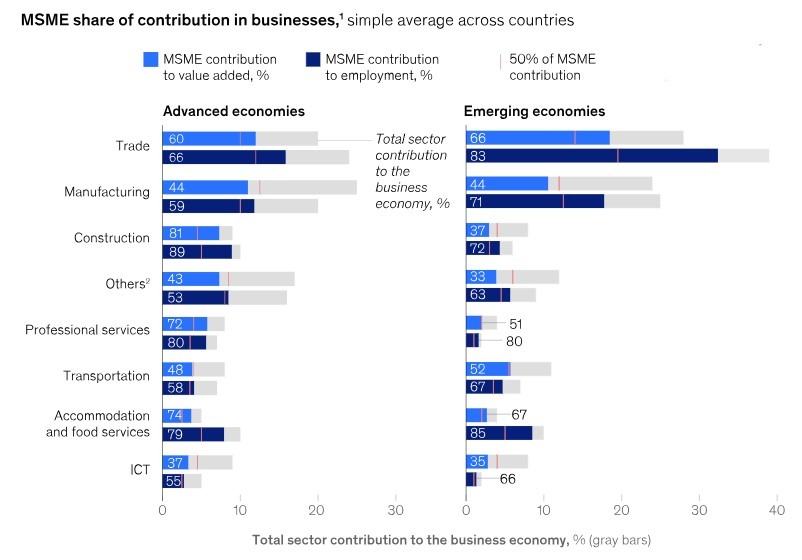
A recent UN-DCO report indicates that low-cost businesses comprise 90% of all global businesses, create 70% of jobs, and contribute to 50% of the world's GDP. In 2026, modern tools, remote work, and online marketplaces make these businesses more accessible than ever.
Also Read:
- How to Avoid Copyright Infringement in Print-on-Demand
- Best Dropshipping Products to Sell for Big Profits
- Small Business Trends to Watch in 2026 (And How to Adapt)
Why Start a Low-Cost Business in 2026?
Starting a business this year is meaningfully different from how it was in the past. Automation has made the operationally hard parts easy, and remote work has made a global customer base accessible to anyone with an internet connection.
You Can Test Ideas Without Risking Your Savings
Most of these businesses only cost you time. If an idea does not work, you have not lost your life savings — you pivot and try the next one. This is not just an optimistic framing. It is a structural advantage of low-cost business models, and the data from Podbase sellers confirms it directly: the sellers who succeed are not the ones who committed the most money upfront. They are the ones who moved fastest on the least capital and let real customer data tell them what to build next.
You Can Tap Into Growing Online Demand
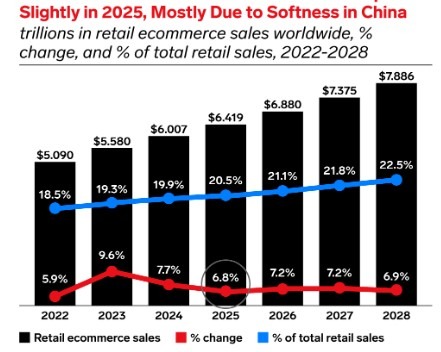
Online shopping continues to accelerate. Retail ecommerce sales are projected to grow from $6.4 trillion in 2025 to $6.88 trillion in 2026, per the Emarketer report. That growth is disproportionately concentrated in personalized, niche, and custom products — exactly where low-cost online business ideas like POD have their structural edge. People are looking for tech accessories and personalized items. If you are there to sell them, you are stepping into a massive, ready-made market.
You Can Adapt Quickly When Markets Shift
Consumer trends move fast. Lean businesses can respond faster because they are not tied to large physical assets or long-term supply commitments. If a product underperforms or demand shifts, you can adjust your offering the same week. This agility is not available to businesses carrying inventory or paying for physical retail space.
Perfect for Side Hustlers and Career Shifters
Starting a business today does not mean quitting your job tomorrow. Many business ideas with low startup costs are designed to be built part-time, giving you space to test demand and build revenue before making a full transition. Saulius Meilutis, Podbase's CEO, describes this pattern in the POD context: "Previously, onboarding could take months. Now you can easily migrate even in a single day or at most a week. It's beneficial for the client because they can test a new product line, a new project idea, way faster without putting in a lot of resources."
30+ Low-Cost Business Ideas to Start
Online Low-Cost Business Ideas
These low-investment businesses are fully remote, easy to start, and reach customers anywhere without rent. "Low cost online business ideas" are the fastest-growing category in 2026 — and the ones with the lowest barriers to entry.
1. Dropshipping Using Platforms Like Shopify
Sell trending items without ever holding the stock yourself. Your suppliers ship items directly to customers. Estimated startup costs: $100–$500. Best for trend-spotters who enjoy marketing.
2. Affiliate Marketing Website
Build a blog or review page and earn a commission when people buy products through your links. Use networks like Amazon or ClickBank. Starting costs: $0–$200. Best for writers and SEO learners.
3. Monetized YouTube or TikTok Channel
Create videos about your hobbies, tutorials, or stories and monetize through ads, sponsorships, and selling your own merch. Investment: $0–$300 in equipment and editing tools. The merchandise angle is particularly powerful when combined with a POD backend — you design once, Podbase fulfills every order automatically.
4. Virtual Assistant Services
Offer remote admin support including managing emails, handling social media, or scheduling for busy entrepreneurs. Starting costs: $0–$100. Suits highly organized multitaskers.
5. Online Tutoring or Coaching
Teach a language, school subject, or professional skill using video tools like Preply or Teachable. Costs: $0–$200. Flexible and scalable for experts in any field.
6. Paid Newsletter
Offer exclusive tips, industry news, or helpful advice to subscribers who pay a small monthly fee. Starting costs: $0–$150. Great for consultants and content creators.
7. Private Membership Community
Start a group for people interested in fitness, investing, or specific hobbies and charge a monthly access fee. Starting costs: $0–$250.
8. AI-Powered Service Reselling
Use free or low-cost AI tools to offer services like resume writing, content repurposing, or prompt engineering. With $0–$200, anyone with basic tech skills can launch this quickly. In 2026, this is one of the fastest-growing low-cost business categories because the service quality has reached professional levels at near-zero cost.
Also Read: 25 Best Side Hustles for Stay at Home Moms in 2026 | How to Make Money on Social Media (Even Without Followers)
Service-Based Low-Cost Business Ideas
These low-cost business ideas let you sell your skills and time directly to clients. They rely on personal expertise rather than products or inventory and can offer the highest profit margins of any category on this list.
9. Freelance Writing
Write blog posts, emails, or website copy for businesses across different industries. Starting costs: $0–$150. Perfect for writers who enjoy research.
10. Graphic Design Freelance
Create logos, social media graphics, or branding kits using Canva Pro, Adobe Illustrator, or Figma. Starting costs: $0–$200. Ideal for creative designers.
11. Social Media Management
Manage social media for business owners, coaches, local shops, and busy professionals. Starting costs: $0–$250. Demand is growing as businesses recognize they cannot ignore social channels.
12. Bookkeeping Services
Manage finances for small businesses and individuals, helping them stay organized and legally compliant. Starting costs: $0–$300. Best for detail-oriented people with numbers affinity.
13. Niche Business Consulting
Give expert advice on specific topics — how to grow a YouTube channel, optimize a Shopify store, or build a POD catalog. Starting costs: $0–$100. Best for experienced professionals who enjoy sharing expertise.
14. Translation or Localization Services
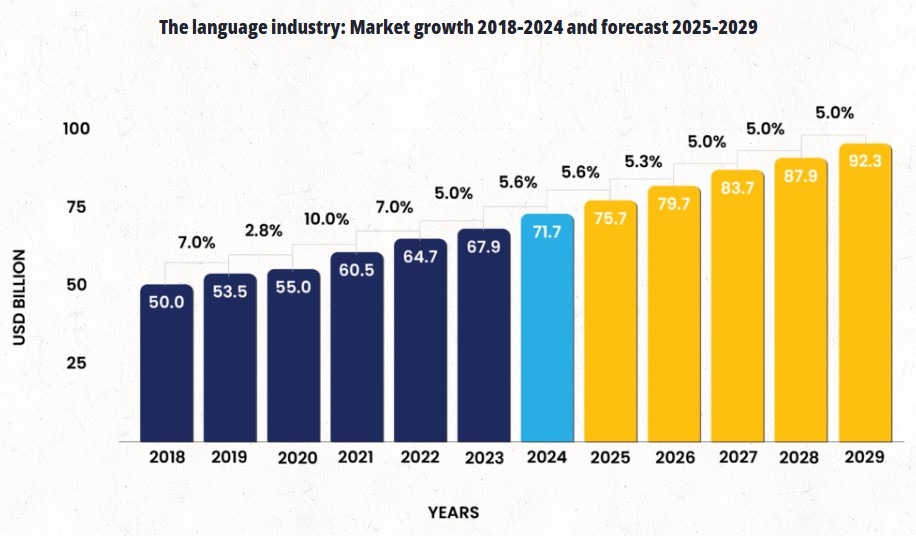
Translate documents, websites, or subtitles for international clients. Starting costs: $0–$150. A recent Nimdzi report reveals the translation industry will expand to almost $80 billion in 2026 — strong underlying demand for this service.
15. Virtual Fitness or Wellness Coaching
Lead workout classes or meditation sessions over video calls. Estimated startup costs: $0–$200 for certification and tools. Perfect for certified fitness professionals.
Also Read: eBay Statistics: Growth, Usage & Seller Insights | 10 Best Blogging Platforms to Make Money in 2026
16. SEO or Digital Marketing Consulting
Help local businesses improve search engine rankings, website visibility, or run targeted ads. Starting costs: $0–$300 for basic tools. One of the best low-cost business ideas for data-driven marketers with a demonstrable track record.
Creative & Digital Product Business Ideas
The key advantage of digital and print-on-demand products is that you create once, sell repeatedly. There is no restocking, no warehouse, and no minimum order. These are the highest-leverage low-cost businesses for creative people in 2026.
17. Custom T-Shirts (Print on Demand)
Design shirts for specific niches, hobbies, or jobs and sell them using a platform like Podbase. Startup costs: $0–$200 for design tools and samples. This works especially well for witty designers who understand what specific communities find funny or meaningful.
18. Personalized Mugs and Drinkware (POD)
Create meaningful mugs for gifts and events. Estimated costs: $0–$150. Best for designers who enjoy the gifting market — mugs are among the highest-reorder products in POD because people break or lose them and come back for more.
19. Custom Phone Cases (POD)
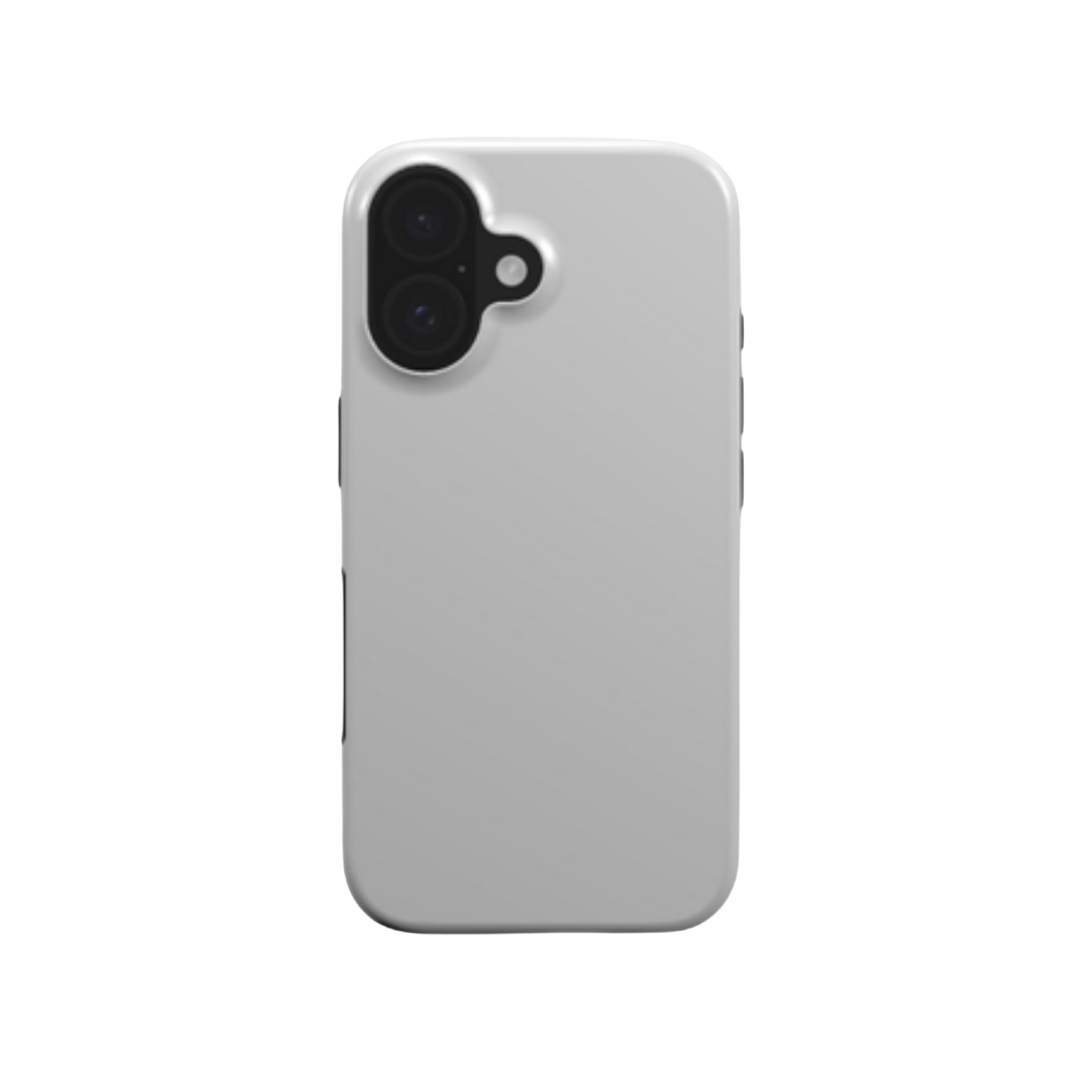
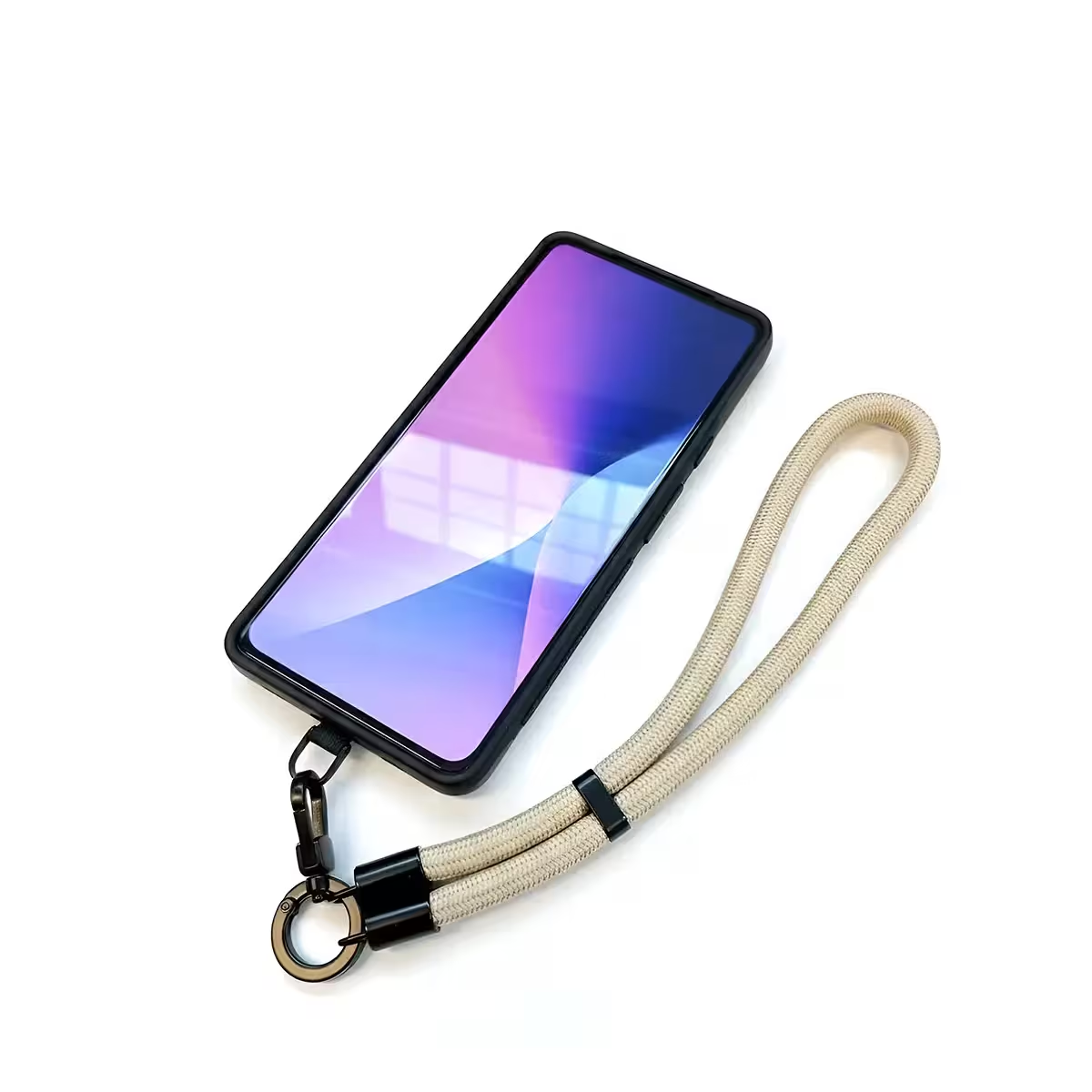
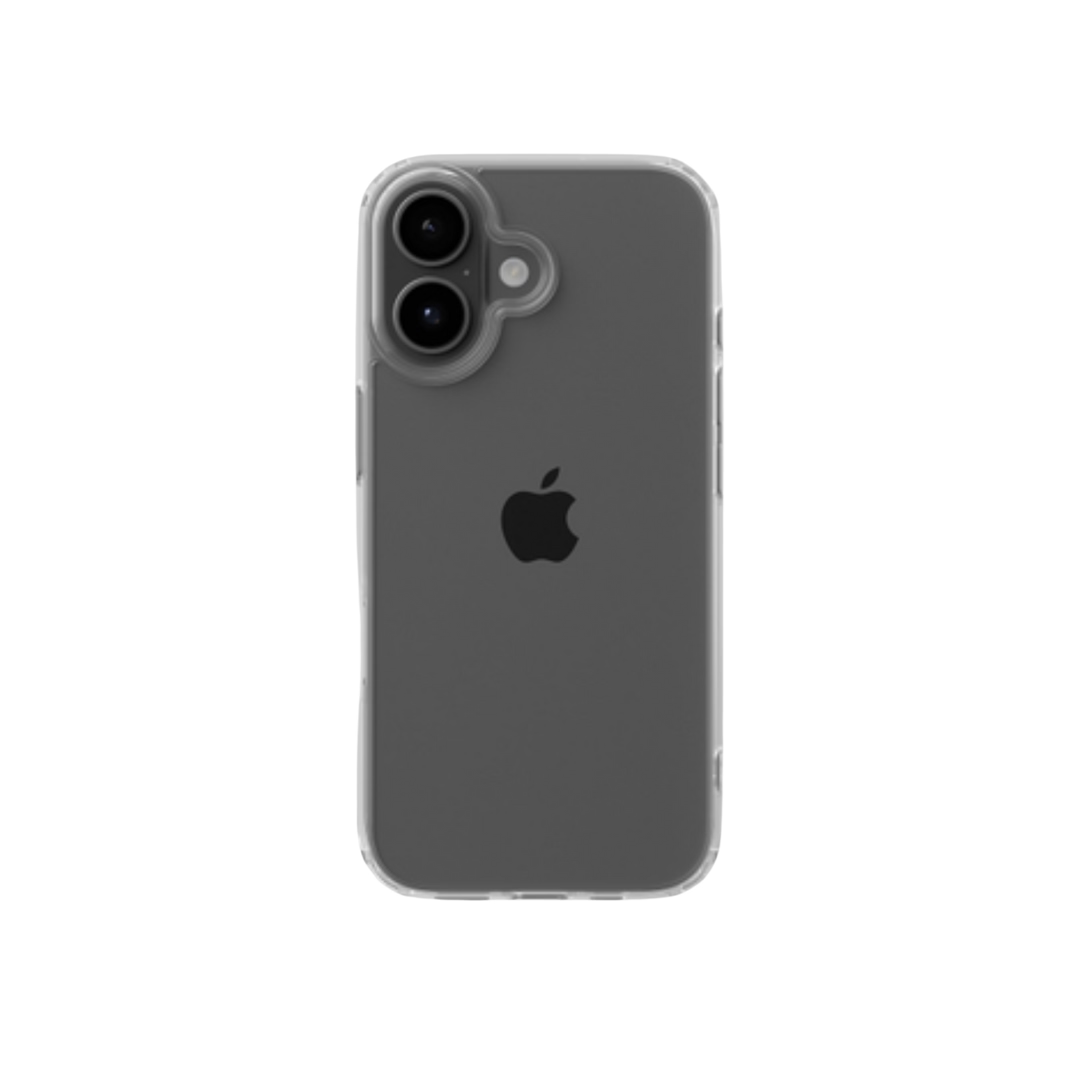
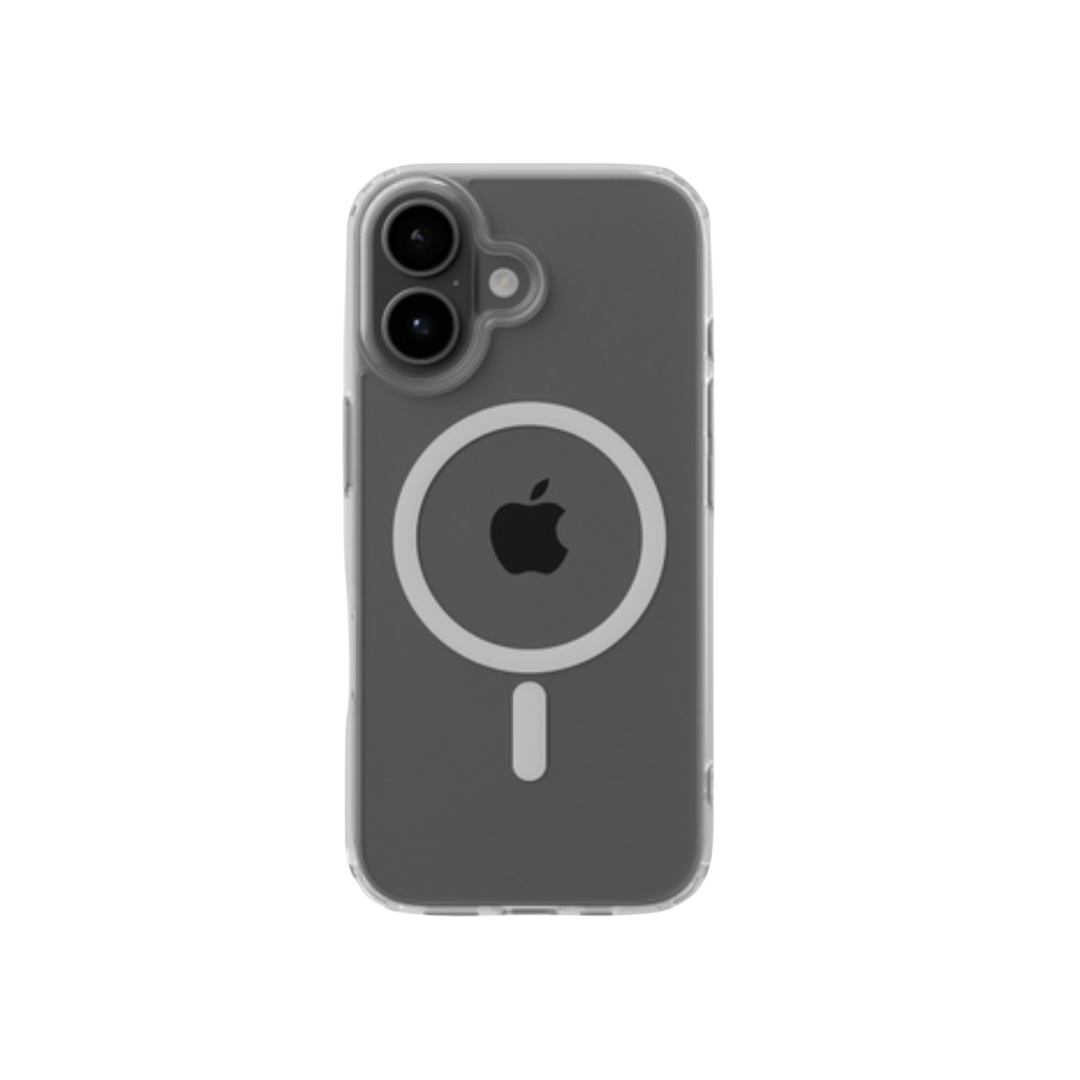
Design protective cases for current and new phone models with artistic or pop-culture themes. Startup costs: $0–$200. This is Podbase's core category and the best margin POD business on this list. A case costs €10 to produce and sells for €35–60 — and with a simple upsell like a screen protector added at checkout, Podbase's internal data shows a 3–10% conversion rate that adds €10 or more to each order at zero additional customer acquisition cost.
20. Wall Art and Posters (POD or Digital)
Sell art that people can download and print at home, or have printed on demand. Estimated startup costs: $0–$100. Podbase's wall art category now supports framed prints in addition to standard posters — a category upgrade driven by direct seller feedback, according to Justina, Podbase's Head of Product Development.
21. Eco-Friendly Tote Bags (POD)
Create reusable bags for book lovers, activists, or small brands. Starting costs: $0–$150. Best for environmentally conscious creators who enjoy combining design with purpose.
22. Hoodies and Sweatshirts (POD)
Design custom hoodies with seasonal themes, fan art, or trendy fashion styles. Starting costs: $0–$250. Best for creators targeting fashion or fandom audiences.
23. Notebooks, Journals, and Planners (POD)
Create themed stationery for students, professionals, or wellness enthusiasts. Startup costs: $0–$150. Fits organized creatives who enjoy productivity tools.
24. Digital Printables and Templates
Sell Canva templates, planners, trackers, or worksheets on platforms like Etsy. Starting costs: $0–$250. A strong passive income option for designers.
25. Online Courses and Masterclasses
Package your professional skills, creative hobbies, or technical expertise into video courses. Starting costs: $0–$300. Works for teachers or experts who enjoy sharing knowledge.
Local & Offline Low-Cost Business Ideas
These businesses serve your community with minimal overhead and fast cash flow. They are less scalable than online businesses but can generate immediate local income.
26. Pet Sitting and Dog Walking
Use apps like Rover to find local pet owners. Starting costs: $0–$200 for permits, insurance, and leashes. Fits animal lovers with flexible schedules.
27. House Cleaning Services
Offer deep-cleaning or "green" cleaning for busy families. Startup costs: $100–$400 for cleaning supplies and tools. Reliable demand and strong word-of-mouth growth.
28. Lawn Care and Landscaping
Mow lawns, trim hedges, or create simple garden designs. Starting costs: $200–$600 for basic tools. Steady seasonal income with low competition in most local markets.
29. Mobile Car Washing and Detailing
Clean and polish vehicles at clients' homes or offices. Starting costs: $150–$500 for supplies. Great for car enthusiasts who want mobile freedom.
Also Read:
- 15 Best Business Ideas for Couples to Start Together in 2026
- Best Print On Demand Greeting Card Companies to Use in 2026
30. Senior Concierge Services
Help elderly neighbors with groceries, tech support, or errands. Starting costs: $0–$100, mainly for background checks. Fits empathetic, reliable people who enjoy helping others.
How Much Does It Cost to Start a Low-Cost Business?
You do not need a fortune to execute any of these low-cost business ideas. Costs vary depending on tools, marketing, certifications, and equipment, but here is a realistic breakdown:
- Online services: $0–$200
- Print on demand: $0–$300
- Digital products: $0–$150
- Local services: $200–$500
Your startup money typically goes toward a domain name and website hosting, basic software tools or subscriptions, branding elements, initial marketing, and legal documents. You are paying for setup and visibility — not infrastructure. You can launch lean and reinvest as revenue grows.
Pros and Cons of Low-Cost Business Ideas
These business ideas with low startup costs have real strengths, but they are not perfect. Before choosing one, look at both sides clearly.
Pros: Easier to start, test, and scale. Lower financial risk. Flexible schedule and work setup.
Cons: Competitive markets. Slower growth in the beginning. Limited budget for ads, tools, or hiring.
The cons are real — but they are manageable. The sellers who navigate them successfully are the ones who go in with accurate expectations and a clear testing plan rather than hoping for instant results.
How to Choose the Right Low-Cost Business Idea
Not all low-cost business ideas fit everyone, and the decision can feel overwhelming. Focus on these three filters:
- Match skills and interests: Choose a business that builds on what you already know or genuinely enjoy. Forced enthusiasm is visible to customers.
- Validate demand before you build: Research competitors, pricing, customer reviews, and online search trends to confirm real demand for what you are offering. Do not spend weeks building a product nobody asked for.
- Consider scalability: Think beyond the first few sales. Can the business grow without dramatically increasing expenses? POD, digital products, and service businesses all scale differently — understand which model fits your goals.
Why Most Low-Cost Businesses Fail (And What Podbase Data Shows Works Instead)
The conventional advice is to "plan carefully before launching." The data from Podbase's seller base tells a different story.
Sidas, Podbase's Head of Sales, describes the pattern directly: "Most sellers who churn go through what we call the guessing phase. They spend months building the ideal store: tweaking designs, optimizing their website, refining their SEO, and creating hundreds of products so every possible customer can find something. Six months pass, the store has never gone live, and the initial drive that sparked the idea has quietly faded. They never gave themselves the chance to find out if it would work."
The sellers who succeed do the opposite. "They put three to five designs live, push their marketing hard on those specific products, identify what is actually resonating — the winning design, the static ad that converts — and then build on top of what the market is already telling them. Most successful stores are up and running within two weeks, using simple tools and basic themes, because the goal is to learn quickly, not to launch perfectly."
The data is specific: sellers who place a sample order within 2 days of opening their store and publish at least 5 products within 30 days are already ahead of 80% of POD stores. Sellers who make their first 10 sales are in the top 10% — because most stores never reach that number. The gap is not talent. It is whether someone was willing to put something real in front of a real customer within the first month.
Low-Cost Business Ideas You Can Start with Print on Demand
Print-on-demand is one of the most accessible low-investment business ideas available today. It is low-risk because you hold zero inventory — products are only printed after a customer places an order. Production, fulfillment, and shipping are handled by the platform. You focus entirely on designing and selling.
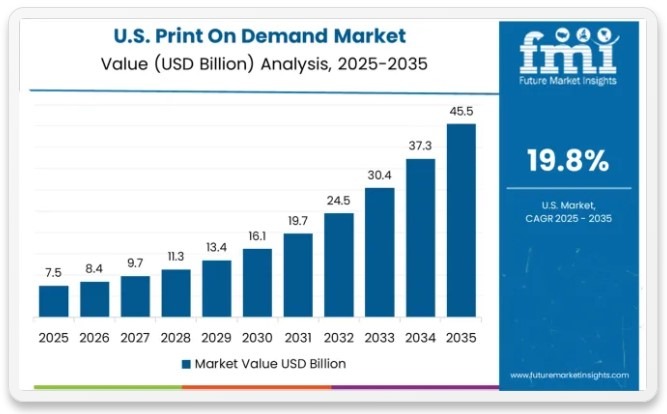
The POD market is expected to reach $8.4 billion in 2026 in the US, up from $7.5 billion in 2025. Within that market, the products with the strongest unit economics for sellers are custom phone cases, niche graphic t-shirts, personalized mugs, hoodies and sweatshirts, wall art and posters, eco-friendly tote bags, notebooks and planners, stickers and decals, laptop and tablet sleeves, and pet accessories like custom tags, bowls, and bandanas.
Also Read:
- How to Make $1000 a Week: 10 High-Income Ideas for 2026
- Print On Demand Design Ideas for 2026: What’s Trending Now
Best Print on Demand Platforms for Low-Cost Businesses
POD makes selling custom products straightforward, even for beginners. You design, upload, link your store, and the platform handles printing and shipping. Here are the top platforms to consider:
Podbase
Podbase is the strongest option for low-cost businesses in the tech accessory niche — and one of the best overall for sellers who want a high-margin, low-overhead POD business. It is completely free to start, with no monthly fees or transaction fees.
The margin advantage is real and specific. A phone case costs €10 from Podbase and sells for €35–60 — a 3.5–6× markup. Podbase's pricing runs 10–15% better than the major POD competitors across most product categories, and up to 20% better in select categories. Add a simple screen protector upsell at checkout and internal conversion data shows an additional 3–10% attach rate, meaning €10 or more in extra profit per order at zero additional marketing spend.
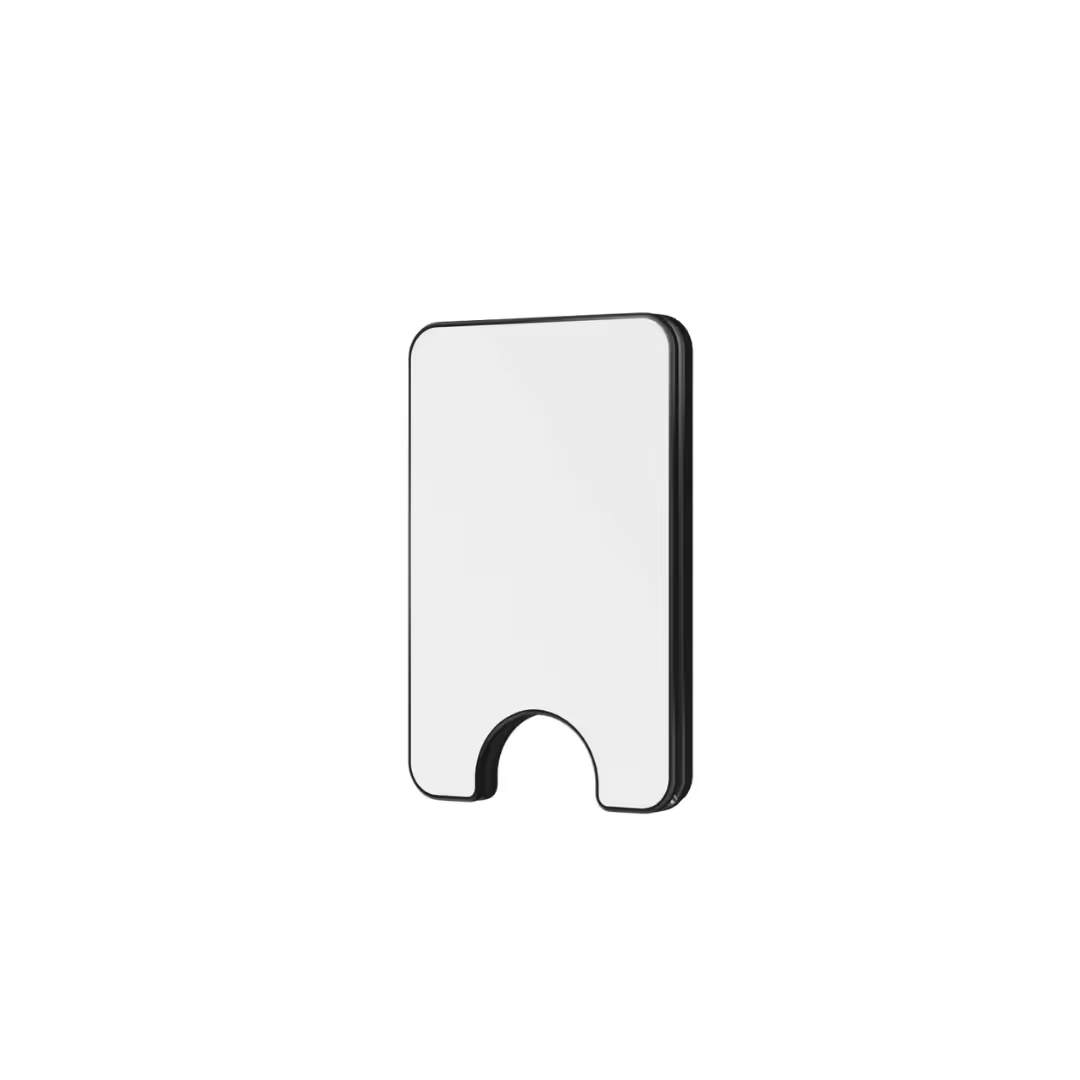
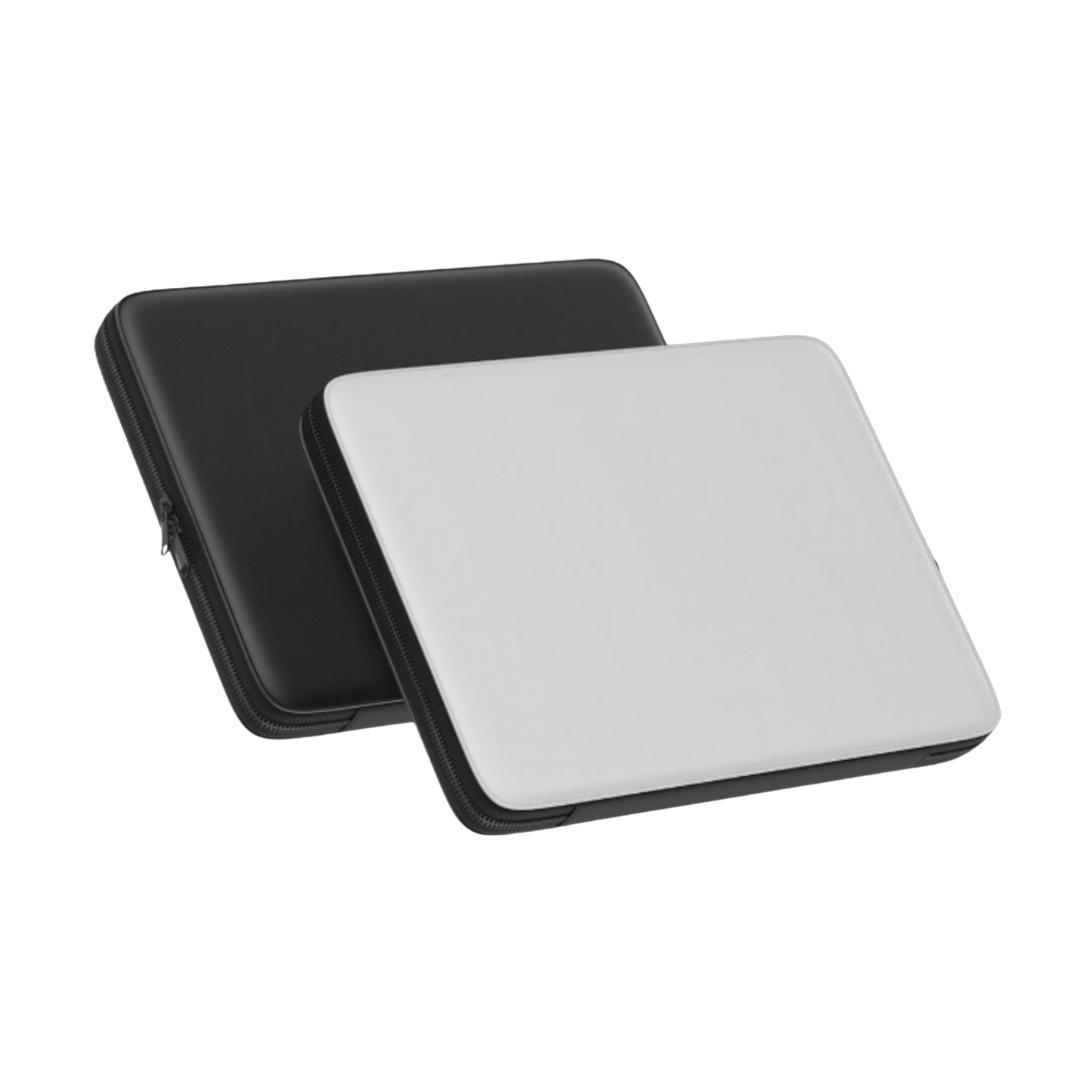
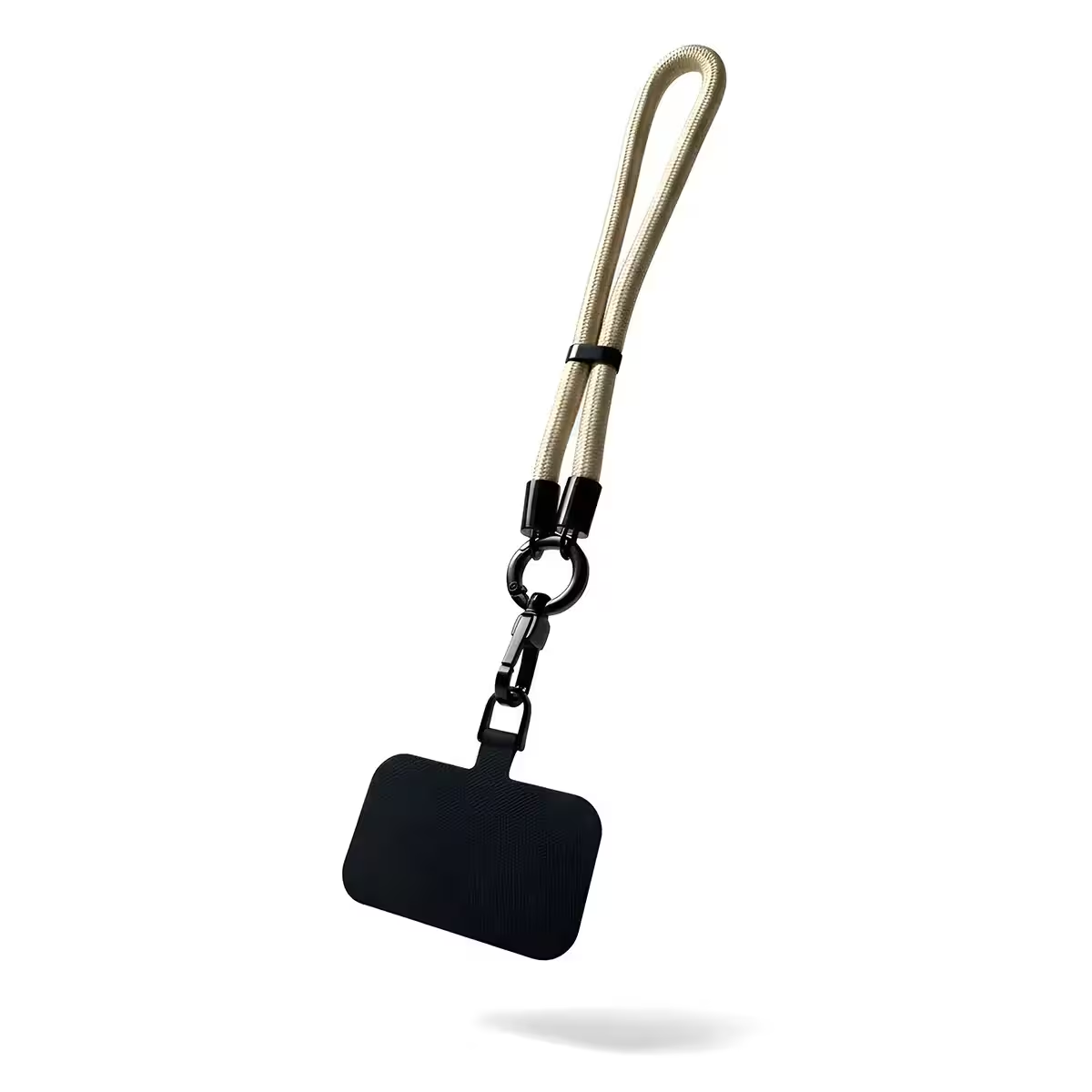
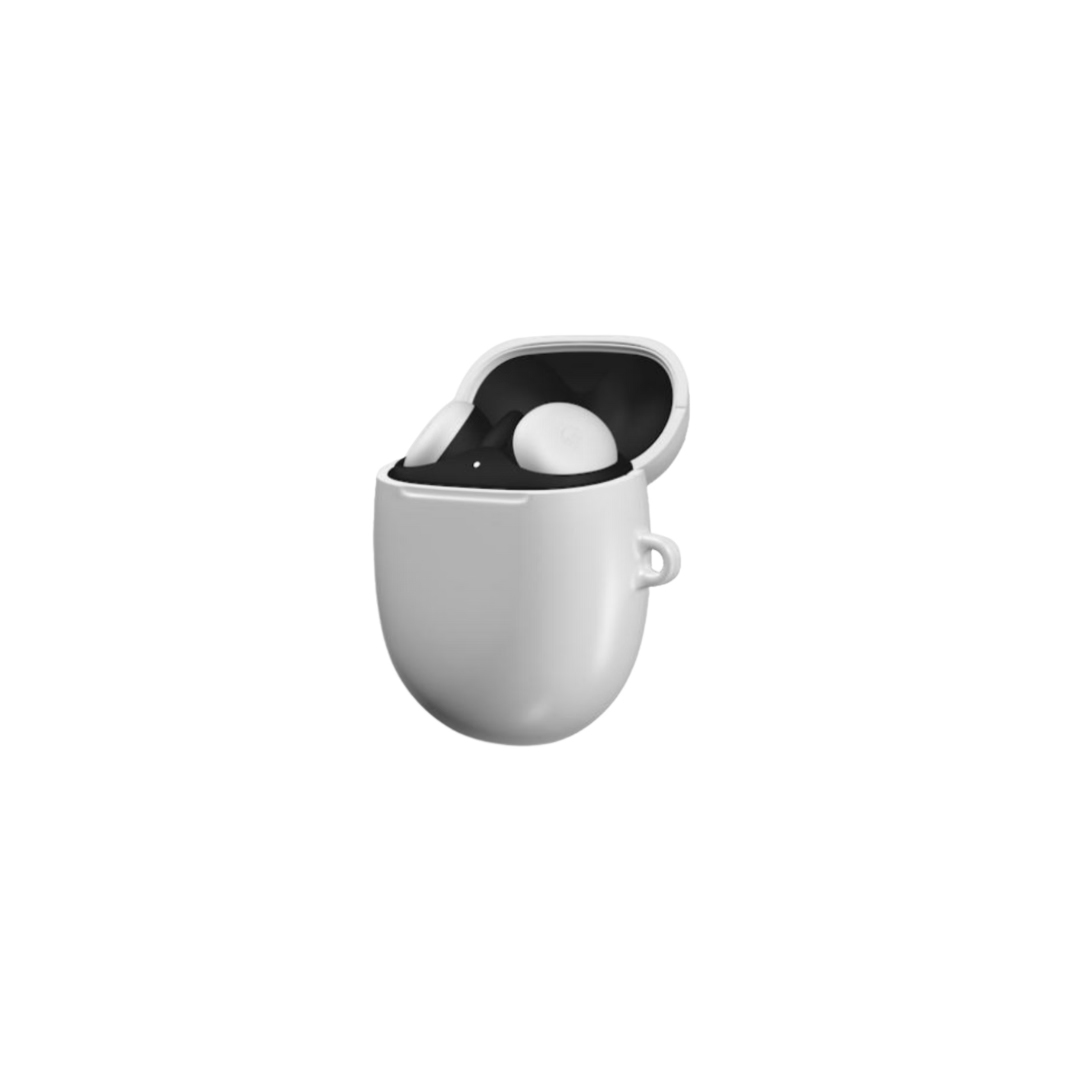
The platform focuses on tech accessories (phone cases, laptop sleeves, AirPod cases), wall art, and drinkware. It offers 300+ products, handles manufacturing in-house for quality consistency, and ships within 24 hours on average — a benchmark that held even during peak winter season when major competitors were running 7+ day lead times.
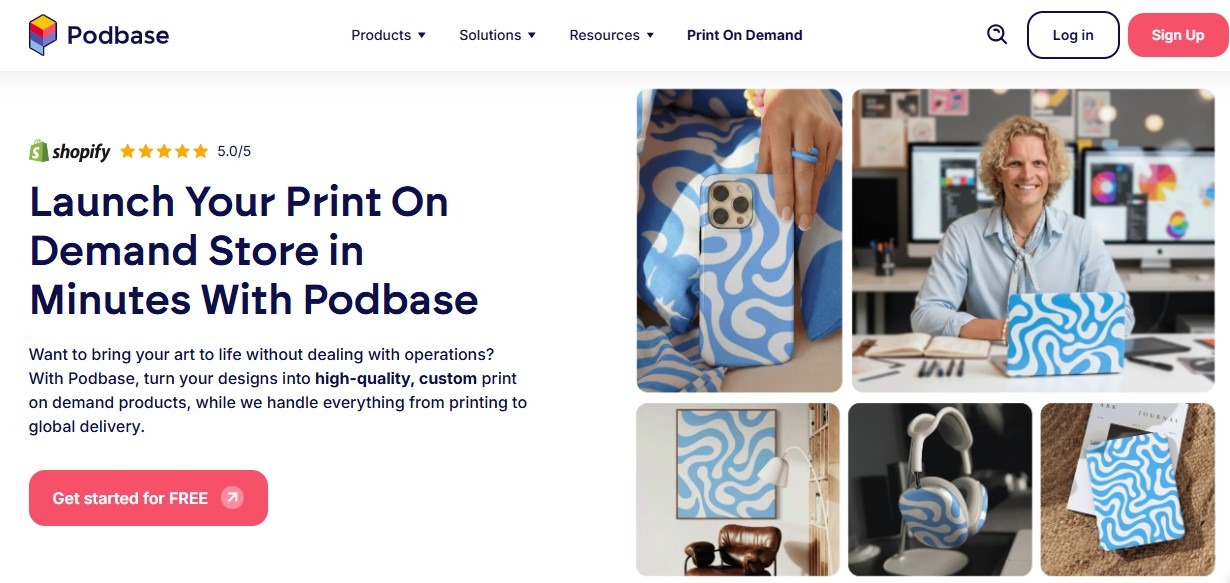
Image via Podbase
Speed of launch is also a differentiator. CEO Saulius Meilutis describes the change in onboarding: "Previously, the average onboarding time for a new print-on-demand project was three months. Currently we can see less than a month — it improved three times, and it is only the beginning." For sellers using AI tools alongside Podbase, the full setup can be completed in under a week.
Printify
A popular option for sellers who want broad product variety. Printify connects you to a global network of print providers, offering 1,300+ products across apparel, home décor, and accessories. You can compare suppliers based on price, shipping speed, and location. Best for testing a wide range of low-cost online business ideas before committing to a niche.
Printful
Known for quality and branding tools, with no monthly fee — you only pay when you make a sale. Printful operates its own production facilities, which means more consistent quality for beginners. Base costs are higher than Podbase, but the strong branding options (custom labels, packaging inserts) make it a good choice for sellers prioritizing unboxing experience.
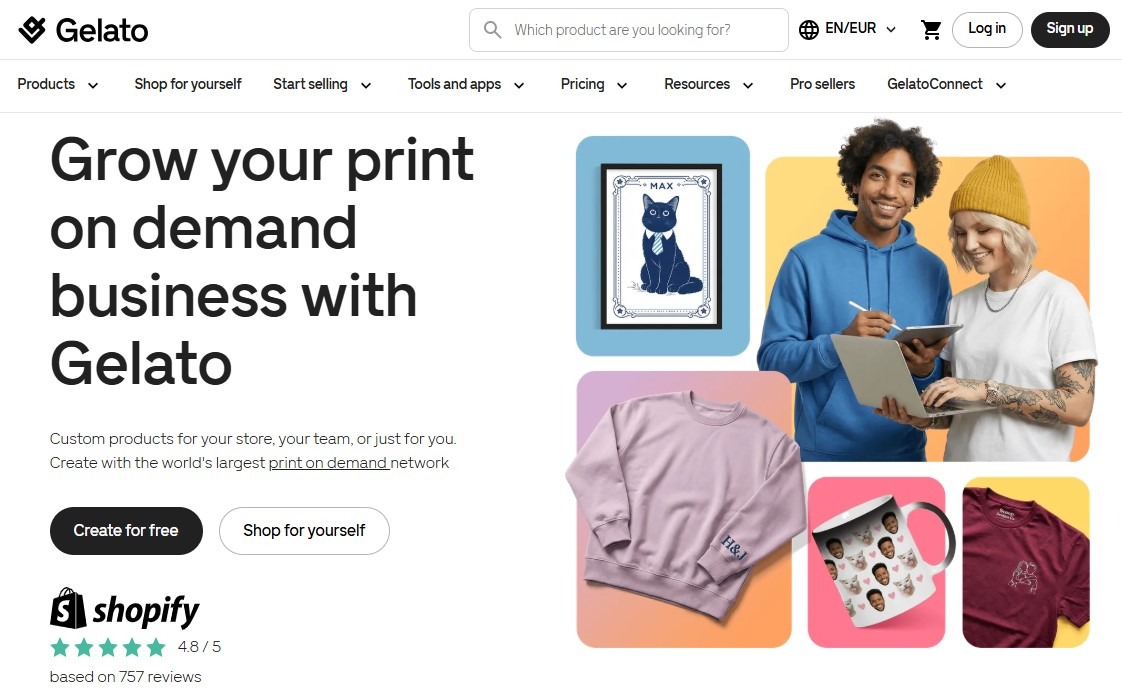
Gelato
A strong choice for international sellers. Gelato works with 140+ local print partners across 32 countries, which reduces shipping times and costs significantly for non-US sellers. Free to start; optional paid plans for analytics and priority support.
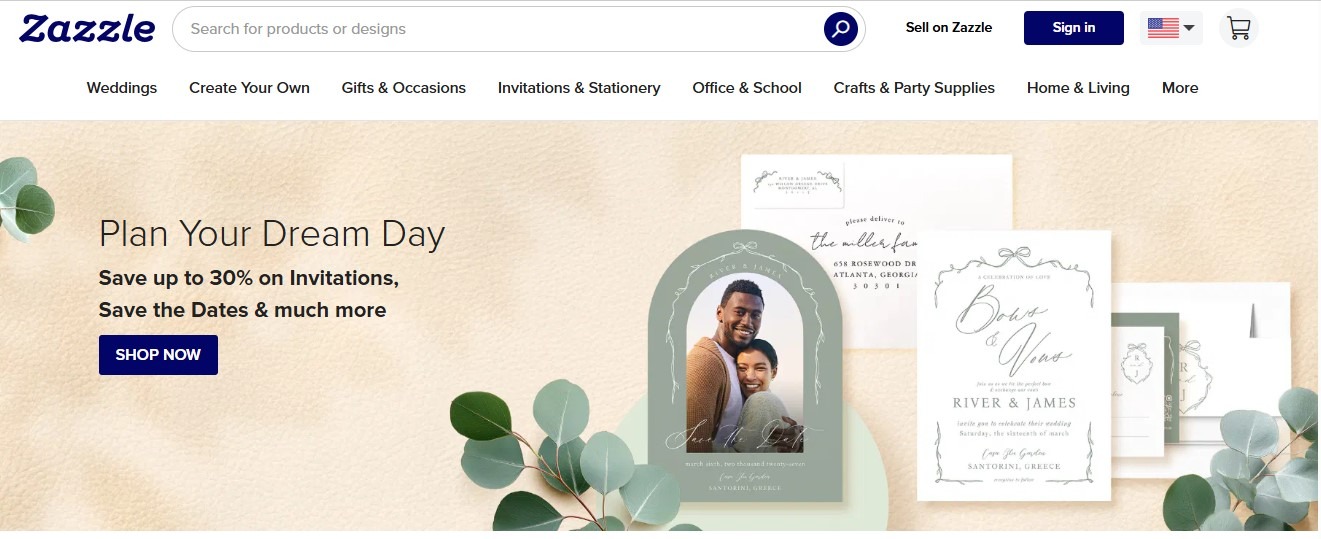
Zazzle
Uses a marketplace model, so you can upload designs directly without building your own store. Zazzle handles printing, shipping, and customer service, and already has built-in traffic. Particularly beginner-friendly for sellers who are not ready to run their own storefront yet.
Also Read:
- How to Make Your First Sale Online: A Step-by-Step Guide
- Is Print-On-Demand Profitable? An In-Depth Guide
Common Mistakes to Avoid When Starting a Low-Cost Business
Most problems come not from lack of money but from poor decisions. Vytautas Mikaila, Podbase's CMO, identifies the three patterns he sees most often when new POD sellers struggle:
The first is not setting up the website properly. "They imagine they are okay with just a regular catalog, a regular working website, and then run ads and things will somehow work out. Reality is that this is where you overspend and waste your money on ads, because people that come to your website will not be incentivized enough to buy. It is also about engagement, clarity, and whether the customer is being taken through a buyer journey that leads them toward a conversion."
The second is wrong budget expectations at the start. If you are running social media ads, you need enough budget to generate real data — typically a few hundred to a couple of thousand dollars in the first three months. Too little and you never learn what works. Too much and you burn through capital before the algorithm has enough data to optimize.
The third is impatience. "You have to be willing to run at a loss for maybe the first three to six months, and then things start to shift. Doing everything step by step really gives you the advantage that comes from patience." The businesses that fail in month two would often have succeeded by month five. They quit before the data turned.
Beyond these three, the most common tactical mistakes are: trying to do everything at once, failing to choose a niche, overspending on tools early, skipping market validation, and not having the right legal documentation in place.
Start Your Low-Cost Business Today
These low-cost business ideas make it easier to take your first step and build confidence as you scale. You do not need perfect timing, a huge budget, or a complicated plan. The key is to pick one idea, launch it with three to five initial offerings, let the market tell you what is resonating, and build from there.
The one insight that runs through every successful Podbase seller story is this: the businesses that succeed are not the ones that planned the longest — they are the ones that started the soonest and adapted the fastest.
If selling tech accessories or custom products fits your skills, Podbase makes it simple. Zero upfront fees, 24-hour fulfillment, and margins that are 10–15% better than the competition. Get started with Podbase in minutes.

Saulius Meilutis is the CEO of Podbase, helping creators and entrepreneurs monetize their ideas with print-on-demand. He shares insights on eCommerce, growth, and building lean online businesses.

.avif)






.avif)
.avif)
.avif)
.avif)
.avif)
.avif)

.avif)



.avif)

.avif)

.avif)

.avif)

.avif)