Podbase Manufacturing & Seller Data in This Article
- 80% of worldwide phone users have a case — and the average user replaces it every two years with each new device
- Podbase uses dual-layer polycarbonate + TPU construction for tough cases; most competitors use cheaper single-layer materials
- Phone case economics: €10 base cost → €35–60 retail price — a 3.5–6× markup before upsells
- Podbase three printing technologies: sublimation, UV printing, and heat press — each suited to different case materials
- Color accuracy verified with spectrophotometer testing on every production run
- POD reduces overproduction waste from 20–40% (batch manufacturing) to near 0%
How to Make Phone Cases and Start Selling Them Online
Almost everyone owns a smartphone, yet few think about the accessory they replace more often than the phone itself. Cases wear out, go out of style, or are swapped for a new look.
This behavior drives real demand. In fact, the global phone case market is projected to be worth over $12.2 billion in 2026. 28% of people replace cases frequently due to wear or upgrades. This is a great business opportunity for selling phone cases.
Podbase CEO Saulius Meilutis explains the structural demand behind these numbers: "Nowadays, almost 80% of worldwide phone users have a protection for their phone — a phone case. And on average, every two years people tend to renew their phone, so they buy a new device. With a new device bought, you will also have to look for protection. What the market also found out is that the gadget became your everyday item that you care for, so it could also become your style element. When you collided those two things — the protection and the style elements — then the case market started booming."
This guide will help you learn how to make phone cases, sell them online, and scale your business.
Is Selling Phone Cases a Good Business?
The accessories market is projected to generate over $739 billion in 2026, with online sales contributing 32.1%. This shows that a growing number of buyers are shopping digitally.
Phone cases are a notable segment within this market. Here is a closer look at the factors driving demand: 85% smartphone penetration drives demand for protective cases; 38% of younger consumers prefer custom designs and 56% buy based on looks; up to 40% of users change cases every six months, creating recurring demand.
For designers, the economics are compelling. Saulius Meilutis describes the digital artist use case: "One of the customer profiles is digital artists, because you can scale down their digital art on the phone case and their audience can have a piece of art which is not like €1,000 for a custom framed canvas — it's like €40–€60 for a case that has your favourite artist's design on it. What it also makes is that you carry this art on your everyday commute to your job, to your gym, or anywhere you go."
Turning these opportunities into profit depends on how phone cases are made and sold, as methods differ in costs, risks, and growth potential. Understanding how to make phone cases, sales statistics, and consumer behavior is crucial before starting.
Also Read:
Smartphone Usage Statistics: Essential Data
Best AI Tools for Entrepreneurs to Scale Smarter
Different Ways to Make Phone Cases
When researching how to make phone cases, you can typically choose one of three methods based on budget and scale.
1. Handmade/DIY
If you want to make phone cases at home, you handle design, printing, assembly, and shipping yourself. This offers full creative control but comes with limits: it is hard to scale beyond a few orders per day; quality is inconsistent between batches; production is time-intensive; phone model support is limited; and the effort required is high.
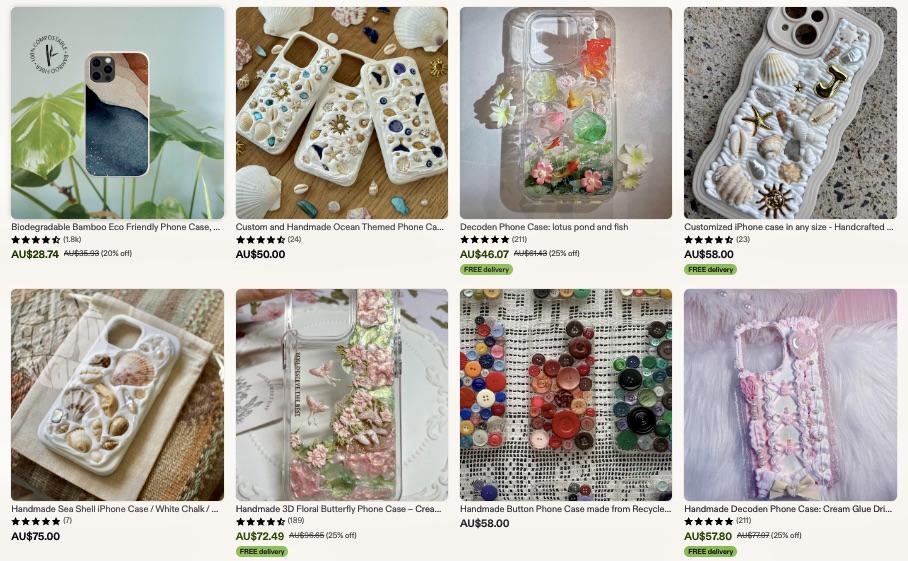
DIY works well for testing creative ideas and building a niche audience. It is common on Etsy, where sellers focus on originality over volume. Examples include hand-stitched leather cases, resin designs, and pressed flower cases made to order.
Also Read:
- Print On Demand Design Ideas for: What’s Trending Now
- Etsy Shop Name Ideas for Print on Demand Success
2. Local Printing
Another way to learn how to make phone cases is to work with local printing shops that use sublimation or UV printing. This is faster than DIY but still requires inventory management, storage, packaging, shipping, and updating stock for new phone models. This suits small brands that want more control while improving production speed.
3. Print on Demand (POD)
The third way to learn how to make phone cases is to use print-on-demand. With POD, you have less hands-on control than DIY or local printing, but you can start selling with no inventory. Other advantages include support for multiple phone models, easy design testing, and printing and fulfillment handled entirely by the provider.
Many sellers use POD to sell custom phone cases, focusing on design and product marketing while the provider manages production.
What Phone Case Materials Actually Last — And What Podbase Uses
Most beginners researching how to make phone cases focus entirely on design. What separates long-term sellers from those who churn through returns and complaints is something more fundamental: the material your cases are made from.
Podbase's Manufacturing and Operations team breaks down exactly what goes into a quality phone case. "Podbase uses high-grade polycarbonate and thermoplastic polyurethane as a dual-layer construction for tough cases, and single-layer polycarbonate for snap cases, clear cases, and MacBook cases. While most competitors use cheaper single-layer thermoplastic polyurethane or low-grade polycarbonate, these do not ensure durability and quality."
The printing technology matters equally. Podbase uses three methods depending on the product and material:
Sublimation: The ink turns into gas and becomes part of the material itself. This creates permanent, vivid colours that will not peel, crack, or fade with normal use.
UV printing: Ink is sprayed directly onto the case surface and instantly cured by UV light. This allows extremely fine detail and works on surfaces where sublimation is not possible.
Heat press: A machine uses heat and pressure to transfer designs. Used for specific materials and case constructions where other methods are less effective.
After printing, every order moves through an assembly and quality check pipeline. Color accuracy is verified using a spectrophotometer — the same tool used to match paint colors — which reads the exact color code from the printed surface and compares it to the design specification. This level of quality control is not standard across the POD industry, particularly at smaller or lower-cost providers.
Why does this matter for sellers learning how to make phone cases? Because a case that fades, chips, or misaligns at the camera cutout generates support tickets, refund requests, and negative reviews. Podbase Head of Sales data confirms that quality product providers drive significantly higher repeat purchase rates — and that poor product quality is one of the most common reasons a seller's store stalls in months two through four.
Types of Phone Cases
There are many styles you can design and sell once you learn how to make phone cases. Each offers different protection levels and attracts different buyers.
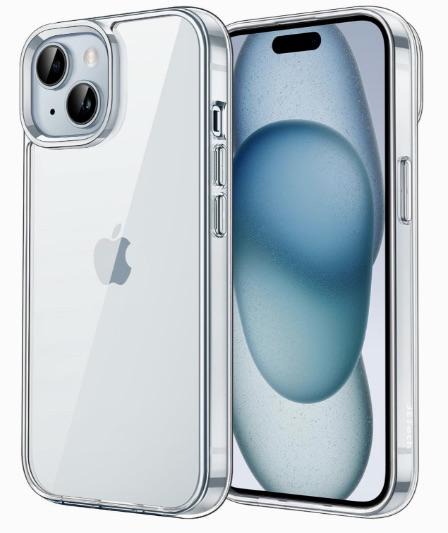
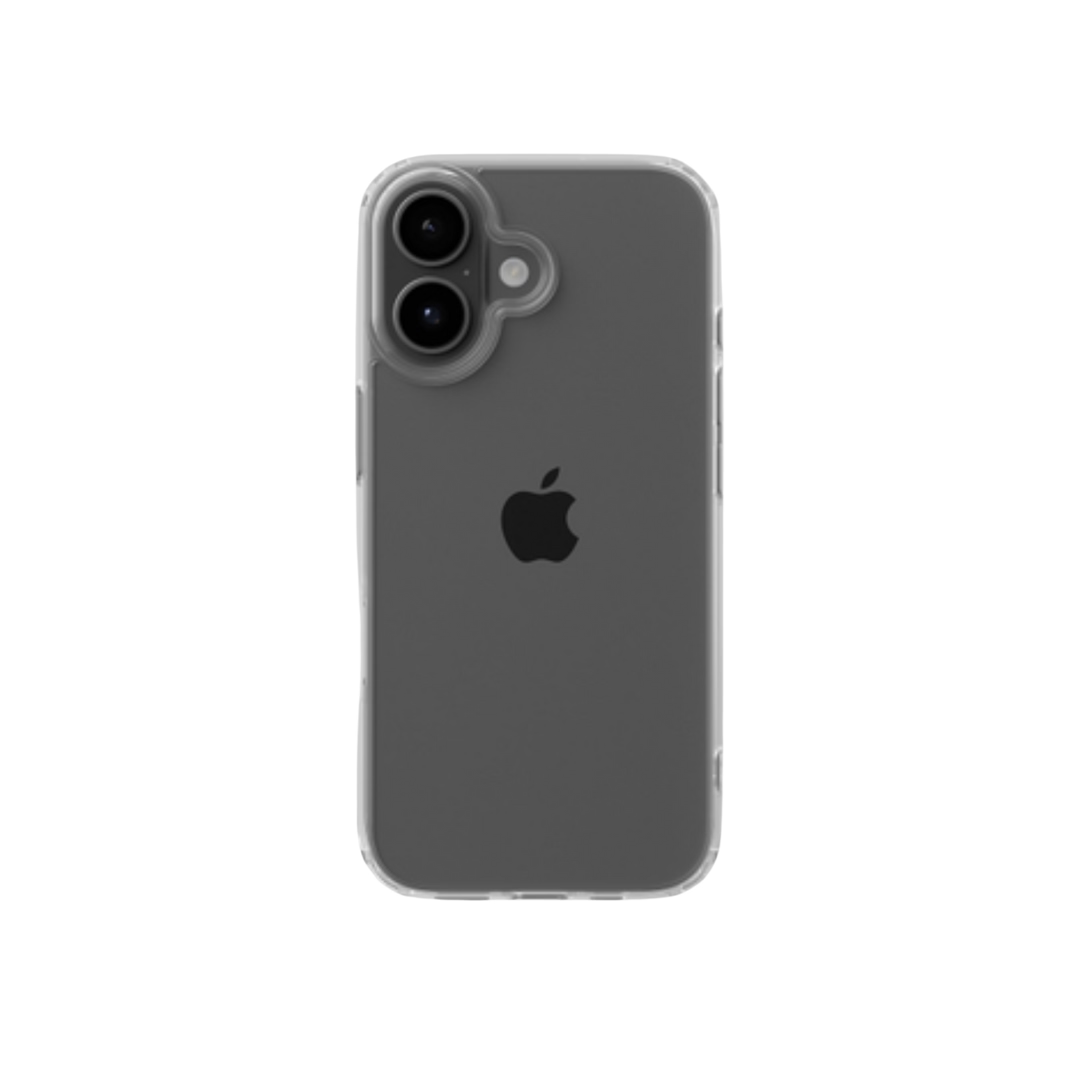
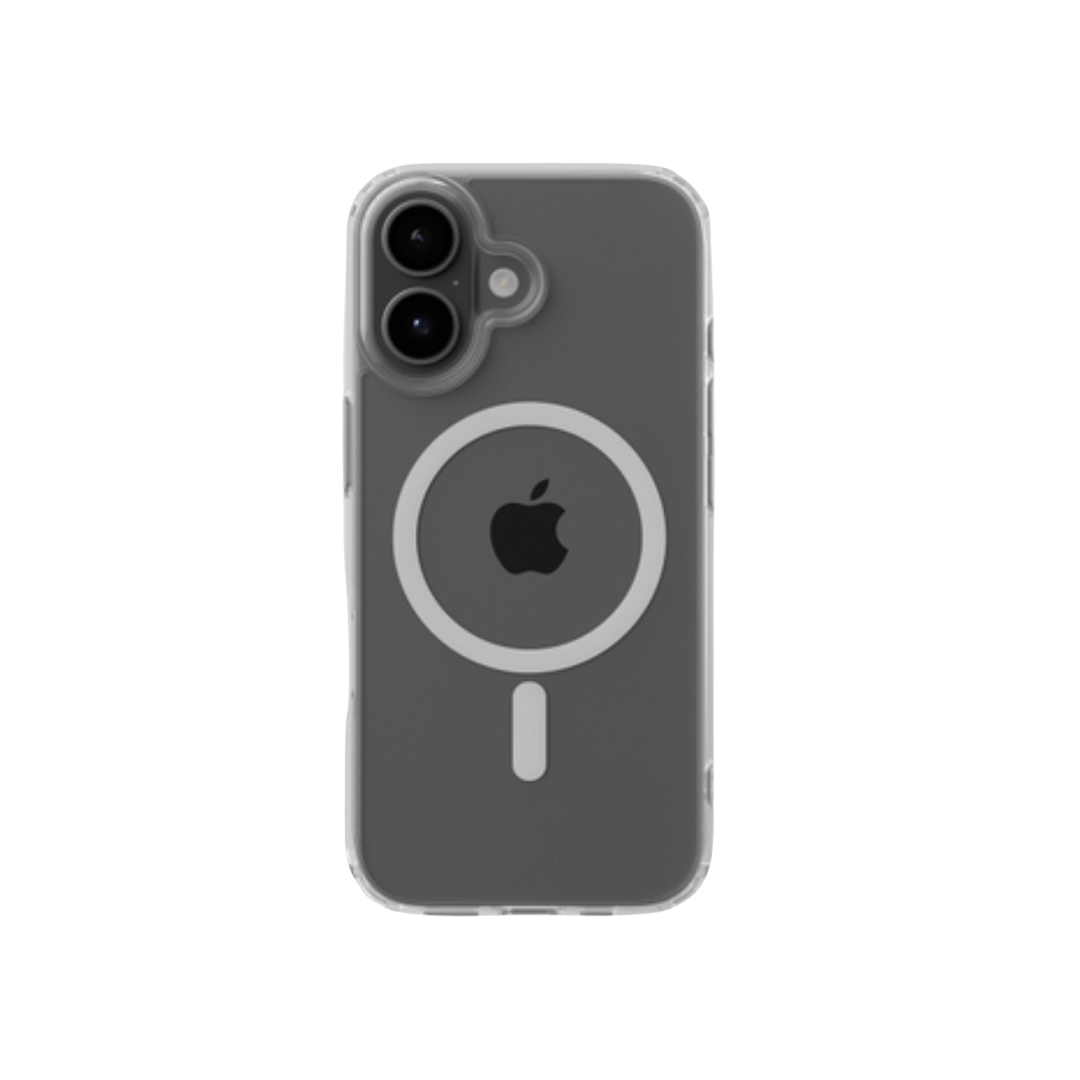
Clear Phone Cases
Clear cases protect the phone while showing its original design. They let the phone's color or logo show through.
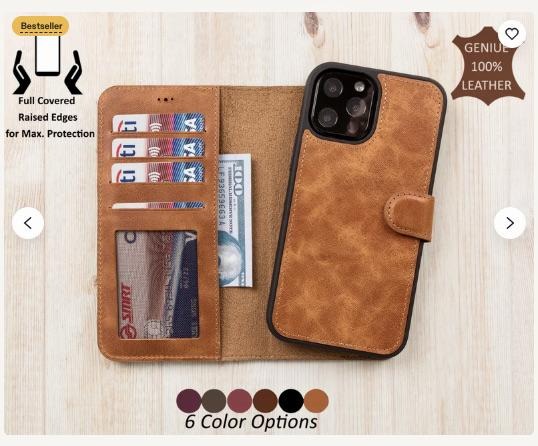
Magnetic Wallet Cases
These cases combine protection with storage. A magnet keeps the cover closed, and most include card slots or a small pocket. They are popular with people who want to carry cards and cash without a separate wallet. Many come in leather for a more premium look.
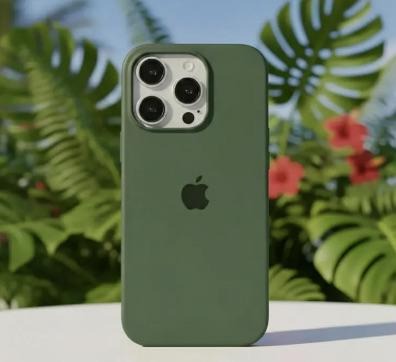
Silicone or Gel Cases
Silicone/gel cases are soft, flexible, and easy to put on or take off. They grip the phone well and absorb small impacts, making them a good everyday choice.
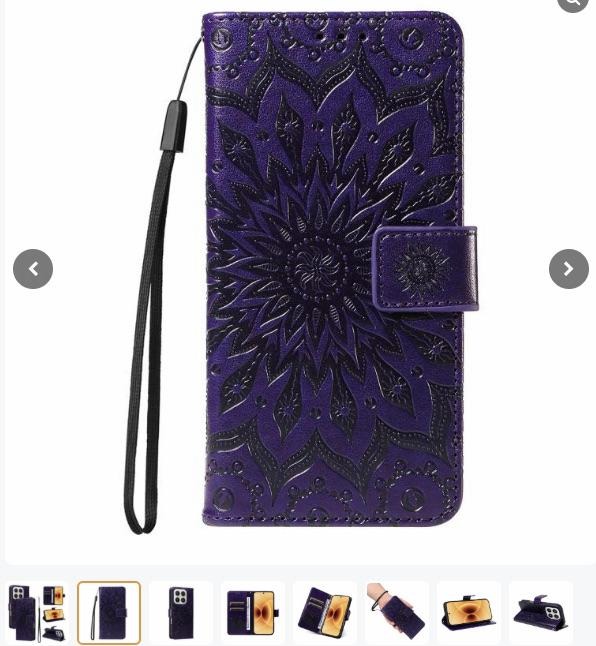
Flip Phone Cases
Flip cases protect both the front and back of the phone. They open like a book and can also include pockets for money or cards, like wallet cases.
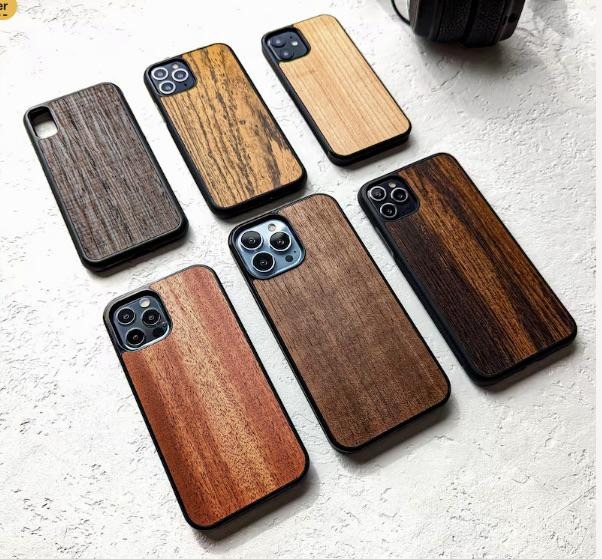
Wooden Phone Cases
Wooden cases use real wood or layered materials for a natural look. Many buyers choose them because they stand out from plastic or silicone options.
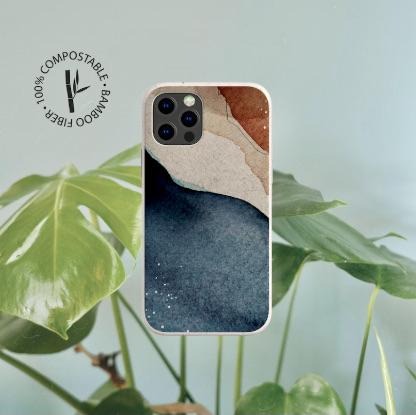
Biodegradable/Eco-Friendly Phone Cases
Eco-friendly cases use plant-based plastics, bamboo fiber, or compostable materials. They appeal to buyers who care about the environment. Podbase's Manufacturing team confirms that POD production specifically supports eco-friendly selling: on-demand manufacturing reduces overproduction waste — which in batch manufacturing typically accounts for 20–40% of total units — to near zero, since items are only produced after a confirmed purchase.
Other Trending Styles
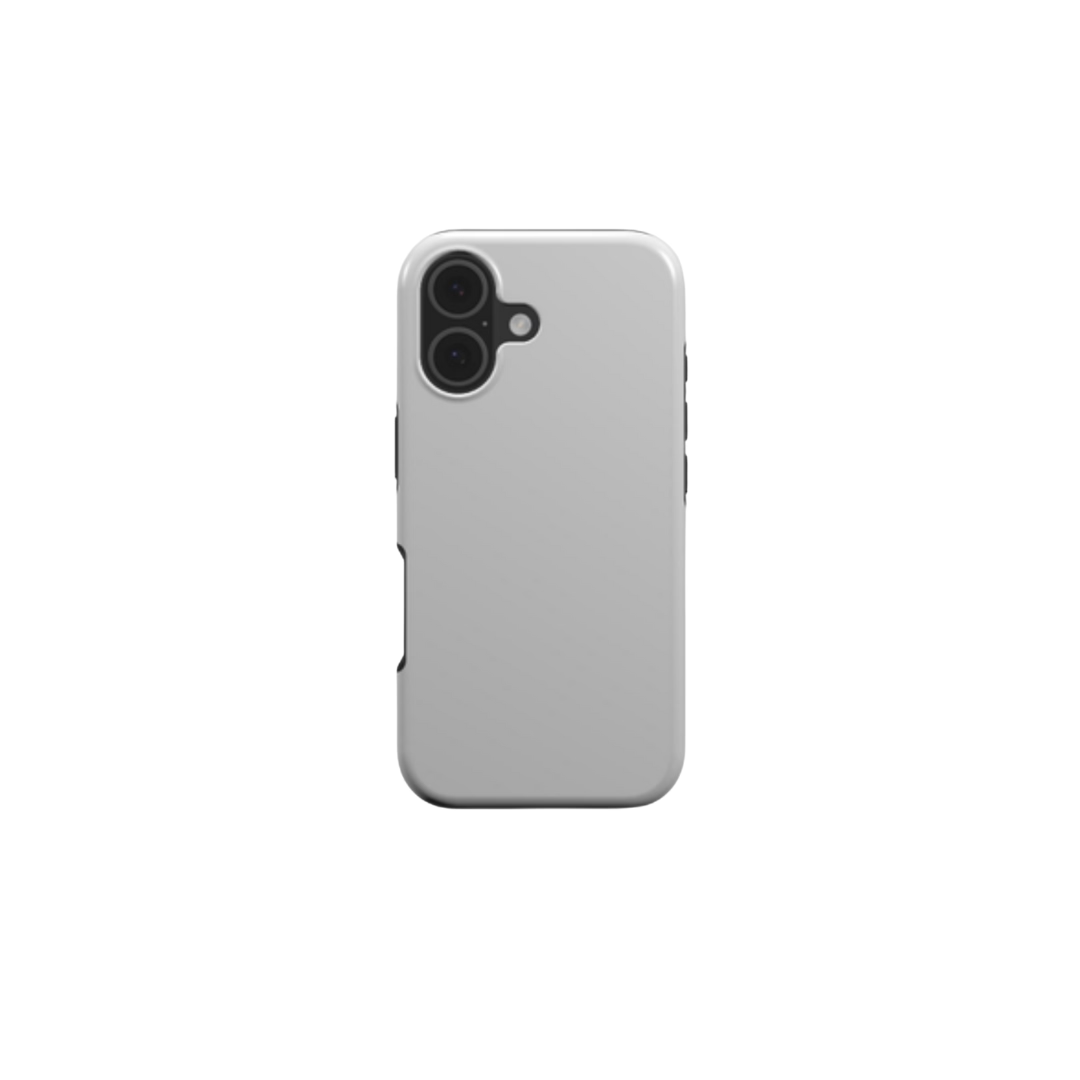
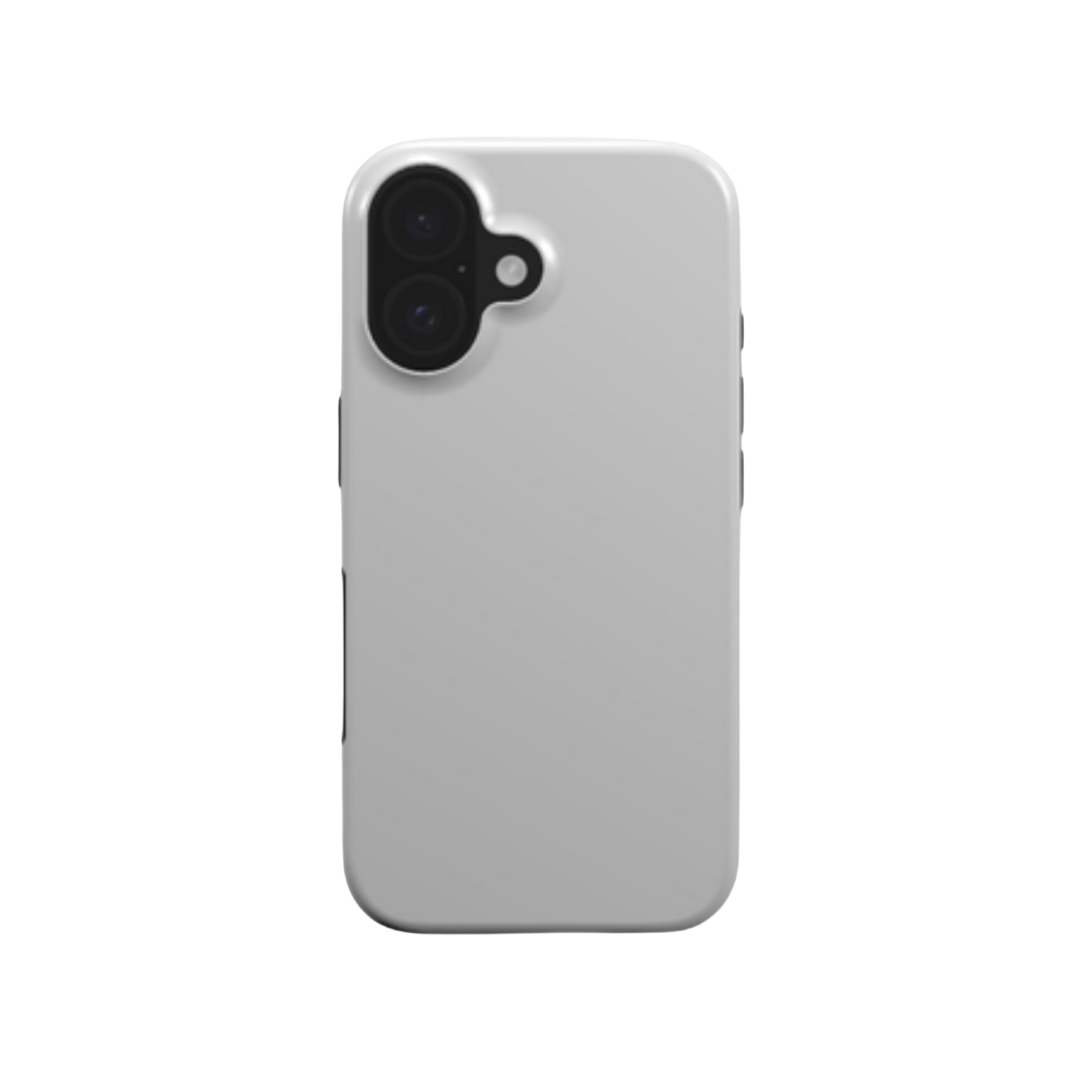
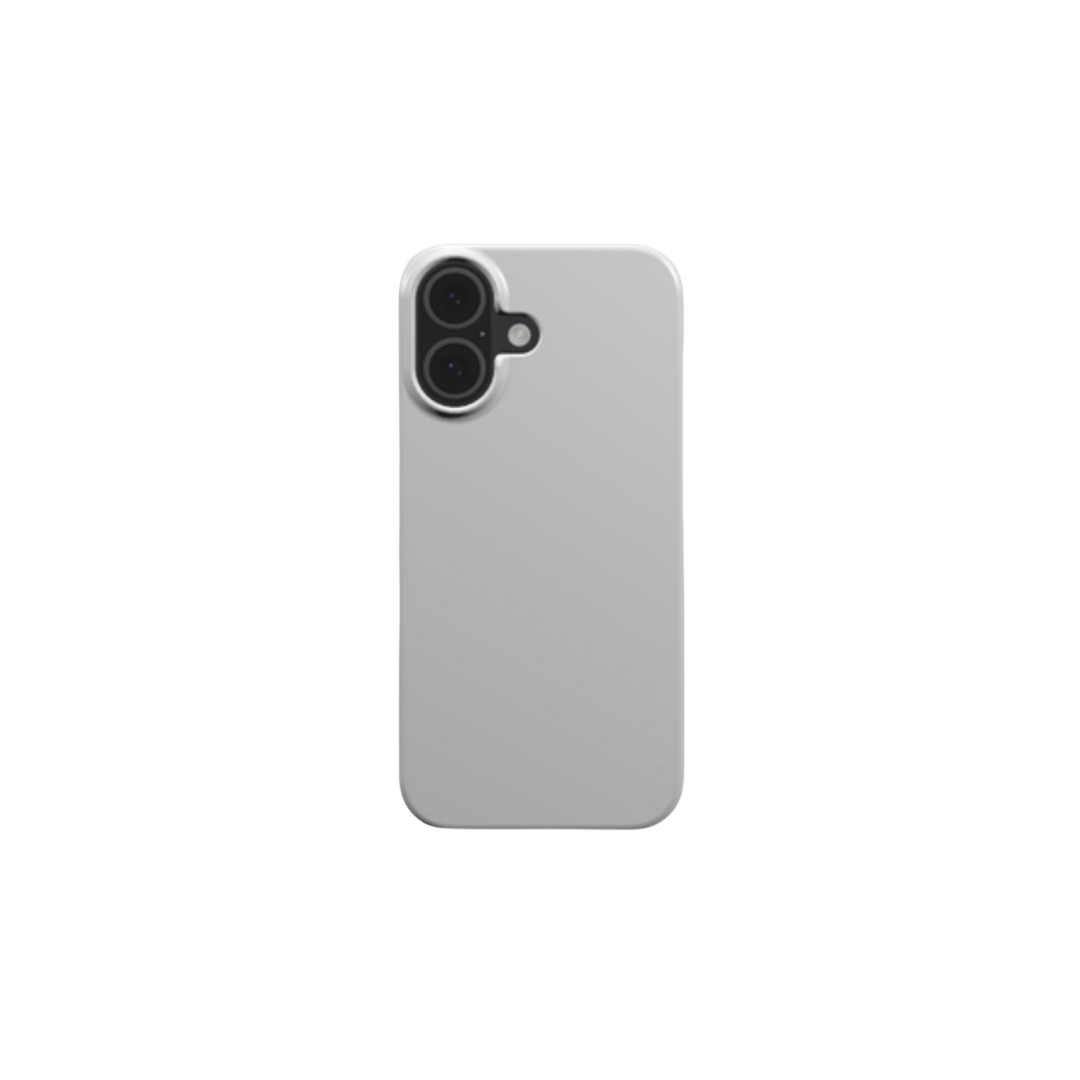
Beyond the main categories, additional styles to consider include hybrid cases (hard plastic and soft TPU combined for drop protection), puffy cases (thick cushioned designs), metal cases (sleek and premium), fashion-printed cases (bold prints and patterns), customizable modular cases (grips, stands, card holders), and rugged cases (reinforced corners, dust covers, water resistance).
How to Make Phone Cases Using Print on Demand
Below are four essential steps to follow when learning how to make print-on-demand phone cases.
Step 1: Create Your Phone Case Design
The first step in learning how to make phone cases is creating a design that people want to buy. Pick a clear idea: design for a specific audience. Minimalist graphics, personalisation, and bold patterns all sell well. You can use tools like Canva or Adobe Express to start quickly. Use quality images: export at 300 DPI, save as PNG or JPG, and use RGB color mode for sharp results. Low-quality files make cases look cheap.
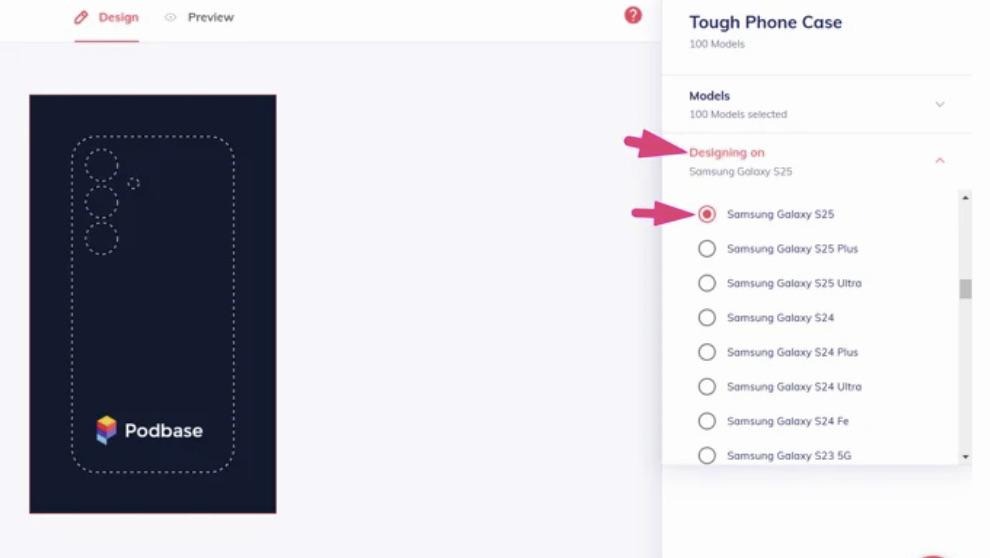
Match the design to the case shape: keep key elements away from camera holes and button cutouts. When using platforms like Podbase, you can switch between models under the Designing On tab, and guidelines adjust automatically — a critical workflow advantage when designing for multiple phone models simultaneously.
For adapting existing designs to print-ready specs, Podbase CEO Saulius Meilutis notes the AI workflow shortcut: "Now you can just simply write a prompt with all the requirements, upload your designs, and the output is here really fast and efficiently" — replacing what used to be hours of manual Photoshop adjustments for each new phone model.
Step 2: Choose Phone Case Models
After designing, the next step in learning how to make phone cases is choosing which models to sell. Start with popular phones like the Samsung Galaxy S26 Ultra and Apple iPhone 17 Pro Max. Offer multiple sizes by adapting one design to different phone dimensions. Select styles carefully: you can offer slim, rugged, or hybrid cases to attract different buyers. Consider niche models: gaming phones or foldables often face less competition, allowing higher pricing.
Podbase's catalog covers iPhone, Samsung, Xiaomi, OnePlus, and Google Pixel — one of the broadest model selections available in a single POD platform, which matters because a customer who buys a Samsung Galaxy case today may need a new model case in two years. Continuity of model support means continuity of customer relationship.
Step 3: Select a Print-on-Demand Provider
Your provider handles phone case printing, packing, and shipping. Quality and speed matter more than most new sellers initially expect. Key criteria: a wide range of phone models; consistent print quality (verified through quality checks, not just claimed); integration with Shopify, Etsy, or your store; and fast fulfillment to improve reviews and repeat sales.
On margins: phone cases are one of the most profitable POD categories. Podbase Head of Sales Sidas confirms: "Phone cases are a great example of a healthy and profitable POD business model. You can buy from Podbase for €10 and sell them for €35–€60. This gives you immediate profit from new customers." That 3.5–6× markup compares favourably with most other POD categories. Podbase pricing also sits 10–15% better than major competitors across most product categories, reaching up to 20% better margins in select categories — meaning the same design sold through Podbase nets more per order than through Printify or Printful.
On fulfillment: during peak winter season — the most demanding period in POD — Podbase maintained an average 48-hour fulfillment window while major competitors ran lead times of over a week. For sellers whose reviews depend on delivery speed, provider choice directly determines star ratings.
On support: Podbase Head of Sales notes what switchers consistently report: "When a seller switches to Podbase from Printify, Printful, Gelato, or bigger competitors, what surprises them most is customer support." Unlike providers who tier their support quality by order volume, Podbase assigns every seller a dedicated account manager regardless of order size — which matters most when a production issue arises on a time-sensitive order.
Step 4: Order Samples
Before selling, order a sample. A design may look perfect on screen but differ in color, feel, or fit in real life. This step is not optional — Podbase's own quality data includes a case where color profile changes during production affected a bulk order, requiring a full remake of 90 cases. The lesson: verify your exact color profile on a physical sample before scaling.
When your sample arrives, check print quality (colors should be bright and sharp, matching your digital spec), alignment (the design should be centered correctly relative to camera holes and buttons), material feel (the case should feel durable, not thin or cheap — a dual-layer construction feels notably different from single-layer), and fit (camera holes and button cutouts must align perfectly for the specific model).
Podbase Head of Sales confirms the data behind this step: "Sellers who place a sample order within the first two days of opening their store and have at least five products published within 30 days are already ahead of 80% of POD stores." The sample order is not just a quality check — it is the single most predictive behavior for long-term seller success.
How to Make Custom Phone Cases That Actually Sell
Learning how to make custom phone cases is one thing. Making ones that people consistently buy requires understanding what drives purchase decisions in this category specifically.
The phone case market splits into two segments that require different design strategies. The first is the protection-first buyer — they want a case that fits their exact model, handles daily drops, and does not interfere with wireless charging or camera performance. For this buyer, design accuracy (correct cutouts, button alignment, non-yellowing clear material) matters as much as aesthetics.
The second is the expression buyer — the 38% of younger consumers who buy based on looks and the 56% who select primarily on visual style. For this buyer, the design itself is the product. Podbase CEO Saulius Meilutis describes this segment precisely: "With a case on a gadget, you could also showcase what you like, what's your interest. You could showcase your art — it became like your personal billboard on your gadget." This buyer replaces cases not because they wear out, but because they want a new look. They are recurring buyers by nature.
The most successful phone case businesses serve both: a design compelling enough for expression buyers to choose it, built on a material quality foundation that satisfies protection buyers. A case that looks great but fails at the camera cutout loses both segments.
How to Sell Phone Cases Online
Once you have learned how to make phone cases, the next step is selling online. To sell phone cases online, you need the right platform, clear product pricing, and strong listings.
Choose a Selling Platform
Etsy is ideal for handmade or niche designs with built-in traffic. Shopify gives you full control over branding and store experience. Amazon offers a large audience but high competition. TikTok Shop or Instagram work best for engagement-first selling and audience building. Choose a platform based on your goal. If you use print on demand, make sure your provider integrates smoothly with ecommerce platforms so orders route to production automatically.
Podbase CMO Vytautas Mikaila notes that 99% of active Podbase sellers use social media ads as their primary traffic source: "It is not only about traffic. It is also about control. You can test faster, you can adjust faster, and you can find what actually resonates faster." For a new phone case seller, this means you do not have to wait for SEO to build — you can put €200 into Meta ads, test three designs, and have clear conversion data within a week.
Also Read:
How to Sell Digital Products on Amazon
How to Sell on Instagram (Complete Guide)
Set Your Pricing
Pricing is one of the most important steps when learning how to sell phone cases online. You need to include all costs to keep real profit. For instance, on Etsy you pay a $0.20 listing fee each time you publish or renew a product listing, a 6.5% transaction fee on the full sale price, and a payment processing fee that varies by country.
To set your retail price, consider: product cost (e.g., €9.95 for a standard Podbase case), shipping (varies by region), listing and transaction fees, and your desired profit margin. At a €9.95 base cost and a €35–€60 retail price, the margin structure leaves meaningful room for ad spend and still retains healthy profit — which is why Podbase Head of Sales describes phone cases as "a great example of a healthy and profitable POD business model."
Also Read:
Shopify vs Amazon: Which Is Better for Sellers?
TikTok Shop Fees: Commission, Refunds, and More
Create Product Listings
Your listing drives sales, so use clear photos, show the case on a real phone, and add close-ups. AI-generated mockups have made this significantly faster: Podbase CEO Saulius Meilutis notes that "you can just take a static picture, generate high-quality multi-angle output of your products showcasing all the different unique selling points of your product, tailored to your ideal customer profile based on your brand's identity" — replacing what used to be a multi-week photo shoot process with a same-day workflow. In the description, mention the material, the models it fits, and the ideal customer it is made for. A strong listing builds trust and reduces hesitation before checkout.
Best Platforms to Sell Phone Cases Online
Marketplaces like Etsy, Amazon, and eBay offer a large built-in audience and easy setup, making them ideal for unique or handmade cases. The trade-off is high competition, fees that cut into profits, and less control over branding. Online stores through Shopify or BigCommerce give you full control over design and branding, and are ideal for custom or branded cases — though they require marketing effort to drive traffic. Social platforms like Instagram and TikTok Shop offer direct engagement and in-app buying with strong visual marketing, though they require consistent content creation and have variable platform fees.
Why Print on Demand Is the Best Way to Make Phone Cases to Sell
Print on demand is one of the easiest and most profitable ways to make phone cases to sell. You do not buy stock upfront, so there is no risk of unsold inventory. Items are produced only after a sale, meaning you pay for production after the customer pays you. You can test dozens of designs before seeing which ones actually sell. POD platforms integrate with marketplaces, online stores, and social media — one design can sell on Instagram, Etsy, and Shopify simultaneously. You can access global fulfillment to reach buyers worldwide. And you can upsell by bundling phone cases with matching accessories or limited editions.
For Podbase specifically, the sustainability advantage is also real: on-demand production reduces overproduction waste from 20–40% (typical in batch manufacturing) to near zero, since items are only produced after a confirmed purchase.
Best Print-on-Demand Provider For Phone Cases
When comparing POD services for phone cases, consider model variety, profit potential, fulfillment speed, material quality, and setup ease. Top options include Printify, Printful, and Podbase. Here is what makes Podbase a strong choice.
Podbase
With over 15 million orders fulfilled and 10 years of experience, Podbase is trusted by creators worldwide. Its 300+ product catalog includes iPhone, Samsung, Xiaomi, OnePlus, and Google Pixel phone cases, letting you launch designs immediately after learning how to make phone cases.
Profit margins range from approximately 30% to 60%, well above competitors' 10–40% range. Orders usually ship within 24 hours; during peak winter season, Podbase maintained 48-hour average fulfillment while competitors ran 7+ day lead times. Materials use dual-layer polycarbonate and TPU construction for tough cases — a specification most competitors do not match.
Podbase also offers white-label branding, personal support through dedicated account managers (not a tiered ticket queue), and high artist control, with tools like mockup generators, PSD templates, and device-specific previews. This simplifies the process so even beginners can create and sell custom phone cases from day one.
For sellers who reach their first 10 sales — entering the top 10% of all POD stores by Podbase's internal data — the platform scales with them: 98% of sellers who work with Podbase for at least three months continue and grow their order volume.
Phone Case Design Tips That Actually Sell
Learning how to make phone cases is just the start. Your designs need to stand out and match what buyers want.
1. Follow Trends, Not Generic Designs
Following design trends gives your phone cases real appeal. Cases do not just help protect a device — they help people express their style. Following trends boosts discoverability and conversions. The "personal billboard" dynamic Podbase CEO Saulius Meilutis describes — where buyers want their case to showcase their art, personality, or interests to everyone who sees it — means designs with a clear aesthetic identity consistently outperform generic patterns.
2. Design for Specific Phone Models
Camera sizes, button placement, and case dimensions vary across iPhone, Samsung, and Xiaomi. If artwork is misaligned or cropped near cutouts, buyers notice. Keep the main elements within safe areas when learning how to make phone cases. Podbase's device-specific templates auto-adjust guidelines when you switch models — critical for maintaining consistent design quality across a large catalog.
Image via Podbase
3. Test Designs Before Scaling
Upload design variations in colors, layouts, or themes and track clicks and orders. Testing shows what buyers respond to and saves time and money when marketing and scaling your business. Podbase Head of Sales Sidas confirms that sellers who test with 3–5 designs first and then scale their winners outperform sellers who launch large catalogs without validation.
Common Mistakes When Starting a Phone Case Business
These are some common errors that can slow your growth when learning how to make phone cases.
Choosing the Wrong Provider for Materials: Sellers often choose the cheapest provider to maximise margins, then discover that single-layer TPU cases generate significantly more complaints, returns, and negative reviews than dual-layer constructions. The margin difference per unit is often smaller than the cost of one refund. Podbase CEO Saulius Meilutis explains: "If you will look into only the cheapest products to sell but they are lacking quality, you won't get recurring orders from your current customers — and recurring customers are an important part of what keeps your business thriving."
Intellectual Property (IP) Infringement: Avoid using copyrighted or trademarked designs, logos, or characters. This can lead to legal trouble related to copyright infringement.
Ignoring Model Updates: Failing to keep up with new phone releases means missing first-mover traffic. Podbase's manufacturing team begins preparing cases for new models as soon as device specs become public — sellers on the platform can launch new model cases the same day a device launches, which is a significant traffic and SEO advantage.
Neglecting Niche Research: Trying to sell to everyone instead of a specific audience makes your designs generic and hard to sell.
Poor Marketing Strategy: Focusing only on designs and ignoring marketing can hurt sales. Podbase CMO Vytautas Mikaila's data shows that sellers who run social media ads in months one through three — even at a small loss — build the audience data needed for Meta to optimise delivery, leading to lower customer acquisition cost from month four onward.
Underestimating Shipping Costs: Forgetting to account for shipping fees, especially for international orders, can eat into your profits.

Saulius Meilutis is the CEO of Podbase, helping creators and entrepreneurs monetize their ideas with print-on-demand. He shares insights on eCommerce, growth, and building lean online businesses.

.avif)

.avif)


.avif)
.avif)
.avif)

.avif)
.avif)
.avif)


.avif)
.avif)

.avif)


.avif)
.avif)

.avif)